Market Overview
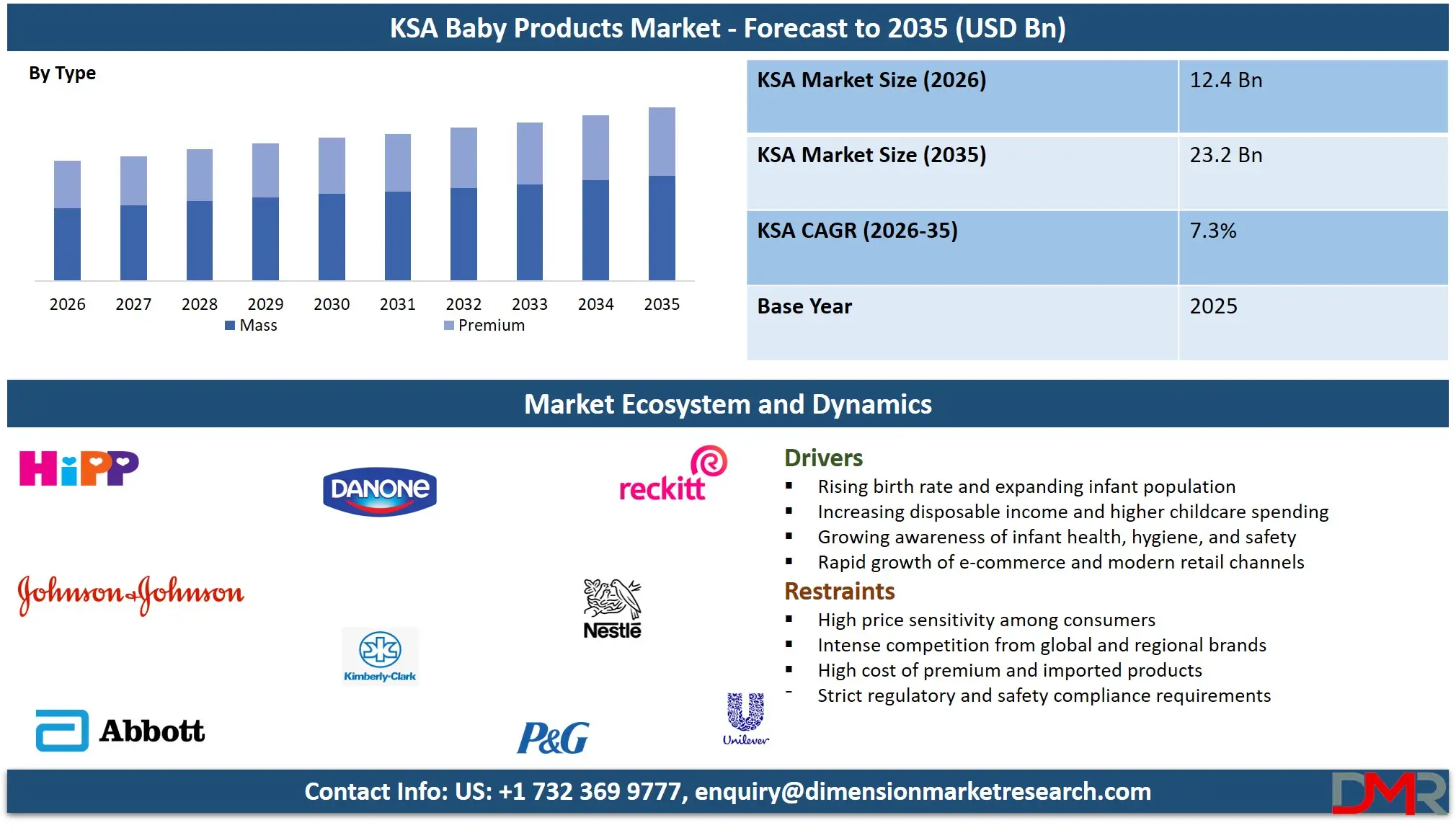
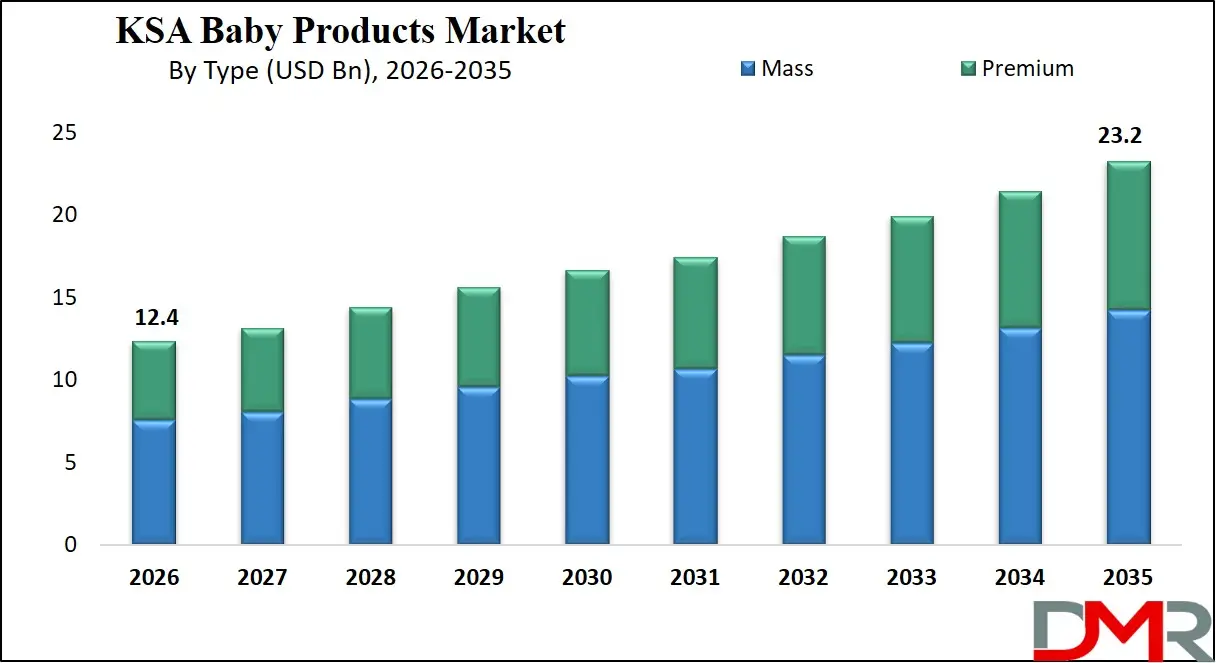
The KSA Baby Products Market size is projected to reach USD 12.4 billion in 2026 and grow at a compound annual growth rate of 7.3% to reach a value of USD 23.2 billion in 2035.
ℹ
To learn more about this report –
Download Your Free Sample Report Here
Baby products encompass a broad range of goods and solutions designed to support infant care, growth, safety, and development, including feeding items, hygiene essentials, apparel, furniture, toys, and mobility products. These offerings combine traditional manufacturing with modern innovations such as ergonomic designs, hypoallergenic materials, and smart monitoring features. The sector plays a vital role in the broader consumer goods and retail ecosystem, reflecting demographic patterns, income levels, and evolving childcare preferences. Continuous advancements in product safety, material quality, and functionality are further enhancing the importance of this sector within the global family-oriented consumption landscape.
In the KSA baby products market, the landscape is influenced by rising urbanization, increasing dual-income households, and a growing focus on child health and safety. Parents are becoming more informed and selective, prioritizing quality, certified safety standards, and premium offerings. Digital transformation is reshaping purchasing behavior, with e-commerce platforms enabling broader access to international and niche brands. Additionally, sustainability is emerging as a key factor, driving demand for eco-friendly, organic, and reusable baby products. Rising disposable income and stronger regulatory frameworks are also reinforcing consumer confidence and encouraging higher spending on infant care essentials.
ℹ
To learn more about this report –
Download Your Free Sample Report Here
The KSA baby products market is witnessing significant shifts, including premiumization, expansion of private-label offerings, and integration of smart technologies such as baby monitors and wearable health trackers. Strategic partnerships between distributors and global brands are improving product availability and innovation. Retailers are investing in omnichannel strategies and last-mile delivery capabilities to enhance customer experience. Regulatory updates focused on safety certifications and labeling are shaping manufacturing and import practices. These developments, combined with ongoing investments in logistics and infrastructure, are positioning the market for sustained growth while fostering a more structured and competitive environment.
KSA Baby Products Market: Key Takeaways
- Market Growth: The KSA Baby Products Market size is expected to grow by USD 10.0 billion, at a CAGR of 7.3%, during the forecasted period of 2027 to 2035.
- By Type: Mass segment is anticipated to get the majority share of the KSA Baby Products market in 2026.
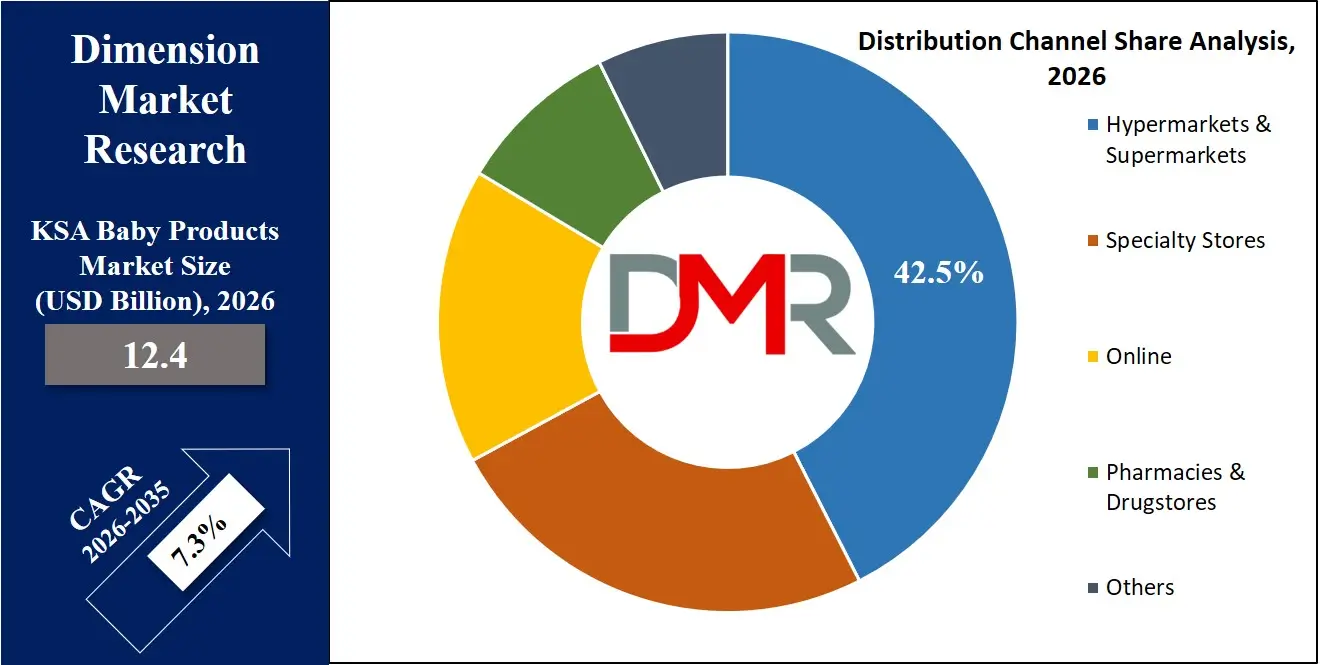
- By Distribution Channel: The hypermarkets & supermarkets segment is expected to get the largest revenue share in 2026 in the KSA Baby Products market.
- Use Cases: Some of the use cases of Baby Products include early childhood development, comfort & mobility and more.
KSA Baby Products Market: Use Cases
- Infant Nutrition Support: Baby feeding and nursing products facilitate safe and efficient feeding practices, supporting early-stage nutrition and parental convenience.
- Hygiene and Skincare: Baby cosmetics and toiletries ensure proper hygiene while addressing sensitive skin needs through gentle and dermatologically tested formulations.
- Safety and Monitoring: Baby safety and convenience products, including monitors and car seats, help parents ensure continuous supervision and protection.
- Early Childhood Development: Toys and play equipment aid cognitive, sensory, and motor skill development through interactive and educational designs.
- Comfort and Mobility: Baby strollers, carriers, and furniture enhance comfort and ease of mobility for both infants and caregivers.
- Clothing and Apparel: Baby clothing products provide comfort, protection, and adaptability to climatic conditions with soft and breathable materials.
- Nursery Setup: Nursery furniture and décor solutions enable organized and safe living spaces tailored to infant needs.
Stats & Facts
- Saudi General Authority for Statistics reported that the birth rate in Saudi Arabia remained above 16 births per 1,000 people in 2024.
- Saudi Vision 2030 initiatives highlighted increased household spending on family welfare categories in 2025.
- World Bank indicated Saudi Arabia’s urban population exceeded 84% in 2024, driving retail demand.
- International Monetary Fund noted Saudi Arabia’s GDP growth supported rising disposable incomes in 2025.
- Saudi Ministry of Health emphasized growing awareness programs for infant health and nutrition in 2024.
- UNICEF reported increasing parental focus on early childhood development investments in Gulf countries in 2025.
- Saudi Food and Drug Authority strengthened regulations on baby product safety and labeling standards in 2024.
- World Health Organization highlighted rising adoption of hygiene products for infants in the Middle East in 2025.
- Saudi Central Bank data showed growth in e-commerce transactions exceeding 20% annually in 2024.
- OECD reported increasing female workforce participation in Saudi Arabia reached over 35% in 2025.
- Saudi Ministry of Commerce recorded expansion in retail outlets and online stores catering to baby products in 2024.
- UN Population Division indicated steady population growth contributing to sustained demand for infant-related products in 2025. .
Market Dynamic
Driving Factors in the KSA Baby Products Market
Rising Disposable Income and Premiumization
Increasing household income levels in Saudi Arabia are significantly influencing spending behavior, particularly in family-oriented categories. Parents are prioritizing high-quality, branded, and premium baby products that ensure safety, comfort, and long-term value. This shift is reinforced by greater awareness of global standards and access to international brands. As a result, demand for organic skincare, ergonomic furniture, and technologically advanced baby gear is rising. Retailers are responding by expanding premium product lines and enhancing in-store and online experiences, making premiumization a central driver of sustained market expansion.
Expansion of E-commerce and Retail Infrastructure
The rapid growth of digital commerce platforms has transformed how consumers access baby products. Online retail channels offer convenience, competitive pricing, and a wide range of options, making them increasingly popular among young parents. Investments in logistics, warehousing, and last-mile delivery have further strengthened this ecosystem. Additionally, the development of modern retail formats such as malls and specialty stores has improved product availability and customer engagement. This dual-channel growth enhances market reach, supports brand visibility, and drives consistent demand across urban and semi-urban areas.
Restraints in the KSA Baby Products Market
High Cost of Premium and Imported Products
A significant portion of baby products in Saudi Arabia is imported, leading to higher costs due to logistics, tariffs, and brand positioning. Premium products, while desirable, may not be accessible to all income groups, limiting widespread adoption. Price sensitivity among certain consumer segments can restrict market penetration, particularly in non-urban areas. Additionally, fluctuations in global supply chains can impact pricing stability. These factors create challenges for manufacturers and retailers in balancing affordability with quality, potentially slowing market growth in price-conscious segments.
Regulatory Compliance and Product Standardization Challenges
Strict safety and quality regulations imposed by authorities ensure consumer protection but can pose challenges for manufacturers and distributors. Compliance with evolving standards requires continuous investment in testing, certification, and labeling. Smaller players may face difficulties in meeting these requirements, leading to market consolidation. Moreover, delays in regulatory approvals can impact product launches and supply chain efficiency. While these measures enhance trust and product reliability, they also increase operational complexity and costs for industry participants.
Opportunities in the KSA Baby Products Market
Growing Demand for Organic and Sustainable Products
There is a rising preference among Saudi parents for eco-friendly and organic baby products, driven by increased awareness of health and environmental concerns. This trend creates opportunities for brands to introduce biodegradable diapers, chemical-free skincare, and sustainable clothing. Companies investing in green manufacturing practices and transparent sourcing can differentiate themselves in a competitive market. As sustainability becomes a key purchasing criterion, this segment is expected to witness substantial growth, offering long-term potential for innovation and brand loyalty.
Increasing Female Workforce Participation
The growing number of working mothers in Saudi Arabia is creating demand for convenient, time-saving baby care solutions. Products such as ready-to-use baby food, automated feeding devices, and multifunctional furniture are gaining traction. This demographic shift also drives demand for daycare-related products and services. Businesses can capitalize on this trend by developing solutions tailored to busy lifestyles, including subscription-based services and smart baby care technologies. This evolving consumer base presents a significant opportunity for market expansion and product diversification.
Trends in the KSA Baby Products Market
Adoption of Smart Baby Care Technologies
Technological integration is becoming a defining trend, with smart baby monitors, wearable devices, and app-connected products gaining popularity. These innovations provide real-time insights into infant health, sleep patterns, and safety, offering peace of mind to parents. The increasing adoption of IoT-enabled devices is enhancing product functionality and value. Companies are investing in research and development to create user-friendly, reliable, and secure solutions, positioning technology as a key differentiator in the market.
Shift Toward Omnichannel Retailing
The blending of online and offline retail channels is transforming the consumer buying journey. Parents are increasingly researching products online before making purchases in-store or vice versa. Retailers are adopting omnichannel strategies, including click-and-collect services, personalized recommendations, and digital marketing campaigns. This trend enhances customer engagement and convenience while enabling brands to gather valuable consumer insights. The integration of digital tools with traditional retail formats is expected to redefine market dynamics in the coming years.
Impact of Artificial Intelligence in KSA Baby Products Market
- Personalized Product Recommendations: AI analyzes consumer behavior to suggest suitable baby products, enhancing shopping experiences and increasing conversion rates.
- Demand Forecasting: AI-driven analytics help retailers predict demand trends, ensuring optimal inventory management and reducing stockouts.
- Smart Baby Monitoring: AI-powered devices track infant health metrics and provide real-time alerts, improving safety and parental confidence.
- Customer Support Automation: Chatbots and virtual assistants streamline customer queries, offering instant and accurate responses.
- Product Innovation: AI assists in designing safer and more ergonomic baby products based on usage data and feedback.
- Fraud Detection in E-commerce: AI enhances transaction security, building trust among online shoppers.
- Supply Chain Optimization: AI improves logistics efficiency by optimizing routes, delivery schedules, and warehouse operations.
- Sentiment Analysis: AI tools analyze customer reviews and feedback to refine product offerings and marketing strategies.
Impact of Iran War in KSA Baby Products Market
The Iran war is impacting the Saudi Arabia baby products market through rising costs and supply chain disruptions. Increased geopolitical tensions have driven up fuel and logistics expenses, making imported baby products such as diapers, formula, and personal care items more expensive. Trade route uncertainties, particularly around key shipping corridors, are causing delays in the import of raw materials and finished goods, leading to potential shortages in the market. Although higher oil prices may support government spending, inflationary pressures are affecting household budgets and reducing consumer purchasing power. This is likely to shift demand toward more affordable, private-label, or locally produced baby products while encouraging companies to strengthen regional supply chains.
Research Scope and Analysis
By Product Analysis
Baby feeding and nursing products are expected to dominate the market, accounting for approximately 28.7% share in 2026. This segment’s leadership is primarily driven by the essential and recurring nature of feeding requirements during infancy, making these products indispensable for parents. Items such as feeding bottles, sterilizers, breast pumps, warmers, and storage solutions are witnessing consistent demand across both urban and semi-urban households. Rising awareness regarding infant nutrition, hygiene, and safe feeding practices is encouraging consumers to opt for high-quality and certified products. Technological advancements, including anti-colic bottle designs and smart feeding monitors, are further enhancing convenience and safety. Moreover, the increasing participation of women in the workforce is boosting demand for time-saving and efficient feeding solutions. Retailers and manufacturers are continuously expanding their portfolios with premium, ergonomic, and innovative offerings, reinforcing this segment’s strong market position and long-term growth potential.
The baby toys and play equipment segment is witnessing rapid expansion, driven by a growing emphasis on early childhood development and learning outcomes. Parents are increasingly recognizing the importance of toys in enhancing cognitive abilities, sensory development, and motor skills from an early age. This has led to rising demand for educational, interactive, and skill-based toys that combine entertainment with developmental benefits. The segment is also benefiting from innovations such as technology-integrated toys, including sound-responsive and AI-enabled play items. Additionally, eco-friendly and non-toxic materials are gaining traction as parents become more conscious of safety and sustainability. Increasing disposable incomes and evolving parenting trends are encouraging higher spending on non-essential yet value-added products. As a result, this segment is emerging as one of the fastest-growing categories, with strong potential for innovation-driven expansion in the coming years.
By Type Analysis
The mass segment is projected to hold around 61.3% share in 2026, maintaining its dominance due to affordability, accessibility, and widespread consumer acceptance. A significant portion of the population in Saudi Arabia prefers budget-friendly baby products that meet basic safety and quality requirements without incurring high costs. This segment benefits from extensive distribution through supermarkets, hypermarkets, and neighborhood retail stores, ensuring easy availability across urban and rural areas. Manufacturers operating in this space focus on cost efficiency, high-volume production, and competitive pricing strategies to attract a broad consumer base. Despite the increasing popularity of premium products, the mass segment continues to thrive due to its practicality and value proposition. Promotional offers, bundled deals, and private-label brands further strengthen its position, making it a cornerstone of the overall market structure.
The premium segment is expanding at a notable pace, driven by shifting consumer preferences toward high-quality, branded, and specialized baby products. Parents are increasingly willing to invest in products that offer enhanced safety, superior materials, and advanced features, particularly for newborn care. This includes organic skincare items, ergonomic furniture, and technologically advanced baby gear. The influence of international brands and exposure to global parenting standards are further fueling demand in this segment. Additionally, rising disposable incomes and increased awareness of infant health and well-being are encouraging consumers to move beyond basic offerings. Premium products often emphasize certifications, sustainability, and innovation, which resonate strongly with modern parents. As a result, this segment is becoming a key growth driver, with companies focusing on differentiation and value-added features to capture a larger share of the evolving market.
By Distribution Channel Analysis
Hypermarkets and supermarkets are expected to lead the distribution landscape, accounting for approximately 42.5% share in 2026. Their dominance is supported by well-established retail infrastructure and a strong consumer preference for one-stop shopping experiences. These outlets provide a comprehensive range of baby products, allowing parents to compare multiple brands and price points in a single visit. The availability of promotional discounts, loyalty programs, and seasonal offers further attracts a large customer base. Additionally, the ability to physically inspect products enhances consumer confidence, particularly for items related to infant safety and hygiene. The continuous expansion of large retail chains in urban centers, coupled with improved store layouts and customer service, is reinforcing the segment’s leadership. This channel remains a critical touchpoint for both established brands and new entrants aiming to build visibility and trust.
ℹ
To learn more about this report –
Download Your Free Sample Report Here
Online distribution is emerging as the fastest-growing channel in the market, driven by increasing digital adoption and changing consumer lifestyles. E-commerce platforms offer unmatched convenience, enabling parents to browse, compare, and purchase products from the comfort of their homes. The availability of detailed product descriptions, customer reviews, and competitive pricing enhances decision-making and transparency. Additionally, online channels provide access to a wider variety of international and niche brands that may not be available in physical stores. The growth of secure digital payment systems and efficient delivery networks is further accelerating adoption. Subscription services and personalized recommendations are also gaining popularity, adding value to the shopping experience. As internet penetration continues to rise, online platforms are expected to play an increasingly important role in shaping the future of baby product distribution.
The KSA Baby Products Market Report is segmented on the basis of the following:
By Product
- Baby Food
- Baby Cosmetics & Toiletries
- Baby Toys & Play Equipment
- Baby Safety & Convenience
- Baby Clothing
- Baby Nursery & Furniture
- Baby Feeding & Nursing
By Type
By Distribution Channel
- Hypermarkets & Supermarkets
- Specialty Stores
- Online
- Pharmacies & Drugstores
- Others
Competitive Landscape
The KSA Baby Products Market is characterized by intense competition, with participants focusing on continuous product innovation, competitive pricing strategies, and strong brand differentiation to maintain and expand their market share. Companies are making substantial investments in research and development to introduce advanced, safe, and user-friendly products that align with evolving consumer expectations.
ℹ
To learn more about this report –
Download Your Free Sample Report Here
Strategic collaborations with distributors, retailers, and e-commerce platforms are enhancing market reach and strengthening visibility across both physical and digital channels. High entry barriers persist due to stringent regulatory compliance requirements and strong brand loyalty among consumers. Additionally, players are increasingly leveraging digital marketing, data-driven insights, and omnichannel strategies to engage modern parents effectively.
Some of the prominent players in the KSA Baby Products are:
- Nestlé S.A.
- Procter & Gamble Company
- Kimberly-Clark Corporation
- Johnson & Johnson
- Unilever PLC
- Danone S.A.
- Abbott Laboratories
- Reckitt Benckiser Group plc
- Beiersdorf AG
- Artsana Group (Chicco)
- Mamas & Papas
- Graco Inc.
- Philips Avent (Koninklijke Philips N.V.)
- Pigeon Corporation
- Unicharm Corporation
- Kao Corporation
- Himalaya Wellness Company
- Sebapharma GmbH & Co. KG
- Hero Group
- HiPP GmbH & Co. Vertrieb KG
- Other Key Players
Recent Developments
- In March 2025, Procter & Gamble announced a strategic investment to enhance its distribution network for baby care products across Saudi Arabia. The initiative focused on expanding warehouse capacity and improving last-mile delivery through digital logistics solutions. The company also collaborated with regional e-commerce platforms to boost online sales and customer engagement.
- In January 2025, Johnson & Johnson expanded its baby care portfolio in Saudi Arabia by launching a new range of hypoallergenic baby skincare products tailored for sensitive skin. The launch included dermatologically tested formulations free from parabens and sulfates, aligning with increasing consumer demand for safe and natural products. The company also partnered with local retailers and e-commerce platforms to ensure widespread availability.
Report Details
| Report Characteristics |
| Market Size (2026) |
USD 12.4 Bn |
| Forecast Value (2035) |
USD 23.2 Bn |
| CAGR (2026–2035) |
7.3% |
| Historical Data |
2021 – 2025 |
| Forecast Data |
2027 – 2035 |
| Base Year |
2025 |
| Estimate Year |
2026 |
| Report Coverage |
Market Revenue Estimation, Market Dynamics, Competitive Landscape, Growth Factors and etc. |
| Segments Covered |
By Product (Baby Food, Baby Cosmetics & Toiletries, Baby Toys & Play Equipment, Baby Safety & Convenience, Baby Clothing, Baby Nursery & Furniture, Baby Feeding & Nursing), By Type (Mass, Premium), By Distribution Channel (Hypermarkets & Supermarkets, Specialty Stores, Online, Pharmacies & Drugstores, Others) |
| Country Coverage |
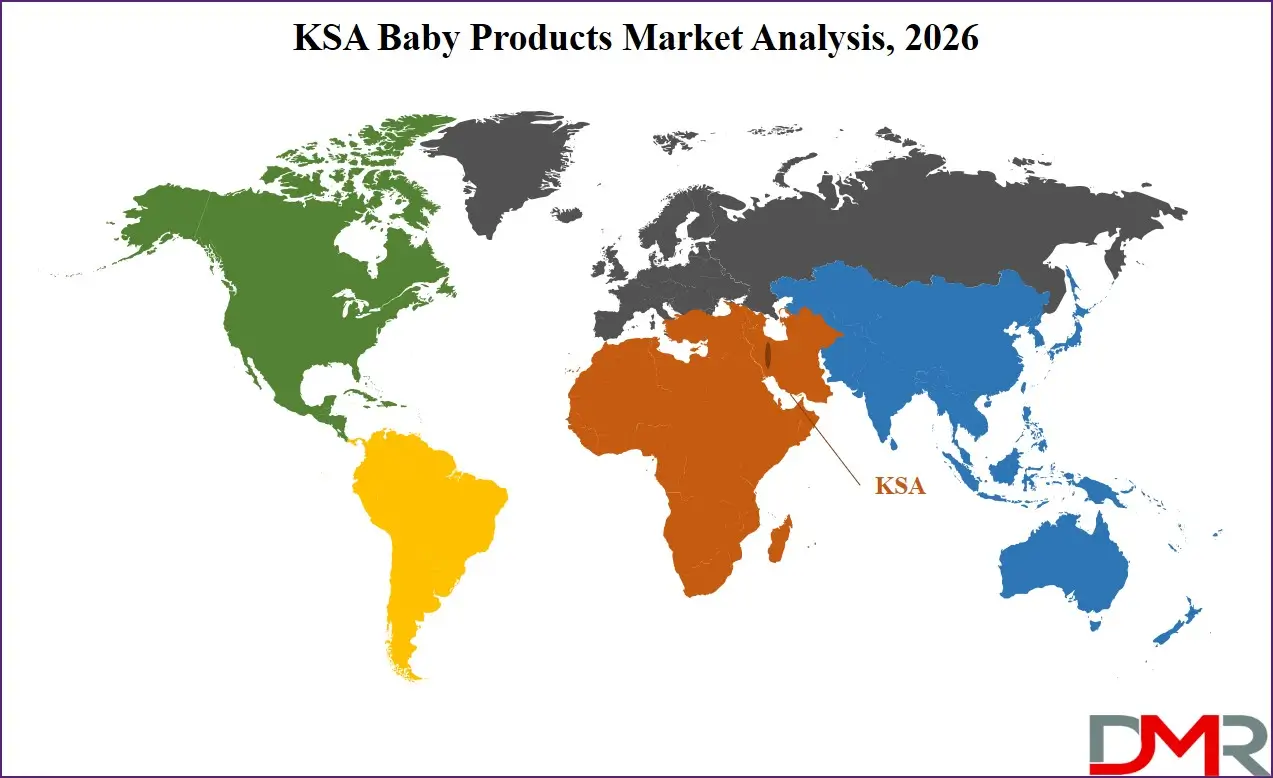
Saudi Arabia |
| Prominent Players |
Nestlé S.A., Procter & Gamble Company, Kimberly-Clark Corporation, Johnson & Johnson, Unilever PLC, Danone S.A., Abbott Laboratories, Reckitt Benckiser Group plc, Beiersdorf AG, Artsana Group (Chicco), Mamas & Papas, Graco Inc., Philips Avent (Koninklijke Philips N.V.), Pigeon Corporation, Unicharm Corporation, Kao Corporation, Himalaya Wellness Company, Sebapharma GmbH & Co. KG, Hero Group, HiPP GmbH & Co. Vertrieb KG, and Other Key Players |
| Purchase Options |
We have three licenses to opt for: Single User License (Limited to 1 user), Multi-User License (Up to 5 Users) and Corporate Use License (Unlimited User) along with free report customization equivalent to 0 analyst working days, 3 analysts working days and 5 analysts working days respectively. |
Frequently Asked Questions
How big is the KSA Baby Products Market?
▾ The KSA Baby Products Market size is expected to reach USD 12.4 billion by 2026 and is projected to reach USD 23.2 billion by the end of 2035.
Who are the key players in the KSA Baby Products Market?
▾ Some of the major key players in the KSA Baby Products Market include Nestle, Johnson & Johnson, P&G and others.
What is the growth rate in the KSA Baby Products Market?
▾ The market is growing at a CAGR of 7.3 percent over the forecasted period.