Market Overview
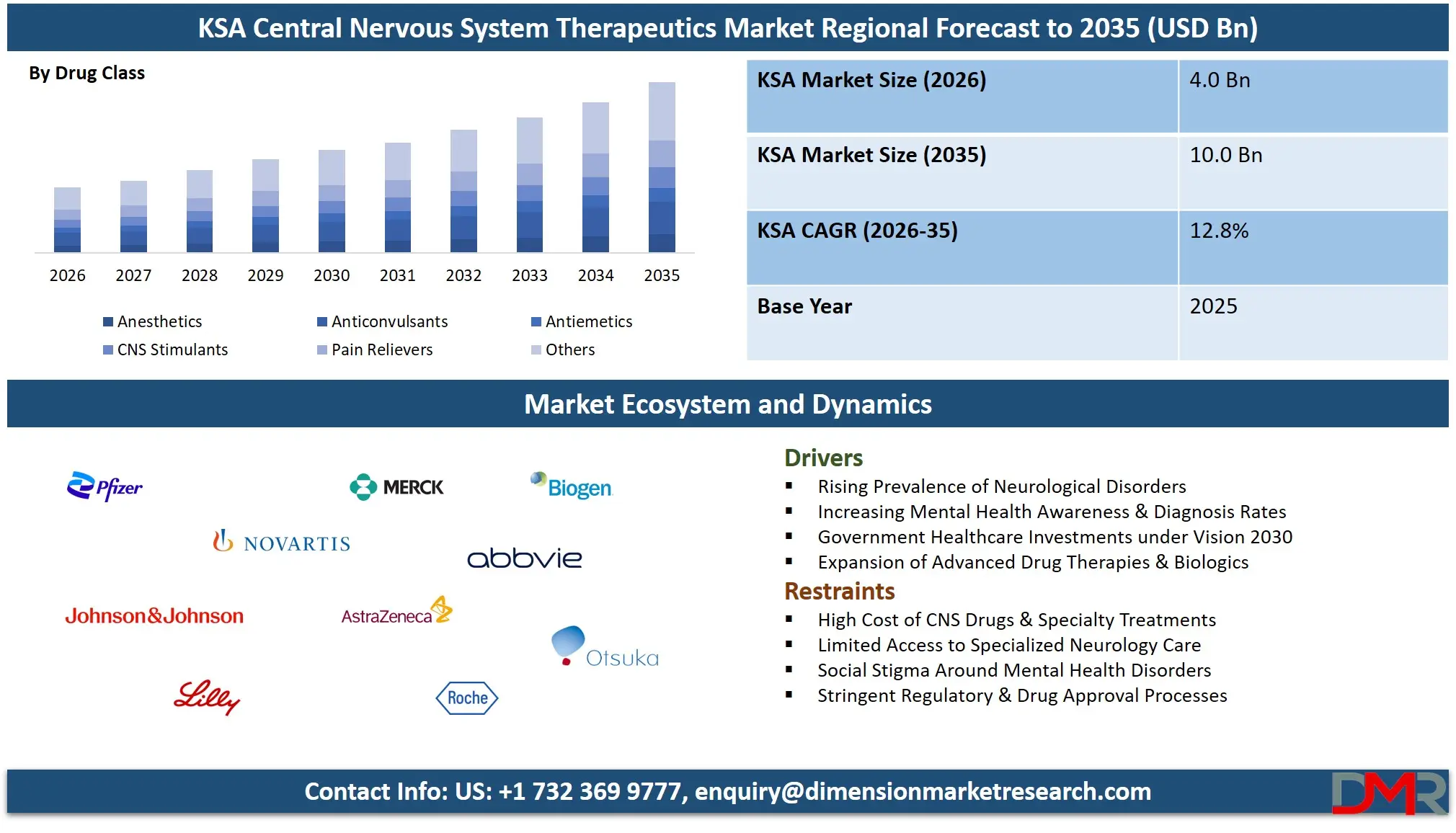
Saudi Arabia Central Nervous System Therapeutics Market size is estimated to be valued at USD 4.0 billion in 2026 and is projected to grow at a CAGR of 12.8%, reaching approximately USD 10.0 billion by 2035, driven by rising neurological disorder prevalence, increasing mental health treatment demand, and grow.
ℹ
To learn more about this report –
Download Your Free Sample Report Here
Central Nervous System therapeutics refers to a broad category of pharmaceutical treatments and medical interventions designed to manage, prevent, or alleviate disorders affecting the brain and spinal cord. This therapeutic area covers a wide spectrum of conditions such as neurodegenerative diseases, psychiatric disorders, epilepsy, and pain related to neurological dysfunction. These therapies include small molecule drugs, biologics, and advanced neuromodulation approaches that act on neurotransmitter pathways, neural signaling, and brain chemistry. The field is characterized by continuous innovation driven by growing research in neuroscience, improved understanding of disease mechanisms, and the development of targeted treatments aimed at enhancing cognitive function, stabilizing mood, and slowing disease progression.
The KSA Central Nervous System therapeutics market represents a rapidly evolving segment of the healthcare industry, driven by increasing prevalence of neurological disorders and mental health conditions across Saudi Arabia. The market encompasses a wide range of prescription drugs and treatment solutions distributed through hospitals, retail pharmacies, and specialized clinics. Growth is supported by rising healthcare expenditure, expanding insurance coverage, and ongoing government initiatives to strengthen healthcare infrastructure under national transformation programs. Additionally, increasing awareness about mental health and early diagnosis is contributing to higher demand for effective CNS medications and long term disease management solutions.
ℹ
To learn more about this report –
Download Your Free Sample Report Here
Furthermore, the market in Saudi Arabia is witnessing a shift toward innovative treatment options including biologics, personalized medicine, and digital health integration in neurology care. Pharmaceutical companies are focusing on strategic collaborations, regulatory approvals, and localization of drug manufacturing to enhance market presence. The demand for therapies targeting conditions such as Alzheimer disease, Parkinson disease, and depression is growing steadily, supported by an aging population and lifestyle related risk factors. At the same time, the market faces challenges related to high treatment costs and access disparities, yet ongoing reforms and private sector participation are expected to create new growth opportunities in the coming years.
KSA Central Nervous System Therapeutics Market: Key Takeaways
- Strong Market Expansion Outlook: The market is projected to grow from USD 4.0 billion in 2026 to USD 10.0 billion by 2035, reflecting robust long term growth potential.
- High Growth Rate Momentum: A CAGR of 12.8% indicates rapid expansion driven by increasing neurological disorder prevalence and treatment adoption.
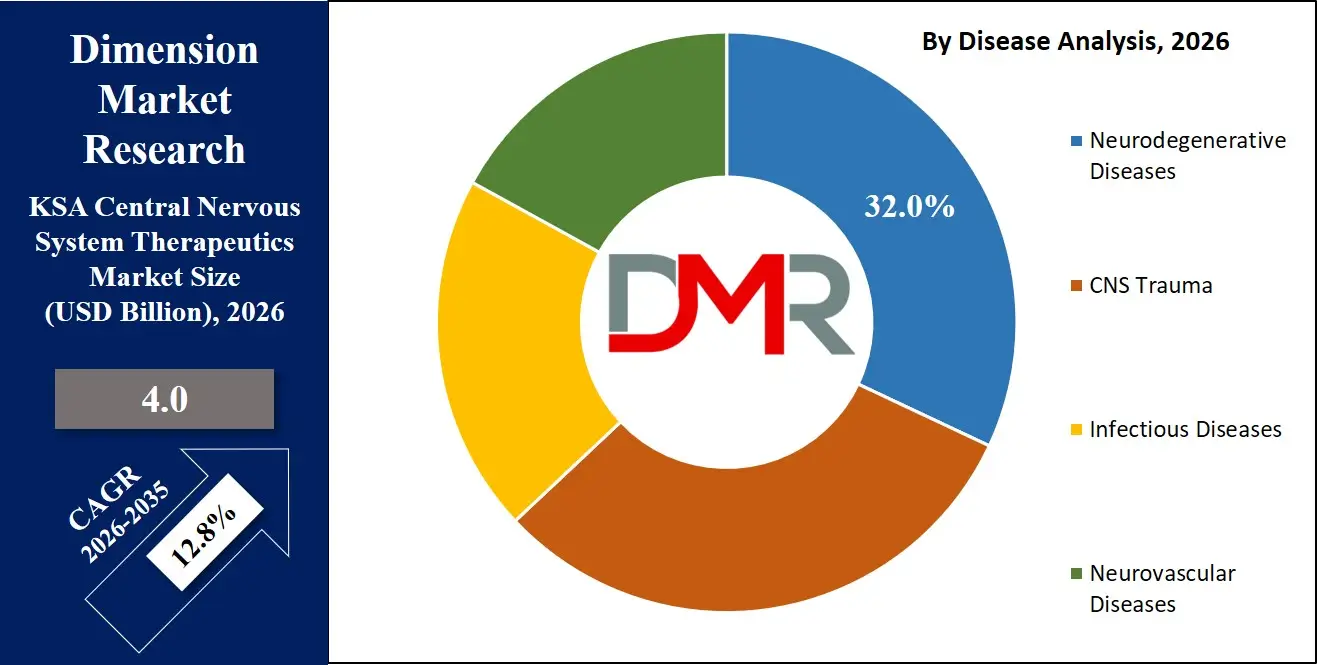
- Neurodegenerative Segment Dominance: Neurodegenerative diseases lead with 32.0% market share, highlighting strong demand for chronic CNS therapies.
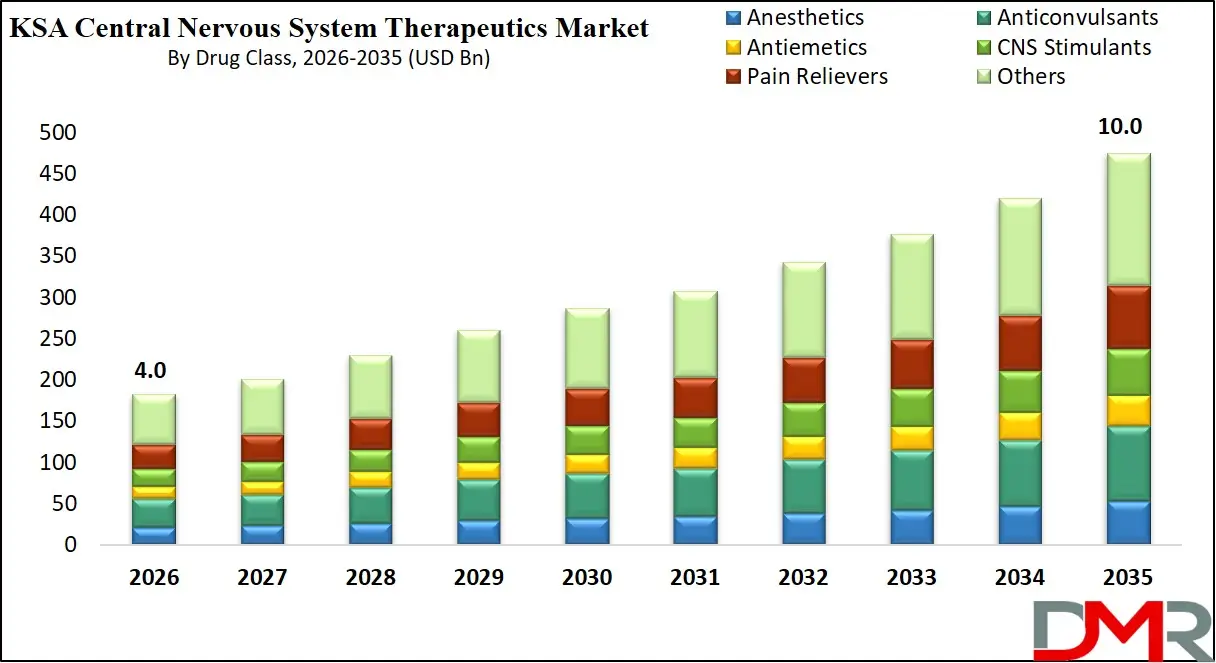
- Drug Class Concentration in Others Segment: The others category holds 34.0% share, driven by high usage of antidepressants and antipsychotics in mental health treatment.
- Hospital Pharmacies Lead Distribution: Hospital pharmacies dominate with 48.0% share, reflecting reliance on specialized care and prescription based CNS drug distribution.
KSA Central Nervous System Therapeutics Market: Use Cases
- Mental Health Treatment Expansion: Rising cases of depression, anxiety, and mood disorders are increasing demand for antidepressants and psychiatric therapies, supported by improved diagnosis and awareness in KSA.
- Neurodegenerative Disease Management: Growing prevalence of Alzheimer disease and Parkinson disease is driving adoption of CNS drugs, neuroprotective treatments, and long term neurological care solutions.
- Epilepsy Treatment: Higher diagnosis of epilepsy is boosting use of anticonvulsants and advanced seizure management therapies across hospitals and neurology centers.
- Pain Management Applications: Increasing use of CNS based analgesics and anesthetics for chronic pain and surgical procedures is supporting market growth in clinical settings.
Impact of Iran Conflict on KSA Central Nervous System Therapeutics Market
- Supply Chain Disruptions & Drug Shortages: Geopolitical tensions and potential disruption of the Strait of Hormuz are impacting pharmaceutical logistics, leading to delays in CNS drug imports, API shortages, and reduced availability of critical neurological medications in KSA.
- Rising Drug Prices & Treatment Costs: Increased oil prices and freight costs are raising manufacturing and transportation expenses, resulting in higher prices for CNS therapeutics such as antidepressants, anticonvulsants, and neurodegenerative drugs.
- Pressure on Healthcare Infrastructure & Procurement: Regional instability and disruption in Gulf logistics hubs are affecting medicine distribution channels, forcing hospitals and pharmacies in Saudi Arabia to maintain higher inventories and diversify sourcing strategies.
KSA Central Nervous System Therapeutics Market: Stats & Facts
- Saudi Health Research / Neuroscience Institutions (2023–2024 Studies)
- Epilepsy accounts for ~9.9% of the global neurological disease burden and is a key condition in Saudi Arabia.
- Around 6–24.9% of epilepsy patients report family history in Saudi populations.
- EEG abnormalities observed in 19.7% to 70% of epilepsy patients.
- Equal distribution observed between focal and tonic-clonic seizures in KSA patients.
- Structural causes such as stroke and malignancy are leading epilepsy triggers.
- Genetic factors are a significant contributor to neurological disorders in Saudi patients.
- Female patients accounted for ~89.9% of study participants in epilepsy datasets.
- Males show higher seizure severity patterns compared to females.
- Neurological disorders show complex multi-factorial causes including trauma and vascular conditions.
- Significant proportion of epilepsy cases have unknown etiology, highlighting diagnostic gaps.
KSA Central Nervous System Therapeutics Market: Market Dynamics
Driving Factors in the KSA Central Nervous System Therapeutics Market
Rising Burden of Neurological and Psychiatric Disorders
The increasing prevalence of neurological disorders such as Alzheimer disease, Parkinson disease, epilepsy, and depression is a primary growth driver in the KSA CNS therapeutics market. Changing lifestyles, urban stress, and improved disease diagnosis are contributing to higher patient volumes, driving demand for targeted CNS drug therapies and long term neurological care solutions.
Healthcare Transformation and Investment Growth
Strong government support under Vision 2030 is accelerating healthcare infrastructure development and access to advanced treatment options. Increased healthcare spending, expansion of specialty neurology centers, and improved insurance coverage are enhancing the adoption of innovative CNS therapeutics, including biologics and precision medicine approaches.
Restraints in the KSA Central Nervous System Therapeutics Market
High Cost of Advanced CNS Therapies
The cost of biologics, specialty drugs, and long term treatment regimens for neurodegenerative and psychiatric disorders remains high. This creates affordability challenges and limits widespread access to advanced CNS treatment, particularly for chronic disease management requiring continuous medication.
Shortage of Specialized Neurology Professionals
Limited availability of trained neurologists and mental health professionals in certain regions of Saudi Arabia restricts timely diagnosis and treatment. This gap affects patient access to specialized CNS care, slowing the adoption of advanced therapeutic solutions and impacting overall market growth.
Opportunities in the KSA Central Nervous System Therapeutics Market
Growth of Local Pharmaceutical Manufacturing
Saudi Arabia is increasingly focusing on domestic drug production to reduce reliance on imports. This creates opportunities for local manufacturing of CNS therapeutics, including generics and branded drugs, improving supply chain resilience and supporting market expansion.
Adoption of Digital Health and Tele-neurology
The integration of digital health platforms and telemedicine is improving access to neurological and psychiatric care. Remote consultations, AI-based diagnostics, and digital monitoring tools are enhancing patient management, creating new growth avenues for CNS drug utilization and treatment adherence.
Trends in the KSA Central Nervous System Therapeutics Market
Shift toward Personalized and Targeted Therapies
There is a growing trend toward precision medicine in CNS therapeutics, with treatments tailored to individual genetic and clinical profiles. This includes the use of targeted biologics and advanced drug delivery systems aimed at improving treatment efficacy and reducing side effects.
Increasing Focus on Mental Health Awareness
Saudi Arabia is experiencing a shift in public perception toward mental health, supported by national awareness campaigns and policy initiatives. This is leading to higher diagnosis rates, increased demand for antidepressants and antipsychotics, and expansion of psychiatric treatment services across the country.
KSA Central Nervous System Therapeutics Market: Research Scope and Analysis
By Disease Analysis
Neurodegenerative diseases are anticipated to dominate the disease segment in the KSA Central Nervous System therapeutics market, capturing around 32.0% of the total market share in 2026. This dominance is primarily driven by the rising aging population and the increasing incidence of conditions such as Alzheimer disease, Parkinson disease, and multiple sclerosis. These disorders require long term treatment and continuous disease management, leading to sustained demand for CNS drug therapies, including neuroprotective agents and dopaminergic treatments. In addition, improved diagnostic capabilities, growing awareness about early stage neurological symptoms, and expanding access to specialty care are further supporting segment growth. The shift toward advanced therapeutics and personalized medicine is also enhancing treatment outcomes, making neurodegenerative disease management a key revenue contributor in the market.
ℹ
To learn more about this report –
Download Your Free Sample Report Here
CNS trauma represents a smaller yet significant segment within the KSA CNS therapeutics market, driven by cases related to road accidents, falls, and traumatic brain injuries. The demand in this segment is largely associated with emergency care, surgical interventions, and post trauma rehabilitation supported by anesthetics, pain management drugs, and supportive neurological therapies. While the treatment duration is typically shorter compared to chronic neurodegenerative conditions, the need for immediate and intensive medical care drives the utilization of hospital based CNS therapeutics. Increasing investments in trauma care infrastructure, along with improvements in critical care services and rehabilitation programs, are contributing to the steady growth of this segment in Saudi Arabia.
By Drug Class Analysis
The others segment, which includes antidepressants, antipsychotics, and other psychiatric medications, is anticipated to dominate the drug class segment in the KSA Central Nervous System therapeutics market, capturing around 34.0% of the total market share in 2026. This dominance is largely attributed to the rising prevalence of mental health disorders such as depression, anxiety, and schizophrenia, along with increasing awareness and diagnosis rates across Saudi Arabia. These medications are widely prescribed for long term management, contributing to consistent demand and high prescription volumes. In addition, expanding mental health programs, improved access to psychiatric care, and growing acceptance of pharmacological treatment are supporting the growth of this segment. The inclusion of multiple high revenue generating drug categories within this group further strengthens its leading position in the market.
Anticonvulsants represent a key segment within the KSA CNS therapeutics market, driven by their essential role in the treatment of epilepsy and seizure disorders. The increasing incidence of neurological conditions requiring seizure control, along with better diagnostic capabilities, is boosting the demand for these drugs. Anticonvulsants are also being increasingly used for off label indications such as neuropathic pain and mood stabilization, expanding their application scope. Hospitals and neurology centers in Saudi Arabia are adopting advanced treatment protocols and combination therapies to improve patient outcomes and reduce seizure frequency. Continuous innovation in drug formulations and improved patient adherence are further contributing to the steady growth of the anticonvulsants segment.
By Distribution Channel Analysis
Hospital pharmacies are anticipated to dominate the distribution channel segment in the KSA Central Nervous System therapeutics market, capturing around 48.0% of the total market share in 2026. This dominance is driven by the high volume of CNS drug prescriptions generated in hospital settings, particularly for severe neurological disorders, psychiatric conditions, and acute care cases such as CNS trauma. Hospitals serve as primary treatment centers for specialized neurology and mental health services, where patients receive diagnosis, inpatient care, and access to advanced drug therapies including biologics and controlled medications. The presence of skilled healthcare professionals, better reimbursement frameworks, and availability of a wide range of prescription drugs further support the strong position of hospital pharmacies in the market.
Retail pharmacies represent a significant distribution channel within the KSA CNS therapeutics market, driven by increasing demand for outpatient care and long term medication management. Patients with chronic conditions such as depression, epilepsy, and neurodegenerative diseases often rely on retail pharmacies for regular prescription refills and ongoing treatment adherence. The expansion of pharmacy chains, improved accessibility in urban and semi urban areas, and integration with digital prescription systems are supporting the growth of this segment. Additionally, rising awareness and convenience associated with community based pharmacies are encouraging patients to access CNS medications outside hospital settings, contributing to steady market expansion.
The KSA Central Nervous System Therapeutics Market Report is segmented on the basis of the following:
By Disease
- Neurovascular Diseases
- CNS Trauma
- Mental Health
- Anxiety Disorders
- Epilepsy
- Mood Disorders
- Psychotic Disorders
- Others
- Neurodegenerative Diseases
- Alzheimer’s Disease
- Parkinson’s Disease
- Multiple Sclerosis
- Huntington’s Disease
- Amytrophic Lateral Sclerosis
- Others
- Infectious Diseases
By Drug Class
- Anesthetics
- Anticonvulsants
- Antiemetics
- CNS Stimulants
- Pain Relievers
- Others
By Distribution Channel
- Hospital Pharmacies
- Retail Pharmacies
- Others
Impact of Artificial Intelligence in the KSA Central Nervous System Therapeutics Market
Artificial intelligence is playing a transformative role in the KSA Central Nervous System therapeutics market by enhancing early diagnosis, drug discovery, and clinical decision making. AI powered algorithms are increasingly being used to analyze brain imaging, neurological biomarkers, and patient data to detect conditions such as Alzheimer disease, Parkinson disease, and epilepsy at earlier stages. This is improving treatment outcomes and enabling physicians to adopt more targeted CNS drug therapies. In addition, AI is accelerating pharmaceutical research by identifying potential drug candidates, optimizing clinical trials, and reducing development timelines, which is particularly valuable for complex neurological disorders that traditionally require long development cycles.
Furthermore, AI is improving patient management and treatment adherence through digital health platforms and predictive analytics. In Saudi Arabia, the integration of AI with telemedicine and remote monitoring tools is enabling continuous tracking of patients with mental health conditions and chronic neurological diseases. These technologies support personalized treatment plans, real time adjustments in medication, and better management of disease progression. AI driven insights are also helping healthcare providers optimize resource allocation and improve overall efficiency in neurology care delivery, contributing to the advancement of the CNS therapeutics market in the country.
KSA Central Nervous System Therapeutics Market: Competitive Landscape
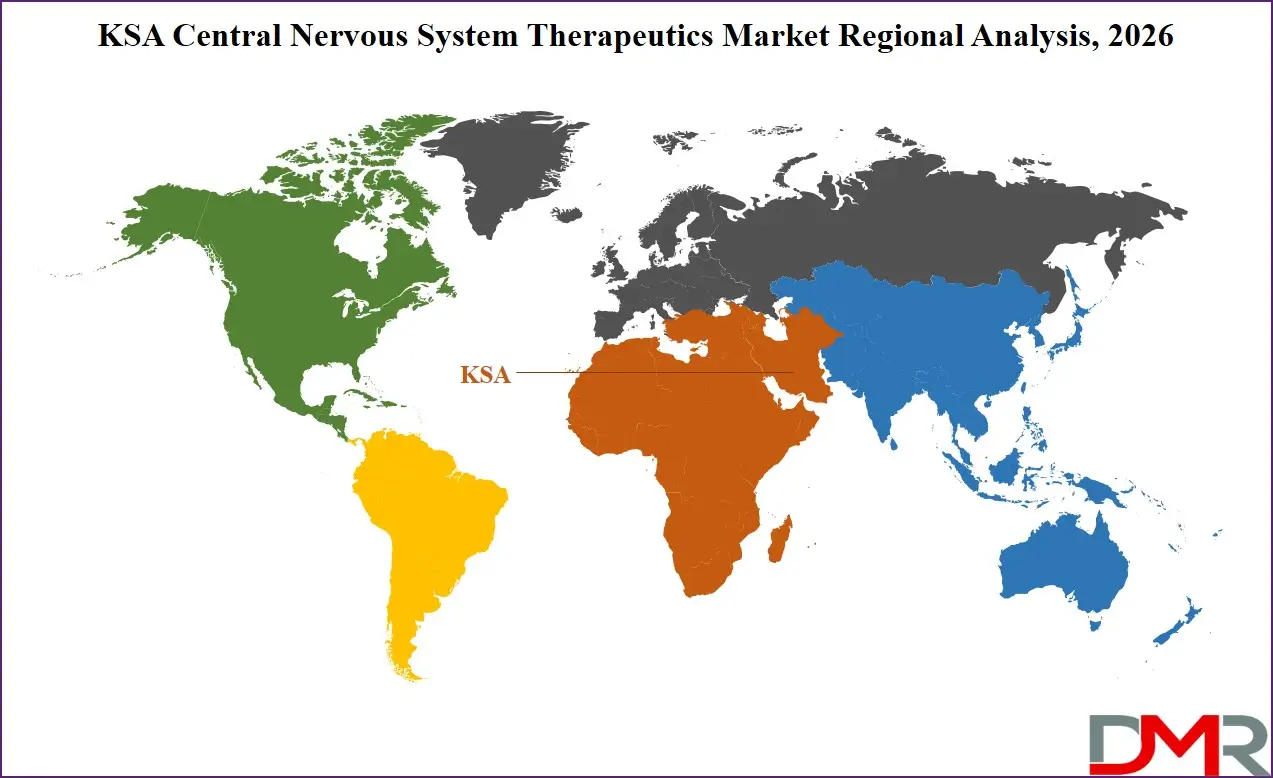
The competitive landscape of the KSA Central Nervous System therapeutics market is characterized by intense competition between multinational pharmaceutical companies and regional manufacturers, creating a highly fragmented yet innovation driven ecosystem. Market participants are heavily focused on expanding their CNS drug portfolios through advanced biologics, neuroprotective therapies, and precision medicine solutions, while also investing significantly in research and development to address complex neurological disorders.
ℹ
To learn more about this report –
Download Your Free Sample Report Here
Strategic collaborations, licensing agreements, and clinical partnerships are widely adopted to accelerate drug development and strengthen market presence. Additionally, competition is influenced by the growing presence of generic drug manufacturers, pricing pressures, and patent expirations, prompting companies to differentiate through product efficacy, safety, and patient support programs. The market is also shaped by increasing localization efforts and government initiatives to boost domestic pharmaceutical production, while digital health integration and personalized treatment approaches are emerging as key competitive factors driving long term growth and market positioning.
Some of the prominent players in the KSA Central Nervous System Therapeutics Market are:
- Pfizer Inc.
- Novartis AG
- Johnson & Johnson
- Eli Lilly and Company
- Merck & Co., Inc.
- AstraZeneca PLC
- Biogen Inc.
- AbbVie Inc.
- Roche Holding AG
- Otsuka Pharmaceutical Co., Ltd.
- Teva Pharmaceutical Industries Ltd.
- Hikma Pharmaceuticals PLC
- Sanofi S.A.
- GlaxoSmithKline plc
- Takeda Pharmaceutical Company Limited
- Lundbeck A/S
- UCB S.A.
- Saudi Pharmaceutical Industries and Medical Appliances Corporation (SPIMACO)
- Tabuk Pharmaceuticals Manufacturing Company
- Jamjoom Pharmaceuticals Company
- Other Key Players
Recent Developments in the KSA Central Nervous System Therapeutics Market
- January 2025: Johnson & Johnson announced the acquisition of Intra-Cellular Therapies for approximately USD 14.6 billion to expand its CNS and mental health drug portfolio.
- December 2024: Ionis Pharmaceuticals received FDA approval for a novel genetic disorder therapy and initiated its first independent commercial drug launch, marking a major advancement in specialty CNS and rare disease therapeutics.
Report Details
| Report Characteristics |
| Market Size (2026) |
USD 4.0 Bn |
| Forecast Value (2035) |
USD 10.0 Bn |
| CAGR (2026–2035) |
12.8% |
| Historical Data |
2021 – 2025 |
| Forecast Data |
2027 – 2035 |
| Base Year |
2025 |
| Estimate Year |
2026 |
| Report Coverage |
Market Revenue Estimation, Market Dynamics, Competitive Landscape, Growth Factors and etc. |
| Segments Covered |
By Disease (Neurovascular Diseases, CNS Trauma, Mental Health, Neurodegenerative Diseases, Infectious Diseases, CNS Cancer, and Others), By Drug Class (Anesthetic, Anticonvulsants, Antiemetics, CNS Stimulants, Pain Relievers, and Others), By Distribution Channel (Hospital Pharmacies, Retail Pharmacies, and Others) |
| Country Coverage |
Saudi Arabia |
| Prominent Players |
Pfizer Inc., Novartis AG, Johnson & Johnson, Eli Lilly and Company, Merck & Co., Inc., AstraZeneca PLC, Biogen Inc., AbbVie Inc., Roche Holding AG, Otsuka Pharmaceutical Co., Ltd., Teva Pharmaceutical Industries Ltd., Hikma Pharmaceuticals PLC, Sanofi S.A., GlaxoSmithKline plc, Takeda Pharmaceutical Company Limited, Lundbeck A/S, UCB S.A., SPIMACO, Tabuk Pharmaceuticals, Jamjoom Pharmaceuticals, and Other Key Players |
| Purchase Options |
We have three licenses to opt for: Single User License (Limited to 1 user), Multi-User License (Up to 5 Users) and Corporate Use License (Unlimited User) along with free report customization equivalent to 0 analyst working days, 3 analysts working days and 5 analysts working days respectively. |
Frequently Asked Questions
How big is the KSA Central Nervous System Therapeutics Market?
▾ The KSA Central Nervous System Therapeutics Market size is estimated to have a value of USD 4.0 billion in 2026 and is expected to reach USD 10.0 billion by the end of 2035.
What is the growth rate in the KSA Central Nervous System Therapeutics Market in 2026?
▾ The market is growing at a CAGR of 12.8% over the forecasted period of 2026.
Who are the key players in the KSA Central Nervous System Therapeutics Market?
▾ Some of the major key players in the KSA Central Nervous System Therapeutics Market are Pfizer Inc., Novartis AG, Johnson & Johnson, Eli Lilly and Company, Merck & Co., Inc., AstraZeneca PLC, Biogen Inc., AbbVie Inc., Roche Holding AG, Otsuka Pharmaceutical Co., Ltd., Teva Pharmaceutical Industries Ltd., Hikma Pharmaceuticals PLC, and many others.