What is the Chronic Disease Management Market Size?
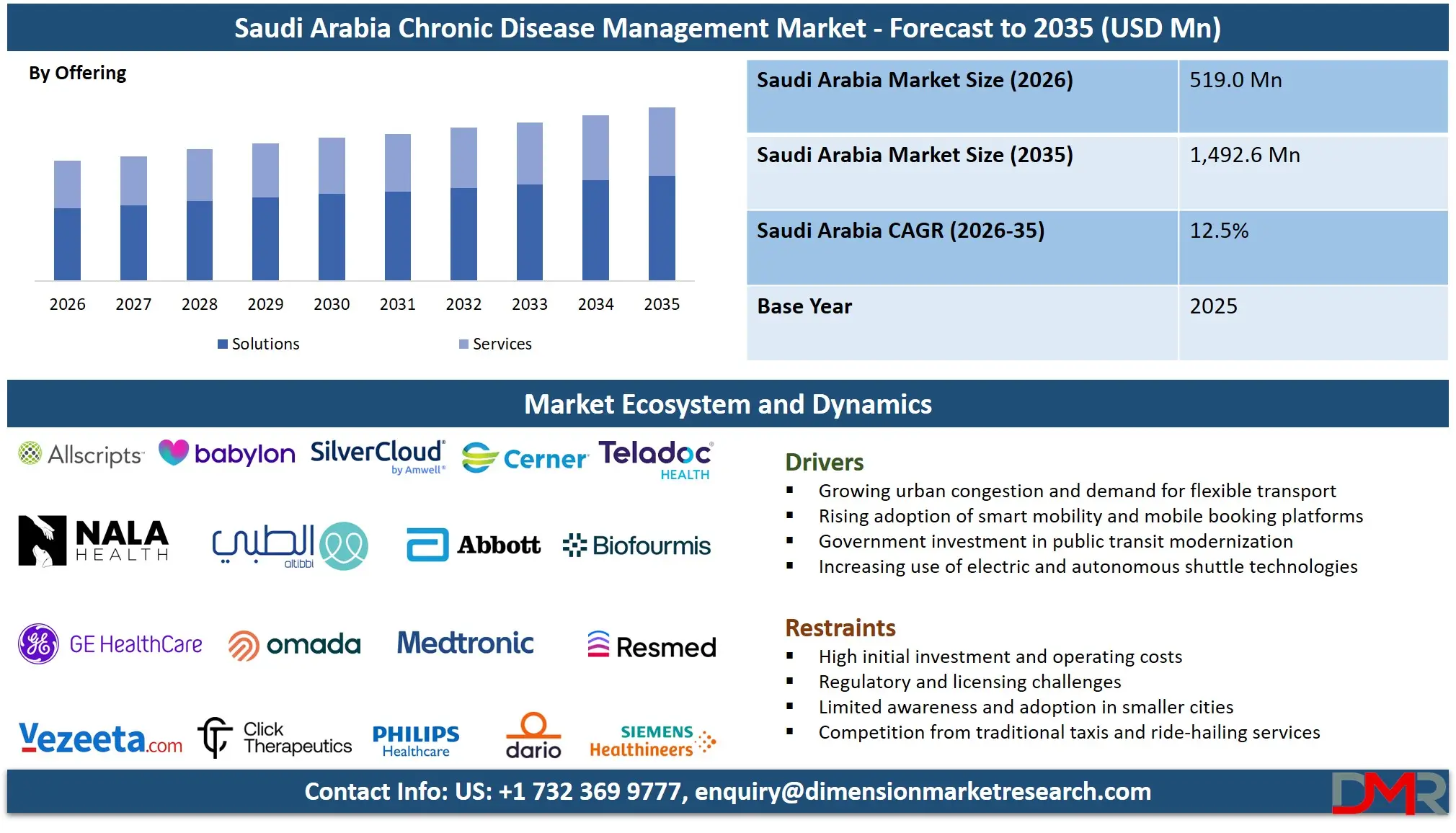
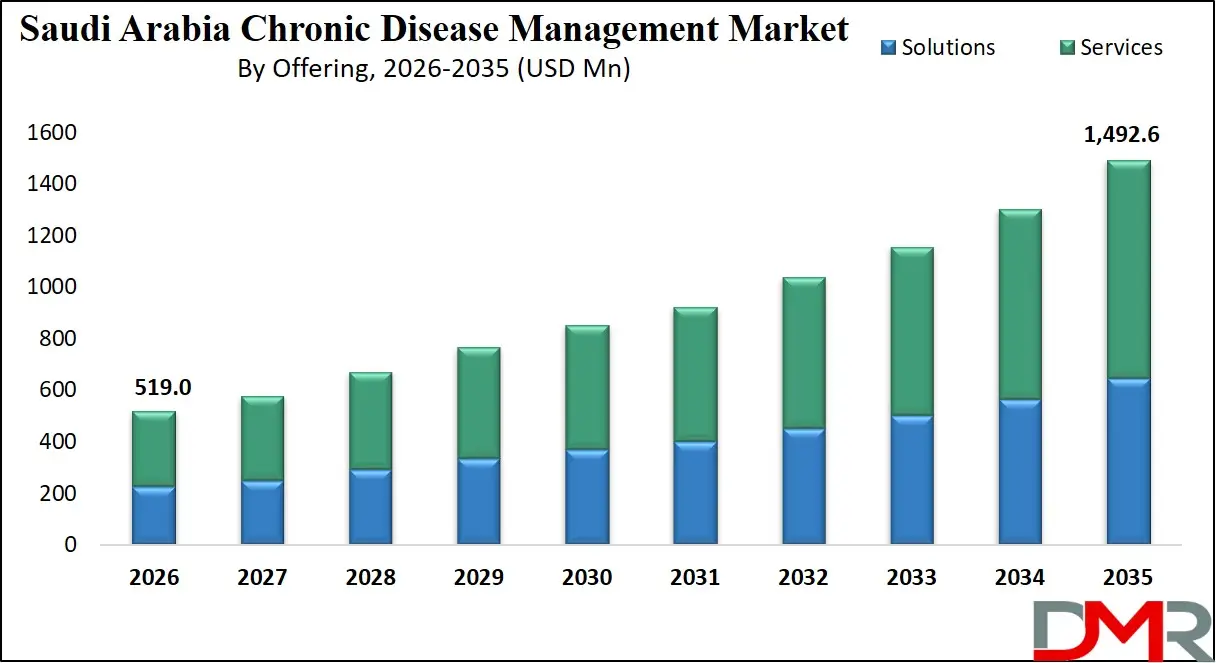
The Saudi Arabia Chronic Disease Management market is expected to reach a value of USD 519.0 million in 2026, and it is further anticipated to reach USD 1,492.6 million by 2035, growing at a CAGR of 12.5% during the forecast period. The Health Sector Transformation Program that forms part of Vision 2030 is placing an enormous structural strain on the healthcare system to shift towards proactive, preventive care and hospital-at-home models, as opposed to reactive, hospital-based treatment.
ℹ
To learn more about this report –
Download Your Free Sample Report Here
Chronic Disease Management in Saudi Arabia involves the systematic integration of digital health solutions, telehealth care monitoring, and value-based care coordination to deal with a population in which lifestyle-related diseases, including diabetes (seen in around 18.7% of the adult population) and cardiovascular issues are very common.
The market ecosystem includes the obligatory implementation of the Unified Digital Medical Record (Sehhaty Platform), the realization of Health Clusters in the country, and the growing participation of the Public Investment Fund (PIF) in localizing MedTech and HealthTech innovation. Saudi Health Council and SFDA are also pushing the agenda through the development of rigid requirements on remote monitoring interoperability and the efficacy of digital therapeutic measures.
ℹ
To learn more about this report –
Download Your Free Sample Report Here
Key Takeaways
- Market Size & Forecast: The Saudi Arabia Chronic Disease Management market is projected to value USD 519.0 million in 2026, which is further expected to reach USD 1,492.6 million by the end of 2035 due to the twin drivers of healthcare mandatory digital adoption and privatisation of primary care services via Public-Private Partnerships.
- Growth Rate & Outlook: The market is projected to grow at a CAGR of 12.5% because of the rapid increase in Type 2 Diabetes Mellitus and Hypertension cases among the national workforce, as well as the increasing reimbursement options on telehealth consultation and remote physiological monitoring within the frameworks of the Council of Cooperative Health Insurance (CCHI) unified policy.
- Primary Growth Drivers: The primary growth drivers are the demand of the Health Sector Transformation Program on Value-Based Care models, the company demand of extensive employee health screening and wellness programs, and the expansion of Specialty Diabetes Centers and Cardiac Centers of Excellence throughout Health Clusters.
- Key Market Trends: Some of the primary market trends include the strong integration of Remote Patient Monitoring (RPM) data into the Sehhaty App ecosystem, the utilization of AI to screen diabetic retinopathy and cardiovascular risk stratification, and the integration of CDM software with Sehhaty digital wallet and appointment-scheduling infrastructure.
- By Offering Analysis: Solutions is projected to dominate the offering segment, as disease specific software, especially Diabetes Mellitus and Cardiovascular Disease (CVD) management software will be in high demand. Virtual hospitals such as Seha Virtual Hospital are quickly adopting Remote Patient Monitoring platforms to control bed capacity and minimize physical referrals.
- By Deployment Type Analysis: Cloud-based solutions are poised to dominate because of the national mandate to centralize data and share data across the 20 Health Clusters smoothly. Hybrid models are still relevant in large tertiary care hospitals such as King Faisal Specialist Hospital that deal with sensitive genomic and oncology data that needs localized sovereignty controls.
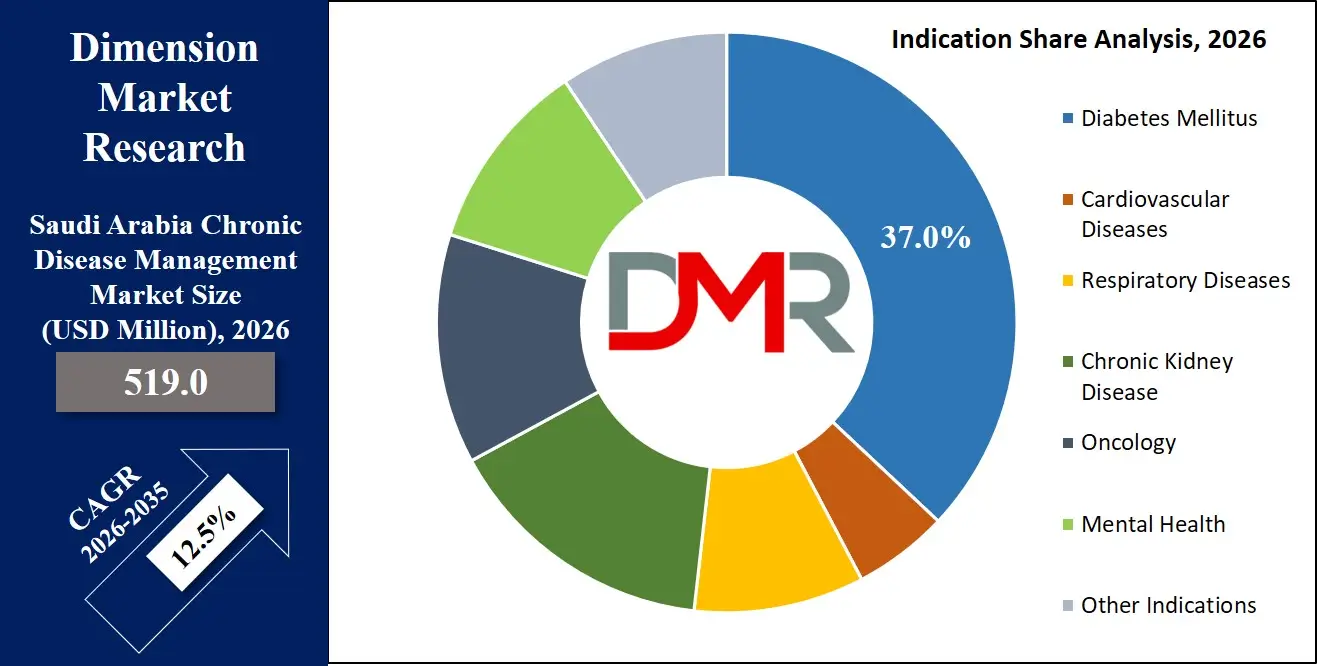
- By Indication Analysis: Diabetes Mellitus will take the largest share because the Kingdom has high prevalence rates and conducts national screening efforts. Cardiovascular Diseases (Heart Failure) is the fastest-growing market because of the aging population and the increase in the number of specialized cardiac remote monitoring programs.
What is the Chronic Disease Management?
Chronic Disease Management (CDM) refers to a model of medical care delivery that is organized and coordinated to provide services to patients with chronic illnesses, like diabetes, heart failures, COPD and hypertension. In place of episodic acute care, CDM focuses on ongoing, active observation and patient education to avert complications and emergency department visits and hospital re-hospitalizations. It combines clinical guidelines, remote monitoring tools, and multidisciplinary care teams to optimize the quality of life and clinical outcomes.
The significance of CDM in the Saudi context is to enable patients with lifestyle modification support and medication adherence monitoring, thus closing the divide between a high frequency of visits to physicians and constant digital interaction. CDM contributes directly to the Vision 2030 of vibrant and healthy society by alleviating the economic burden of complications of chronic diseases.
Use Cases
- National Diabetes and Obesity Prevention: Government agencies and employers implement diabetes management platforms to meet the wellness recommendations of the Ministry of Human Resources and Social Development. These programs help the healthier workforce, decrease absenteeism, decrease the exposure to disability, and treat metabolic syndrome through lifelong prevention, monitoring, coaching, and treatment programs throughout the country.
- Virtual Hospital Expansion: The Seha Virtual hospital operates remote patient monitoring systems with cardiac and diabetic patients in Al Jouf and Najran. Virtual specialist consultation helps minimize the need to travel to Riyadh or Jeddah and enhance continuity of care.
- Retail Pharmacy-Linked Adherence Tracking: Major pharmacy chains such as the Al Nahdi Medical Company and the Al-Dawaa Pharmacies are integrating digital adherence apps into their strategies. These tools assist the elderly patients in coping with polypharmacy, enhance the ratio of medication possession and enhancing long-term treatment adherence.
- Pilgrim Health (Hajj & Umrah) Management: Digital chronic disease management systems will become particularly valuable in pilgrimages as millions of people come with existing conditions. These systems allow real time tracking, medication notifications and emergency organization in the crowded environments in Makkah and Madinah during Hajj and Umrah seasons.
Market Dynamics
Key Drivers of the Saudi Arabia Chronic Disease Management Market
The Health Sector Transformation Program and Vision 2030 Mandates
The most significant driver is the strategic change to Value-Based Care (VBC). The Ministry of Health is shifting towards outcome-based reimbursement as opposed to fee-per-service volume. This change renders investment in CDM software and analytics platforms to be economically viable both to public health cluster and to the operators. The Sehhaty platform has become the key to engaging citizens by providing a unified infrastructure to launch national-level digital therapeutics and remote consultation services.
High Prevalence of Diabetes and Cardiovascular Disease
Saudi Arabia has one of the highest prevalence rates of Type 2 Diabetes in the world. The current model is not sustainable because of the economic and social expense of dealing with the complications and end stage renal disease (ESRD) dialysis. This weight has generated a pressing need of AI-guided diabetic retinopathy screening and predictive analytics that have the potential to discover high-risk patients, prior to them needing expensive treatments. Moreover, the increasing geriatric population is also creating need to implement heart failure remote monitoring solutions to control readmission rates.
Market Restraints in the Saudi Arabia Chronic Disease Management Market
Data Fragmentation and Legacy System Interoperability
Incorporating AI insights into clinical workflows has a learning curve. Doctors who are used to the physical form of consultation might be alerted or opposed to the introduction of the digital process of triage. On the same note, although the smartphone penetration is very high, developing patient trust in the fully virtual care models, especially among the older population, will need substantial change management and digital literacy efforts.
Workforce Readiness and Cultural Adaptation
Incorporating AI insights into clinical workflows has a learning curve. Doctors who are used to the physical form of consultation might be alerted or opposed to the introduction of the digital process of triage. On the same note, although the smartphone penetration is very high, developing patient trust in the fully virtual care models, especially among the older population, will need substantial change management and digital literacy efforts.
Growth Opportunities in the Saudi Arabia Chronic Disease Management Market
Integration with the Sehhaty Ecosystem and NPHIES
The market of software providers able to create FHIR-based APIs and smoothly integrate into the Sehhaty backend is a big untapped area. CDM systems capable of taking advantage of the massive Real-World Data (RWD) generated in the Saudi health system, and adhering to SDAIA (Saudi Data and Artificial Intelligence Authority) privacy policies, will fetch a very high price. RWD aggregators have secondary sources of revenue in the form of anonymized insights to Pharma and MedTech companies that are considering local market access strategies.
Specialist-Driven Chronic Care in Primary Care Centers
As the Ministry drives towards the Shift Care to Primary, an increasing opportunity exists to implement specialist level CDM tools in primary healthcare facilities throughout the Kingdom. The opportunities to provide a general practitioner in a Primary Healthcare Center with solutions that would allow handling a complex Type 2 diabetic patient with AI-supported decision support (which is equivalent to the services of an endocrinologist) provides a high-growth channel and relieves the burden on tertiary hospitals.
Trends in the Saudi Arabia Chronic Disease Management Market
The Rise of Mental Health and Wellbeing Integration
Aligned with the Quality of Life Program under Vision 2030, there is a growing trend to integrate mental health management with chronic physical disease management. The frequent comorbidities with diabetes and CVD are depression and anxiety. Corporate wellness programs and government health agencies are increasingly adopting platforms providing integrated behavioral health coaching, mindfulness, and digital cognitive behavioral therapy (CBT) modules in Arabic.
Pharma-Driven "Beyond-the-Pill" Services
Saudi drug firms and international companies that have local manufacturing plants (under NUPCO arrangements) are changing the focus of their sale of pure drugs towards integrated disease management services. There is growing collaboration between pharmaceutical companies and local HealthTech startups to offer branded RPM applications to enhance medication adherence and create local Real-World Evidence to negotiate with the SFDA and National Unified Procurement Company on formulary inclusion.
Research Scope and Analysis
By Offering Analysis
Solutions are predicted to lead the offering segment due to the high demand for Diabetes Management Platforms and Cardiovascular Care Software. These strategies are critical to Health Clusters that want to address Value-Based Care key performance indicators and decrease hospital admissions. The most rapid growth is observed in Remote Patient Monitoring Platforms due to the business concept of Seha Virtual Hospital and the necessity to control the number of beds in big cities. In the meantime, services, especially outsourced disease management programs and patient education call centers, are increasing as private insurers and large employers look to better serve the health of their covered population.
By Deployment Type Analysis
The cloud-based deployment models is poised to take over the market since the centralization is mandatory at the national level as part of the Sehhaty and NPHIES ecosystems. These solutions promote the desired interoperability between primary care centers, specialist hospitals, and pharmacies. Hybrid models can still be used, especially in large specialty institutions such as King Faisal Specialist Hospital and Research Centre or King Abdullah University of science and technology Health centres, where sensitive research data or genomic information must be stored on-premise to meet the requirements of strict local laws on data sovereignty.
By Indication Analysis
Diabetes Mellitus is poised to be the dominant indication segment, driven by the high national prevalence rate and the Ministry of Health's targeted screening and intervention programs. Cardiovascular Diseases, and especially Heart Failure, is the most rapidly expanding segment.
ℹ
To learn more about this report –
Download Your Free Sample Report Here
The number of patients needing long-term care due to chronic heart failure is growing as the population is aging, and the survival rates of the acute cardiac events increase, prompting the use of remote weight and blood pressure monitoring platforms. The Chronic Kidney Disease is another high-priority area as dialysis is quite expensive and there is a drive towards preemptive nephrology treatment.
By Technology Analysis
The digital health ecosystems rely on wearables and Connected Devices, and glucose level, blood pressure, and cardiac rhythm monitoring devices are becoming more popular and connected with local telecom networks (5G). Artificial Intelligence and Machine Learning-based Predictive Analytics are highly important differentiators. AIso capable of screening Diabetic Retinopathy with retinal images or of forecasting Stroke Risk with national health data sets can be of great clinical and economic benefit. Patient engagement and behavior change require Mobile Apps in full Arabic language and culturally relevant content.
By End User Analysis
Providers, including Ambulatory Care Centers, Hospitals, Physician Groups & Integrated Delivery Networks, Home Healthcare Agencies, Nursing Homes & Assisted Living Facilities, Diagnostic & Imaging Centers, are expected to represent the largest user base. These organizations depend on the CDM systems to oversee population health in large geographical regions. The payers, namely the Council of Cooperative Health Insurance and the National Health Insurance Program are some of the most influential players in the market and are the ones to promote the adoption through the reimbursement policies. Pharma and Medical Technology Companies are turning to strategic partners, integrating digital tools with therapies to enhance results and prove value.
Saudi Arabia Chronic Disease Management Market Report is segmented based on the following:
By Offering
- Solutions
- Disease-Specific Software
- Diabetes Management Platforms
- CHF/CVD Platforms
- COPD Platforms
- Remote Patient Monitoring (RPM) Platforms
- Telehealth / Teleconsultation Platforms
- Analytics & Population-Health Platforms
- Clinical Decision Support
- Risk Stratification
- Mobile Apps & Patient Engagement Tools (mHealth)
- Integration & EHR Connectors
- Services
- Disease Management Programs
- Remote Monitoring Services
- Consulting & Implementation
- Training & Support
By Deployment Type
- Cloud-based
- On-premises
- Hybrid
By Indication
- Diabetes Mellitus
- Cardiovascular Diseases
- Heart Failure
- Hypertension
- Coronary Artery Disease
- Respiratory Diseases
- Chronic Kidney Disease
- Oncology
- Mental Health
- Depression
- Anxiety
- Chronic Behavioral Health Comorbidity
- Other Indications
By Technology
- Wearables & Connected Devices
- IoT & Sensors
- AI / ML & Predictive Analytics
- Clinical Decision Support
- Mobile Apps & SMS Platforms
By End User
- By Providers
- Ambulatory Care Centers
- Hospitals, Physician Groups & Integrated Delivery Networks
- Home Healthcare Agencies
- Nursing Homes & Assisted Living Facilities
- Diagnostic & Imaging Centers
- Pharmaceutical & Medtech Companies
- By Payer
- Public Payers (Medicare, Medicaid)
- Private Insurers
- Employer-Sponsored Health Plans
Competitive Landscape
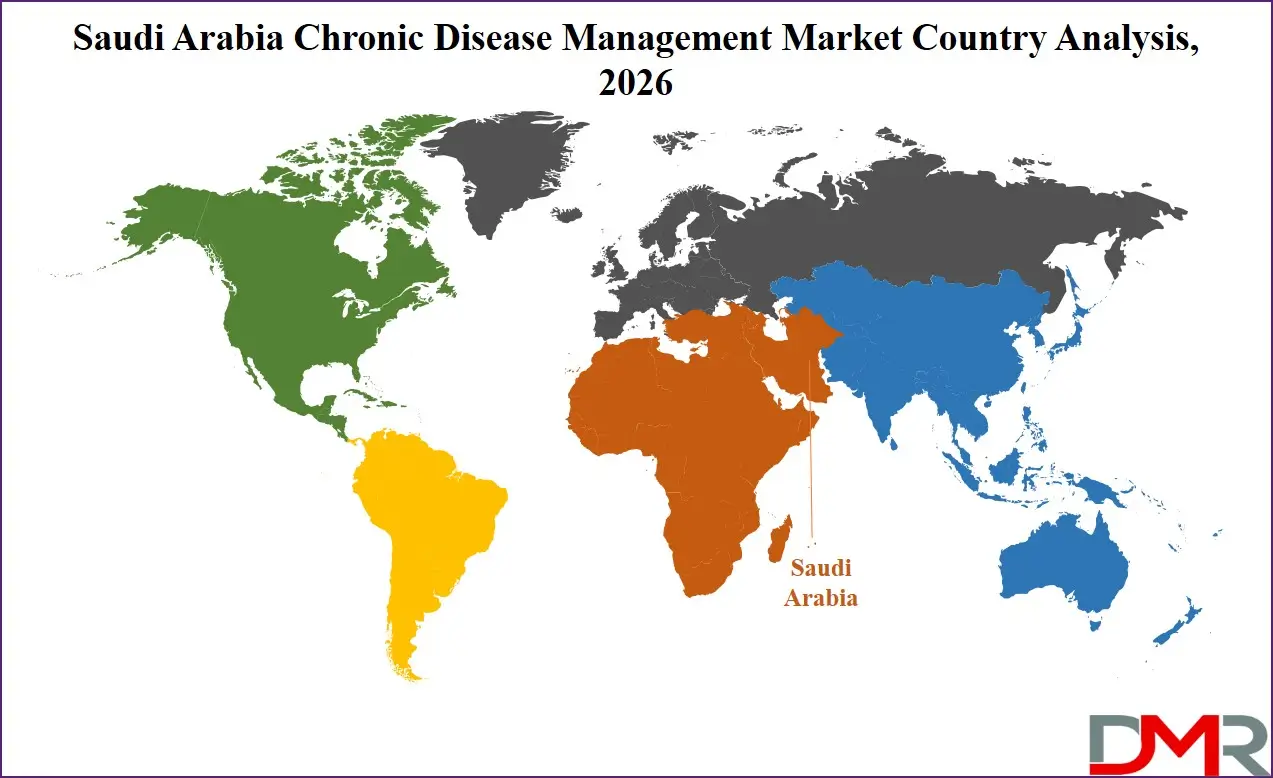
The competition in the Saudi Arabia chronic disease management market involves the rivalry of local healthcare organizations, international MedTech firms, and emerging digital health startups. The Public Investment Fund also provides strategic support to several domestic companies, helping them to grow quickly in hospitals and primary care networks. International actors play in the market by collaborating with local distributors, insurance companies and health care delivery systems.
ℹ
To learn more about this report –
Download Your Free Sample Report Here
The market dominance relies on effective localization skills such as the ability to integrate with the Sehhaty ecosystem, regulatory approvals by the Saudi Food and Drug Authority, and complete acculturation to Arabic language preferences and cultural anticipations. The consolidation is on the rise with existing medical equipment suppliers and medical software developers teaming to provide turn-key solutions to all 20 Health Clusters across the country.
Some of the prominent players in the Chronic Disease Management Market are:
- Philips Healthcare
- Medtronic
- Abbott Laboratories
- GE HealthCare
- Siemens Healthineers
- Cerner Corporation
- Allscripts Healthcare Solutions
- Teladoc Health
- Omada Health
- DarioHealth
- Biofourmis
- ResMed
- Babylon Health
- Vezeeta
- Altibbi
- Nala Health
- Noom
- Click Therapeutics
- Akili Interactive
- SilverCloud Health
- Other Key Players
Recent Developments
- November 2025: The Saudi Commission for Health Specialties entered into 20 partnership deals and launched three digital healthcare products at the Global Health Exhibition 2025, broadening the spectrum of chronic disease management in Saudi Arabia and enhancing the overall digital health integration in the country.
- October 2025: The Saudi Food and Drug Authority announced a number of digital health programs and patient-care initiatives at the Global Health Exhibition 2025, to support remote monitoring, chronic disease management, and implementation of new medical software solutions.
- October 2025: Saudi Arabia launched the first digital diabetes command center in the world in the Global Health Exhibition 2025. The platform allows monitoring diabetic patients in real time and improves the prevention of chronic diseases on a national scale.
Report Details
| Report Characteristics |
| Market Size (2026) |
USD 519.0 Mn |
| Forecast Value (2035) |
USD 1,492.6 Mn |
| CAGR (2026–2035) |
12.5% |
| Historical Data |
2021 – 2025 |
| Forecast Data |
2027 – 2035 |
| Base Year |
2025 |
| Estimate Year |
2026 |
| Segments Covered |
By Offering (Solutions, Services), By Deployment Type (Cloud-based, On-premises, Hybrid), By Indication (Diabetes Mellitus, Cardiovascular Diseases, Respiratory Diseases, Chronic Kidney Disease, Oncology, Mental Health, Other Indications), By Technology (Wearables & Connected Devices, IoT & Sensors, AI/ML & Predictive Analytics, Clinical Decision Support, Mobile Apps & SMS Platforms), By End User (By Providers, By Payer) |
| Country Coverage |
Saudi Arabia |
Frequently Asked Questions
How big is the Saudi Arabia Chronic Disease Management Market?
▾ The Saudi Arabia chronic disease management market is projected to grow from USD 519.0 million in 2026 to USD 1,492.6 million by 2035.
What is the CAGR of the Saudi Arabia Chronic Disease Management Market from 2026 to 2035?
▾ The Saudi Arabia Chronic Disease Management market is expected to grow at a CAGR of 12.5% from 2026 to 2035, reflecting strong expansion due to increased adoption of Seha Virtual Hospital models, remote monitoring, and value-based care initiatives.
What factors are driving the growth of the Saudi Arabia Chronic Disease Management Market?
▾ Key growth drivers include the high prevalence of Diabetes and Cardiovascular Disease, Vision 2030 mandates for preventive care, the expansion of Sehhaty and NPHIES digital infrastructure, and the shift toward Public-Private Partnerships in healthcare delivery.
What are the major trends in the Saudi Arabia Chronic Disease Management Market?
▾ Major trends include the integration of AI for diabetic retinopathy screening, the expansion of Seha Virtual Hospital services, the rise of Mental Health integration within CDM platforms, and increased Pharma involvement in "beyond-the-pill" digital services.
Who are the key players in the Saudi Arabia Chronic Disease Management Market?
▾ Key players include Seha Virtual Hospital, major Health Clusters, national insurers like Tawuniya and Bupa Arabia, pharmacy chains like Al Nahdi Medical Company, and international MedTech firms with local distribution networks.
How is the Saudi Arabia Chronic Disease Management Market segmented?
▾ The Saudi Arabia Chronic Disease Management market is segmented across offering (Solutions and Services); deployment type (Cloud-based and Hybrid); indication (Diabetes, Cardiovascular Diseases, and Chronic Kidney Disease); technology (AI, Wearables, and Mobile Platforms); and end users (Health Clusters, Payers, and Life Sciences companies).