Market Overview
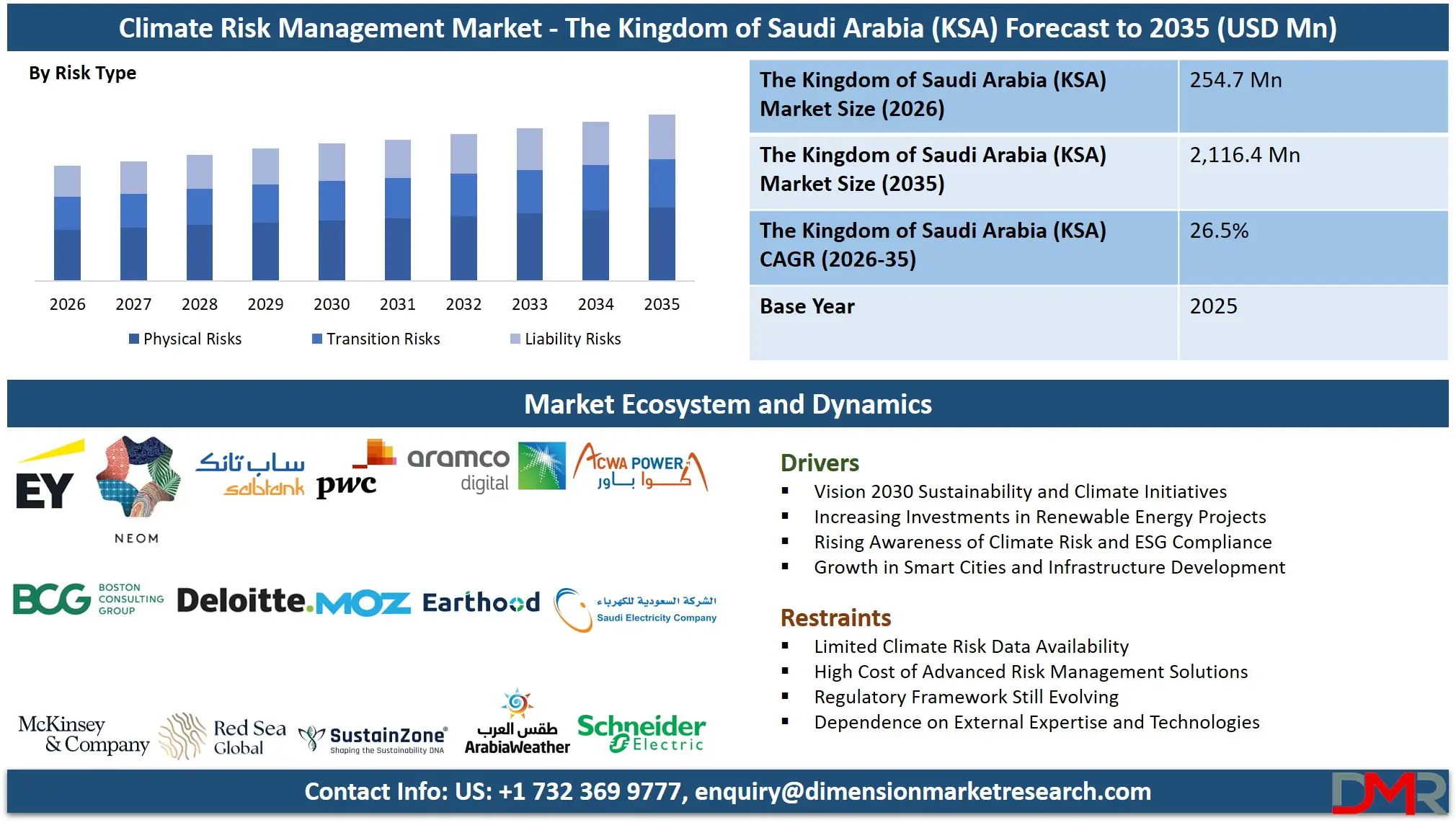
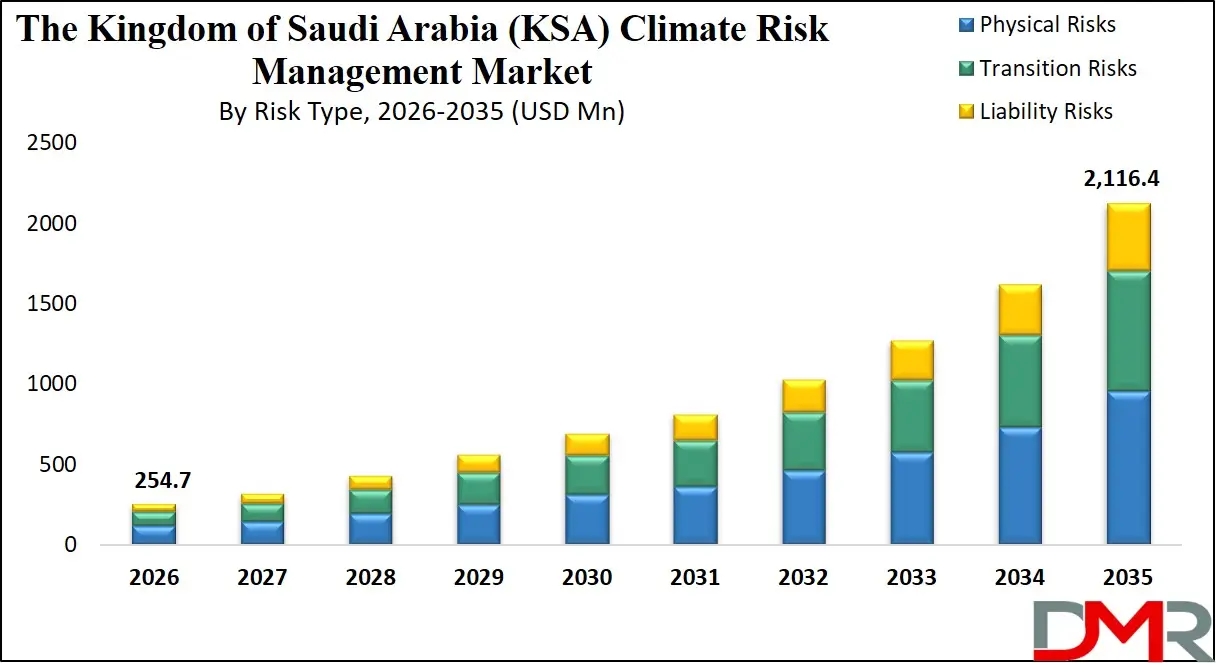
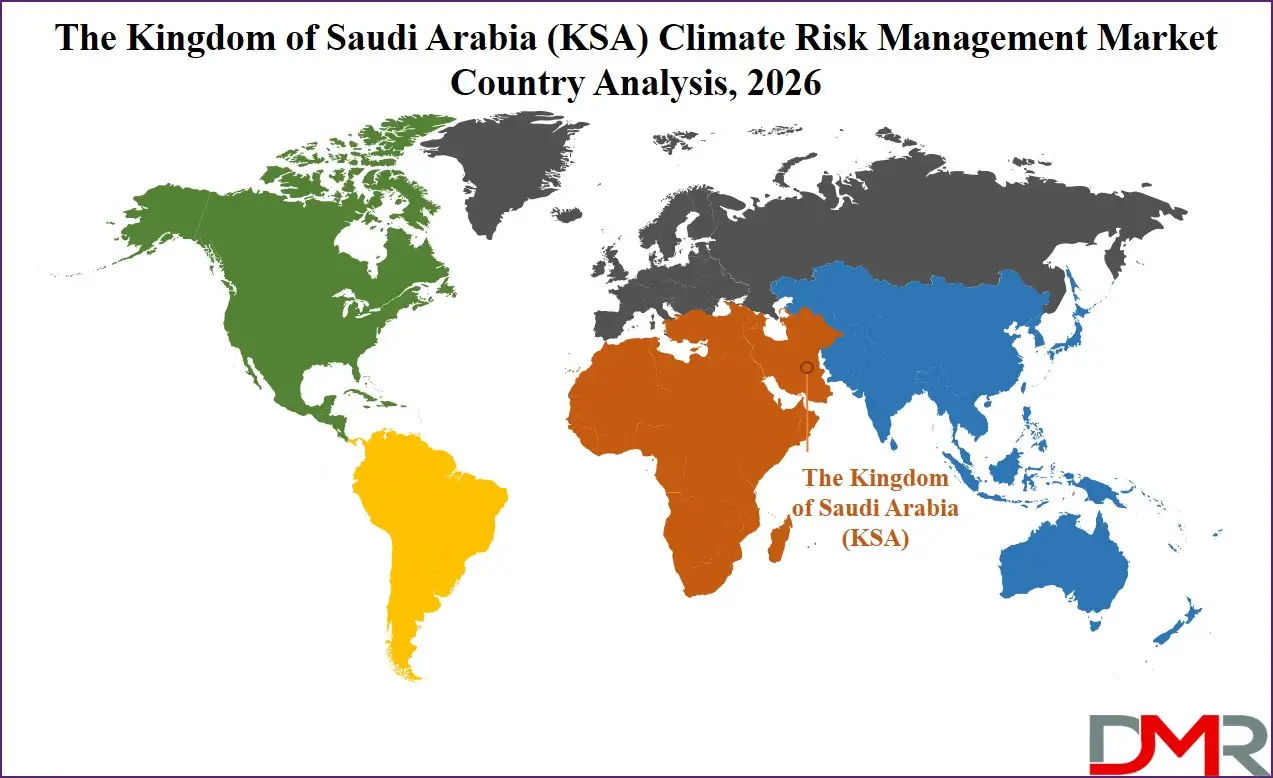
Saudi Arabia climate risk management size is projected to reach USD 254.7 million in 2026, and it is even expected that by 2035 the market size will reach USD 2,116.4 million at a CAGR of 26.5%.
ℹ
To learn more about this report –
Download Your Free Sample Report Here
The KSA market on climate risk management is among the fastest developing in the Middle East, as this region has ambitious sustainability goals to be achieved by adopting vision 2030 and Saudi green initiative. As the physical climate conditions of the area change to extreme heat, dust storms, and water shortage, the transition risks associated with the economic diversification outside of hydrocarbons are being addressed by the private sector, as well as by the general population.
ℹ
To learn more about this report –
Download Your Free Sample Report Here
The problem of climate risk management in KSA is becoming more advanced in the format of a national economic security scenario and economic diversification. The initiative by the government to make sure that the nation achieves zero emissions by the year 2060, as well as the development of mega-projects like the NEOM and the Red Sea Projects, is creating a great demand for climate risk analysis and adaptation.
The Kingdom of Saudi Arabia (KSA) Climate Risk Management Market: Key Takeaways & Other Influencing Factors
- Market Growth Insights: The market is anticipated to reach approximately USD 254.7 million in 2026 and is projected to expand to around USD 2,116.4 million by 2035, registering a CAGR of 26.5% during the forecast period.
- By Risk Type Insights: Physical risks, including extreme heat, dust storms, and water scarcity, are the dominant segment. Transition risks are rapidly gaining importance as the Kingdom is diversifying its economy.
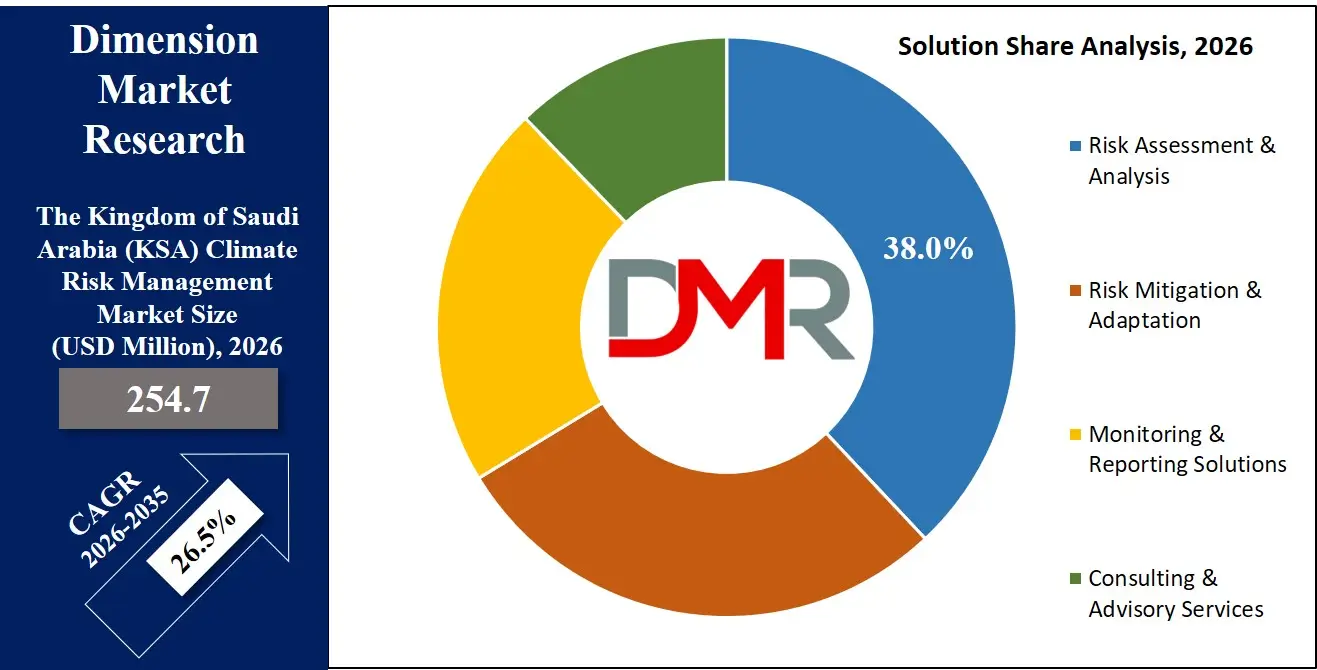
- By Solution Insights: Risk Assessment and Analysis is projected to dominate the market, which has been fueled by the necessity to grasp the conditions of the baseline. The most rapidly expanding one is the risk mitigation & adaptation due to massive infrastructure initiatives.
- By Deployment Mode Insights: Cloud-based options are favored due to their scalability and compatibility with smart city platforms, but on-premises solutions are still applicable to government and critical national infrastructure.
- Saudi Green Initiative (SGI): The Saudi Green Initiative (SGI) is an initiative to plant 10 billion trees throughout the Kingdom, which is an enormous project in terms of climate adaptation and mitigation of risks associated with desertification.
- Ministry of Environment, Water and Agriculture (MEWA): KSA is ranked among the most water-dependent countries globally, with more than 80.0% of water usage presently being fulfilled by desalination, and assessment and reduction of climate risks to water facilities is a national issue.
- General Authority for Statistics (GASTAT), Saudi Arabia: It is estimated that more than 90.0% of the population in KSA will be living in urban areas by 2030. This concentration aggravates the risk profile of the urban centers and stimulates the need to develop climate adaptation solutions for infrastructure, housing, and the service of the population.
Impact of Iran Conflict on KSA Climate Risk Management Market
The Iran crisis has increased geopolitical and environmental risks in the climate risk management sector of Saudi Arabia. The increasing tensions pose a threat to critical energy infrastructure and oil export corridors, and hasten the need to have climate resilience tools that incorporate security and extreme weather hazards like heatwaves and flooding. The players, such as Saudi Aramco, NEOM, and ACWA Power are investing in AI-based risk modeling (Aramco Digital, Mozn), early warning (ArabiaWeather), and ESG advisory services (PwC, Deloitte, EY). The market is moving towards hybrid risk models that integrate physical climate analytics and geopolitical scenario modeling. This will provide a chance of consultancies, insurance, and digital solution providers throughout the giga-projects in Saudi Arabia.
The Kingdom of Saudi Arabia (KSA) Climate Risk Management Market: Use Cases
- Giga-Project Sustainability and Resilience: The design of a mega-project, like NEOM, the Red Sea Project, and Qiddiya, must be organized regarding the issue of climate risks. These projects are using advanced modeling to comprehend and mitigate the hazards of extreme temperatures, flash floods and sandstorms to ensure long term operational resilience and sustainability.
- Water Scarcity Management and Adaptive Agriculture: One of the national concerns is water security. The water resources climate risk management is being intensively invested in by the government and the private sector in the form of desalination plant resilience, wastewater treatment, and sustainable agriculture to control the drought and extreme heat risks.
- Energy Sector Decarbonization and Transition Risk: As Saudi Aramco and SABIC state-owned companies, the Saudi government focuses on reducing net-zero and energy diversification by 2060, and, thus, the companies are mitigating transition risks. It involves investments in carbon capture, utilization, and storage (CCUS), renewable energy, and measurement/reporting of the emissions to the international sustainability standard.
- Financial Sector Stress Testing and Investment Alignment: ESG and climate risk guidelines are starting to be implemented by the Saudi Central Bank (SAMA) and the Capital Market Authority (CMA). Large financial institutions and banks have begun to perform climate stress tests of their portfolios, especially the risks to real estate assets and investment in carbon-intensive industries.
The Kingdom of Saudi Arabia (KSA) Climate Risk Management Market: Market Dynamic
Driving Factors in the Kingdom of Saudi Arabia (KSA) Climate Risk Management Market
Government-Led Vision 2030 and Sustainability Agenda
The Vision 2030 economic diversification strategy and the Saudi green initiative are the key drivers of the climate risk management market. These government-driven initiatives enforce sustainability and environmental responsibility and the creation of green technologies, which provide a top-down demand for climate risk assessment, reporting, and mitigation services across the entire economy.
Development of Large-Scale Giga-Projects
Major drivers of the market are the construction and operation of giga-projects such as NEOM, the Red Sea Project, and ROSHN. These initiatives are built around sustainability and demand profound climate risk modeling and adaptation strategies to provide them with the ability to withstand the extreme environmental conditions and sustainability in the long-term.
Restraints in the Kingdom of Saudi Arabia (KSA) Climate Risk Management Market
Emerging Regulatory Approach and Data Gaps
The regulatory system of obligatory disclosure of climate risks, which is established in KSA, is not developed as it is in Europe and the US. The absence of standardised reporting requirements and the shortage of localised and high-quality climate data may cause uncertainty among businesses, preventing the widespread adoption and investment in the market.
Limited Local Expertise and Talent Pool
There are not enough qualified local talents in the specialized sphere of climate risk management, especially in such areas as climate scenario modeling and sustainability reporting. Such dependence on foreign consultants may raise expenses and delay the process of embedding the concept of climate risk management into local organizations.
Opportunities in the Kingdom of Saudi Arabia (KSA) Climate Risk Management Market
Development of Local Climate Tech and Data Capabilities
There is a significant opportunity to build and scale local expertise in climate analytics and technology. Developing localized climate models, AI-driven risk platforms, and data services tailored to the specific needs of the Gulf region can fill critical market gaps and support the Kingdom's self-reliance in this strategic domain.
Green Financing and Investment Frameworks
As KSA develops its green finance market, there is a massive opportunity for climate risk management services. The need for independent verification, portfolio risk assessments, and alignment with global taxonomies (e.g., the Saudi Green Finance Framework) will create substantial demand for services from both financial institutions and corporate issuers.
Trends in the Kingdom of Saudi Arabia (KSA) Climate Risk Management Market
Integration of Climate Risk with Smart City Development
One of the important trends in this market is that climate risk intelligence is being incorporated into the fundamental design and operational framework of smart cities by KSA. Digital twins, IoT networks, and urban planning platforms are being fed with climate data to make real-time monitoring and automatic adaptation responses possible.
Focus on Carbon Capture and Industrial Decarbonization
Considering the saliency of the hydrocarbon industry, one of the key trends is the emphasis on the management of transition risks, which implies the decarbonization of the industrial sector. Investments and the use of such technologies as carbon capture, utilization, and storage (CCUS) are significant, and the measurement of Scope 1 and 2 emissions is becoming a norm for large industrial entities.
The Kingdom of Saudi Arabia (KSA) Climate Risk Management Market: Research Scope and Analysis
By Risk Type Analysis
The KSA market is currently dominated by physical risks, which indicates immediate environmental challenges in the kingdom. These consist of the danger of high temperatures, water shortage, dust storms, and flash floods. The mitigation and evaluation of these risks is paramount to the well-being of the people, the lifespan of infrastructure, and the economy. Transition Risks are increasing at a high rate because the country is committed to net-zero and diversifying its economy. It will consist of dealing with policy change risks, technological shocks (e.g., transition to renewables), and market changes in the global energy market. Liability Risks are at the most initial stages and yet underway as international investors and local regulators begin examining corporate climate accountability.
By Solution Analysis
The most prominent segment is Risk Assessment & Analysis solutions because they deliver the core basis on which all other actions are taken. This involves climate modelling, water resource studies, and the environmental impact of new developments. The fastest growing segment is the Risk Mitigation & Adaptation solutions due to the implementation stage of giga-projects.
ℹ
To learn more about this report –
Download Your Free Sample Report Here
This includes developing heat-resistant infrastructure and large-scale reforestation, as well as water conservation. Consulting and advisory services continue to play a vital role in the strategy and capacity-building, and the Monitoring and Reporting Solutions are picking up as major companies start to conform to international reporting standards.
By Deployment Mode Analysis
Cloud-based deployment is expected to dominate this segment as it is preferred that cloud-based solutions be used to meet the complex computational requirements of climate modeling and to be compatible with the smart city platforms under development. On-premises deployment mode also matters, especially to government organizations, national oil companies (Saudi Aramco), and the operation of a critical infrastructure, where the sovereignty and security of the data are of utmost importance.
By Enterprise Size Analysis
This segment is poised to be dominated by the large enterprises as they hold the highest market share in 2026. The large enterprises that include government bodies, state-owned oil and gas companies (Saudi Aramco, SABIC), and the giga-projects developers (NEOM, RCU). These organizations possess the funds and operational mandate to risk a lot on climate management. Small & Medium Enterprises (SMEs) are an immature yet growing market, mainly as suppliers to large enterprises, and are increasingly being requested to have their own climate resilience and sustainability credentials.
By Industry Vertical Analysis
The Government & Public Sector is the top vertical, which serves as a prime force and financier of climate risk management through Vision 2030. Energy & Utilities (oil & gas, renewables, water) follows closely behind as it not only has to deal with the physical risk of its massive infrastructure but also with the transition risks of decarbonizing the world. The Real Estate and Infrastructure are one of the significant growth vectors, since the developers of new cities and tourist destinations need to incorporate climate resiliency into their strategies. Another vertical, which is also a significant one, is Agriculture & Forestry, dealing with water management and the struggle.
The Kingdom of Saudi Arabia (KSA) Climate Risk Management Market Report is segmented on the basis of the following:
By Risk Type
- Physical Risks
- Transition Risks
- Liability Risks
By Solution
- Risk Assessment & Analysis
- Risk Mitigation & Adaptation
- Monitoring & Reporting Solutions
- Consulting & Advisory Services
By Deployment Mode
By Enterprise Size
- Large Enterprises
- Small & Medium Enterprises (SMEs)
By Industry Vertical
- Financial Services & Insurance
- Energy & Utilities
- Agriculture & Forestry
- Manufacturing & Industrial
- Real Estate & Infrastructure
- Government & Public Sector
Impact of Artificial Intelligence in the Kingdom of Saudi Arabia (KSA) Climate Risk Management Market
- Predictive Modeling for Extreme Heat and Water Stress: AI is being utilized to develop the high-resolution predictive models of extreme heat events and water availability. This enables the urban planners and agro managers to foresee the dangers and act in advance, like to change irrigation timing or open the community cooling facilities.
- Optimizing Desert Reforestation and Land Management: The AI-based satellite image analysis can be applied to track the development of the tree-planting program of the Saudi Green Initiative. AI assists in predicting the best planting sites, success, and water consumption to carry out the massive land restoration initiatives.
- Smart Infrastructure Monitoring and Resilience: AI is incorporated in the construction of new infrastructure on giga-projects. It is applied to monitor the building performance in extreme conditions, anticipate the maintenance requirements and dynamically operate the energy grids in order to endure the climate-related stress.
- Automated Carbon Accounting for Industrial Entities: Large industrial companies, such as Saudi Aramco and SABIC, are implementing AI and IoT sensors to automate the Scope 1 and 2 emission collection and reporting to offer a more precise and effective means of managing transition risks and readying themselves in case of a carbon price.
The Kingdom of Saudi Arabia (KSA) Climate Risk Management Market: Competitive Landscape
The climate risk management market in the Kingdom of Saudi Arabia is a dynamic environment where the combination of large government-supported organizations, the top international consulting and technological companies, and the increasing ecosystem of local providers of services represents a dynamic environment. The focus of competition is on the achievement of the ambitious Vision 2030 in the country. State-owned giants and project developers, including Saudi Aramco, NEOM, RCU, and SABIC, are anchors of the market, as well as key consumers and innovators in this field.
ℹ
To learn more about this report –
Download Your Free Sample Report Here
They also tend to collaborate with top international companies in order to have highly skilled technical knowledge. The major companies of global consulting and engineering, such as WSP, AECOM, McKinsey and Company are very active and offer strategic advisory and implementation services of the main projects. There are also international data and analytics providers such as MSCI and Moodys who serve the financial industry.
Some of the prominent players in the Kingdom of Saudi Arabia (KSA) Climate Risk Management Market are:
- Saudi Aramco
- SABIC
- ACWA Power
- Saudi Electricity Company
- NEOM
- Red Sea Global
- Aramco Digital
- Mozn
- ArabiaWeather
- Schneider Electric
- Earthood
- Prima Consulting
- SustainZone
- PwC Middle East
- Deloitte Middle East
- EY Middle East
- KPMG Saudi Arabia
- Boston Consulting Group
- McKinsey & Company
- Control Risks
- Other Key Players
Recent Developments in the Kingdom of Saudi Arabia (KSA) Climate Risk Management Market
- In March 2026, NEOM announced a partnership with a leading international AI firm to develop a digital twin that incorporates real-time climate risk modeling for its entire region.
- In February 2026, Saudi Aramco now has a new carbon management division, which was initiated in February 2026, marking a significant growth in its transition risk management and carbon capture capacities.
- In February 2026, The Saudi Green Initiative (SGI) Forum held in Riyadh showcased over 50 new public and private sector projects focused on climate adaptation and mitigation, creating new opportunities for service providers.
- In January 2026, The Saudi Central Bank (SAMA) has set out a new set of guiding principles to financial institutions to start adopting climate and environmental risk management in the operations in January 2026.
Report Details
| Report Characteristics |
| Market Size (2026) |
USD 254.7 Mn |
| Forecast Value (2035) |
USD 2,116.4 Mn |
| CAGR (2026–2035) |
26.5% |
| Historical Data |
2021 – 2025 |
| Forecast Data |
2027 – 2035 |
| Base Year |
2025 |
| Estimate Year |
2026 |
| Report Coverage |
Market Revenue Estimation, Market Dynamics, Competitive Landscape, Growth Factors and etc. |
| Segments Covered |
By Risk Type (Physical Risks, Transition Risks, and Liability Risks), By Solution (Risk Assessment & Analysis, Risk Mitigation & Adaptation, Monitoring & Reporting Solutions, and Consulting & Advisory Services), By Deployment Mode (Cloud-based and On-premises), By Enterprise Size (Large Enterprises, and Small & Medium Enterprises (SMEs)), and By Industry Vertical (Financial Services & Insurance, Energy & Utilities, Agriculture & Forestry, Manufacturing & Industrial, Real Estate & Infrastructure, and Government & Public Sector) |
| Country Coverage |
The Kingdom of Saudi Arabia (KSA) |
| Prominent Players |
Saudi Aramco, SABIC, ACWA Power, Saudi Electricity Company, NEOM, Red Sea Global, Aramco Digital, Mozn, ArabiaWeather, Schneider Electric, Earthood, Prima Consulting, SustainZone, PwC Middle East, Deloitte Middle East, EY Middle East, KPMG Saudi Arabia, Boston Consulting Group, McKinsey & Company, Control Risks, and Other Key Players |
| Purchase Options |
We have three licenses to opt for: Single User License (Limited to 1 user), Multi-User License (Up to 5 Users) and Corporate Use License (Unlimited User) along with free report customization equivalent to 0 analyst working days, 3 analysts working days and 5 analysts working days respectively. |
Frequently Asked Questions
How big is the Kingdom of Saudi Arabia (KSA) Climate Risk Management Market?
▾ The Kingdom of Saudi Arabia (KSA) Climate Risk Management Market size is estimated to have a value of USD 254.7 million in 2026 and is expected to reach USD 2,116.4 million by the end of 2035.
Who are the key players in the Kingdom of Saudi Arabia (KSA) Climate Risk Management Market?
▾ Some of the major key players in the Kingdom of Saudi Arabia (KSA) Climate Risk Management Market are Saudi Aramco, NEOM, SABIC, WSP, AECOM, MSCI, and many others.
What is the growth rate in the Kingdom of Saudi Arabia (KSA) Climate Risk Management Market?
▾ The market is growing at a CAGR of 26.5 percent over the forecasted period.