Market Overview
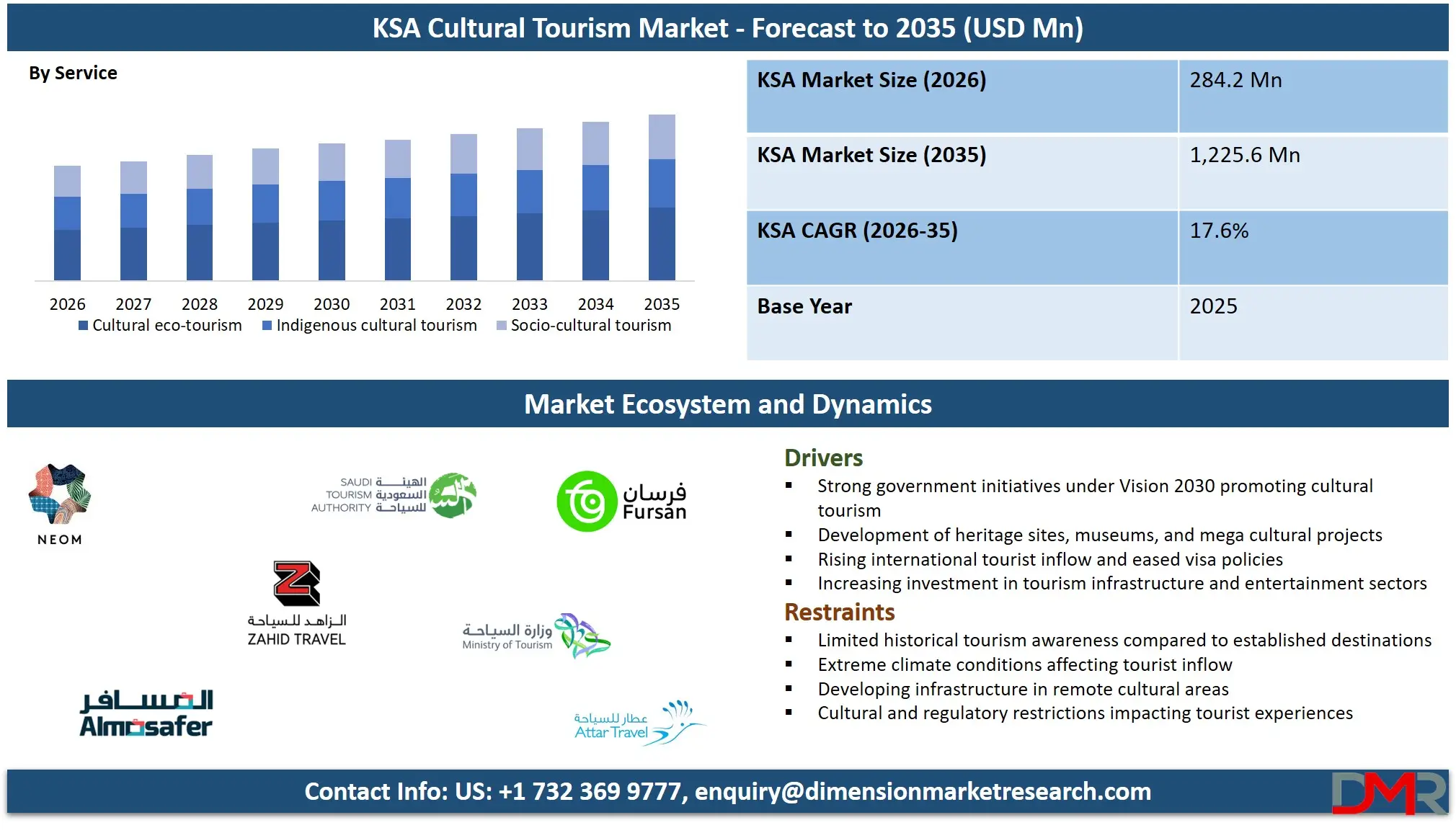
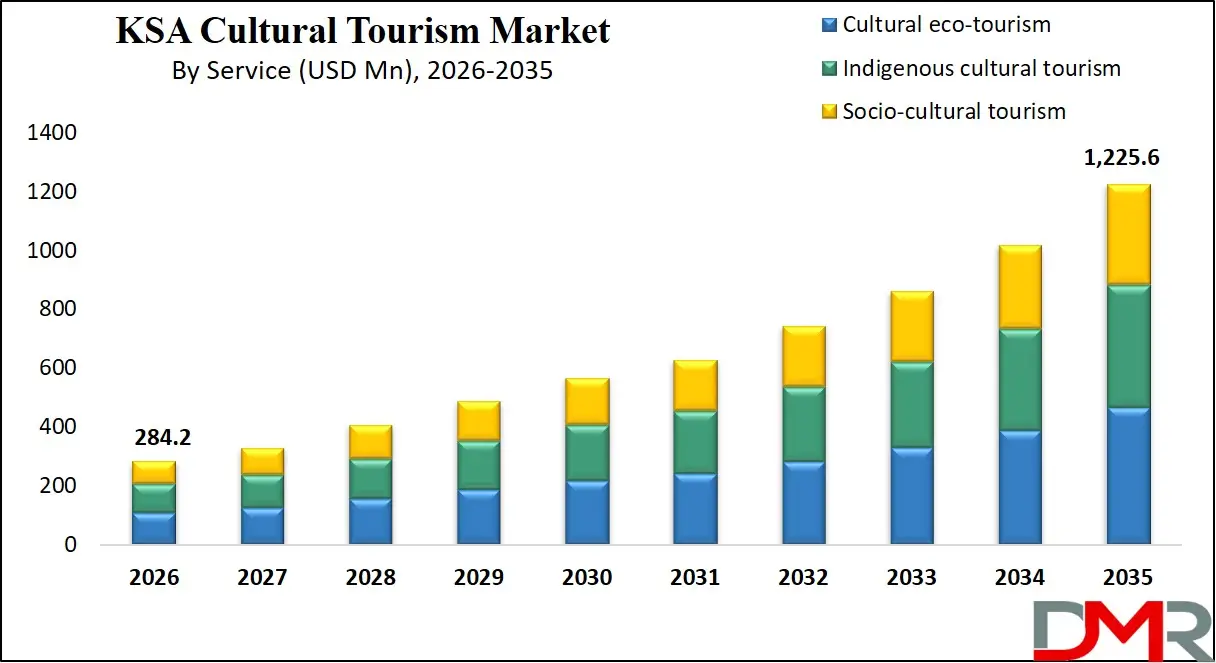
The KSA Cultural Tourism Market size is projected to reach USD 284.2 million in 2026 and grow at a compound annual growth rate of 17.6% to reach a value of USD 1,225.6 million in 2035.
ℹ
To learn more about this report –
Download Your Free Sample Report Here
KSA Cultural Tourism refers to the travel and hospitality ecosystem centered around experiencing the cultural, historical, and heritage-rich aspects of Saudi Arabia. It includes heritage sites, museums, religious landmarks, festivals, traditional arts, and community-based tourism offerings that reflect the Kingdom’s identity. This sector integrates services such as guided tours, cultural events, eco-tourism, and indigenous experiences, supported by infrastructure, digital platforms, and government-led initiatives. It plays a crucial role in diversifying the national economy beyond oil while preserving and promoting cultural heritage globally.
The market is experiencing strong momentum driven by strategic national transformation initiatives, particularly those aligned with Vision 2030. Investments in restoring heritage sites, developing tourism infrastructure, and enhancing visitor experiences are accelerating sector growth. Digitalization, smart tourism solutions, and immersive technologies are redefining how tourists engage with cultural assets. Additionally, global interest in authentic and experiential travel is driving inbound tourism demand.
ℹ
To learn more about this report –
Download Your Free Sample Report Here
Major shifts include increased public-private partnerships, international collaborations, and regulatory reforms to ease travel access. The rise of cultural festivals and heritage-driven events is boosting seasonal tourism flows. Sustainability and preservation efforts are also shaping development strategies, ensuring long-term viability while maintaining cultural authenticity.
KSA Cultural Tourism Market: Key Takeaways
- Market Growth: The KSA Cultural Tourism Market size is expected to grow by USD 896.4 million, at a CAGR of 17.6%, during the forecasted period of 2027 to 2035.
- By Service: The cultural eco-tourism segment is anticipated to get the majority share of the KSA Cultural Tourism market in 2026.
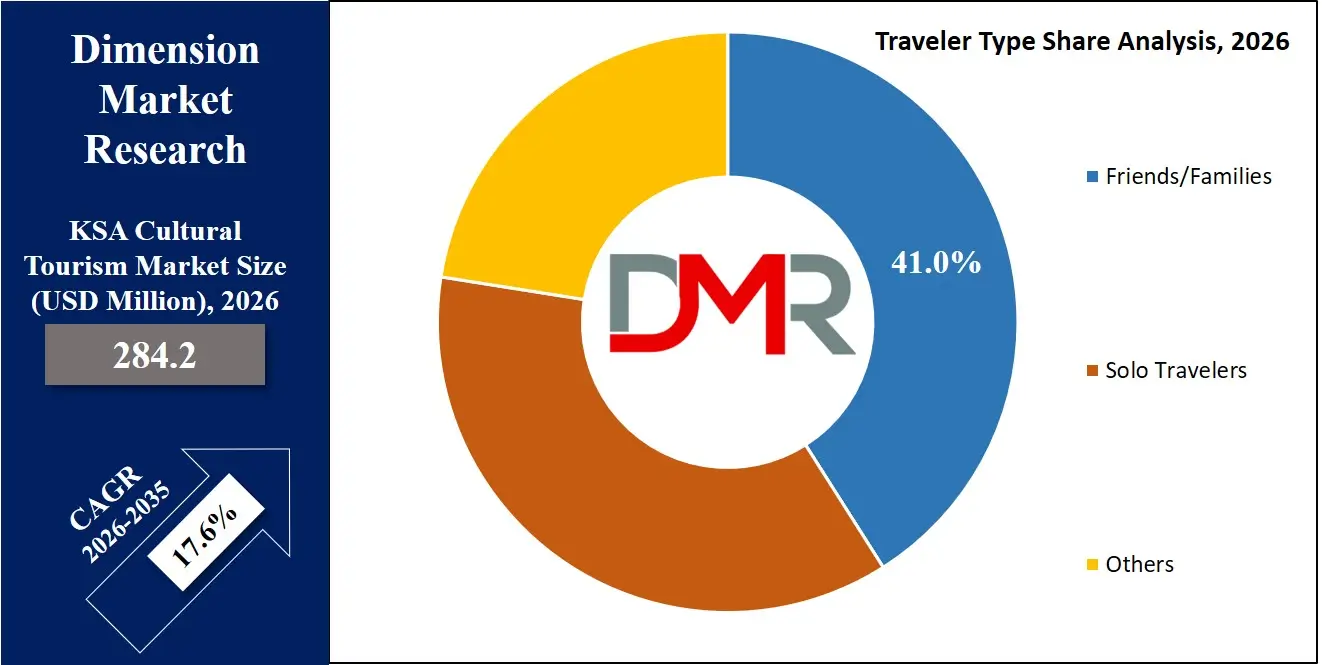
- By Traveler Type: The friends/family segment is expected to get the largest revenue share in 2026 in the KSA Cultural Tourism market.
- Use Cases: Some of the use cases of cultural tourism include heritage exploration, cultural festival & events and more.
KSA Cultural Tourism Market: Use Cases
- Heritage Exploration: Visitors engage in curated tours of ancient sites and historical landmarks, gaining insights into Saudi Arabia’s rich past through guided storytelling and preservation-focused experiences.
- Religious Tourism Integration: Cultural tourism complements religious pilgrimages by offering extended itineraries that include historical mosques, cultural museums, and traditional markets.
- Cultural Festivals & Events: Tourists participate in large-scale festivals showcasing music, art, cuisine, and traditional crafts, enhancing cross-cultural engagement and tourism revenue.
- Eco-Cultural Experiences: Travelers explore natural landscapes combined with cultural narratives, including desert heritage tours and eco-friendly accommodations rooted in local traditions.
- Museum and Exhibition Visits: Modern museums provide interactive and immersive storytelling through digital exhibits, attracting both domestic and international audiences.
- Community-Based Tourism: Local communities offer authentic experiences such as handicrafts, traditional cooking, and storytelling, promoting inclusive economic development.
- Educational Tourism: Academic groups and researchers visit cultural sites and institutions for study tours, contributing to knowledge exchange and heritage awareness.
Stats & Facts
- Saudi Ministry of Tourism reported over 100 million domestic and international tourist visits in 2024.
- Saudi Vision 2030 Office aims to increase tourism’s GDP contribution to 10% by 2030.
- World Tourism Organization stated that Saudi Arabia recorded one of the fastest tourism growth rates globally in 2024.
- Saudi General Authority for Statistics indicated a 12% increase in cultural site visits in 2025.
- Saudi Ministry of Culture confirmed the development of more than 100 cultural initiatives by 2025.
- UNESCO listed multiple Saudi heritage sites contributing to rising international cultural tourism interest in 2024.
- Saudi Tourism Authority reported a 15% increase in international cultural tourists in 2025.
- International Monetary Fund highlighted tourism diversification as a key economic driver for Saudi Arabia in 2024.
- World Bank noted increased infrastructure spending supporting tourism expansion in 2025.
- Saudi Ministry of Investment recorded billions in tourism-related FDI inflows in 2024.
- Gulf Cooperation Council data showed regional tourism integration boosting visitor flows into Saudi Arabia in 2025.
- Saudi Entertainment Authority reported millions of attendees at cultural festivals in 2024.
Market Dynamic
Driving Factors in the KSA Cultural Tourism Market
Government-Led Vision and Strategic Investments
The Saudi government’s Vision 2030 initiative is a major catalyst driving the cultural tourism market. Substantial investments in heritage restoration, tourism infrastructure, and global marketing campaigns are transforming the sector. Policies encouraging foreign investment, easing visa regulations, and promoting public-private partnerships are accelerating growth. Cultural institutions and mega-projects are being developed to attract global tourists while preserving national identity. These initiatives not only enhance accessibility and visitor experience but also create employment opportunities and stimulate regional development, positioning cultural tourism as a cornerstone of economic diversification.
Rising Demand for Experiential and Authentic Travel
Global travelers are increasingly seeking immersive and authentic experiences, which is significantly boosting demand for cultural tourism in Saudi Arabia. Visitors are drawn to unique traditions, heritage sites, and local lifestyles that offer deeper engagement beyond conventional tourism. The integration of storytelling, interactive exhibits, and community-based tourism enhances visitor satisfaction. Additionally, younger travelers and digital nomads are influencing demand for culturally rich and socially meaningful travel experiences. This shift in consumer preference is encouraging service providers to innovate and diversify offerings, further strengthening market growth.
Restraints in the KSA Cultural Tourism Market
Infrastructure and Accessibility Gaps
Despite rapid development, certain heritage and cultural sites still face infrastructure limitations, including transportation connectivity, accommodation availability, and visitor facilities. Remote locations can be challenging for international tourists to access, reducing overall visitation potential. While major cities are well-equipped, rural and heritage-rich regions require further investment. These gaps can hinder seamless travel experiences and limit the scalability of tourism operations. Addressing these challenges is essential to ensure consistent growth and equitable distribution of tourism benefits across regions.
Cultural Awareness and Global Perception Challenges
Limited global awareness about Saudi Arabia’s cultural offerings remains a constraint. Many international tourists primarily associate the country with religious tourism, overlooking its broader cultural attractions. Additionally, misconceptions about travel regulations and cultural norms can deter potential visitors. Marketing efforts and international outreach campaigns are improving perception, but sustained efforts are required. Enhancing global visibility through digital platforms, partnerships, and cultural diplomacy will be critical to overcoming these barriers and attracting diverse tourist segments.
Opportunities in the KSA Cultural Tourism Market
Expansion of Heritage and Mega Tourism Projects
Large-scale heritage and tourism projects present significant growth opportunities. The development of new cultural districts, restoration of ancient sites, and integration of modern amenities are attracting global attention. These projects create immersive tourism ecosystems that combine history, entertainment, and hospitality. They also encourage investment from international stakeholders and boost local economies. As these initiatives mature, they will significantly enhance Saudi Arabia’s positioning as a leading cultural tourism destination.
Digital Transformation and Smart Tourism
The adoption of advanced technologies such as virtual reality, augmented reality, and AI-driven platforms is opening new avenues for cultural tourism. Digital tools enable interactive storytelling, virtual site exploration, and personalized travel experiences. Smart tourism solutions improve operational efficiency, crowd management, and visitor engagement. These innovations not only attract tech-savvy travelers but also enhance accessibility for global audiences, making cultural experiences more inclusive and scalable.
Trends in the KSA Cultural Tourism Market
Integration of Technology in Cultural Experiences
Technology is increasingly being integrated into cultural tourism offerings, transforming how visitors interact with heritage sites. Augmented reality guides, virtual reconstructions, and mobile applications provide immersive and educational experiences. These tools enhance storytelling and make historical content more engaging for diverse audiences. Additionally, digital ticketing and smart navigation systems improve convenience and operational efficiency. This trend is reshaping the tourism landscape by blending tradition with innovation.
Growth of Cultural Events and Festivals
Cultural festivals and events are emerging as key drivers of tourism growth. These events showcase local traditions, arts, music, and cuisine, attracting both domestic and international visitors. Seasonal festivals create recurring tourism demand and boost local economies. Government and private sector collaborations are expanding the scale and diversity of these events. This trend not only enhances cultural visibility but also strengthens Saudi Arabia’s global tourism brand.
Impact of Artificial Intelligence in KSA Cultural Tourism Market
- Personalized Travel Planning: AI-driven platforms analyze traveler preferences to create customized cultural itineraries, improving satisfaction and engagement.
- Smart Tour Guides: AI-powered virtual assistants provide real-time information and multilingual support at cultural sites.
- Visitor Behavior Analysis: AI tools track visitor patterns to optimize site management and improve resource allocation.
- Enhanced Marketing Strategies: AI enables targeted campaigns based on traveler data, increasing conversion rates.
- Virtual Experiences: AI supports virtual tours and immersive storytelling, expanding global reach.
- Operational Efficiency: Automation of booking, ticketing, and customer service reduces operational costs.
- Predictive Analytics: AI forecasts tourism trends, helping stakeholders make informed investment decisions.
- Cultural Preservation: AI assists in digitizing and preserving historical artifacts and heritage data.
Research Scope and Analysis
By Type Analysis
Heritage sites dominate the KSA cultural tourism market due to their deep historical significance, cultural richness, and strong global appeal among international travelers. By 2026, this segment is projected to hold approximately 34% market share, supported by extensive restoration initiatives and growing international recognition. Government-led programs are actively preserving ancient cities, archaeological landmarks, and UNESCO-listed sites, making them more accessible and attractive. Improved infrastructure, professional guided tours, and the integration of digital storytelling technologies significantly enhance visitor engagement. Additionally, heritage tourism is increasingly linked with educational programs and cultural awareness campaigns, strengthening its position as a foundational pillar of Saudi Arabia’s tourism diversification strategy.
Museums represent the fastest-growing segment within the KSA cultural tourism market, largely driven by rapid modernization and digital transformation initiatives. Advanced technologies such as augmented reality, virtual reality, and interactive installations are redefining how visitors experience history and culture. These immersive exhibits are particularly appealing to younger audiences and international tourists seeking engaging and educational experiences. Significant investments in developing world-class museum infrastructure and forming partnerships with global cultural institutions are further enhancing credibility and global appeal. Moreover, the increasing focus on cultural education, research collaborations, and international exhibitions is contributing to sustained growth and positioning museums as dynamic cultural hubs.
By Services Analysis
Cultural eco-tourism leads the services segment, accounting for an estimated 38% share in 2026, driven by the rising global demand for sustainable and responsible travel experiences. This segment combines cultural exploration with environmental conservation, attracting tourists who prioritize eco-friendly practices and authentic local engagement. Visitors are increasingly seeking nature-based experiences, sustainable accommodations, and opportunities to interact with local communities. Government policies promoting environmental sustainability and heritage conservation are significantly supporting this growth. Furthermore, the involvement of local populations in tourism activities enhances cultural authenticity while ensuring economic inclusivity, making cultural eco-tourism a key driver of long-term sustainable development.
Indigenous cultural tourism is rapidly expanding as travelers show increasing interest in authentic, immersive, and community-driven experiences. This segment emphasizes traditional lifestyles, indigenous knowledge, handicrafts, and local customs, offering tourists a deeper connection to the region’s cultural identity. Growing global awareness of cultural preservation and ethical tourism practices is fueling demand for such experiences. Government initiatives and support programs are encouraging local community participation, enabling them to showcase their heritage while benefiting economically. Additionally, collaborations with cultural organizations and tourism operators are helping structure these experiences professionally, ensuring quality and sustainability while strengthening this segment’s growth trajectory.
By Traveler Type Analysis
The friends and families segment holds the largest share in the KSA cultural tourism market, projected at 41% in 2026, driven by the increasing popularity of group travel experiences. Cultural festivals, heritage tours, and recreational attractions are designed to cater to diverse age groups, making them highly appealing for families and social groups. The availability of family-friendly infrastructure, including comfortable accommodations, transportation, and entertainment options, further enhances the segment’s growth. Seasonal holidays, school vacations, and national events also contribute to higher travel frequency among groups. Additionally, bundled travel packages and curated itineraries are encouraging more families to explore cultural destinations together.
ℹ
To learn more about this report –
Download Your Free Sample Report Here
Solo travelers represent the fastest-growing segment in the KSA cultural tourism market, fueled by a rising preference for personalized and flexible travel experiences. Advancements in digital platforms, including mobile booking apps and AI-driven travel planning tools, are making solo travel more accessible and convenient. Improved safety measures, supportive tourism policies, and better infrastructure are also encouraging individuals to travel independently. This segment is particularly popular among younger demographics, including millennials and Gen Z travelers, who seek cultural immersion and unique experiences. The growing availability of customized itineraries and community-based tourism options further supports the expansion of solo travel in the region.
The KSA Cultural Tourism Market Report is segmented on the basis of the following:
By Type
- Heritage Sites
- Religious Sites
- Parks & Gardens
- Museums
- Monuments
- Others
By Services
- Cultural eco-tourism
- Indigenous cultural tourism
- Socio-cultural tourism
By Traveler Type
- Solo Travelers
- Friends/Families
- Others
Competitive Landscape
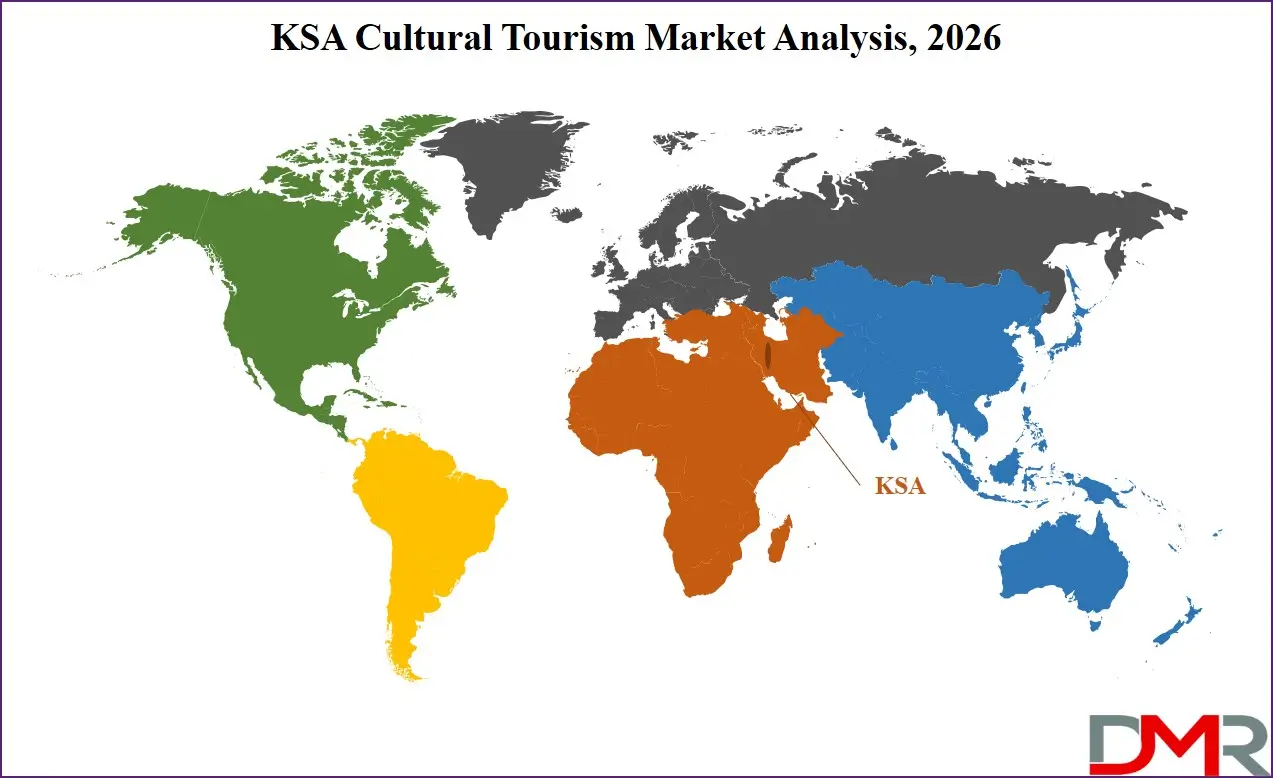
The KSA cultural tourism market is characterized by strong government involvement, strategic partnerships, and increasing private sector participation. Market participants focus on innovation, digital transformation, and experience enhancement to gain competitive advantage. High entry barriers exist due to regulatory requirements, capital investment needs, and infrastructure development.
ℹ
To learn more about this report –
Download Your Free Sample Report Here
Companies are investing in research, technology, and branding to differentiate their offerings. Collaborations with international tourism and cultural organizations are strengthening market positioning. Continuous improvements in service quality, sustainability practices, and customer engagement strategies are shaping competition and driving long-term growth.
Some of the prominent players in the KSA Cultural Tourism are:
- Saudi Tourism Authority
- Ministry of Tourism (Saudi Arabia)
- Public Investment Fund (Tourism Projects)
- Diriyah Gate Development Authority
- AlUla Development Company
- Red Sea Global
- NEOM Company
- Qiddiya Investment Company
- Seera Group Holding
- Almosafer
- Flynas Holidays
- Fursan Travel
- Zahid Travel Group
- Kanoo Travel
- Al Tayyar Travel Group
- Attar Travel Company
- Elaf Travel Group
- AlFaris International Travel & Tourism
- Al Rajhi Aviation & Travel
- Al Khaleej Travel
- Other Key Players
Recent Developments
- In June 2025, the Saudi Ministry of Culture announced a major investment in museum infrastructure, including the development of new interactive museums and the upgrade of existing facilities. The project integrates advanced technologies such as augmented reality and AI-driven exhibits to enhance visitor engagement. Collaborations with global cultural institutions were also established to bring international exhibitions to Saudi Arabia.
In January 2025, Saudi Tourism Authority launched a comprehensive cultural tourism campaign aimed at promoting heritage destinations globally. The initiative included partnerships with international travel platforms, digital marketing strategies, and curated travel packages focusing on cultural experiences. The campaign highlighted newly restored heritage sites and upcoming cultural festivals, attracting significant international attention.
Report Details
| Report Characteristics |
| Market Size (2026) |
USD 284.2 Mn |
| Forecast Value (2035) |
USD 1,225.6 Mn |
| CAGR (2026–2035) |
17.6% |
| Historical Data |
2021 – 2025 |
| Forecast Data |
2027 – 2035 |
| Base Year |
2025 |
| Estimate Year |
2026 |
| Report Coverage |
Market Revenue Estimation, Market Dynamics, Competitive Landscape, Growth Factors and etc. |
| Segments Covered |
By Type (Heritage Sites, Religious Sites, Parks & Gardens, Museums, Monuments, and Others), By Services (Cultural eco-tourism, Indigenous cultural tourism, and Socio-cultural tourism), By Traveler Type (Solo Travelers, Friends/Families, and Others) |
| Country Coverage |
Saudi Arabia |
| Prominent Players |
Saudi Tourism Authority, Ministry of Tourism (Saudi Arabia), Public Investment Fund (Tourism Projects), Diriyah Gate Development Authority, AlUla Development Company, Red Sea Global, NEOM Company, Qiddiya Investment Company, Seera Group Holding, Almosafer, Flynas Holidays, Fursan Travel, Zahid Travel Group, Kanoo Travel, Al Tayyar Travel Group, Attar Travel Company, Elaf Travel Group, AlFaris International Travel & Tourism, Al Rajhi Aviation & Travel, Al Khaleej Travel, and Other Key Players |
| Purchase Options |
We have three licenses to opt for: Single User License (Limited to 1 user), Multi-User License (Up to 5 Users) and Corporate Use License (Unlimited User) along with free report customization equivalent to 0 analyst working days, 3 analysts working days and 5 analysts working days respectively. |
Frequently Asked Questions
How big is the KSA Cultural Tourism Market?
▾ The KSA Cultural Tourism Market size is expected to reach USD 284.2 million by 2026 and is projected to reach USD 1,225.6 million by the end of 2035.
Who are the key players in the KSA Cultural Tourism Market?
▾ Some of the major key players in the KSA Cultural Tourism Market include NEOM, Almosfar, Saudi Tourism and others.
What is the growth rate in the KSA Cultural Tourism Market?
▾ The market is growing at a CAGR of 17.6 percent over the forecasted period.