Market Overview
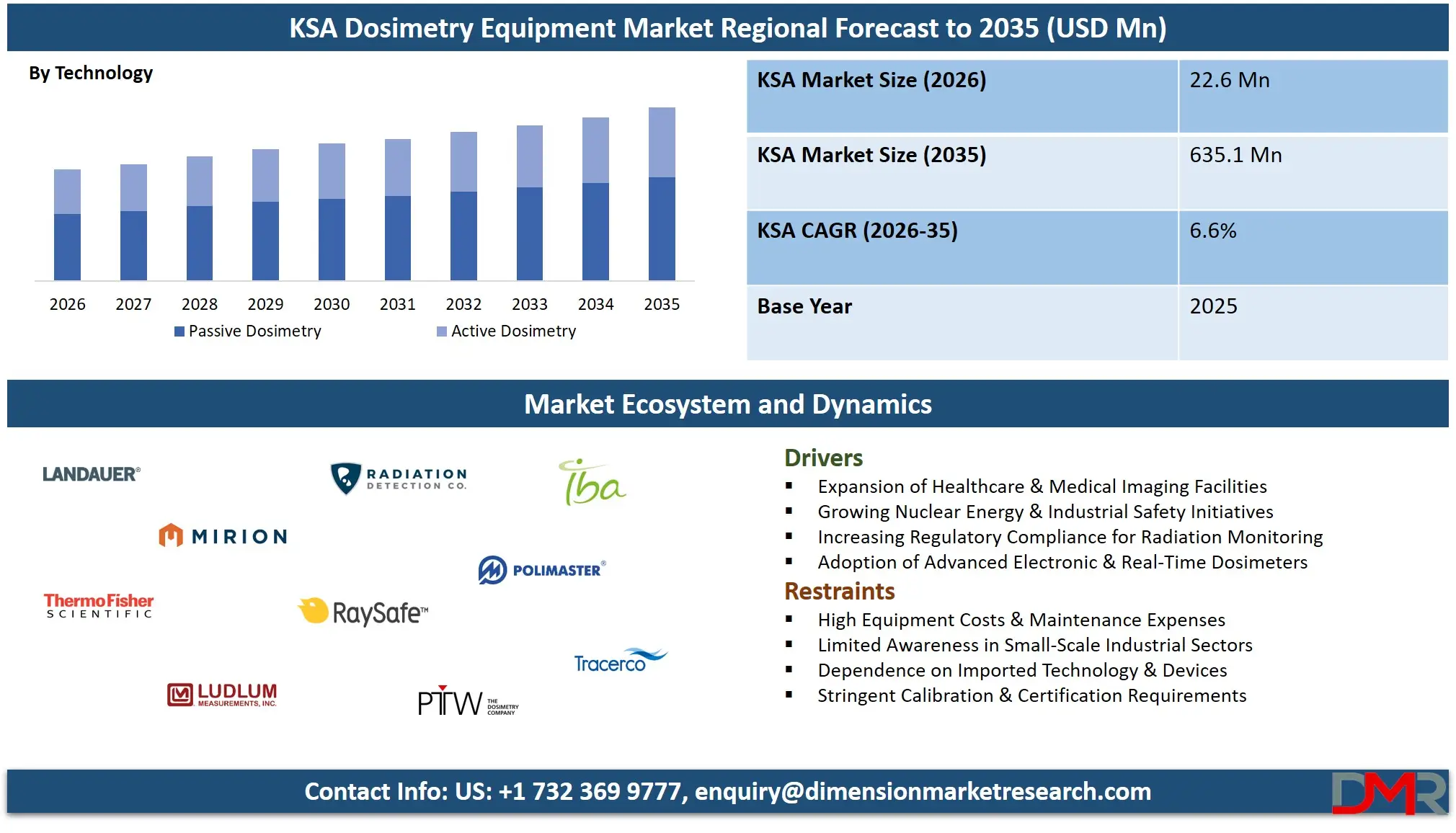
Saudi Arabia dosimetry equipment market is expected to reach USD 22.6 million in 2026 and expand at a CAGR of 6.6%, driven by rising demand for radiation monitoring solutions, electronic personal dosimeters, and workplace safety compliance, reaching an estimated value of USD 635.1 million by 2035.
ℹ
To learn more about this report –
Download Your Free Sample Report Here
Dosimetry equipment refers to instruments and devices designed to measure, monitor, and record the exposure of individuals or objects to ionizing radiation. These devices are critical in environments where radiation is present, such as hospitals, nuclear power plants, industrial facilities, and research laboratories. They provide accurate data on cumulative radiation doses and real-time exposure, helping ensure safety, regulatory compliance, and effective radiation protection. Common types of dosimetry equipment include electronic personal dosimeters, thermoluminescent dosimeters, optically stimulated luminescence dosimeters, and film badge dosimeters. The technology behind these instruments ranges from passive monitoring devices to active systems capable of continuous measurement and digital reporting. By offering reliable assessment of radiation levels, dosimetry equipment supports health and safety management, risk mitigation, and operational efficiency in radiation-intensive industries.
The KSA dosimetry equipment market has been gaining momentum due to the country’s expanding healthcare infrastructure and the implementation of advanced medical imaging and radiation therapy services. Hospitals, diagnostic centers, and research institutions are increasingly adopting electronic and passive dosimeters to ensure the safety of staff and patients while meeting regulatory requirements. Industrial sectors, including manufacturing and non-destructive testing, also rely on these devices to monitor radiation exposure among workers. The market is driven by rising awareness of occupational safety standards, investments in nuclear energy projects, and the need for accurate environmental radiation monitoring.
ℹ
To learn more about this report –
Download Your Free Sample Report Here
The market exhibits significant potential for growth as both public and private sectors emphasize radiation safety and compliance. The adoption of innovative technologies such as real-time monitoring systems, wearable sensors, and digital data management platforms is enhancing operational efficiency and decision-making in healthcare and industrial applications. Furthermore, government initiatives focused on nuclear energy expansion and industrial modernization are creating additional demand for reliable radiation measurement solutions. As the market matures, collaborations with global manufacturers and local distributors are likely to expand the availability and application of advanced dosimetry instruments across the country.
KSA Dosimetry Equipment Market: Key Takeaways
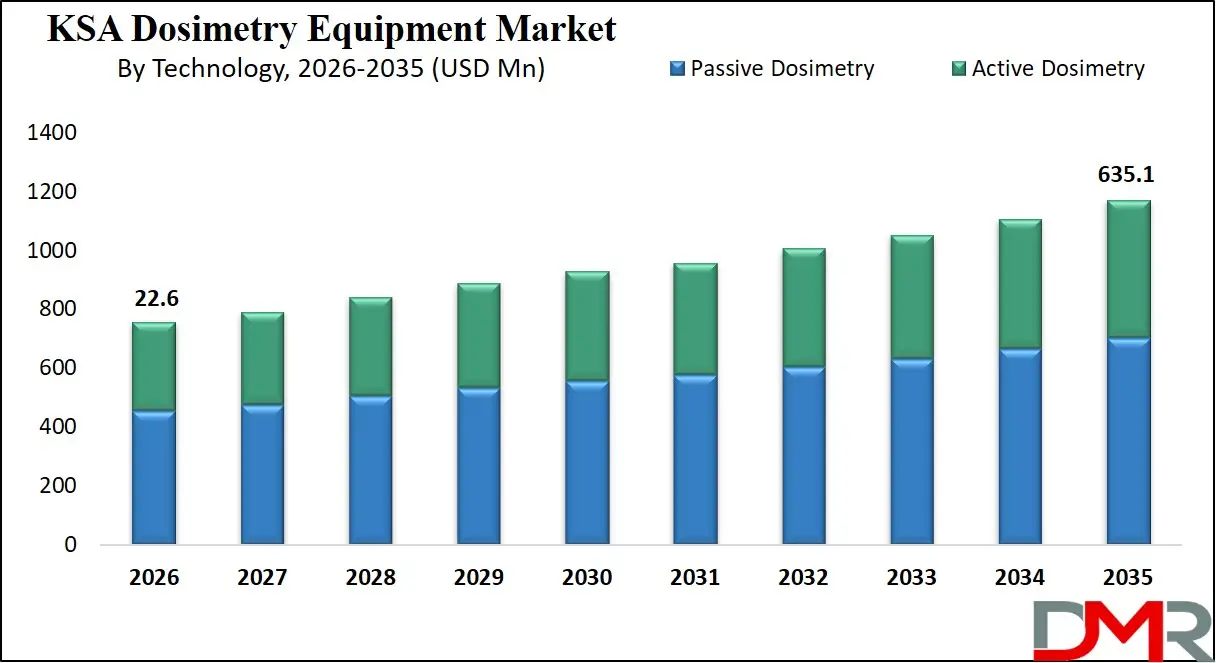
- Market Size Growth: The KSA dosimetry equipment market is projected to grow from USD 22.6 million in 2026 to USD 635.1 million by 2035, reflecting strong long-term expansion potential.
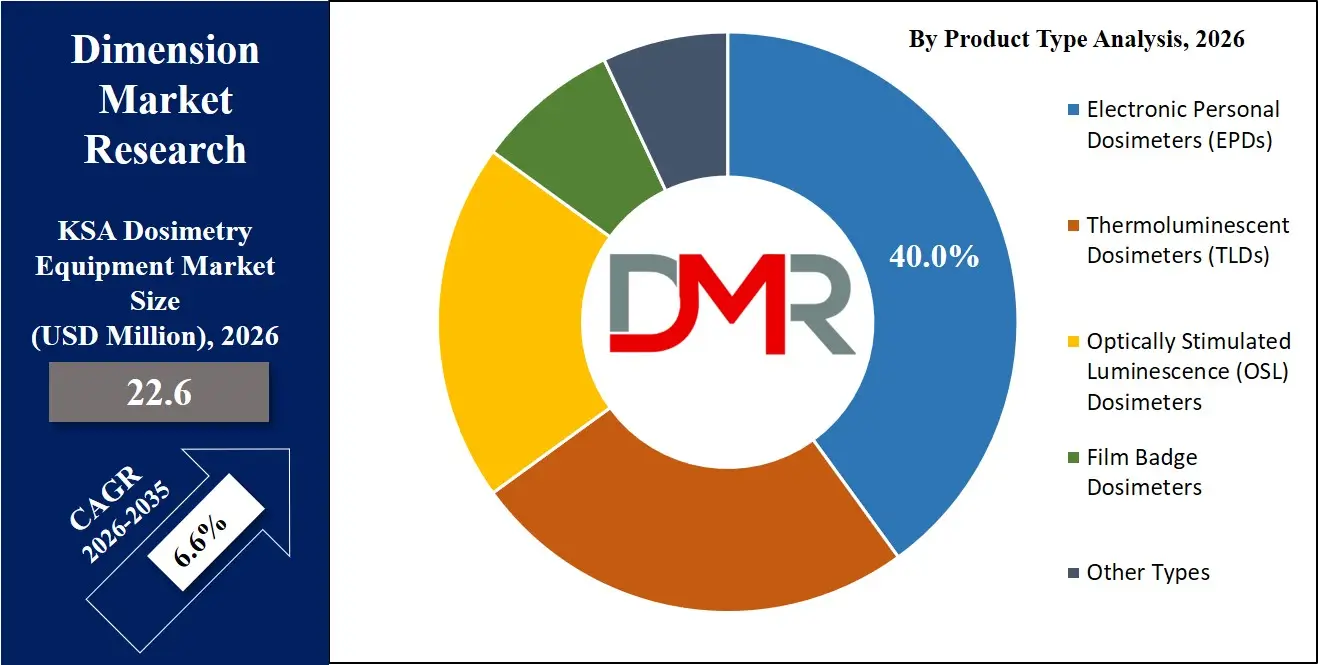
- Product Type Dominance: Electronic Personal Dosimeters (EPDs) are expected to hold 40% of the market in 2026, leading the product segment due to real-time monitoring demand.
- Technology Preference: Passive dosimetry is set to capture 60% of the technology segment in 2026, driven by cumulative dose measurement needs across healthcare and industrial sectors.
- Application Share: Medical applications are forecasted to account for 45% of the total market in 2026, reflecting widespread adoption in hospitals and diagnostic centers.
- End-User Leadership: Healthcare facilities will dominate the end-user segment with a 50% share in 2026, highlighting the critical role of hospitals and radiation therapy units in dosimetry adoption.
KSA Dosimetry Equipment Market: Use Cases
- Medical Radiation Safety: Dosimeters monitor exposure of staff and patients during imaging and therapy, ensuring safety and regulatory compliance.
- Industrial Protection: Used in manufacturing and NDT, dosimeters track worker radiation exposure and prevent overexposure.
- Nuclear Facility Monitoring: Dosimeters measure radiation for plant personnel and surrounding areas, supporting safety and compliance.
- Environmental Assessment: Devices monitor radiation in public and research areas, ensuring safety and detecting anomalies.
KSA Dosimetry Equipment Market: Stats & Facts
- Nuclear and Radiological Regulatory Commission (NRRC) – Statistics and Numbers (2025)
- 500 licenses issued in the field of radiological industry in KSA
- 240 licenses issued in the field of radiological medicine in KSA
- 300 radiation monitoring stations established across the Kingdom
- 30,000+ registered radiologists in Saudi Arabia
- General Authority for Statistics – Health and Safety at Work Statistics 2023 (2023)
- 7.8% of employees directly or indirectly deal with chemical substances, medical waste, radioactive materials, or toxic gases at work
KSA Dosimetry Equipment Market: Market Dynamic
Driving Factors in the KSA Dosimetry Equipment Market
Expansion of Healthcare Infrastructure
The rapid growth of hospitals, diagnostic centers, and radiation therapy units in Saudi Arabia is fueling demand for dosimetry equipment. With increasing use of CT scans, X-rays, and radiotherapy, electronic and passive dosimeters are essential for monitoring occupational exposure and protecting medical staff and patients.
Industrial and Nuclear Safety Initiatives
Saudi Arabia’s industrial modernization and nuclear energy projects are driving adoption of radiation monitoring solutions. Real-time dosimeters and thermoluminescent devices are used in manufacturing, oil and gas, and nuclear facilities to ensure workplace safety and regulatory compliance.
Restraints in the KSA Dosimetry Equipment Market
High Equipment Costs
The adoption of advanced dosimetry instruments, including electronic personal dosimeters and real-time monitoring systems, is constrained by their high acquisition and maintenance costs, limiting penetration in smaller healthcare facilities and industrial units.
Limited Local Manufacturing
Most dosimetry equipment is imported, creating dependency on global suppliers. Delays in procurement and high import tariffs can slow market growth and affect timely implementation of radiation safety programs.
Opportunities in the KSA Dosimetry Equipment Market
Adoption of Advanced Real-Time Monitoring
There is growing potential for wearable electronic dosimeters and digital monitoring platforms in hospitals and industrial facilities, enabling accurate dose tracking, automated reporting, and enhanced operational efficiency.
Expansion in Environmental and Research Applications
Saudi regulatory agencies and research institutes are increasingly investing in radiation monitoring for environmental safety and scientific studies, creating opportunities for dosimetry equipment in long-term dose assessment and public safety monitoring.
Trends in the KSA Dosimetry Equipment Market
Shift toward Electronic and Active Dosimeters
The market is moving from traditional film badges and passive TLDs to electronic personal dosimeters and optically stimulated luminescence devices, offering real-time monitoring, data logging, and wireless reporting capabilities.
Integration with Digital Safety Platforms
Dosimetry equipment is increasingly integrated with cloud-based data management systems and IoT-enabled devices, enabling centralized monitoring, predictive analytics, and regulatory reporting for healthcare, industrial, and nuclear sectors.
KSA Dosimetry Equipment Market: Research Scope and Analysis
By Product Type Analysis
Electronic Personal Dosimeters (EPDs) are expected to be the leading product type in the KSA dosimetry equipment market, accounting for approximately 40.0% of the total market share in 2026. Their dominance is driven by the increasing demand for real-time radiation monitoring in healthcare facilities, nuclear plants, and industrial sites. EPDs provide immediate feedback on exposure levels, allowing personnel to take preventive measures and maintain safety standards. Their portability, ease of use, and digital reporting capabilities make them highly suitable for environments where continuous monitoring is critical, such as hospitals, diagnostic imaging centers, and industrial radiography operations.
ℹ
To learn more about this report –
Download Your Free Sample Report Here
Thermoluminescent Dosimeters (TLDs) also hold a significant position in the market, particularly in applications requiring cumulative dose measurement over extended periods. TLDs are widely used in medical, research, and nuclear sectors to record and analyze radiation exposure accurately. They function by storing energy from radiation and releasing it as light when heated, providing reliable readings for regulatory compliance and occupational safety. Although TLDs do not offer real-time monitoring like EPDs, their long-term accuracy, durability, and cost-effectiveness make them a preferred choice for many organizations in Saudi Arabia seeking dependable dose measurement solutions.
By Technology Analysis
Passive dosimetry is expected to lead the technology segment of the KSA dosimetry equipment market, capturing around 60.0% of the total market share in 2026. Passive dosimeters, such as thermoluminescent and optically stimulated luminescence devices, are widely adopted for cumulative radiation monitoring in healthcare, industrial, and nuclear sectors. These devices provide accurate long-term dose measurements, helping organizations maintain compliance with safety regulations and monitor occupational exposure over time. Their reliability, low maintenance requirements, and ability to record doses without continuous supervision make them a preferred choice for hospitals, research institutes, and nuclear facilities in Saudi Arabia.
Active dosimetry, on the other hand, is gaining traction due to the growing need for real-time radiation monitoring in high-risk environments. Electronic personal dosimeters and other active devices continuously track exposure levels and provide immediate alerts when radiation limits are exceeded. This technology is particularly useful in industrial radiography, nuclear plants, and medical imaging centers, where timely intervention is critical to prevent overexposure. While active dosimetry accounts for a smaller share compared to passive systems, its adoption is increasing as organizations prioritize safety, regulatory compliance, and operational efficiency through real-time monitoring solutions.
By Application Analysis
Medical applications are expected to dominate the application segment of the KSA dosimetry equipment market, accounting for approximately 45.0% of the total market share in 2026. The increasing number of hospitals, diagnostic imaging centers, and radiation therapy units in Saudi Arabia is driving the adoption of dosimeters to ensure the safety of healthcare professionals and patients. Electronic personal dosimeters and passive devices are widely used to monitor exposure during X-rays, CT scans, and radiotherapy procedures. The focus on occupational safety, regulatory compliance, and accurate dose measurement makes medical facilities the largest consumer of dosimetry equipment, as these devices help mitigate health risks and maintain effective radiation management protocols.
Industrial applications also represent a significant portion of the market, with manufacturing units, oil and gas facilities, and non-destructive testing operations relying on dosimetry equipment to protect workers from occupational radiation exposure. Active and passive dosimeters are used to monitor radiation levels in real-time and record cumulative doses, ensuring compliance with workplace safety standards. The need to prevent overexposure in high-risk industrial processes and adhere to regulatory requirements is driving the adoption of advanced dosimetry solutions in Saudi Arabia’s growing industrial sector.
By End-User Analysis
Healthcare facilities are expected to lead the end-user segment of the KSA dosimetry equipment market, capturing around 50.0% of the total market share in 2026. Hospitals, diagnostic centers, and radiation therapy units are the primary consumers of dosimeters, using them to monitor and manage radiation exposure for medical staff and patients. Electronic personal dosimeters and passive devices are widely deployed to ensure compliance with safety regulations, reduce occupational health risks, and provide accurate dose recording during X-rays, CT scans, and radiotherapy procedures. The focus on patient safety, staff protection, and regulatory adherence makes healthcare facilities the largest end-user segment in the country.
Industrial sectors, including non-destructive testing and manufacturing, also form a significant part of the market. Dosimetry equipment is employed to monitor radiation exposure of workers involved in industrial radiography, material testing, and manufacturing processes that utilize ionizing radiation. Real-time active dosimeters and passive devices help ensure workplace safety, prevent overexposure, and maintain compliance with industrial safety standards. The growing industrial infrastructure in Saudi Arabia and the emphasis on occupational health and safety are driving the adoption of dosimetry solutions in these sectors.
The KSA Dosimetry Equipment Market Report is segmented on the basis of the following:
By Product Type
- Electronic Personal Dosimeters (EPDs)
- Thermoluminescent Dosimeters (TLDs)
- Optically Stimulated Luminescence (OSL) Dosimeters
- Film Badge Dosimeters
- Other Types
By Technology
- Passive Dosimetry
- Active Dosimetry
By Application
- Medical
- Industrial
- Nuclear Power
- Environment Monitoring
- Others
By End-User
- Healthcare Facilities
- Industrial (NDT & Manufacturing)
- Nuclear Facilities
- Research Institutes
- Others
Impact of Artificial Intelligence in the KSA Dosimetry Equipment Market
Artificial Intelligence is gradually transforming the KSA dosimetry equipment market by enhancing the accuracy, efficiency, and predictive capabilities of radiation monitoring systems. AI-enabled dosimeters can analyze real-time exposure data, detect anomalies, and provide predictive alerts to prevent overexposure in medical, industrial, and nuclear environments. Machine learning algorithms allow the integration of historical dose data with current readings, enabling more precise risk assessments and improved decision-making for healthcare professionals and safety officers. This technological advancement is particularly beneficial in hospitals and diagnostic centers, where AI-driven systems can optimize radiation use in imaging and therapy while ensuring regulatory compliance.
In industrial and nuclear sectors, AI is improving operational safety by automating data collection, analysis, and reporting from multiple dosimetry devices across large facilities. Intelligent monitoring systems can identify trends in radiation exposure, recommend preventive measures, and support centralized management of occupational safety programs. Additionally, AI integration with cloud platforms and IoT-enabled dosimeters facilitates remote monitoring and predictive maintenance of devices, reducing downtime and operational risks. As Saudi Arabia invests in smart healthcare and advanced industrial infrastructure, AI-powered dosimetry solutions are expected to play a crucial role in enhancing worker safety, environmental monitoring, and overall radiation management efficiency.
KSA Dosimetry Equipment Market: Competitive Landscape
The competitive landscape of the KSA dosimetry equipment market is characterized by the presence of both global manufacturers and local distributors offering a wide range of electronic and passive dosimeters. Companies are increasingly focusing on product innovation, including real-time monitoring systems, wearable devices, and IoT-enabled solutions, to enhance safety and compliance across healthcare, industrial, and nuclear sectors.
ℹ
To learn more about this report –
Download Your Free Sample Report Here
Strategic collaborations, partnerships with hospitals and industrial facilities, and investment in after-sales service and calibration support are key strategies to strengthen market presence. The market is also witnessing gradual adoption of digital data management platforms and AI-enabled analytics, allowing players to differentiate themselves through advanced monitoring capabilities, regulatory support, and operational efficiency.
Some of the prominent players in the KSA Dosimetry Equipment Market are:
- Landauer, Inc.
- Mirion Technologies, Inc.
- Thermo Fisher Scientific Inc.
- Ludlum Measurements, Inc.
- Radiation Detection Company, Inc.
- Unfors RaySafe
- IBA Dosimetry GmbH
- Polimaster Ltd.
- PTW Freiburg GmbH
- Arrow‑Tech, Inc.
- Tracerco
- ATOMTEX SPE
- RadPro International GmbH
- Dosimetrics
- Radiation Services, Inc.
- Axiom Medical Consulting, LLC
- SGS Saudi Arabia
- Advanced Systems Company Ltd. (ASCO)
- Attieh Medico Ltd.
- Scientific and Medical Equipment House (SMEH)
- Other Key Players
Recent Developments in the KSA Dosimetry Equipment Market
- June 2024: Thermo Fisher Scientific launched the Thermo Scientific NetDose Pro digital dosimeter, a connected wearable solution using Bluetooth technology to monitor and transmit radiation exposure data for improved workplace safety and regulatory adherence.
- April 2024: Mirion Dosimetry Services announced the commercial availability of the InstadoseVUE wireless radiation dosimeter, a next‑generation wearable device that captures, transmits, and reports real‑time dose exposure data to enhance radiation monitoring and compliance in medical and industrial settings.
Report Details
| Report Characteristics |
| Market Size (2026) |
USD 22.6 Mn |
| Forecast Value (2035) |
USD 635.1 Mn |
| CAGR (2026–2035) |
6.6% |
| Historical Data |
2021 – 2025 |
| Forecast Data |
2027 – 2035 |
| Base Year |
2025 |
| Estimate Year |
2026 |
| Report Coverage |
Market Revenue Estimation, Market Dynamics, Competitive Landscape, Growth Factors and etc. |
| Segments Covered |
By Product Type (Electronic Personal Dosimeters (EPDs), Thermoluminescent Dosimeters (TLDs), Optically Stimulated Luminescence (OSL) Dosimeters, Film Badge Dosimeters, Other Types), By Technology (Passive Dosimetry, Active Dosimetry), By Application (Medical, Industrial, Nuclear Power, Environment Monitoring, Others), and By End-User (Healthcare Facilities, Industrial (NDT & Manufacturing), Nuclear Facilities, Research Institutes, Others). |
| Country Coverage |
Saudi Arabia |
| Prominent Players |
Landauer, Inc., Mirion Technologies, Inc., Thermo Fisher Scientific Inc., Ludlum Measurements, Inc., Radiation Detection Company, Inc., Unfors RaySafe, IBA Dosimetry GmbH, Polimaster Ltd., PTW Freiburg GmbH, Arrow-Tech, Inc., Tracerco, ATOMTEX SPE, RadPro International GmbH, Dosimetrics, Radiation Services, Inc., Axiom Medical Consulting, LLC, SGS Saudi Arabia, Advanced Systems Company Ltd. (ASCO), Attieh Medico Ltd., Scientific and Medical Equipment House (SMEH), and Other Key Players |
| Purchase Options |
We have three licenses to opt for: Single User License (Limited to 1 user), Multi-User License (Up to 5 Users) and Corporate Use License (Unlimited User) along with free report customization equivalent to 0 analyst working days, 3 analysts working days and 5 analysts working days respectively. |
Frequently Asked Questions
How big is the KSA Dosimetry Equipment Market?
▾ The KSA Dosimetry Equipment Market size is estimated to have a value of USD 22.6 million in 2026 and is expected to reach USD 635.1 million by the end of 2035.
What is the growth rate in the KSA Dosimetry Equipment Market in 2026?
▾ The market is growing at a CAGR of 6.6% over the forecasted period of 2026.
Who are the key players in the KSA Dosimetry Equipment Market?
▾ Some of the major key players in the KSA Dosimetry Equipment Market are Landauer, Inc., Mirion Technologies, Inc., Thermo Fisher Scientific Inc., Ludlum Measurements, Inc., Radiation Detection Company, Inc., Unfors RaySafe, IBA Dosimetry GmbH, Polimaster Ltd., PTW Freiburg GmbH, Arrow-Tech, Inc., Tracerco, and many others.