Market Overview
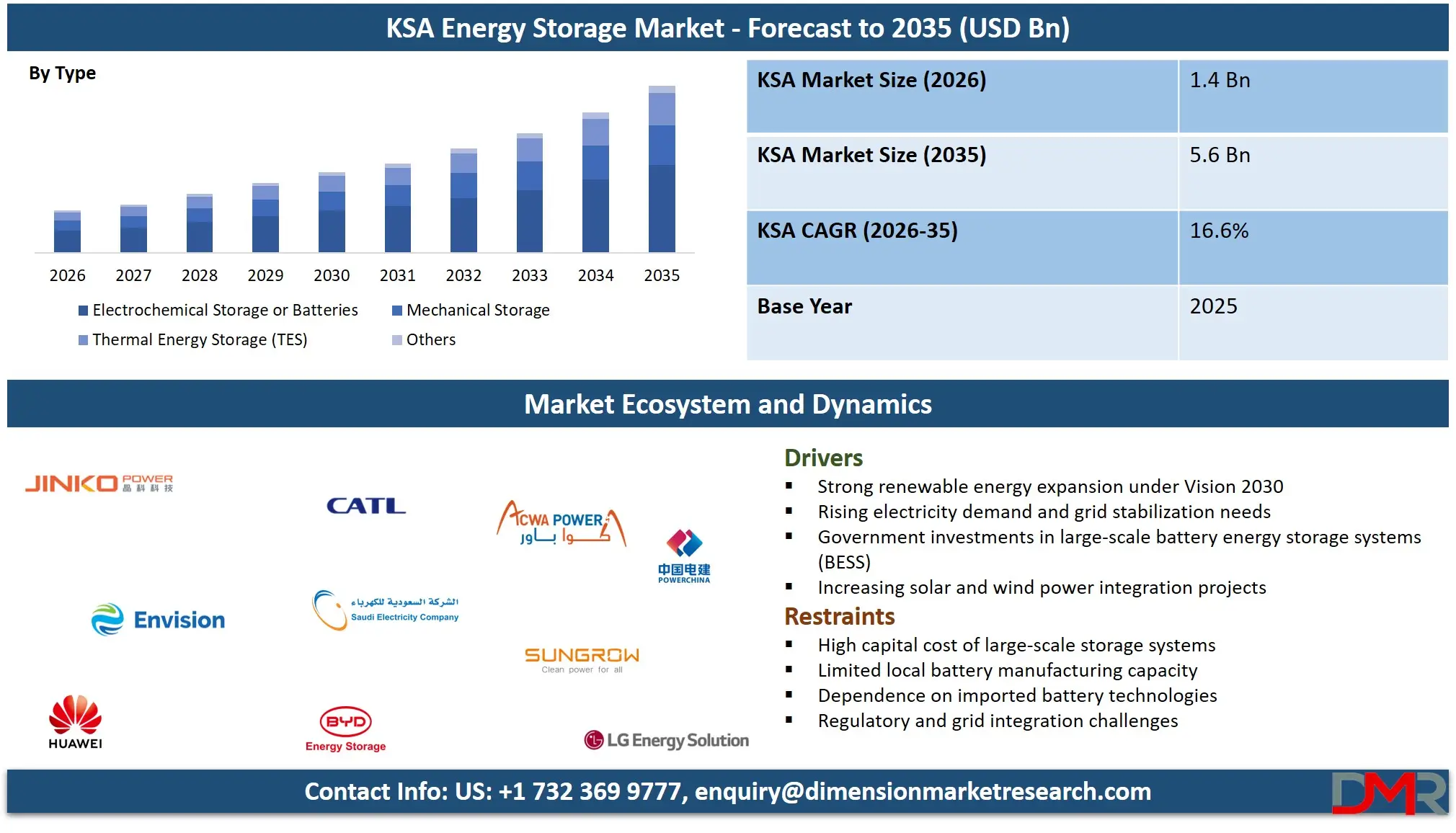
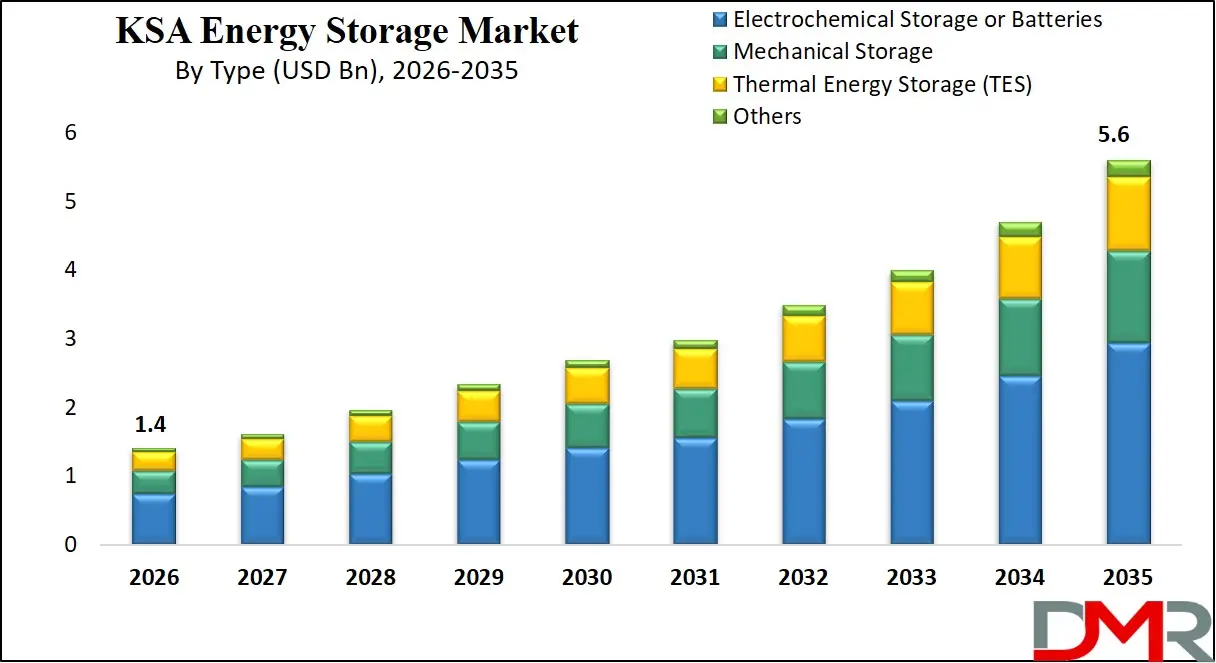
Saudi Arabia Energy Storage Market size is projected to reach USD 1.4 billion in 2026 and grow at a compound annual growth rate of 16.6% to reach a value of USD 5.6 billion in 2035.
ℹ
To learn more about this report –
Download Your Free Sample Report Here
Energy storage refers to technologies and systems that capture energy produced at one time for use at a later stage. It involves a range of solutions including electrochemical batteries, mechanical storage systems, and thermal storage technologies that help manage energy supply and demand efficiently. These systems are widely used to store electricity generated from renewable and conventional sources and release it when needed, improving grid reliability and operational stability. Energy storage solutions play a vital role in balancing intermittent renewable generation, enabling peak shaving, enhancing power quality, and ensuring energy security across power networks.
In the Kingdom of Saudi Arabia (KSA), energy storage solutions are becoming increasingly relevant as the country accelerates its transition toward diversified energy systems. The growing adoption of renewable energy sources such as solar and wind is creating a strong requirement for efficient storage technologies capable of stabilizing fluctuating power generation.
Rapid advancements in lithium-ion battery systems, thermal storage technologies, and grid-scale storage installations are supporting improved energy management across utilities, residential buildings, and industrial facilities. These developments are helping optimize energy distribution and improve the flexibility of national electricity infrastructure.
ℹ
To learn more about this report –
Download Your Free Sample Report Here
Significant technological progress, supportive energy policies, and large-scale infrastructure initiatives are shaping the evolution of energy storage in the country. Investments in smart grid modernization, renewable energy integration, and digital energy management systems are enhancing the efficiency and scalability of storage solutions. Growing collaboration between technology developers, utilities, and industrial sectors is accelerating innovation in battery technologies and large-scale storage deployments, strengthening the role of energy storage as a critical component in the future of Saudi Arabia’s energy ecosystem.
KSA Energy Storage Market: Key Takeaways
- Market Growth: The KSA Energy Storage Market size is expected to grow by USD 4.0 billion, at a CAGR of 16.6%, during the forecasted period of 2027 to 2035.
- By Type: The electrochemical storage or battery segment is anticipated to get the majority share of the KSA Energy Storage market in 2026.
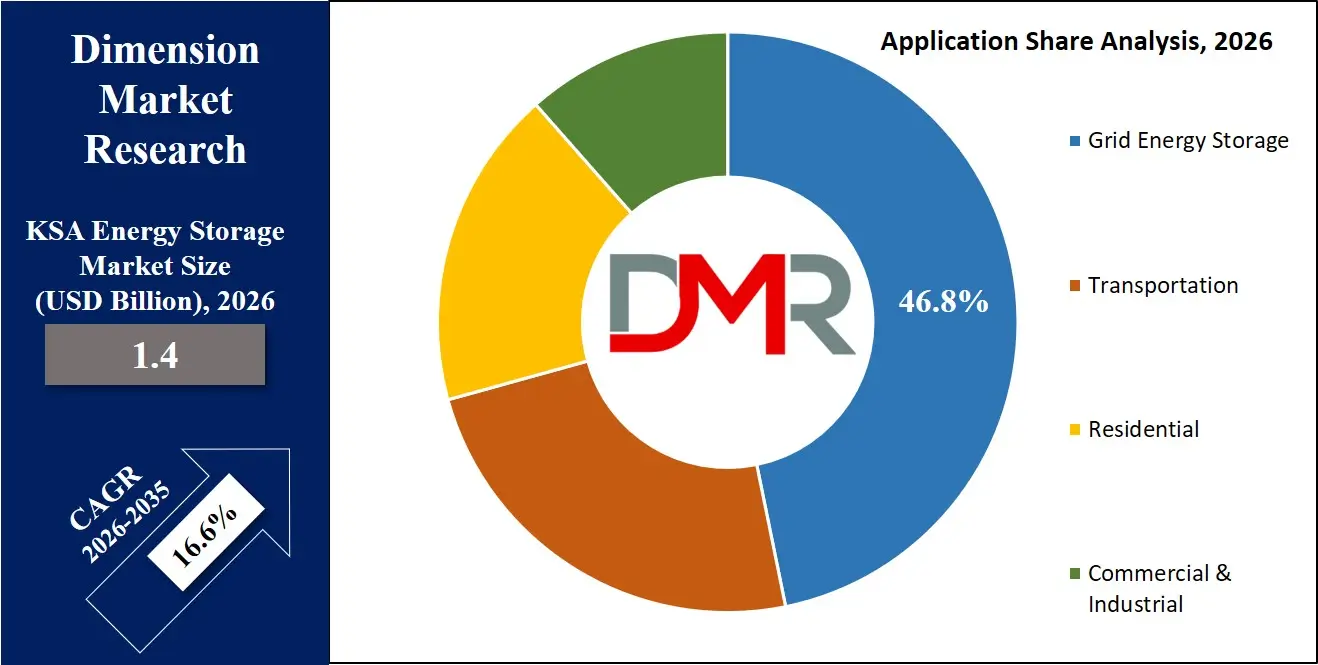
- By Application: The grid energy storage segment is expected to get the largest revenue share in 2026 in the KSA Energy Storage market.
- Use Cases: Some of the use cases of energy storage include grid stability & peak load management, renewable energy integration, and more.
KSA Energy Storage Market: Use Cases
- Grid Stability and Peak Load Management: Energy storage systems are widely used to stabilize electricity grids by storing excess power during low demand and releasing it during peak consumption periods. This capability improves grid reliability and reduces stress on generation infrastructure. In Saudi Arabia, grid storage solutions are becoming important as renewable energy installations increase.
- Renewable Energy Integration: Large solar and wind projects require storage solutions to manage intermittent energy production. Energy storage helps capture surplus renewable electricity and deliver it when production declines. This improves overall energy utilization and supports the country’s renewable transition strategy.
- Residential Backup Power Systems: Households are increasingly installing battery storage systems alongside rooftop solar panels. These systems provide backup power during outages and allow homeowners to store daytime solar energy for nighttime use, enhancing energy independence and cost efficiency.
- Industrial Energy Optimization: Industrial facilities use energy storage to manage electricity consumption and reduce peak demand charges. Stored energy can be used during high tariff periods, improving operational efficiency and lowering energy costs for large manufacturing operations.
- Electric Mobility Infrastructure: Energy storage systems support electric vehicle charging infrastructure by storing energy during off-peak hours and delivering it during high charging demand. This improves charging station efficiency and reduces strain on the grid.
- Remote and Off-Grid Power Solutions: Energy storage enables reliable electricity supply in remote areas where grid connectivity is limited. By combining storage systems with renewable energy generation, off-grid communities and industrial sites can maintain continuous power availability.
- Commercial Building Energy Management: Large commercial buildings integrate storage solutions to optimize energy consumption and reduce electricity bills. These systems support load shifting, demand response programs, and energy efficiency initiatives in commercial infrastructure.
Stats & Facts
- International Energy Agency (IEA) states that Saudi Arabia aims to generate 50% of its electricity from renewable sources by 2030, accelerating the need for large-scale energy storage systems.
- Saudi Ministry of Energy reported that the Kingdom plans to develop 130 GW of renewable energy capacity by 2030 as part of Vision 2030 energy diversification initiatives.
- International Renewable Energy Agency (IRENA) indicates that Saudi Arabia possesses one of the world’s highest solar irradiation levels, exceeding 2,200 kWh/m² annually, creating strong potential for solar-plus-storage systems.
- Saudi Vision 2030 Program confirms that the country is targeting net-zero emissions by 2060, encouraging investments in renewable energy and energy storage infrastructure.
- World Bank reports that Saudi Arabia’s electricity consumption exceeded 350 terawatt-hours annually, highlighting the importance of storage technologies for grid balancing.
- U.S. Energy Information Administration (EIA) states that Saudi Arabia remains among the top global electricity producers in the Middle East, necessitating advanced grid management technologies including energy storage.
- International Energy Agency (IEA) notes that global battery storage capacity additions exceeded 40 GW in 2024, reflecting accelerating adoption of grid-scale storage technologies.
- International Renewable Energy Agency (IRENA) reported that global installed renewable capacity surpassed 3,870 GW in 2024, strengthening the need for supporting energy storage infrastructure.
- Saudi Electricity Company announced plans to integrate advanced grid technologies to support large-scale renewable integration projects across multiple regions in 2025.
- International Energy Agency (IEA) highlights that energy storage installations worldwide are projected to grow more than sixfold by 2030 due to renewable energy expansion.
- World Economic Forum notes that energy storage technologies are essential for achieving grid flexibility and decarbonization goals in rapidly developing energy markets.
- United Nations Framework Convention on Climate Change (UNFCCC) identifies energy storage as a critical enabling technology for achieving global climate targets.
Market Dynamic
Driving Factors in the KSA Energy Storage Market
Rapid Expansion of Renewable Energy Projects
Saudi Arabia is significantly expanding its renewable energy capacity as part of national energy diversification strategies. Large solar and wind installations require reliable storage systems to manage variability in power generation. Energy storage technologies enable excess renewable electricity to be stored and used during periods of high demand or low generation. As solar generation dominates daytime production, storage systems play a vital role in maintaining consistent energy supply during evening hours. This integration improves grid reliability and supports national sustainability objectives. The rising number of renewable energy projects across Saudi Arabia is therefore creating strong demand for advanced energy storage solutions across utility-scale and distributed energy applications.
Grid Modernization and Smart Infrastructure Development
The modernization of power infrastructure is another major factor contributing to the expansion of energy storage systems in Saudi Arabia. Rapid urban development, increasing electricity demand, and expanding industrial activities require efficient and flexible power systems. Energy storage technologies help utilities manage fluctuations in electricity demand, improve grid stability, and reduce the need for costly power generation during peak periods. Integration of smart grid technologies, digital monitoring systems, and automated energy management platforms further enhances the performance of storage systems. As the country continues to upgrade its electricity infrastructure, energy storage is becoming an essential component of modern grid architecture.
Restraints in the KSA Energy Storage Market
High Initial Investment and Infrastructure Costs
One of the primary barriers to large-scale adoption of energy storage systems in Saudi Arabia is the high upfront cost associated with installation and infrastructure development. Advanced battery technologies, grid-scale storage systems, and supporting power management equipment require substantial capital investment. Additionally, integrating storage solutions into existing power networks often requires upgrades to transmission and distribution infrastructure. These financial requirements can slow adoption, particularly for smaller utilities or commercial users. While technological improvements are gradually reducing costs, the economic challenges associated with deployment remain a significant consideration for many market participants.
Limited Technical Expertise and Operational Challenges
Energy storage systems require specialized technical expertise for design, installation, and operation. In emerging storage markets such as Saudi Arabia, the availability of skilled professionals and technical knowledge can be limited. Complex system integration with renewable energy sources and grid infrastructure may present operational challenges for utilities and developers. Maintenance requirements, safety concerns related to battery technologies, and long-term performance reliability also require advanced technical capabilities. Addressing these issues requires significant investment in workforce development, training programs, and technology partnerships to ensure the successful implementation and management of large-scale energy storage projects.
Opportunities in the KSA Energy Storage Market
Growth of Solar Energy and Hybrid Power Systems
Saudi Arabia possesses exceptional solar resources, making solar power one of the most promising energy sources in the country. Combining solar power generation with advanced energy storage systems enables continuous electricity supply and improved grid stability. Hybrid solar-plus-storage projects allow utilities to store excess daytime energy and utilize it during evening peak demand periods. This approach significantly enhances renewable energy utilization and reduces reliance on conventional power generation. As solar installations continue expanding across the Kingdom, energy storage solutions are expected to play a critical role in maximizing the efficiency and reliability of solar energy systems.
Government Policies and Vision 2030 Energy Goals
Government initiatives aimed at transforming the national energy sector are creating strong opportunities for energy storage development. Saudi Arabia’s Vision 2030 strategy focuses on reducing dependence on fossil fuels while expanding renewable energy capacity and improving energy efficiency. Supportive regulatory frameworks, infrastructure investments, and energy sector reforms are encouraging private sector participation in renewable energy and storage projects. These initiatives are likely to accelerate the deployment of grid-scale batteries, thermal storage systems, and hybrid renewable energy projects, creating significant growth opportunities for technology providers and infrastructure developers.
Trends in the KSA Energy Storage Market
Increasing Adoption of Lithium-Ion Battery Technology
Lithium-ion battery systems are becoming the dominant technology in modern energy storage deployments due to their high energy density, long operational life, and improving cost efficiency. In Saudi Arabia, lithium-ion batteries are widely used in grid-scale storage systems, residential energy storage installations, and electric mobility infrastructure. Continuous improvements in battery chemistry, manufacturing efficiency, and recycling technologies are making these systems more reliable and cost-effective. As renewable energy installations expand, lithium-ion storage systems are expected to remain a key technology for supporting flexible and scalable energy storage solutions across the country.
Integration of Digital Energy Management Systems
The energy storage sector is increasingly incorporating advanced digital technologies such as cloud-based monitoring platforms, predictive analytics, and smart grid communication networks. These digital systems allow operators to monitor storage performance, optimize energy dispatch, and detect operational issues in real time. Integration of energy management software with storage infrastructure improves efficiency and reduces operational costs. As Saudi Arabia advances its smart city and digital infrastructure initiatives, the use of intelligent energy management systems is expected to grow significantly, enabling more efficient operation of large-scale energy storage networks.
Impact of Artificial Intelligence in KSA Energy Storage Market
- Predictive Maintenance Systems: AI-powered analytics monitor battery health and detect early signs of performance degradation, allowing operators to conduct maintenance before system failures occur.
- Energy Demand Forecasting: AI algorithms analyze historical consumption data and weather patterns to predict electricity demand accurately, enabling better energy storage scheduling and grid balancing.
- Smart Grid Optimization: Artificial intelligence supports automated energy distribution by optimizing when stored energy should be released into the grid, improving overall power system efficiency.
- Battery Performance Optimization: AI-based monitoring systems continuously analyze battery usage patterns to enhance charging cycles and extend the operational life of storage systems.
- Renewable Integration Management: AI helps coordinate renewable energy generation with storage capacity, ensuring that excess solar or wind power is efficiently captured and utilized.
- Real-Time Energy Trading: AI platforms facilitate automated electricity trading by determining optimal times to sell stored energy to the grid or other consumers.
- Operational Cost Reduction: Advanced AI systems optimize energy dispatch and storage utilization, helping utilities reduce operational costs and improve asset performance.
- Safety Monitoring and Risk Detection: AI-powered sensors and monitoring tools identify temperature changes, voltage fluctuations, or other anomalies that may pose safety risks in storage systems.
- Energy Efficiency Improvements: AI helps optimize building energy management systems by integrating storage solutions with heating, cooling, and lighting systems.
Research Scope and Analysis
By Type Analysis
Electrochemical storage systems, particularly lithium-ion batteries, represent the most widely adopted energy storage technology in Saudi Arabia. These systems are extensively used for grid-scale storage, renewable energy integration, and distributed energy applications due to their high energy density, efficiency, and scalability. Lithium-ion batteries provide rapid response times, making them ideal for stabilizing electricity grids and supporting variable renewable energy generation. Continuous improvements in battery chemistry, manufacturing processes, and recycling technologies have significantly improved their cost efficiency and operational lifespan. Increasing investments in renewable energy infrastructure and smart grid technologies are further accelerating the deployment of electrochemical storage solutions. As a result, electrochemical storage systems are projected to account for 52.4% of the KSA energy storage market share in 2026, making them the dominant storage technology in the country’s energy ecosystem.
Thermal energy storage is emerging as one of the fastest-growing segments in the Saudi Arabian energy storage sector. TES systems store energy in the form of heat or cold for later use in electricity generation, industrial processes, or building temperature control. These systems are particularly suitable for integration with concentrated solar power plants and large industrial facilities. In regions with high solar radiation such as Saudi Arabia, TES enables efficient utilization of solar energy by storing heat during peak sunlight hours and releasing it during nighttime electricity demand. Growing adoption of solar thermal technologies and large-scale industrial energy efficiency initiatives are expected to significantly accelerate the expansion of thermal energy storage systems across the country.
By Application Analysis
Grid energy storage represents the largest application segment in the Saudi Arabian energy storage market due to the country’s rapidly expanding electricity infrastructure and renewable energy installations. Large-scale storage systems help utilities maintain grid stability, manage electricity demand fluctuations, and integrate renewable energy sources such as solar and wind. Grid storage solutions also support peak load management by storing excess electricity during low-demand periods and releasing it when demand increases. This reduces the need for additional power generation infrastructure and improves overall system efficiency. Ongoing investments in smart grid modernization and renewable energy projects are further strengthening this segment. Grid energy storage is expected to account for 46.8% of the total market share in 2026, reflecting its critical role in Saudi Arabia’s energy transition.
ℹ
To learn more about this report –
Download Your Free Sample Report Here
The commercial and industrial segment is emerging as the fastest-growing application area for energy storage solutions in Saudi Arabia. Industrial facilities, manufacturing plants, and large commercial buildings are increasingly adopting energy storage technologies to optimize electricity consumption and reduce peak demand charges. By storing energy during off-peak hours and using it during periods of high electricity tariffs, organizations can significantly lower operational costs. Additionally, integration of storage systems with renewable energy generation and advanced energy management platforms enables companies to improve energy efficiency and sustainability performance. As industries continue to prioritize cost optimization and energy resilience, demand for commercial and industrial storage solutions is expected to expand rapidly.
The KSA Energy Storage Market Report is segmented on the basis of the following:
By Type
- Electrochemical Storage or Batteries
- Mechanical Storage
- Thermal Energy Storage (TES)
- Other Types
By Application
- Grid Energy Storage
- Transportation
- Residential
- Commercial & Industrial
Competitive Landscape
The KSA energy storage market is characterized by a competitive environment shaped by technological innovation, strategic partnerships, and infrastructure investments. Companies operating in this sector are focusing heavily on research and development to improve battery performance, enhance energy density, and reduce system costs.
ℹ
To learn more about this report –
Download Your Free Sample Report Here
Collaboration with renewable energy developers and utilities is becoming a key strategy for expanding project portfolios and gaining long-term supply contracts. Market participants are also investing in localized manufacturing capabilities and supply chain optimization to strengthen their market presence. High capital requirements and advanced technological expertise create barriers to entry, encouraging consolidation and partnerships among technology providers, energy developers, and infrastructure companies.
Some of the prominent players in the KSA Energy Storage are:
- ACWA Power
- Saudi Electricity Company
- BYD Energy Storage
- Sungrow Power Supply
- Huawei Digital Power
- Tesla Energy
- Fluence Energy
- LG Energy Solution
- Samsung SDI
- CATL
- Envision Energy
- Jinko Power
- Power Construction Corporation of China (POWERCHINA)
- China Energy Overseas Investment Company (CEECOIC)
- China Southern Power Grid International
- Electricité de France (EDF Renewables)
- TotalEnergies Renewables
- Masdar
- KEPCO
- Samsung C&T Corporation
- Other Key Players
Recent Developments
- In July 2025, Huawei Digital Power entered a strategic partnership with a Saudi energy developer to implement advanced battery energy storage solutions across multiple renewable energy projects. The collaboration focuses on integrating smart energy management platforms with high-capacity lithium battery systems to improve power grid efficiency and renewable energy utilization. The project includes deployment of AI-enabled monitoring technologies to optimize charging cycles and system performance.
- In February 2025, BYD Energy Storage announced the deployment of a large-scale grid battery system in Saudi Arabia aimed at supporting renewable energy integration and grid stability. The project includes advanced lithium-ion battery storage modules combined with intelligent energy management systems capable of optimizing energy distribution. The installation was designed to store surplus solar power generated during peak sunlight hours and release electricity during high demand periods.
Report Details
| Report Characteristics |
| Market Size (2026) |
USD 1.4 Bn |
| Forecast Value (2035) |
USD 5.6 Bn |
| CAGR (2026–2035) |
16.6% |
| Historical Data |
2021 – 2025 |
| Forecast Data |
2027 – 2035 |
| Base Year |
2025 |
| Estimate Year |
2026 |
| Report Coverage |
Market Revenue Estimation, Market Dynamics, Competitive Landscape, Growth Factors and etc. |
| Segments Covered |
By Type (Electrochemical Storage or Batteries, Mechanical Storage, Thermal Energy Storage (TES), Other Types), By Application (Grid Energy Storage, Transportation, Residential, Commercial & Industrial) |
| Country Coverage |
Saudi Arabia |
| Prominent Players |
ACWA Power, Saudi Electricity Company, BYD Energy Storage, Sungrow Power Supply, Huawei Digital Power, Tesla Energy, Fluence Energy, LG Energy Solution, Samsung SDI, CATL, Envision Energy, Jinko Power, Power Construction Corporation of China (POWERCHINA), China Energy Overseas Investment Company (CEECOIC), China Southern Power Grid International, Électricité de France (EDF Renewables), TotalEnergies Renewables, Masdar, KEPCO, Samsung C&T Corporation, and Other Key Players |
| Purchase Options |
We have three licenses to opt for: Single User License (Limited to 1 user), Multi-User License (Up to 5 Users) and Corporate Use License (Unlimited User) along with free report customization equivalent to 0 analyst working days, 3 analysts working days and 5 analysts working days respectively. |
Frequently Asked Questions
How big is the KSA Energy Storage Market?
▾ The KSA Energy Storage Market size is expected to reach USD 1.4 billion by 2026 and is projected to reach USD 5.6 billion by the end of 2035.
Who are the key players in the KSA Energy Storage Market?
▾ Some of the major key players in the KSA Energy Storage Market include ACWA, CATL, Samsung and others
What is the growth rate in the KSA Energy Storage Market?
▾ The market is growing at a CAGR of 16.6 percent over the forecasted period.