Market Overview
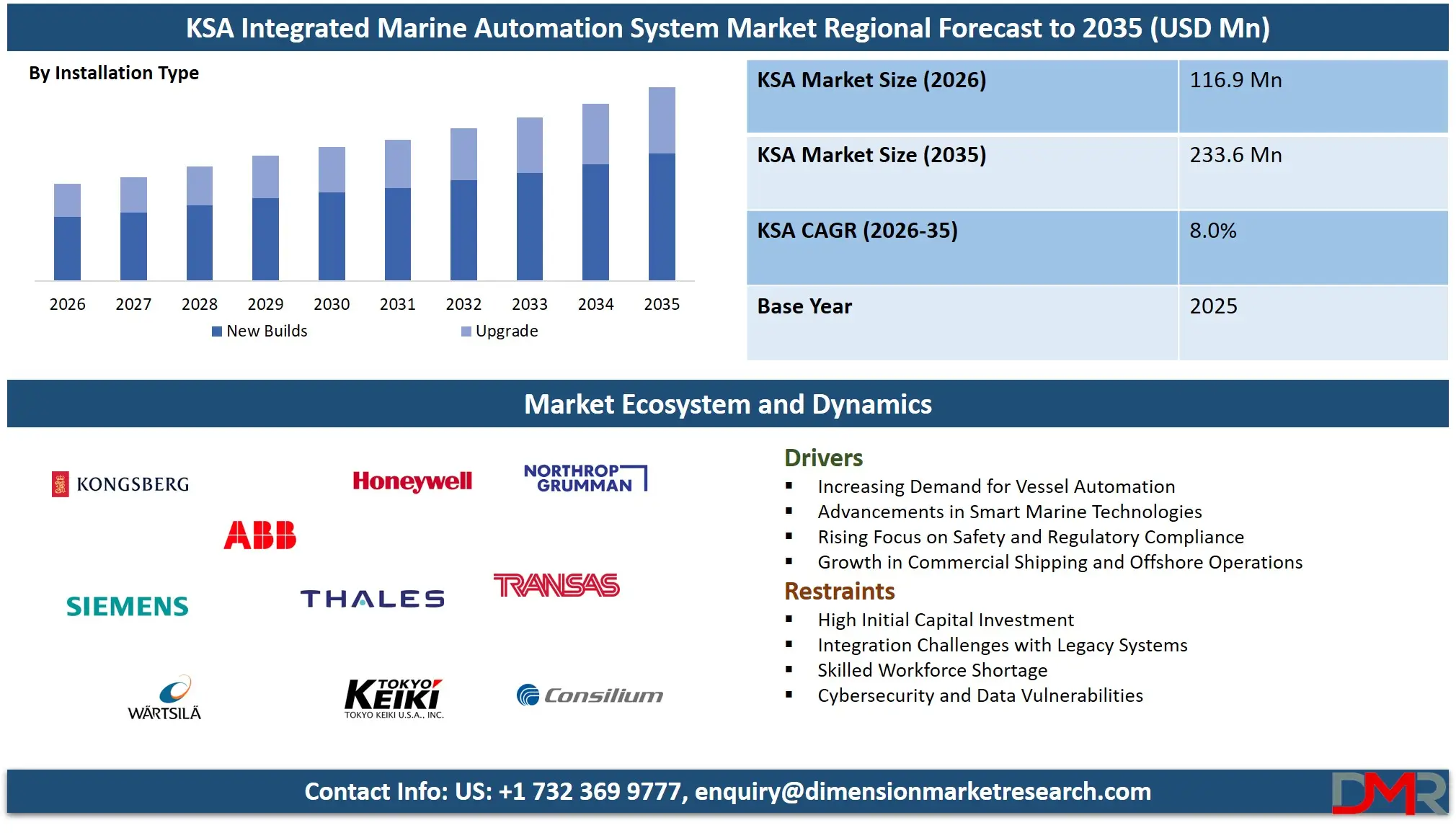
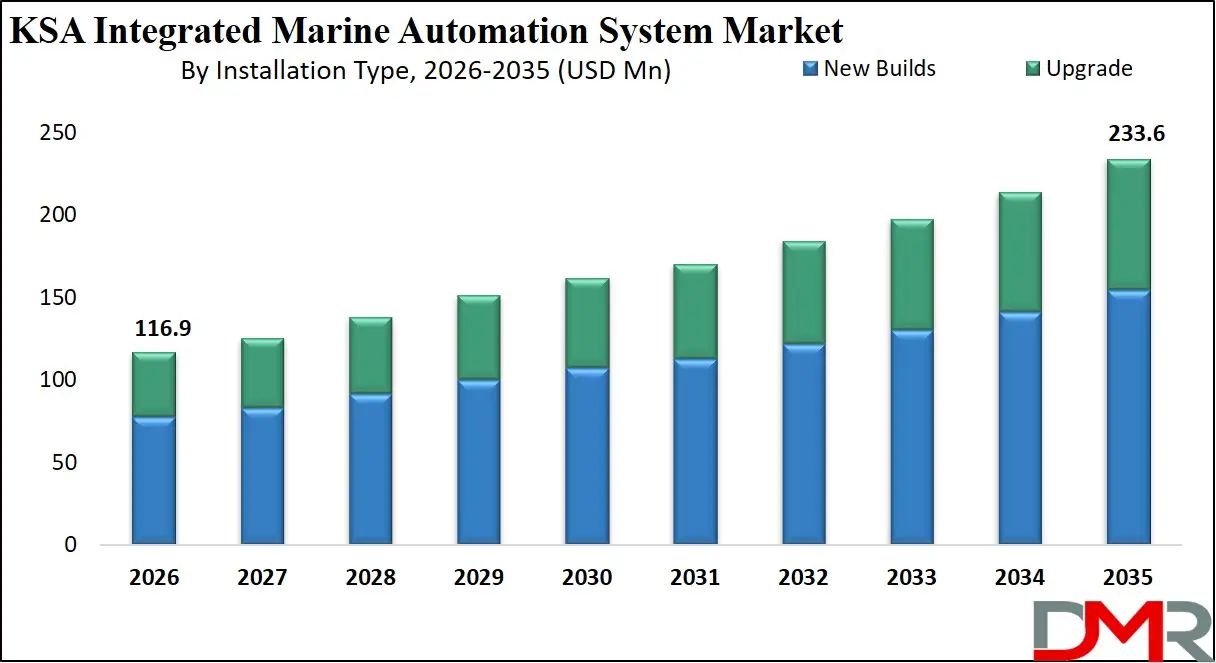
The KSA Integrated Marine Automation System Market is expected to reach USD 116.9 million in 2026 and expand at a CAGR of 8.0% to achieve USD 233.6 million by 2035. Growth is driven by increasing adoption of vessel management systems, automated propulsion control, and digital navigation solutions across commercial shipping and offshore operations, supported by port modernization and smart ship initiatives in the Kingdom.
ℹ
To learn more about this report –
Download Your Free Sample Report Here
An Integrated Marine Automation System is a sophisticated network of interconnected hardware, software, and control systems designed to optimize the operations of a vessel. It combines vessel management, propulsion control, power distribution, navigation, and safety systems into a single cohesive platform that allows real-time monitoring and automated decision-making. These systems enhance operational efficiency, reduce human error, lower fuel consumption, and ensure compliance with international maritime safety standards. By integrating advanced sensors, communication modules, and intelligent algorithms, marine automation systems enable predictive maintenance, remote diagnostics, and seamless coordination across various shipboard functions, supporting both commercial and defense maritime applications.
The KSA Integrated Marine Automation System Market is experiencing significant growth driven by the Kingdom's expanding maritime infrastructure and its strategic initiatives to enhance commercial and naval shipping capabilities. With major ports undergoing modernization and new offshore projects emerging, there is an increasing demand for advanced marine control solutions that provide real-time vessel monitoring, safety compliance, and energy-efficient operations. Local shipping companies and offshore operators are increasingly investing in automated control platforms, intelligent propulsion systems, and digital monitoring solutions to optimize fleet performance and reduce operational risks.
ℹ
To learn more about this report –
Download Your Free Sample Report Here
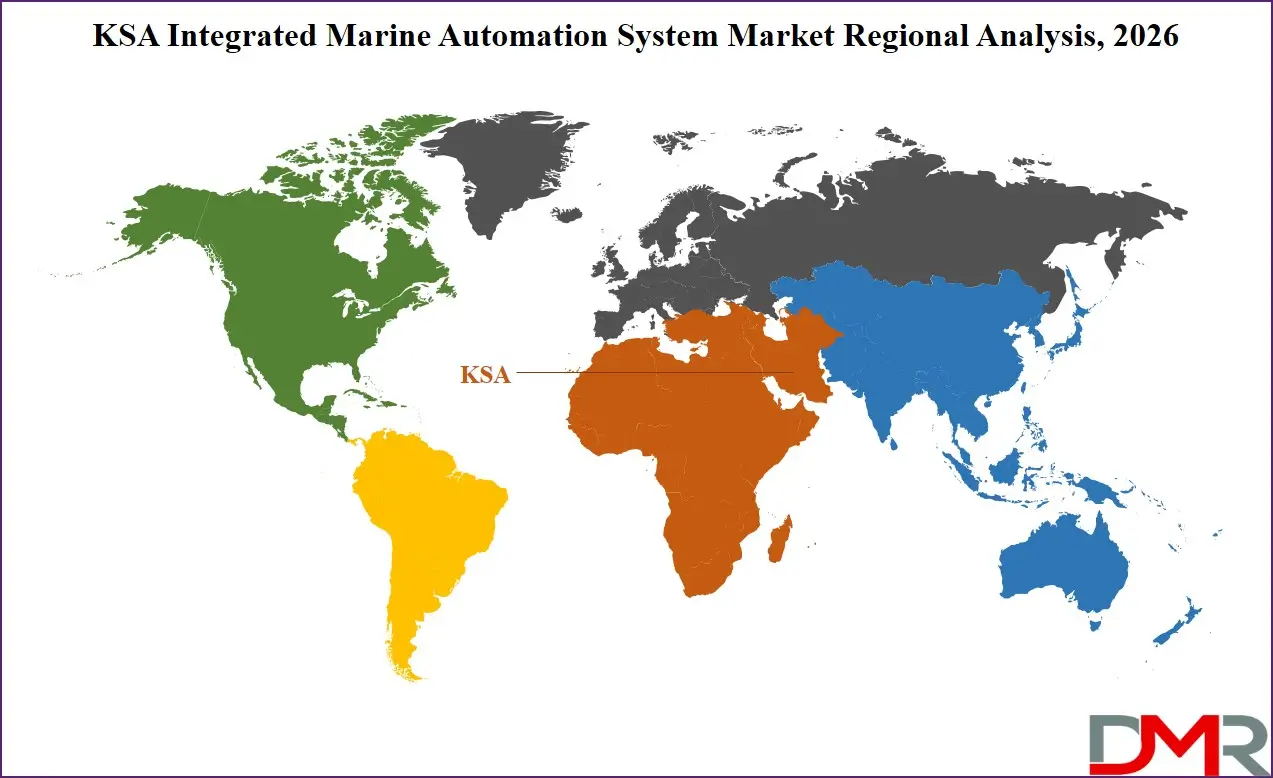
The market in Saudi Arabia is also supported by government-backed maritime development programs and collaborations with global marine technology providers. The adoption of smart ship technologies, predictive maintenance tools, and integrated navigation systems is rising, reflecting the Kingdom's emphasis on operational efficiency, environmental sustainability, and compliance with international maritime regulations. As a result, the KSA market is evolving into a hub for marine automation adoption, creating opportunities for local integrators, service providers, and technology partners focused on digital ship management, automated monitoring, and advanced vessel control solutions.
KSA Integrated Marine Automation System Market: Key Takeaways
- Market Size and Growth: The market is expected to reach USD 116.9 million in 2026 and grow to USD 233.6 million by 2035 at a CAGR of 8.0%, reflecting strong automation adoption.
- Component Focus: Hardware leads with 65% market share, showing high demand for shipboard sensors, controllers, and communication devices.
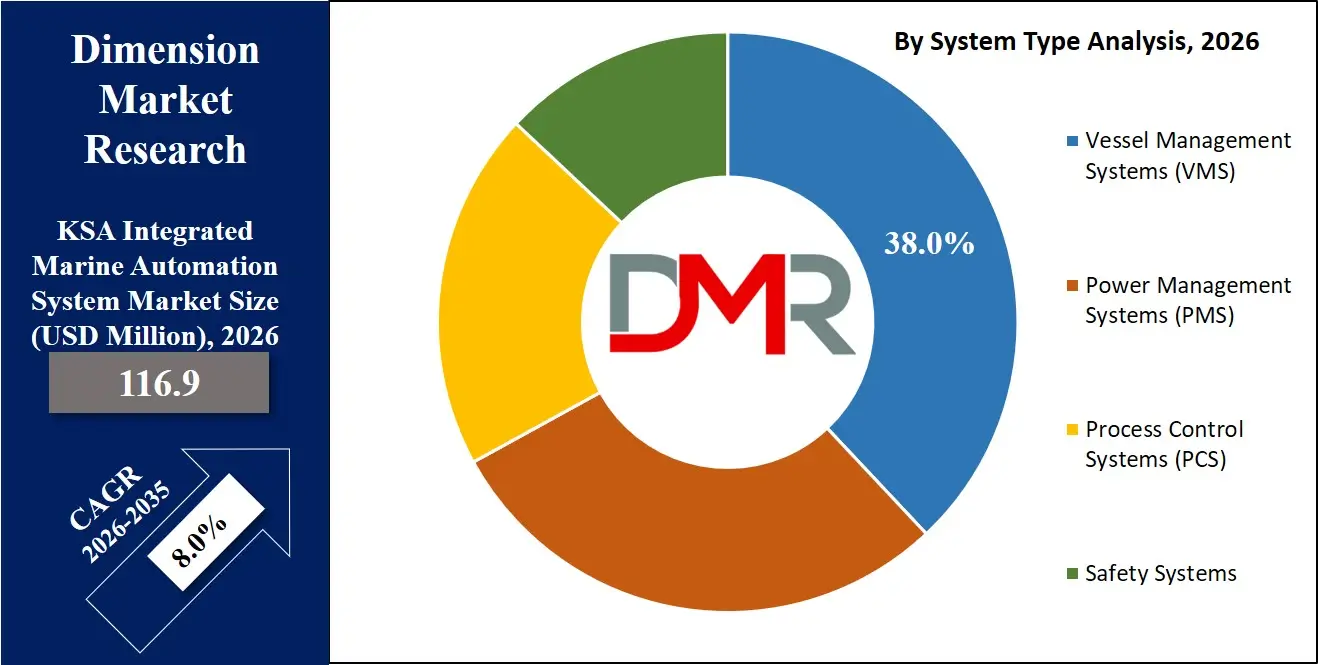
- System Type Leader: Vessel Management Systems (VMS) account for 38% of the market, highlighting their role in navigation, propulsion, and safety control.
- Installation Trends: New builds represent 66% of installations, indicating most adoption occurs during vessel construction.
- End-User Dominance: Commercial shipping holds 71% market share, driving automation for logistics, tankers, and offshore supply vessels.
KSA Integrated Marine Automation System Market: Use Cases
- Smart Vessel Operations: Automation enables real-time control of propulsion, navigation, and power systems, improving fuel efficiency and reducing downtime in KSA fleets.
- Offshore Oil and Gas Support: Automated systems enhance safety and operational reliability for offshore support vessels, including dynamic positioning and remote monitoring.
- Port and Harbor Management: Integration with port platforms improves docking accuracy, reduces turnaround time, and streamlines cargo handling.
- Maritime Safety and Compliance: Systems monitor safety, alarms, and emissions to ensure compliance with international maritime standards and greener operations.
Impact of US-Iran Conflict on the KSA Integrated Marine Automation System Market
- Increased Shipping and Logistics Risk: Heightened tensions around the Strait of Hormuz and Arabian Gulf have led carriers to halt or reroute vessels and impose risk surcharges, creating operational uncertainty for maritime automation system deployment in Saudi waters.
- Supply Chain Delays and Route Diversions: Disruptions in key shipping corridors extend transit routes and delivery times for automation hardware, sensors, control systems, and spare parts, slowing installations and commissioning schedules.
- Rising Marine Insurance and Cost Pressures: Higher war-risk and hull insurance premiums increase total lifecycle costs for ships using integrated automation technologies, potentially limiting upgrades or new system adoption.
- Volatility in Energy and Maritime Markets: Changes in oil production and export flows affect tanker movements and maritime activity, influencing shipping demand patterns and capital allocation toward essential operations over automation investments.
- Safety and Regulatory Focus Intensifies: Operators may prioritize automation features that enhance navigation, threat detection, and remote monitoring, accelerating adoption of resilient systems even as baseline trade slows.
KSA Integrated Marine Automation System Market: Stats & Facts
- General Authority for Statistics (GASTAT) – Saudi Maritime Transport Statistics
- In 2024, Saudi ports handled over 331 million tons of cargo, reflecting strong national trade throughput.
- Outbound cargo in 2024 reached 222.4 million tons, up 9.3% compared to 2023.
- Inbound cargo in 2024 was approximately 108.9 million tons, showing a 3.6% increase from 2023.
- Total cargo across categories in 2024 exceeded 334 million tons, including liquid, bulk, and containers.
- In 2024, 8,693 ships called at Saudi ports, indicating robust vessel traffic.
- Jeddah Islamic Port received 3,805 ships in 2024, the highest among all Saudi ports.
- Saudi Ports Authority (Mawani) – 2025 Port Activity
- In May 2025, container handling at Saudi ports reached 720,684 TEUs, marking a 13% year‑on‑year increase.
- Transshipment containers grew by 12.89% in May 2025 year‑on‑year.
- Imports in May 2025 surged 15.84% compared to the previous year.
- Total cargo handled in May 2025 was 21.3 million tons, up by 1.40%.
- Livestock imports in May 2025 rose 61.22% year‑on‑year.
- Passenger traffic at ports in May 2025 increased 68.15% compared to May 2024.
- In June 2025, container throughput was 696,839 TEUs, up 18.66% from June 2024.
- June 2025 saw transshipment volumes jump 35.94% year‑on‑year.
- Export containers in June 2025 rose 17.79% compared to June 2024.
- Import containers in June 2025 grew 10.68% year‑on‑year.
- June 2025 recorded 1,039 vessel calls, marking a 7.56% increase year‑on‑year.
- Passenger traffic in June 2025 rose 42.34% compared with June 2024.
- In March 2025, container throughput reached 699,928 TEUs, up 13.61% compared to March 2024.
- Exported containers in March 2025 surged 31.82% year‑on‑year.
- Imported containers in March 2025 increased 7.78% year‑on‑year.
- March 2025 saw 1,044 vessels calling at Saudi ports, up 6.75% from the previous year.
- Passenger numbers in March 2025 rose 35.45% compared to March 2024.
- From January to February 2025, total containers handled increased 14.44% year‑on‑year.
- Exported containers in February 2025 rose 18.25% compared to February 2024.Passenger traffic in February 2025 increased 37.85% year‑on‑year.
KSA Integrated Marine Automation System Market: Market Dynamic
Driving Factors in the KSA Integrated Marine Automation System Market
Rising Demand for Smart Ship Technologies
The adoption of integrated marine automation systems in KSA is driven by the increasing need for smart ship solutions that optimize vessel performance, fuel efficiency, and crew productivity. Automated propulsion control, intelligent navigation modules, and predictive maintenance tools allow shipping operators to streamline operations, minimize downtime, and reduce operational costs while meeting international maritime safety standards.
Government-Backed Maritime Development
Saudi Arabia’s Vision 2030 and port modernization initiatives have significantly boosted investments in digital maritime infrastructure. Development of commercial ports, offshore energy projects, and naval capabilities is creating a strong demand for advanced automation systems, vessel monitoring solutions, and integrated control platforms across the Kingdom.
Restraints in the KSA Integrated Marine Automation System Market
High Capital Investment Requirements
The initial cost of deploying integrated marine automation systems, including sensors, control units, and software platforms, remains substantial. Small and medium-sized shipping operators in KSA may face financial constraints, limiting large-scale adoption despite the potential operational benefits.
Skilled Workforce Shortage
The effective operation and maintenance of automation systems require specialized technical expertise. KSA faces a shortage of trained marine automation engineers and technicians, which can slow system deployment, increase reliance on external service providers, and elevate operational risks.
Opportunities in the KSA Integrated Marine Automation System Market
Integration of AI and Predictive Analytics
There is a growing opportunity to implement artificial intelligence and predictive analytics in marine automation systems. AI-driven monitoring enables real-time decision-making, predictive maintenance, and optimized energy management, helping Saudi operators improve fleet efficiency and reduce environmental impact.
Expansion into Offshore Energy and Logistics
The Kingdom’s increasing offshore oil, gas, and shipping projects present opportunities for automation solution providers. Automated dynamic positioning, vessel monitoring, and safety management systems can enhance operational reliability and safety in offshore environments while supporting supply chain efficiency.
Trends in the KSA Integrated Marine Automation System Market
Digital Twin and Remote Monitoring Adoption
The use of digital twin technologies and remote monitoring platforms is emerging as a key trend in KSA. Operators are leveraging real-time simulation and remote diagnostic tools to predict system failures, optimize performance, and reduce downtime, enabling smarter fleet management.
Sustainability and Green Shipping Initiatives
Environmental regulations and global pressure to reduce emissions are driving the adoption of energy-efficient propulsion systems, automated fuel monitoring, and emission tracking features. KSA operators are increasingly investing in green ship technologies integrated with marine automation systems to achieve sustainable maritime operations.
KSA Integrated Marine Automation System Market: Research Scope and Analysis
By Component Analysis
In the KSA Integrated Marine Automation System Market, hardware is expected to dominate the component segment, accounting for approximately 65.0% of the total market share in 2026. This dominance is driven by the high demand for essential shipboard equipment such as sensors, actuators, controllers, and communication devices that form the backbone of automation systems. Hardware components are critical for real-time monitoring, control of propulsion, power management, navigation, and safety systems, making them indispensable for both commercial and offshore vessels. The strong emphasis on upgrading fleets, modernizing ports, and ensuring compliance with international maritime safety standards further fuels the demand for reliable and robust hardware solutions.
Software also plays a crucial role in this market, serving as the intelligence behind the hardware components. Automation software integrates vessel management systems, predictive maintenance tools, navigation platforms, and safety monitoring modules, enabling seamless operation and data-driven decision-making. It allows operators to optimize fuel consumption, reduce operational risks, and improve overall fleet efficiency. With increasing adoption of digital ship technologies, cloud-based monitoring, and AI-enabled analytics, software solutions are becoming more sophisticated, offering enhanced control, remote diagnostics, and smart automation capabilities that complement the hardware infrastructure in KSA’s marine automation ecosystem.
By System Type Analysis
In the KSA Integrated Marine Automation System Market, Vessel Management Systems (VMS) are expected to dominate the system type segment, accounting for around 38.0% of the total market share in 2026. VMS are central to the operation of modern vessels as they provide an integrated platform to monitor and control various shipboard functions, including navigation, propulsion, safety systems, and onboard equipment. These systems enhance operational efficiency, reduce human error, and allow real-time decision-making, which is especially valuable for commercial shipping fleets and offshore support vessels operating in Saudi waters. The increasing focus on fleet optimization, regulatory compliance, and advanced vessel monitoring solutions is driving the strong adoption of VMS across the Kingdom.
ℹ
To learn more about this report –
Download Your Free Sample Report Here
Power Management Systems (PMS) are also a critical component of the system type segment, managing the generation, distribution, and consumption of electrical power on vessels. PMS ensures stable and efficient operation of all onboard electrical systems, reducing energy waste and optimizing fuel consumption. In KSA, the growing adoption of automated and smart ships has increased the demand for advanced PMS that can integrate seamlessly with other marine automation systems. These systems provide predictive diagnostics, load balancing, and real-time monitoring, helping operators maintain reliability, reduce operational risks, and support sustainable energy management across commercial and offshore maritime operations.
By Installation Type Analysis
In the KSA Integrated Marine Automation System Market, new builds are expected to dominate the installation type segment, capturing approximately 66.0% of the total market share in 2026. This trend is driven by the construction of modern vessels and offshore support ships equipped with the latest automation technologies from the outset. Installing integrated systems during the shipbuilding process allows for seamless integration of hardware and software components, including vessel management, navigation, power control, and safety systems. New builds benefit from optimized layouts, reduced retrofitting challenges, and enhanced operational efficiency, making them the preferred choice for commercial shipping companies and government-backed maritime projects in Saudi Arabia.
Upgrades also play a significant role in the market, focusing on retrofitting existing vessels with advanced automation technologies. Many operators in KSA are investing in upgrade projects to enhance the performance, safety, and efficiency of older fleets without commissioning entirely new ships. Upgrades may include the installation of modern sensors, control modules, software platforms, and power management systems, enabling vessels to meet current regulatory standards and operational expectations. This segment allows operators to extend the life of their assets while gradually adopting digital and smart ship technologies.
By Automation Level Analysis
In the KSA Integrated Marine Automation System Market, partial automation is expected to dominate the automation level segment, capturing around 64.0% of the total market share in 2026. Partial automation systems allow vessels to perform routine operations such as propulsion control, navigation assistance, and monitoring of onboard equipment while still relying on crew intervention for critical decision-making. This level of automation is preferred by many Saudi shipping operators as it balances advanced operational efficiency with human oversight, reducing risks and ensuring compliance with international safety standards. Partial automation also provides a cost-effective entry point for fleets transitioning from manual systems to more advanced digital ship technologies.
Remotely-operated systems are another growing segment, enabling vessels to be monitored and controlled from onshore locations or remote control centers. These systems are particularly valuable for offshore support ships and high-risk maritime operations, allowing operators to manage navigation, propulsion, and safety systems without being physically onboard. In KSA, the adoption of remotely-operated solutions is increasing due to rising safety concerns, the need for efficient fleet management, and advancements in communication and control technologies. These systems also support predictive maintenance, real-time diagnostics, and reduced crew dependency, making them a strategic option for modern maritime operations.
By End-User Analysis
In the KSA Integrated Marine Automation System Market, commercial shipping is expected to dominate the end-user segment, capturing approximately 71.0% of the total market share in 2026. The dominance of commercial shipping is driven by the Kingdom’s expanding logistics, trade, and port operations, which rely heavily on automated systems to improve vessel efficiency, reduce operational costs, and ensure timely cargo delivery. Integrated automation systems in commercial vessels enable real-time monitoring of navigation, propulsion, power management, and safety systems, helping operators optimize fleet performance and comply with international maritime regulations. The growing demand for container ships, tankers, and offshore supply vessels further reinforces the adoption of advanced automation solutions in Saudi Arabia’s commercial maritime sector.
The defense segment also contributes to the market by deploying integrated marine automation systems on naval vessels and coast guard ships. These systems enhance situational awareness, automated propulsion, navigation control, and safety monitoring, supporting strategic maritime security operations. In KSA, defense operators are increasingly adopting smart ship technologies and digital control platforms to strengthen fleet readiness, ensure rapid response capabilities, and improve operational reliability in regional waters. The integration of advanced sensors, remote monitoring, and predictive maintenance tools helps maintain high-performance standards for defense vessels while reducing crew workload and operational risks.
The KSA Integrated Marine Automation System Market Report is segmented on the basis of the following:
By Component
- Hardware
- Software
- Services
By System Type
- Vessel Management Systems (VMS)
- Power Management Systems (PMS)
- Process Control Systems (PCS)
- Safety Systems
By Installation Type
By Automation Level
- Partial Automation
- Remotely-Operated
- Fully Autonomous
By End-User
- Commercial Shipping
- Defense
- Others
Impact of Artificial Intelligence in the KSA Integrated Marine Automation System Market
Artificial intelligence is playing an increasingly transformative role in the KSA Integrated Marine Automation System Market by enabling smarter, data-driven operations across vessels and fleets. AI-powered algorithms enhance predictive maintenance capabilities, allowing operators to anticipate equipment failures and schedule timely repairs, reducing downtime and operational costs. Intelligent navigation systems leverage machine learning to optimize routes, improve fuel efficiency, and enhance vessel safety, while automated monitoring tools analyze real-time data from propulsion, power, and safety systems for faster decision-making. The integration of AI with digital ship platforms also supports remote diagnostics and performance optimization, making fleet management more efficient and responsive.
In Saudi Arabia, the adoption of AI-driven marine automation is further accelerated by government initiatives to modernize ports and expand offshore operations. AI applications improve situational awareness for both commercial and defense vessels, enabling automated threat detection, collision avoidance, and enhanced control over complex shipboard systems. By combining AI with advanced sensors, predictive analytics, and real-time monitoring tools, operators can achieve higher operational reliability, energy efficiency, and regulatory compliance. The integration of AI not only strengthens the Kingdom’s maritime infrastructure but also positions it as a regional hub for smart ship technology and intelligent fleet management solutions.
KSA Integrated Marine Automation System Market: Competitive Landscape
The competitive landscape of the KSA Integrated Marine Automation System Market is characterized by the presence of well-established global and regional players offering a range of hardware, software, and services for vessel management, power control, and safety systems. Companies are focusing on strategic partnerships, technology collaborations, and localized service networks to strengthen their presence in the Kingdom.
ℹ
To learn more about this report –
Download Your Free Sample Report Here
Innovation in smart ship technologies, AI-enabled monitoring, and predictive maintenance solutions is becoming a key differentiator, while operators emphasize high-quality after-sales support and customized automation platforms. The market is also witnessing increasing investment in research and development to address energy efficiency, environmental compliance, and advanced navigation requirements, making competition both technology-driven and service-oriented.
Some of the prominent players in the KSA Integrated Marine Automation System Market are:
- Kongsberg Gruppen
- ABB Ltd.
- Siemens AG
- Wärtsilä Corporation
- Honeywell International Inc.
- Thales Group
- Tokyo Keiki Inc.
- Northrop Grumman
- Transas
- Consilium AB
- Rockwell Automation, Inc.
- Schneider Electric
- Rolls‑Royce Power Systems (MTU)
- Raytheon Anschütz GmbH
- Mitsubishi Heavy Industries Marine Machinery & Equipment Co., Ltd.
- General Electric Company (GE)
- DNV (Det Norske Veritas)
- Furuno Electric Co., Ltd.
- Marine Technologies LLC
- Danelec Marine
- Other Key Players
Recent Developments in the KSA Integrated Marine Automation System Market
- Mar 2026: Kraken Robotics signed a definitive agreement to acquire Covelya Group Limited for approximately USD 615 million, expanding its underwater technology offerings and strengthening its global maritime and subsea systems footprint.
- Mar 2026: Mirai Robotics raised USD 4.2 million in pre‑seed funding to develop autonomous and intelligent maritime systems, focusing on robotics, sensing, and AI‑driven vessel operations for complex marine environments.
- Feb 2026: Mercury Marine unveiled a new generation of digital and control innovations designed to enhance vessel performance, simplify operations, and improve overall boating system integration, reflecting rising adoption of advanced automation and digital control solutions in marine applications.
- Dec 2025: Vatn Systems secured USD 60 million in Series A funding to support the expansion of autonomous underwater vehicle development and enhance its capabilities as a leading manufacturer of AUVs for defense and commercial maritime uses.
Report Details
| Report Characteristics |
| Market Size (2026) |
USD 116.9 Mn |
| Forecast Value (2035) |
USD 233.6 Mn |
| CAGR (2026–2035) |
8.0% |
| Historical Data |
2021 – 2025 |
| Forecast Data |
2027 – 2035 |
| Base Year |
2025 |
| Estimate Year |
2026 |
| Report Coverage |
Market Revenue Estimation, Market Dynamics, Competitive Landscape, Growth Factors and etc. |
| Segments Covered |
By Component (Hardware, Software, Services), By System Type (Vessel Management Systems, Power Management Systems, Process Control Systems, Safety Systems), By Installation Type (New Builds, Upgrade), By Automation Level (Partial Automation, Remotely-Operated, Fully Autonomous), and By End-User (Commercial Shipping, Defense, Others) |
| Country Coverage |
Kingdom of Saudi Arabia |
| Prominent Players |
Kongsberg Gruppen, ABB Ltd., Siemens AG, Wärtsilä Corporation, Honeywell International Inc., Thales Group, Tokyo Keiki Inc., Northrop Grumman, Transas, Consilium AB, Rockwell Automation, Inc., Schneider Electric, Rolls-Royce Power Systems (MTU), Raytheon Anschütz GmbH, Mitsubishi Heavy Industries Marine Machinery & Equipment Co., Ltd., General Electric Company (GE), DNV, Furuno Electric Co., Ltd., Marine Technologies LLC, Danelec Marine, and Other Key Players |
| Purchase Options |
We have three licenses to opt for: Single User License (Limited to 1 user), Multi-User License (Up to 5 Users) and Corporate Use License (Unlimited User) along with free report customization equivalent to 0 analyst working days, 3 analysts working days and 5 analysts working days respectively. |
Frequently Asked Questions
How big is the KSA Integrated Marine Automation System Market?
▾ The KSA Integrated Marine Automation System Market size is estimated to have a value of USD 116.9 million in 2026 and is expected to reach USD 233.6 million by the end of 2035.
What is the growth rate in the KSA Integrated Marine Automation System Market in 2026?
▾ The market is growing at a CAGR of 8.0% over the forecasted period of 2026.
Who are the key players in the KSA Integrated Marine Automation System Market?
▾ Some of the major key players in the KSA Integrated Marine Automation System Market are Kongsberg Gruppen, ABB Ltd., Siemens AG, Wärtsilä Corporation, Honeywell International Inc., Thales Group, Tokyo Keiki Inc., Northrop Grumman, Transas, Consilium AB, Rockwell Automation, Inc., Schneider Electric, Rolls-Royce Power Systems (MTU), Raytheon Anschütz GmbH, and many others.