Market Overview
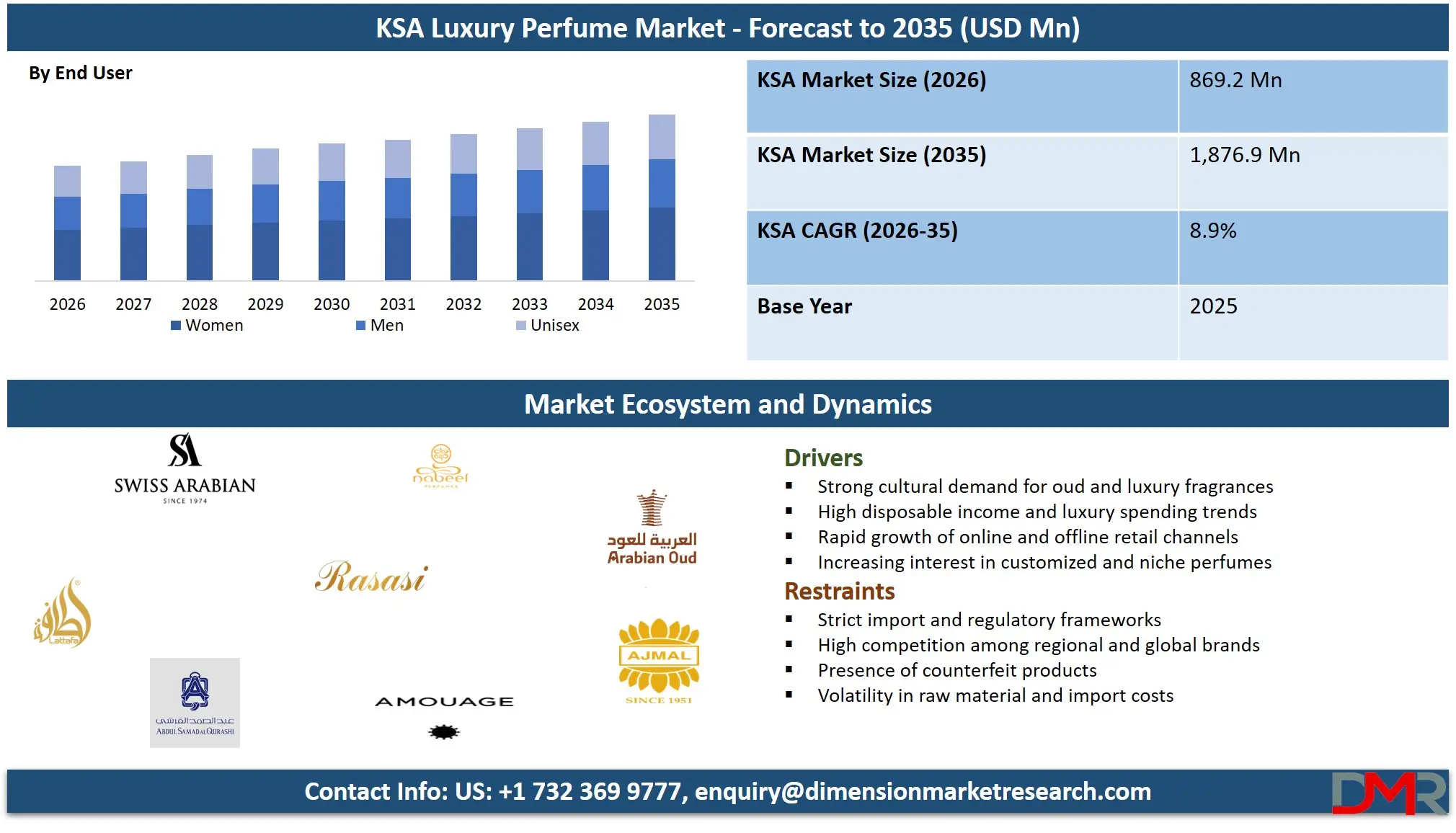
The KSA Luxury Perfume Market size is projected to reach USD 869.2 million in 2026 and grow at a compound annual growth rate of 8.9% to reach a value of USD 1,876.9 billion in 2035.
ℹ
To learn more about this report –
Download Your Free Sample Report Here
Luxury perfumes represent the high-end segment of fragrance products, distinguished by premium ingredients, artisanal craftsmanship, and strong cultural significance. These perfumes often feature oud, amber, musk, and exotic floral notes, reflecting the rich traditions of Middle Eastern perfumery. The category includes pure perfumes, eau de parfum, and bespoke fragrances, typically offered through exclusive boutiques and luxury retail channels. Serving as a symbol of status, identity, and heritage, this segment blends traditional artistry with modern consumer preferences, creating a unique and culturally significant experience for fragrance enthusiasts globaly.
The market has undergone significant transformation in KSA, driven by rising disposable incomes, growing urban populations, and an increasing preference for premium personal care products. Consumers are showing a stronger inclination toward niche, artisanal, and customized fragrances, while domestic brands are gaining recognition both regionally and internationally. The rise of digitalization and e-commerce platforms has also expanded access, enabling luxury perfume brands to reach a broader audience and engage directly with consumers. Retail experiences are being enhanced through personalized services, further strengthening brand loyalty across the Kingdom.
ℹ
To learn more about this report –
Download Your Free Sample Report Here
Shifting demographics, particularly a younger population with evolving tastes, are shaping product development and innovation in KSA. Sustainability, halal-certified ingredients, and eco-conscious packaging are becoming critical considerations for consumers. Government initiatives under Vision 2030 are supporting the expansion of local luxury manufacturing and encouraging international collaborations. The market continues to integrate cultural heritage with modern innovation, positioning KSA as a dynamic hub for premium perfumery and reinforcing its role in the global luxury fragrance landscape.
KSA Luxury Perfume Market: Key Takeaways
- Market Growth: The KSA Luxury Perfume Market size is expected to grow by USD 938.1 million, at a CAGR of 8.9%, during the forecasted period of 2027 to 2035.
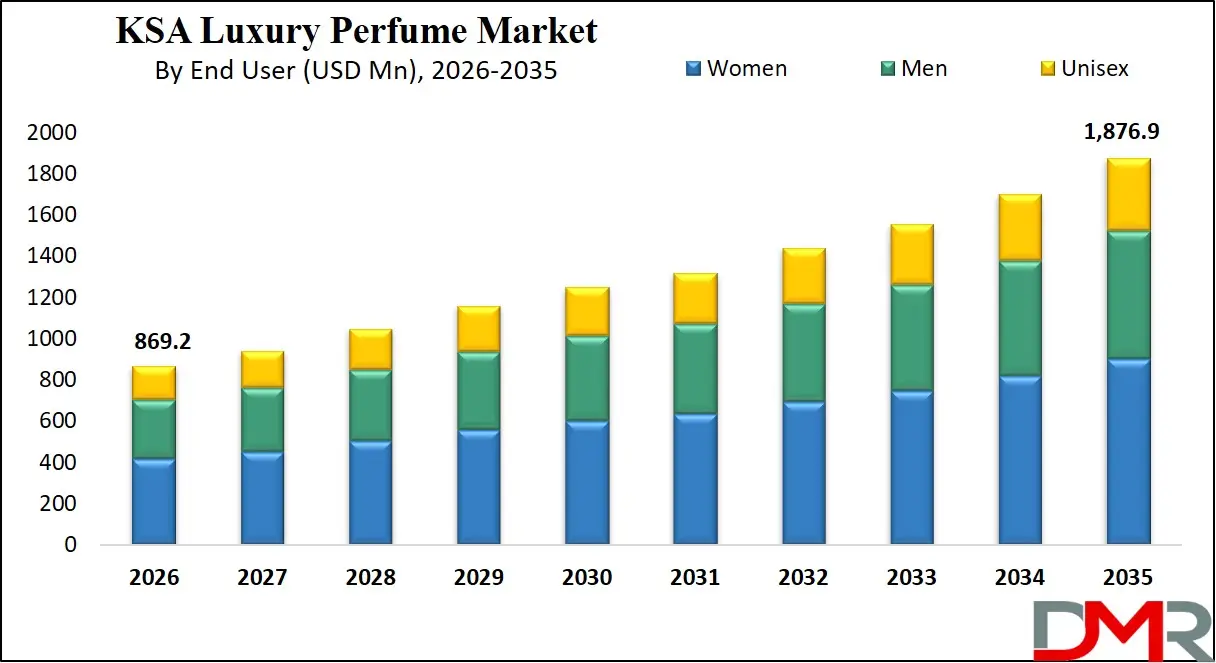
- By End User: Women are anticipated to get the majority share of the KSA Luxury Perfume market in 2026.
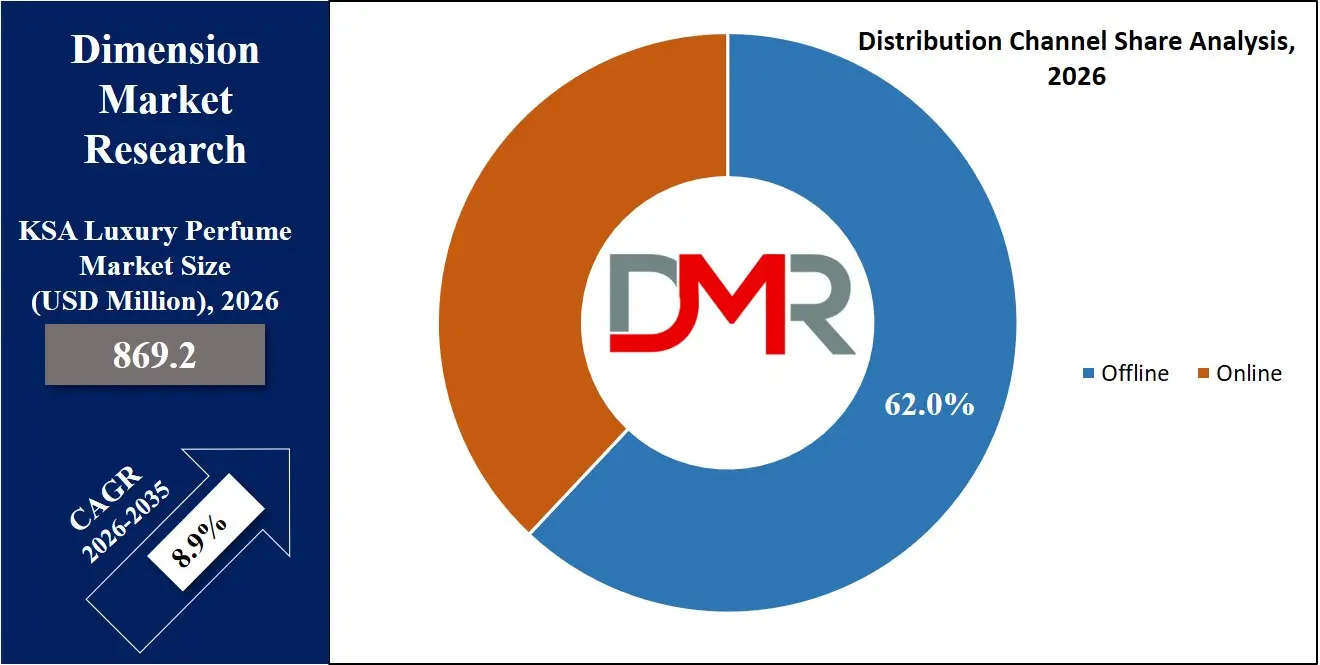
- By Distribution Channel: The offline segment is expected to get the largest revenue share in 2026 in the KSA Luxury Perfume market.
- Use Cases: Some of the use cases of Luxury Perfume include personal grooming, gifting purpose and more.
KSA Luxury Perfume Market: Use Cases
- Personal Grooming: Luxury perfumes are widely used for daily grooming, reflecting personal identity and sophistication. High-end fragrances are considered essential in maintaining a refined lifestyle and leaving lasting impressions.
- Cultural and Religious Occasions: Perfumes play a vital role during events such as weddings, Eid celebrations, and religious gatherings, where fragrance is associated with purity and tradition.
- Gifting Purposes: Premium perfumes are among the most popular luxury gifts, symbolizing prestige and thoughtfulness in both personal and corporate settings.
- Hospitality Industry: High-end hotels and resorts use luxury fragrances to enhance guest experiences through ambient scenting and branded olfactory identities.
- Retail Experience Enhancement: Luxury stores incorporate signature scents to create immersive shopping environments, strengthening brand recall and customer engagement.
- Corporate Branding: Businesses use bespoke fragrances in offices and events to reinforce brand identity and create memorable impressions among clients.
- Wellness and Aromatherapy: Certain luxury perfumes with natural ingredients are used for relaxation and emotional well-being, aligning with growing wellness trends.
Stats & Facts
- Saudi General Authority for Statistics reported that household expenditure on personal care products increased by over 8% in 2024.
- Saudi Ministry of Commerce stated that retail trade licenses for perfumes and cosmetics grew by approximately 12% in 2025.
- International Trade Centre recorded Saudi Arabia’s fragrance imports exceeding USD 1.5 billion in 2024.
- World Bank highlighted Saudi Arabia’s GDP growth rate at around 3.2% in 2025, supporting luxury consumption.
- Saudi Central Bank noted a 15% rise in POS transactions in luxury retail segments in 2024.
- UN Comtrade data indicated a 10% year-on-year increase in perfume exports from Saudi Arabia in 2025.
- Saudi Vision 2030 reports confirmed that non-oil sectors contributed over 50% to GDP in 2024.
- General Authority for Small and Medium Enterprises reported a 9% increase in SME participation in the fragrance sector in 2025.
- International Monetary Fund highlighted rising disposable income levels in Saudi Arabia by 6% in 2024.
- Saudi General Investment Authority noted foreign direct investment inflows into retail and luxury sectors increased by 7% in 2025.
- Euromonitor International estimated premium fragrance demand growth at over 11% in Saudi Arabia in 2024.
- Gulf Cooperation Council statistics showed Saudi Arabia accounts for over 40% of the regional luxury fragrance market in 2025..
Market Dynamic
Driving Factors in the KSA Luxury Perfume Market
Cultural Significance and Premiumization
Fragrance holds deep cultural importance in Saudi Arabia, making it an integral part of daily routines and social interactions. The preference for oud and other traditional scents continues to drive demand for high-end perfumes. Consumers increasingly associate luxury fragrances with social status and identity, encouraging spending on premium products. Additionally, the trend of layering fragrances and using multiple scent formats has expanded consumption patterns. This cultural affinity combined with rising disposable income and urbanization is significantly shaping the growth trajectory of the luxury perfume market.
Expansion of Retail and Digital Channels
The rapid development of modern retail infrastructure, including luxury malls and specialty boutiques, has enhanced product accessibility. Simultaneously, e-commerce platforms are transforming purchasing behavior by offering convenience, wider product ranges, and personalized recommendations. Online channels also enable niche and international brands to enter the market with lower barriers. Digital marketing strategies, influencer collaborations, and virtual fragrance experiences are further boosting consumer engagement, making retail expansion a critical driver of market growth.
Restraints in the KSA Luxury Perfume Market
High Product Costs and Pricing Sensitivity
Luxury perfumes often involve expensive raw materials such as oud and ambergris, leading to high product prices. While affluent consumers drive demand, price sensitivity among middle-income groups limits broader adoption. Economic fluctuations can also impact discretionary spending on luxury goods. Additionally, counterfeit products pose challenges by offering lower-cost alternatives, potentially affecting brand reputation and consumer trust within the market.
Regulatory and Import Dependencies
The market relies heavily on imported ingredients and finished products, making it vulnerable to supply chain disruptions and import regulations. Compliance with quality standards, labeling requirements, and halal certifications can increase operational complexity for manufacturers and distributors. These regulatory challenges may delay product launches and increase costs, impacting overall market expansion and competitiveness.
Opportunities in the KSA Luxury Perfume Market
Growth of Local Artisanal Brands
There is significant potential for local perfume houses to expand by leveraging traditional ingredients and heritage craftsmanship. Consumers are showing increased interest in authentic, locally produced fragrances that reflect regional identity. Government support for SMEs under Vision 2030 further enhances opportunities for domestic brands to scale operations, innovate, and compete globally.
Rising Demand for Personalized Fragrances
Customization is emerging as a key growth avenue, with consumers seeking unique scent profiles tailored to their preferences. Advances in fragrance technology and AI-driven scent matching are enabling brands to offer bespoke experiences. This trend not only enhances customer satisfaction but also fosters brand loyalty and premium pricing opportunities.
Trends in the KSA Luxury Perfume Market
Shift Toward Sustainable and Ethical Products
Sustainability is gaining traction, with consumers increasingly valuing eco-friendly packaging and ethically sourced ingredients. Brands are adopting refillable bottles and reducing environmental impact. Transparency in sourcing and production processes is becoming a differentiating factor, influencing purchasing decisions.
Integration of Digital Experiences
Digital transformation is reshaping the market through virtual scent discovery tools, augmented reality, and online consultations. Social media platforms play a crucial role in influencing consumer preferences. The integration of technology into the shopping journey is enhancing engagement and redefining luxury retail experiences.
Impact of Artificial Intelligence in KSA Luxury Perfume Market
- Personalized Fragrance Creation: AI analyzes customer preferences to recommend or create customized scent profiles, enhancing satisfaction and exclusivity.
- Demand Forecasting: Advanced algorithms predict consumer demand patterns, helping brands optimize inventory and reduce waste.
- Customer Experience Enhancement: AI-powered chatbots and virtual assistants provide tailored recommendations and improve online shopping experiences.
- Product Development: Machine learning accelerates formulation processes by identifying optimal ingredient combinations.
- Supply Chain Optimization: AI improves logistics efficiency, ensuring timely delivery and cost reduction.
- Fraud Detection: AI systems help identify counterfeit products, protecting brand integrity and consumer trust.
- Marketing Optimization: Data-driven insights enable targeted campaigns and better audience segmentation.
- Retail Analytics: AI tracks in-store behavior to refine merchandising strategies and improve sales performance.
Research Scope and Analysis
By Product Type Analysis
Parfum continues to dominate the KSA luxury perfume market and is projected to hold approximately 34% of the total market by 2026. Its leadership is primarily driven by the high concentration of fragrance oils, which ensures a long-lasting and intense scent experience that aligns perfectly with Saudi consumers’ preferences. The cultural affinity for strong, oud-based and amber-infused fragrances reinforces the appeal of this segment. Additionally, parfum products are synonymous with exclusivity, luxury, and premium positioning, making them highly desirable for affluent individuals. The rising popularity of artisanal and niche fragrances further supports sustained growth, as these high-end products are widely available in luxury boutiques and flagship stores across major urban centers, enhancing brand presence and consumer accessibility.
Eau de Parfum is emerging as the fastest-growing segment in the KSA luxury perfume market due to its ideal balance between lasting power and affordability, making it accessible to a wider consumer base compared with pure parfum. Its moderate concentration of fragrance oils allows for long wear while remaining cost-effective. Growth in this segment is further fueled by the increasing availability of EDP products across both online marketplaces and offline specialty stores. Younger consumers, including millennials and Gen Z, are increasingly adopting EDP as their preferred choice for daily use and gifting purposes, which is also encouraging brands to expand their product lines. The segment’s rapid adoption is aided by marketing campaigns targeting digital-savvy audiences, seasonal promotions, and influencer collaborations, all contributing to significant market expansion.
By Distribution Channel Analysis
Offline retail remains the dominant distribution channel in the KSA luxury perfume market, accounting for approximately 62% of total sales in 2026. Luxury malls, flagship boutiques, and specialty stores provide immersive, tactile experiences that are highly valued by consumers who prefer to sample fragrances before purchase. The personal consultation offered by trained staff enhances customer confidence and encourages premium spending. Offline channels also facilitate exclusive launches, limited-edition collections, and loyalty programs, strengthening brand engagement. High visibility in prime retail locations helps reinforce brand prestige, while the cultural preference for in-person shopping ensures continued reliance on traditional retail despite growing digital alternatives. This channel’s strength lies in its ability to combine sensory engagement with a personalized customer journey, which is critical in the high-value luxury perfume segment.
ℹ
To learn more about this report –
Download Your Free Sample Report Here
Online channels are witnessing the fastest growth in the KSA luxury perfume market due to increasing internet penetration, mobile shopping adoption, and the convenience of doorstep delivery. E-commerce platforms offer a broad assortment of fragrances, including niche and limited-edition products, making them accessible to a geographically diverse customer base. Digital marketing, influencer endorsements, and virtual scent recommendations enhance consumer engagement and trust in online purchases. Younger, tech-savvy consumers increasingly rely on online platforms for product discovery and personalized recommendations, accelerating adoption. Online distribution also allows brands to test new products, launch seasonal collections, and expand their reach without significant infrastructure costs, positioning this segment as a critical growth driver.
By End User Analysis
Women represent the largest end-user segment in the KSA luxury perfume market, projected to account for approximately 48% of market share by 2026. The segment’s growth is fueled by high consumer spending on personal care and luxury products, as well as a strong desire for diverse fragrance portfolios to match different occasions and moods. Brands actively target this demographic through marketing campaigns, seasonal promotions, and product innovations tailored to female preferences. Women’s affinity for premium, artisanal, and signature scents also drives repeat purchases. In addition, cultural emphasis on gifting and social presentation strengthens consumption, making women a key driver of overall market revenue and brand loyalty.
Unisex fragrances are emerging as the fastest-growing end-user segment due to shifting consumer preferences toward gender-neutral and versatile scent profiles. These products appeal to younger generations, including millennials and Gen Z, who value individuality, self-expression, and inclusivity in personal care choices. Unisex perfumes allow consumers to explore diverse fragrance options without being restricted by traditional gender norms, supporting broader adoption. Increasing marketing focus on unisex collections, social media campaigns, and influencer partnerships has amplified awareness and desirability. Additionally, unisex fragrances align with evolving lifestyle trends, gifting patterns, and sustainable purchasing preferences, positioning this segment for significant growth within the overall luxury perfume market in Saudi Arabia.
The KSA Luxury Perfume Market Report is segmented on the basis of the following:
By Product Type
- Parfum (Pure Perfume)
- Eau de Parfum (EDP)
- Eau de Toilette (EDT)
- Eau de Cologne (EDC)
- Eau Fraiche
By Distribution Channel
By End User
Competitive Landscape
The KSA luxury perfume market is characterized by intense competition driven by product differentiation, brand heritage, and innovation. Market participants focus on premium positioning, exclusive product launches, and personalized offerings to maintain competitive advantage. High entry barriers exist due to the need for strong brand identity, distribution networks, and access to high-quality raw materials.
ℹ
To learn more about this report –
Download Your Free Sample Report Here
Strategic partnerships, collaborations, and investments in research and development are common approaches to sustain growth. Companies also emphasize digital transformation and direct-to-consumer strategies to expand reach and enhance customer engagement in a rapidly evolving market.
Some of the prominent players in the KSA Luxury Perfume are:
- Arabian Oud
- Abdul Samad Al Qurashi
- Ajmal Perfumes
- Rasasi Perfumes
- Swiss Arabian
- Al Haramain Perfumes
- Amouage
- Ahmed Al Maghribi Perfumes
- Paris Corner Perfumes
- Lattafa Perfumes
- Armaf (Sterling Perfumes)
- Reef Perfumes
- Taif Al Emarat
- Nabeel Perfumes
- Yas Perfumes
- Oud Elite
- Ibrahim Al Qurashi Perfumes
- Atyab Al Marshoud
- Gissah Perfumes
- Al Rehab Perfumes
- Other Key Players
Recent Developments
- In June 2025, Abdul Samad Al Qurashi announced a strategic expansion plan involving significant investment in local manufacturing facilities within Saudi Arabia. The move aims to reduce reliance on imports and enhance production capabilities for premium fragrances. The company also introduced advanced extraction technologies to improve product quality and sustainability.
- In February 2025, Arabian Oud launched a new premium fragrance collection inspired by traditional Saudi heritage, incorporating rare oud variants sourced from Southeast Asia. The collection features limited-edition bottles with handcrafted designs, targeting high-net-worth individuals. The launch included an immersive retail experience across flagship stores in Riyadh and Jeddah, along with digital campaigns to attract younger consumers.
Report Details
| Report Characteristics |
| Market Size (2026) |
USD 869.2 Mn |
| Forecast Value (2035) |
USD 1,876.9 Mn |
| CAGR (2026–2035) |
8.9% |
| Historical Data |
2021 – 2025 |
| Forecast Data |
2027 – 2035 |
| Base Year |
2025 |
| Estimate Year |
2026 |
| Report Coverage |
Market Revenue Estimation, Market Dynamics, Competitive Landscape, Growth Factors and etc. |
| Segments Covered |
By Product Type (Parfum (Pure Perfume), Eau de Parfum (EDP), Eau de Toilette (EDT), Eau de Cologne (EDC), Eau Fraiche), By Distribution Channel (Offline, Online), By End User (Women, Men, Unisex) |
| Country Coverage |
Saudi Arabia |
| Prominent Players |
Arabian Oud, Abdul Samad Al Qurashi, Ajmal Perfumes, Rasasi Perfumes, Swiss Arabian, Al Haramain Perfumes, Amouage, Ahmed Al Maghribi Perfumes, Paris Corner Perfumes, Lattafa Perfumes, Armaf (Sterling Perfumes), Reef Perfumes, Taif Al Emarat, Nabeel Perfumes, Yas Perfumes, Oud Elite, Ibrahim Al Qurashi Perfumes, Atyab Al Marshoud, Gissah Perfumes, Al Rehab Perfumes, and Other Key Players |
| Purchase Options |
We have three licenses to opt for: Single User License (Limited to 1 user), Multi-User License (Up to 5 Users) and Corporate Use License (Unlimited User) along with free report customization equivalent to 0 analyst working days, 3 analysts working days and 5 analysts working days respectively. |
Frequently Asked Questions
How big is the KSA Luxury Perfume Market?
▾ The KSA Luxury Perfume Market size is expected to reach USD 869.2 million by 2026 and is projected to reach USD 1,876.9 million by the end of 2035.
Who are the key players in the KSA Luxury Perfume Market?
▾ Some of the major key players in the KSA Luxury Perfume Market include Arabian Oud, Ajmal, Lattafa and others.
What is the growth rate in the KSA Luxury Perfume Market?
▾ The market is growing at a CAGR of 8.9 percent over the forecasted period.