Saudi Arabia Medical Devices Market Snapshot
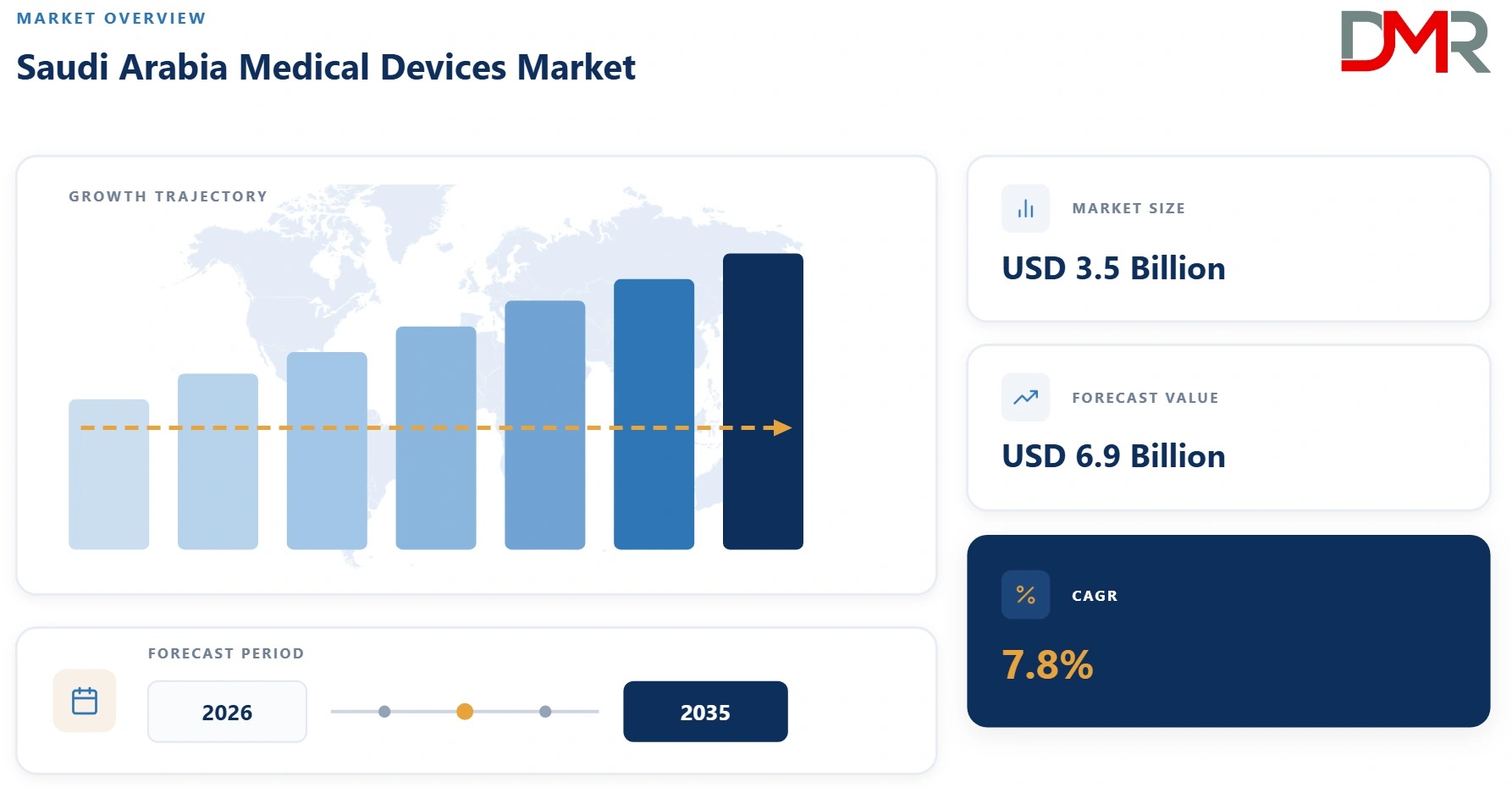
- Saudi Arabia Medical Devices Market Size in 2026: USD 3.5 Billion
- Saudi Arabia Medical Devices Market Size in 2035: USD 6.9 Billion
- Saudi Arabia CAGR from 2026 to 2035: 7.8%
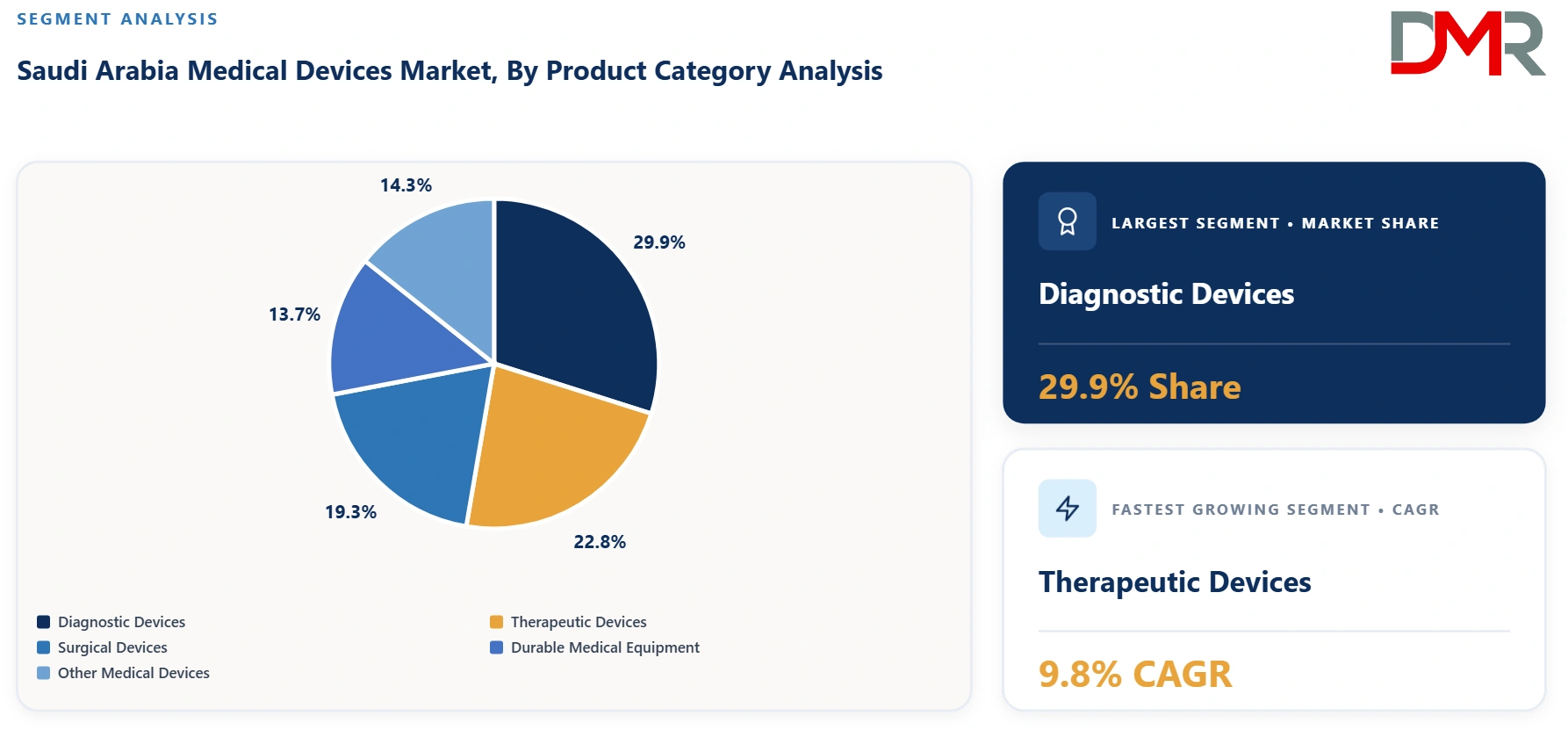
- Diagnostic Devices is the leading product category segment in 2026: 29.9%
- Traditional Mechanical/Electronic Devices is the leading technology segment in 2026: 56.2%
- Hospitals & Clinics is the leading end user segment in 2026: 55.4%
What is the Saudi Arabia Medical Devices Market and its Market Size?
The Saudi Arabia Medical Devices Market is projected to be valued at approximately USD 3.5 Billion in 2026 and is projected to reach USD 6.9 Billion by 2035, expanding at a CAGR of 7.8% during the forecast period.
ℹ
To learn more about this report –
Download Your Free Sample Report Here
This robust growth is driven by the Kingdom's ambitious Vision 2030 healthcare transformation program, which is significantly boosting healthcare infrastructure investment . A SAR 260 billion (USD 69 billion) allocation for health and social development is fueling the construction and modernization of hospitals, driving substantial demand for advanced medical technologies . The market, however, remains highly dependent on imports, with over 90% of medical device needs sourced from international markets, primarily the U.S. and Europe, presenting a major opportunity for local manufacturing . The rising prevalence of chronic diseases like diabetes, projected to exceed 4 million cases, further stimulates demand for diagnostic, monitoring, and therapeutic devices .
Key Takeaways
- Market Size: The Saudi Arabia Medical Devices Market is anticipated to be valued at USD 3.5 Billion in 2026 and is forecast to reach USD 6.9 Billion by 2035, expanding at a CAGR of 7.8%.
- Growth Outlook: Market expansion is propelled by massive government healthcare investments under Vision 2030, a rising burden of chronic diseases, and a strategic push to localize medical device manufacturing.
- Primary Growth Drivers: Sustained government healthcare expenditure, the increasing prevalence of lifestyle-related diseases, and the rapid adoption of digital health and advanced diagnostic technologies are accelerating market growth .
- By Product Category Analysis: Diagnostic Devices is projected to lead the product category segment with a 29.9% share in 2026, reflecting strong demand for imaging and in-vitro diagnostics . This dominance is driven by hospital investments, early disease detection needs, and the adoption of advanced diagnostic technologies .
- By Technology Analysis: Traditional Mechanical/Electronic Devices is expected to dominate with a 56.2% share in 2026, driven by high demand for fundamental diagnostic equipment, surgical tools, and patient monitoring systems . Digital Health Technology is the fastest-growing segment, fueled by the expansion of telemedicine and AI-driven diagnostics .
- By End User Analysis: Hospitals & Clinics are projected to dominate with a 55.4% share in 2026, reflecting their role as the primary point of care in the Kingdom . This dominance is underpinned by ongoing hospital modernization projects and the concentration of advanced medical procedures within these facilities.
Key Drivers in the Saudi Arabia Medical Devices Market
Sustained Government Investment in Healthcare Infrastructure
The Saudi government's unwavering commitment to healthcare is the primary driver of the medical devices market. As part of its Vision 2030 agenda, a historic SAR 260 billion has been allocated to health and social development . This funding supports the construction of new hospitals, specialized care centers, and the modernization of existing facilities. With an estimated USD 11.4 billion worth of hospital projects ongoing or planned as of early 2026, the demand for a wide range of medical equipment—from imaging systems to surgical instruments—is surging . This massive infrastructure expansion is creating a sustained and significant market for device manufacturers and suppliers.
Rising Prevalence of Chronic and Lifestyle-Related Diseases
The increasing burden of chronic diseases is a powerful catalyst for market growth. Conditions such as diabetes, cardiovascular diseases, and obesity are escalating due to changing lifestyles and urbanization . This epidemiological shift fuels demand for advanced diagnostic, monitoring, and therapeutic devices. Healthcare providers are increasingly relying on technologies like blood glucose monitors, cardiac implants, and wearable monitoring systems to manage the growing patient population . As the need for continuous and effective disease management intensifies, the market for related medical devices will continue to expand.
Key Restraints in the Saudi Arabia Medical Devices Market
High Import Dependency
Saudi Arabia relies on imports for over 90% of its medical device requirements, with the U.S. and Europe being the primary sources . This high dependency creates a significant challenge, making the market vulnerable to global supply chain disruptions, tariff fluctuations, and geopolitical instability . The import value for selected medical products reached USD 2.24 billion in 2024, underscoring the scale of this reliance . While localization is a key goal of Vision 2030, the current limited local manufacturing capability constrains the market's ability to control costs and secure a resilient, self-sufficient supply chain .
Growth Opportunities in the Saudi Arabia Medical Devices Market
Localization of Medical Device Production
The government's strategic objective to reduce import dependency presents a significant growth opportunity for the domestic industry . With current local content share estimated at just 16.9%, there is substantial room for growth through public-private partnerships and government incentives . The number of licensed medical-device factories has already reached 150, with total investments of SAR 3.1 billion, signaling a strong commitment to building local manufacturing capabilities . This localization drive is expected to contribute significantly to GDP and create thousands of jobs, offering a lucrative avenue for investment.
Expansion of Telemedicine and Digital Health Solutions
The rapidly growing digital health sector is a key opportunity area for medical device manufacturers. The telemedicine market in Saudi Arabia is projected to grow significantly, driving demand for remote monitoring tools, diagnostic equipment, and portable devices for telehealth applications . Furthermore, the market for home healthcare solutions is expected to rise considerably, creating demand for innovative portable and home-based monitoring systems . Companies that develop connected and digital devices to meet this demand are well-positioned to capture a significant share of this expanding market.
Key Trends in the Saudi Arabia Medical Devices Market
Shift Towards Digital and Connected Devices
The market is witnessing a clear trend from traditional medical devices to connected and digital health technologies . Hospitals are increasingly requiring interoperable monitoring systems, remote-care capabilities, and digitally traceable devices to improve efficiency and patient outcomes . This trend is driven by the expansion of telemedicine and the adoption of AI and machine learning in diagnostics . The "Software as a Medical Device" segment, though currently smaller, is expected to scale as it requires less physical manufacturing capital, presenting a modern avenue for growth .
Growth in Minimally Invasive and Patient-Centric Devices
There is a growing preference for technologically advanced solutions such as minimally invasive surgical devices and robotics in surgery . This shift is aligned with global trends towards procedures that offer faster recovery times and lower complication rates. Additionally, the rise of personalized medicine is influencing the market, with an increasing focus on patient-centric medical devices tailored to individual needs . This trend is prompting manufacturers to innovate and develop sophisticated, specialized devices for the Saudi market.
Research and Scope Analysis
The Saudi Arabia Medical Devices Market is segmented by product category, technology, end user, and distribution channel. Product categories include diagnostic, therapeutic, surgical, durable medical equipment, and other devices. Technologies comprise traditional mechanical/electronic devices, digital health, 3D printing, additive manufacturing, advanced materials, and nanotechnology. End users include hospitals and clinics, diagnostic centers, ambulatory surgical centers, homecare settings, and others, while distribution channels comprise direct and indirect channels.
ℹ
To learn more about this report –
Download Your Free Sample Report Here
By Product Category Analysis
Diagnostic Devices is projected to dominate the Saudi Arabia Medical Devices Market with approximately 29.9% share in 2026, reflecting the high demand for advanced imaging, laboratory, and in-vitro diagnostic systems . This segment's leadership is driven by the rising prevalence of chronic diseases, increasing hospital investments, and a growing focus on early disease detection. The expansion of imaging infrastructure across public and private healthcare facilities is a key contributor to this segment's dominance . Other significant categories include Therapeutic Devices and Surgical Instruments, which are also experiencing growth due to the modernization of healthcare facilities and the increasing volume of surgical procedures.
By Technology Analysis
Traditional Mechanical/Electronic Devices is anticipated to dominate, accounting for approximately 56.2% share in 2026 . This segment's strong performance is driven by the foundational need for robust, reliable equipment such as diagnostic devices, surgical tools, and patient monitoring systems in both new and existing hospitals. However, Digital Health Technology is projected to be the fastest-growing segment, fueled by the government's push for digital health, the expansion of telemedicine services, and the increasing adoption of AI in diagnostics . This shift towards connected devices is reshaping the technological landscape of the market.
By End User Analysis
Hospitals & Clinics are projected to dominate the Saudi Arabia Medical Devices Market with approximately 55.4% share in 2026, reflecting their role as the primary point of care for both acute and chronic conditions . This segment's dominance is underpinned by the government's massive investment in building and upgrading hospital infrastructure across the Kingdom. Diagnostic Centers and Ambulatory Surgical Centers are also growing segments, supported by the trend towards specialized care and outpatient procedures. The Homecare Settings segment is expected to see significant growth, driven by the increasing prevalence of chronic diseases and a rising preference for home-based care .
By Distribution Channel Analysis
Direct Distribution is projected to dominate the Saudi Arabia Medical Devices Market, accounting for a substantial majority share in 2026, reflecting the preference of large healthcare providers, government entities, and hospital groups to procure high-value capital equipment, diagnostic imaging systems, and specialized surgical instruments directly from manufacturers through competitive tenders and framework agreements. This channel enables closer manufacturer-customer relationships, customized product configurations, comprehensive installation, training, and after-sales service support. Indirect Distribution through specialized medical device distributors and dealers represents a significant channel, particularly for smaller clinics, diagnostic centers, and homecare providers requiring broad portfolios of consumables, diagnostic reagents, and lower-value devices. Distributors provide local warehousing, logistics, regulatory navigation, consolidated procurement solutions, and credit facilities to end users.
The Saudi Arabia Medical Devices Market Report is Segmented Based on the Following:
By Product Category
- Diagnostic Devices
- Therapeutic Devices
- Surgical Devices
- Durable Medical Equipment
- Other Medical Devices
By Technology
- Traditional Mechanical/Electronic Devices
- Digital Health Technology
- 3D Printing and Additive Manufacturing
- Advanced Materials & Nanotechnology
By End User
- Hospitals & Clinics
- Diagnostic Centers
- Ambulatory Surgical Centers
- Homecare Settings
- Others
By Distribution Channel
Regulatory Landscape
Saudi Arabia's medical devices market is governed by a comprehensive regulatory framework administered by the Saudi Food and Drug Authority (SFDA), which serves as the primary regulatory body for medical device registration, market authorization, and post-market surveillance. All medical devices must obtain SFDA marketing authorization before entering the Kingdom, with classification ranging from Class A (low risk) to Class D (high risk) based on international harmonized standards. The SFDA has aligned its regulatory requirements with the Global Harmonization Task Force (GHTF) framework, mandating compliance with essential principles of safety and performance, quality management system certification (ISO 13485), and clinical evidence requirements for higher-risk devices. The National Transformation Program under Vision 2030 has accelerated regulatory modernization, introducing streamlined approval pathways, increasing transparency, and establishing the National Medical Devices Registry.
Technology Analysis
Technology development in Saudi Arabia's medical devices market is advancing toward digital, connected, and AI-enabled healthcare solutions. Hospitals and healthcare facilities are increasingly adopting interoperable medical devices capable of seamless data integration with electronic health record systems, enabling real-time clinical decision support and improved patient outcomes. The proliferation of Internet of Medical Things (IoMT) devices is facilitating remote patient monitoring, telemedicine applications, and home-based care, particularly relevant given the Kingdom's large geographic area and growing chronic disease burden. AI and machine learning algorithms are being integrated into diagnostic imaging systems, predictive analytics platforms, and clinical decision support tools, enhancing diagnostic accuracy and operational efficiency. 3D printing technology is gaining traction for customized implants, prosthetics, and surgical guides, supported by the establishment of dedicated 3D printing centers in leading hospitals.
Competitive Landscape
The Saudi Arabia medical devices market is moderately fragmented and increasingly competitive, comprising global multinational corporations, regional distributors, and a growing number of domestic manufacturers supported by government localization initiatives. Global leaders including Medtronic, Abbott Laboratories, Siemens Healthineers, Philips Healthcare, and GE Healthcare compete on comprehensive product portfolios, established hospital relationships, brand reputation, and advanced technology platforms. These multinational players benefit from extensive R&D capabilities, global supply chains, and strong regulatory expertise in navigating SFDA requirements. Domestic manufacturers such as Saudi Pharmaceutical Industries (SPIMACO) and Al-Hikma Medical are gaining traction through government contracts, competitive pricing, and tailored solutions for local healthcare needs, supported by the Local Content and Government Procurement Authority's localization mandates.
Some of the Prominent Players in the Saudi Arabia Medical Devices Market Are:
- Medtronic plc
- Johnson & Johnson MedTech
- GE HealthCare Technologies Inc.
- Siemens Healthineers AG
- Koninklijke Philips N.V.
- Abbott Laboratories
- Stryker Corporation
- Boston Scientific Corporation
- Becton, Dickinson and Company (BD)
- Zimmer Biomet Holdings, Inc.
- Smith+Nephew plc
- Terumo Corporation
- Baxter International Inc.
- Cardinal Health, Inc.
- F. Hoffmann-La Roche Ltd.
- Fresenius Medical Care AG & Co. KGaA
- Olympus Corporation
- Drägerwerk AG & Co. KGaA
- B. Braun Melsungen AG
- Canon Medical Systems Corporation
- Fujifilm Corporation
- Mindray Medical International Limited
- Getinge AB
- Hologic, Inc.
- Hitachi Healthcare
- Shimadzu Corporation
- Cochlear Limited
- Invacare Corporation
- Nihon Kohden Corporation
- Oticon A/S
- Coloplast A/S
- ConvaTec Group PLC
- Hollister Incorporated
- Cordis
- Saudi Pharmaceutical Industries & Medical Appliances Corporation (SPIMACO)
- Jamjoom Medical Industries Co. Ltd.
- Arabian Medical Products Manufacturing Company (ENAYAH)
- Al Shifa Medical Products Co.
- Saudi Mais for Medical Products Co.
- Al Faisaliah Medical Systems
- Other Key Players
Recent Developments
- March 2026: Tigermed opened its new global headquarters and Tigermed Park in Hangzhou, China, strengthening its global clinical research operations and innovation infrastructure while expanding AI-enabled and decentralized clinical trial capabilities.
- July 2025: Tigermed completed the acquisition of Japan-based CRO Micron, strengthening its clinical trial, medical imaging, imaging biomarker, and AI-powered imaging capabilities across Japan and the broader Asia-Pacific region.
- June 2026: Avance Clinical announced a major Asia-Pacific expansion, extending clinical operations into Singapore and Malaysia, expanding into mainland China, and scaling its clinical operations in India to support multi-country biotech trials.
Report Details
| Report Characteristics |
| Market Size (2026) |
USD 3.5 Bn |
| Forecast Value (2035) |
USD 6.9 Bn |
| CAGR (2026–2035) |
7.8% |
| Historical Data |
2021 – 2025 |
| Forecast Data |
2026 – 2035 |
| Base Year |
2025 |
| Segments Covered |
By Product Category, By Technology, and By End User |
| Country Coverage |
Saudi Arabia |
Frequently Asked Questions
How big is the Saudi Arabia Medical Devices Market?
▾ The Saudi Arabia Medical Devices Market is valued at USD 3.5 Billion in 2026 and is projected to reach USD 6.9 Billion by 2035, reflecting massive government investment and rising demand for advanced healthcare technologies.
What is the CAGR of the Saudi Arabia Medical Devices Market from 2026 to 2035?
▾ The market is projected to expand at a compound annual growth rate (CAGR) of 7.8% between 2026 and 2035, supported by robust infrastructure spending, a growing chronic disease burden, and a strategic focus on local manufacturing.
What factors are driving the growth of the Saudi Arabia Medical Devices Market?
▾ Growth is primarily driven by sustained government investment in healthcare infrastructure under Vision 2030, the rising prevalence of chronic diseases, and the rapid adoption of digital health and advanced technologies.
What are the major trends in the Saudi Arabia Medical Devices Market?
▾ Major trends include a shift towards digital and connected medical devices, the growth of minimally invasive and patient-centric technologies, and a strong government push for the localization of manufacturing.
Who are the key players in the Saudi Arabia Medical Devices Market?
▾ Key market participants include Medtronic, Abbott Laboratories, Siemens Healthineers, Philips Healthcare, GE Healthcare, Boston Scientific, and other global medical device leaders .
How is the Saudi Arabia Medical Devices Market segmented?
▾ The market is segmented by product category (e.g., diagnostic, therapeutic), technology (e.g., traditional, digital), end user (e.g., hospitals, clinics), and distribution channel .