Market Overview
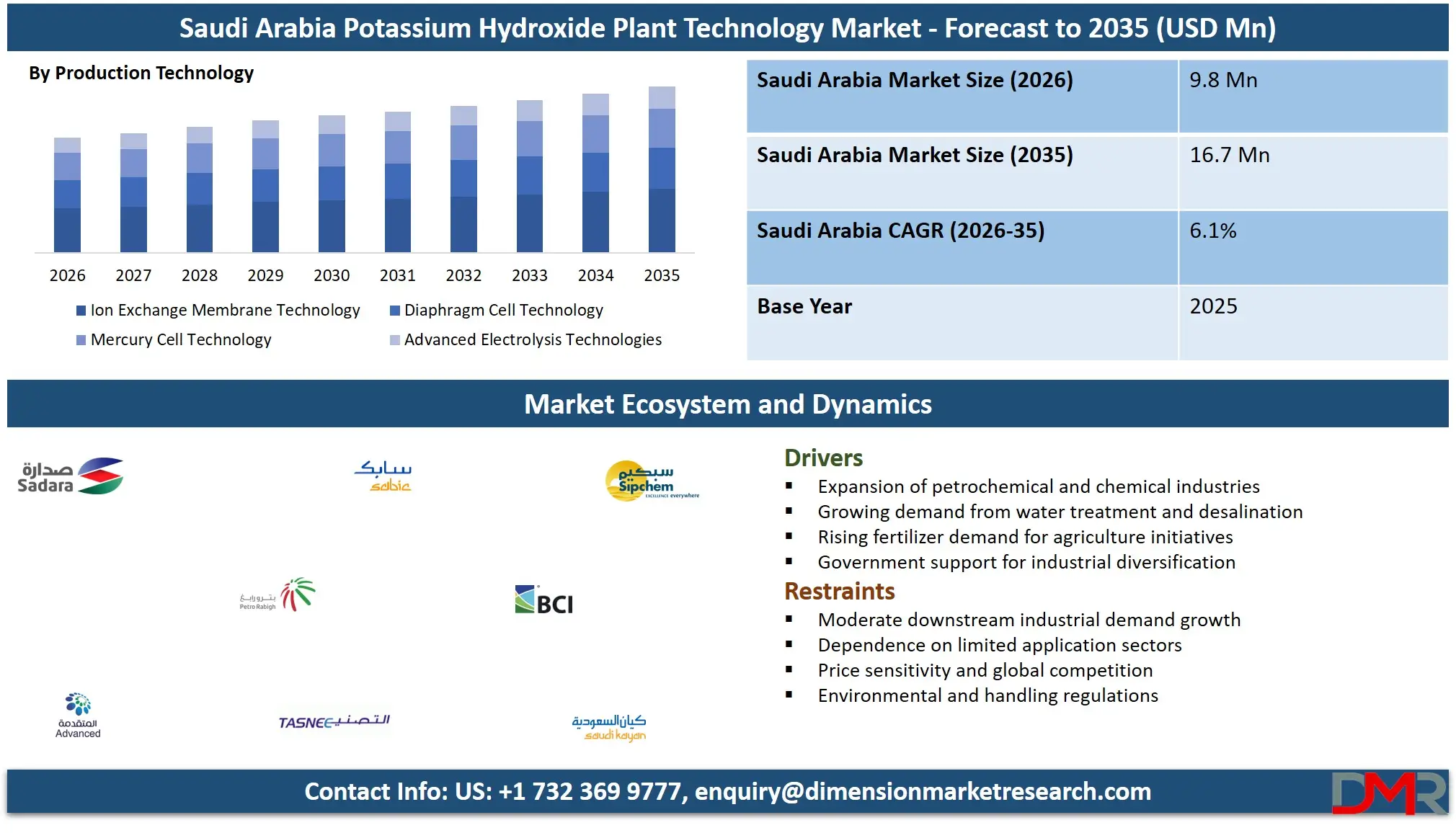
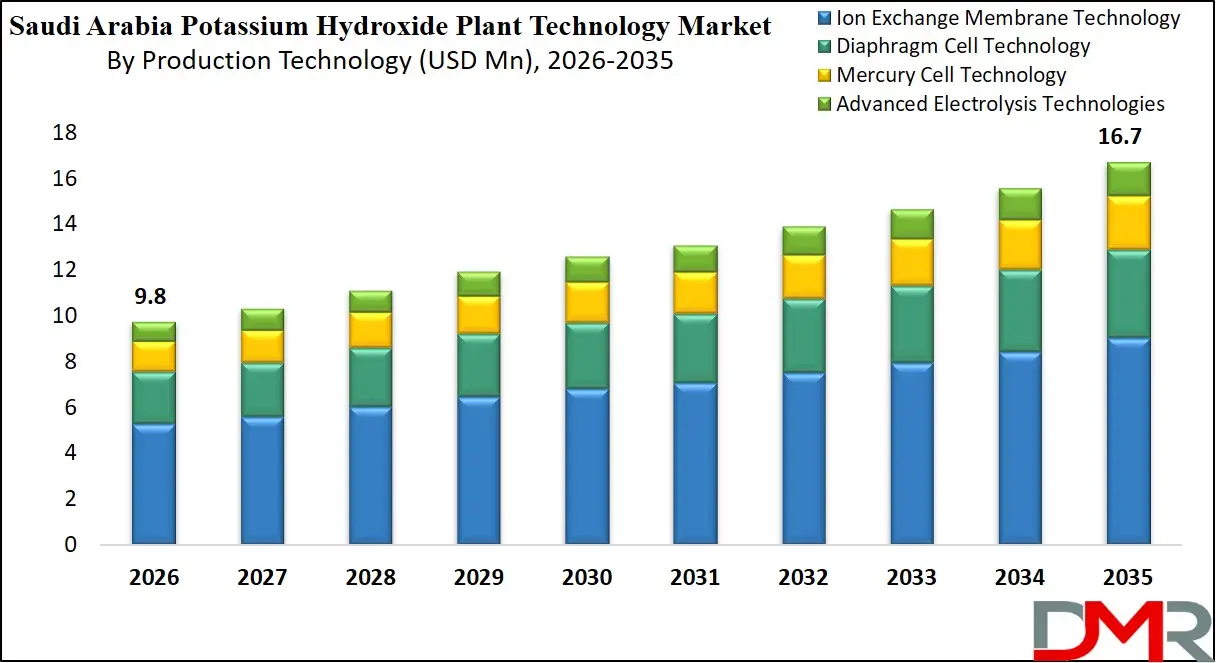
The Saudi Arabia Potassium Hydroxide Plant Technology Market size is projected to reach USD 9.8 million in 2026 and grow at a compound annual growth rate of 6.1% to reach a value of USD 16.7 million in 2035.
ℹ
To learn more about this report –
Download Your Free Sample Report Here
Potassium Hydroxide Plant Technology can be described as the technological means, equipment, and engineering designs involved in the production of potassium hydroxide (KOH) via electrolysis and similar chemical manufacturing operations. They involve membrane cells, diaphragm technology, and other forms of electrolysis that guarantee efficiency and environmental compliance.
Such technology is important in meeting growing demands for potassium hydroxide, which finds wide application in chemicals, agriculture, batteries, and the pharmaceutical industry among others. The increasing need for sustainable production, efficient processes, and purity is resulting in advancements in electrolysis processes.
ℹ
To learn more about this report –
Download Your Free Sample Report Here
Saudi Arabia Potassium Hydroxide Plant Technology Market: Key Takeaways & Influencing Factors
- Market Growth: The Saudi Arabia Potassium Hydroxide Plant Technology Market size is expected to grow by USD 6.4 million, at a CAGR of 6.1%, during the forecasted period of 2027 to 2035.
- By Production Technology: The ion exchange membrane technology segment is anticipated to get the majority share of the Saudi Arabia Potassium Hydroxide Plant Technology market in 2026.
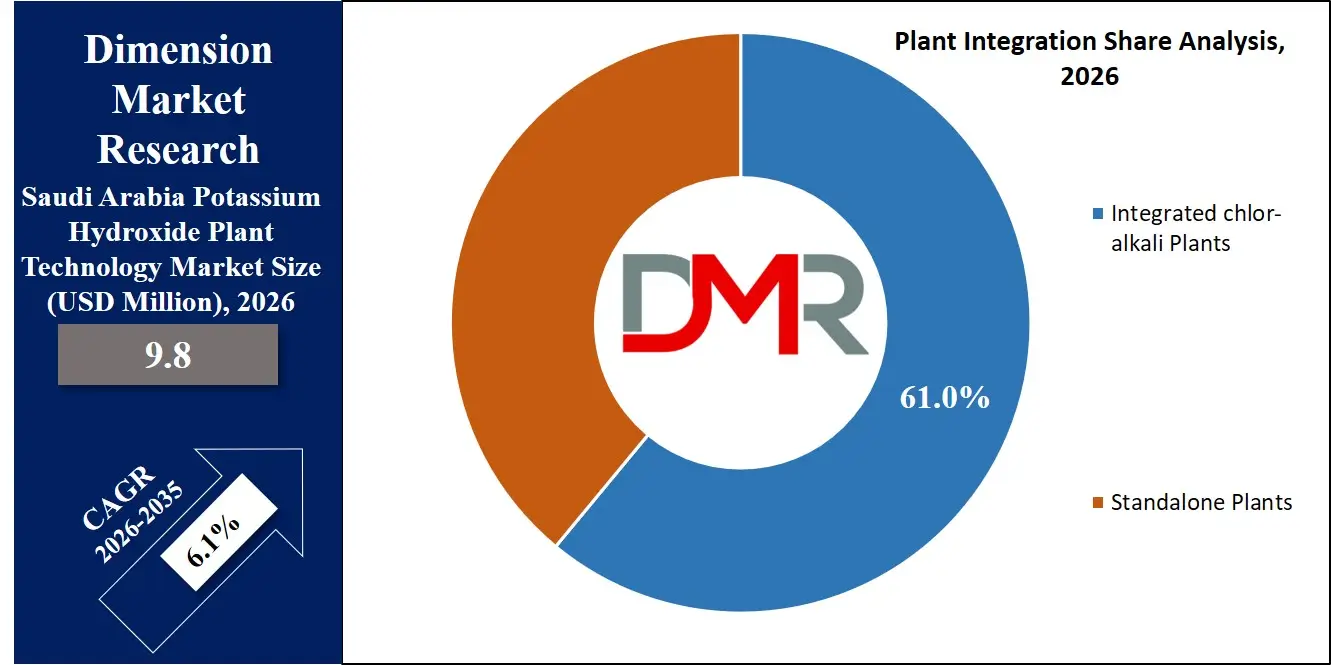
- By Plant Integration: The integrated chlor-alkali plants segment is expected to get the largest revenue share in 2026 in the Saudi Arabia Potassium Hydroxide Plant Technology market.
- Use Cases: Some of the use cases of Potassium Hydroxide Plant Technology include agricultural applications, energy storage solutions, and more.
- Saudi Ministry of Energy reported in 2025 that industrial chemical output capacity utilization in the Kingdom exceeded 78%, driven by increased demand for specialty chemicals.
- Saudi General Authority for Statistics stated in 2024 that the chemical manufacturing sector contributed over 12% to total industrial GDP.
- International Energy Agency noted in 2025 that Saudi Arabia increased investment in electrochemical production technologies by approximately 18% year-on-year.
- World Bank indicated in 2026 that Saudi Arabia's industrial diversification initiatives led to a 9% growth in non-oil manufacturing sectors.
Saudi Arabia Potassium Hydroxide Plant Technology Market: Use Cases
- Chemical Manufacturing: Widely used in producing soaps, detergents, and specialty chemicals, potassium hydroxide plant technologies ensure consistent quality and scalability for industrial chemical production, supporting downstream industries and export capabilities.
- Agricultural Applications: Enables production of potassium-based fertilizers, improving crop yield and soil fertility, especially important in arid regions requiring efficient nutrient management solutions.
- Energy Storage Solutions: Plays a key role in battery manufacturing, particularly alkaline batteries, where high-purity potassium hydroxide is essential for performance and durability.
- Food & Pharmaceutical Processing: Utilized in food processing and pharmaceutical formulations, requiring advanced purification technologies to meet stringent regulatory and quality standards.
Market Dynamic
Driving Factors in the Saudi Arabia Potassium Hydroxide Plant Technology Market
Rising Demand for High-Purity Chemical Products
Industrial demand for potassium hydroxide of high purity in industries such as electronics, pharmaceuticals, and batteries has been one of the key driving forces. Modern techniques employed in plant construction allow for accurate regulation of impurities in production. Another factor driving the market growth is the development of Saudi Arabia towards the production of high-value chemicals through electrolysis.
Government Support for Industrial Diversification
The diversification process that is championed by Saudi Arabia's Vision 2030 program is keen on moving towards industries not based on oil. The use of incentives, infrastructure development, and good policies is driving innovation in plant technology. Such an approach facilitates the growth of production capacities, reduces reliance on imports, and improves technology.
Restraints in the Saudi Arabia Potassium Hydroxide Plant Technology Market
High Capital Investment Requirements
The construction of more advanced facilities utilizing potassium hydroxide involves considerable capital expenditure in terms of electrolytic equipment and energy resources. Such heavy costs may discourage small enterprises and hinder any modernization attempts, particularly in case of switching from conventional methods like the use of mercury cell batteries.
Energy-Intensive Production Process
The process of manufacturing potassium hydroxide through electrolysis requires significant amounts of energy, hence making costs related to the process highly dependent on the price of electricity. Despite Saudi Arabia having several favorable characteristics relating to energy production, there can be some difficulties in ensuring cost-effectiveness.
Opportunities in the Saudi Arabia Potassium Hydroxide Plant Technology Market
Adoption of Green and Energy-Efficient Technologies
There is considerable potential for utilizing energy-saving and environment-friendly technology like zero-gap electrolysis and oxygen depolarized cathodes. This technology not only saves energy but also helps to meet the sustainable development objectives of the world and gives competitive advantage in the export market for green chemicals.
Expansion in Battery and Renewable Energy Sectors
Growing trends in renewable energy sources and energy storage systems have created new areas of application for potassium hydroxide. The rising need for batteries in energy storage and electric vehicles calls for an increased need for top-notch KOH, thereby prompting technological advancements in production plants.
Trends in the Saudi Arabia Potassium Hydroxide Plant Technology Market
Shift Toward Membrane Cell Technology
Cell membrane technology is the new favored way of producing chemicals owing to its higher level of efficiency and lower environmental damage, as well as its capability of manufacturing pure potassium hydroxide. This shows the new trend of adopting environmentally sustainable ways in the industry.
Integration with Digital and Automation Systems
The implementation of digitalization and automation is becoming common in plants, leading to the ability to monitor processes in real time, predict maintenance issues, and optimize processes. This is one of the trends that have been adopted in the industry of potassium hydroxide plants.
Impact of Artificial Intelligence in Saudi Arabia Potassium Hydroxide Plant Technology Market
AI technology is changing the way plants operate with the use of predictive maintenance that reduces downtimes and optimization of electrolysis processes. With the use of AI-powered analytics, the operation can easily be managed through the monitoring of energy usage, yield, and quality of products. The use of smart automation technologies will also help in improving plant safety and decreasing any human errors. In addition, AI will assist in forecasting demand and managing supply chains.
Impact of Iran War on Saudi Arabia Potassium Hydroxide Plant Technology Market
Geopolitical issues surrounding Iran may have an effect on the energy market in the region and also on supply chain reliability. Changes in the cost of energy will have an impact on the economic viability of producing through electrolysis. Furthermore, there has been a greater emphasis on local production capacity in Saudi Arabia, which is pushing investments towards technologically advanced production plants.
Research Scope and Analysis
By Production Technology Analysis
Membrane technology has taken up the majority share in this market on account of the efficiency, eco-friendliness, and high purity of potassium hydroxide that it provides. The global membrane technology market accounted for approximately 54% of the global potassium hydroxide manufacturing market share in 2026. This technology's adoption has been boosted by environmental regulations and increased focus on sustainability due to the elimination of mercury process and processes. Zero gap electrolysis technology has been found to be one of the most rapidly growing segments in recent years.
By Plant Capacity Analysis
Large-scale plants occupy the dominant market position, having a projected market share of about 49% in 2026 due to economies of scale and capability to fulfill large industrial needs. Large-scale plants enjoy benefits such as synergy and efficiency in energy use. On the other hand, medium-scale plants have been identified as the fastest-growing market segment owing to their versatility and minimal startup costs. The rising demand for distributed manufacturing is anticipated to fuel growth in this market segment.
By Product Grade Analysis
Potassium hydroxide for industrial purposes emerges as the leading product type with a forecast market share of around 57% in 2026, due to the wide application scope for chemical production and agricultural purposes. High-volume consumption makes the product type dominate. In contrast, the high purity/electronic grade segment is the most rapidly growing, thanks to emerging uses in the electronics and batteries industry.
By Plant Integration Analysis
ℹ
To learn more about this report –
Download Your Free Sample Report Here
Chlor-alkali plants with integrated operations will account for nearly 61% of market volume in 2026 because of their efficient operations and cost-saving benefits due to shared facilities and resources. Chlor-alkali plants allow for effective manufacturing and energy usage. Free-standing plants are expected to grow at a higher rate owing to their flexibility and ability to manufacture products for specific applications.
By End-Use Industry Analysis
The chemicals sector comes out on top, projected to have a market share of 46% by 2026. This is attributed to the widespread application of potassium hydroxide in production processes and chemicals production. The constant demand guarantees its market supremacy. On the other hand, the energy & batteries sector records the fastest growth.
The Saudi Arabia Potassium Hydroxide Plant Technology Market Report is segmented on the basis of the following:
By Production Technology
- Ion Exchange Membrane Technology
- Cation Exchange Membrane (CEM)
- Anion Exchange Membrane (AEM)
- Hybrid Membrane Systems
- Diaphragm Cell Technology
- Asbestos Diaphragm
- Non-Asbestos Diaphragm
- Mercury Cell Technology
- Advanced Electrolysis Technologies
- Zero-gap Electrolysis
- Oxygen Depolarized Cathode (ODC)
By Plant Capacity
- Small Scale (<50 TPD)
- Medium Scale (50–200 TPD)
- Large Scale (>200 TPD)
By Product Grade
- Industrial Grade
- High Purity / Electronic Grade
- Food & Pharmaceutical Grade
By Plant Integration
- Standalone Plants
- Integrated Chlor-Alkali Plants
By End-Use Industry
- Chemicals
- Agriculture
- Energy & Batteries
- Food & Pharmaceuticals
- Electronics & Semiconductors
Competitive Landscape
Entry barriers to the Potassium Hydroxide Plant Technology Market in Saudi Arabia are very high because of the heavy capital requirement for installation and environmental laws. Companies tend to invest in technologies that are efficient in terms of energy consumption to be able to have an edge in the market. The use of strategic partnerships, research and development efforts, and digital technologies are some of the methods adopted by companies to retain their market position.
ℹ
To learn more about this report –
Download Your Free Sample Report Here
Some of the prominent players in the Saudi Arabia Potassium Hydroxide Plant Technology are:
- SABIC
- Saudi International Petrochemical Company (Sipchem)
- Tasnee (National Industrialization Company)
- Saudi Basic Chemical Industries Company (BCI)
- Advanced Petrochemical Company
- Sahara International Petrochemical Company
- Petro Rabigh
- Saudi Kayan Petrochemical Company
- Sadara Chemical Company
- Yanbu National Petrochemical Company (Yansab)
- Saudi Acrylic Acid Company
- Jubail Chemical Industries Company
- Arabian Chemical Company (ChemCo)
- Saudi Industrial Chemicals Factory
- Gulf Chemicals & Industrial Oils Company
- Al-Jubail Petrochemical Company (Kemya)
- Saudi Chevron Phillips Company
- Farabi Petrochemicals Company
- Saudi Specialty Chemicals Company
- Riyadh Petrochemical Company
- Other Key Players
Report Details
| Report Characteristics |
| Market Size (2026) |
USD 9.8 Mn |
| Forecast Value (2035) |
USD 16.7 Mn |
| CAGR (2026–2035) |
6.1% |
| Historical Data |
2021 – 2025 |
| Forecast Data |
2027 – 2035 |
| Base Year |
2025 |
| Estimate Year |
2026 |
| Report Coverage |
Market Revenue Estimation, Market Dynamics, Competitive Landscape, Growth Factors and etc. |
| Segments Covered |
By Production Technology (Ion Exchange Membrane Technology, Diaphragm Cell Technology, Mercury Cell Technology, Advanced Electrolysis Technologies), By Plant Capacity (Small Scale (<50 TPD), Medium Scale (50–200 TPD), Large Scale (>200 TPD)), By Product Grade (Industrial Grade, High Purity / Electronic Grade, Food & Pharmaceutical Grade), By Plant Integration (Standalone Plants, Integrated Chlor-Alkali Plants), By End-Use Industry (Chemicals, Agriculture, Energy & Batteries, Food & Pharmaceuticals, Electronics & Semiconductors) |
| Country Coverage |
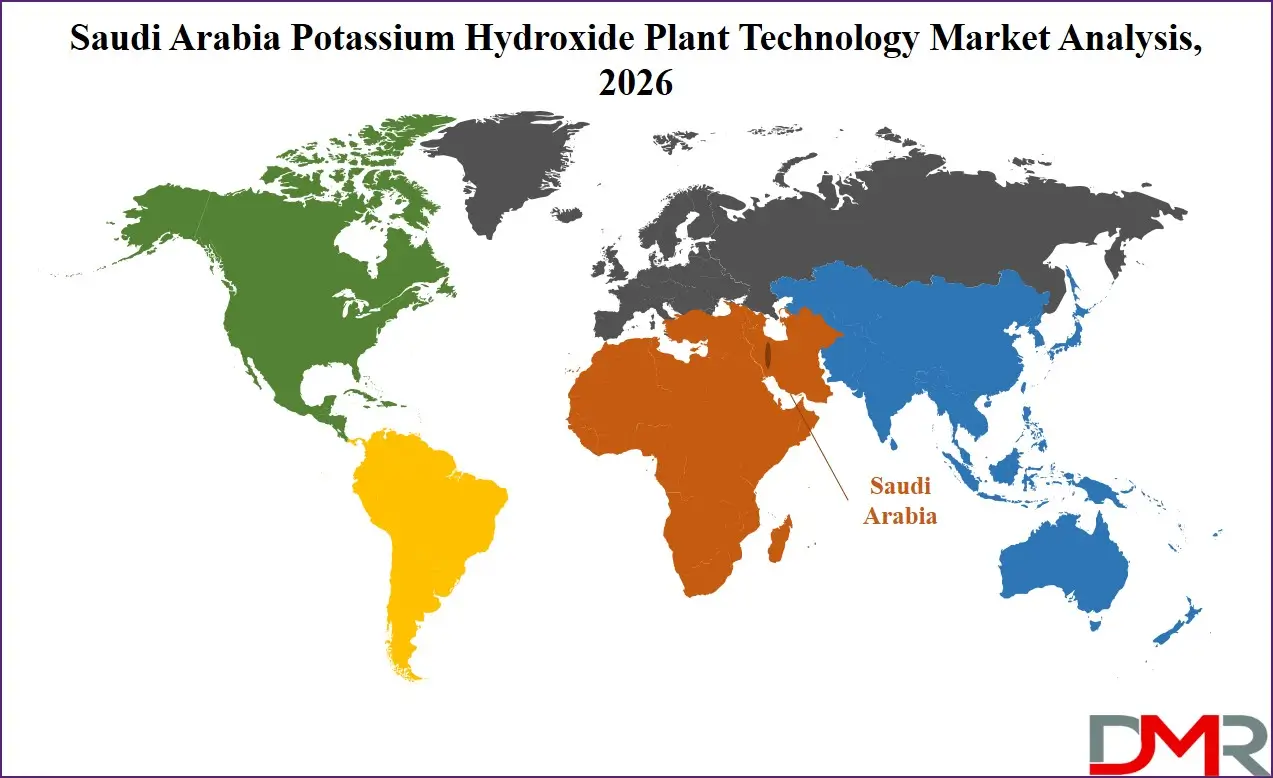
Saudi Arabia |
| Prominent Players |
SABIC, Saudi International Petrochemical Company (Sipchem), Tasnee (National Industrialization Company), Saudi Basic Chemical Industries Company (BCI), Advanced Petrochemical Company, Sahara International Petrochemical Company, Petro Rabigh, Saudi Kayan Petrochemical Company, Sadara Chemical Company, Yanbu National Petrochemical Company (Yansab), Saudi Acrylic Acid Company, Jubail Chemical Industries Company, Arabian Chemical Company (ChemCo), Saudi Industrial Chemicals Factory, Gulf Chemicals & Industrial Oils Company, Al-Jubail Petrochemical Company (Kemya), Saudi Chevron Phillips Company, Farabi Petrochemicals Company, Saudi Specialty Chemicals Company, Riyadh Petrochemical Company, and Other Key Players |
| Purchase Options |
We have three licenses to opt for: Single User License (Limited to 1 user), Multi-User License (Up to 5 Users) and Corporate Use License (Unlimited User) along with free report customization equivalent to 0 analyst working days, 3 analysts working days and 5 analysts working days respectively. |
Frequently Asked Questions
How big is the Saudi Arabia Potassium Hydroxide Plant Technology Market?
▾ The Saudi Arabia Potassium Hydroxide Plant Technology Market size is expected to reach USD 9.8 million by 2026 and is projected to reach USD 16.7 million by the end of 2035.
Who are the key players in the Saudi Arabia Potassium Hydroxide Plant Technology Market?
▾ Some of the major key players in the Saudi Arabia Potassium Hydroxide Plant Technology Market include SABIC, BCI, Tasnee, and others.
What is the growth rate in the Saudi Arabia Potassium Hydroxide Plant Technology Market?
▾ The market is growing at a CAGR of 6.1 percent over the forecasted period.