Market Overview
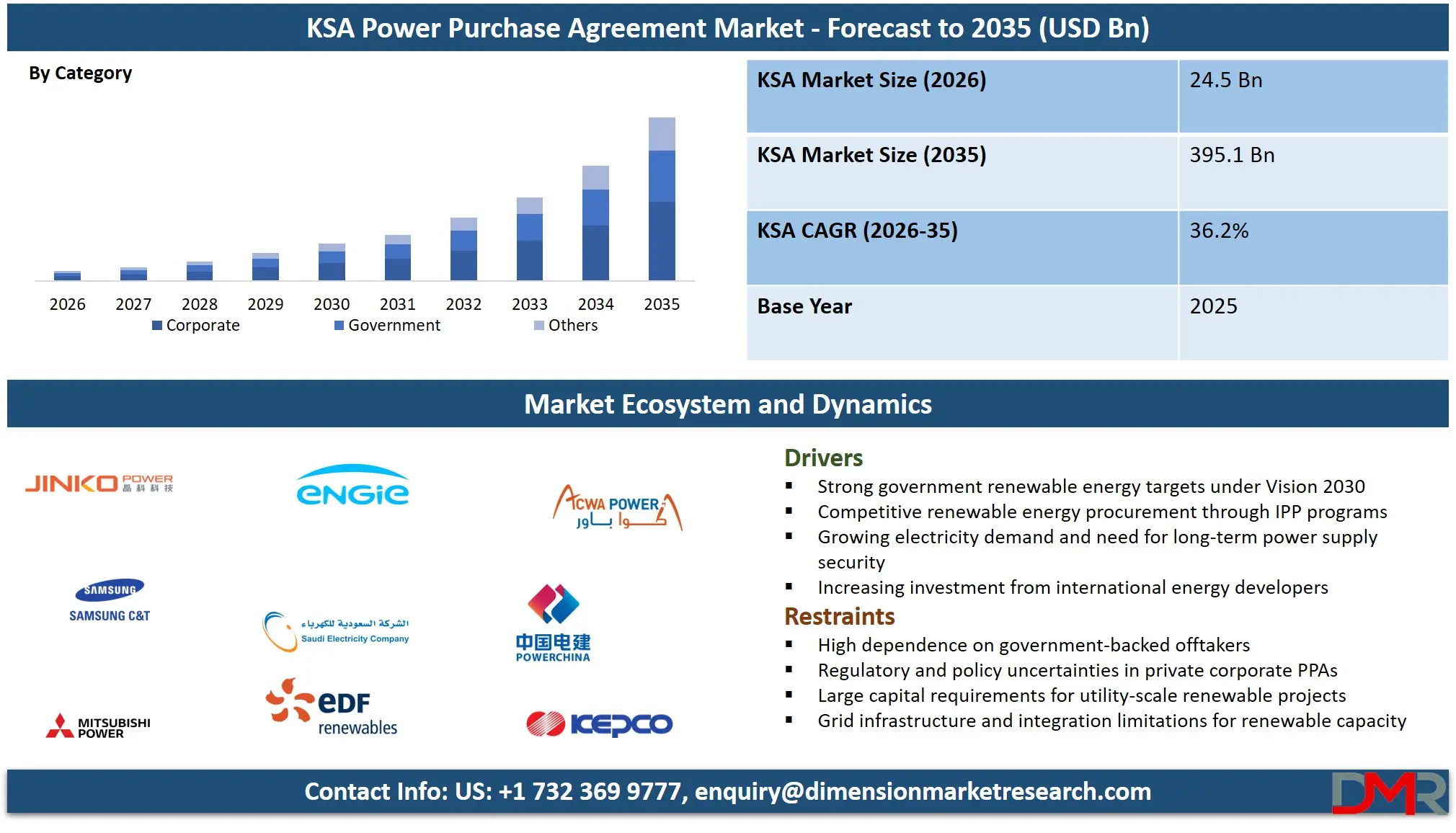
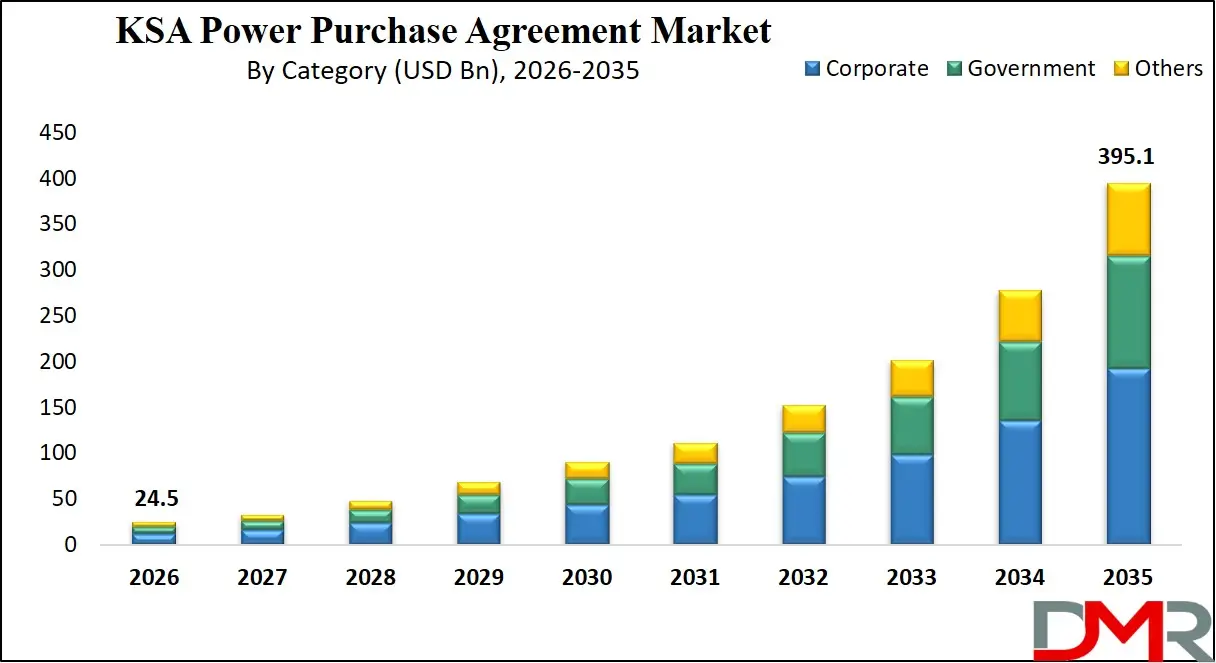
The KSA Power Purchase Agreement Market size is projected to reach USD 24.5 billion in 2026 and grow at a compound annual growth rate of 36.2% to reach a value of USD 395.1 billion in 2035.
ℹ
To learn more about this report –
Download Your Free Sample Report Here
A Power Purchase Agreement (PPA) is a long-term contractual arrangement between an electricity producer and a power buyer in which the buyer agrees to purchase electricity at predetermined terms and pricing for a defined period. These agreements are widely used in the energy sector to finance and operate power generation projects, particularly renewable energy facilities such as solar and wind plants. PPAs define critical aspects such as pricing structures, contract duration, energy delivery terms, performance guarantees, and risk allocation between the generator and the buyer.
In the context of KSA, PPAs play a vital role in supporting large-scale energy projects by providing revenue certainty for developers and price predictability for buyers. Saudi Arabia’s evolving energy landscape, characterized by diversification away from oil dependency and increasing renewable energy investments, has strengthened the relevance of such contractual frameworks. The adoption of solar and wind energy facilities, along with government-backed power procurement initiatives, has increased the utilization of long-term electricity purchasing contracts across corporate and utility sectors.
ℹ
To learn more about this report –
Download Your Free Sample Report Here
The ecosystem surrounding these agreements is evolving due to policy reforms, renewable energy targets, and the modernization of electricity infrastructure. Energy procurement strategies are increasingly focused on sustainability commitments, cost stability, and long-term energy security. Large industrial consumers, technology companies, and government entities are exploring structured electricity procurement models to support decarbonization objectives. At the same time, energy developers and financial institutions are leveraging innovative contract structures and digital energy management solutions to optimize project financing and operational performance.
KSA Power Purchase Agreement Market: Key Takeaways
- Market Growth: The KSA Power Purchase Agreement Market size is expected to grow by USD 362.7 billion, at a CAGR of 36.2%, during the forecasted period of 2027 to 2035.
- By Category: The corporate segment is anticipated to get the majority share of the KSA Power Purchase Agreement market in 2026.
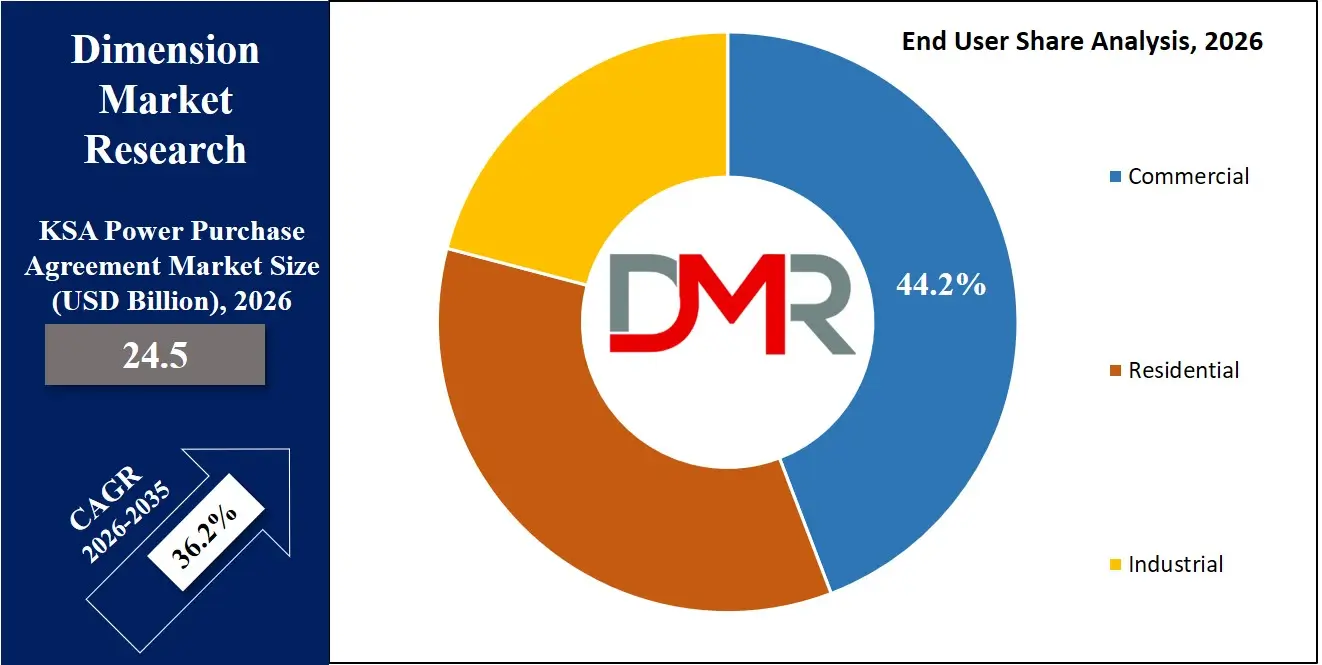
- By End User: The commercial segment is expected to get the largest revenue share in 2026 in the KSA Power Purchase Agreement market.
- Use Cases: Some of the use cases of power purchase agreement include industrial energy supply, hybrid renewable systems, and more.
KSA Power Purchase Agreement Market: Use Cases
- Corporate Renewable Procurement: Large corporations in Saudi Arabia are increasingly entering long-term electricity purchasing agreements to secure renewable energy supply for operations. These agreements help companies achieve sustainability targets, stabilize electricity costs, and reduce carbon emissions while ensuring long-term energy availability.
- Utility-Scale Renewable Projects: Government-backed renewable projects rely heavily on structured electricity purchasing contracts to secure project financing. Energy developers use these agreements to guarantee revenue streams for large solar and wind farms, making them attractive to investors and financial institutions.
- Industrial Energy Supply: Energy-intensive industries such as petrochemicals, manufacturing, and mining utilize long-term electricity contracts to maintain stable operational costs. These agreements provide reliable power access and enable companies to hedge against energy price volatility.
- Public Infrastructure Power Procurement: Government agencies responsible for large infrastructure projects, including transportation systems and urban developments, utilize long-term electricity agreements to ensure continuous energy supply for operations.
- Renewable Energy Project Financing: Financial institutions and investors rely on guaranteed electricity purchasing agreements as part of project financing structures. These contracts provide predictable revenue streams, reducing investment risks in renewable energy development.
- Hybrid Renewable Systems: Electricity procurement agreements support hybrid renewable energy installations that combine solar, wind, and storage solutions. This approach enhances grid reliability while improving the efficiency of renewable energy deployment.
- Cross-Sector Energy Collaboration: Large organizations collaborate with energy developers to jointly establish renewable power generation projects. These agreements enable shared investment structures and promote sustainable electricity production across industries.
Stats & Facts
- International Energy Agency (IEA) reported that Saudi Arabia aims to generate 50% of its electricity from renewable energy by 2030 under national energy transition initiatives.
- Saudi Ministry of Energy stated in 2025 that the Kingdom plans to install more than 130 GW of renewable energy capacity by 2030.
- International Renewable Energy Agency (IRENA) indicated in 2024 that Saudi Arabia’s renewable capacity reached over 3.7 GW, primarily from solar projects.
- Saudi Power Procurement Company (SPPC) announced in 2025 that multiple renewable projects with combined capacity exceeding 8 GW were under procurement stages.
- World Bank reported in 2024 that Saudi Arabia’s electricity consumption surpassed 350 TWh annually, reflecting strong industrial demand.
- U.S. Energy Information Administration (EIA) stated in 2025 that Saudi Arabia remains one of the largest electricity consumers in the Middle East, driven by industrial expansion and population growth.
- International Energy Agency (IEA) estimated in 2024 that renewable investments in the Middle East, including Saudi Arabia, exceeded USD 20 billion annually.
- Saudi Vision 2030 Program highlighted plans in 2025 to diversify the national energy mix and reduce reliance on oil-fired power generation.
- Gulf Cooperation Council Interconnection Authority (GCCIA) reported in 2024 that cross-border electricity exchange in the GCC region exceeded 30 TWh annually.
- Saudi Electricity Company stated in 2025 that peak electricity demand in the Kingdom exceeded 65 GW during summer months.
- International Renewable Energy Agency (IRENA) noted in 2024 that solar PV costs globally have declined by over 80% since 2010, supporting renewable power agreements worldwide.
- Organisation of the Petroleum Exporting Countries (OPEC) highlighted in 2025 that energy demand in the Middle East is expected to grow steadily due to industrial diversification.
Market Dynamic
Driving Factors in the KSA Power Purchase Agreement Market
Expansion of Renewable Energy Projects
Saudi Arabia’s aggressive renewable energy expansion strategy is a major driver behind the adoption of structured electricity procurement agreements. The government’s national transformation agenda emphasizes large-scale solar and wind power development to diversify the country’s energy mix and reduce reliance on fossil fuels. These agreements provide guaranteed revenue streams for project developers, enabling easier access to project financing from international investors and financial institutions. As renewable installations increase across the Kingdom, long-term electricity purchasing frameworks are becoming a preferred mechanism to ensure project bankability and operational stability while supporting national sustainability and energy transition goals.
Industrial Demand for Long-Term Energy Cost Stability
Saudi Arabia’s rapidly expanding industrial sectors, including petrochemicals, manufacturing, and metals processing requires reliable and cost-predictable energy supplies. Long-term electricity purchasing agreements help industrial operators mitigate risks associated with fluctuating energy prices while ensuring continuous power availability for production facilities. Large corporations are increasingly integrating renewable energy procurement strategies to meet environmental commitments and reduce operational carbon footprints. These agreements allow businesses to secure fixed electricity pricing structures for extended durations, improving financial planning and operational efficiency while supporting broader industrial development across the Kingdom.
Restraints in the KSA Power Purchase Agreement Market
Complex Regulatory and Contractual Frameworks
Although the adoption of renewable energy procurement agreements is growing in Saudi Arabia, complex regulatory frameworks and contractual negotiations can slow market expansion. These agreements involve detailed legal, financial, and operational provisions related to pricing structures, delivery mechanisms, grid access, and risk allocation between buyers and developers. Negotiations often require multiple regulatory approvals and coordination with government authorities responsible for electricity procurement and grid operations. Such complexities can lengthen project development timelines and increase transaction costs, potentially discouraging smaller developers or corporate buyers from entering into long-term electricity purchasing agreements.
High Initial Infrastructure and Financing Requirements
Developing large-scale renewable power projects linked to electricity procurement agreements requires substantial upfront capital investment. Infrastructure components such as solar farms, wind turbines, transmission lines, and grid interconnection facilities involve significant financial commitments. While long-term electricity purchasing contracts provide revenue certainty, developers must still secure financing and manage construction risks before project commissioning. These financial barriers may limit participation from smaller energy developers or emerging market players. Additionally, fluctuations in global equipment prices and supply chain disruptions can further increase project development costs, impacting the feasibility of new electricity generation projects.
Opportunities in the KSA Power Purchase Agreement Market
Expansion of Corporate Renewable Procurement Programs
Corporate renewable procurement is emerging as a significant opportunity within Saudi Arabia’s energy sector. Large multinational companies operating in the Kingdom are adopting sustainability strategies aligned with global climate commitments and environmental standards. Long-term electricity procurement agreements allow these organizations to directly source renewable energy from solar and wind projects while reducing operational emissions. As environmental, social, and governance (ESG) frameworks gain prominence, more corporations are expected to adopt renewable procurement strategies. This trend could significantly expand the adoption of structured electricity purchasing agreements across commercial and industrial sectors in the Kingdom.
Development of Green Hydrogen and Clean Energy Projects
Saudi Arabia is positioning itself as a global hub for green hydrogen and advanced clean energy production. These emerging sectors require large quantities of renewable electricity to power electrolyzers and associated production infrastructure. Long-term electricity procurement agreements can play a central role in securing stable energy supplies for hydrogen facilities and other energy-intensive clean technology projects. As investments in green hydrogen and carbon-neutral energy solutions accelerate, electricity purchasing frameworks are likely to become critical tools for integrating renewable power into large industrial energy systems.
Trends in the KSA Power Purchase Agreement Market
Integration of Hybrid Renewable Energy Systems
Energy developers in Saudi Arabia are increasingly integrating hybrid renewable energy systems that combine solar, wind, and energy storage technologies. These integrated solutions improve grid stability and ensure consistent power supply even when renewable energy generation fluctuates. Long-term electricity procurement agreements are being adapted to accommodate hybrid energy projects, allowing buyers to access diversified renewable energy sources through a single contractual framework. The integration of battery storage technologies within these agreements further enhances energy reliability and supports the Kingdom’s broader energy transition goals.
Digitalization and Energy Data Management
Digital technologies are transforming the way electricity procurement agreements are structured and managed. Advanced data analytics, smart grid technologies, and energy management platforms are enabling better monitoring of electricity generation, consumption, and contractual performance. These digital solutions help energy buyers optimize procurement strategies and ensure compliance with contract terms. As Saudi Arabia continues to modernize its electricity infrastructure and adopt smart energy systems, digital platforms are expected to play a significant role in improving transparency, efficiency, and operational performance within electricity procurement agreements.
Impact of Artificial Intelligence in KSA Power Purchase Agreement Market
- Predictive Energy Forecasting: AI models analyze historical consumption patterns and weather conditions to forecast electricity generation and demand, improving the accuracy of power procurement planning.
- Contract Performance Monitoring: AI-powered platforms track compliance with electricity purchasing agreements, automatically detecting deviations in supply commitments or pricing structures.
- Grid Optimization: AI algorithms optimize grid operations by balancing renewable energy generation with real-time electricity demand, improving overall energy system efficiency.
- Energy Price Optimization: Machine learning tools help organizations analyze market trends and optimize electricity procurement strategies to secure more favorable contract terms.
- Renewable Energy Production Forecasting: AI technologies predict solar and wind generation patterns, allowing energy buyers to plan electricity consumption and storage strategies more effectively.
- Risk Assessment and Management: AI systems analyze operational and financial risks associated with long-term electricity purchasing agreements, supporting better decision-making for project developers and investors.
- Energy Trading Automation: Automated AI platforms facilitate electricity trading and contract settlements by analyzing real-time energy market conditions.
- Asset Performance Optimization: AI-driven predictive maintenance systems monitor renewable energy infrastructure such as solar panels and wind turbines to improve operational efficiency.
- Demand Response Management: AI enables intelligent demand response systems that adjust electricity consumption based on grid conditions and energy availability.
Research Scope and Analysis
By Type Analysis
Physical delivery electricity procurement agreements represent the dominant segment within Saudi Arabia’s structured power procurement ecosystem. These agreements involve the direct delivery of electricity from a generation facility to the buyer through the national grid or dedicated transmission infrastructure. They are widely used for large-scale renewable energy projects, particularly solar and wind installations developed under government procurement programs. Industrial consumers and utilities prefer this model because it provides stable electricity supply and predictable long-term pricing. The increasing development of renewable power plants across the Kingdom has strengthened the adoption of this contract type. By 2026, Physical Delivery agreements are projected to account for approximately 42.3% of the KSA electricity procurement agreement market, reflecting their importance in financing and operating large energy generation projects.
Virtual electricity procurement agreements are emerging as one of the fastest-growing segments in Saudi Arabia’s evolving energy procurement landscape. Unlike physical delivery agreements, these contracts are financial arrangements in which the buyer and developer settle electricity price differences without the direct transfer of electricity. Virtual agreements enable corporations to support renewable energy projects while continuing to purchase electricity from the local grid. This structure is particularly attractive for multinational companies seeking to meet sustainability goals and renewable energy commitments. As corporate sustainability initiatives expand and energy procurement strategies become more flexible, virtual agreements are expected to experience significant adoption across the commercial and industrial sectors.
By Location Analysis
Off-site electricity procurement agreements represent the dominant segment within Saudi Arabia’s structured power procurement ecosystem. These agreements involve electricity generated from renewable power plants located away from the buyer’s facilities and delivered through the national grid. Large solar and wind farms developed in energy-rich regions such as desert areas are commonly linked to industrial zones and urban centers through these contracts. Off-site agreements enable companies to access large-scale renewable power generation without requiring land or infrastructure at their own facilities. In addition, government-backed renewable procurement initiatives strongly favor centralized large-scale projects connected through the grid. By 2026, off-site agreements are expected to account for nearly 63.7% of the KSA electricity procurement agreement market, supported by large renewable energy projects and national grid expansion.
On-site electricity procurement agreements are emerging as a fast-growing segment due to increasing interest in decentralized energy systems. In this model, renewable energy systems such as rooftop solar or small-scale generation units are installed directly at the buyer’s facility. Industrial plants, commercial buildings, and logistics hubs are adopting on-site renewable generation to reduce electricity costs and improve energy security. On-site systems also help organizations reduce transmission losses and achieve sustainability goals through direct renewable energy consumption. As solar technology costs continue to decline and corporate sustainability initiatives expand, on-site electricity procurement agreements are expected to gain traction across commercial and industrial sectors in Saudi Arabia.
By Category Analysis
Corporate electricity procurement agreements dominate the market as large organizations increasingly pursue renewable energy sourcing strategies to meet sustainability targets and long-term cost management goals. Multinational corporations, technology companies, manufacturing firms, and logistics operators are among the key adopters of long-term renewable electricity agreements. These organizations use structured procurement contracts to secure stable electricity prices while reducing their environmental footprint. Saudi Arabia’s industrial expansion and growing presence of global corporations have accelerated the adoption of corporate renewable procurement strategies. By 2026, corporate buyers are projected to hold approximately 48.5% of the KSA electricity procurement agreement market, supported by ESG commitments, sustainability reporting requirements, and rising corporate demand for clean energy solutions.
Government electricity procurement agreements are expanding rapidly due to large infrastructure development projects and national energy diversification initiatives. Public sector entities responsible for transportation systems, public utilities, smart city developments, and public infrastructure require stable long-term electricity supplies. Government-backed procurement initiatives also play a crucial role in developing large-scale renewable power projects across Saudi Arabia. As national energy transition policies prioritize renewable deployment and electricity market modernization, public sector procurement is expected to grow significantly. Government organizations also serve as anchor buyers for large renewable energy projects, supporting long-term project financing and infrastructure development across the Kingdom.
By Deal Type Analysis
Wholesale electricity procurement agreements represent the leading segment in Saudi Arabia’s electricity contracting landscape. These agreements involve large-scale electricity purchases typically between energy developers and utilities, grid operators, or large industrial consumers. Wholesale contracts are commonly used for utility-scale renewable energy projects, where electricity is sold in bulk volumes to distribution companies or government procurement agencies. The scale of these transactions makes them essential for financing major solar and wind developments across the country. By 2026, wholesale electricity agreements are expected to account for approximately 55.9% of the KSA electricity procurement agreement market, reflecting their importance in large-scale power generation projects and national energy supply frameworks.
Retail electricity procurement agreements are growing rapidly as deregulation and market liberalization create opportunities for direct electricity purchasing by commercial and industrial customers. Retail agreements enable smaller businesses, commercial facilities, and institutional buyers to enter into long-term electricity purchasing arrangements with energy providers. These agreements provide customers with more flexible pricing structures and energy sourcing options, including renewable energy supply contracts. As Saudi Arabia continues to modernize its electricity market and encourage private sector participation, retail electricity procurement agreements are expected to expand significantly across the commercial and service sectors.
By Capacity Analysis
Large-capacity electricity procurement agreements above 100 MW dominate the Saudi Arabian market due to the country’s emphasis on large-scale renewable power generation projects. Solar and wind projects developed under national energy procurement programs typically exceed 100 MW in capacity to maximize economies of scale and improve energy production efficiency. These large projects often supply electricity to national utilities, industrial clusters, or multiple corporate buyers through long-term agreements. Large-scale projects also attract significant international investment and financial backing. By 2026, agreements exceeding 100 MW capacity are projected to account for nearly 46.8% of the KSA electricity procurement agreement market, supported by utility-scale renewable developments.
The 20–50 MW capacity segment is expected to grow rapidly due to increasing adoption of mid-scale renewable projects serving commercial complexes, industrial parks, and regional energy networks. These projects are particularly attractive for organizations seeking dedicated renewable energy sources without investing in massive utility-scale infrastructure. Mid-scale installations offer flexibility in project development and can be deployed closer to consumption centers. As Saudi Arabia expands its renewable energy portfolio and encourages distributed energy generation, projects within the 20–50 MW capacity range are expected to gain strong traction in the coming years.
By Application Analysis
Solar energy applications dominate electricity procurement agreements in Saudi Arabia due to the country’s exceptional solar resource potential and favorable climatic conditions. The Kingdom receives some of the highest solar irradiation levels globally, making solar photovoltaic power generation highly efficient and cost-effective. Government initiatives aimed at expanding solar energy capacity have accelerated the development of utility-scale solar farms across the country. Many electricity procurement agreements are structured specifically to support solar project financing and long-term electricity supply. By 2026, solar energy is expected to account for approximately 51.6% of the KSA electricity procurement agreement market, reflecting its strategic importance in national renewable energy plans.
Wind energy is emerging as one of the fastest-growing applications within Saudi Arabia’s electricity procurement ecosystem. Certain regions of the Kingdom, particularly coastal and northern areas, offer strong wind resources suitable for large-scale wind farms. Wind projects are increasingly being integrated into renewable procurement initiatives alongside solar power plants. Hybrid solar-wind energy systems are also gaining attention as they provide more consistent electricity generation. As Saudi Arabia continues to diversify its renewable energy mix, wind energy procurement agreements are expected to expand steadily.
By End User Analysis
Industrial consumers represent the largest end-user segment in Saudi Arabia’s electricity procurement agreement market. Industries such as petrochemicals, metals processing, manufacturing, and mining require continuous high-volume electricity supply to support production processes. Long-term electricity procurement agreements enable industrial operators to secure stable electricity pricing and ensure reliable power availability. The rapid expansion of industrial zones and mega-projects in Saudi Arabia has further increased demand for structured electricity procurement contracts. By 2026, the industrial sector is expected to hold approximately 44.2% of the KSA electricity procurement agreement market, reflecting its significant energy consumption and operational requirements.
ℹ
To learn more about this report –
Download Your Free Sample Report Here
Commercial organizations are among the fastest-growing end-users of electricity procurement agreements. Businesses such as office complexes, retail centers, hospitality establishments, and logistics facilities are increasingly adopting renewable energy procurement strategies to reduce operational costs and meet sustainability commitments. These organizations often enter into long-term electricity contracts to access renewable energy supply without investing directly in power generation infrastructure. The expansion of commercial real estate and service industries in Saudi Arabia is expected to further accelerate the adoption of electricity procurement agreements within this segment.
The KSA Power Purchase Agreement Market Report is segmented on the basis of the following:
By Type
- Physical Delivery PPA
- Virtual PPA
- Portfolio PPA
- Block Delivery PPA
- Others
By Location
By Category
- Corporate
- Government
- Others
By Deal Type
By Capacity
- Up to 20 MW
- 20–50 MW
- 50–100 MW
- Above 100 MW
By Application
- Solar
- Wind
- Geothermal
- Hydropower
- Carbon Capture and Storage
- Others
By End-User
- Commercial
- Residential
- Industrial
Competitive Landscape
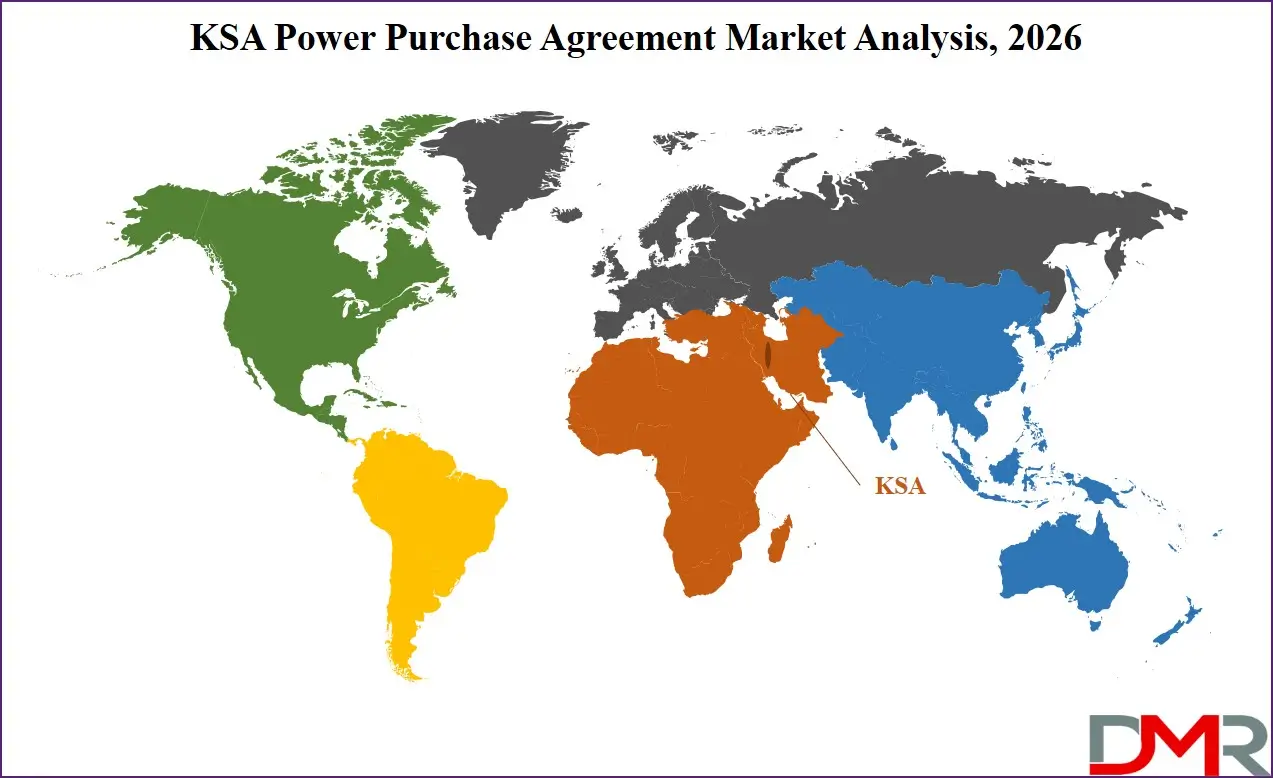
The competitive landscape of the Saudi Arabia electricity procurement agreement market is shaped by strong government oversight, strategic partnerships, and increasing private sector participation. Market participants focus heavily on securing long-term project pipelines through government procurement initiatives and corporate renewable energy partnerships.
ℹ
To learn more about this report –
Download Your Free Sample Report Here
Competitive advantages are often built through technological expertise in renewable energy generation, strong financial backing, and the ability to deliver large-scale projects efficiently. Strategic collaborations between energy developers, infrastructure investors, and financial institutions are common, enabling risk-sharing and improved project financing structures. Market entry barriers remain relatively high due to capital requirements, regulatory compliance, and the need for technical expertise in renewable energy project development and grid integration.
Some of the prominent players in the KSA Power Purchase Agreement are:
- ACWA Power
- Saudi Electricity Company
- EDF Renewables
- Masdar
- TotalEnergies
- ENGIE
- Jinko Power
- SPIC Huanghe Hydropower Development
- Al Jomaih Energy and Water Company
- Nesma Company
- Marubeni Corporation
- Mitsubishi Power
- Sumitomo Corporation
- KEPCO
- Samsung C&T
- Abengoa
- Acciona Energia
- China Energy Engineering Corporation
- PowerChina
- China Three Gorges Corporation
- Other Key Players
Recent Developments
- In June 2025, the Saudi Power Procurement Company (SPPC) signed multiple long-term electricity purchasing agreements with renewable energy developers for new solar and wind power projects. These agreements are part of the Kingdom’s national renewable energy program aimed at accelerating clean energy generation capacity. The contracts cover several utility-scale renewable power plants located in different regions of Saudi Arabia and are expected to supply electricity to the national grid over long-term operational periods.
- In January 2025, ACWA Power announced the expansion of its renewable electricity procurement portfolio in Saudi Arabia through new long-term power purchasing agreements linked to large-scale solar projects. The initiative involved partnerships with government procurement authorities and international financial institutions to accelerate renewable energy deployment across the Kingdom. The projects collectively aim to supply gigawatt-scale renewable electricity capacity to the national grid and industrial consumers.
Report Details
| Report Characteristics |
| Market Size (2026) |
USD 24.5 Bn |
| Forecast Value (2035) |
USD 395.1 Bn |
| CAGR (2026–2035) |
36.2% |
| Historical Data |
2021 – 2025 |
| Forecast Data |
2027 – 2035 |
| Base Year |
2025 |
| Estimate Year |
2026 |
| Report Coverage |
Market Revenue Estimation, Market Dynamics, Competitive Landscape, Growth Factors and etc. |
| Segments Covered |
By Type (Physical Delivery PPA, Virtual PPA, Portfolio PPA, Block Delivery PPA, Others), By Location (On-site, Off-site), By Category (Corporate, Government, Others), By Deal Type (Wholesale, Retail, Others), By Capacity (Up to 20 MW, 20–50 MW, 50–100 MW, Above 100 MW), By Application (Solar, Wind, Geothermal, Hydropower, Carbon Capture and Storage, Others), By End-User (Commercial, Residential, Industrial) |
| Country Coverage |
Saudi Arabia |
| Prominent Players |
ACWA Power, Saudi Electricity Company, EDF Renewables, Masdar, TotalEnergies, ENGIE, Jinko Power, SPIC Huanghe Hydropower Development, Al Jomaih Energy and Water Company, Nesma Company, Marubeni Corporation, Mitsubishi Power, Sumitomo Corporation, KEPCO, Samsung C&T, Abengoa, Acciona Energia, China Energy Engineering Corporation, PowerChina, China Three Gorges Corporation, and Other Key Players |
| Purchase Options |
We have three licenses to opt for: Single User License (Limited to 1 user), Multi-User License (Up to 5 Users) and Corporate Use License (Unlimited User) along with free report customization equivalent to 0 analyst working days, 3 analysts working days and 5 analysts working days respectively. |
Frequently Asked Questions
How big is the KSA Power Purchase Agreement Market?
▾ The KSA Power Purchase Agreement Market size is expected to reach USD 24.5 billion by 2026 and is projected to reach USD 395.1 billion by the end of 2035.
Who are the key players in the KSA Power Purchase Agreement Market?
▾ Some of the major key players in the KSA Power Purchase Agreement Market include ACWA, ENGIE, Samsung and others
What is the growth rate in the KSA Power Purchase Agreement Market?
▾ The market is growing at a CAGR of 36.2 percent over the forecasted period.