Market Overview
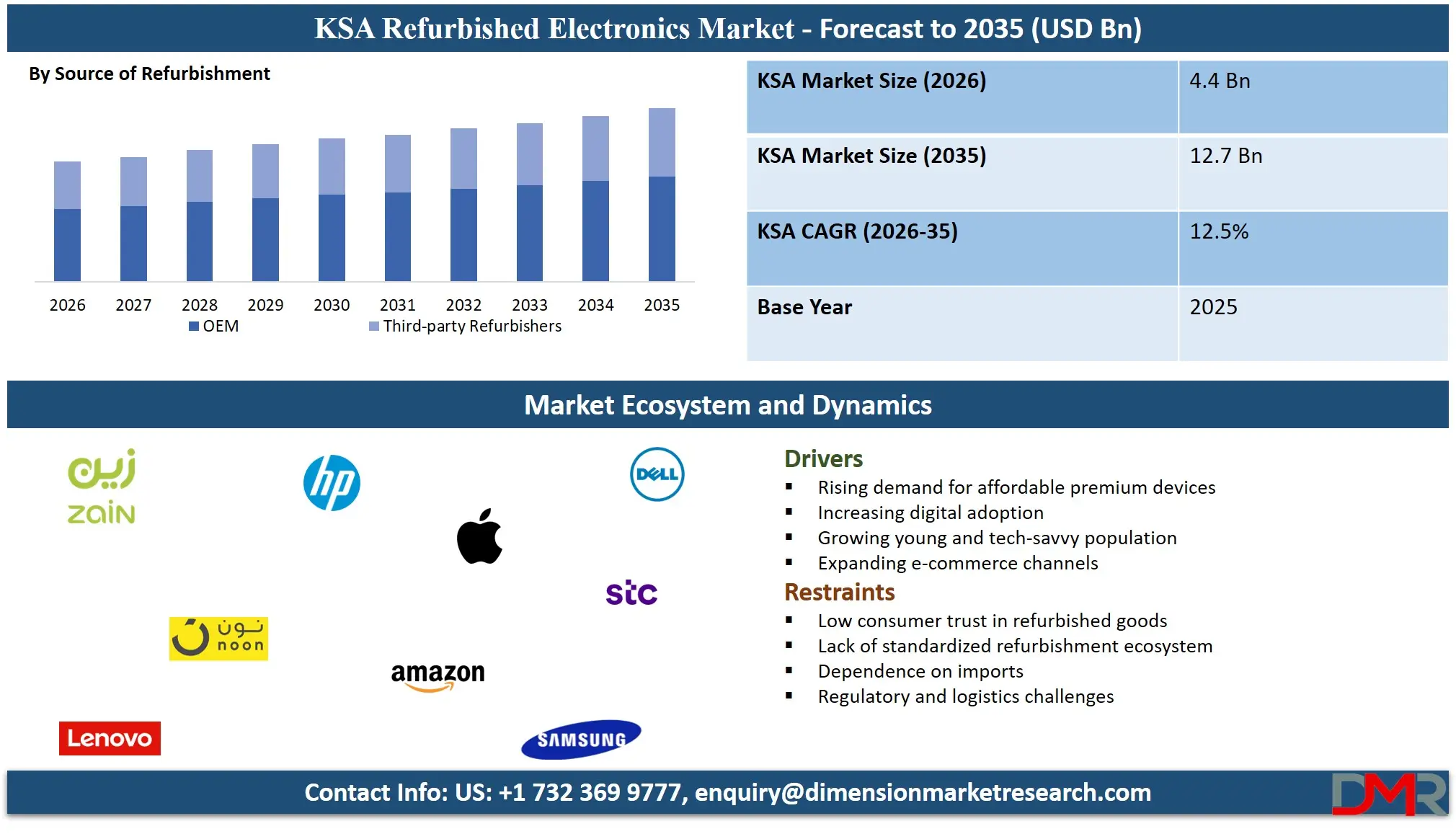
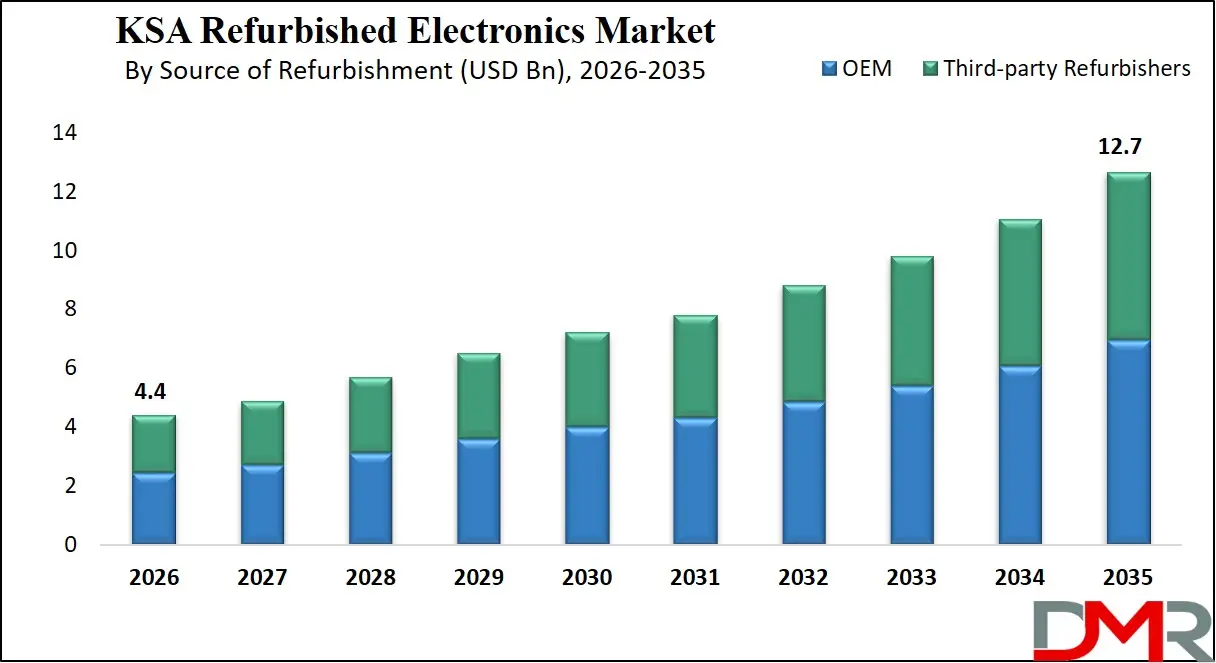
KSA Refurbished Electronics Market size is projected to reach USD 4.4 billion in 2026 and grow at a compound annual growth rate of 12.5% to reach a value of USD 12.7 billion in 2035.
ℹ
To learn more about this report –
Download Your Free Sample Report Here
Refurbished electronics refers to the ecosystem involving the restoration, testing, certification, and resale of previously owned electronic devices, including smartphones, laptops, home appliances, and other consumer electronics. These products undergo rigorous quality checks, repairs, and software updates to ensure functionality comparable to new items, often accompanied by limited warranties. The sector includes original equipment manufacturers (OEMs), third-party refurbishers, online marketplaces, and offline retail channels. It plays a crucial role in extending product lifecycles, reducing electronic waste, and providing cost-effective access to technology for consumers and businesses alike.
In Saudi Arabia, the refurbished electronics segment is gaining momentum within the broader consumer electronics and circular economy landscape. Rising digital penetration, increasing awareness of sustainable consumption, and the demand for affordable alternatives are key factors driving adoption. Government regulations encouraging waste reduction and resource optimization further support market growth. Businesses in the region are increasingly adopting advanced refurbishment technologies, such as automated diagnostics, AI-assisted testing, and component-level repairs, to enhance operational efficiency and ensure product reliability, which strengthens trust among consumers and institutional buyers.
ℹ
To learn more about this report –
Download Your Free Sample Report Here
The market in Saudi Arabia is gradually transitioning from informal resale channels to organized, certified refurbishment models. Strategic collaborations between OEMs and regional refurbishers, coupled with the emergence of e-commerce platforms specializing in certified pre-owned devices, are reshaping consumer perceptions and improving accessibility. Additionally, growing enterprise demand for bulk refurbished IT assets and government-led sustainability initiatives are contributing to steady market maturation. Investment in grading systems, warranty programs, and logistics infrastructure is further formalizing the ecosystem and fostering long-term growth in the Saudi refurbished electronics sector.
KSA Refurbished Electronics Market: Key Takeaways
- Market Growth: KSA Refurbished Electronics Market size is expected to grow by USD 7.8 billion, at a CAGR of 12.5%, during the forecasted period of 2027 to 2035.
- By Source of Refurbishment: OEMs are anticipated to get the majority share of the KSA Refurbished Electronics market in 2026.
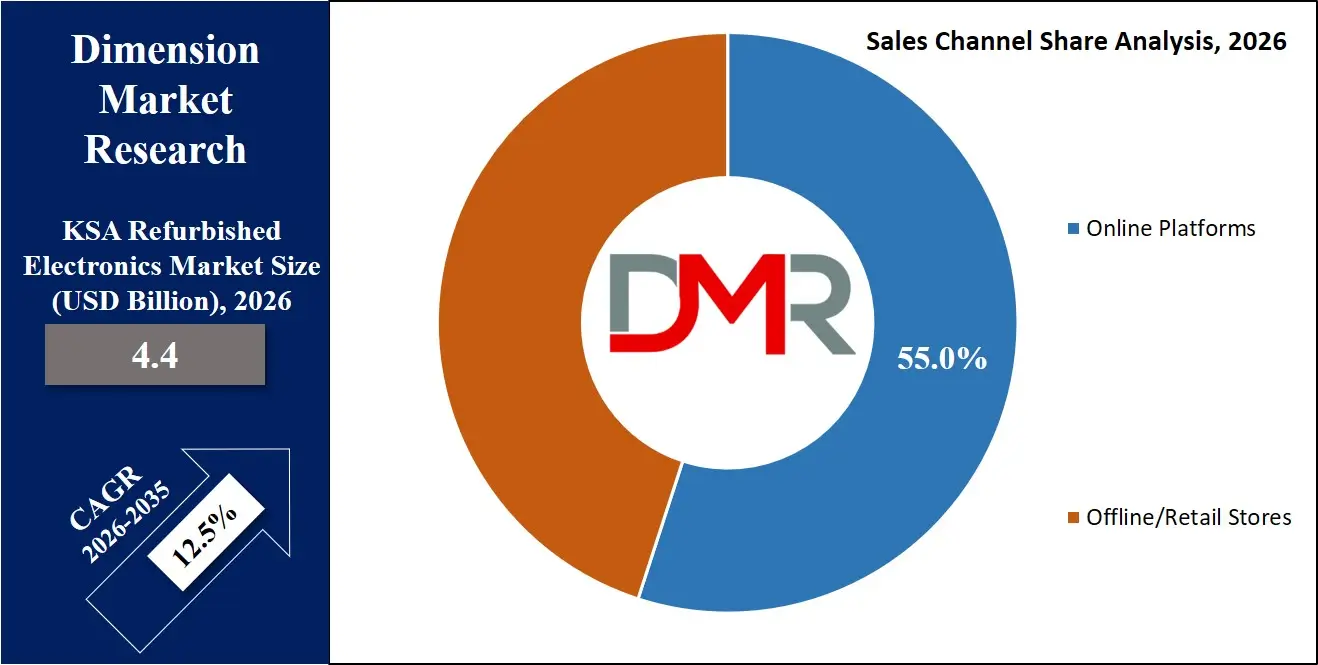
- By Sales Channel: The online platforms segment is expected to get the largest revenue share in 2026 in the KSA Refurbished Electronics market.
- Use Cases: Some of the use cases of Refurbished Electronics include affordable consumer access, educational enablement, and more.
KSA Refurbished Electronics Market: Use Cases
- Affordable Consumer Access: Refurbished smartphones and laptops provide cost-effective alternatives for budget-conscious consumers, enabling wider access to digital tools without compromising functionality.
- Enterprise IT Asset Management: Businesses adopt refurbished IT equipment to reduce capital expenditure while maintaining operational efficiency, especially for non-critical workloads.
- Educational Enablement: Schools and universities utilize refurbished devices to equip students with necessary digital infrastructure at reduced costs, supporting digital learning initiatives.
- Government Digital Inclusion Programs: Public sector initiatives leverage refurbished electronics to bridge the digital divide and improve access in underserved communities.
- Sustainability and E-Waste Reduction: Refurbishment supports circular economy goals by extending product lifecycles and minimizing environmental impact from discarded electronics.
- Secondary Device Usage: Consumers purchase refurbished devices as secondary gadgets for travel, backup, or limited-use scenarios, increasing demand diversity.
- Retail and Resale Ecosystems: Retailers integrate refurbished products into their portfolios, offering trade-in programs and certified resale channels to enhance customer retention.
Stats & Facts
- Saudi Central Bank reported that digital payments accounted for over 70% of total retail transactions in 2024.
- General Authority for Statistics stated that household internet penetration exceeded 98% in 2024.
- Ministry of Communications and Information Technology indicated that smartphone penetration surpassed 95% in 2025.
- Saudi Vision 2030 program highlighted a target to increase e-waste recycling rates to over 50% by 2025.
- International Telecommunication Union noted that Saudi Arabia ranked among the top countries in ICT adoption index in 2024.
- World Bank reported that Saudi Arabia’s urban population exceeded 84% in 2024, supporting electronics demand.
- United Nations Environment Programme estimated global e-waste generation reached over 62 million metric tons in 2024.
- OECD indicated that circular economy initiatives in GCC countries grew by over 20% in 2025.
- Saudi Ministry of Environment reported increased focus on sustainable waste management policies in 2024.
- GSMA stated that mobile internet users in Saudi Arabia exceeded 30 million in 2025.
- International Energy Agency highlighted growing demand for energy-efficient appliances in the Middle East in 2024.
- World Economic Forum emphasized that refurbished electronics adoption is rising globally due to cost savings of 30–50% compared to new devices.
Market Dynamic
Driving Factors in the KSA Refurbished Electronics Market
Rising Demand for Cost-Effective Technology
The increasing cost of new electronic devices is pushing consumers and enterprises toward refurbished alternatives. In Saudi Arabia, a tech-savvy population with high digital consumption seeks affordable solutions without compromising performance. Refurbished devices offer significant price advantages, often ranging between 30% and 50% lower than new products. This affordability is particularly appealing to students, small businesses, and price-sensitive segments. Additionally, inflationary pressures and economic diversification efforts are encouraging value-based purchasing behavior, further accelerating demand for refurbished electronics across multiple product categories.
Growth of Circular Economy and Sustainability Initiatives
Saudi Arabia’s commitment to sustainability under Vision 2030 is significantly influencing the refurbished electronics market. The government is promoting responsible consumption, waste reduction, and recycling practices, which directly align with refurbishment activities. Increasing awareness about environmental impacts of e-waste is encouraging consumers to opt for refurbished products. Companies are also integrating sustainability into their corporate strategies, adopting refurbishment to reduce carbon footprints. This alignment between policy direction and consumer sentiment is creating a strong foundation for long-term market expansion.
Restraints in the KSA Refurbished Electronics Market
Consumer Perception and Trust Issues
Despite growing awareness, many consumers still associate refurbished electronics with inferior quality or limited reliability. Concerns regarding product lifespan, hidden defects, and inconsistent quality standards hinder broader adoption. Lack of standardized certification processes across all vendors further complicates trust-building. While organized players offer warranties and quality assurances, the presence of unregulated sellers in informal markets undermines overall confidence. Addressing these perception challenges requires consistent quality benchmarks, transparent grading systems, and strong after-sales support to build long-term consumer trust.
Limited Organized Infrastructure and Supply Chain Constraints
The refurbishment ecosystem in Saudi Arabia is still developing, with limited large-scale facilities and fragmented supply chains. Dependence on imported used electronics and inconsistent sourcing channels can create supply shortages. Additionally, logistics challenges in collecting, transporting, and processing used devices impact operational efficiency. The absence of a fully integrated reverse logistics network restricts scalability. These infrastructural gaps increase operational costs and limit the ability of market players to meet rising demand effectively.
Opportunities in the KSA Refurbished Electronics Market
Expansion of E-commerce and Digital Marketplaces
The rapid growth of e-commerce platforms in Saudi Arabia presents a significant opportunity for refurbished electronics. Online channels provide wider reach, better price transparency, and access to certified products with warranties. Dedicated refurbished sections on major platforms enhance consumer confidence and convenience. Digital payment adoption and improved logistics infrastructure further support online sales growth. This shift toward digital retail is expected to unlock new customer segments and drive market expansion.
Enterprise and Government Procurement Growth
Increasing adoption of refurbished electronics in enterprise and government sectors offers strong growth potential. Organizations are focusing on cost optimization and sustainability goals, making refurbished IT assets an attractive option. Bulk procurement for offices, schools, and public programs can significantly boost demand. Government-led digital inclusion initiatives also create opportunities for large-scale deployment of refurbished devices, especially in education and community development projects.
Trends in the KSA Refurbished Electronics Market
Integration of Advanced Refurbishment Technologies
Technological advancements such as AI-driven diagnostics, automated testing tools, and predictive maintenance systems are transforming refurbishment processes. These technologies improve efficiency, accuracy, and product quality, reducing turnaround times and operational costs. Enhanced testing capabilities ensure higher reliability, helping bridge the trust gap among consumers. As technology adoption increases, the market is expected to move toward standardized, high-quality refurbishment practices.
Shift Toward Certified and Warranty-Backed Products
Consumers are increasingly favoring certified refurbished products that come with warranties and return policies. This trend reflects a shift from informal resale markets to organized retail channels. Companies are investing in branding and certification programs to differentiate their offerings and build trust. The availability of graded products with clear quality indicators is also improving transparency, enabling informed purchasing decisions and boosting overall market credibility.
Impact of Artificial Intelligence in the KSA Refurbished Electronics Market
- Automated Diagnostics: AI-powered tools quickly identify hardware and software issues, reducing inspection time and improving accuracy.
- Predictive Maintenance: AI models predict component failures, enabling proactive repairs and enhancing product reliability.
- Quality Grading Systems: Machine learning algorithms standardize device grading, ensuring consistent quality classification.
- Inventory Optimization: AI helps manage inventory by forecasting demand and optimizing stock levels across channels.
- Customer Personalization: AI-driven recommendations improve user experience by suggesting suitable refurbished products.
- Fraud Detection: AI systems identify counterfeit or tampered devices, enhancing marketplace security.
- Supply Chain Efficiency: AI streamlines reverse logistics and sourcing processes, reducing operational inefficiencies.
- Dynamic Pricing Models: AI enables real-time pricing adjustments based on demand, condition, and market trends.
- Enhanced Testing Automation: Robotics combined with AI improves testing precision and scalability in refurbishment facilities.
Impact of Iran War in the KSA Refurbished Electronics Market
The Iran war is creating a dual impact on Saudi Arabia’s refurbished electronics market. Regional instability and disruptions in trade routes are affecting the steady flow of electronics imports and components, increasing refurbishment costs and delays. At the same time, economic uncertainty is making consumers more price-sensitive, boosting demand for refurbished devices. Despite strong purchasing power in the region, supply inconsistencies and logistical challenges are limiting the ability of refurbishers to meet growing demand. As a result, the market is experiencing demand growth alongside operational and supply-side constraints.
Research Scope and Analysis
By Product Type Analysis
Smartphones & mobiles dominate the KSA refurbished electronics market, accounting for an estimated 42% share in 2026. This segment’s leadership is primarily fueled by high smartphone penetration, frequent device upgrade cycles, and strong consumer demand for affordable alternatives to premium devices. Trade-in programs, telecom operator buybacks, and the rapid turnover of older devices provide a consistent supply of units for refurbishment. Advances in refurbishment processes, including hardware replacement, battery optimization, and software updates, ensure these devices maintain high performance and reliability. Additionally, growing acceptance of certified pre-owned smartphones among younger consumers, expatriates, and tech-savvy populations enhances market adoption. The segment benefits from robust online retail channels, flexible pricing models, and warranty-backed offerings, which together reinforce its dominant position while building long-term consumer trust in refurbished smartphones.
Laptops & notebooks are the fastest-growing segment within the KSA refurbished electronics market, driven by trends such as remote work, hybrid office environments, and digital learning initiatives across educational institutions. Businesses increasingly prefer refurbished laptops to reduce capital expenditure while maintaining productivity, particularly for non-critical functions or secondary devices. Educational institutions are leveraging affordable refurbished laptops to equip students and staff with essential digital tools. Enhanced refurbishment processes, including component replacement, system optimization, and quality testing, ensure that refurbished laptops meet performance and reliability standards. Combined with growing consumer awareness about sustainability and cost-efficiency, these factors are expected to accelerate the adoption of refurbished laptops significantly in Saudi Arabia, making this segment one of the fastest-expanding areas of the market over the next few years.
By Source of Refurbishment Analysis
OEM-refurbished products hold a dominant position in the KSA refurbished electronics market, with an estimated 55% market share in 2026. These products benefit from strong brand trust, standardized refurbishment protocols, and official warranties, which appeal to consumers seeking reliable pre-owned devices. OEMs often operate structured trade-in and buyback programs, creating a consistent and high-quality supply of devices for refurbishment. Their products undergo strict quality control, grading, and testing procedures, ensuring longevity and performance comparable to new devices. OEM-certified devices are especially preferred by individual consumers, enterprises, and institutions due to reliability assurances. Strong after-sales support, integrated warranties, and official certification further reinforce OEM dominance, positioning these products as the most trusted option in Saudi Arabia’s growing refurbished electronics market.
Third-party refurbishers are the fastest-growing segment in the KSA refurbished electronics market due to competitive pricing, operational flexibility, and broad product coverage. These players source devices from diverse channels, including consumer trade-ins, corporate IT refresh programs, and secondary markets, allowing them to offer a wide range of products across multiple price points. Advances in refurbishment technologies, including component-level repairs, automated testing, and quality grading, are improving reliability and consumer confidence in third-party refurbished electronics. Their ability to quickly adapt to market demand, coupled with cost-effective pricing strategies, makes third-party refurbishers attractive to budget-conscious consumers and smaller businesses. Consequently, this segment is expected to grow rapidly in the coming years as organized processes and quality improvements expand its market presence.
By Price Range Analysis
The medium price range segment is projected to lead the KSA refurbished electronics market with an estimated 48% share in 2026. It achieves this position by offering an ideal balance between affordability and performance, catering to a wide range of consumers, including students, working professionals, and mid-income families. Consumers in this segment prioritize devices that provide reliable functionality without the premium price of new products. The availability of popular models, strong resale value, and warranty-backed options further enhance the appeal of mid-range refurbished devices. Additionally, digital marketplaces, trade-in programs, and financing options contribute to growth by making these products more accessible. This price segment plays a critical role in bridging affordability with quality, driving overall market expansion.
The low-price segment is experiencing rapid growth due to increasing demand from price-sensitive consumers, first-time buyers, and entry-level users. This segment is vital for expanding market penetration, especially among younger consumers and lower-income populations seeking digital access at minimal cost. Affordable refurbished devices in this range include smartphones, basic laptops, and entry-level tablets, which serve essential functionality without high upfront investment. The low-price segment also benefits from strong online retail adoption and trade-in programs that supply devices for refurbishment. As consumer awareness and trust in refurbished electronics increase, this segment is expected to continue expanding, enabling broader adoption and contributing significantly to the overall market’s growth trajectory in Saudi Arabia.
By Sales Channel Analysis
In the KSA refurbished electronics market, the online platform segment holds a 55% share, reflecting strong consumer preference for digital purchasing channels driven by convenience, competitive pricing, and wider product availability. The growth of e-commerce infrastructure, increasing smartphone penetration, and rising trust in refurbished products have supported this dominance. Consumers increasingly favor online platforms for easy comparison, doorstep delivery, and access to certified products, making digital channels the leading distribution segment in the market while continuing to expand alongside Saudi Arabia’s broader e-commerce ecosystem.
ℹ
To learn more about this report –
Download Your Free Sample Report Here
Offline and retail stores are witnessing steady growth as consumers continue to value the ability to physically inspect refurbished products before purchase. Physical stores provide hands-on experience, immediate availability, and personalized sales assistance, which strengthens trust in the quality of refurbished electronics. Retailers are increasingly integrating certified pre-owned devices into their product offerings, often supported by warranty programs and trade-in services. In addition, offline channels cater to customers with limited digital literacy or those preferring face-to-face interactions. The combination of product transparency, on-site testing, and after-sales support is making brick-and-mortar retail a complementary and growing channel alongside online platforms in Saudi Arabia’s refurbished electronics landscape.
By End-User Analysis
Individual consumers are the largest end-user segment, accounting for an estimated 58% of the KSA refurbished electronics market in 2026. Rising affordability concerns, growing digital literacy, and increased device replacement cycles are motivating consumers to purchase pre-owned devices. Certified refurbished electronics provide reliable alternatives to new products at reduced prices, appealing to students, young professionals, and expatriates. The availability of online marketplaces, warranty-backed options, and trade-in programs enhances confidence and encourages adoption. Additionally, awareness of environmental sustainability and e-waste reduction is influencing consumer preferences, making refurbished devices an attractive choice. This segment will continue driving growth as affordability and accessibility remain top priorities.
Enterprises and small-to-medium enterprises represent the fastest-growing end-user segment in the KSA refurbished electronics market. Organizations are increasingly adopting refurbished devices to optimize IT budgets while supporting sustainability goals and reducing electronic waste. Bulk procurement for office operations, remote work setups, and employee devices is becoming more common. Refurbished laptops, desktops, and other IT equipment provide cost-effective solutions without compromising operational efficiency. Additionally, government initiatives promoting digital infrastructure in public institutions further support adoption. The combination of economic savings, corporate sustainability policies, and availability of high-quality refurbished products positions this segment for rapid expansion over the next several years.
The KSA Refurbished Electronics Market Report is segmented on the basis of the following:
By Product Type
- Smartphones & Mobiles
- Laptops & Notebooks
- Tablets & iPads
- Desktops & Monitors
- Televisions & Displays
- Home Appliances
- Audio Devices
- Cameras & Imaging Devices
- Gaming Consoles & Accessories
- Others
By Source of Refurbishment
- OEM
- Third-party Refurbishers
By Price Range
- Low (<USD 200)
- Medium (USD 200-500)
- High (> USD 500)
By Sales Channel
- Online Platforms
- Offline/Retail Stores
By End-User
- Individual Consumers
- Enterprises/SMEs
- Educational Institutions
- Government/NGOs
Competitive Landscape
The KSA refurbished electronics market is characterized by increasing formalization and competition among organized and unorganized players. Companies are focusing on building consumer trust through certification, warranties, and transparent grading systems. Strategic investments in refurbishment technologies and logistics infrastructure are enhancing operational efficiency.
ℹ
To learn more about this report –
Download Your Free Sample Report Here
Partnerships with OEMs and e-commerce platforms are expanding market reach and product availability. Entry barriers remain moderate due to the need for technical expertise and capital investment in refurbishment facilities. Players are also differentiating through pricing strategies, after-sales services, and sustainability positioning to gain a competitive edge.
Some of the prominent players in the KSA Refurbished Electronics are:
- Jarir Marketing Company
- Extra (United Electronics Company)
- eXtra Electronics (eXtra Stores)
- STC (Saudi Telecom Company)
- Mobily (Etihad Etisalat Company)
- Zain Saudi Arabia
- Noon.com
- Amazon.sa
- Apple Inc.
- Samsung Electronics
- Huawei Technologies
- Lenovo Group Limited
- Dell Technologies
- HP Inc.
- Microsoft Corporation
- Sharaf DG
- Jumbo Electronics
- Axiom Telecom
- Revibe (refurbished marketplace)
- Cartlow
- Other Key Players
Recent Developments
- In September 2025, Amazon launched an upgraded “Renewed” platform in Saudi Arabia, significantly expanding its refurbished electronics offerings. The company collaborated with certified refurbishers and implemented stricter quality checks, including AI-powered diagnostics and extended return policies. Investments in local refurbishment hubs improved supply chain efficiency and reduced delivery times, enabling faster fulfillment of customer orders. The initiative aimed to meet the growing demand for affordable, sustainable electronics while promoting trust in certified pre-owned products.
- In January 2025, Apple Inc. expanded its certified refurbished program across the Middle East, including Saudi Arabia, offering a broader range of refurbished iPhones, MacBooks, and iPads through its official online store. The initiative introduced enhanced warranty coverage, flexible financing options, and region-specific promotions to appeal to local consumers. Apple partnered with local logistics providers to improve delivery timelines and optimize reverse logistics for trade-in devices.
Report Details
| Report Characteristics |
| Market Size (2026) |
USD 4.4 Bn |
| Forecast Value (2035) |
USD 12.7 Bn |
| CAGR (2026–2035) |
12.5% |
| Historical Data |
2021 – 2025 |
| Forecast Data |
2027 – 2035 |
| Base Year |
2025 |
| Estimate Year |
2026 |
| Report Coverage |
Market Revenue Estimation, Market Dynamics, Competitive Landscape, Growth Factors and etc. |
| Segments Covered |
By Product Type (Smartphones & Mobiles, Laptops & Notebooks, Tablets & iPads, Desktops & Monitors, Televisions & Displays, Home Appliances, Audio Devices, Cameras & Imaging Devices, Gaming Consoles & Accessories, Others), By Source of Refurbishment (OEM, Third-party Refurbishers), By Price Range (Low (<USD 200), Medium (USD 200-500), High (> USD 500)), By Sales Channel (Online Platforms, Offline/Retail Stores), By End-User (Individual Consumers, Enterprises/SMEs, Educational Institutions, Government/NGOs) |
| Country Coverage |
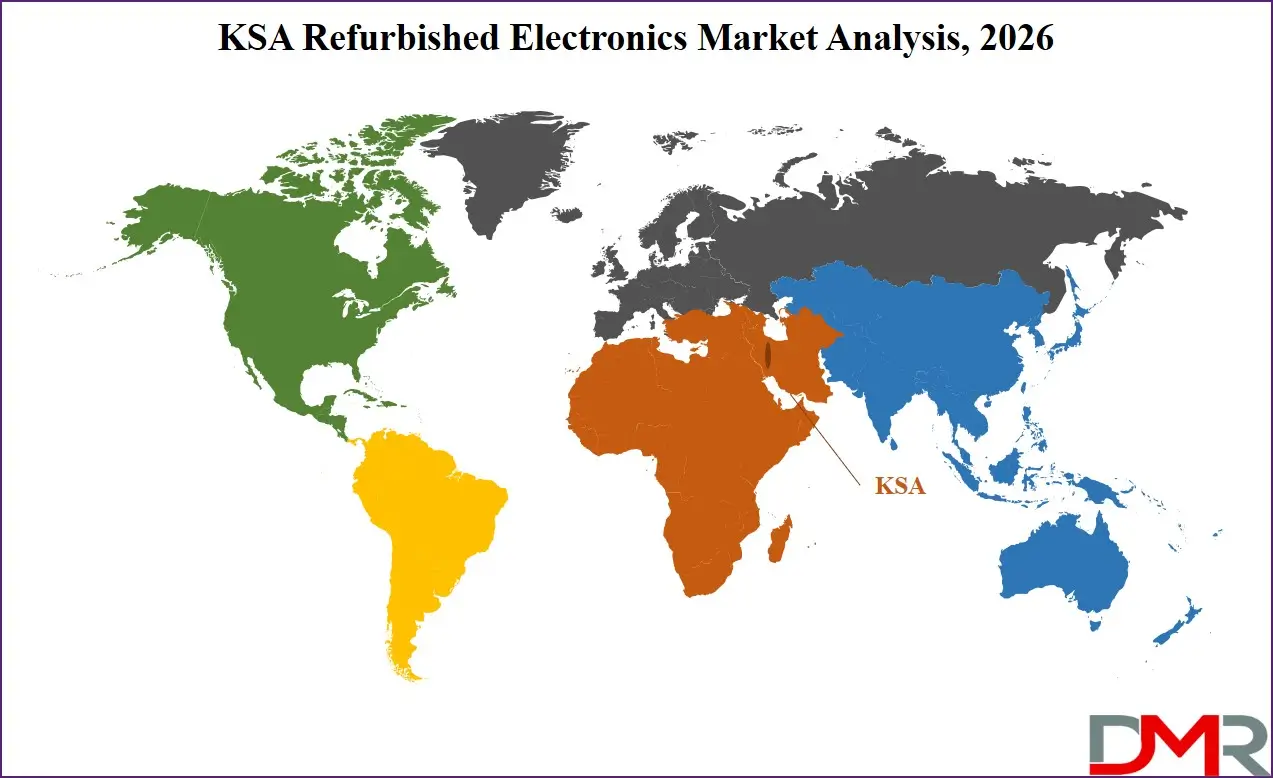
Saudi Arabia |
| Prominent Players |
Jarir Marketing Company, Extra (United Electronics Company), eXtra Electronics (eXtra Stores), STC (Saudi Telecom Company), Mobily (Etihad Etisalat Company), Zain Saudi Arabia, Noon.com, Amazon.sa, Apple Inc., Samsung Electronics, Huawei Technologies, Lenovo Group Limited, Dell Technologies, HP Inc., Microsoft Corporation, Sharaf DG, Jumbo Electronics, Axiom Telecom, Revibe (refurbished marketplace), Cartlow, and Other Key Players |
| Purchase Options |
We have three licenses to opt for: Single User License (Limited to 1 user), Multi-User License (Up to 5 Users) and Corporate Use License (Unlimited User) along with free report customization equivalent to 0 analyst working days, 3 analysts working days and 5 analysts working days respectively. |
Frequently Asked Questions
How big is the KSA Refurbished Electronics Market?
▾ KSA Refurbished Electronics Market size is expected to reach USD 4.4 billion by 2026 and is projected to reach USD 12.7 billion by the end of 2035.
Who are the key players in the KSA Refurbished Electronics Market?
▾ Some of the major key players in the KSA Refurbished Electronics Market include HP, Dell, Apple and others.
What is the growth rate in the KSA Refurbished Electronics Market?
▾ The market is growing at a CAGR of 12.5 percent over the forecasted period.