Market Overview
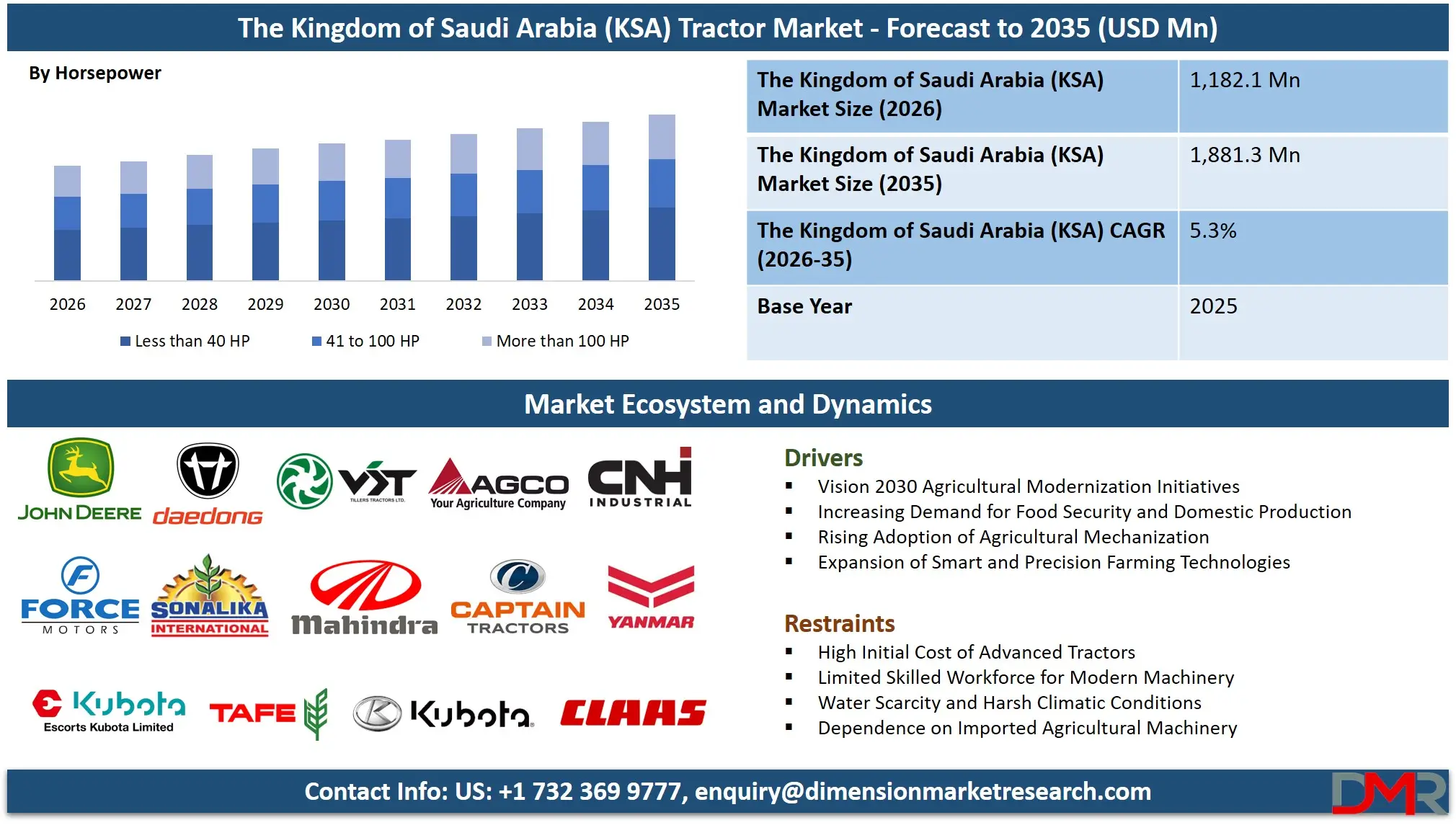
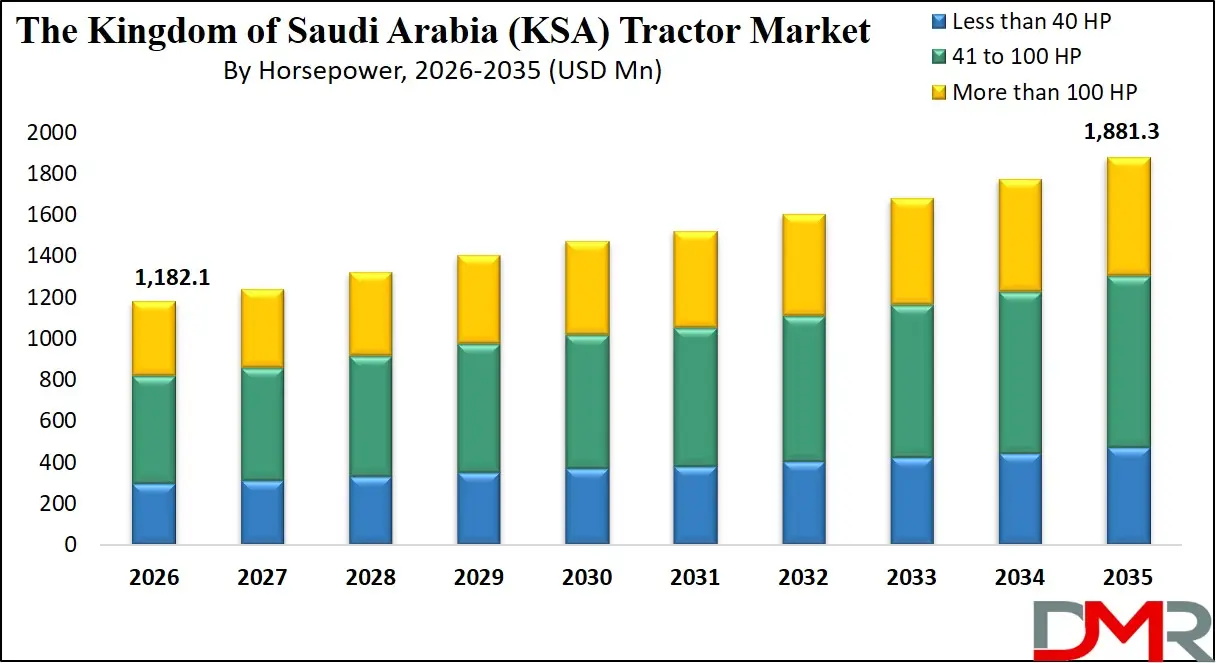
Saudi Arabia Tractor Market is projected to reach USD 1,182.1 million by 2026 and is expected to expand steadily at a compound annual growth rate (CAGR) of 5.3% through 2035, ultimately attaining a market value of USD 1,881.3 million.
ℹ
To learn more about this report –
Download Your Free Sample Report Here
The tractor market is an important part of the economic development of the Kingdom of Saudi Arabia, led by the highly ambitious Vision 2030. Strategically focused on agricultural self-sufficiency and industrial diversification, Saudi Arabia's push for mechanization is transforming its landscape. The sector covers a wide range of equipment, from compact utility tractors for small farms to high-horsepower machines for large-scale agricultural and industrial projects, which are important in facilitating food security and supporting the growth of strategic sectors such as construction, logistics, and landscaping. The government's commitment to diversifying the economy from oil dependency has resulted in substantial investment in agricultural technology and infrastructure, significantly transforming the tractor and heavy machinery landscape.
Over the last few years, the tractor market of Saudi Arabia has witnessed a strategic transition in adopting advanced technologies like GPS-guided systems, telematics, and AI. These technologies are making farming and construction operations more effective, developing real-time visibility, facilitating easier fleet management, and further helping in the optimization of fuel consumption. Also, with the rapid growth of large-scale agricultural projects and smart city initiatives, the need for high-performance tractors has accelerated the demand to scale up companies' mechanization capabilities. All these evolutions of technology and the market are likely to drive the sector's growth, signifying a good future outlook for the market.
Key trends currently evident within the tractor arena in Saudi Arabia are digital transitions taking hold of operations by moving from traditional machinery to tech-based ecosystems. Aside from this, further integration of IoT and telematics brings predictive maintenance and real-time decisions with cost reductions along a value chain for better outputs of efficiency. Furthermore, with the augmenting emphasis on sustainability in line with Vision 2030, adaptation to green practices, such as the deployment of electric tractors and more efficient engines to reduce carbon emissions, is on the rise. Similarly, the rise in vertical farming and greenhouse cultivation has changed strategies for farm management as companies try to meet production expectations with reliable and advanced equipment.
ℹ
To learn more about this report –
Download Your Free Sample Report Here
The market is consequently witnessing huge opportunities on the back of high investments by the Saudi government in agricultural and infrastructure development. Initiatives such as the Saudi Green Initiative and large-scale land reclamation projects are creating a robust demand backbone to support domestic food production. Megaprojects like Neom City and the Red Sea Project illustrate the strategic importance of advanced machinery in enabling Saudi Arabia's ambitious economic goals. The focus on sustainable technologies provides companies with opportunities to gain a competitive edge by improving efficiency and reducing operational costs.
Impact of Iran Conflict on the Global Tractors Market
Rising Fuel Prices Increasing Farm Operating Costs: The Iran conflict has increased geopolitical tensions in the Middle East, leading to fluctuations and potential increases in global crude oil prices. Since tractors and other agricultural machinery rely heavily on diesel fuel, higher fuel costs raise operational expenses for farmers. As farming becomes more expensive, many farmers may delay purchasing new tractors or upgrading existing equipment.
Higher Fertilizer Prices Affecting Agricultural Investment: Geopolitical instability in the Middle East can disrupt fertilizer production and supply chains, particularly for nitrogen-based fertilizers that depend on natural gas. Rising fertilizer prices increase overall farming costs, reducing farmers' available capital for investment in new agricultural equipment. As a result, farmers may prioritize essential inputs like seeds and fertilizers over machinery purchases.
Supply Chain and Logistics Disruptions: The conflict may create disruptions in key shipping routes and increase transportation and logistics costs across global trade networks. Higher freight costs and longer shipping times can affect the supply of tractor components, engines, and electronic systems used in agricultural machinery manufacturing.
Increased Government Focus on Food Security: While the conflict may create short-term challenges, it can also encourage governments to strengthen domestic agricultural production and reduce reliance on food imports. Many countries may invest more heavily in agricultural modernization, irrigation infrastructure, and farm mechanization to improve productivity and food security.
The Kingdom of Saudi Arabia (KSA) Tractor Market: Key Takeaways
- Market Value: The Kingdom of Saudi Arabia Tractor Market size is estimated to have a value of USD 1,182.1 million in 2026 and is expected to reach USD 1,881.3 million by the end of 2035.
- By Horsepower Segment Analysis: The 41 to 100 HP segment is anticipated to dominate this market as it will hold 46.9% of market share in 2026, favored for its versatility in mixed-use applications.
- By Driveline Segment Analysis: The 4WD segment is projected to dominate the driveline segment in the KSA Tractor Market with the highest market share in 2026, due to its superior performance in sandy and uneven terrain.
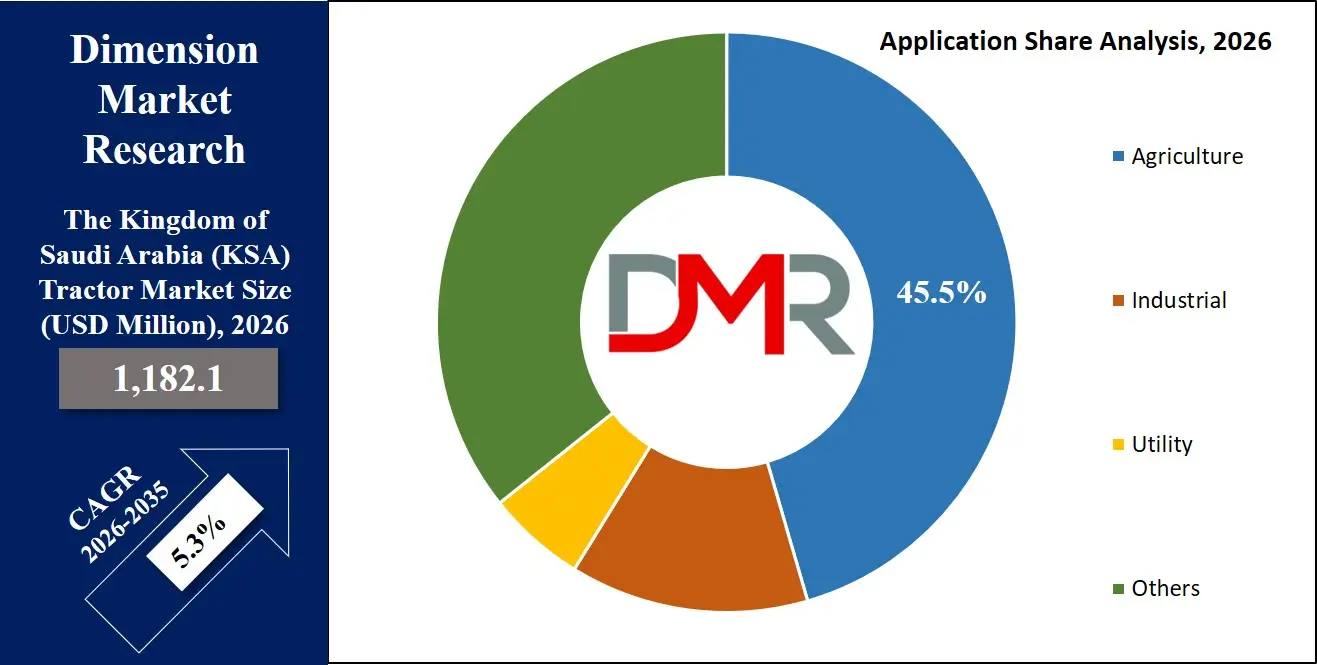
- By Application Segment Analysis: Agriculture is projected to hold the leading position in the application segment of this market in 2026.
- Key Players: Some of the major key players in the Kingdom of Saudi Arabia Tractor Market are Al Jonair, Al-Dosari Group, Zahid Tractor, Al-Bahar, Abdul Latif Jameel Machinery, and many others.
- Market Growth Rate: The market is growing at a CAGR of 5.3 percent over the forecasted period.
The Kingdom of Saudi Arabia (KSA) Tractor Market: Use Cases
- Large-Scale Farming: This involves the use of high-horsepower tractors for plowing, planting, and harvesting in vast agricultural projects dedicated to wheat, forage, and other strategic crops.
- Date Palm Cultivation: Medium-sized tractors are optimized for specialized operations within date palm orchards, including spraying, lifting, and transporting harvests, ensuring minimal damage to trees.
- Infrastructure and Construction: Utility tractors equipped with loaders and backhoes are used in landscaping, road maintenance, and material handling at construction sites across the Kingdom.
- Greenhouse and Vertical Farming: Compact tractors (less than 40 HP) are utilized in controlled environment agriculture for soil preparation, bed formation, and internal logistics, supporting the year-round production of high-value crops.
The Kingdom of Saudi Arabia (KSA) Tractor Market: Stats & Facts
Saudi Ministry of Environment, Water and Agriculture (MEWA)
- The Saudi government allocated about USD 747 million in 2023 to agricultural modernization programs supporting mechanization and advanced farming technologies.
- Government agricultural subsidy programs historically covered up to 45% of tractor purchase costs to encourage farm mechanization.
- The ministry provides subsidies of up to 40% of farm machinery costs to support the adoption of tractors and other agricultural equipment.
- National agricultural development programs emphasize mechanized farming systems to improve productivity in desert agriculture conditions.
- Government initiatives support precision irrigation systems and mechanized crop production technologies.
- Agricultural mechanization policies focus on improving farm efficiency and reducing labor dependency through modern equipment adoption.
General Authority for Statistics (GASTAT)
- Saudi Arabia has approximately 1.5 million hectares of cultivated agricultural land supporting mechanized farming activities.
- The General Authority for Statistics was established in 2015 to manage national statistical systems including agricultural data collection.
- The authority conducts national agricultural surveys and economic data reporting across the Kingdom.
- GASTAT coordinates statistical activities across multiple government entities involved in agricultural and economic data collection.
Saudi Ministry of Investment
- Saudi Arabia imported approximately 3,200 GPS-enabled tractors in 2023 to support precision agriculture initiatives.
- Around USD 1.33 billion was invested in advanced farming equipment technologies in 2024 to modernize the agricultural sector.
- The government invested over USD 533 million in agricultural machinery upgrades in 2024 to improve farm productivity and water efficiency.
Saudi Vision 2030 Agricultural Development Programs
- Saudi Arabia accounts for approximately 22.4% of the Middle East farm mechanization market activity.
- Agricultural mechanization expansion is a key component of Vision 2030 food security initiatives.
- Large commercial farms are adopting GPS-guided tractors and precision agriculture technologies.
- Autonomous tractors and drone-assisted monitoring systems are being used in major wheat and date palm farming regions.
- Government programs aim to increase domestic agricultural production and reduce reliance on food imports.
FAO and Agricultural Research Sources
- Saudi Arabia had approximately 3,500 tractors in operation in 1980 during early agricultural mechanization programs.
- Around 1,500 of these were four-wheel tractors used for large-scale farming operations.
- Approximately 2,000 smaller tractors and rotary tillers were used for small-scale farming activities.
- Saudi Arabia imports most agricultural machinery including tractors due to limited domestic manufacturing capacity.
- Agricultural expansion programs increased irrigated cropland by about 80,000 hectares.
- This expansion represented approximately 20% growth in irrigated farmland during early mechanization development.
Regional Agricultural Mechanization Programs
- Tractors account for approximately 37.4% of total agricultural machinery usage across the Middle East and Africa region.
- Tractor adoption in Saudi Arabia is increasing due to mechanized irrigation and modern desert farming techniques.
- Government agricultural financing programs support farmers purchasing tractors and mechanized equipment.
Saudi Agricultural and Livestock Sector
- Saudi Arabia has over 1.2 million livestock animals, supporting demand for mechanized feed production systems.
- Mechanization is increasingly used in livestock farming operations including automated feeding and mechanized crop cultivation.
The Kingdom of Saudi Arabia (KSA) Tractor Market: Market Dynamic
Driving Factors in the Kingdom of Saudi Arabia (KSA) Tractor Market
Digital Transformation of Agriculture
The tractor sector in Saudi Arabia is also becoming a hub of digital transformation due to the initiatives laid down by Vision 2030 for integrating technology across all sectors. Companies are leveraging technologies such as telematics, GPS, and AI for real-time tracking, predictive analytics, and extended visibility. For example, GPS-enabled sensors provide timely insights into field conditions, reducing any inefficiencies. Precision farming enhances data accuracy in complex agricultural processes, building trust among stakeholders. This trend significantly improves operational efficiencies, besides being in tune with global smart farming practices, and cements the Kingdom's status as a regional leader in agricultural technology.
E-commerce Expansion Boosting Logistics Demand
This rapid development has produced high demand in Saudi Arabia for the sector to implement sustainable and energy-efficient solutions. Manufacturers such as John Deere and New Holland are introducing models with advanced emission control technologies to meet stringent environmental goals. The number of pilot projects for electric compact tractors has been on the rise, targeting zero-emission operations in urban green spaces and greenhouses. As sustainability is increasingly integral to national policy, this trend is producing real investment in the hard infrastructure of green technology but also increasingly in digital platforms that then tie the operation together in one seamless interface for farmers and contractors alike.
Restraints in the Kingdom of Saudi Arabia (KSA) Tractor Market
High Initial Investment Costs
One of the major restraints in the Saudi tractor market is the high initial cost associated with purchasing advanced tractors and agricultural machinery. Modern tractors equipped with technologies such as GPS navigation, automation systems, and telematics require substantial capital investment. While large agricultural companies and government-supported farms may be able to afford these technologies, small and medium-sized farmers often face financial constraints. Even with government incentives and subsidies, the overall cost of machinery ownership, including financing, insurance, and maintenance, can be a significant burden. This financial barrier limits the adoption of advanced mechanized solutions among smaller agricultural operators and may slow the overall growth of the tractor market in Saudi Arabia.
Limited Skilled Workforce
The shortage of skilled operators and technicians capable of handling modern agricultural machinery presents another challenge for the Saudi tractor market. Advanced tractors increasingly rely on digital technologies, automation systems, and precision farming tools that require specialized training to operate and maintain effectively. However, the availability of trained professionals with expertise in agricultural technology remains limited in the country. Although Vision 2030 includes initiatives aimed at workforce development and education, the rapid pace of technological advancement often outpaces the availability of skilled labor. As a result, many companies depend on expatriate workers, which increases operational costs and creates additional workforce management challenges within the agricultural machinery sector.
Opportunities in the Kingdom of Saudi Arabia (KSA) Tractor Market
Integration of Emerging Technologies
The integration of emerging technologies such as artificial intelligence, robotics, and data analytics offers significant opportunities for the Saudi tractor market. Modern tractors equipped with GPS, telematics, and AI-based automation can improve operational efficiency, optimize field operations, and reduce fuel consumption. Autonomous and semi-autonomous tractors are gaining interest as they help farmers address labor shortages and improve productivity. Technology providers and agricultural machinery manufacturers are increasingly focusing on digital solutions that enable precision farming and real-time monitoring of agricultural activities. As Saudi Arabia continues to invest in smart agriculture and digital transformation under Vision 2030, the adoption of advanced technology-driven tractors is expected to create substantial opportunities for manufacturers and technology developers.
Expansion of Leasing and Rental Models
The growth of tractor leasing and rental services is emerging as a major opportunity in the Saudi tractor market. Many farmers and small agricultural enterprises prefer leasing machinery rather than purchasing it due to the high upfront investment associated with modern tractors. Rental services allow farmers to access advanced equipment during peak agricultural seasons without bearing the full cost of ownership. Major agricultural equipment distributors and service providers are expanding their rental fleets and offering flexible financing options to attract more customers. Additionally, increasing infrastructure and agricultural development projects in Saudi Arabia are boosting demand for temporary machinery usage. This trend is expected to encourage the expansion of leasing and rental models across the country.
Trends in the Kingdom of Saudi Arabia (KSA) Tractor Market
Vision 2030 Economic Diversification Initiatives
Saudi Arabia's Vision 2030 strategy plays a significant role in driving growth in the tractor and agricultural machinery market. The initiative focuses on reducing the country's reliance on oil revenues by strengthening other sectors, including agriculture, construction, and infrastructure development. Large-scale projects such as NEOM, the Red Sea Global development, and other mega infrastructure initiatives have increased the demand for construction and agricultural machinery, including tractors. Additionally, the government has introduced supportive policies such as agricultural development funds, financial incentives for farm modernization, and reduced barriers to machinery imports. These measures encourage domestic and international companies to invest in modern farming equipment and mechanized solutions, contributing to the steady expansion of the tractor market.
Increasing Demand for Food Self-Sufficiency
Saudi Arabia has been actively working to strengthen its food security and reduce dependence on food imports. Government initiatives aimed at increasing domestic agricultural production have boosted the demand for advanced farming equipment such as tractors and mechanized tools. Programs promoting the expansion of arable land, adoption of efficient irrigation systems, and modernization of farming practices are transforming the agricultural landscape. Farmers are increasingly adopting tractors to improve productivity, reduce labor dependency, and manage large-scale agricultural operations more efficiently. In addition, improvements in supply chains, agricultural infrastructure, and rural development programs are supporting the growth of the farming sector. These developments are collectively driving sustained demand for tractors in the country.
The Kingdom of Saudi Arabia (KSA) Tractor Market: Research Scope and Analysis
By Horsepower
The 41 to 100 HP segment is projected to dominate the horsepower segment in this market as it will hold 46.9% of market share in 2026. The dominance of this horsepower range in the KSA Tractor Market is owing to its versatility and suitability for a wide range of activities. Businesses and farms in KSA are hugely investing in mixed-use operations; hence, tractors in this mid-range category are being used to smoothen tasks ranging from primary tillage and planting to material handling and municipal services. Saudi Arabia's Vision 2030 underlines the emphasis on integrating technology for smooth operations. It therefore raises demand for tractors that can be equipped with precision farming tools, helping in real-time field management and building traceability-critical to maintaining operational efficiency in this highly competitive market. Such huge farming projects spur demand for mid-range tractors that can handle various implements.
The 41-100 HP segment will help in the complete interconnectivity of machinery and digital farm management systems, thus making its future in the market indispensable. Tasks like baling, spraying, and loader work completely depend on this horsepower range for optimal performance. Growth in the landscaping and municipal sectors also adds to the contribution of these tractors that optimize maintenance processes. Government-backed agricultural zones and initiatives advocate the use of the latest available equipment to reduce operational bottlenecks, thus supporting the market for mid-range tractors. Hence, this segment remains an integral factor as it provides the actual mechanical backbone for modern agricultural and industrial management in KSA.
By Driveline
4WD (Four-Wheel Drive) driveline modes dominate the share in the driveline segment of the tractor market in KSA, owing to the strategic reliance on robust machinery capable of handling the country's challenging terrain. Saudi Arabia has vast expanses of sandy and uneven land, making 4WD tractors essential for maintaining traction and stability during heavy tillage and field operations. Four-wheel drive offers power and efficiency no other driveline can provide. Primary tillage operations, being very essential, do happen with agriculture and also in heavy-duty industrial applications. There is an unparalleled growth in the demand for 4WD tractors as, with the expansion of large-scale farming projects, users would want to expect maximum productivity and fuel economy.
The investments in agricultural infrastructure involve the expansion of cultivated areas, adding large-scale irrigation projects, and furthering the need for high-traction machinery. This development also aligns with Vision 2030 in positioning Saudi Arabia as a leader in food production. The prevalence of sandy soil across the Kingdom further cements 4WD's position as the main driveline for demanding applications. Among many factors, superior performance comes forward. Compared with 2WD, it has 4WD tractors providing better power delivery and less slippage, thus making them perfectly fit for heavy tillage and deep plowing. The increased use of technologies for fleet management improves the operational efficiency-cum-situation more in enhancing 4WD dominance.
By Application
Agriculture is projected to hold the leading position with 45.5% of market share in the application segment of the KSA Tractor Market in 2026, as such a segment is very crucial to assure national food security and economic diversification. With the fast growth of large-scale farming projects and the push for self-sufficiency in Saudi Arabia, the demand for advanced tractors that could handle such growing demand effectively is increasingly felt. Tractors enable businesses under Vision 2030 to attain the goal of KSA being a leader in food production by ensuring timely planting, harvesting, and field operations. Advanced agricultural tractors integrate GPS, IoT, and telematics to offer real-time field data and smooth operation with minimal errors, optimize fuel consumption, and improve overall farm visibility. The increasing adoption of precision farming in large agricultural projects underlines the importance of this segment all the more. Besides, smart technologies are increasingly being adopted by enterprises that work in tandem with irrigation and harvesting systems to help lower operational costs and meet production targets.
ℹ
To learn more about this report –
Download Your Free Sample Report Here
Further, this segment ensures dominance through the development of growing government-backed agricultural holdings. Most advanced farming operations have their dependence on such kinds of modern tractors for serving strategic crops that range from wheat and barley to forage. Supporting the market's demand are also some government initiatives towards developing agricultural zones and providing subsidies for machinery. Due to its immediate effects relating to productivity, efficiency within operations, and contribution to national goals, it keeps its superiority in the market.
The Kingdom of Saudi Arabia (KSA) Tractor Market Report is segmented on the basis of the following:
By Horsepower
- Less than 40 HP
- 41 to 100 HP
- More than 100 HP
By Driveline
By Application
- Agriculture
- Industrial
- Utility
- Others
Impact of Artificial Intelligence in the Kingdom of Saudi Arabia (KSA) Tractor Market
- Growth of Autonomous and Smart Tractors: Artificial intelligence is enabling the development of autonomous and semi-autonomous tractors capable of performing tasks such as plowing, seeding, and harvesting with minimal human intervention. In Saudi Arabia, where agricultural labor availability is limited, AI-powered tractors help farmers automate operations and maintain productivity.
- Improved Precision Farming and Resource Management: AI-driven systems allow tractors to support precision farming by analyzing field data and optimizing the use of resources such as water, fertilizers, and pesticides. In Saudi Arabia's arid climate, efficient resource management is critical for sustainable agriculture.
- Enhanced Operational Efficiency and Productivity: Artificial intelligence improves tractor performance by enabling real-time monitoring and automated decision-making. AI systems analyze operational data such as engine performance, fuel consumption, and field conditions to optimize tractor operations.
- Predictive Maintenance and Reduced Downtime: AI technology helps tractor manufacturers and farm operators implement predictive maintenance systems. Sensors embedded in tractors collect data on machine performance and detect potential mechanical issues before they lead to breakdowns. AI algorithms analyze this data to predict maintenance requirements and alert operators about necessary repairs or component replacements.
- Support for Smart Agriculture and Digital Transformation: Artificial intelligence plays a key role in supporting Saudi Arabia's transition toward smart agriculture as part of its Vision 2030 initiatives. AI-enabled tractors can integrate with broader agricultural management platforms that combine data from drones, satellites, and farm sensors.
The Kingdom of Saudi Arabia (KSA) Tractor Market: Competitive Landscape
The competitive landscape is fueled by participation, both domestic and international, in the Kingdom of Saudi Arabia Tractor Market, with dissimilar capabilities across machinery sales, service, and distribution. Major companies, therefore, strategize to develop advanced technologies such as GPS, telematics, and IoT to enhance tractor operations to better competitiveness. The leading players are Al Jomaih, Zahid Tractor, and Al-Bahar in heavy equipment sales, while in precision farming technology, the leading players include global manufacturers like John Deere, CNH Industrial, and AGCO. These companies leverage Saudi Arabia's Vision 2030 initiatives by aligning their offerings with government priorities meant to attract investments and improve efficiency. It addresses both rising agricultural and construction sectors where these focus more on niche capabilities: high-horsepower tractors and utility vehicles.
ℹ
To learn more about this report –
Download Your Free Sample Report Here
Mergers and partnerships are common strategies that allow companies to expand service portfolios and reach. For instance, technology companies partnering with local distributors enhance data-driven decision-making and operational agility. While the leading companies are competitive, innovation in the fields of automation, autonomous machinery, and predictive analytics separates the leaders. These opportunities are likely to come along with an intense competitive landscape for both established players and new entrants, with strong governmental support for developing agricultural zones.
Some of the prominent players in the Kingdom of Saudi Arabia (KSA) Tractor Market are:
- John Deere
- CNH Industrial (Case IH & New Holland Agriculture)
- AGCO Corporation (Massey Ferguson)
- Mahindra & Mahindra Ltd.
- Kubota Corporation
- Yanmar Holdings Co., Ltd.
- TAFE Limited
- Escorts Kubota Limited
- Sonalika Tractors
- VST Tillers & Tractors Ltd.
- Force Motors (Balwan Tractors)
- Captain Tractors Pvt. Ltd.
- Daedong Corporation (Kioti)
- Same Deutz-Fahr (SDF Group)
- CLAAS KGaA mbH
- Zamil Group
- Zahid Tractor
- Aljomaih Automotive Company
- Al-Ghalbi International
- Arabian Auto Agency
- Other Key Players
Recent Developments in the Kingdom of Saudi Arabia (KSA) Tractor Market
- October 2025: The Saudi Agricultural Development Fund (ADF) expanded financing and subsidy programs for agricultural mechanization, enabling farmers to purchase modern tractors and farm equipment from manufacturers such as John Deere, AGCO Corporation, and Kubota Corporation. This initiative supports the adoption of advanced machinery and strengthens the modernization of the Kingdom of Saudi Arabia (KSA) tractor market.
- July 2025: AGCO Corporation (Massey Ferguson) increased investments in precision agriculture technologies and introduced upgraded tractor solutions equipped with GPS guidance and digital farm management systems. These developments support efficient farming practices and reflect the growing shift toward smart agriculture in the Kingdom of Saudi Arabia (KSA) tractor market.
- May 2025: John Deere, in partnership with regional distributors such as Zahid Tractor, expanded its dealership and service network across Saudi Arabia. The expansion improves farmer access to advanced tractors, spare parts, and maintenance services, supporting mechanization growth in the Kingdom of Saudi Arabia (KSA) tractor market.
- February 2025: Mahindra & Mahindra Ltd. strengthened its presence in the Middle East through expanded distribution partnerships and increased supply of compact and mid-range tractors designed for arid agricultural conditions in the Kingdom of Saudi Arabia (KSA) tractor market.
- November 2024: CNH Industrial (New Holland Agriculture) supported government mechanization initiatives by expanding its range of fuel-efficient tractors and precision farming equipment for Saudi farmers, helping improve productivity and modernization in the Kingdom of Saudi Arabia (KSA) tractor market.
- August 2024: Kubota Corporation expanded its regional distribution partnerships and after-sales service capabilities across key agricultural regions in Saudi Arabia, improving access to compact tractors and agricultural equipment in the Kingdom of Saudi Arabia (KSA) tractor market.
- April 2023: CLAAS Group strengthened its presence in the Middle East agricultural machinery sector by collaborating with regional partners to promote advanced farming equipment and tractors as part of Saudi Arabia's agricultural modernization initiatives.
- January 2023: Yanmar Holdings Co., Ltd. promoted its compact and fuel-efficient tractor models in Saudi Arabia to support precision farming practices and mechanization, contributing to technological advancement in the Kingdom of Saudi Arabia (KSA) tractor market.
Report Details
| Report Characteristics |
| Market Size (2026) |
USD 1,182.1 Mn |
| Forecast Value (2035) |
USD 1,881.3 Mn |
| CAGR (2026–2035) |
5.3% |
| Historical Data |
2021 – 2025 |
| Forecast Data |
2027 – 2035 |
| Base Year |
2025 |
| Estimate Year |
2026 |
| Report Coverage |
Market Revenue Estimation, Market Dynamics, Competitive Landscape, Growth Factors and etc. |
| Segments Covered |
By Horsepower (Less than 40 HP, 41 to 100 HP, and More than 100 HP), By Driveline (2WD, and 4WD), By Application (Agriculture, Industrial, Utility, and Others) |
| Country Coverage |
The Kingdom of Saudi Arabia (KSA) |
| Prominent Players |
John Deere, CNH Industrial (Case IH & New Holland Agriculture), AGCO Corporation (Massey Ferguson), Mahindra & Mahindra Ltd., Kubota Corporation, Yanmar Holdings Co., Ltd., TAFE Limited, Escorts Kubota Limited, Sonalika Tractors, VST Tillers & Tractors Ltd., Force Motors (Balwan Tractors), Captain Tractors Pvt. Ltd., Daedong Corporation (Kioti), Same Deutz-Fahr (SDF Group), CLAAS KGaA mbH, Zamil Group, Zahid Tractor, Aljomaih Automotive Company, Al-Ghalbi International, and Arabian Auto Agency., and Other Key Players |
| Purchase Options |
We have three licenses to opt for: Single User License (Limited to 1 user), Multi-User License (Up to 5 Users) and Corporate Use License (Unlimited User) along with free report customization equivalent to 0 analyst working days, 3 analysts working days and 5 analysts working days respectively. |
Frequently Asked Questions
How big is the Kingdom of Saudi Arabia's Tractor Market?
▾ The Kingdom of Saudi Arabia Tractor Market size is estimated to have a value of USD 1,182.1 million in 2026 and is expected to reach USD 1,881.3 million by the end of 2035.
Who are the key players in the Kingdom of Saudi Arabia Tractor Market?
▾ Some of the major key players in the Kingdom of Saudi Arabia Tractor Market are Al Jomaih, Al-Dosari Group, Zahid Tractor, Al-Bahar, Abdul Latif Jameel Machinery, and many others.
What is the growth rate in the Kingdom of Saudi Arabia Tractor Market?
▾ The market is growing at a CAGR of 5.3 percent over the forecasted period.