Saudi Arabia Zika Virus Testing Market Snapshot
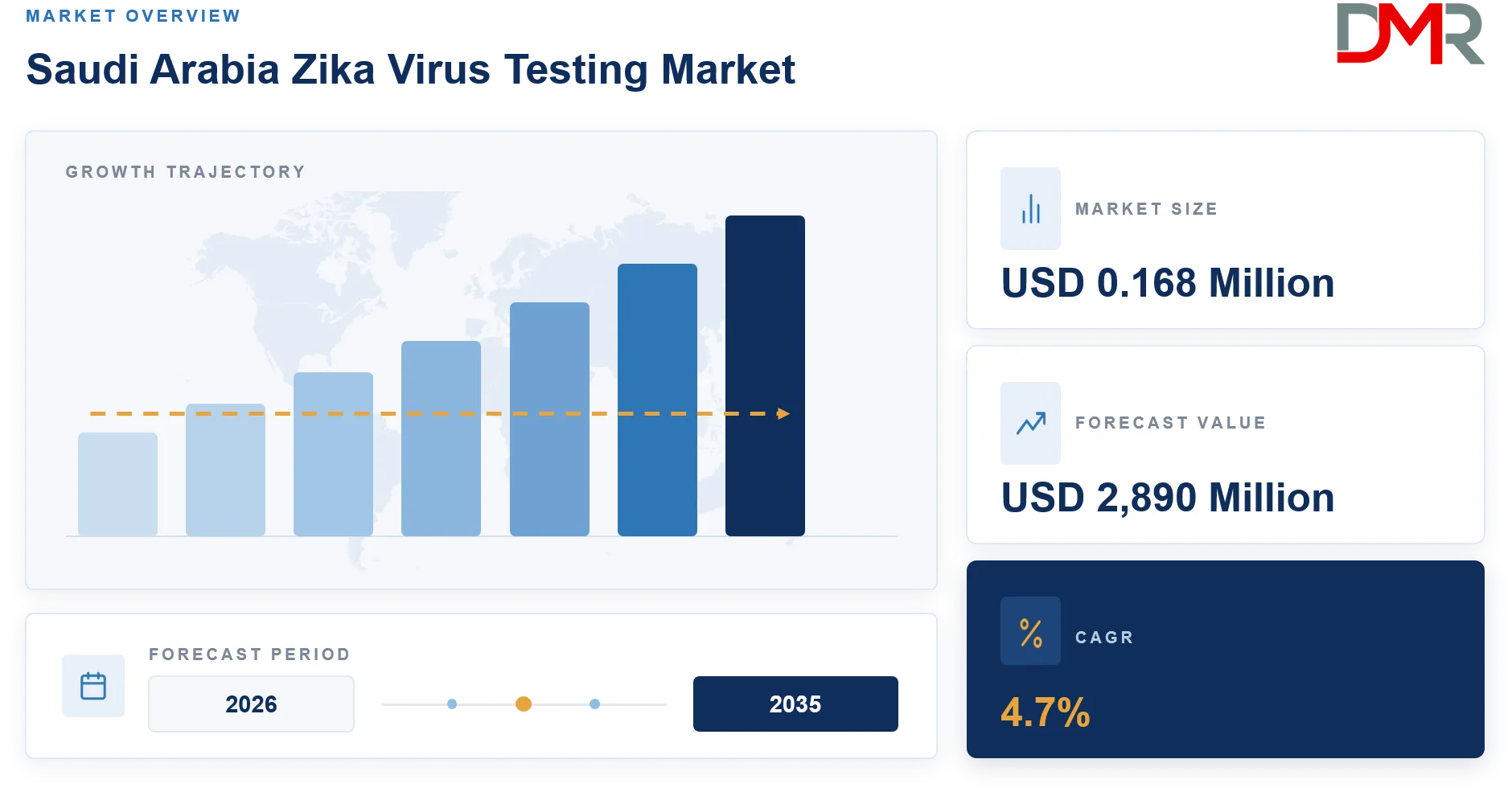
- Market Value: Saudi Arabia Zika virus testing market is valued at USD 0.168 million in 2026 and is projected to reach USD 0.247 million by 2035.
- CAGR: Saudi Arabia Zika virus testing market is expected to grow at a CAGR of 4.1% from 2026 to 2035.
- By Test Type Segment Analysis: Molecular diagnostic kits led the test type segment with a 42.0% share in 2026.
- By Product Segment Analysis: Consumables led the product segment with a 58.0% share in 2026.
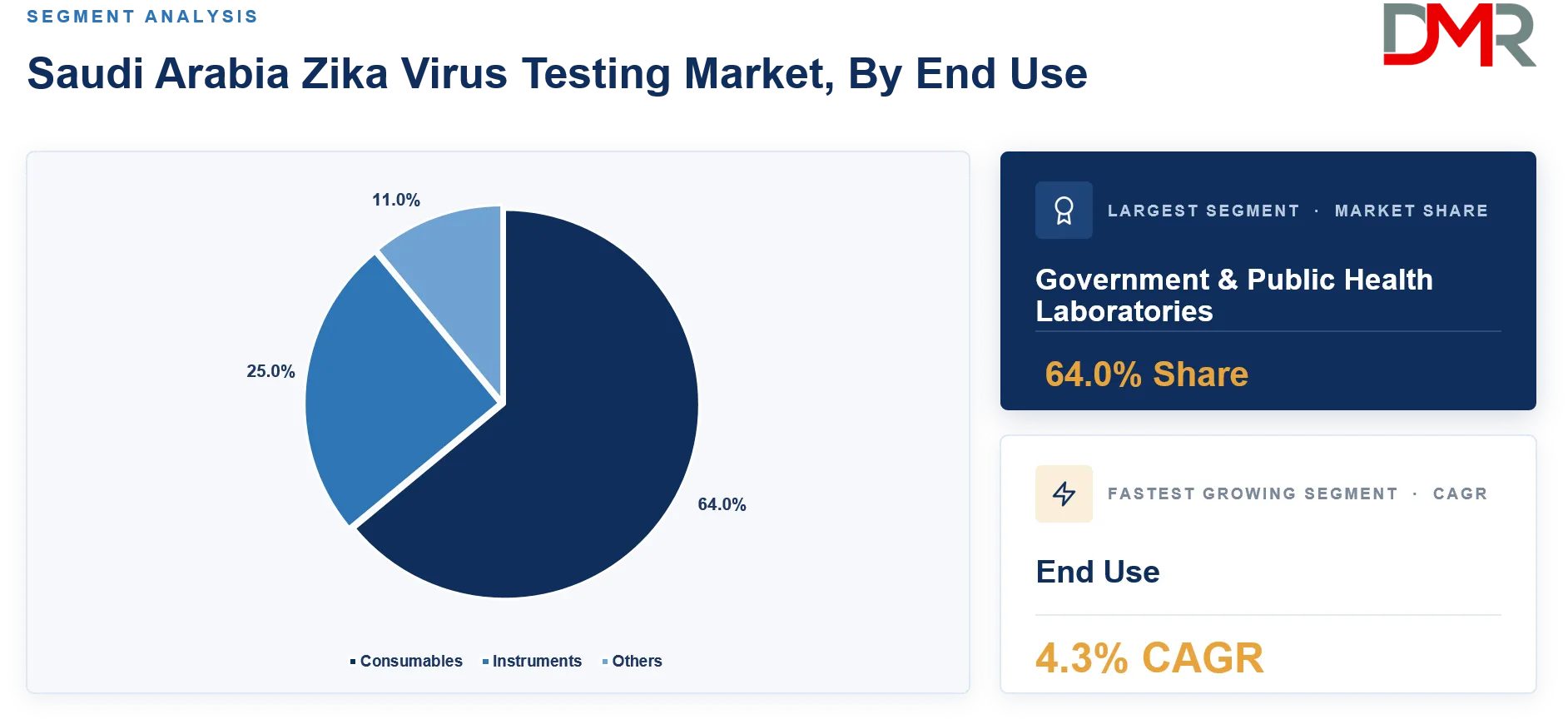
- By End Use Segment Analysis: Government & public health laboratories held a 45.0% share in 2026.
- Major Players: Thermo Fisher Scientific, Inc., CTK Biotech, Inc., F. Hoffmann-La Roche Ltd, and Others.
What is the Saudi Arabia Zika Virus Testing Market and its Market Size?
The Saudi Arabia Zika virus testing market size is projected to be valued at USD 0.168 million in 2026 and is expected to reach USD 0.247 million by 2035, expanding at a CAGR of 4.1% during the forecast period. The market covers molecular diagnostic kits, lateral flow assays, rapid diagnostic tests, ELISA-based tests, instruments, reagents, consumables, and supporting laboratory products used to identify suspected Zika virus infections.
ℹ
To learn more about this report –
Download Your Free Sample Report Here
Demand remains specialized because Zika testing is primarily connected with epidemiological surveillance, investigation of suspected imported infections, differential diagnosis of mosquito-borne diseases, pregnancy-related risk assessment, and public health preparedness. Saudi Arabia's Ministry of Health recognizes Zika as an Aedes mosquito-borne viral infection. This gives testing strategic relevance within the country's broader arbovirus surveillance framework, particularly where symptoms can overlap with dengue and other febrile illnesses.
Use Cases
- Suspected Infection Confirmation: Molecular and serological Zika tests help laboratories investigate patients with compatible symptoms and relevant travel or exposure history. PCR-based testing can identify viral genetic material during suitable diagnostic windows and supports more precise confirmation of acute infection.
- Public Health Surveillance: Government and public health laboratories use Zika virus testing as part of arbovirus preparedness programs. Laboratory confirmation strengthens epidemiological surveillance, supports case investigation, and helps health authorities distinguish isolated imported infections from possible local transmission events.
- Pregnancy Risk Assessment: Testing has particular clinical relevance when pregnant women have a potential Zika exposure because infection during pregnancy can cause serious fetal complications. Laboratory assessment may combine molecular testing, serology, exposure history, clinical findings, and specialist interpretation.
- Differential Arbovirus Diagnosis: Zika symptoms may overlap with other mosquito-borne diseases. Laboratories can use molecular and immunological assays alongside dengue testing to improve differential diagnosis. This is important because antibody cross-reactivity between related flaviviruses may complicate interpretation of positive serology results.
- Research and Preparedness: Research institutes use Zika testing technologies for assay evaluation, epidemiological research, viral surveillance, and preparedness studies. Such activities create specialized demand for PCR reagents, controls, ELISA products, extraction consumables, analytical instruments, and laboratory quality assurance materials.
How AI/Gen AI is Transforming the Saudi Arabia Zika Virus Testing Market?
Advanced computational tools are improving how laboratories interpret molecular diagnostic information, manage surveillance data, and identify unusual infectious disease patterns. In Zika testing, these systems can support automated review of PCR amplification curves, laboratory workflow monitoring, quality-control analysis, and integration of test outcomes with travel, geographic, and epidemiological information. Their value is particularly relevant in low-volume testing markets such as Saudi Arabia, where laboratories need to maintain preparedness without operating continuous high-throughput Zika-specific testing programs. Digital laboratory systems can also help public health teams connect suspected cases with broader arbovirus surveillance and improve the speed of escalation when an unusual result is detected.
Generative and predictive technologies can further support knowledge management, assay documentation, epidemiological summaries, and decision support, but they do not replace validated diagnostic methods or expert laboratory interpretation. Zika diagnosis requires careful consideration of specimen type, timing of collection, exposure history, and possible cross-reactivity with dengue and related flaviviruses. WHO guidance highlights the importance of combining epidemiological information with the strengths and limitations of available assays. As Saudi laboratories expand digital health and diagnostic infrastructure, the strongest opportunity is likely to come from using intelligent software around regulated PCR, immunoassay, and laboratory information systems rather than replacing the underlying diagnostic test.
Key Drivers in the Saudi Arabia Zika Virus Testing Market
Strengthening Arbovirus Surveillance and Public Health Preparedness
Saudi Arabia's need to monitor mosquito-borne infections supports continued demand for specialized Zika diagnostic capacity. Aedes mosquitoes are relevant to the country's vector-control programs, while Zika can require laboratory confirmation because clinical symptoms alone are not sufficiently specific. Public health laboratories therefore need access to molecular assays, extraction reagents, controls, and serological tools that can be activated when suspected cases arise. Laboratory-based surveillance also enables health authorities to investigate imported infections and respond rapidly to unusual arbovirus activity.
Expansion of Molecular Diagnostic Infrastructure
Saudi Arabia's wider investment in in-vitro diagnostics supports the infrastructure required for Zika virus PCR testing. Molecular laboratories already serving infectious disease programs can use existing extraction systems, real-time PCR platforms, trained personnel, and quality-control processes for specialized arbovirus assays. This reduces the need for dedicated Zika-only infrastructure and supports adoption of molecular diagnostic kits as required. The broader Saudi IVD sector also includes major international diagnostic companies with established molecular and immunoassay portfolios, strengthening technology access and commercial distribution.
Restraints in the Saudi Arabia Zika Virus Testing Market
Low Routine Testing Volumes
Zika testing is not a routine high-volume diagnostic category in Saudi Arabia. Demand is concentrated around suspected exposures, travel-related assessments, surveillance activities, research, and public health investigation rather than everyday hospital testing. This limits predictable reagent consumption and can make it difficult for suppliers to justify large Zika-specific inventories. Laboratories may instead rely on adaptable molecular platforms and maintain smaller stocks of specialized assays, controls, and consumables, restricting revenue growth compared with high-burden infectious disease testing categories.
Complex Serological Interpretation
Serological testing faces an important technical restraint because Zika antibodies can cross-react with antibodies generated by related flaviviruses, particularly dengue. WHO notes that positive IgM findings require careful differentiation when exposure to related viruses is possible. This can reduce confidence in stand-alone antibody results and increase the need for molecular confirmation, additional testing, epidemiological information, or expert interpretation. Such complexity can raise diagnostic costs and limit the use of simple serology as a broad population screening solution.
Growth Opportunities in the Saudi Arabia Zika Virus Testing Market
Multiplex Arbovirus Diagnostic Platforms
A major opportunity lies in assays that evaluate Zika together with dengue, chikungunya, or other clinically relevant pathogens. A multiplex approach offers greater commercial value than a Zika-only workflow because laboratories can use the same molecular platform across several mosquito-borne disease investigations. It also supports differential diagnosis when symptoms overlap. Suppliers that combine flexible PCR chemistry, automated extraction, multiple pathogen targets, controls, and streamlined laboratory software can address broader public health needs while improving utilization of installed molecular diagnostic infrastructure.
Specialized Testing for Travel and Public Health Preparedness
Saudi Arabia's international connectivity creates a long-term opportunity for targeted testing linked to travelers arriving from areas where Zika transmission persists. WHO reports that transmission continues at low levels in several endemic areas even though global case numbers fell substantially after 2017. Public health laboratories, referral centers, and specialized diagnostic facilities can therefore maintain selective testing capacity for patients with relevant exposure histories. Suppliers that provide small-batch kits with suitable shelf life and strong technical support are positioned to address this preparedness-driven demand.
Trends in the Saudi Arabia Zika Virus Testing Market
Preference for Molecular Confirmation
Molecular diagnostic kits accounted for 42.0% of Saudi Arabia Zika virus testing market revenue in 2026, making them the leading test type. Their position reflects the clinical value of directly detecting viral nucleic acid when samples are collected within an appropriate diagnostic window. PCR-based methods can offer greater specificity than antibody-only approaches in settings where flavivirus cross-reactivity creates uncertainty. Continued access to real-time PCR infrastructure, extraction technology, validated controls, and trained molecular laboratory personnel is expected to support this segment throughout the forecast period.
Greater Focus on Flexible Laboratory Consumables
Consumables represented 58.0% of product revenue in 2026, reflecting the recurring requirement for reagents, extraction materials, PCR components, controls, microplates, sample-processing products, and other single-use laboratory supplies. Unlike instruments, which are purchased periodically and can serve multiple infectious disease applications, consumables generate recurring demand each time testing is performed. Suppliers are increasingly competing on assay compatibility, shelf life, workflow efficiency, quality assurance, packaging size, technical support, and the ability to serve laboratories with variable testing volumes.
Research Scope and Analysis
The Saudi Arabia Zika virus testing market is segmented based on Test Type, Product, End Use, and regional demand patterns. The study provides an in-depth analysis of key segments and sub-segments, covering their diagnostic applications, industry adoption, public health relevance, demand patterns, competitive positioning, and contribution to overall market growth.
By Test Type
Molecular diagnostic kits held 42.0% of the Saudi Arabia Zika virus testing market in 2026 and represented the leading test type. Molecular methods are valuable for identifying Zika viral RNA and supporting laboratory confirmation during appropriate phases of infection. Their strong position is also supported by Saudi Arabia's established real-time PCR infrastructure used across infectious disease laboratories. Molecular testing avoids several interpretation problems associated with flavivirus antibody cross-reactivity, although diagnostic performance still depends on specimen timing and quality. Lateral flow assays, rapid diagnostic tests, and ELISA-based methods remain relevant for screening, serological investigation, research, and situations where laboratories require faster or more accessible workflows. WHO guidance recommends interpreting assay results in the context of epidemiology, patient history, specimen timing, and known test limitations.
ℹ
To learn more about this report –
Download Your Free Sample Report Here
By Product
Consumables led the Saudi Arabia Zika virus testing market with 58.0% revenue share in 2026. This category benefits from recurring utilization because every molecular or immunological workflow requires reagents and disposable laboratory materials. Products can include PCR reagents, primers, probes, extraction kits, reaction components, controls, ELISA reagents, test cartridges, buffers, tubes, plates, pipette tips, and other sample-processing supplies. Instruments account for a smaller revenue share because platforms such as PCR systems, readers, extraction equipment, and laboratory analyzers can be used for several infectious diseases rather than Zika alone. This creates a market structure in which capital equipment supports laboratory readiness, while recurring consumable purchases generate more continuous commercial value for diagnostic suppliers and distributors.
By End Use
Government & public health laboratories accounted for 45.0% of market revenue in 2026. Their leadership reflects the surveillance-driven nature of Zika testing in Saudi Arabia. These laboratories play a central role in suspected case confirmation, outbreak preparedness, epidemiological monitoring, referral testing, and coordination with national disease-control programs. Diagnostic laboratories and hospitals represent additional demand channels, particularly when clinicians encounter patients with compatible symptoms or travel exposure. Research institutes form a smaller but strategically important segment because they support assay validation, epidemiological investigation, vector-related research, and infectious disease studies. The strong public-sector position is expected to continue as Zika testing remains primarily a preparedness and surveillance requirement rather than a routine mass-screening category.
The Saudi Arabia Zika Virus Testing Market Report is Segmented on the Basis of the Following:
By Test Type
- Lateral Flow Assays (Antigen-Based)
- Molecular Diagnostic Kits
- Rapid Diagnostic Tests (RDTs)
- ELISA-Based Tests
By Product
- Instruments
- Consumables
- Others
By End Use
- Government & Public Health Laboratories
- Research Institutes
- Diagnostic Laboratories
- Hospitals
Competitive Landscape
The Saudi Arabia Zika virus testing market is characterized by competition among global molecular diagnostics companies, immunoassay manufacturers, rapid testing specialists, and niche infectious disease diagnostic suppliers. Thermo Fisher Scientific, F. Hoffmann-La Roche, Bio-Rad Laboratories, and Abbott benefit from broad laboratory technology portfolios and established positions in global infectious disease diagnostics. CTK Biotech, GENBODY, InBios International, SD Biosensor, and QuidelOrtho strengthen competition through rapid tests, immunoassays, infectious disease products, or specialized diagnostic capabilities. The commercial environment favors suppliers that can integrate Zika testing into wider arbovirus or molecular diagnostic workflows because Saudi testing volumes are specialized rather than mass-market. Product sensitivity and specificity, regulatory compliance, distributor networks, reagent availability, shelf life, technical support, instrument compatibility, and procurement relationships are important competitive factors. Saudi Food and Drug Authority requirements for in-vitro diagnostic medical devices also make regulatory readiness an important component of market access.
Some of the prominent players in the Saudi Arabia Zika virus testing industry are:
- Thermo Fisher Scientific, Inc.
- CTK Biotech, Inc.
- F. Hoffmann-La Roche Ltd
- GENBODY INC.
- Bio-Rad Laboratories, Inc.
- Abbott
- QuidelOrtho Corporation
- InBios International, Inc.
- SD Biosensor
- Others
Regulatory Landscape
The regulatory landscape of the Saudi Arabia Zika virus testing market is shaped primarily by the Saudi Food and Drug Authority (SFDA), which oversees in-vitro diagnostic medical devices placed on the national market. Manufacturers and authorized representatives must address applicable medical device authorization, classification, safety, performance, labeling, and post-market requirements before commercial distribution. For Zika molecular diagnostic kits, ELISA-based tests, rapid diagnostic tests, instruments, and related consumables, regulatory readiness is particularly important because assay accuracy directly influences infectious disease surveillance and clinical decisions. Saudi public-sector procurement also places importance on documented product quality, reliable supply, technical support, and laboratory compatibility. These requirements favor established diagnostic manufacturers and qualified local distribution partners that can maintain compliance throughout the product lifecycle. As molecular testing capabilities expand, suppliers with validated assays, strong quality systems, and efficient regulatory strategies are positioned to compete more effectively in specialized Zika testing tenders and laboratory procurement.
Investment and White Space Analysis
Investment white space in the Saudi Arabia Zika virus testing market is concentrated in flexible arbovirus diagnostics rather than large-scale Zika-only testing infrastructure. With the market projected to increase from USD 0.168 million in 2026 to USD 0.247 million by 2035, suppliers can target specialized demand through multiplex molecular assays, compact reagent packs, automated sample preparation, quality controls, and consumables compatible with existing PCR platforms. Molecular diagnostic kits already hold a 42.0% market share, while consumables account for 58.0%, highlighting opportunities in recurring laboratory purchases instead of capital-intensive standalone systems. Additional white space exists in assays that differentiate Zika from dengue and other clinically similar arboviral infections, an important capability where serological cross-reactivity can complicate interpretation. Partnerships with local distributors, government laboratories, diagnostic networks, hospitals, and research institutes can improve market access. Companies that combine regulatory readiness, dependable inventory, training, and multi-pathogen testing capabilities can capture underserved preparedness and surveillance demand.
Recent Developments
- June 2026: Leading suppliers, including Abbott, Roche, Thermo Fisher Scientific, and Bio-Rad, continued strengthening molecular, serological, and multiplex platforms relevant to Saudi Arabia’s Zika surveillance needs.
- April 2026: Diagnostic developers increased attention on rapid and point-of-care Zika technologies, including portable molecular and isothermal systems that could support faster outbreak investigations beyond centralized laboratories.
- February 2026: Public-health surveillance initiatives improved Zika-testing preparedness, supported by Saudi Arabia’s expanding infectious-disease monitoring, international travel activity, and adoption of advanced molecular diagnostics.
Report Details
| Report Characteristics |
| Market Size (2026) |
USD 0.168 Million |
| Forecast Value (2035) |
USD 0.247 Million |
| CAGR (2026–2035) |
4.1% |
| Historical Data |
2021 – 2025 |
| Forecast Data |
2027 – 2035 |
| Base Year |
2025 |
| Estimate Year |
2026 |
| Segments Covered |
By Test Type (Lateral Flow Assays (Antigen-Based), Molecular Diagnostic Kits, Rapid Diagnostic Tests (RDTs), and ELISA-Based Tests), By Product (Instruments, Consumables, and Others), and By End Use (Government & Public Health Laboratories, Research Institutes, Diagnostic Laboratories, and Hospitals) |
| Regional Coverage |
Saudi Arabia |
Frequently Asked Questions
What is the current size of the Saudi Arabia Zika virus testing market?
▾ The Saudi Arabia Zika virus testing market is valued at USD 0.168 million in 2026 and is forecast to reach USD 0.247 million by 2035.
What is the growth rate of the Saudi Arabia Zika virus testing market?
▾ The Saudi Arabia Zika virus testing market is expected to grow at a CAGR of 4.1% during the forecast period from 2026 to 2035.
What factors are driving the growth of the Saudi Arabia Zika virus testing market?
▾ Arbovirus surveillance, molecular diagnostic capacity, public health preparedness, and travel-linked testing drive the Saudi Arabia Zika virus testing market.
What are the major challenges restraining the Saudi Arabia Zika virus testing market?
▾ Low routine testing volumes and flavivirus antibody cross-reactivity are key challenges restraining the Saudi Arabia Zika virus testing market growth.
Which segment holds the largest share of the Saudi Arabia Zika virus testing market?
▾ Consumables lead the Saudi Arabia Zika virus testing market with a 58.0% share, while molecular diagnostic kits hold 42.0% by test type.
Who are the leading companies in the Saudi Arabia Zika virus testing market
▾ Thermo Fisher Scientific, Inc., CTK Biotech, Inc., F. Hoffmann-La Roche Ltd, GENBODY INC., Bio-Rad Laboratories, Inc., Abbott, QuidelOrtho Corporation, InBios International, Inc., and SD Biosensor are prominent companies in the Saudi Arabia Zika virus testing market.
How is AI influencing the Saudi Arabia Zika virus testing market?
▾ AI supports the Saudi Arabia Zika virus testing market through laboratory automation, result analysis, surveillance, quality control, and diagnostic workflows.
What are the future opportunities and trends in the Saudi Arabia Zika virus testing market?
▾ Multiplex arbovirus assays, molecular testing, automated workflows, and surveillance programs offer opportunities in the Saudi Arabia Zika virus testing market.