What is the Shape Memory Polymer Market Size?
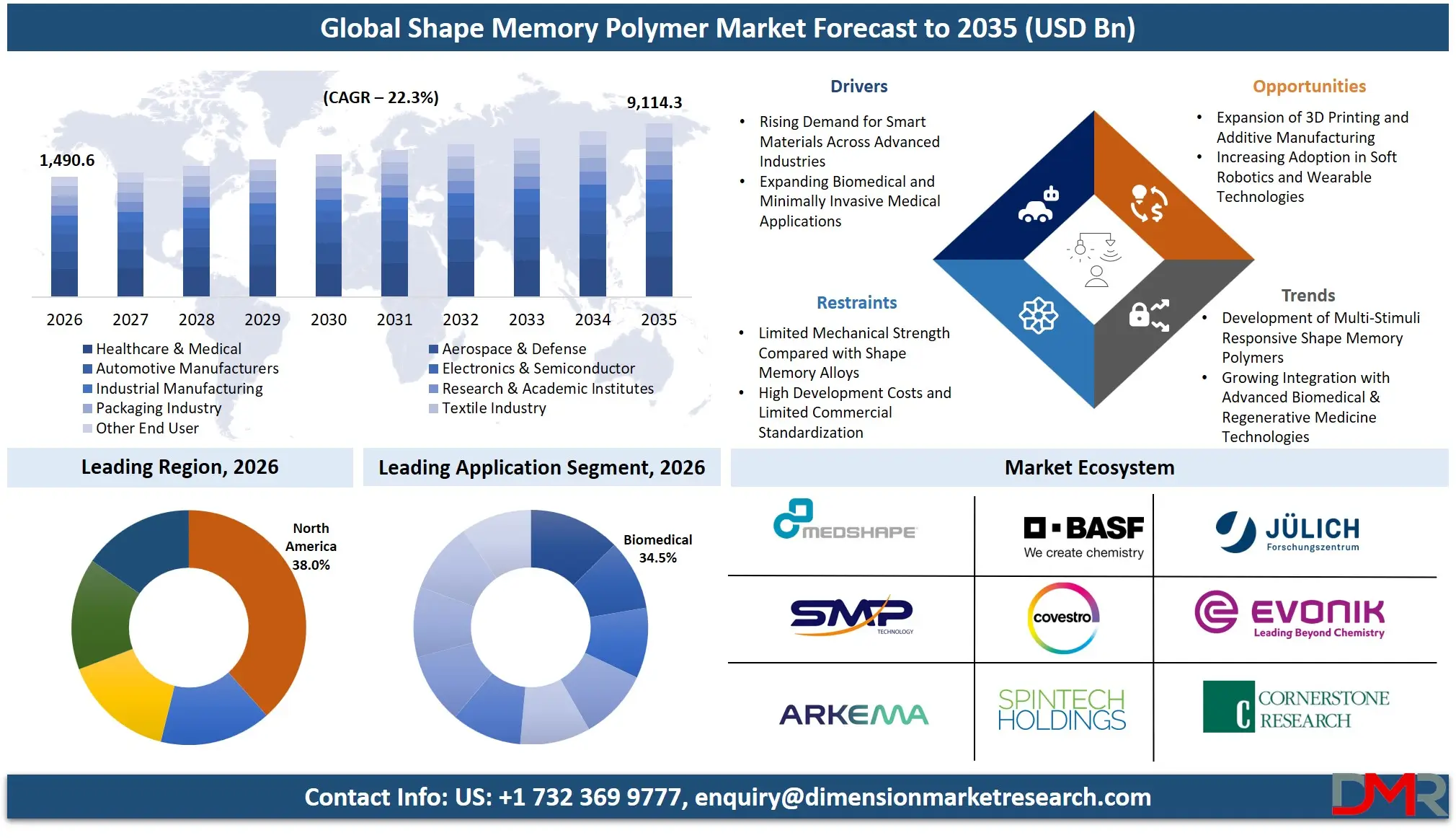
The Global Shape Memory Polymer Market is expected to reach a value of USD 1,490.6 million in 2026, and it is further anticipated to reach USD 9,114.3 million by 2035, growing at a CAGR of 22.3% during the forecast period.
ℹ
To learn more about this report –
Download Your Free Sample Report Here
The shape memory polymer market has been experiencing high growth as industries accelerate the adoption of smart materials that can return from a deformed state to their original shape upon exposure to an external stimulus. The market consists of thermally, light, electrically, and magnetically induced polymers which are used across biomedical, aerospace, automotive, and electronics sectors. The increasing demand to develop minimally invasive medical devices, self-deploying space structures, self-healing materials, and soft robotics components is driving the necessity for specialized SMP formulations and processing expertise. Healthcare & Medical and Aerospace & Defense are key end users, with thermally induced SMPs like Polyurethane remaining the most commercially popular because of their tunable transition temperatures and biocompatibility.
The US Shape Memory Polymer Market
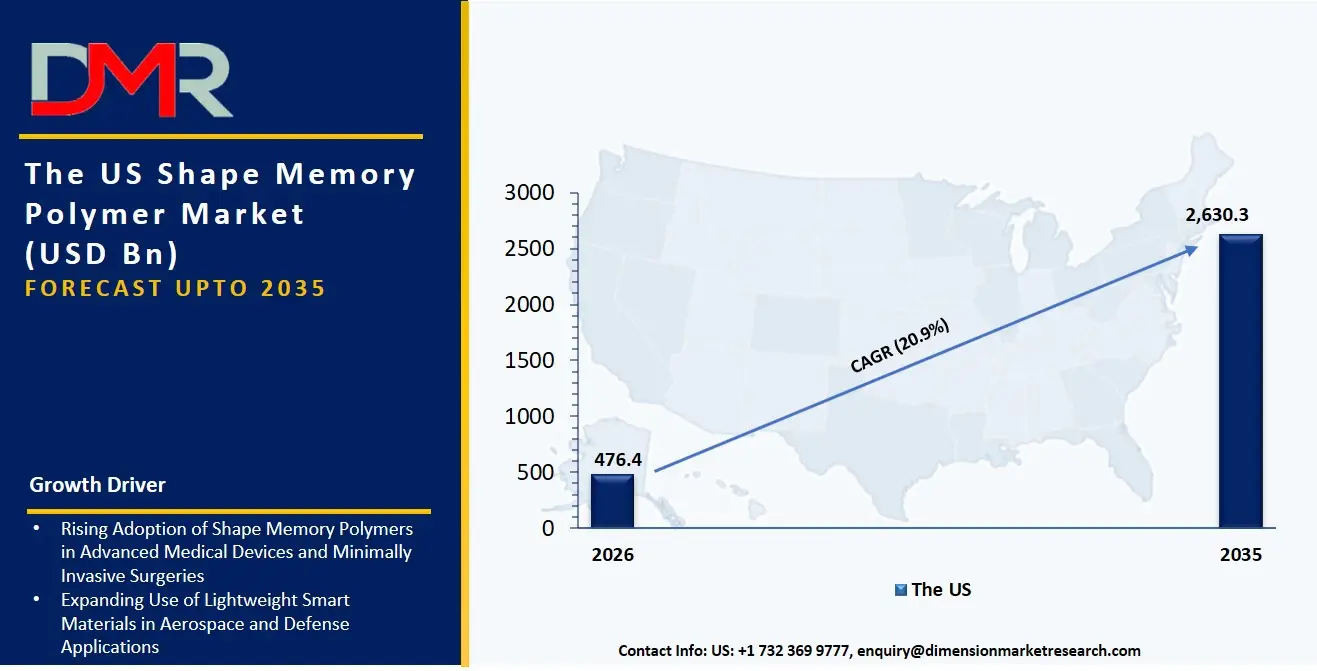
The US Shape Memory Polymer Market is projected to reach USD 476.4 million in 2026 at a compound annual growth rate of 20.9% over its forecast period, culminating in a value of USD 2,630.3 million by 2035.
ℹ
To learn more about this report –
Download Your Free Sample Report Here
The US continues to be the largest and most advanced market for shape memory polymers due to the robust research funding from defense agencies and the rapid commercialization of novel biomedical devices by Fortune 500 medical technology companies. The market has been typified by high demand for Polyurethane-based thermally induced SMPs, whereby organizations are focused on developing next-generation vascular stents and thrombectomy devices. Besides, the integration of electrically induced SMPs in soft robotics and flexible electronics is producing a similar need for multi-stimuli responsive polymers that can enable complex, programmable shape-changing behaviors.
The Europe Shape Memory Polymer Market
The Europe Shape Memory Polymer Market is estimated to be valued at USD 427.8 million in 2026 and is further anticipated to reach USD 2,571.2 million by 2035 at a CAGR of 21.1%. The regulatory frameworks including EU Medical Device Regulation (MDR) and REACH have a significant impact on the European market and drive the need to employ bio-based and biocompatible SMPs like Polylactic Acid (PLA) and Polycaprolactone (PCL) for tissue engineering and drug delivery systems. Accelerated growth in the aerospace application segment is also being experienced in the region as manufacturers in Germany and France are trying to strike a balance between structural integrity and weight reduction with morphing wing components. In addition, automotive OEMs are challenging polymer suppliers to create dedicated SMP-based films and coatings for damage sensing and aesthetic self-repair.
The Japan Shape Memory Polymer Market
The Japan Shape Memory Polymer Market is projected to be valued at USD 154.2 million in 2026. It is further expected to witness robust growth, holding USD 848.6 million in 2035 at a CAGR of 20.9%. The Japanese market is unique, with a corporate drive toward Society 5.0 in response to an aging population and a leadership position in industrial robotics. Light-induced and electrically induced shape memory polymers make up a large part of the spending as conglomerates integrate micro-actuators into consumer electronics and precision manufacturing. There is also a strong need to develop specialized 3D printing filaments that can bridge the gap between rapid prototyping and functional end-use parts, which forms a niche in multi-stimuli responsive SMPs and thermomechanical programming.
Key Takeaways
- Market Size & Forecast: The Global Shape Memory Polymer market is projected to reach USD 1,490.6 million in 2026, expanding dramatically to USD 9,114.3 million by 2035, fueled by the dual drivers of minimally invasive medical device innovation and the demand for self-deployable aerospace structures.
- Growth Rate & Outlook: Global market growth is expected at a CAGR of 22.3%, driven by a critical breakthrough in multi-stimuli responsive material formulations and the escalating complexity of programming temporary and permanent shapes in complex 4D-printed components.
- Primary Growth Drivers: Key forces include the widespread shift from traditional metal stents to polymeric self-expanding devices, the need for polyurethane and epoxy-based SMPs to create autonomous morphing surfaces, and the integration of electrically induced polymers into soft robotics requiring specialized shape recovery kinetics.
- Key Market Trends: Major trends include the rise of application-specific SMP grades (e.g., medical-grade PCL, aerospace-grade epoxy), the use of 4D printing to create time-dependent, programmable shapes, and the shift toward moisture-responsive and chemically activated SMPs as industries prioritize sustainability and autonomous environmental response.
- By Activation Method Analysis: Thermal activation is expected to dominate commercial applications due to its ease of control and reliability. However, light and electrical activation methods are increasingly required to build precise, localized shape change in biomedical and electronic devices.
- By End User Analysis: Healthcare & Medical and Aerospace & Defense are the most lucrative verticals due to stringent performance and biocompatibility needs. Electronics & Semiconductor is the fastest-growing sector as flexible circuits and soft displays require robust multi-stimuli responsive SMPs for dynamic, foldable architectures.
- Regional Leadership: North America is poised to dominate this market with 38.0% of the market share in 2026 due to its well-developed research ecosystem that translates material science breakthroughs into market-ready medical and defense products.
What is the Shape Memory Polymer?
Shape memory polymers (SMPs) are a class of smart polymeric materials that can be deformed and fixed into a temporary shape and subsequently recover to their original, memorized shape upon exposure to an external stimulus such as heat, light, an electric field, magnetic field, or moisture. These materials, unlike shape memory alloys, are defined by their programmability and versatility. This involves the formulation of different polymer types, like polyurethane (PU), polyethylene (PE), and epoxy-based SMPs, to tune their transition temperature and recovery stress. With 4D printing using SMP filaments now a commercial reality, specialized product forms are needed to achieve multi-stage shape deployment in body-temperature-activated sutures, self-tightening vascular devices, and dynamic structural components, making smart material investments translate into tangible product functionality, as opposed to passive structural performance.
Use Cases
- Self-Expanding Vascular Stents in Biomedical: Medical device companies utilize thermally induced Polyurethane SMPs to program compact, temporary shapes for catheter delivery. Upon reaching body temperature, the stent self-expands to its permanent shape, enabling a minimally invasive procedure and reducing vascular trauma.
- Morphing Wing Surfaces in Aerospace: Aerospace engineers use light-induced and electrically induced SMP-based coatings on wing leading edges. These materials change shape in response to solar radiation or an electric current, optimizing aerodynamic performance across different flight phases and replacing heavy hydraulic actuator systems.
- Sutureless Surgical Closure in Healthcare: Wound closure devices made from moisture-responsive or thermally induced Polycaprolactone (PCL) fibers are programmed to shrink upon contact with body fluids or warmth, automatically approximating wound edges and closing surgical incisions without the need for traditional sutures or staples.
- Self-Healing Automotive Films: Automotive manufacturers use SMP-based multi-stimuli responsive films in vehicle interiors and exteriors. When a scratch occurs, an induced stimulus like heat or light triggers the film's shape memory effect, physically healing the scratch by recovering the material's original smooth surface.
How AI is Transforming the Shape Memory Polymer Market?
Artificial intelligence (AI) is significantly transforming the shape memory polymer (SMP) market by accelerating material discovery, product design, and manufacturing optimization. Machine learning algorithms analyze large datasets to predict polymer compositions with improved shape recovery, durability, responsiveness, and biocompatibility, reducing research and development time. AI-powered simulations enable engineers to model material behavior under different stimuli such as heat, light, electricity, and moisture, improving product reliability before physical testing. In manufacturing, AI enhances quality control through real-time defect detection, predictive maintenance, and process optimization, minimizing waste and production costs. AI also supports the development of customized SMP-based medical devices, smart textiles, soft robotics, and aerospace components by enabling precise design modifications. Additionally, AI-driven digital twins and data analytics improve product performance monitoring, accelerating innovation while helping manufacturers meet evolving industrial requirements and shorten commercialization cycles for advanced shape memory polymer technologies.
Market Dynamics
Key Drivers in the Global Shape Memory Polymer Market
Rising Demand for Smart Materials Across Advanced Industries
The growing adoption of smart materials in aerospace, automotive, electronics, healthcare, and defense industries is a major driver of the global shape memory polymer market. Shape memory polymers offer lightweight construction, excellent shape recovery, design flexibility, and lower manufacturing costs compared to conventional smart materials. Manufacturers increasingly integrate these materials into adaptive structures, deployable systems, flexible electronics, and intelligent components to improve performance while reducing weight. Continuous advancements in polymer chemistry and material engineering further enhance functionality. Expanding industrial automation, increasing demand for high-performance materials, and ongoing investments in advanced manufacturing continue driving worldwide adoption of shape memory polymers.
Expanding Biomedical and Minimally Invasive Medical Applications
Growing demand for minimally invasive medical procedures is significantly accelerating adoption of shape memory polymers worldwide. These materials are increasingly used in vascular devices, orthopedic implants, tissue engineering scaffolds, surgical sutures, and controlled drug delivery systems because of their excellent biocompatibility and programmable shape recovery. Healthcare providers benefit from reduced surgical trauma, faster patient recovery, and improved treatment outcomes. Continuous innovation in regenerative medicine and personalized healthcare further expands medical applications. Rising healthcare expenditure, aging populations, increasing prevalence of chronic diseases, and strong investment in advanced biomaterials continue supporting sustained growth within the biomedical segment of the global market.
Restraints in the Global Shape Memory Polymer Market
Limited Mechanical Strength Compared with Shape Memory Alloys
Despite their advantages, shape memory polymers generally exhibit lower mechanical strength, stiffness, and load-bearing capacity than shape memory alloys and other advanced engineering materials. These limitations restrict their application in environments requiring high structural performance or repeated heavy mechanical loading. Certain aerospace, automotive, and industrial applications continue relying on metallic alternatives because of superior durability and fatigue resistance. Researchers are actively developing reinforced composites and hybrid materials to overcome these performance gaps. However, existing mechanical limitations remain a significant challenge affecting broader commercialization across demanding engineering applications in the global shape memory polymer market.
High Development Costs and Limited Commercial Standardization
Commercializing advanced shape memory polymer technologies requires extensive investment in material research, testing, product validation, and manufacturing optimization. Many specialized formulations remain at the research or pilot-production stage, limiting economies of scale and increasing product costs. Differences in activation mechanisms, material compositions, and performance characteristics also reduce standardization across commercial products. Manufacturers often require customized material development for specific applications, extending development timelines and increasing costs. Limited large-scale production capacity and relatively low market maturity further constrain widespread industrial adoption, particularly among cost-sensitive industries seeking standardized, high-volume smart material solutions.
Growth Opportunities in the Global Shape Memory Polymer Market
Expansion of 3D Printing and Additive Manufacturing
The rapid advancement of additive manufacturing presents substantial opportunities for the global shape memory polymer market. Shape memory polymers enable production of complex, lightweight, customized structures with programmable functionality that cannot be achieved using conventional manufacturing techniques. Four-dimensional (4D) printing, where printed components change shape over time in response to external stimuli, is gaining significant attention across healthcare, aerospace, robotics, and consumer products. Increasing investments in advanced manufacturing technologies and customized medical devices continue expanding commercial applications. Growing adoption of digital manufacturing processes is expected to create strong long-term demand for innovative shape memory polymer materials.
Increasing Adoption in Soft Robotics and Wearable Technologies
Soft robotics and wearable electronics represent rapidly expanding opportunities for shape memory polymers due to their flexibility, lightweight construction, and programmable movement capabilities. These materials enable development of adaptive robotic actuators, smart prosthetics, rehabilitation devices, wearable sensors, and intelligent textiles capable of responding to environmental stimuli. Growing demand for human-machine interaction technologies, industrial automation, and personalized healthcare continues accelerating research and commercialization efforts. Continuous improvements in polymer responsiveness and durability further enhance product performance. Expanding investments in robotics, healthcare technology, and smart wearable devices position this application area as a major future growth opportunity.
Trends in the Global Shape Memory Polymer Market
Development of Multi-Stimuli Responsive Shape Memory Polymers
A major trend in the global shape memory polymer market is the development of materials capable of responding to multiple external stimuli such as heat, light, electricity, magnetic fields, and moisture. These multi-responsive polymers offer greater functionality and design flexibility compared with conventional thermally activated materials. Researchers are developing advanced formulations for biomedical devices, aerospace systems, soft robotics, and flexible electronics requiring programmable, multifunctional performance. Continuous innovation in polymer chemistry and nanocomposite technologies is improving responsiveness, durability, and application versatility. This technological evolution is significantly expanding commercial opportunities across numerous high-value industries.
Growing Integration with Advanced Biomedical and Regenerative Medicine Technologies
Shape memory polymers are increasingly being integrated into regenerative medicine, tissue engineering, minimally invasive surgery, and personalized medical devices. Researchers continue developing biodegradable and bioresorbable polymers capable of supporting tissue regeneration while safely degrading after treatment. Advances in precision manufacturing and biomaterial engineering enable production of patient-specific implants with improved clinical performance. Collaboration among universities, medical device manufacturers, and healthcare providers continues accelerating commercialization of innovative biomedical solutions. Growing regulatory support, expanding clinical research, and increasing demand for advanced implantable technologies make biomedical integration one of the defining trends shaping the global shape memory polymer market.
Research Scope and Analysis
The Global Shape Memory Polymer Market is segmented by type, material, form, activation method, application, and end user. The report evaluates thermally, light, electrically, magnetically, moisture, and multi-stimuli responsive polymers across various materials and product forms. It further analyzes applications in healthcare, aerospace, automotive, electronics, robotics, packaging, and other industries, alongside key end-user sectors driving market demand.
ℹ
To learn more about this report –
Download Your Free Sample Report Here
By Type Analysis
Thermally induced shape memory polymers is projected to dominate the global market because they offer excellent shape recovery, simple activation, cost-effective manufacturing, and compatibility with a wide range of commercial applications. These materials require only controlled temperature changes to recover their original shape, making them suitable for biomedical devices, aerospace components, automotive systems, textiles, and industrial products. Polyurethane- and epoxy-based thermally responsive polymers are especially favored for their mechanical strength, flexibility, and durability. Continuous research into improved thermal responsiveness and processing techniques further enhances commercial adoption. Their proven reliability, scalability, and broad industrial acceptance firmly establish thermally induced polymers as the largest segment.
By Material Analysis
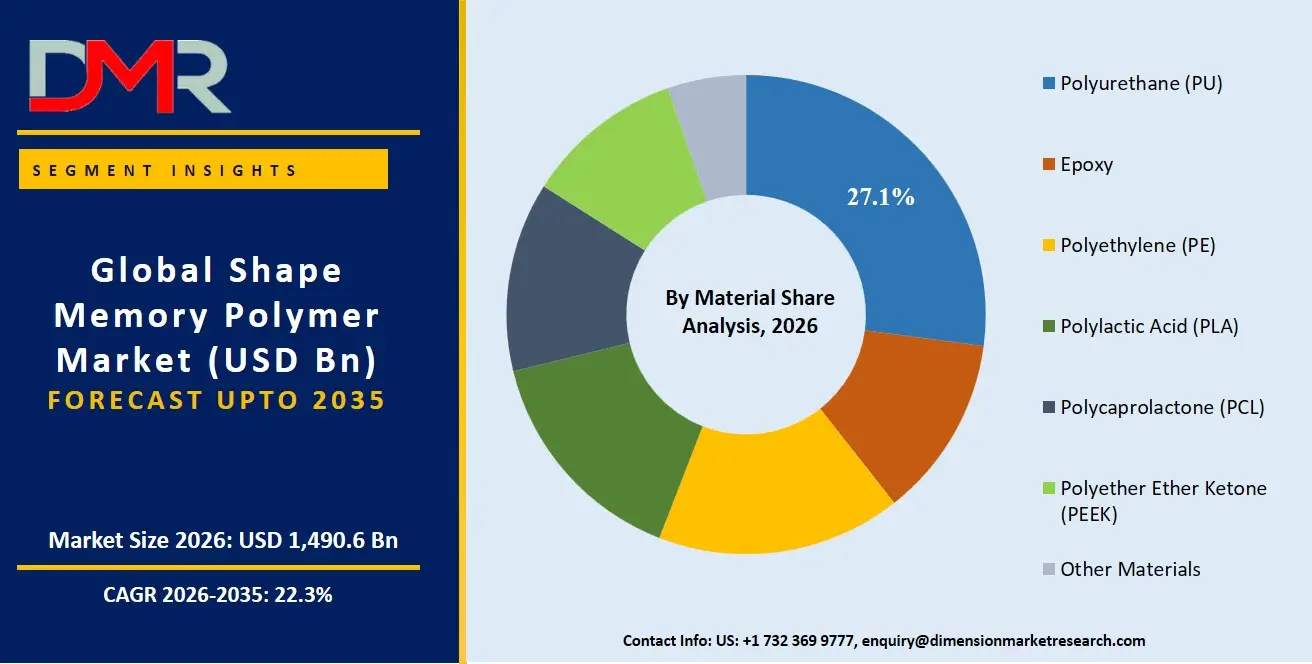
Polyurethane is poised to dominate the shape memory polymer market owing to its outstanding flexibility, biocompatibility, mechanical strength, and excellent shape recovery characteristics. PU-based shape memory polymers can be engineered across a broad range of transition temperatures, enabling use in medical devices, aerospace components, automotive systems, and smart textiles. The material also offers excellent fatigue resistance, lightweight properties, and ease of processing, making it attractive for both research and commercial applications. Continuous material innovation and expanding biomedical applications further support market growth. Its superior balance of performance, durability, and cost-effectiveness makes polyurethane the dominant material used worldwide.
By Form Analysis
Films is anticipated to represent the dominant form in the global shape memory polymer market because they offer lightweight construction, flexibility, ease of fabrication, and excellent responsiveness to external stimuli. Shape memory polymer films are widely used in biomedical devices, flexible electronics, aerospace structures, sensors, smart packaging, and protective coatings. Their thin profile enables rapid activation while maintaining mechanical performance and design flexibility. Manufacturers also benefit from scalable production methods and compatibility with advanced manufacturing technologies. Growing demand for miniaturized devices and smart materials across multiple industries continues driving adoption, firmly positioning films as the leading form segment in the global market.
By Activation Method Analysis
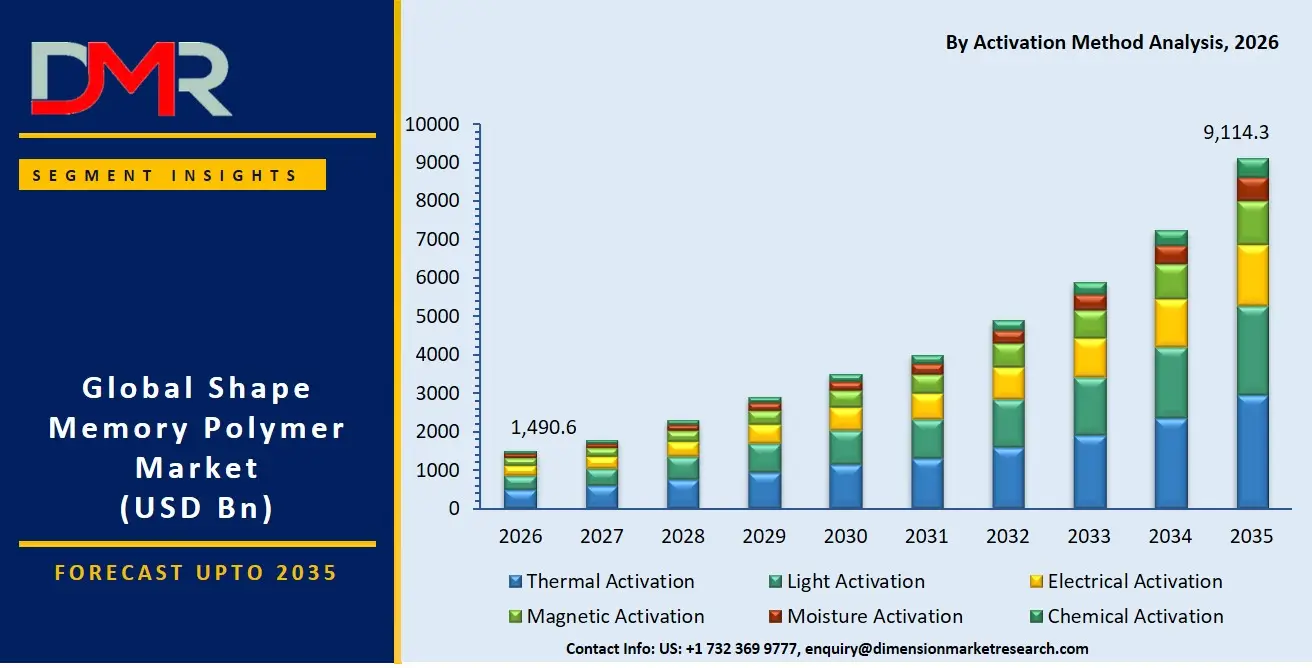
Thermal activation is poised to dominate the shape memory polymer market because it provides the simplest, most reliable, and commercially established mechanism for triggering shape recovery.
ℹ
To learn more about this report –
Download Your Free Sample Report Here
Controlled temperature changes enable predictable performance without requiring complex electrical or magnetic systems, making thermal activation highly suitable for medical devices, aerospace components, automotive applications, and industrial products. Most commercially available shape memory polymers are specifically engineered for thermally activated functionality due to their proven performance and manufacturing maturity. Continuous improvements in polymer chemistry further optimize transition temperatures for specialized applications. These advantages ensure thermal activation remains the preferred mechanism across global commercial markets.
By Application Analysis
Biomedical applications is expected to dominate the global shape memory polymer market because these materials possess excellent biocompatibility, flexibility, lightweight properties, and minimally invasive deployment capabilities. Shape memory polymers are increasingly utilized in vascular stents, orthopedic implants, surgical sutures, tissue engineering scaffolds, drug delivery systems, and other implantable medical devices. Their ability to change shape within the human body improves surgical outcomes while reducing patient trauma and recovery time. Growing demand for advanced medical technologies, expanding regenerative medicine research, and continuous innovation in minimally invasive procedures continue strengthening adoption. These factors firmly establish biomedical applications as the market's leading segment.
By End User Analysis
Healthcare and Medical is expected to dominate the global shape memory polymer market due to the rapid adoption of advanced biomaterials for minimally invasive surgical procedures and implantable medical devices. Hospitals, medical device manufacturers, and healthcare providers increasingly utilize shape memory polymers in cardiovascular devices, orthopedic implants, wound care products, tissue engineering, and controlled drug delivery systems. Continuous innovation in regenerative medicine and personalized healthcare further increases material demand. Regulatory approvals for advanced biomaterials and expanding investment in medical research accelerate commercialization worldwide. Strong clinical benefits and rising healthcare expenditure ensure Healthcare & Medical remains the dominant end-user segment globally.
The Global Shape Memory Polymer Market Report is segmented on the basis of the following:
By Type
- Thermally Induced Shape Memory Polymers
- Polyurethane (PU)
- Polyethylene (PE)
- Polystyrene (PS)
- Epoxy-Based SMPs
- Polycaprolactone (PCL)
- Other Thermally Induced SMPs
- Light-Induced Shape Memory Polymers
- Electrically Induced Shape Memory Polymers
- Magnetically Induced Shape Memory Polymers
- Moisture-Responsive Shape Memory Polymers
- Multi-Stimuli Responsive Shape Memory Polymers
By Material
- Polyurethane (PU)
- Epoxy
- Polyethylene (PE)
- Polylactic Acid (PLA)
- Polycaprolactone (PCL)
- Polyether Ether Ketone (PEEK)
- Other Materials
By Form
- Films
- Foams
- Sheets
- Fibers
- Tubes
- 3D Printing Filaments
- Coatings
- Others
By Activation Method
- Thermal Activation
- Light Activation
- Electrical Activation
- Magnetic Activation
- Moisture Activation
- Chemical Activation
By Application
- Biomedical
- Drug Delivery Systems
- Tissue Engineering
- Orthopedic Implants
- Vascular Devices
- Surgical Sutures
- Wound Care Devices
- Dental Applications
- Other Medical Applications
- Aerospace
- Morphing Aircraft Structures
- Deployable Space Structures
- Adaptive Wings
- Antennas & Satellite Components
- Vibration Control Systems
- Automotive
- Smart Interior Components
- Adaptive Seating Systems
- Self-Healing Components
- Actuators & Sensors
- Lightweight Structural Parts
- Electronics
- Flexible Electronics
- Smart Sensors
- Wearable Devices
- Cable Management
- Microelectromechanical Systems (MEMS)
- Textiles
- Smart Fabrics
- Shape-Adaptive Apparel
- Protective Clothing
- Medical Textiles
- Sportswear
- Robotics
- Soft Robotic Actuators
- Artificial Muscles
- Grippers
- Adaptive Robotic Components
- Wearable Robotics (Exoskeletons)
- Packaging
- Smart Packaging
- Temperature-Responsive Packaging
- Self-Folding Packaging
- Protective Packaging
- Food & Pharmaceutical Packaging
- Construction
- Self-Healing Building Materials
- Smart Insulation Systems
- Adaptive Structural Components
- Expansion Joints
- Seismic Protection Systems
- Consumer Goods
- Eyewear Frames
- Footwear
- Household Products
- Toys & Recreational Products
- Personal Care Products
- Defense
- Adaptive Camouflage Systems
- Deployable Military Equipment
- Smart Protective Gear
- UAV Components
- Military Medical Devices
- Others
By End User
- Healthcare & Medical
- Aerospace & Defense
- Automotive Manufacturers
- Electronics & Semiconductor
- Industrial Manufacturing
- Research & Academic Institutes
- Packaging Industry
- Textile Industry
- Other End User
Regional Analysis
Leading Region by Market Share
ℹ
To learn more about this report –
Download Your Free Sample Report Here
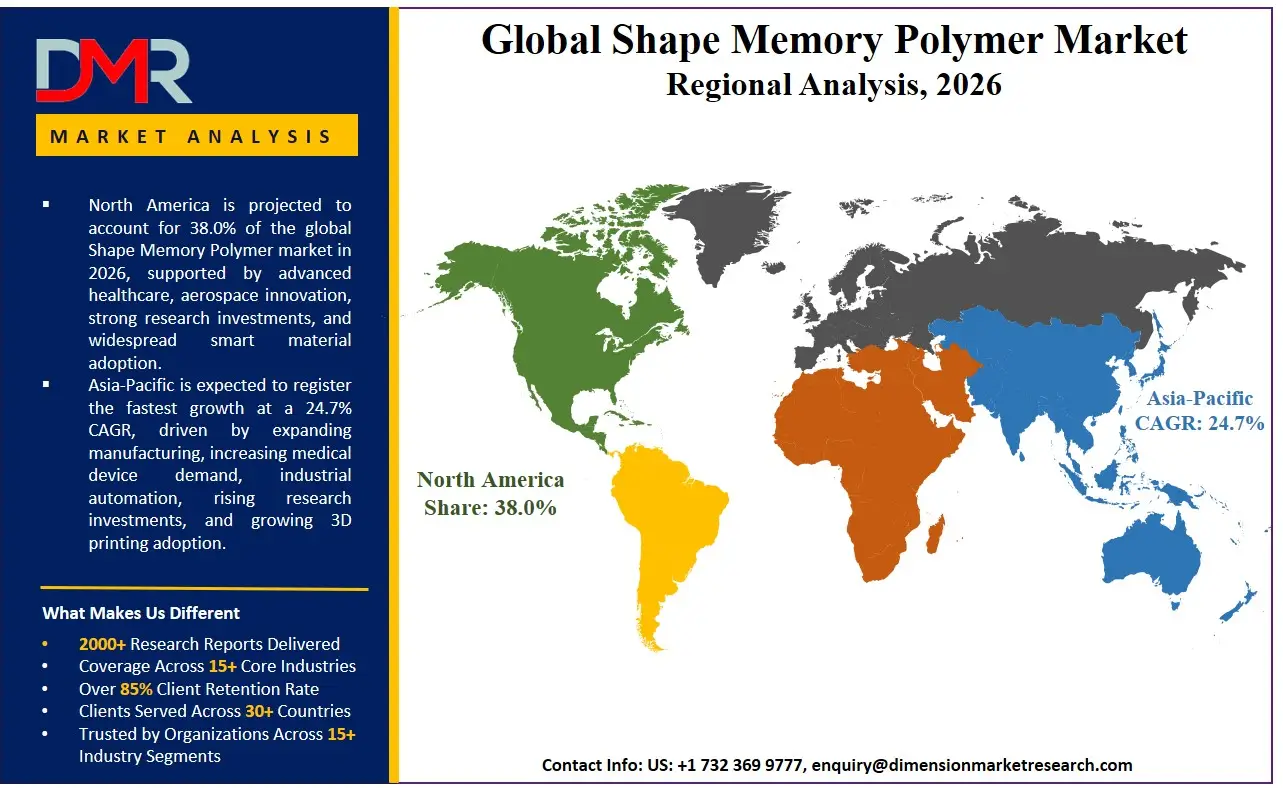
North America is poised to dominate the global shape memory polymer market as it is projected to hold 38.0% of the market share by the end of 2026. The United States, which dominates North America, has the highest share in the SMP market because of the unmatched concentration of advanced biomedical device manufacturers, top-tier aerospace primes, and robust DARPA and NIH research funding. The area has an established ecosystem of multinational material science corporations, specialized SMP formulators, and a rich pool of talent in polymer chemistry and additive manufacturing. Enterprise investment in 4D printing, flexible electronics, and the overall development of self-healing material systems contributes to the continued demand for multi-stimuli responsive SMPs and medical-grade fibers and coatings. Moreover, a strong venture capital climate persistently finances emerging smart-textile and shape-memory medical device startups that need expert material partners to achieve expedited FDA clearance and compliance.
Fastest-Growing Regional Market
Asia-Pacific is expected to be the most rapidly expanding shape memory polymer market, driven by the government-led sweeping investments in advanced manufacturing in China, South Korea, and Japan, coupled with the exploding consumer electronics sector. The fast-paced economic growth, the rise of a middle-income population, and the dynamic expansion of the textile and automotive industries are compelling established conglomerates to integrate smart functionalities into mass-market products. Electrically induced and moisture-responsive SMPs are in high demand to help these large organizations create differentiated smart garments and sensor-integrated vehicle interiors. There is also a severe thrust in translating biomedical SMP innovations from academic labs to clinical practice in the region, and it is necessary to build local GMP manufacturing capacity to cover the gap between research and market access for the large and aging patient populations.
By Region
North America
Europe
- Germany
- The U.K.
- France
- Italy
- Russia
- Spain
- Benelux
- Nordic
- Rest of Europe
Asia-Pacific
- China
- Japan
- South Korea
- India
- ANZ
- ASEAN
- Rest of Asia-Pacific
Latin America
- Brazil
- Mexico
- Argentina
- Colombia
- Rest of Latin America
Middle East & Africa
- Saudi Arabia
- UAE
- South Africa
- Israel
- Egypt
- Rest of MEA
Competitive Landscape
The competitive environment of the global shape memory polymer market has become highly dynamic with a heterogeneous array of multinational chemical conglomerates, specialized medical polymer formulators, and niche 4D-printing material start-ups. The key to success will be the profound strategic alliances with medical device OEMs and defense prime contractors because they will open the necessary co-development pathways and long-term supply agreements for application-specific SMP formulations. The movement towards market consolidation is rapidly progressing with traditional polymer producers acquiring biopolymer synthesis and nano-functionalization specialized boutiques to stay afloat in biomedical and electronics markets. Proprietary intellectual property, including specific copolymer compositions, crosslinking methods, and multi-step thermomechanical programming processes, is becoming a more important basis of competitive differentiation than just selling generic polymer resin.
Some of the prominent players in the Global Shape Memory Polymer Market are:
- Covestro AG
- Arkema S.A.
- BASF SE
- Evonik Industries AG
- SMP Technologies Inc.
- MedShape, Inc.
- Cornerstone Research Group, Inc.
- Forschungszentrum Jülich GmbH
- SpinTech Holdings Inc.
- Huntsman Corporation
- Mitsubishi Chemical Group Corporation
- 3M Company
- DuPont de Nemours, Inc.
- Asahi Kasei Corporation
- DSM-Firmenich
- Lubrizol Corporation
- Merck KGaA
- Celanese Corporation
- Sekisui Chemical Co., Ltd.
- NAGASE & CO., LTD.
- Other Key Players
Recent Developments
- February 2025: Covestro AG reported increased sales volumes in its FY2024 results and reaffirmed its focus on innovation, circular economy initiatives, and high-performance polymer materials for automotive, electronics, healthcare, and industrial applications.
- September 2025: Huntsman Corporation launched a new range of more sustainable ARALDITE® epoxy adhesives, strengthening its advanced materials portfolio for high-performance industrial and engineering applications.
- November 2025: Covestro AG completed its strategic partnership with XRG following regulatory approval, enhancing its financial position and supporting long-term investments in innovative polymer materials and sustainable technologies.
Report Details
| Report Characteristics |
| Market Size (2026) |
USD 1,490.6 Mn |
| Forecast Value (2035) |
USD 9,114.3 Mn |
| CAGR (2026–2035) |
22.3% |
| The US Market Size (2026) |
USD 476.4 Mn |
| Historical Data |
2021 – 2025 |
| Forecast Data |
2027 – 2035 |
| Base Year |
2025 |
| Estimate Year |
2026 |
| Segments Covered |
By Type, By Material, By Form, By Activation Method, By Application, and By End User |
| Regional Coverage |
North America – The US and Canada; Europe – Germany, The UK, France, Russia, Spain, Italy, Benelux, Nordic, & Rest of Europe; Asia-Pacific – China, Japan, South Korea, India, ANZ, ASEAN, Rest of APAC; Latin America – Brazil, Mexico, Argentina, Colombia, Rest of Latin America; Middle East & Africa – Saudi Arabia, UAE, South Africa, Turkey, Egypt, Israel, & Rest of MEA |
Frequently Asked Questions
How big is the Global Shape Memory Polymer Market?
▾ The Global Shape Memory Polymer market is poised to be valued at USD 1,490.6 million in 2026 and is projected to reach USD 9,114.3 million by 2035, driven by the universal need for smart, responsive materials in minimally invasive medical devices, self-deploying structures, and next-generation electronics.
What is the CAGR of the Global Shape Memory Polymer Market from 2026 to 2035?
▾ The market is expected to grow at a CAGR of 22.3% from 2026 to 2035, reflecting the accelerating commercialization of 4D printing and the expanding application scope of multi-stimuli responsive polymers.
What factors are driving the growth of the Global Shape Memory Polymer Market?
▾ Key drivers include the paradigm shift toward minimally invasive surgery, the need for lightweight actuators in aerospace and robotics, and breakthroughs in creating durable, electrically and moisture-responsive SMPs for autonomous textile and electronic applications.
Which region held the largest share of the Shape Memory Polymer Market in 2026?
▾ North America, specifically the United States, held 38.0% of the market share in 2026, driven by a mature biomedical device ecosystem and aggressive defense investment in Polyurethane, Epoxy, and PEEK-based SMPs for morphing and deployable structures.
Which region is expected to grow the fastest in the Shape Memory Polymer Market?
▾ The Asia-Pacific region is expected to grow the fastest, fueled by rapid electronics and textile manufacturing expansion in China, Japan, and South Korea, where electrically induced SMP films and smart fiber formulations are critical for creating differentiated consumer products.
What are the major trends in the Global Shape Memory Polymer Market?
▾ Major trends include the convergence of SMPs with 4D printing to create programmable, time-evolving parts, the rise of bioresorbable SMP platforms like PLA and PCL for transient implants, and the development of self-healing coatings as a value-added solution for automotive and electronics durability.
Who are the key players in the Global Shape Memory Polymer Market?
▾ Key players include chemical giants like BASF, Covestro, and Evonik, specialized biomedical material suppliers like DSM Biomedical, and focused technology firms like SMP Technologies Inc. and Cornerstone Research Group, alongside dedicated medical device developers like MedShape, Inc.
How is the Global Shape Memory Polymer Market segmented?
▾ The market is segmented by Type, Material, Form, Activation Method, Application, and End User.