Market Overview
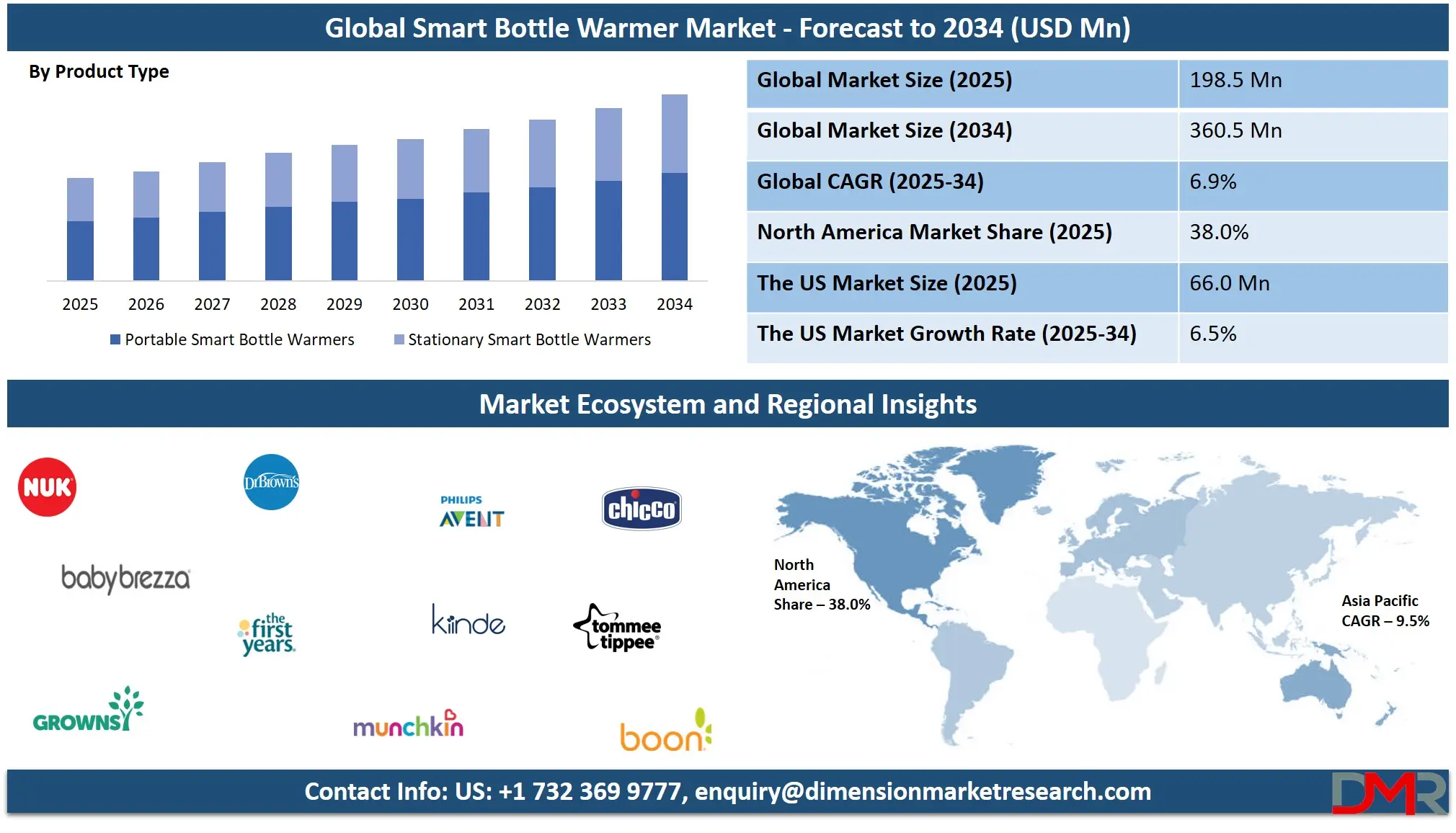
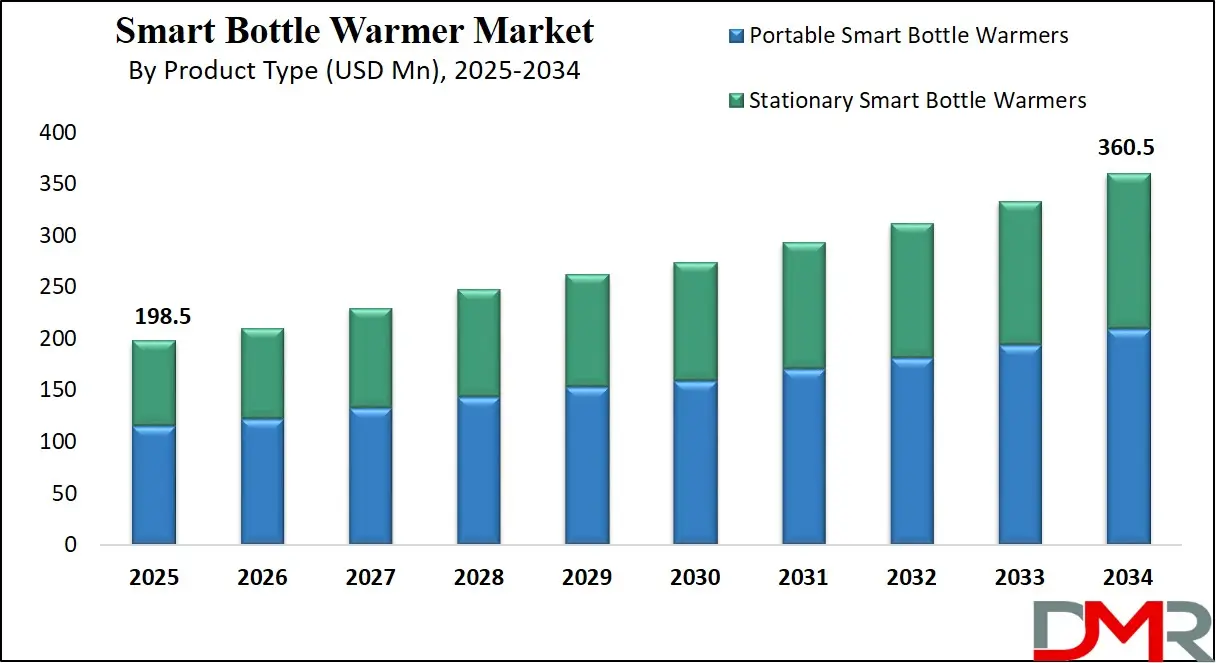
The Global Smart Bottle Warmer Market size is projected to reach USD 198.5 million in 2025 and grow at a compound annual growth rate of 6.9% to reach a value of USD 360.5 million in 2034.
ℹ
To learn more about this report –
Download Your Free Sample Report Here
The smart bottle warmer market refers to technologically advanced infant-feeding devices that use digital controls, sensors, and automated heating mechanisms to warm baby bottles. These products include portable and stationary units equipped with features such as precise temperature regulation, automatic shut-off, and, in some models, wireless connectivity. Smart bottle warmers play a critical role within the broader baby-care products industry by addressing safety, hygiene, and convenience concerns associated with infant feeding. Their importance has grown as parents increasingly prioritize reliable devices that prevent overheating and nutrient degradation in breast milk or formula.
Market evolution is being influenced by the convergence of baby-care appliances with smart home technologies. Digital displays, sensor-based heating, and energy-efficient designs are becoming standard components. These products align with modern parenting lifestyles where automation and time efficiency are highly valued. The integration of smart electronics into infant products reflects a broader shift toward connected household solutions.
ℹ
To learn more about this report –
Download Your Free Sample Report Here
The market continues to progress as manufacturers focus on usability, portability, and enhanced safety compliance. Shifts toward premium baby-care products, increasing urbanization, and the rise of dual-income households are contributing to sustained demand. Growing awareness of infant nutrition and feeding standards is further shaping long-term market expansion.
The US Smart Bottle Warmer Market
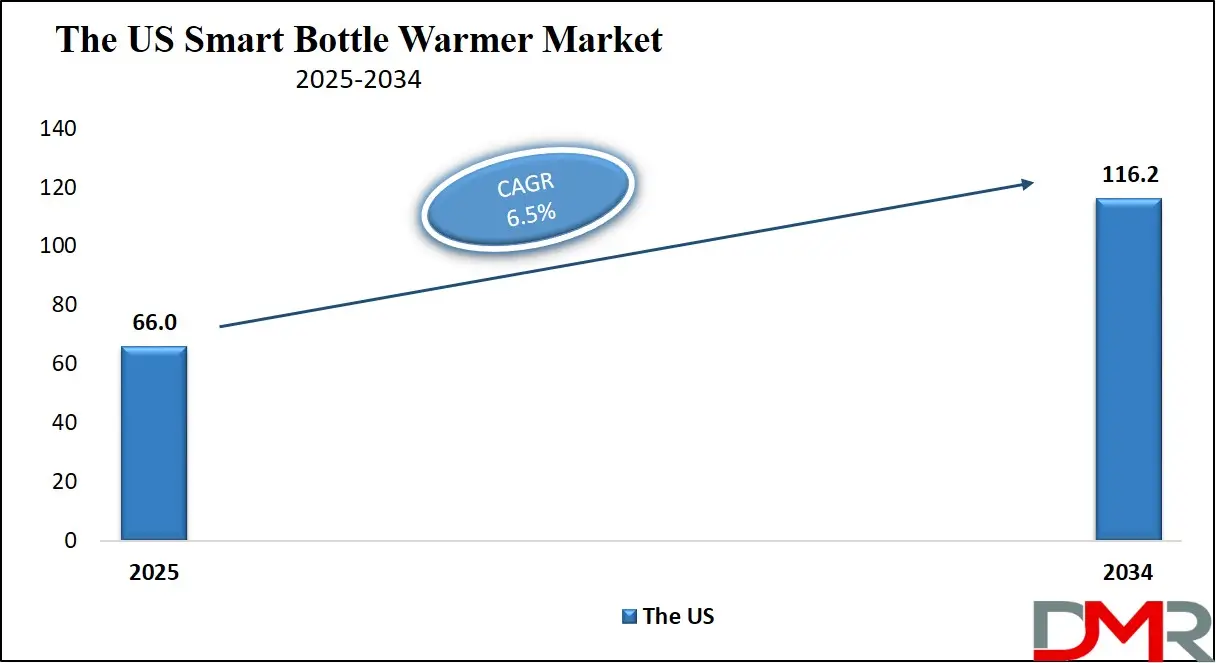
The US Smart Bottle Warmer Market size is projected to reach USD 66.0 million in 2025 at a compound annual growth rate of 6.5% over its forecast period.
ℹ
To learn more about this report –
Download Your Free Sample Report Here
The US smart bottle warmer market is driven by high consumer purchasing power and strong adoption of smart home and connected devices. Parents in the US increasingly prefer automated infant-care products that provide convenience, safety, and precise temperature control. The presence of established baby-care brands and widespread access to online retail platforms support market penetration. Regulatory emphasis on infant product safety encourages the adoption of advanced warming devices that meet strict compliance standards. Additionally, the growing number of working parents and nuclear families fuels demand for time-saving feeding solutions, positioning the US as a major contributor to overall market revenue.
Europe Smart Bottle Warmer Market
Europe Smart Bottle Warmer Market size is projected to reach USD 49.6 million in 2025 at a compound annual growth rate of 6.2% over its forecast period.
Europe represents a mature yet steadily growing market for smart bottle warmers, supported by strong consumer awareness of infant health and safety. Countries such as Germany, France, and the United Kingdom lead adoption due to higher disposable incomes and preference for technologically advanced baby-care products. European regulations emphasize product quality, safety certification, and energy efficiency, influencing product design and innovation. Sustainability considerations also shape purchasing decisions, encouraging manufacturers to develop energy-efficient and durable warmers. The European Green Deal indirectly supports innovation by promoting responsible manufacturing and eco-friendly materials.
Japan Smart Bottle Warmer Market
Japan Smart Bottle Warmer Market size is projected to reach USD 24.6 million in 2025 at a compound annual growth rate of 7.0% over its forecast period.
Japan’s smart bottle warmer market is characterized by high technological acceptance and demand for precision-based household appliances. Urban living conditions and compact housing favor portable and multifunctional devices. Japanese consumers place strong emphasis on product reliability, automation, and minimal maintenance, which aligns well with smart warming solutions. Government initiatives aimed at supporting families and childcare indirectly stimulate spending on premium infant products. However, demographic challenges such as declining birth rates push manufacturers to focus on innovation, quality differentiation, and value-added features to sustain market growth.
Smart Bottle Warmer Market: Key Takeaways
- Market Growth: The Smart Bottle Warmer Market size is expected to grow by USD 149.8 million, at a CAGR of 6.9%, during the forecasted period of 2026 to 2034.
- By Product Type: The portable smart bottle warmers segment is anticipated to get the majority share of the Smart Bottle Warmer Market in 2025.
- By Technology: Connected Smart Warmers segment is expected to get the largest revenue share in 2025 in the Smart Bottle Warmer Market.
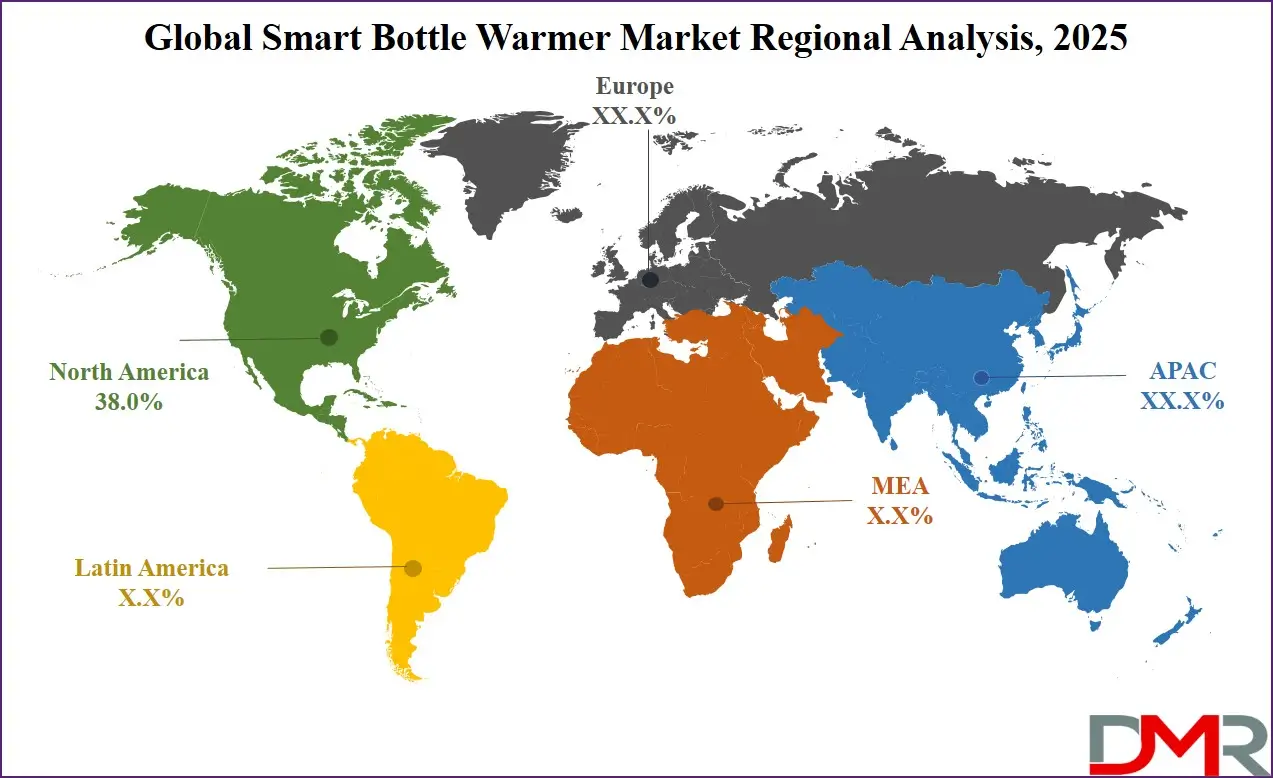
- Regional Insight: North America is expected to hold a 38.0% share of revenue in the Global Smart Bottle Warmer Market in 2025.
- Use Cases: Some of the use cases of Smart Bottle Warmer include travel & mobility, healthcare facilities, and more.
Smart Bottle Warmer Market: Use Cases
- Household Infant Feeding: Smart warmers provide consistent temperature control, ensuring safe and nutrient-preserving feeding.
- Travel and Mobility: Portable smart warmers enable parents to warm bottles during travel without compromising safety.
- Healthcare Facilities: Hospitals and neonatal units use smart warmers for standardized and hygienic milk preparation.
- Night-Time Feeding: Automated warming reduces preparation time during late-night feeding routines.
- Smart Home Ecosystems: Connected warmers integrate with digital assistants for remote operation.
- Multi-Child Families: Dual-capacity models allow simultaneous warming of multiple bottles.
- Premium Gifting: High-end smart warmers are popular as baby shower and newborn gifts.
Stats & Facts
- U.S. Consumer Product Safety Commission reported increased adoption of automated infant-care appliances in 2024 due to enhanced safety standards.
- U.S. Census Bureau recorded a rise in dual-income households with infants in 2024, supporting demand for time-saving baby products.
- European Commission highlighted growth in smart household appliances across childcare categories in 2025.
- Eurostat indicated that online sales of baby-care electronics increased by over 12% in 2024 across EU countries.
- Ministry of Health, Labour and Welfare (Japan) noted higher spending on premium infant-care products in urban regions in 2024.
- International Energy Agency reported improved energy efficiency standards for small household appliances in 2025.
- World Health Organization emphasized controlled temperature feeding to preserve breast milk nutrients in 2024 guidance.
- OECD observed increased investment in smart consumer appliances in developed economies in 2025.
- U.S. Department of Commerce recorded growth in domestic manufacturing of baby-care electronics in 2024.
- European Consumer Safety Authorities reinforced compliance requirements for infant warming devices in 2025.
Market Dynamic
Driving Factors in the Smart Bottle Warmer Market
Technological Advancements in Infant-Care Appliances
Technological innovation is a primary driver shaping the smart bottle warmer market. Advancements such as sensor-based automatic heating, digital temperature displays, and programmable settings improve accuracy and safety. These technologies reduce risks associated with overheating and uneven warming, increasing consumer trust. Integration of smart electronics allows users to monitor and control warming cycles efficiently. As parents become more tech-savvy, demand for intelligent infant-care solutions continues to rise. Continuous R&D investment further accelerates product differentiation, strengthening overall market momentum.
Changing Lifestyles and Parenting Patterns
Modern parenting trends significantly influence market expansion. The increase in working parents and urban households creates demand for products that simplify daily routines. Smart bottle warmers address convenience by reducing preparation time and manual monitoring. Compact and portable designs suit on-the-go lifestyles, while premium features appeal to parents seeking reliability. These lifestyle shifts directly contribute to higher adoption rates and consistent market growth across developed regions.
Restraints in the Smart Bottle Warmer Market
High Product Costs
High initial costs remain a key barrier to wider adoption of smart bottle warmers. Advanced components, digital controls, and connectivity features increase manufacturing expenses, leading to premium pricing. Price sensitivity among middle- and low-income consumers limits penetration in certain regions. Smaller brands also face challenges in achieving cost efficiency, which restricts competitive pricing. This restraint impacts market expansion, particularly in developing economies.
Limited Consumer Awareness in Emerging Markets
In several emerging regions, awareness of smart bottle warmer benefits remains limited. Traditional warming methods continue to dominate due to cost considerations and lack of product knowledge. Limited retail presence and insufficient marketing efforts further restrict adoption. This gap slows market growth despite rising birth rates in these regions.
Opportunities in the Smart Bottle Warmer Market
Expansion in Emerging Economies
Emerging economies present significant growth opportunities due to increasing urbanization and rising disposable incomes. As awareness of infant safety and hygiene improves, demand for smart feeding solutions is expected to rise. Market players can leverage affordable product variants and localized distribution strategies to capture untapped demand.
Product Innovation and Customization
Customization and innovation offer strong growth potential. Features such as multi-bottle capacity, faster warming cycles, and enhanced portability can attract diverse consumer segments. Integration with mobile applications and smart home platforms further strengthens product appeal and competitive positioning.
Trends in the Smart Bottle Warmer Market
Integration of Smart and Connected Technologies
The market is witnessing a trend toward connected devices that align with smart home ecosystems. Wi-Fi and Bluetooth-enabled warmers offer enhanced control and monitoring, improving user experience. This trend supports premium product positioning and long-term innovation.
Shift Toward Portable and Compact Designs
Portability is gaining importance as parents seek flexible feeding solutions. Lightweight, battery-powered, and USB-enabled warmers are increasingly preferred for travel and outdoor use. This trend supports diversification of product offerings and market expansion.
Impact of Artificial Intelligence in Smart Bottle Warmer Market
- Temperature Optimization: AI algorithms adjust heating cycles to prevent nutrient loss.
- Predictive Heating: Usage data enables pre-warming based on feeding schedules.
- Error Detection: AI detects abnormal heating patterns and alerts users.
- Energy Efficiency: Smart learning reduces power consumption over time.
- Personalized Settings: AI adapts warming preferences for different milk types.
- Remote Monitoring: Intelligent systems allow real-time status updates.
- Safety Enhancements: Automated shut-off minimizes overheating risks.
Research Scope and Analysis
By Product Type Analysis
Portable smart bottle warmers dominate this category, accounting for 58% market share in 2025, primarily due to their adaptability to modern parenting lifestyles. These devices are designed for mobility, featuring compact structures, lightweight materials, and flexible power options such as battery-powered and USB-rechargeable systems. Parents increasingly rely on these warmers during travel, outdoor activities, and daily commutes, where access to traditional power sources is limited. Their ease of operation, quick heating cycles, and compatibility with multiple bottle types further enhance adoption. Continuous innovation in battery efficiency, faster warming technology, and safety mechanisms strengthens consumer confidence and reinforces the leadership position of portable smart bottle warmers.
Stationary smart bottle warmers represent the fastest-growing segment within the product type category, supported by rising demand for stable and high-capacity countertop solutions. These warmers are widely used in households and healthcare environments where consistent power supply and precise temperature control are essential. Plug-in designs enable reliable performance, extended usage, and advanced features such as multi-bottle warming and preset temperature modes. Their suitability for routine feeding schedules and shared caregiving environments contributes to growing adoption. As parents seek dependable at-home feeding solutions and healthcare facilities emphasize standardization and hygiene, stationary smart bottle warmers continue to gain traction across both residential and institutional settings.
By Technology Analysis
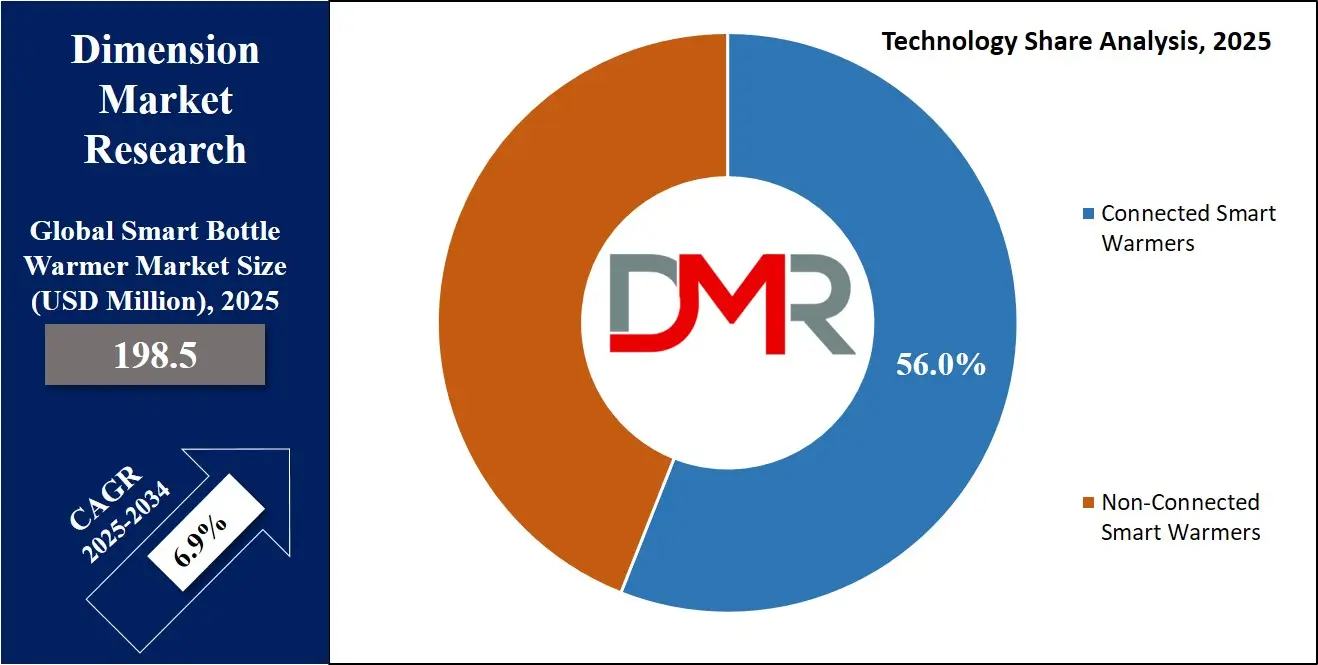
Connected smart warmers hold 56% market share in 2025, driven by the growing integration of Wi-Fi and Bluetooth connectivity in infant-care appliances. These devices allow users to remotely monitor and control warming cycles through mobile applications, improving convenience and operational efficiency. Compatibility with smart home ecosystems further enhances appeal among tech-savvy parents. Features such as real-time alerts, programmable schedules, and usage tracking support personalized feeding routines. The premium positioning of connected warmers, combined with rising acceptance of smart home technologies, strengthens their market presence. Continuous software enhancements and security improvements are expected to support sustained demand in this segment.
ℹ
To learn more about this report –
Download Your Free Sample Report Here
Non-connected smart warmers are expanding rapidly due to their affordability, simplicity, and reliability. These devices rely on digital temperature displays and sensor-based automatic heating without the need for wireless connectivity. Their straightforward operation appeals to consumers seeking efficient warming solutions without added complexity or higher costs. This segment is particularly attractive in price-sensitive markets and among users prioritizing basic functionality. Despite lacking connectivity features, these warmers offer consistent performance and essential safety mechanisms, making them suitable for everyday household use. Growing demand for cost-effective smart appliances continues to support the expansion of non-connected smart warmers globally.
By Power Source Analysis
Electric AC-powered smart bottle warmers account for 52% of the market in 2025, reflecting their dominance in stationary and high-usage environments. These warmers provide stable and uninterrupted power, ensuring consistent heating performance and precise temperature control. They are widely adopted in households and healthcare facilities where reliability and efficiency are critical. AC-powered models often support advanced features such as multi-bottle capacity and extended operational cycles, making them suitable for routine feeding schedules. Their long lifespan and minimal dependency on battery replacement further strengthen adoption. As consumers prioritize durability and consistent performance, AC-powered smart bottle warmers maintain strong market leadership.
Battery and USB-powered smart bottle warmers are witnessing rapid expansion, driven by increasing demand for portability and convenience. These power sources enable flexible usage during travel, outdoor activities, and emergency situations. Advances in battery technology and charging efficiency have improved performance and reduced downtime. Growing preference for mobile infant-care solutions supports sustained growth in this segment.
By End User Analysis
Households dominate the end-user category with 61% market share in 2025, reflecting the widespread integration of smart feeding solutions into everyday residential use. Daily infant feeding routines, combined with increasing parental awareness regarding feeding safety, hygiene, and nutritional preservation, strongly drive demand. Smart bottle warmers provide consistent temperature control, reduce preparation time, and minimize manual effort, making them an essential household appliance for modern parents. The growth of nuclear families and dual-income households further accelerates adoption, as caregivers seek automated and reliable solutions to manage time efficiently. Additionally, the availability of user-friendly models across low, mid, and premium price ranges ensures accessibility, reinforcing household dominance in the smart bottle warmer market.
Healthcare facilities, including hospitals and clinics, represent the fastest-growing end-user segment due to strict feeding protocols and heightened hygiene requirements. Smart bottle warmers enable precise and uniform heating, which is critical in neonatal care units and pediatric wards. These devices help reduce human error, ensure consistent feeding temperatures, and support compliance with medical guidelines. Rising investments in maternal and infant healthcare infrastructure further support adoption across healthcare settings. As healthcare providers prioritize patient safety and operational efficiency, demand for technologically advanced bottle warming solutions continues to increase steadily within this segment.
By Distribution Channel Analysis
Online channels account for 57% market share in 2025, supported by convenience, extensive product variety, and competitive pricing structures. E-commerce platforms and direct-to-consumer models allow manufacturers to reach a broader customer base while reducing dependency on physical retail networks. Online platforms also provide detailed product descriptions, user reviews, and comparison tools, which influence informed purchasing decisions. Faster product launches and promotional campaigns further accelerate adoption of advanced smart bottle warmers. The growing preference for digital shopping, particularly among younger parents, continues to strengthen the dominance of online distribution channels.
Offline channels, including specialty baby stores and supermarkets, continue to experience steady growth despite rising online sales. Physical retail outlets offer consumers hands-on product evaluation, personalized recommendations, and immediate availability, which are particularly valued for premium and high-investment purchases. Many parents prefer offline channels to assess product quality, build trust, and seek expert guidance. Supermarkets and specialty stores also benefit from impulse purchases and bundled baby-care offerings. These factors support sustained demand across offline distribution channels.
By Price Range Analysis
Mid-range smart bottle warmers lead the price segment with 49% market share in 2025, offering an optimal balance between affordability and advanced functionality. These products typically include features such as digital temperature control, automatic shut-off, and reliable heating mechanisms without premium pricing. Their broad appeal spans middle-income households seeking value-driven solutions with dependable performance. Mid-range models are widely available through both online and offline channels, enhancing accessibility. As consumers increasingly prioritize quality and safety at reasonable costs, this segment continues to play a central role in overall market growth.
Premium smart warmers are the fastest-growing price segment, driven by rising demand for connectivity, superior aesthetics, and enhanced safety features. These products often integrate smart technologies, advanced sensors, and high-end materials, appealing to tech-savvy and quality-conscious consumers. Parents increasingly associate premium pricing with reliability, innovation, and long-term value, particularly for infant-care products. Growing disposable incomes and gifting trends further contribute to rapid expansion of this segment.
The Smart Bottle Warmer Market Report is segmented on the basis of the following:
By Product Type
- Portable Smart Bottle Warmers
- Battery Powered
- USB Rechargeable
- Stationary Smart Bottle Warmers
By Technology
- Connected Smart Warmers
- Wi-Fi Enabled
- Bluetooth Enabled
- Non-Connected Smart Warmers
- Digital Temperature Control
- Sensor-Based Automatic Heating
By Power Source
- Electric (AC Powered)
- Battery Operated
- USB Powered
By End User
- Households
- Healthcare Facilities
- Hospitals
- Clinics & Neonatal Care Units
- Travel & Outdoor Users
By Distribution Channel
- Online
- E-commerce Platforms
- Brand Direct-to-Consumer (D2C)
- Offline
- Specialty Baby Stores
- Supermarkets & Hypermarkets
By Price Range
- Low-Cost / Economy
- Mid-Range
- Premium Smart Warmers
Regional Analysis
Leading Region in the Smart Bottle Warmer Market
North America leads the smart bottle warmer market with 38% share in 2025, supported by high levels of technology adoption and strong consumer purchasing power. Parents in the region readily invest in advanced infant-care products that emphasize safety, convenience, and automation. Well-developed retail and e-commerce infrastructure ensures widespread product availability. Additionally, strict regulatory standards related to infant product safety encourage the adoption of compliant and technologically advanced devices. Continuous product innovation, strong brand presence, and high consumer awareness collectively reinforce North America’s dominant position in the global market.
ℹ
To learn more about this report –
Download Your Free Sample Report Here
Fastest Growing Region in the Smart Bottle Warmer Market
Asia Pacific is the fastest-growing region in the smart bottle warmer market, driven by rapid urbanization, rising disposable incomes, and increasing awareness of infant health and nutrition. Expanding e-commerce penetration enables broader access to smart baby-care products across urban and semi-urban areas. Supportive government initiatives focused on maternal and child welfare further encourage adoption. The growth of middle-class populations, changing lifestyles, and increasing participation of women in the workforce accelerate demand for convenient and automated feeding solutions, positioning Asia Pacific as a key growth engine for the market.
By Region
North America
Europe
- Germany
- The U.K.
- France
- Italy
- Russia
- Spain
- Benelux
- Nordic
- Rest of Europe
Asia-Pacific
- China
- Japan
- South Korea
- India
- ANZ
- ASEAN
- Rest of Asia-Pacific
Latin America
- Brazil
- Mexico
- Argentina
- Colombia
- Rest of Latin America
Middle East & Africa
- Saudi Arabia
- UAE
- South Africa
- Israel
- Egypt
- Rest of MEA
Competitive Landscape
The Smart Bottle Warmer market is characterized by innovation-driven competitive strategies focused on product differentiation, continuous R&D investment, and pricing optimization. Companies in the market emphasize enhanced safety features, precise temperature control, and improved product usability to strengthen brand positioning. Expanding online presence and direct-to-consumer channels remains a key approach to increasing market reach. Entry barriers such as strict regulatory compliance and high technology development costs limit new entrants. To maintain competitiveness, market participants actively pursue strategic partnerships, diversify product portfolios, and implement regular product upgrades aligned with evolving consumer expectations.
Some of the prominent players in the global Smart Bottle Warmer are:
- Philips Avent
- Baby Brezza
- Tommee Tippee
- Munchkin
- Dr. Brown’s
- Chicco
- Kiinde
- The First Years
- Boon
- Grownsy
- Babymoov
- NUK
- Pigeon Corporation
- Comotomo
- Cuisinart
- Born Free
- Nuby
- Jiffi
- Eccomum
- Nanobébé
- Other Key Players
Recent Developments
- In April 2025, Baby & Mom Retail launched its new healthcare and consumer electronics brand CORVELL, which is positioned as a high-quality, made-in-India healthcare equipment brand, CORVELL aims to make smart healthcare solutions more accessible, reliable, and affordable. The products are clinically tested and approved by regulatory bodies, including the Government of India, ensuring adherence to safety and quality standards.
Report Details
| Report Characteristics |
| Market Size (2025) |
USD 198.5 Mn |
| Forecast Value (2034) |
USD 360.5 Mn |
| CAGR (2025–2034) |
6.9% |
| The US Market Size (2025) |
USD 66.0 Mn |
| Historical Data |
2019 – 2024 |
| Forecast Data |
2026 – 2034 |
| Base Year |
2024 |
| Estimate Year |
2025 |
| Report Coverage |
Market Revenue Estimation, Market Dynamics, Competitive Landscape, Growth Factors and etc. |
| Segments Covered |
By Product Type (Portable Smart Bottle Warmers, Stationary Smart Bottle Warmers), By Technology (Connected Smart Warmers, Non-Connected Smart Warmers), By Power Source (Electric, Battery Operated, USB Powered), By End User (Households, Healthcare Facilities, Travel & Outdoor Users), By Distribution Channel (Online, Offline), By Price Range (Low-Cost / Economy, Mid-Range, Premium Smart Warmers) |
| Regional Coverage |
North America – The US and Canada; Europe – Germany, The UK, France, Russia, Spain, Italy, Benelux, Nordic, & Rest of Europe; Asia-Pacific – China, Japan, South Korea, India, ANZ, ASEAN, Rest of APAC; Latin America – Brazil, Mexico, Argentina, Colombia, Rest of Latin America; Middle East & Africa – Saudi Arabia, UAE, South Africa, Turkey, Egypt, Israel, & Rest of MEA |
| Prominent Players |
Philips Avent, Baby Brezza, Tommee Tippee, Munchkin, Dr. Brown’s, Chicco, Kiinde, The First Years, Boon, Grownsy, Babymoov, NUK, Pigeon Corporation, Comotomo, Cuisinart, Born Free, Nuby, Jiffi, Eccomum, Nanobébé, and Other Key Players |
| Purchase Options |
We have three licenses to opt for: Single User License (Limited to 1 user), Multi-User License (Up to 5 Users) and Corporate Use License (Unlimited User) along with free report customization equivalent to 0 analyst working days, 3 analysts working days and 5 analysts working days respectively. |
Frequently Asked Questions
How big is the Global Smart Bottle Warmer Market?
▾ The Global Smart Bottle Warmer Market size is expected to reach USD 198.5 million by 2025 and USD 360.5 million by the end of 2034.
Which region accounted for the largest Global Smart Bottle Warmer Market?
▾ North America is expected to have the largest market share in the Global Smart Bottle Warmer Market, with a share of about 38.0% in 2025.
How big is the Smart Bottle Warmer Market in the US?
▾ The US Smart Bottle Warmer market is expected to reach USD 66.0 million by 2025.
Who are the key players in the Smart Bottle Warmer Market?
▾ Some of the major key players in the Global Smart Bottle Warmer Market include Kiinde, Chicco, Philips Avent, and others.
What is the growth rate in the Global Smart Bottle Warmer Market?
▾ The market is growing at a CAGR of 6.9 percent over the forecasted period.