Market Overview
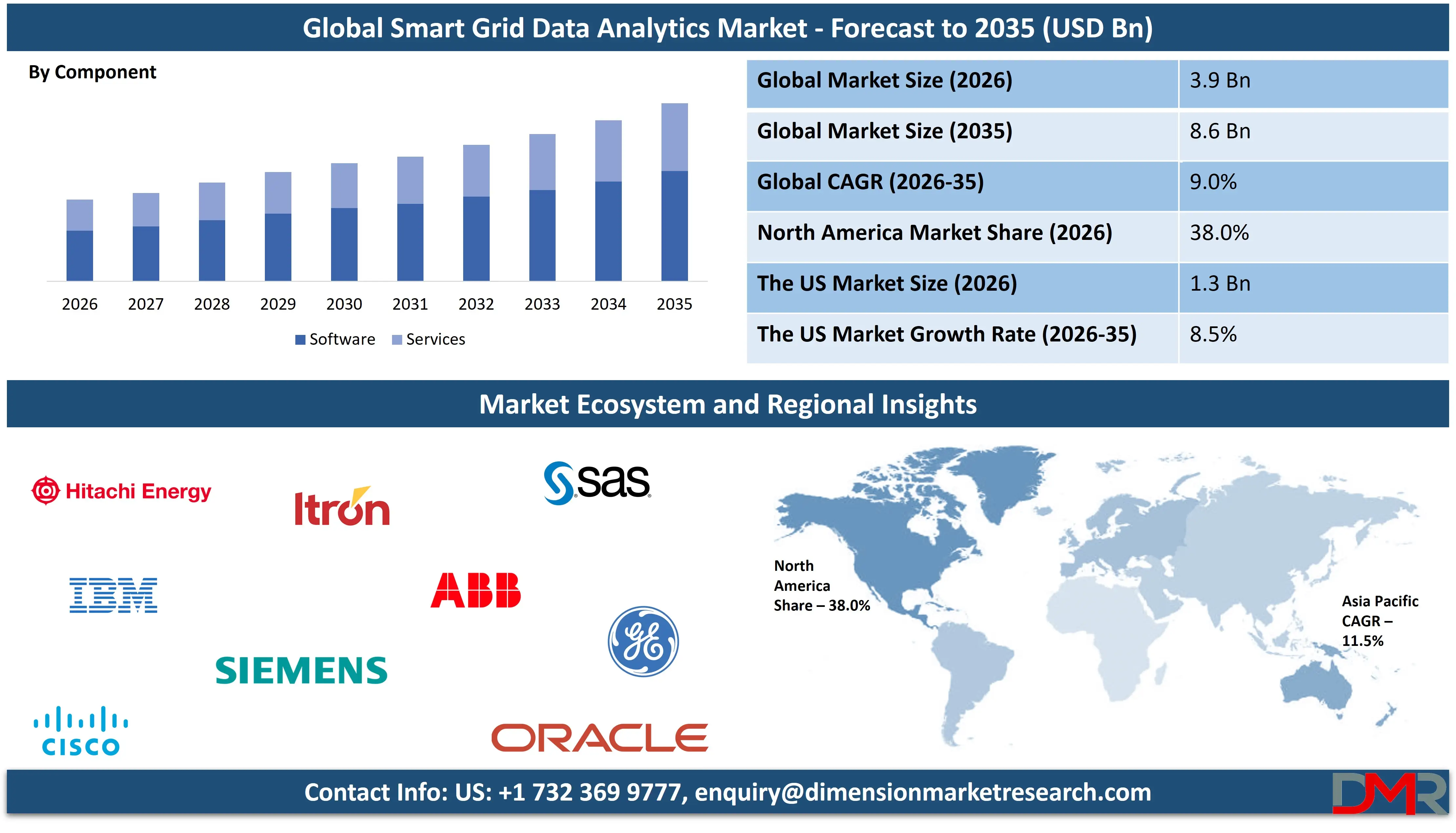
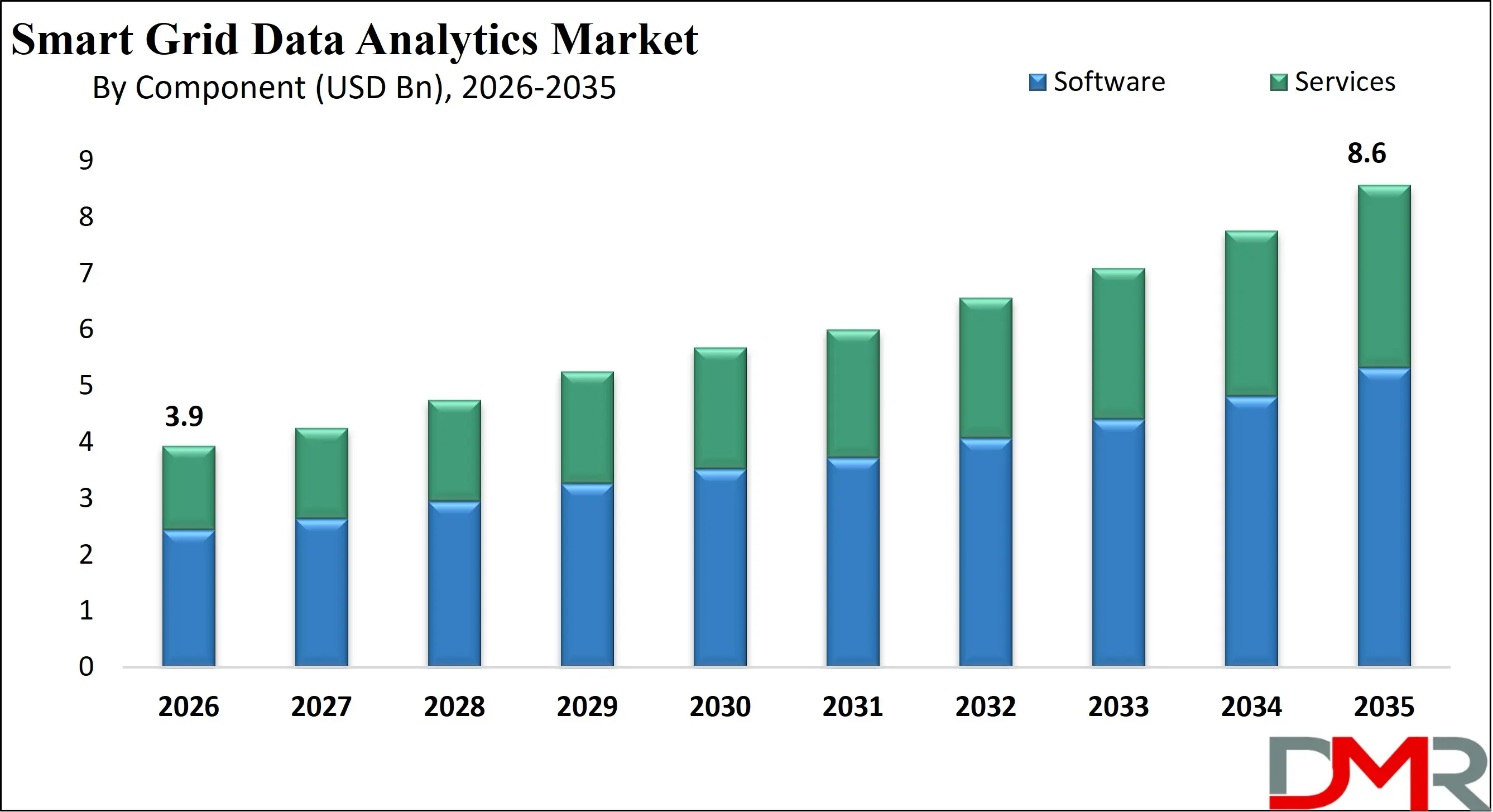
The Global Smart Grid Data Analytics Market size is projected to reach USD 3.9 billion in 2026 and grow at a compound annual growth rate of 9.0% to reach a value of USD 8.6 billion in 2035.
Smart Grid Data Analytics refers to the collection, processing, and interpretation of data generated across electricity networks through smart meters, sensors, advanced metering infrastructure (AMI), and grid management systems. It includes software platforms, analytics engines, and associated services that convert raw grid data into actionable insights for utilities and energy stakeholders. Core technologies such as machine learning, cloud computing, IoT-enabled devices, and real-time dashboards enhance situational awareness, operational visibility, and data-driven decision-making across transmission and distribution networks.
ℹ
To learn more about this report –
Download Your Free Sample Report Here
It plays a critical role in modernizing power infrastructure by enabling predictive maintenance, load forecasting, outage management, and renewable energy integration. As electricity demand becomes increasingly dynamic due to electric vehicles, distributed energy resources, and decentralized generation, advanced analytics ensures grid stability, flexibility, and efficiency. The convergence of operational technology (OT) and information technology (IT) is reshaping traditional utility business models into automated, intelligent, and customer-centric systems capable of responding to real-time grid conditions.
ℹ
To learn more about this report –
Download Your Free Sample Report Here
Further, the growth in the smart grid data analytics market is fueled by digital transformation initiatives, decarbonization targets, and large-scale investments in smart grid infrastructure. Regulatory mandates supporting smart meter rollouts, carbon neutrality commitments, and grid resilience standards are accelerating analytics deployment. Emerging trends such as edge computing, AI-driven demand response, interoperable data standards, and enhanced cybersecurity frameworks are pushing the market from pilot projects to enterprise-wide implementations. Strategic collaborations, technology integrations, and performance-focused regulatory models continue to position analytics as a foundational pillar of next-generation energy ecosystems..
The US Smart Grid Data Analytics Market
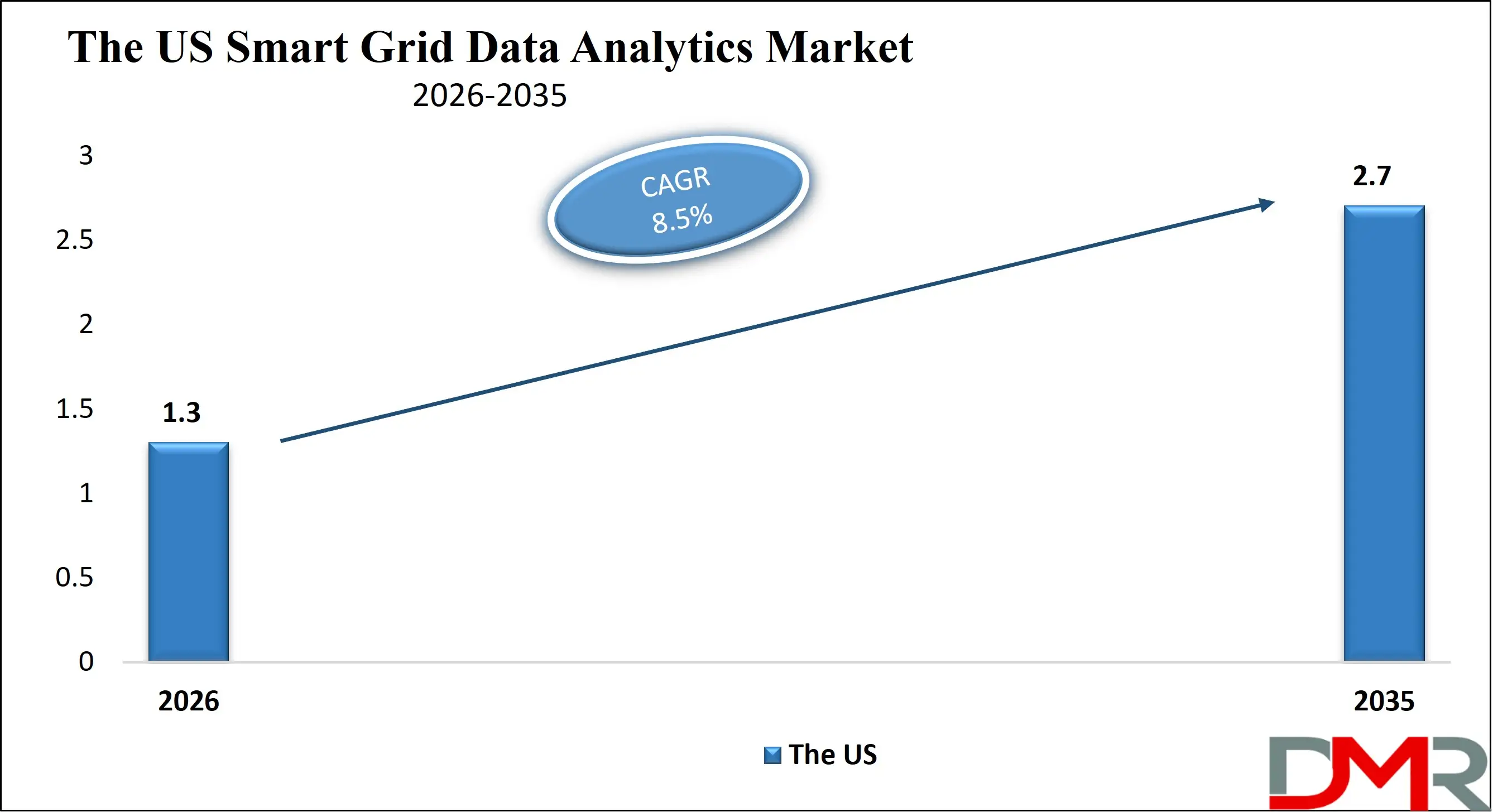
The US Smart Grid Data Analytics Market size is projected to reach USD 1.3 billion in 2026 at a compound annual growth rate of 8.5% over its forecast period.
ℹ
To learn more about this report –
Download Your Free Sample Report Here
The US market is driven by federal infrastructure funding, grid modernization programs, and widespread smart meter penetration. Major investor-owned utilities are deploying advanced analytics to manage aging infrastructure and rising renewable integration. Regulatory bodies such as the Federal Energy Regulatory Commission (FERC) promote grid reliability standards, encouraging analytics adoption. Cloud-based deployments are gaining traction due to scalability and cost efficiency. Market share is concentrated among established technology providers partnering with utilities for AMI analytics and outage management solutions. State-level clean energy targets and electric vehicle growth further amplify demand for real-time grid intelligence platforms.
Europe Smart Grid Data Analytics Market
Europe Smart Grid Data Analytics Market size is projected to reach USD 1.1 billion in 2026 at a compound annual growth rate of 8.8% over its forecast period.
Europe’s market growth is strongly influenced by the European Green Deal and regional decarbonization mandates. Countries such as Germany, France, and the Nordic nations are accelerating renewable integration, increasing reliance on advanced analytics for balancing intermittent generation. Strict regulatory frameworks on data protection and energy efficiency shape deployment models, with emphasis on secure cloud and hybrid systems. Smart city initiatives and cross-border electricity trading require robust grid visibility tools. Utilities prioritize predictive maintenance and load forecasting to enhance grid resilience amid rising distributed energy adoption and electrification of heating and transport sectors.
Japan Smart Grid Data Analytics Market
Japan Smart Grid Data Analytics Market size is projected to reach USD 190.0 million in 2026 at a compound annual growth rate of 8.6% over its forecast period.
Japan’s market expansion is supported by government initiatives promoting smart communities and renewable energy integration following grid reforms. Rapid urbanization and high population density necessitate reliable and efficient grid operations, driving analytics adoption. The Ministry of Economy, Trade and Industry (METI) encourages digital grid investments to strengthen energy security. Advanced metering infrastructure penetration is increasing, enabling real-time consumption insights. Industrial demand response programs and disaster-resilient grid systems are key focus areas. While aging infrastructure poses challenges, Japan’s strong technology ecosystem fosters innovation in AI-driven grid monitoring and predictive asset management solutions.
Smart Grid Data Analytics Market: Key Takeaways
- Market Growth: The Smart Grid Data Analytics Market size is expected to grow by USD 4.3 billion, at a CAGR of 9.0%, during the forecasted period of 2027 to 2035.
- By Component: The software segment is anticipated to get the majority share of the Smart Grid Data Analytics market in 2026.
- By End User: The utilities segment is expected to get the largest revenue share in 2026 in the Smart Grid Data Analytics market.
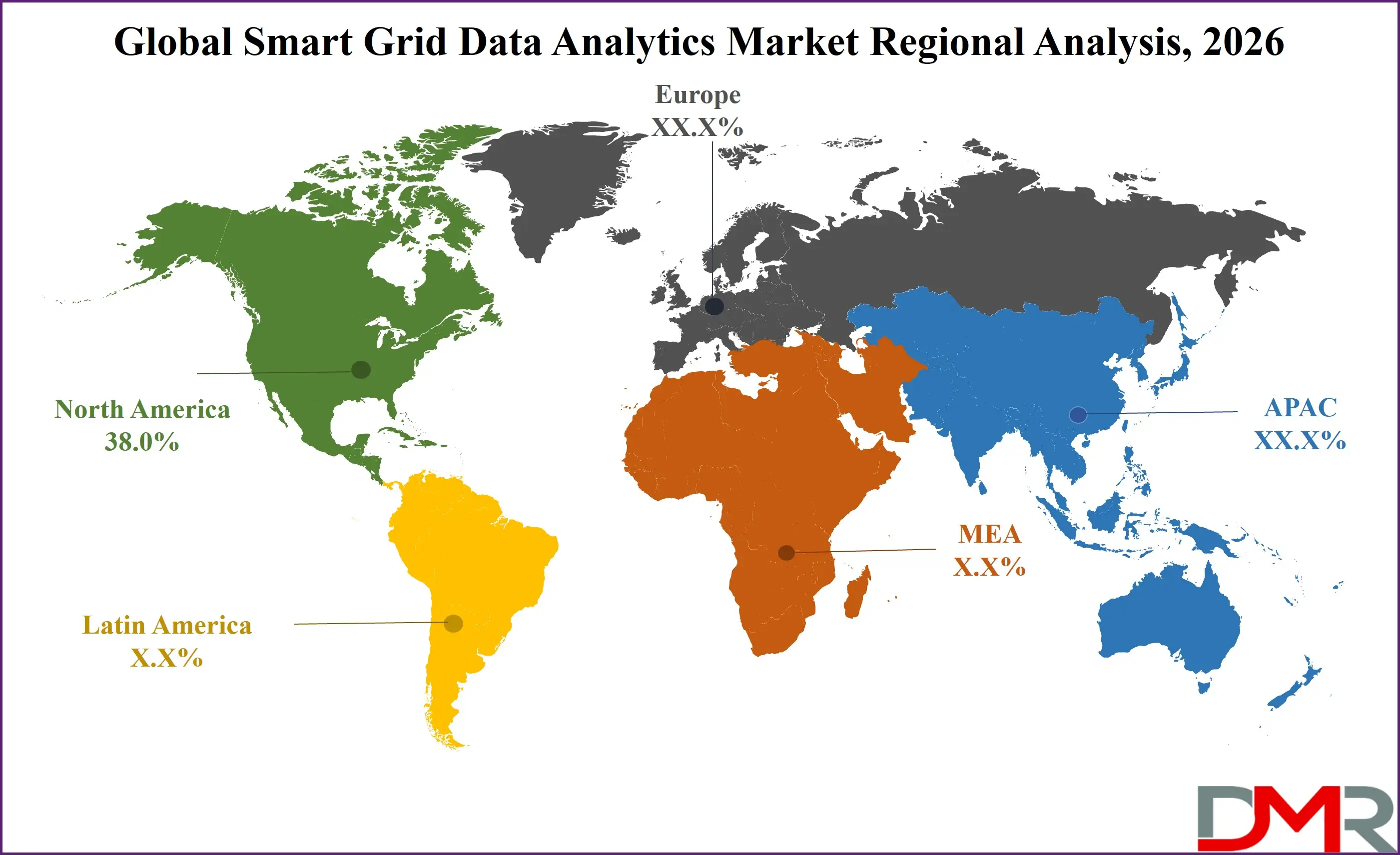
- Regional Insight: North America is expected to hold a 38.0% share of revenue in the global Smart Grid Data Analytics market in 2026.
- Use Cases: Some of the use cases of Smart Grid Data Analytics include load forecasting, renewable integration, and more.
Smart Grid Data Analytics Market: Use Cases
- Outage Prediction & Management: Real-time analytics identify fault patterns and predict outages, reducing downtime and restoration costs.
- Load Forecasting: AI-driven models forecast short- and long-term electricity demand to optimize generation planning.
- Renewable Integration: Analytics balance intermittent solar and wind inputs with grid stability requirements.
- Energy Theft Detection: Pattern recognition tools detect anomalies indicating unauthorized consumption.
- Asset Performance Monitoring: Predictive maintenance extends equipment lifespan and reduces capital expenditure.
- Demand Response Optimization: Data-driven strategies incentivize consumers to shift usage during peak periods.
- Customer Engagement Analytics: Usage insights enable personalized billing, energy-saving recommendations, and dynamic pricing.
Stats & Facts
- U.S. Energy Information Administration reported in 2024 that over 119 million smart meters were installed across the United States.
- European Commission stated in 2024 that smart meter rollout in the EU exceeded 70% household coverage.
- International Energy Agency reported in 2025 that global electricity demand grew by 3.4% year-on-year in 2024.
- U.S. Department of Energy announced in 2024 a USD 3.5 billion allocation for grid resilience and innovation partnerships.
- Eurostat recorded in 2024 that renewable energy accounted for 44% of EU electricity generation.
- Ministry of Economy, Trade and Industry (Japan) reported in 2024 that renewable energy represented approximately 22% of national power generation.
- Federal Energy Regulatory Commission noted in 2025 that utility-scale battery storage capacity increased by over 40% in 2024.
- International Renewable Energy Agency stated in 2025 that global renewable capacity additions reached 473 GW in 2024.
- U.S. Environmental Protection Agency reported in 2024 that power sector emissions declined by 7% compared to 2023 levels.
- Organisation for Economic Co-operation and Development indicated in 2025 that digital infrastructure investment in energy networks rose by 8% across member countries in 2024.
Market Dynamic
Driving Factors in the Smart Grid Data Analytics Market
Grid Modernization and Renewable Integration
The rapid expansion of renewable energy sources such as solar and wind necessitates advanced analytics to maintain grid stability. Variability in generation requires real-time forecasting and balancing solutions. Governments worldwide are funding modernization initiatives to replace aging infrastructure with intelligent systems. Utilities increasingly rely on analytics platforms to integrate distributed energy resources, manage bidirectional power flows, and enhance situational awareness. Electrification of transport and heating further intensifies load variability, making data-driven grid orchestration essential for operational reliability and long-term sustainability objectives.
Digital Transformation and Cloud Adoption
Utilities are embracing digital transformation strategies, shifting from legacy systems to cloud-based analytics platforms. Cloud deployment reduces capital expenditure while enabling scalability and real-time data access. Integration of IoT sensors and edge computing enhances data collection accuracy. Advanced machine learning algorithms improve predictive maintenance and operational efficiency. Interoperability standards facilitate seamless integration across grid components. As utilities seek cost optimization and enhanced customer engagement, digital analytics platforms become central to operational strategies and competitive differentiation.
Restraints in the Smart Grid Data Analytics Market
High Initial Capital Investment
Deployment of smart grid analytics requires substantial upfront investment in infrastructure, sensors, communication networks, and software platforms. Utilities with limited budgets may delay modernization initiatives. Integration with legacy systems can increase implementation complexity and costs. Smaller utilities face financial constraints in adopting enterprise-scale analytics solutions. Long return-on-investment cycles may discourage aggressive spending, particularly in regulated markets where cost recovery mechanisms are stringent and tariff approvals are required.
Cybersecurity and Data Privacy Concerns
Increased connectivity exposes grid systems to cyber threats. Sensitive consumption data collected from smart meters raises privacy concerns among consumers and regulators. Compliance with strict data protection laws, particularly in Europe, adds operational complexity. Utilities must invest in robust cybersecurity frameworks, encryption technologies, and continuous monitoring systems. Breaches could disrupt power supply and damage public trust, making security considerations a critical barrier to widespread analytics adoption.
Opportunities in the Smart Grid Data Analytics Market
Expansion of Smart Cities Initiatives
Smart city programs integrate intelligent transportation, energy management, and digital infrastructure. Analytics platforms play a central role in coordinating electricity distribution within urban ecosystems. Government-backed urban modernization projects create demand for real-time grid optimization solutions. Integration with EV charging networks and distributed storage presents additional revenue streams for analytics providers.
AI-Driven Predictive Grid Management
Advancements in artificial intelligence enable highly accurate forecasting, anomaly detection, and automated decision-making. AI-powered analytics reduce downtime and enhance grid efficiency. As computational power becomes more accessible, utilities can deploy advanced prescriptive analytics to autonomously manage grid operations. This evolution opens new business models centered on performance optimization and service-based analytics offerings.
Trends in the Smart Grid Data Analytics Market
Edge Computing Integration
Edge analytics processes data closer to the source, reducing latency and bandwidth requirements. This trend enhances real-time fault detection and localized grid management. Utilities deploy edge-enabled devices for faster decision-making, particularly in remote or distributed energy systems.
Hybrid Cloud Deployments
Hybrid cloud models combine on-premises infrastructure with public and private cloud solutions. Utilities adopt hybrid architectures to balance data security with scalability. This approach supports compliance with regulatory standards while enabling flexible analytics expansion as grid complexity increases.
Impact of Artificial Intelligence in Smart Grid Data Analytics Market
- Predictive Maintenance: AI models analyze equipment data to forecast failures, minimizing unplanned outages.
- Real-Time Load Forecasting: Machine learning improves demand prediction accuracy for better generation planning.
- Anomaly Detection: AI identifies irregular consumption patterns to detect faults or energy theft.
- Automated Grid Control: Intelligent algorithms autonomously balance supply-demand fluctuations.
- Renewable Forecasting: AI enhances solar and wind output predictions using weather data analytics.
- Customer Personalization: Advanced analytics deliver tailored consumption insights and dynamic pricing options.
- Cybersecurity Monitoring: AI detects potential cyber threats through behavioral analytics.
- Energy Storage Optimization: Machine learning optimizes battery charge-discharge cycles for peak efficiency.
Research Scope and Analysis
By Component Analysis
Software is projected to account for 62% of the Smart Grid Data Analytics market share in 2026, maintaining its dominant position due to scalability, subscription-based revenue structures, and seamless integration across grid ecosystems. Utilities increasingly rely on predictive, prescriptive, and visualization tools to manage distributed energy resources and fluctuating demand. Cloud-native architectures enable real-time analytics, remote monitoring, and automated reporting, reducing operational complexity. Integration with AMI, SCADA, and IoT platforms strengthens system-wide visibility. Continuous feature upgrades, cybersecurity enhancements, and AI-driven capabilities further reinforce the software’s leadership, positioning it as the core value-generating component within digital grid transformation initiatives.
Services represent the fastest-growing component, driven by the increasing complexity of deploying and managing advanced analytics platforms. Utilities require consulting, system integration, customization, and long-term maintenance to ensure seamless operation. Integration with legacy grid infrastructure, compliance with regulatory standards, and adherence to cybersecurity frameworks require specialized technical expertise. As adoption expands from pilot projects to enterprise-wide deployments, demand for managed services and performance-based contracts is rising steadily. Vendors are offering lifecycle support models, including training and optimization services, enabling utilities to maximize return on investment while ensuring grid reliability, scalability, and continuous digital innovation.
By Deployment Mode Analysis
Cloud-based deployment is projected to hold 58% of the market share in 2026, driven by scalability, cost efficiency, and real-time data accessibility. Utilities are increasingly shifting from legacy on-premises systems to public, private, and hybrid cloud environments to enable advanced analytics and AI-driven forecasting. Cloud platforms support large-scale AMI data processing, distributed energy monitoring, and remote grid management. Subscription pricing models reduce capital expenditure while enabling continuous upgrades and cybersecurity enhancements. As grid complexity increases with renewable integration and EV adoption, cloud infrastructure provides the flexibility and computational power required for dynamic analytics operations.
On-premises deployment remains relevant, particularly for utilities operating in highly regulated environments with strict data sovereignty and cybersecurity requirements. Large transmission operators prefer localized infrastructure for sensitive grid control systems and real-time operational data. While growth is slower compared to cloud-based solutions, modernization of internal IT frameworks and hybrid integration models are sustaining demand. Utilities with established legacy systems often adopt phased deployment strategies, combining on-premises reliability with selective cloud capabilities. This segment benefits from enhanced control, customization, and compliance assurance, especially in regions where regulatory frameworks restrict external data hosting.
By Solution Type Analysis
AMI Analytics is expected to account for 26% of the market share in 2026, making it the leading solution type. Widespread smart meter deployments generate massive volumes of granular consumption data, creating demand for advanced analytics platforms. Utilities leverage AMI analytics for billing accuracy, consumption pattern analysis, demand response optimization, and outage detection. Increasing smart meter penetration globally strengthens this segment’s dominance. Integration with AI and machine learning further enhances forecasting accuracy and theft detection capabilities. As digital metering becomes universal, AMI analytics remains foundational to broader grid intelligence strategies.
Renewable Integration Analytics is the fastest-growing solution segment, driven by the rapid expansion of solar, wind, and distributed energy resources. Managing intermittency and bidirectional power flows requires sophisticated forecasting and balancing tools. Utilities are investing in real-time weather-linked analytics and storage optimization solutions to maintain grid stability. Government decarbonization targets and carbon neutrality commitments are accelerating adoption. As renewable penetration deepens, analytics platforms capable of predictive modeling and automated grid response are becoming critical, positioning this segment for sustained high growth in both developed and emerging markets.
By Application Analysis
Grid Reliability & Stability is projected to capture 29% of the market share in 2026, driven by the increasing need to prevent outages and manage infrastructure stress. Utilities prioritize real-time monitoring, predictive maintenance, and automated fault detection to enhance service continuity. Climate-related extreme weather events further elevate the importance of resilience-focused analytics. AI-powered systems help operators detect anomalies and respond proactively. Regulatory mandates emphasizing reliability standards also contribute to strong demand. This segment remains central to smart grid transformation as utilities aim to reduce downtime and improve operational performance.
Demand Forecasting is the fastest-growing application segment as load variability increases due to EV adoption, electrification of heating, and distributed generation. Advanced analytics models leverage historical consumption, weather patterns, and behavioral data to generate precise short- and long-term forecasts. Utilities depend on accurate forecasting to optimize generation planning and reduce peak load stress. Integration with AI and cloud computing enhances forecasting precision and scalability. As electricity consumption patterns become more dynamic, demand forecasting analytics play a crucial role in ensuring balanced and cost-efficient grid operations.
By End User Analysis
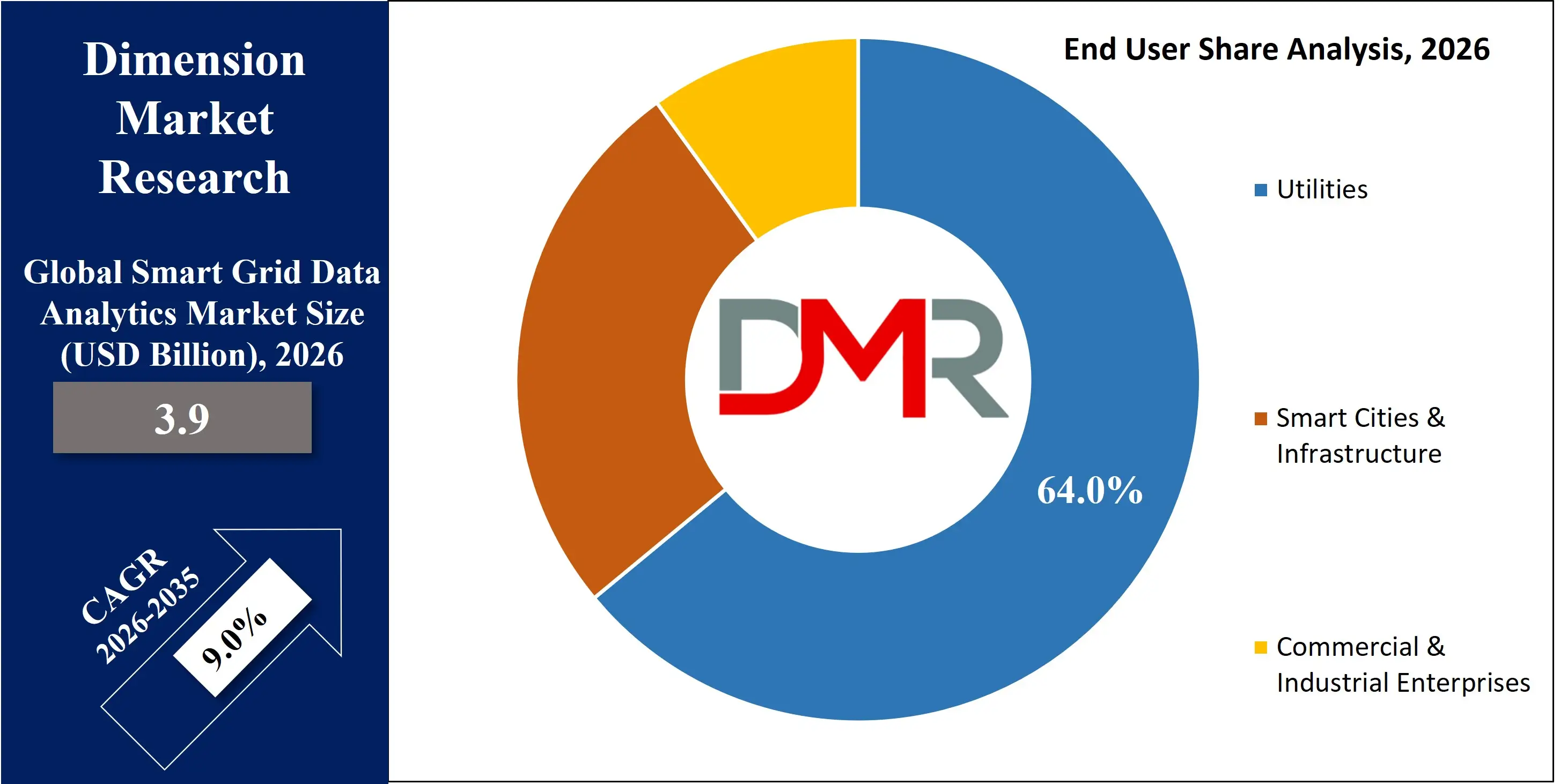
Utilities are expected to hold 64% of the Smart Grid Data Analytics market share in 2026, maintaining dominance due to their central role in transmission, distribution, and retail electricity operations. Transmission & Distribution Operators rely on analytics for asset management and outage prevention, while Retail Electricity Providers use data insights for billing optimization and customer engagement. Independent System Operators deploy forecasting tools for load balancing and market operations. Large-scale infrastructure ownership and regulatory obligations drive significant investments, making utilities the primary adopters of advanced grid analytics platforms.
ℹ
To learn more about this report –
Download Your Free Sample Report Here
Smart Cities & Infrastructure is the fastest-growing end-user segment as urban centers adopt intelligent energy management systems. Municipal governments integrate grid analytics with transportation, EV charging, and public infrastructure networks. Real-time energy monitoring improves efficiency and supports sustainability goals. Rapid urbanization and government-backed smart city programs are expanding adoption across emerging economies. Integration of IoT sensors and digital platforms enables coordinated management of distributed assets. As cities aim to reduce emissions and enhance operational transparency, smart grid analytics becomes a foundational technology within urban digital ecosystems.
The Smart Grid Data Analytics Market Report is segmented on the basis of the following
By Component
- Software
- Descriptive Analytics
- Predictive Analytics
- Prescriptive Analytics
- Visualization & Reporting Tools
- Services
- Consulting
- Integration & Deployment
- Support & Maintenance
By Deployment Mode
- On-Premises
- Cloud-Based
- Public Cloud
- Private Cloud
- Hybrid
By Solution Type
- Advanced Metering Infrastructure (AMI) Analytics
- Outage & Fault Analytics
- Network Optimization Analytics
- Asset Management Analytics
- Demand Response & Load Forecasting Analytics
- Energy Theft Detection Analytics
- Customer Engagement & Billing Analytics
- Renewable Integration Analytics
By Application
- Grid Reliability & Stability
- Operational Efficiency
- Demand Forecasting
- Asset Performance Management
- Energy Theft Detection
- Load & Peak Management
By End-User
- Utilities
- Transmission & Distribution Operators
- Retail Electricity Providers
- Independent System Operators (ISOs)
- Smart Cities & Infrastructure
- Commercial & Industrial Enterprises
Regional Analysis
Leading Region in the Smart Grid Data Analytics Market
North America is expected to command 38% of the global Smart Grid Data Analytics market share in 2026, driven by advanced grid infrastructure, high smart meter penetration, and substantial federal and state-level funding programs. Utilities across the region are investing heavily in AI-powered analytics to manage renewable integration, aging transmission assets, and rising EV adoption. Regulatory frameworks promoting grid resilience and decarbonization further stimulate technology deployment. A strong ecosystem of technology innovators and established solution providers enhances competitive intensity. The region’s focus on cybersecurity and cloud transformation strengthens analytics integration across transmission and distribution networks.
ℹ
To learn more about this report –
Download Your Free Sample Report Here
Fastest Growing Region in the Smart Grid Data Analytics Market
Asia-Pacific is anticipated to record the fastest growth due to accelerating urbanization, industrial expansion, and rapidly rising electricity demand. Governments across emerging economies are investing in smart grid modernization to enhance reliability and energy security. Large-scale renewable energy projects and smart city initiatives are generating substantial demand for real-time analytics and forecasting solutions. Expanding advanced metering infrastructure deployments provide the data foundation necessary for analytics adoption. Strong digital transformation programs, supportive policy frameworks, and a growing manufacturing base position Asia-Pacific as a strategic growth engine for analytics vendors seeking long-term expansion opportunities.
By Region
North America
Europe
- Germany
- The U.K.
- France
- Italy
- Russia
- Spain
- Benelux
- Nordic
- Rest of Europe
Asia-Pacific
- China
- Japan
- South Korea
- India
- ANZ
- ASEAN
- Rest of Asia-Pacific
Latin America
- Brazil
- Mexico
- Argentina
- Colombia
- Rest of Latin America
Middle East & Africa
- Saudi Arabia
- UAE
- South Africa
- Israel
- Egypt
- Rest of MEA
Competitive Landscape
The Smart Grid Data Analytics Market is characterized by intense competition driven by technological innovation, platform scalability, and strategic partnerships. Companies focus on expanding cloud-based analytics portfolios and integrating AI capabilities to differentiate their offerings. Long-term contracts with utilities and performance-based service models strengthen customer retention and recurring revenue streams. High entry barriers arise from strict regulatory compliance requirements, cybersecurity standards, and the complexity of integrating analytics solutions with legacy grid infrastructure. Strategic collaborations with grid operators and infrastructure providers support ecosystem expansion. Continuous R&D investment, mergers, and targeted acquisitions further enhance analytics capabilities, geographic presence, and overall competitive positioning within this rapidly evolving market.
Some of the prominent players in the global Smart Grid Data Analytics are
- Siemens
- IBM
- General Electric (GE / GE Vernova)
- Oracle
- Schneider Electric
- Itron
- SAS Institute
- Hitachi Energy
- Landis+Gyr
- Honeywell
- ABB
- Accenture
- Cisco
- Capgemini
- Eaton
- AutoGrid Systems
- Uplight
- C3.ai
- Bidgely
- Aclara Technologies
- Other Key Players
Recent Developments
- In December 2025, Schneider Electric introduced its One Digital Grid Platform, an AI-enabled, unified software solution aimed at helping utilities accelerate modernization, enhance grid resilience, and lower energy costs. The platform was unveiled concurrently in Spain at Enlit Europe and during the company’s Innovation Summit North America in Las Vegas, bringing together thousands of industry professionals to advance resilient, cost-effective, and intelligent energy solutions.
- In March 2025, Itron, Inc. announced a collaboration with NVIDIA to accelerate AI adoption at the grid edge for utilities and communities. The partnership combines Itron’s Grid Edge Intelligence portfolio with NVIDIA’s AI technologies to leverage high-fidelity, real-time data. Together, they aim to enhance grid resilience, disaster management, customer engagement, operational efficiency, and secure, affordable energy delivery while addressing emerging industry challenges.
Report Details
| Report Characteristics |
| Market Size (2026) |
USD 3.9 Bn |
| Forecast Value (2035) |
USD 8.6 Bn |
| CAGR (2026–2035) |
9.0% |
| The US Market Size (2026) |
USD 1.3 Bn |
| Historical Data |
2021 – 2025 |
| Forecast Data |
2027 – 2035 |
| Base Year |
2025 |
| Estimate Year |
2026 |
| Report Coverage |
Market Revenue Estimation, Market Dynamics, Competitive Landscape, Growth Factors, etc. |
| Segments Covered |
Segments Covered By Component (Software, Services), By Deployment Mode (On-Premises, Cloud-Based), By Solution Type (Advanced Metering Infrastructure (AMI) Analytics, Outage & Fault Analytics, Network Optimization Analytics, Asset Management Analytics, Demand Response & Load Forecasting Analytics, Energy Theft Detection Analytics, Customer Engagement & Billing Analytics, Renewable Integration Analytics), By Application (Grid Reliability & Stability, Operational Efficiency, Demand Forecasting, Asset Performance Management, Energy Theft Detection, Load & Peak Management), By End-User (Utilities, Smart Cities & Infrastructure, Commercial & Industrial Enterprises) |
| Regional Coverage |
North America – US, Canada; Europe – Germany, UK, France, Russia, Spain, Italy, Benelux, Nordic, Rest of Europe; Asia-Pacific – China, Japan, South Korea, India, ANZ, ASEAN, Rest of APAC; Latin America – Brazil, Mexico, Argentina, Colombia, Rest of Latin America; Middle East & Africa – Saudi Arabia, UAE, South Africa, Turkey, Egypt, Israel, Rest of MEA |
| Prominent Players |
Prominent Players Siemens, IBM, General Electric (GE / GE Vernova), Oracle, Schneider Electric, Itron, SAS Institute, Hitachi Energy, Landis+Gyr, Honeywell, ABB, Accenture, Cisco, Capgemini, Eaton, AutoGrid Systems, Uplight, C3.ai, Bidgely, Aclara Technologies, and Other Key Players |
| Purchase Options |
We have three licenses to opt for: Single User License (Limited to 1 user), Multi-User License (Up to 5 Users), and Corporate Use License (Unlimited User) along with free report customization equivalent to 0 analyst working days, 3 analysts working days, and 5 analysts working days respectively. |
Frequently Asked Questions
How big is the Global Smart Grid Data Analytics Market?
▾ The Global Smart Grid Data Analytics Market size is expected to reach USD 3.9 billion by 2026 and is projected to reach USD 8.6 billion by the end of 2035.
Which region accounted for the largest Global Smart Grid Data Analytics Market?
▾ North America is expected to have the largest market share in the Global Smart Grid Data Analytics Market, with a share of about 38.0% in 2026.
How big is the Smart Grid Data Analytics Market in the US?
▾ The US Smart Grid Data Analytics market is expected to reach USD 1.3 billion by 2026.
Who are the key players in the Smart Grid Data Analytics Market?
▾ Some of the major key players in the Global Smart Grid Data Analytics Market include IBM, Siemens, Oracle and others
What is the growth rate in the Global Smart Grid Data Analytics Market?
▾ What is the growth rate in the Global Smart Grid Data Analytics Market?