What is the Smart Medical Devices Market Size?
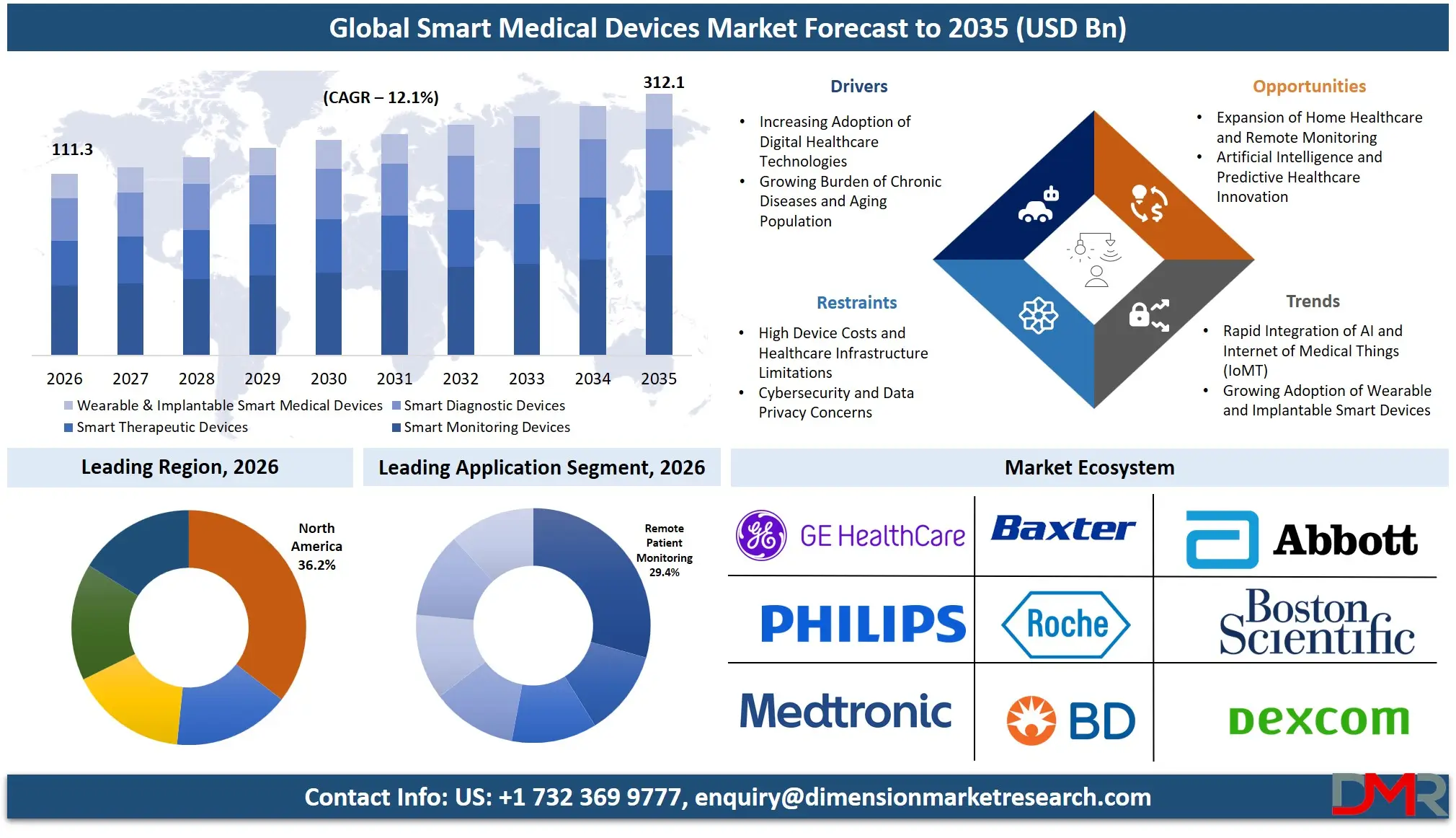
The Smart Medical Devices Market size is expected to be USD 111.3 billion in 2026 and increase at a compound annual growth rate of 12.1% to USD 312.1 billion in 2035 due to increasing adoption of digital healthcare technologies.
ℹ
To learn more about this report –
Download Your Free Sample Report Here
Smart medical devices are transforming modern healthcare by combining advanced sensors, wireless connectivity, artificial intelligence (AI), Internet of Medical Things (IoMT), and cloud-based analytics to improve disease diagnosis, treatment, and patient monitoring. These devices support continuous health tracking, remote patient management, and personalized therapies while reducing hospital visits and improving clinical outcomes. Growing prevalence of chronic diseases, increasing healthcare digitalization, rising adoption of telehealth, and demand for home-based care continue to accelerate market expansion. Continuous innovation in wearable technologies, AI-assisted diagnostics, cybersecurity, and interoperable healthcare ecosystems is further reshaping the competitive landscape and expanding opportunities across developed and emerging healthcare markets.
The US Smart Medical Devices Market
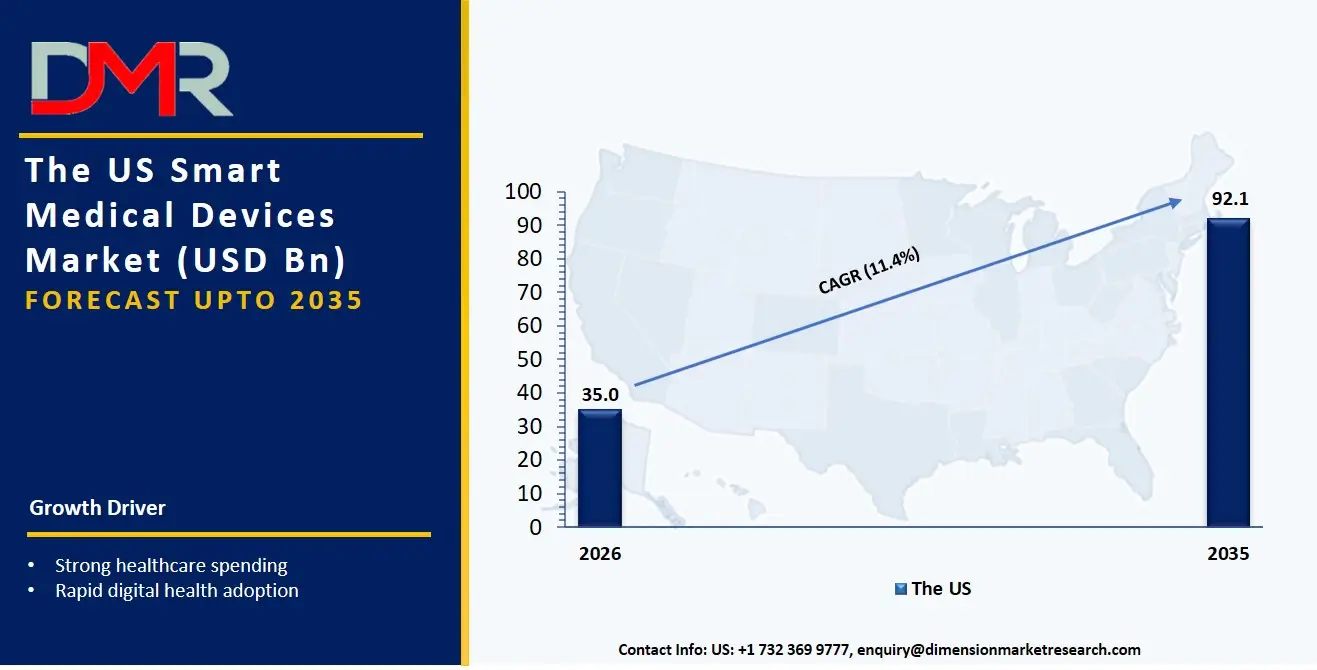
The US Smart Medical Devices Market size is estimated to be USD 35.0 billion in 2026 and is expected to increase at a CAGR of 11.4% over the forecast period.
ℹ
To learn more about this report –
Download Your Free Sample Report Here
The United States represents one of the most technologically advanced smart medical devices markets owing to strong healthcare spending, rapid digital health adoption, widespread reimbursement support, and extensive investments in AI-enabled medical technologies. Major manufacturers continuously introduce connected monitoring devices, wearable healthcare products, and intelligent diagnostic systems. Government initiatives supporting digital healthcare, increasing FDA approvals for AI-enabled devices, expanding remote patient monitoring reimbursement, and strong hospital adoption continue strengthening market growth while encouraging innovation across clinical specialties.
Europe Smart Medical Devices Market
The Europe Smart Medical Devices Market size is estimated to be USD 24.5 billion in 2026 and is expected to increase at a CAGR of 11.1% over the forecast period.
Europe continues experiencing strong market expansion due to increasing healthcare modernization, aging demographics, and supportive regulatory frameworks encouraging digital transformation. The European Green Deal also encourages sustainable medical technologies through environmentally responsible manufacturing practices. Growing investments in connected healthcare infrastructure, rising telemedicine adoption, and increasing demand for wearable patient monitoring solutions contribute significantly to market development. Countries including Germany, France, the United Kingdom, and the Nordic nations remain major innovation centers for smart healthcare technologies.
Japan Smart Medical Devices Market
The market size of Japan Smart Medical Devices will be USD 5.6 billion in 2026 and at a CAGR of 11.7% in the forecast period.
Japan remains a highly attractive market because of its rapidly aging population, sophisticated healthcare infrastructure, and continuous investment in robotics, artificial intelligence, and precision healthcare. Government initiatives promoting digital health transformation and remote elderly care are encouraging adoption of connected medical devices. Rising demand for chronic disease management, wearable monitoring systems, implantable medical technologies, and AI-assisted diagnostics supports sustained market expansion. Domestic innovation combined with advanced manufacturing capabilities provides Japan with significant opportunities despite regulatory complexities and reimbursement challenges.
Key Takeaways
- Market Size & Forecast: The Smart Medical Devices Market size is projected to reach USD 111.3 billion in 2026 and is anticipated to have a value of USD 312.1 billion in 2035.
- Growth Rate & Outlook: The Smart Medical Devices Market size is set to grow at a compound annual growth rate of 12.1% during the forecast period of 2026 to 2035.
- Primary Growth Drivers: Some of the major growth drivers in the market are Increasing Adoption of Digital Healthcare Technologies and more.
- Key Market Trends: Some of the major trends in the market are Rapid Integration of AI and Internet of Medical Things (IoMT) and more.
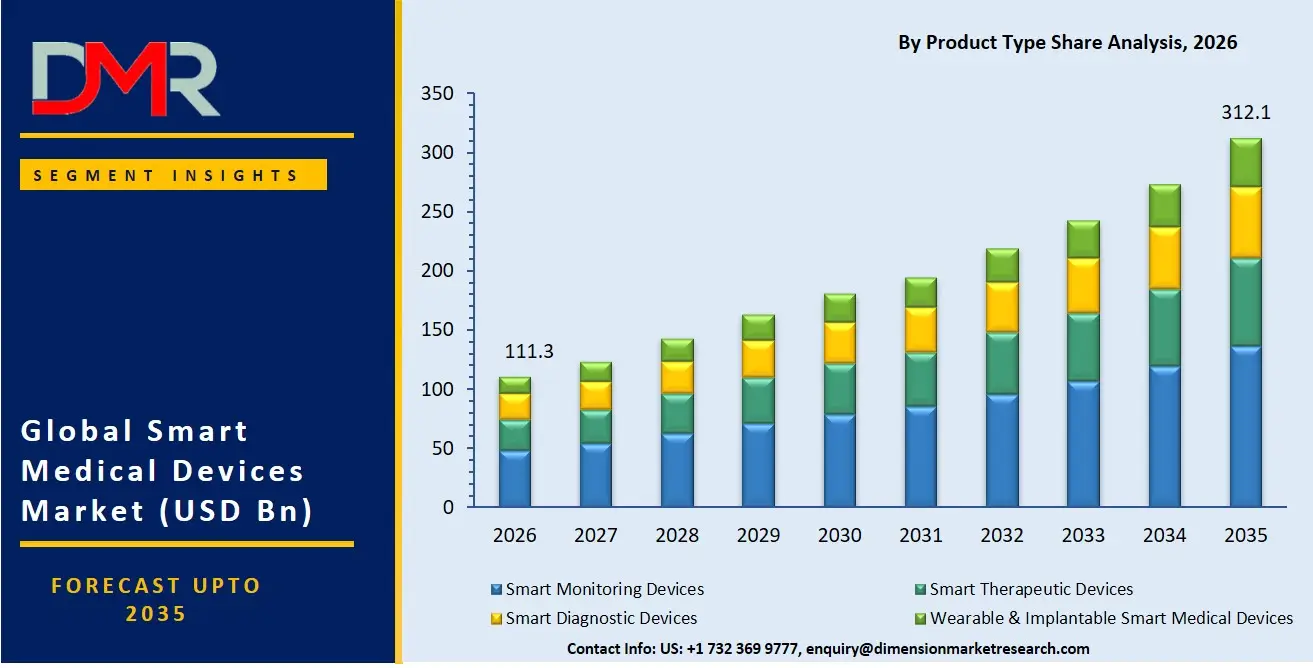
- By Product Type: Smart Monitoring Devices segment is anticipated to get the majority share of the Smart Medical Devices Market in 2026.
- By End User Type: Hospitals & Clinics are expected to get the largest revenue share in 2026 in the Smart Medical Devices Market.
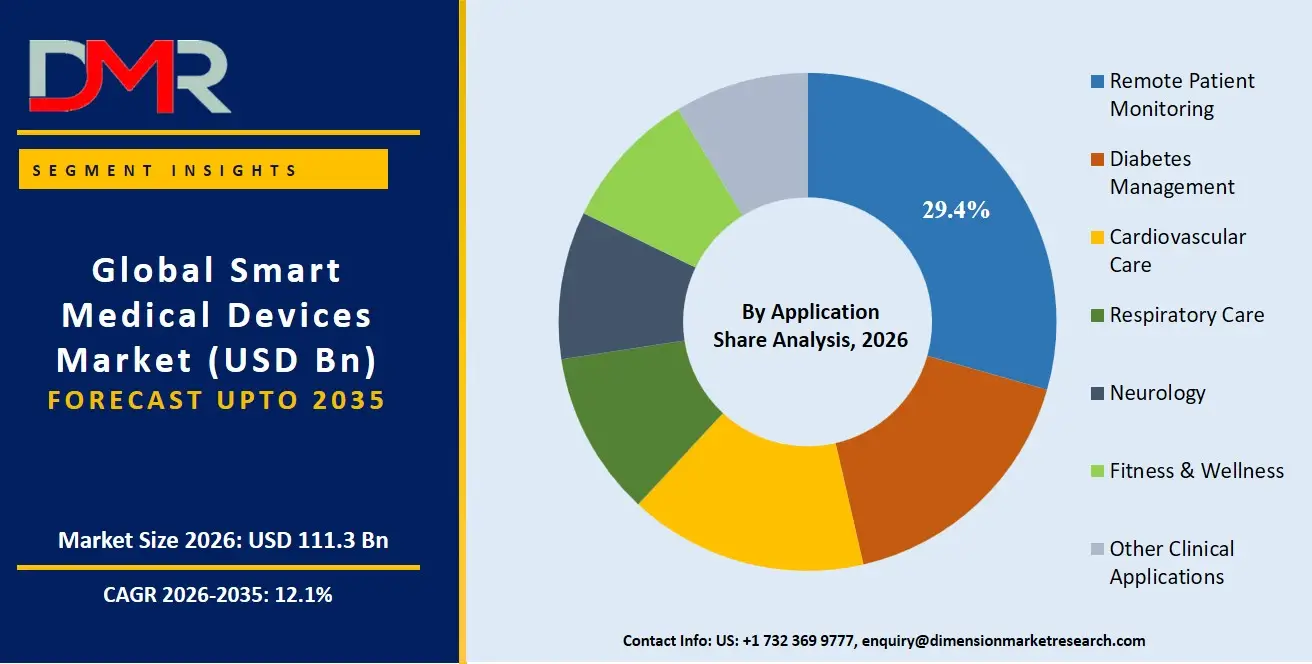
- By Application Type: Remote Patient Monitoring is expected to get the largest revenue share in 2026 in the Smart Medical Devices Market.
- Regional Leadership: North America is set to lead the Smart Medical Devices Market with an estimated 36.2% share in 2026.
What is the Smart Medical Devices?
Smart medical devices are technologically advanced healthcare products that integrate sensors, embedded software, wireless communication, cloud connectivity, artificial intelligence, and data analytics to monitor, diagnose, treat, or manage medical conditions. These devices generate real-time patient information, enable automated clinical decision support, and facilitate communication between patients and healthcare professionals. The category includes smart monitoring devices, therapeutic systems, diagnostic equipment, wearable technologies, implantable devices, and connected healthcare solutions that enhance patient safety, operational efficiency, and personalized medical care. Increasing interoperability and predictive analytics capabilities are expanding their role across preventive, acute, and chronic healthcare management.
Use Cases
- Remote Patient Monitoring: Connected smart monitoring devices continuously measure vital signs such as blood pressure, glucose levels, oxygen saturation, and heart rate while transmitting data directly to healthcare professionals. Continuous monitoring enables early intervention, minimizes hospital admissions, improves chronic disease management, and supports value-based healthcare delivery.
- Chronic Disease Management: Smart insulin pumps, continuous glucose monitors, smart inhalers, and cardiac monitoring devices assist patients with diabetes, respiratory disorders, and cardiovascular diseases by enabling real-time monitoring, automated therapy adjustments, medication adherence, and personalized treatment recommendations.
- Hospital Workflow Optimization: Hospitals utilize connected infusion pumps, AI-enabled diagnostic equipment, and multiparameter monitoring systems to automate patient monitoring, reduce manual documentation, improve clinical decision-making, optimize staff productivity, and enhance patient safety throughout treatment processes.
- Preventive Healthcare and Wellness: Wearable health trackers, smart patches, and AI-powered wellness devices enable continuous health assessment, early disease detection, fitness monitoring, preventive healthcare interventions, and personalized health coaching, encouraging proactive healthcare management among consumers.
How AI Is Transforming the Smart Medical Devices Market
Artificial intelligence is fundamentally transforming smart medical devices by enabling predictive diagnostics, automated clinical decision support, intelligent image interpretation, personalized treatment planning, and continuous patient monitoring. AI algorithms analyze vast volumes of physiological data in real time, allowing earlier disease detection while improving diagnostic precision and clinical workflow efficiency. Manufacturers are increasingly embedding AI capabilities directly into monitoring systems, wearable devices, imaging platforms, and therapeutic equipment.
AI also improves operational efficiency through predictive maintenance, intelligent alert prioritization, remote patient monitoring, automated documentation, and personalized healthcare recommendations. Integration with cloud computing and IoMT platforms enables healthcare professionals to access actionable insights from connected devices, improving patient engagement, reducing hospital readmissions, supporting preventive care, and facilitating value-based healthcare delivery across hospitals, clinics, and home healthcare environments.
Market Dynamic
Driving Factors in the Smart Medical Devices Market
Increasing Adoption of Digital Healthcare Technologies
Rapid digital transformation across healthcare systems is significantly accelerating smart medical device adoption. Hospitals increasingly integrate connected monitoring platforms, AI-assisted diagnostics, cloud computing, and remote patient monitoring into clinical workflows. Growing patient preference for personalized healthcare, rising telemedicine utilization, and increasing healthcare automation further strengthen demand. Continuous technological improvements in sensors, wireless communication, battery efficiency, and predictive analytics continue expanding clinical applications across hospitals, ambulatory care centers, and home healthcare environments.
Restraints in the Smart Medical Devices Market
High Device Costs and Healthcare Infrastructure Limitations
Despite significant technological advancements, the relatively high cost of advanced smart medical devices limits adoption across developing economies and smaller healthcare providers. Initial investments involving connected infrastructure, cybersecurity, software integration, maintenance, and staff training remain substantial. Budget limitations, unequal healthcare access, and reimbursement challenges continue slowing widespread deployment, particularly in resource-constrained healthcare systems.
Opportunities in the Smart Medical Devices Market
Expansion of Home Healthcare and Remote Monitoring
Growing preference for home-based healthcare creates significant opportunities for connected monitoring devices, wearable technologies, and AI-enabled diagnostic systems. Healthcare providers increasingly support remote patient monitoring programs to reduce hospitalization rates, improve chronic disease management, and lower treatment costs. Expansion of telehealth infrastructure further strengthens long-term market opportunities across developed and emerging economies.
Trends in the Smart Medical Devices Market
Rapid Integration of AI and Internet of Medical Things (IoMT)
Medical device manufacturers increasingly integrate artificial intelligence, cloud computing, IoMT connectivity, and advanced analytics into smart healthcare solutions. AI-powered algorithms improve disease prediction, automate image interpretation, optimize device performance, and provide personalized treatment recommendations. Connected healthcare ecosystems continue supporting seamless communication between patients, healthcare professionals, and hospital information systems.
Research Scope and Analysis
The Smart Medical Devices Market research evaluates industry performance across product type, application, end user, connectivity, technology, and distribution channel while assessing regional demand, competitive developments, and innovation trends. The analysis examines market drivers, restraints, opportunities, and emerging technologies, with a focus on AI integration, remote patient monitoring, wearable healthcare solutions, regulatory developments, and estimated segment performance to support strategic business planning and investment decisions.
ℹ
To learn more about this report –
Download Your Free Sample Report Here
By Product Type Analysis
Among product types, Smart Monitoring Devices are estimated to hold the largest market share of 43.8% in 2026, supported by increasing adoption of continuous glucose monitors, smart blood pressure monitors, pulse oximeters, cardiac monitoring devices, and multiparameter monitoring systems across hospitals and home healthcare.
ℹ
To learn more about this report –
Download Your Free Sample Report Here
The growing prevalence of chronic diseases, expansion of remote patient monitoring programs, and increasing demand for real-time physiological data continue strengthening this segment. Meanwhile, Wearable & Implantable Smart Medical Devices are projected to register the fastest growth owing to continuous technological improvements in miniaturized sensors, wireless connectivity, AI-powered analytics, and patient preference for non-invasive monitoring. Increasing consumer awareness regarding preventive healthcare, coupled with rising investments in connected wearable ecosystems and implantable therapeutic technologies, is expected to sustain long-term growth across developed and emerging healthcare markets.
By Application Analysis
Based on application, Remote Patient Monitoring is projected to account for the leading market share of 29.4% in 2026. The segment benefits from increasing adoption of telehealth services, healthcare digitalization, aging populations, and rising chronic disease prevalence requiring continuous monitoring outside hospital settings. Healthcare providers increasingly deploy connected monitoring devices to reduce hospital readmissions while improving patient outcomes. Diabetes Management is anticipated to witness the fastest expansion due to growing global diabetes incidence, widespread adoption of continuous glucose monitoring systems, smart insulin pumps, AI-assisted disease management platforms, and personalized treatment approaches. Integration of predictive analytics and cloud-based monitoring further enhances treatment adherence and patient engagement while supporting value-based healthcare initiatives.
By End User Analysis
Hospitals & Clinics are expected to dominate the market with an estimated 48.6% share in 2026 due to significant investments in connected healthcare infrastructure, AI-enabled diagnostics, intelligent patient monitoring, and integrated electronic health record systems. Large healthcare institutions continue adopting advanced smart medical devices to improve operational efficiency, clinical accuracy, and patient safety. Home Healthcare is forecast to be the fastest-growing end-user segment as healthcare systems increasingly shift toward decentralized care delivery. Rising demand for remote monitoring, favorable reimbursement policies, improved internet connectivity, and growing acceptance of home-based treatment solutions continue accelerating adoption among elderly populations and patients with chronic illnesses.
The Smart Medical Devices Market Report is segmented on the basis of the following:
By Product Type
- Smart Monitoring Devices
- Continuous Glucose Monitors (CGMs)
- Smart Blood Pressure Monitors
- Smart Pulse Oximeters
- Cardiac Monitoring Devices
- Multiparameter Patient Monitoring Devices
- Smart Therapeutic Devices
- Smart Insulin Pumps
- Smart Inhalers
- Smart Infusion Pumps
- Neurostimulation Devices
- Smart Diagnostic Devices
- Point-of-Care Diagnostic Devices
- AI-Enabled Diagnostic Devices
- Digital Imaging Devices
- Wearable & Implantable Smart Medical Devices
- Wearable Health Trackers
- Smart Patches
- Implantable Cardiac Devices
- Smart Orthopedic Implants
By Application
- Diabetes Management
- Cardiovascular Care
- Respiratory Care
- Neurology
- Remote Patient Monitoring
- Fitness & Wellness
- Other Clinical Applications
By End User
- Hospitals & Clinics
- Home Healthcare
- Ambulatory Surgical Centers (ASCs)
- Diagnostic Centers
- Long-Term Care & Rehabilitation Centers
Regional Analysis
Leading Region in the Smart Medical Devices Market
ℹ
To learn more about this report –
Download Your Free Sample Report Here
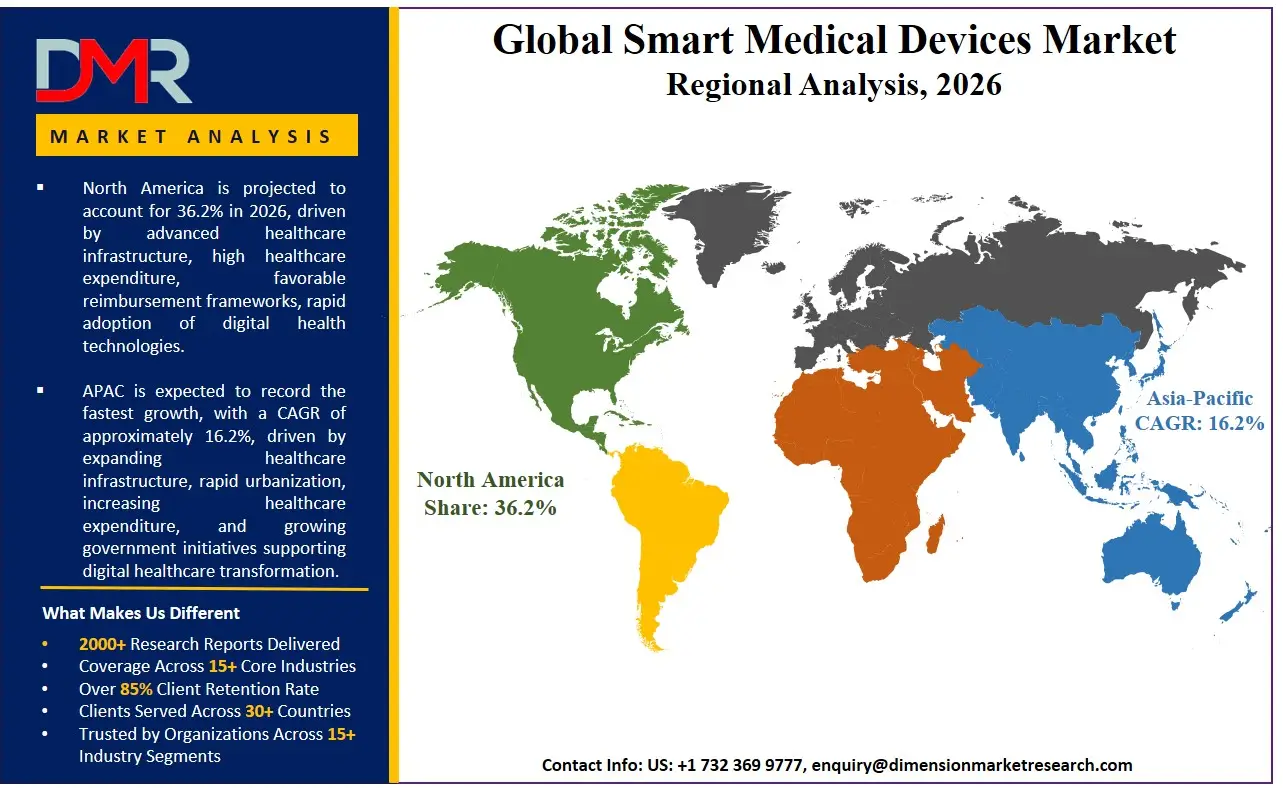
North America is projected to remain the leading regional market, accounting for an estimated 36.2% share in 2026. The region benefits from advanced healthcare infrastructure, high healthcare expenditure, favorable reimbursement frameworks, rapid adoption of digital health technologies, and strong investment in artificial intelligence, cloud computing, and connected medical devices. Continuous product innovation, early regulatory approvals, increasing remote patient monitoring adoption, and strong collaboration between healthcare providers and technology developers further reinforce regional leadership. The widespread deployment of smart hospitals and growing emphasis on personalized healthcare continue supporting sustained market expansion throughout the United States and Canada.
Fastest Growing Region in the Smart Medical Devices Market
Asia-Pacific is expected to register the fastest market growth during the forecast period due to expanding healthcare infrastructure, rapid urbanization, increasing healthcare expenditure, and growing government initiatives supporting digital healthcare transformation. Countries including China, India, Japan, South Korea, and Australia are investing significantly in connected healthcare ecosystems, artificial intelligence, wearable technologies, and telemedicine infrastructure. Rising chronic disease prevalence, improving healthcare accessibility, increasing smartphone penetration, expanding middle-class populations, and favorable investments by both domestic and international manufacturers continue creating substantial opportunities for smart medical device adoption across the region.
By Region
North America
Europe
- Germany
- The U.K.
- France
- Italy
- Russia
- Spain
- Benelux
- Nordic
- Rest of Europe
Asia-Pacific
- China
- Japan
- South Korea
- India
- ANZ
- ASEAN
- Rest of Asia-Pacific
Latin America
- Brazil
- Mexico
- Argentina
- Colombia
- Rest of Latin America
Middle East & Africa
- Saudi Arabia
- UAE
- South Africa
- Israel
- Egypt
- Rest of MEA
Competitive Landscape
The smart medical devices market remains highly competitive, characterized by continuous technological innovation, significant investment in research and development, strategic collaborations, digital platform integration, and expansion of connected healthcare ecosystems. Market participants focus on strengthening artificial intelligence capabilities, enhancing cybersecurity, improving interoperability with electronic health record systems, and expanding remote patient monitoring solutions. High regulatory standards, substantial development costs, intellectual property protection, and clinical validation requirements create considerable entry barriers for new participants. Companies increasingly pursue partnerships, product portfolio expansion, software integration, and geographic diversification to strengthen competitive positioning while addressing evolving healthcare provider and patient requirements.
Some of the prominent players in the global Smart Medical Devices are:
- Medtronic
- Abbott Laboratories
- GE HealthCare
- Koninklijke Philips N.V.
- Siemens Healthineers AG
- Boston Scientific Corporation
- DexCom, Inc.
- Insulet Corporation
- ResMed Inc.
- Masimo Corporation
- Omron Healthcare Co., Ltd.
- F. Hoffmann-La Roche Ltd
- Baxter International Inc.
- Becton, Dickinson and Company
- Stryker Corporation
- Zimmer Biomet Holdings, Inc.
- Edwards Lifesciences Corporation
- Johnson & Johnson MedTech
- Terumo Corporation
- Smith+Nephew plc
- Other Key Players
Recent Developments
- In July 2025, Medtronic announced a new multi-year strategic partnership with Philips to broaden global access to advanced patient monitoring technologies. Building on more than three decades of collaboration, the agreement integrates Medtronic's next-generation monitoring technologies—including pulse oximetry, capnography, and brain monitoring solutions—into Philips' patient monitoring platforms. The collaboration aims to deliver streamlined monitoring solutions for hospitals, enhance clinical decision-making, improve workflow efficiency, and support better patient outcomes. The expanded partnership demonstrates the industry's increasing emphasis on interoperability, connected care, and integrated smart medical device ecosystems.
- In January 2025, Philips introduced an expanded portfolio of AI-enabled smart medical technologies during Arab Health 2025 in Dubai. The launch included advanced patient monitoring solutions, intelligent diagnostic imaging platforms, clinical informatics software, and cloud-connected healthcare systems designed to improve workflow efficiency and patient outcomes. The company emphasized predictive analytics, automation, interoperability, and integrated data management to reduce clinician workload while enabling more personalized care. These innovations strengthen Philips' position in connected healthcare and reflect the industry's growing focus on artificial intelligence, digital transformation, and hospital-wide smart medical ecosystems.
Report Details
| Report Characteristics |
| Market Size (2026) |
USD 111.3 Bn |
| Forecast Value (2035) |
USD 312.1 Bn |
| CAGR (2026–2035) |
12.1% |
| Historical Period |
2021 – 2025 |
| Forecast Period |
2027 – 2035 |
| Base Year |
2025 |
| Estimate Year |
2026 |
| Segments Covered |
By Product Type (Smart Monitoring Devices, Smart Therapeutic Devices, Smart Diagnostic Devices, Wearable & Implantable Smart Medical Devices), By Application, By End User |
| Regional Coverage |
North America – The US and Canada; Europe – Germany, The UK, France, Russia, Spain, Italy, Benelux, Nordic, & Rest of Europe; Asia-Pacific – China, Japan, South Korea, India, ANZ, ASEAN, Rest of APAC; Latin America – Brazil, Mexico, Argentina, Colombia, Rest of Latin America; Middle East & Africa – Saudi Arabia, UAE, South Africa, Turkey, Egypt, Israel, & Rest of MEA |
Frequently Asked Questions
How big is the Smart Medical Devices Market?
▾ The Smart Medical Devices Market size is expected to reach USD 111.3 billion by 2026 and is projected to reach USD 312.1 billion by the end of 2035.
What is the CAGR of the Smart Medical Devices Market from 2026 to 2035?
▾ The market is growing at a CAGR of 12.1 percent over the forecasted period.
What factors are driving the growth of the Smart Medical Devices Market?
▾ Increasing Adoption of Digital Healthcare Technologies, and more are the factors driving the growth of the Smart Medical Devices Market.
What are the major trends in the Smart Medical Devices Market?
▾ Rapid Integration of AI and Internet of Medical Things (IoMT), and more are some of the major trends in the market.
Who are the key players in the Smart Medical Devices Market?
▾ Some of the key players in the Smart Medical Devices Market include BD, Medtronic, GE Healthcare, and more.
How is the Smart Medical Devices Market segmented?
▾ The Smart Medical Devices Market is segmented by product type, application, end user.
Which region held the largest share of the Smart Medical Devices Market in 2026?
▾ North America is set to lead the Smart Medical Devices Market with an estimated 36.2% share in 2026.
Which region is expected to grow the fastest in the Smart Medical Devices Market?
▾ Asia Pacific is the fastest-growing region in the Smart Medical Devices Market during the forecast period.