South Korea Digital Mental Health Market Snapshot
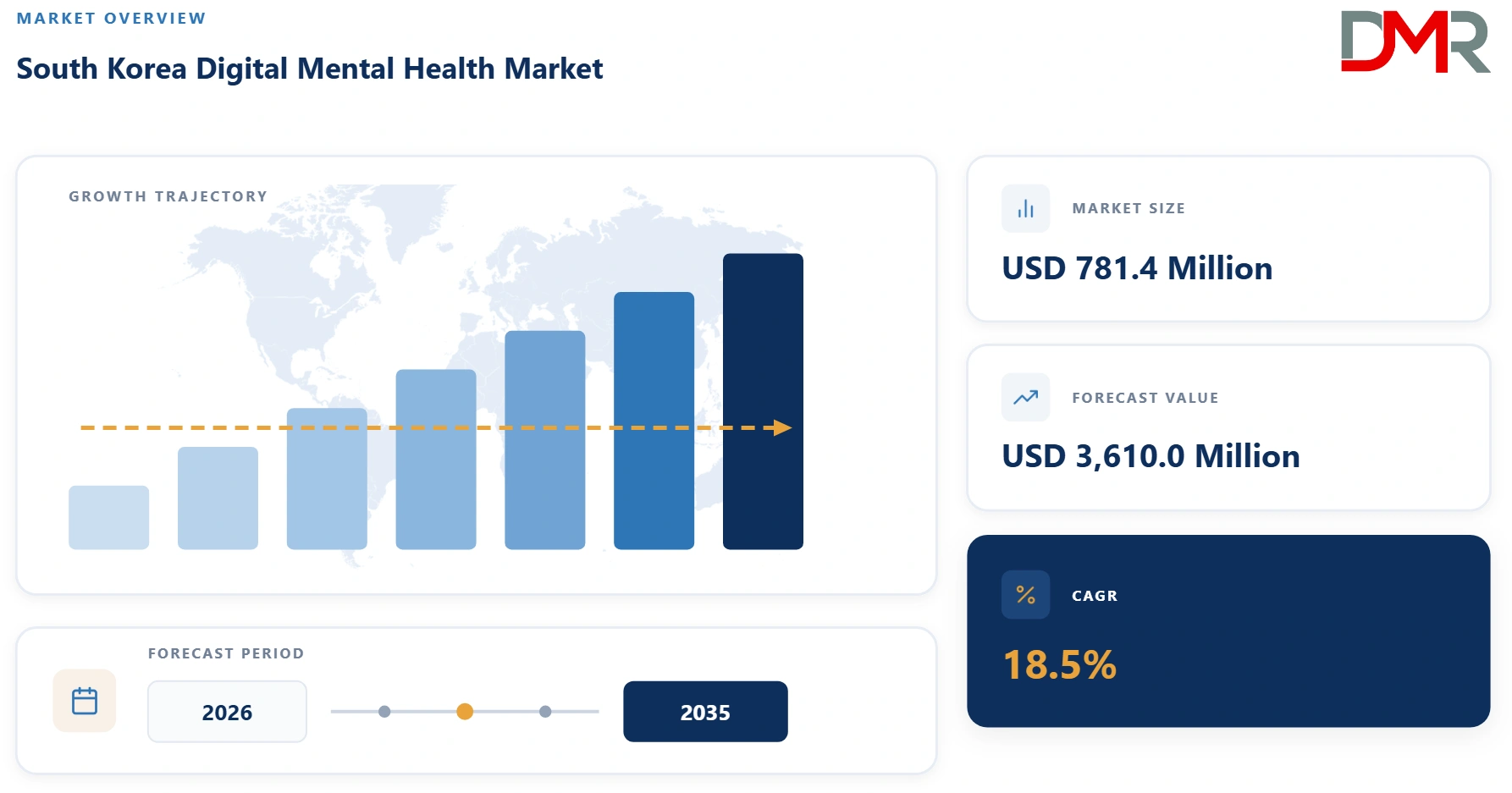
- South Korea Digital Mental Health Market Size in 2026: USD 781.4 million
- South Korea Digital Mental Health Market Size in 2035: USD 3,610.0 million
- South Korea CAGR from 2026 to 2035: 18.5%
- Individuals is the leading end-user segment in 2026: 57.8%
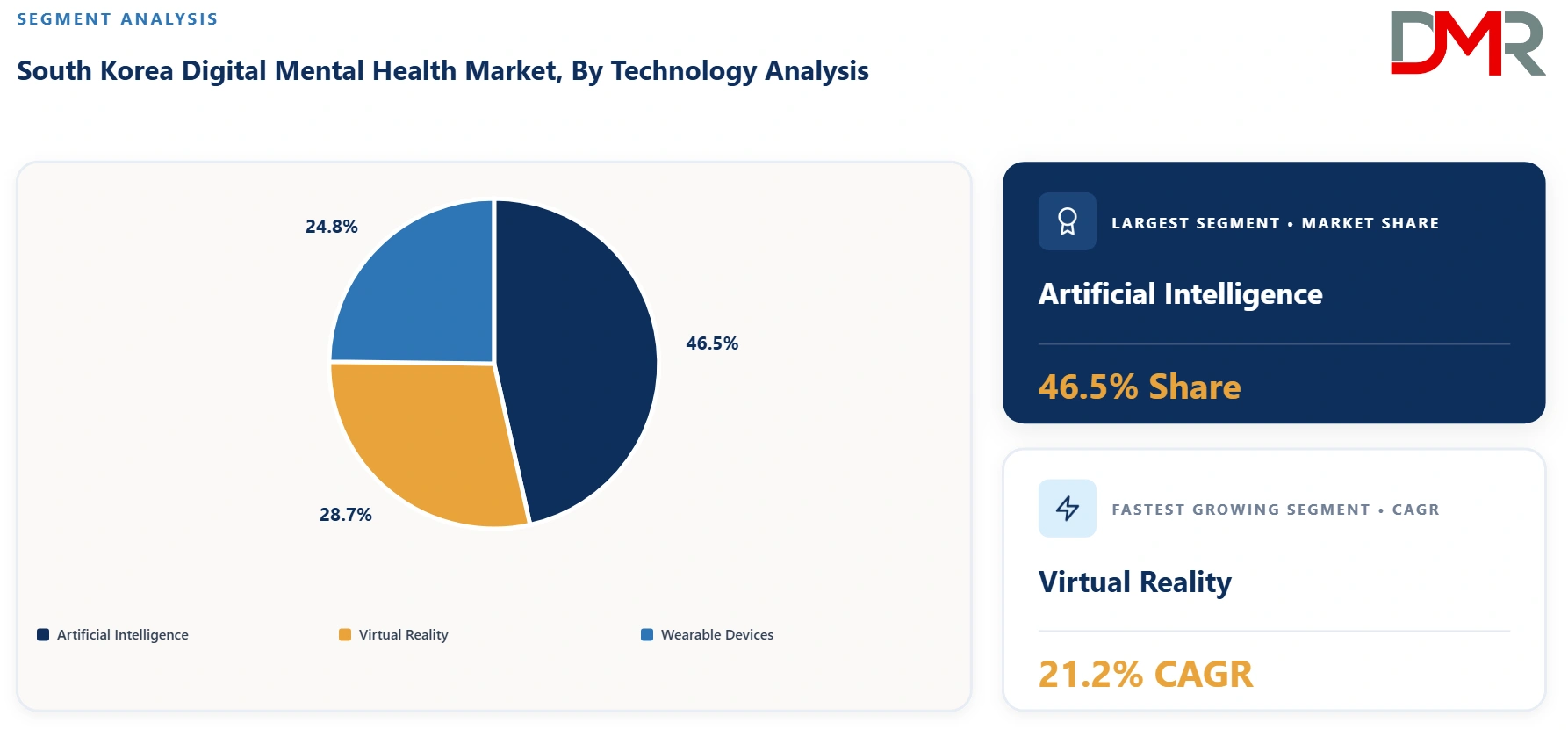
- Artificial Intelligence is the leading technology segment in 2026: 46.5%
- Mobile Applications is the leading application segment in 2026: 42.5%
- Synchronous is the leading delivery mode segment in 2026: 43.8%
What is the South Korea Digital Mental Health Market and its Market Size?
The South Korea Digital Mental Health Market is projected to reach USD 781.4 million in 2026 and grow at a compound annual growth rate of 18.5% until 2035 to reach a value of USD 3,610.0 million.
ℹ
To learn more about this report –
Download Your Free Sample Report Here
Digital mental health comprises technology-enabled solutions supporting psychological assessment, counseling, therapy, emotional wellness, behavioral monitoring, and condition management. The market includes teletherapy platforms, mental health applications, AI-enabled conversational tools, digital therapeutics, wearable monitoring devices, online communities, and self-guided programs. South Korea’s advanced digital infrastructure, widespread smartphone usage, evolving telemedicine framework, workplace wellness demand, and considerable unmet mental healthcare requirements support rapid market expansion.
Use Cases
- Remote Counseling and Teletherapy: Digital mental health platforms connect individuals with psychologists, psychiatrists, counselors, and trained therapists through secure video, voice, and messaging services. These solutions reduce geographic and scheduling barriers, support follow-up consultations, and improve access for rural residents, students, working professionals, older adults, and patients reluctant to attend conventional clinics because of stigma or privacy concerns.
- AI-Assisted Mental Health Screening: Artificial intelligence solutions analyze questionnaires, speech characteristics, behavioral patterns, sleep information, text conversations, and emotional indicators to identify potential anxiety, depression, stress, insomnia, or cognitive decline. Healthcare providers can use these insights for early screening and patient prioritization, while individuals receive personalized recommendations, self-management activities, escalation alerts, and guidance on when professional intervention may be required.
- Workplace and Educational Wellness: Employers and educational institutions deploy confidential platforms offering stress assessments, counseling, meditation, resilience training, crisis support, and employee or student assistance programs. Aggregated and anonymized analytics help organizations identify population-level risks without exposing personal records. These solutions support productivity, reduce absenteeism, improve student engagement, and address burnout arising from demanding workplaces and highly competitive academic environments.
- Digital Therapeutics and Continuous Monitoring: Clinically validated applications deliver cognitive behavioral therapy, acceptance and commitment therapy, sleep interventions, and structured behavioral programs. Wearable devices and smartphones can continuously capture sleep, activity, heart-rate variability, and engagement information. Clinicians use longitudinal information to monitor progress, adjust interventions, improve adherence, detect deterioration, and extend mental healthcare beyond occasional in-person appointments.
Key Takeaways
- Market Size: The South Korea Digital Mental Health Market is anticipated to be valued at USD 781.4 million in 2026 and is forecast to reach USD 3,610.0 million by 2035, expanding at a CAGR of 18.5%.
- Growth Outlook: Market expansion is supported by widespread internet and smartphone access, growing awareness of psychological well-being, permanent telemedicine legislation, increasing acceptance of remote counseling, AI-enabled personalization, digital therapeutic approvals, wearable integration, workplace wellness programs, and demand for confidential mental healthcare services across urban and underserved populations.
- Primary Growth Drivers: High psychological stress, shortages of accessible mental health professionals, persistent social stigma, increasing youth and workplace mental health concerns, government digitization initiatives, growing demand for preventive care, rising availability of Korean-language platforms, and improved connectivity are encouraging individuals, providers, employers, and educational institutions to adopt digital mental health solutions.
- By End User Analysis: Individuals are projected to dominate with a 57.8% share in 2026, supported by demand for private, convenient, and on-demand counseling and self-care. Employers are expected to register the highest CAGR of approximately 20.4%, driven by employee assistance programs, burnout prevention, confidential counseling benefits, and organizational focus on productivity and workforce retention.
- By Technology Analysis: Artificial Intelligence is expected to lead with a 46.5% share in 2026 because of its application in conversational support, screening, personalization, engagement tracking, and clinical decision assistance. Virtual Reality is projected to expand at the highest CAGR of approximately 21.2%, supported by emerging applications in exposure therapy, relaxation, rehabilitation, and controlled therapeutic simulations.
- By Application Analysis: Mobile Applications are projected to lead with a 42.5% share in 2026, reflecting high smartphone penetration and consumer demand for convenient mental wellness tools. Teletherapy is expected to grow at the highest CAGR of approximately 19.6%, supported by formalization of remote care, increasing provider participation, and demand for professional counseling without location constraints.
- By Delivery Mode Analysis: Synchronous delivery is expected to dominate with a 43.8% share in 2026, supported by real-time video counseling and live professional interaction. Hybrid delivery is projected to record the highest CAGR of approximately 20.1%, combining live sessions with messaging, digital exercises, monitoring, educational modules, and clinician-guided self-management.
How AI and Generative AI are Transforming the South Korea Digital Mental Health Market?
AI and generative AI are improving screening, personalization, engagement, and continuous support across South Korea’s digital mental health ecosystem. Korean-language conversational agents can provide mood check-ins, psychoeducation, structured exercises, appointment navigation, and escalation recommendations. Machine learning can analyze speech, sleep, activity, and interaction patterns to identify emerging risks and personalize interventions. Generative AI also supports clinician documentation and tailored educational content. However, hallucinations, clinical bias, privacy breaches, inadequate crisis escalation, and overreliance on automated guidance require human supervision, transparent validation, and strong regulatory controls.
Key Drivers in the South Korea Digital Mental Health Market
High Mental Health Burden and Need for Accessible Support
South Korea faces substantial unmet requirements for preventive and clinical mental healthcare. OECD data show that Korea recorded approximately 23.2 suicide deaths per 100,000 people in 2023, compared with an OECD average of 10.7. The country also had only 2.7 practicing doctors per 1,000 people, below the OECD average of 3.9. Digital counseling, screening, and self-management platforms can extend support beyond conventional facilities, particularly for individuals avoiding treatment because of stigma, scheduling constraints, cost, or geographical distance. Growing awareness among younger adults, employers, universities, and families is strengthening demand for confidential and immediately accessible services.
Advanced Connectivity and Formalization of Telemedicine
South Korea possesses an exceptionally strong foundation for mobile mental healthcare. The Ministry of Science and ICT reported a 99.97% household internet access rate in 2024, while individual internet usage reached 94.5% and average weekly use reached 20.5 hours. In December 2025, South Korea enacted amendments establishing a permanent legal basis for limited doctor-to-patient telemedicine, with implementation expected after a transitional period. These developments enable scalable counseling, follow-up care, monitoring, and hybrid delivery. High digital familiarity also supports AI chatbots, wearable integration, remote assessments, and app-based therapeutic programs across diverse age groups.
Restraints in the South Korea Digital Mental Health Market
Privacy Risks and Handling of Sensitive Behavioral Data
Digital mental health platforms process highly sensitive information, including diagnoses, therapy conversations, emotional assessments, medication histories, biometric indicators, and crisis-related disclosures. Data leakage, unauthorized profiling, weak consent practices, or inappropriate secondary use could cause discrimination and reputational harm. AI systems also create concerns regarding data localization, model training, explainability, and the exposure of personal information through external infrastructure. Providers must comply with South Korea’s Personal Information Protection Act and healthcare-related requirements while maintaining encryption, access control, audit trails, and informed consent. Compliance expenses may restrict smaller companies and slow institutional procurement.
Clinical Validation and Limited Reimbursement Certainty
Consumer wellness applications can enter the market more easily than clinically positioned digital therapeutics, but products making medical claims require evidence, regulatory review, and post-market monitoring. Demonstrating sustained outcomes through Korean clinical populations can be expensive and time-consuming. Reimbursement remains selective, and temporary registration may require additional real-world evidence before permanent coverage decisions are made. Limited reimbursement can leave patients paying directly and discourage clinicians from prescribing digital interventions. Healthcare providers may also hesitate when platforms lack integration with clinical workflows, clear accountability, crisis escalation protocols, or evidence demonstrating equivalence to conventional treatment.
Growth Opportunities in the South Korea Digital Mental Health Market
Employer and Educational Mental Wellness Programs
South Korea’s demanding work culture and competitive academic environment create substantial opportunities for confidential digital wellness programs. Employers can integrate counseling, burnout screening, sleep support, resilience training, and crisis referral within employee benefits, while universities and schools can offer age-appropriate assessment and counseling access. Providers can differentiate through Korean-language content, anonymous entry points, rapid therapist matching, and aggregated organizational insights. Partnerships with conglomerates, insurers, universities, and public institutions can generate recurring contracts. Solutions demonstrating improvements in absenteeism, retention, student engagement, and early intervention are positioned to capture enterprise and institutional spending.
Hybrid Care and Digitally Supported Clinical Pathways
Hybrid models combining in-person assessment, live teletherapy, asynchronous messaging, digital exercises, wearables, and clinician dashboards represent a significant opportunity. These models preserve professional oversight while increasing convenience and continuity between appointments. Providers can develop condition-specific pathways for anxiety, depression, insomnia, stress, addiction, and cognitive health. Integration with hospitals, primary-care clinics, pharmacies, and national reimbursement pilots could improve credibility and user acquisition. Companies that produce measurable outcomes through real-world evidence may secure stronger provider partnerships, regulatory acceptance, and eventual reimbursement, creating defensible positions beyond general-purpose wellness applications.
Trends in the South Korea Digital Mental Health Market
Expansion of AI-Based Conversational and Predictive Support
South Korean developers are moving from basic meditation and journaling applications toward AI-enabled platforms capable of Korean-language conversation, emotional classification, personalized recommendations, and behavioral-risk identification. Generative AI is enabling more natural engagement and scalable psychoeducation, while machine learning supports mood, sleep, and adherence monitoring. Platforms are increasingly positioning AI as a supplement to therapists instead of an autonomous replacement. The most successful solutions are likely to combine automated engagement with professional escalation, clinical governance, explainable recommendations, and culturally appropriate content, particularly for users experiencing depression, anxiety, loneliness, workplace stress, or academic pressure.
Growing Integration of Wearables and Digital Biomarkers
Smartwatches, fitness trackers, smartphones, and connected sensors are increasingly being used to capture sleep duration, physical activity, heart rate, heart-rate variability, voice changes, and daily behavioral patterns. These digital biomarkers can support earlier identification of stress, insomnia, depression, or relapse risks. South Korea’s strong electronics and wearable ecosystem creates opportunities for integration between consumer devices and mental health platforms. Samsung’s healthcare expansion and wearable capabilities demonstrate the strategic relevance of connected monitoring. However, providers must distinguish wellness indicators from validated clinical biomarkers and avoid overstating conclusions based on incomplete or noisy consumer-generated data.
Research Scope and Analysis
The report examines the South Korea digital mental health market across end users, including individuals, healthcare providers, employers, educational institutions, technologies including artificial intelligence, virtual reality, wearable devices, applications including teletherapy, mobile applications, online support groups, self-help programs, and delivery modes including synchronous, asynchronous, and hybrid solutions during the forecast period covered.
ℹ
To learn more about this report –
Download Your Free Sample Report Here
By End User Analysis
Individuals are projected to dominate the South Korea Digital Mental Health Market with a 57.8% share in 2026, supported by private access, convenience, self-guided care, and smartphone-based counseling. Employers are expected to record the highest CAGR of 20.4%. Growth is supported by employee assistance programs, burnout management, confidential counseling, and corporate wellness investments.
By Technology Analysis
Artificial Intelligence is expected to lead the technology segment with a 46.5% share in 2026, driven by screening, chatbots, personalization, emotional analytics, and clinical support. Virtual Reality is anticipated to expand at the highest CAGR of 21.2%. Growth will arise from exposure therapy, immersive relaxation, rehabilitation, and controlled therapeutic environments.
By Application Analysis
Mobile Applications are projected to account for the highest application share of 42.5% in 2026, supported by widespread smartphone access, affordability, and continuous availability. Teletherapy is forecast to register the highest CAGR of approximately 19.6%. Legal recognition of telemedicine, therapist availability, and demand for live professional guidance will support adoption.
By Delivery Mode Analysis
Synchronous delivery is projected to dominate with a 43.8% share in 2026, supported by live video consultations, real-time counseling, and immediate therapist interaction. Hybrid delivery is expected to register the highest CAGR of approximately 20.1%. Hybrid solutions combine professional sessions, asynchronous communication, digital exercises, monitoring, and personalized follow-up support.
The South Korea Digital Mental Health Market Report is Segmented Based on the Following
By End User
- Individuals
- Healthcare Providers
- Employers
- Educational Institutions
By Technology
- Artificial Intelligence
- Virtual Reality
- Wearable Devices
By Application
- Teletherapy
- Mobile Applications
- Online Support Groups
- Self-Help Programs
By Delivery Mode
- Synchronous
- Asynchronous
- Hybrid
Regulatory Landscape Analysis
South Korea’s digital mental health regulatory environment is evolving from temporary experimentation toward formal oversight. Clinically positioned software may be regulated as a digital medical product and require Ministry of Food and Drug Safety authorization, clinical evidence, cybersecurity controls, and post-market monitoring. The Digital Medical Products Act, effective in 2025, created a dedicated framework covering digital therapeutics and AI-enabled medical software. Permanent but limited telemedicine legislation passed in December 2025 provides clearer foundations for remote clinical services. Opportunities include regulatory predictability and temporary reimbursement pathways, while risks include evidence costs, data protection obligations, restricted prescribing, and uncertain permanent reimbursement.
Technology Analysis
Artificial intelligence, digital therapeutics, wearables, virtual reality, cloud platforms, and digital biomarkers are reshaping mental healthcare delivery in South Korea. AI supports Korean-language conversations, screening, documentation, personalization, and risk detection, while wearables enable passive monitoring of sleep, activity, and physiological stress. Virtual reality offers controlled environments for exposure, relaxation, and rehabilitation. Opportunities are strongest for interoperable platforms integrating clinician supervision with continuous digital engagement. Major risks include algorithmic bias, hallucinated advice, weak crisis escalation, cybersecurity vulnerabilities, and unvalidated biomarker claims. Vendors demonstrating clinical outcomes, cultural relevance, transparent algorithms, and secure integration with hospital systems will gain stronger competitive positions.
Competitive Landscape
The South Korea Digital Mental Health Market includes domestic platforms, digital therapeutic developers, telecommunications companies, electronics manufacturers, hospital technology providers, and international mental wellness companies. Competition centers on Korean-language personalization, therapist networks, clinical validation, user engagement, privacy protection, employer partnerships, and integration with healthcare systems. Domestic companies benefit from cultural understanding and local regulatory experience, while multinational providers contribute established content and scalable platforms. Strategic investment, clinical trials, acquisitions, and partnerships with hospitals, employers, insurers, universities, and device manufacturers are expected to shape market positioning.
Some of the Prominent Players in the South Korea Digital Mental Health Market Are
- Atommerce Inc.
- Mind Cafe
- HAII Corporation
- WELT Corporation
- AIMMED Co. Ltd.
- Samsung Electronics Co. Ltd.
- Samsung Health
- Kakao Healthcare Corp.
- NAVER Corporation
- SK Telecom Co. Ltd.
- KT Corporation
- LG Uplus Corporation
- Ybrain Inc.
- VUNO Inc.
- Lunit Inc.
- Neurophet Inc.
- iMediSync Inc.
- Handok Inc.
- Teladoc Health Inc.
- BetterHelp
- Talkspace Inc.
- Headspace Inc.
- Calm.com Inc.
- Lyra Health Inc.
- Spring Health
- Modern Health
- Amwell
- SilverCloud Health
- Big Health
- Click Therapeutics Inc.
- DarioHealth Corp.
- Wysa
- Youper Inc.
- Limbic AI
- Kooth plc
- Unmind Ltd.
- Meru Health Inc.
- Intellect Company Pte. Ltd.
- MindFi
- HelloBetter
- Other Key Players
Recent Developments
- July 2026: Hyundai Department Store Group partnered with Mind Cafe to expand AI-enabled workplace mental healthcare for employees, combining digital assessments, confidential psychological support, and organizational wellness capabilities.
- September 2025: A peer-reviewed clinical study reported that WELT-I demonstrated significant therapeutic efficacy and safety in improving sleep efficiency and sleep-related dysfunctional attitudes among patients with insomnia.
- April 2025: HAII announced that Anzeilax received South Korean regulatory approval as a digital therapeutic for generalized anxiety disorder, expanding the country’s clinically validated digital mental health portfolio.
- March 2025: South Korea implemented the Digital Medical Products Act, establishing a dedicated regulatory framework for digital therapeutics, artificial intelligence-enabled medical products, and software-based healthcare technologies.
Report Details
| Report Characteristics |
| Market Size (2026) |
USD 781.4 Mn |
| Forecast Value (2035) |
USD 3,610.0 Mn |
| CAGR (2026–2035) |
18.5% |
| Historical Data |
2021 – 2025 |
| Forecast Data |
2026 – 2035 |
| Base Year |
2025 |
| Segments Covered |
By End User, By Technology, By Application, By Delivery Mode |
Frequently Asked Questions
How big is the South Korea Digital Mental Health Market?
▾ The South Korea Digital Mental Health Market is estimated at USD 781.4 million in 2026 and is projected to reach USD 3,610.0 million by 2035.
What is the CAGR of the South Korea Digital Mental Health Market from 2026 to 2035?
▾ The market is expected to grow at a compound annual growth rate of approximately 18.5% from 2026 to 2035.
What factors are driving the growth of the South Korea Digital Mental Health Market?
▾ Growth is driven by high mental healthcare requirements, widespread internet access, formalization of telemedicine, smartphone adoption, AI innovation, reduced stigma, digital therapeutic approvals, and growing workplace wellness spending.
What are the major trends in the South Korea Digital Mental Health Market?
▾ Major trends include AI conversational support, hybrid care, digital therapeutics, wearable-based monitoring, digital biomarkers, Korean-language personalization, employer wellness platforms, and clinically supervised self-management programs.
Who are the key players in the South Korea Digital Mental Health Market?
▾ Key players include Atommerce, Mind Cafe, HAII, WELT, AIMMED, Samsung Electronics, Kakao Healthcare, NAVER, Ybrain, VUNO, Teladoc Health, Talkspace, Headspace, Calm, and other digital healthcare providers.
How is the South Korea Digital Mental Health Market segmented?
▾ The market is segmented by end user, technology, application, and delivery mode. Major categories include individuals, artificial intelligence, teletherapy, mobile applications, synchronous, asynchronous, and hybrid care.
Which end-user segment dominates the South Korea Digital Mental Health Market?
▾ Individuals are projected to dominate the end-user segment with approximately 57.8% of market revenue in 2026, supported by demand for confidential and convenient digital care.
Which segment is expected to grow fastest in South Korea Digital Mental Health Market ?
▾ Virtual Reality is expected to be among the fastest-growing technology segments, while employers, teletherapy, socioeconomic status-based solutions, and hybrid delivery are projected to lead growth within their respective categories.