South Korea Nutraceutical Ingredients Market Snapshot
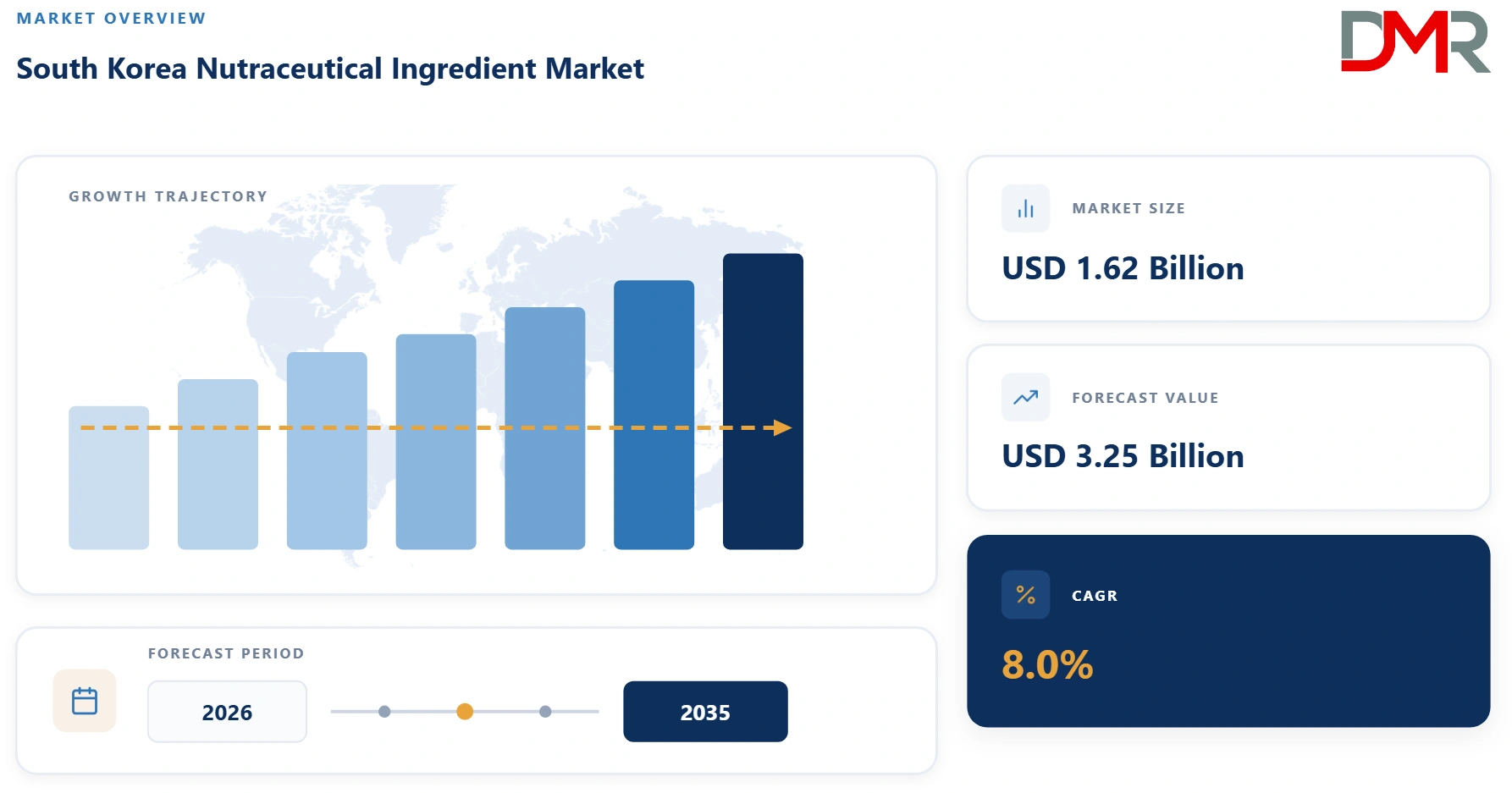
- Market Size in 2026: USD 1.62 billion
- Market Size in 2035: USD 3.25 billion
- CAGR from 2026 to 2035: 8.0%
- Leading Ingredient Segment in 2026: Vitamins, 18.5% share
- Leading Form Segment in 2026: Dry, 79.0% share
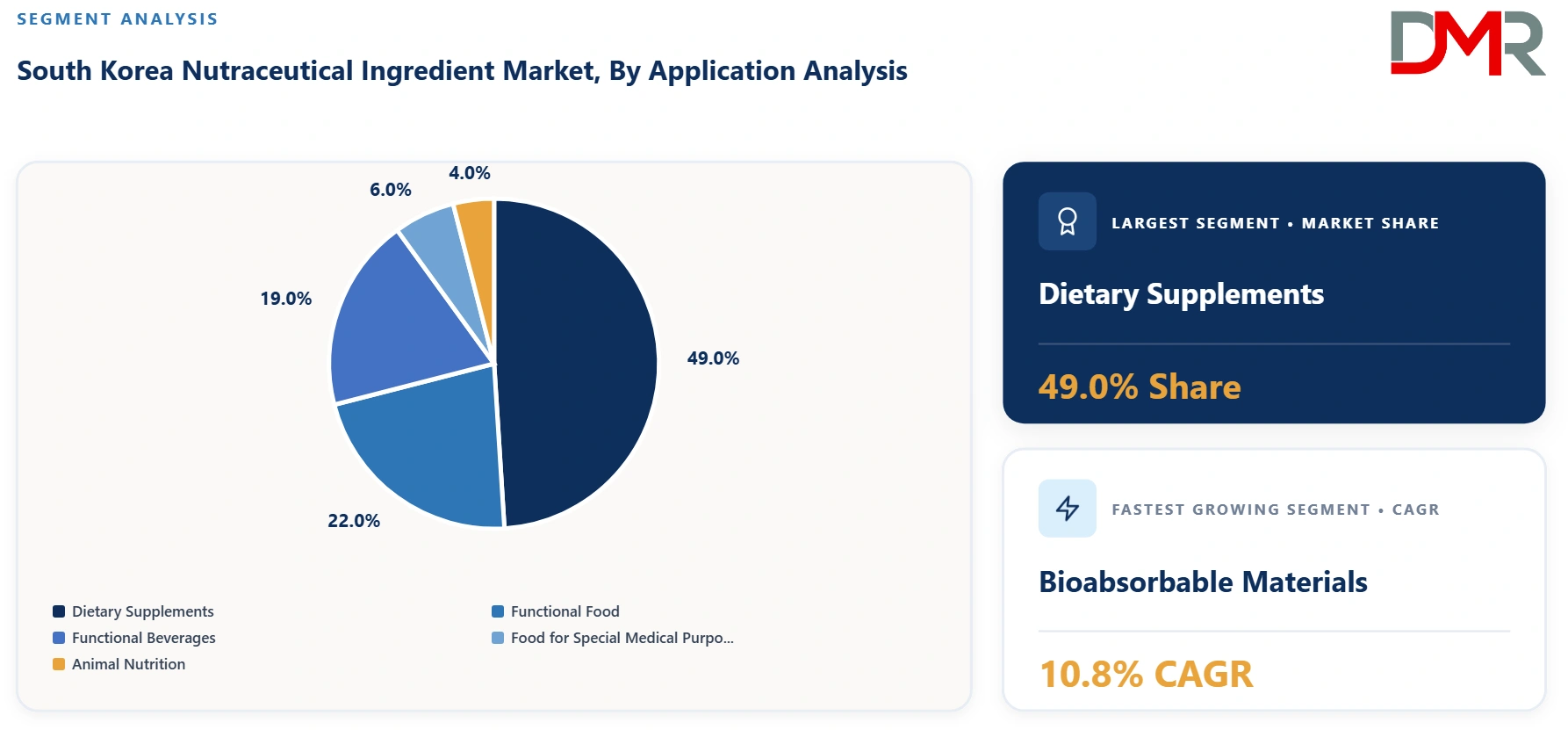
- Leading Application Segment in 2026: Dietary Supplements, 49.0% share
- Fastest-Growing Segment: Proteins & Amino Acids, 10.2% CAGR
What is the South Korea Nutraceutical Ingredients and its Market Size?
The South Korean nutraceutical ingredients market is estimated at USD 1.62 billion in 2026 and is projected to reach approximately USD 3.25 billion by 2035, representing an 8.0% CAGR.
ℹ
To learn more about this report –
Download Your Free Sample Report Here
The South Korea nutraceutical ingredients market comprises functional nutritional substances supplied to manufacturers of dietary supplements, functional foods, beverages, foods for special medical purposes and selected animal-nutrition products. It includes vitamins, minerals, proteins, amino acids, probiotics, prebiotics, fibers, specialty carbohydrates, phytochemicals, botanical extracts, functional fats and oils, carotenoids and other bioactive compounds. These ingredients are sold primarily on a business-to-business basis as standardized powders, concentrates, oils, cultures, extracts or liquid preparations. Their value proposition is to provide measurable nutritional or physiological benefits while enabling Korean manufacturers to formulate differentiated products, support approved health claims and respond to rapidly changing consumer wellness priorities. MFDS distinguishes notified functional ingredients from individually recognized ingredients, with the latter requiring safety and functionality review.
Use Cases
- Daily nutritional supplementation: Vitamins, minerals and amino acids address routine micronutrient and nutritional requirements.
- Gut-health formulations: Probiotics, prebiotics and specialty fibers support digestive-health and microbiome-oriented products.
- Sports nutrition: Proteins, amino acids and functional carbohydrates support muscle recovery, performance and active lifestyles.
- Healthy aging: Botanical extracts, collagen peptides, minerals and omega fatty acids target bone, joint, cognitive and cardiovascular health.
- Functional beverages: Soluble vitamins, amino acids, probiotics and botanical extracts enable convenient ready-to-drink wellness products.
- Medical nutrition: Specialized proteins, amino acids, vitamins and minerals are incorporated into targeted nutritional formulations.
Key Takeaways
- Market size and growth: The ingredient market is estimated at USD 1.62 billion in 2026 and USD 3.25 billion in 2035, implying an 8.0% CAGR.
- Key growth drivers: Healthy aging, preventive healthcare, sports nutrition, microbiome awareness and premium functional-food innovation are central demand catalysts.
- Segment dominance: Vitamins lead ingredient demand, dry ingredients dominate form, and dietary supplements remain the largest application.
- Fastest-growing segment: Proteins & Amino Acids are projected to grow at approximately 10.2% annually, supported by sports nutrition, healthy aging and high-protein food innovation.
- Competitive direction: Korean suppliers increasingly compete through clinical substantiation, proprietary ingredients, formulation support, quality certifications and international commercialization.
How AI/Gen AI is Transforming the South Korea Nutraceutical Ingredients Market?
Artificial intelligence is increasingly being applied to nutraceutical formulation, ingredient discovery, consumer segmentation, demand forecasting and personalized nutrition. Korean manufacturers can combine consumer purchase data, health preferences, formulation constraints and ingredient-performance information to identify promising ingredient combinations and optimize dosage forms. AI-assisted R&D can also accelerate screening of botanical compounds, probiotics and bioactive molecules before laboratory validation. This complements Korea's expanding individually recognized ingredient pipeline, where scientific evidence and functionality are important competitive requirements. MFDS continued approving new functional ingredients during 2025, including probiotics, collagen peptides, botanical extracts and Akkermansia-related materials.
The main benefits are shorter formulation cycles, better demand prediction, lower trial-and-error costs and more targeted product development. AI also supports personalized nutrition platforms that recommend combinations according to age, lifestyle and wellness objectives. Suppliers that combine AI with fermentation, microbiome science, analytical chemistry and clinical research can move from commodity ingredients toward higher-margin solution platforms.
Key Drivers in the South Korea Nutraceutical Ingredients Market
Aging Population and Preventive Health Orientation
South Korea's rapidly aging population is structurally increasing demand for ingredients associated with healthy aging, mobility, cognition, cardiovascular health, immunity and general nutritional adequacy. This favors vitamins, minerals, omega fatty acids, proteins, collagen peptides, botanical extracts and specialized amino acids. The country's health-functional-food ecosystem is already highly developed, with the market exceeding KRW 5 trillion and thousands of registered products.
Expansion of Functional Foods, Beverages and Sports Nutrition
Korean consumers increasingly expect nutrition to be integrated into convenient consumption occasions rather than limited to traditional tablets and capsules. Protein beverages, functional snacks, gummies, powders and ready-to-drink products are broadening the addressable ingredient pool. Industry suppliers report increasing interest in protein snacks, plant-based milk, hydration products and specialized wellness formulations.
Restraints in the South Korea Nutraceutical Ingredients Market
Stringent Functional-Ingredient Approval and Claim Requirements
South Korea's regulatory framework creates significant barriers to entry for novel functional ingredients. MFDS distinguishes standardized notified ingredients from individually recognized ingredients, and applicants seeking individual recognition must provide evidence concerning safety and functionality. Only recognized functionality can be used in regulated health-functional-food labeling and advertising.
Mature Core Categories and Price Competition
Vitamins, minerals, probiotics and established botanical ingredients are relatively mature, creating pricing pressure and limited differentiation for commodity-grade inputs. The downstream market also experienced declines in 2023 and 2024 before stabilizing, demonstrating that high consumer awareness does not guarantee uninterrupted volume growth.
Growth Opportunities in the South Korea Nutraceutical Ingredients Market
Microbiome, Postbiotic and Next-Generation Probiotic Ingredients
Microbiome science is one of the strongest white-space opportunities because consumers increasingly connect gut health with immunity, metabolism and overall wellness. Korea's regulatory pipeline is becoming more receptive to differentiated microbial ingredients; MFDS recognized multiple new probiotic and microbiome-related materials during 2025, including Akkermansia-related ingredients.
High-Protein and Healthy-Aging Nutrition
Proteins and amino acids are expected to be the fastest-growing ingredient category, benefiting from sports participation, muscle-health awareness and aging-related demand. Korean ingredient companies already maintain extensive amino-acid portfolios for health supplements, foods and pharmaceutical applications.
Trends in the South Korea Nutraceutical Ingredients Market
Shift Toward Clinically Substantiated Proprietary Ingredients
Korean brands are moving from generic nutrients toward proprietary botanicals, peptides, probiotics and specialty ingredients that support differentiated claims. Kolmar BNH, for example, maintains a portfolio of individually recognized ingredients supported by clinical and scientific data.
Convenience, Personalization and Multi-Functional Formulation
Consumers increasingly prefer smaller doses, powders, gummies, beverages and combination products addressing multiple health objectives. Korean manufacturers are consequently demanding ingredients compatible with diverse delivery systems and personalized product architectures.
Research Scope and Analysis
The market is segmented By Ingredient Type, By Form, By Function and By Application. The analysis assesses 2026 market shares, identifies the dominant sub-segment in each category and estimates the fastest-growing opportunity based on Korean consumer demand, regulatory activity, formulation trends and supplier portfolios.
ℹ
To learn more about this report –
Download Your Free Sample Report Here
By Ingredient Type Analysis
Vitamins are estimated to be the dominant ingredient category in 2026 with approximately 18.5% share, supported by widespread consumer awareness, broad formulation applicability and strong demand for multivitamins and single-nutrient products. MFDS-derived market data show vitamins and minerals among Korea's largest health-functional-food categories, with vitamins accounting for approximately 18.1% of 2025 functional-ingredient sales. Proteins & Amino Acids are projected to be the fastest-growing ingredient category at approximately 10.2% CAGR, driven by sports nutrition, muscle-health positioning, healthy aging and protein-enriched foods and beverages. Probiotics are the second-largest category at an estimated 15.5% share, reflecting Korea's strong domestic probiotic culture and established consumer familiarity; domestic sales data place probiotics among the three largest functional-ingredient groups. Phytochemicals & Plant Extracts remain strategically important because Korean manufacturers increasingly seek differentiated botanical claims, while fibers, specialty carbohydrates, minerals, functional fats and carotenoids benefit from gut health, metabolic health, cardiovascular and eye-health applications.
By Form Analysis
The Dry segment dominates with an estimated 79.0% share in 2026, reflecting the extensive use of powders, granules, encapsulated materials, spray-dried extracts, protein powders, vitamin premixes and freeze-dried probiotic cultures. Dry ingredients generally offer superior storage stability, transportation economics and compatibility with tablets, capsules, sachets and powdered beverages. Liquid ingredients account for approximately 21.0% but represent the faster-growing form, with an estimated 9.2% CAGR, as ready-to-drink functional beverages, shots and liquid concentrates expand. Liquid formats are particularly attractive for water-soluble vitamins, botanical concentrates, amino acids and certain probiotic formulations, although stability, oxidation, microbial control and sensory challenges remain important barriers. The fastest-growing opportunity therefore lies in high-stability liquid systems and concentrated premixes that maintain active potency throughout shelf life while supporting convenient beverage applications.
By Function Analysis
General Nutrition is estimated to lead the functional segmentation with approximately 22.0% share in 2026, reflecting the broad use of vitamins, minerals, amino acids and basic nutritional ingredients across mass-market products. Gut Health is the second-largest functional area at roughly 15.5%, supported by Korea's established probiotic market and increasing interest in digestive and microbiome health. Sports Nutrition is expected to be the fastest-growing function at approximately 11.1% CAGR, driven by protein consumption, fitness participation, muscle preservation and demand for convenient recovery products. Immune Health remains a major demand pool after the pandemic, while cardiovascular, bone and joint, skin, cognitive and eye-health applications increasingly use targeted combinations of omega fatty acids, peptides, botanicals, carotenoids, minerals and amino acids. The most attractive premium opportunities are multifunctional formulations combining general nutrition with a clearly differentiated health benefit.
By Application Analysis
Dietary Supplements are estimated to account for approximately 49.0% of ingredient demand in 2026, making them the largest application. The segment benefits from Korea's mature health-functional-food ecosystem, high consumer awareness and extensive use of tablets, capsules, powders, gummies and sachets. Functional Food represents approximately 22.0%, while Functional Beverages account for about 19.0% and are expected to grow faster as consumers seek portable, convenient nutrition. Functional beverages are particularly attractive for soluble vitamins, electrolytes, amino acids, proteins, fibers and botanical extracts. FSMP represents around 6.0%, supported by aging and specialized nutritional needs, while Animal Nutrition accounts for approximately 4.0% within the broader ingredient scope used in this report. The fastest-growth white space is expected in functional beverages and nutrition formats that bridge supplements and everyday food consumption.
The South Korea Nutraceutical Ingredients Market Report is segmented on the basis of the following:
By Ingredient Type
- Proteins
- Amino Acids
- Fibers & Specialty Carbohydrates
- Probiotics
- Prebiotics
- Phytochemicals & Plant Extracts
- Functional Fats & Oils
- Vitamins
- Minerals
- Carotenoids
- Other Nutraceutical Ingredients
By Form
By Function
- General Nutrition
- Sports Nutrition
- Weight Management
- Gut Health
- Immune Health
- Cardiovascular Health
- Bone & Joint Health
- Skin Health
- Eye Health
- Cognitive Health
- Other Health & Wellness Functions
By Application
- Dietary Supplements
- Functional Food
- Functional Beverages
- Food for Special Medical Purposes (FSMP)
- Animal Nutrition
Regulatory Landscape
South Korea is a regulation-intensive market in which functional-ingredient approval can become a significant competitive moat. MFDS recognizes notified functional ingredients and individually recognized ingredients, with the latter requiring safety and functionality evidence. Only approved functionality can generally be communicated in regulated health-functional-food labeling and advertising. During 2025, MFDS continued recognizing new probiotics, botanical extracts, collagen peptides and microbiome-related materials, indicating an active innovation pipeline. The opportunity is therefore strongest for suppliers with clinical-development capabilities and Korean regulatory expertise. The primary risk is longer commercialization timelines and high evidence costs, particularly for novel botanicals and next-generation probiotics.
Investment and White Space Analysis
The most attractive investment areas are microbiome/postbiotics, high-protein nutrition, healthy aging, women's health, blood-sugar management, cognitive health and convenient functional-beverage ingredients. Korea already has significant scale in vitamins, red ginseng and probiotics, making undifferentiated commodity exposure less attractive.
White-space opportunities are concentrated in clinically differentiated ingredients with regulatory recognition, proprietary strain or extraction technology and strong formulation compatibility. Investors should prioritize suppliers that combine raw-material production with clinical research, formulation services and ODM/CDMO capabilities. Risk remains elevated for ingredients dependent on a single health claim or imported botanical supply chain. Partnerships with Korean manufacturers can reduce commercialization risk while providing access to established distribution and regulatory expertise.
Competitive Landscape
The South Korean nutraceutical-ingredients market is moderately fragmented, combining large domestic fermentation and ingredient manufacturers, specialized probiotic and botanical suppliers, global nutrition-ingredient companies, distributors and ODM/CDMO organizations. Competition is shifting away from simple price-based raw-material supply toward clinically supported proprietary ingredients, formulation assistance, regulatory expertise and integrated B2B solutions. Domestic companies have structural advantages in Korean regulatory navigation and consumer insight, while multinational suppliers often compete through global clinical evidence, technology platforms and broad portfolios.
Some of the prominent players in the South Korea Nutraceutical Ingredients Market are:
- Kolmar BNH
- Chong Kun Dang Bio
- Daesang Corporation
- CJ CheilJedang
- Cell Biotech
- Korea Ginseng Corporation
- Novarex
- HY Co., Ltd.
- Cosmax Bio
- Nutribiotech
- Pulmuone Health & Living
- Suheung
- Ilhwa
- Amorepacific
- LG Household & Health Care
- Kwangdong Pharmaceutical
- Dong-A Pharmaceutical
- Yuhan Corporation
- Chong Kun Dang Health
- Korea Yakult
- Kyowon Life Science
- Kolmar Korea
- ShinWoo Corporation
- Bioland
- Nutrex
- Nutricore
- Ace Biotech
- Korea Bio-Science
- Seoulin Bioscience
- Korea Bio Medical
- Nisshin Seifun Group
- Mitsubishi Corporation Life Sciences
- DSM-Firmenich
- BASF
- Kerry Group
- Ingredion
- Givaudan
- Roquette
- ADM
- Cargill
- Other Key Players
Recent Developments
- March 2025: Kolmar BNH: Expanded its personalized health-functional-food strategy through pharmacy-based ingredient portioning, allowing products to be tailored to individual consumers with professional pharmacist consultation.
- February 2025: Cell Biotech: Reported KRW 53.3 billion in revenue and KRW 7.9 billion in operating profit for 2025, supported by continued export growth and increasing international demand for its probiotic products.
- January 2025: CJ CheilJedang: Completed third-party validation of its Life Cycle Assessment (LCA) system covering 41 products across seven manufacturing sites in five countries. The initiative improves transparency around the environmental impact of its bio-ingredient products.
- December 2024: CJ CheilJedang: Introduced its 3B (Borrow, Buy, Build) strategy for the B2B nutrition business. It also launched BiomeNrich, a functional-biotics ingredient brand, and began domestic sales of Nuritas’ PeptiStrong ingredient.
Report Details
| Report Characteristics |
| Market Size (2026) |
USD 1.62 Bn |
| Forecast Value (2035) |
USD 3.25 Bn |
| CAGR (2026–2035) |
8.0% |
| Historical Data |
2021 – 2025 |
| Forecast Data |
2026 – 2035 |
| Base Year |
2025 |
| Segments Covered |
By Ingredient Type, By Form, By Function, By Application |
| Country Coverage |
South Korea |
Frequently Asked Questions
What is the South Korea Nutraceutical Ingredients Market size in 2026?
▾ The South Korea Nutraceutical Ingredients Market is estimated at USD 1.62 billion in 2026, covering major nutritional and functional ingredients.
What will the South Korea Nutraceutical Ingredients Market reach by 2035?
▾ The South Korea Nutraceutical Ingredients Market is projected to reach approximately USD 3.25 billion by 2035, driven by premium functional nutrition demand.
What is the CAGR of the South Korea Nutraceutical Ingredients Market?
▾ The South Korea Nutraceutical Ingredients Market is projected to grow at approximately 8.0% CAGR between 2026 and 2035.
What are the key growth drivers of the South Korea Nutraceutical Ingredients Market?
▾ The South Korea Nutraceutical Ingredients Market is driven by healthy aging, preventive healthcare, sports nutrition, microbiome awareness and functional-food innovation.
Which ingredient category leads the South Korea Nutraceutical Ingredients Market?
▾ Vitamins lead the South Korea Nutraceutical Ingredients Market with an estimated 18.5% share, while proteins and amino acids are growing fastest.
What are the major trends in the South Korea Nutraceutical Ingredients Market?
▾ Major South Korea Nutraceutical Ingredients Market trends include microbiome ingredients, postbiotics, healthy-aging nutrition, personalized formulations and clinically substantiated botanical ingredients.
Who are the key players in the South Korea Nutraceutical Ingredients Market?
▾ Key South Korea Nutraceutical Ingredients Market participants include CJ CheilJedang, Daesang, Kolmar BNH and Cell Biotech, alongside global ingredient suppliers.
How is the South Korea Nutraceutical Ingredients Market segmented?
▾ The South Korea Nutraceutical Ingredients Market is segmented by Ingredient Type, Form, Function and Application, covering major upstream and downstream categories.How is the South Korea Nutraceutical Ingredients Market segmented?