South Korea Radiopharmaceuticals Market Snapshot
- South Korea Radiopharmaceuticals Market Size in 2026: USD 222.7 Million
- South Korea Radiopharmaceuticals Market Size in 2035: USD 454.0 Million
- South Korea CAGR from 2026 to 2035: 8.24%
- Fluorine-18 Derivatives is the leading radioisotope segment in 2026: 38.4%
- Diagnostic Radiopharmaceuticals is the leading type segment in 2026: 65.8%
- Cyclotrons is the leading source segment in 2026: 52.6%
- Oncology is the leading application segment in 2026: 54.7%
- Hospitals is the leading end-user segment in 2026: 62.3%
What is the South Korea Radiopharmaceuticals Market and its Market Size?
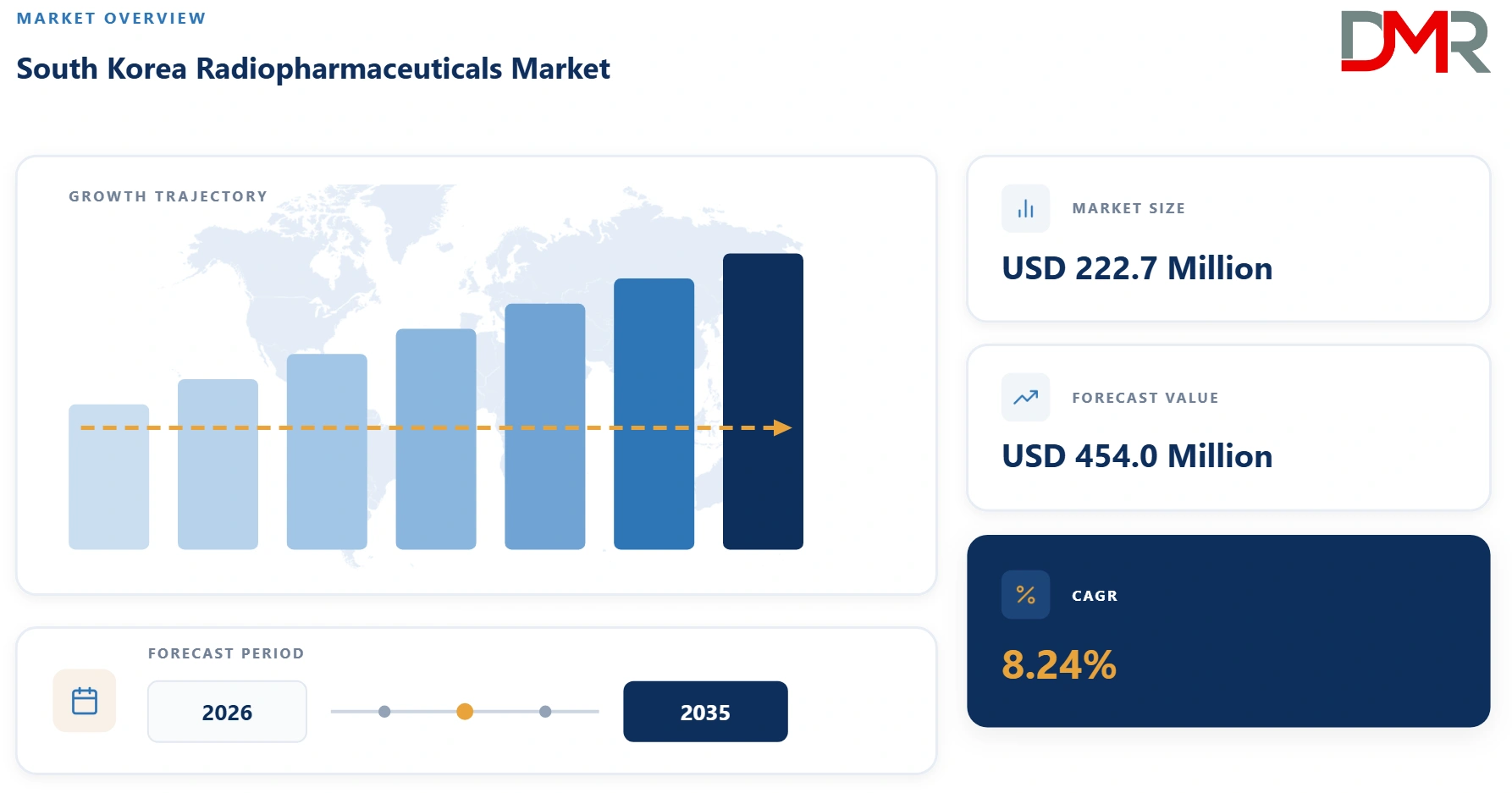
The South Korea Radiopharmaceuticals Market is projected to reach USD 222.7 million in 2026 and grow at a compound annual growth rate of 8.24% until 2035 to reach a value of USD 454.0 million.
ℹ
To learn more about this report –
Download Your Free Sample Report Here
Radiopharmaceuticals are radioactive medicinal formulations used to diagnose, monitor, and treat diseases through PET, SPECT, and targeted radionuclide therapy. South Korea has developed an advanced nuclear medicine ecosystem supported by tertiary hospitals, domestic radiopharmaceutical manufacturers, research institutions, cyclotron infrastructure, and expanding cancer programs. Rising demand for precision oncology and molecular imaging is encouraging hospitals to adopt newer diagnostic tracers and therapeutic isotopes.
The market includes short-lived diagnostic agents such as fluorine-18 and gallium-68 and therapeutic radioisotopes including lutetium-177. South Korea’s established hospital radiopharmacy infrastructure supports localized production and rapid distribution of time-sensitive products. Increasing cancer incidence, wider PET and SPECT utilization, domestic drug development, reimbursement expansion, and clinical adoption of radioligand therapies are expected to strengthen market growth through 2035.
Use Cases
- Cancer Detection and Staging: Radiopharmaceuticals support PET and SPECT imaging for identifying primary tumors, detecting metastases, staging cancers, evaluating treatment response, and monitoring recurrence. Fluorine-18 FDG remains extensively used, while prostate-specific membrane antigen tracers are expanding prostate cancer diagnosis. Molecular imaging enables physicians to detect functional changes before structural abnormalities become visible through conventional imaging, improving clinical decisions and personalized treatment planning.
- Targeted Radionuclide Therapy: Therapeutic radiopharmaceuticals deliver cytotoxic radiation directly to cancer cells while limiting exposure to surrounding healthy tissue. Lutetium-177 therapies are gaining importance for prostate cancer and neuroendocrine tumors. Their ability to combine targeted treatment with molecular imaging supports theranostic care, allowing physicians to select suitable patients, calculate treatment response, and monitor disease progression using corresponding diagnostic tracers.
- Neurological and Cardiac Imaging: Radiotracers help assess cerebral metabolism, dopamine transporter activity, myocardial perfusion, ventricular function, and tissue viability. These applications support the diagnosis of Parkinson’s disease, dementia, epilepsy, coronary artery disease, and heart failure. South Korea’s aging population and advanced imaging infrastructure are encouraging hospitals and medical imaging centers to expand nuclear medicine procedures for neurological and cardiovascular disease evaluation.
- Clinical Research and Drug Development: Cancer institutes, universities, biotechnology companies, and pharmaceutical developers employ radioisotopes to evaluate drug biodistribution, receptor occupancy, pharmacokinetics, and therapeutic response. PET tracers provide noninvasive biological measurements during clinical development. South Korea’s research hospitals and domestic radiopharmaceutical companies are increasingly developing PSMA-targeted agents, theranostic combinations, novel ligands, and localized isotope production technologies for domestic and international commercialization.
Key Takeaways
- Market Size: The South Korea Radiopharmaceuticals Market is anticipated to be valued at USD 222.7 million in 2026 and is forecast to reach USD 454.0 million by 2035, expanding at a CAGR of 8.24%.
- Growth Outlook: Market expansion is supported by rising cancer incidence, increasing PET and SPECT procedure volumes, growing adoption of precision medicine, expanding cyclotron infrastructure, domestic radiopharmaceutical development, favorable clinical research capabilities, and wider utilization of targeted radionuclide therapies in prostate cancer and neuroendocrine tumors.
- Primary Growth Drivers: Increasing demand for early cancer detection, growth in PSMA imaging, commercial introduction of lutetium-177 therapies, greater availability of molecular imaging systems, an aging population, and investments in domestic isotope production are accelerating radiopharmaceutical adoption across South Korean hospitals and research centers.
- By Radioisotope Analysis: Fluorine-18 Derivatives is projected to dominate with a 38.4% share in 2026, supported by established FDG-PET utilization, suitable imaging characteristics, cyclotron availability, and extensive oncology applications. Lutetium-177 is expected to register the highest CAGR through 2035 as targeted radioligand therapies enter wider clinical practice.
- By Type Analysis: Diagnostic Radiopharmaceuticals is expected to lead with a 65.8% share in 2026 due to high PET and SPECT procedure volumes. Therapeutic Radiopharmaceuticals is projected to grow faster as lutetium-177 products, theranostic care pathways, and targeted cancer treatments gain clinical and reimbursement acceptance.
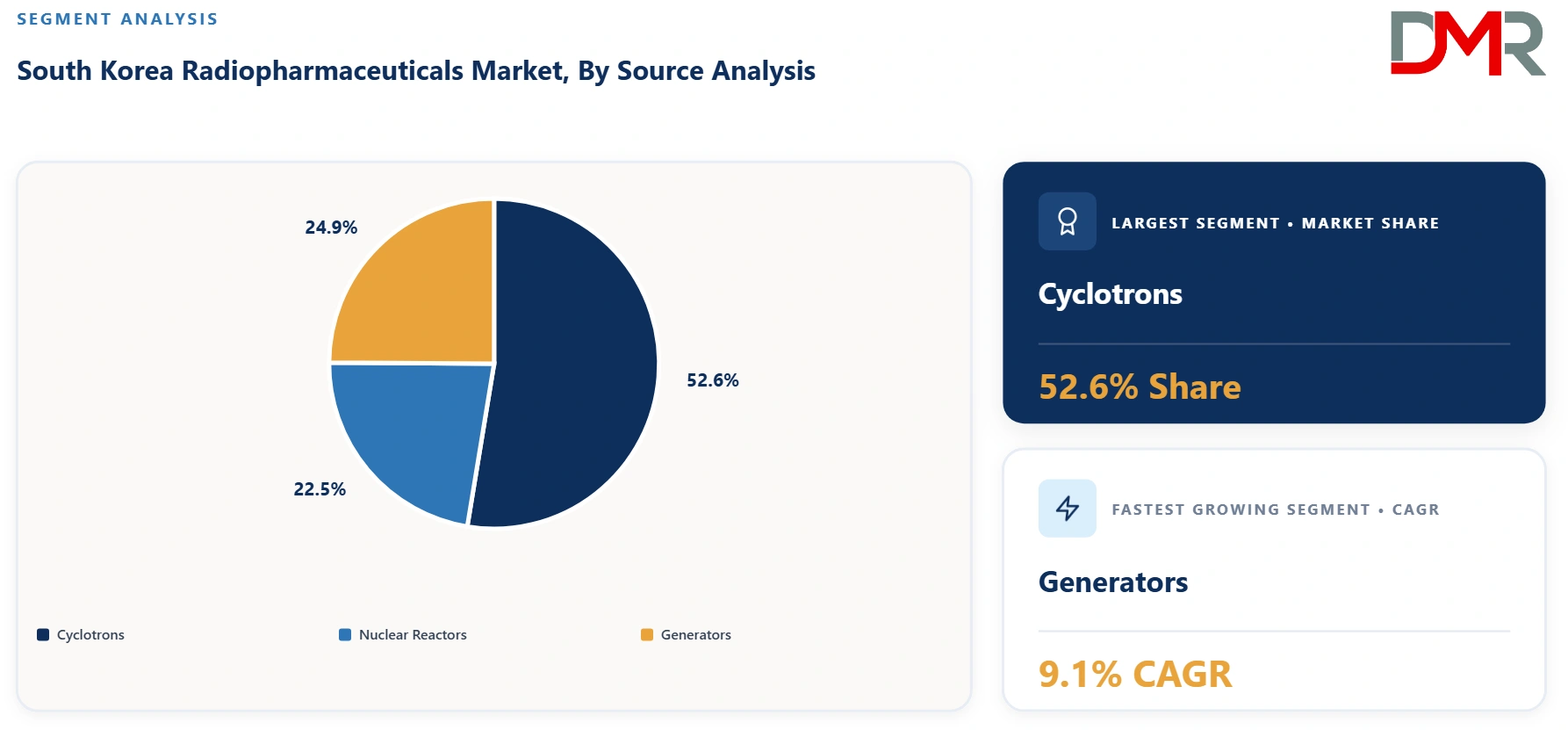
- By Source Analysis: Cyclotrons are anticipated to account for 52.6% of the market in 2026, reflecting strong domestic infrastructure and demand for short-lived PET isotopes. Generators are expected to record the highest growth as gallium-68 imaging and decentralized radiopharmaceutical preparation expand across healthcare facilities.
- By Application Analysis: Oncology is projected to dominate with a 54.7% share in 2026, driven by radiopharmaceutical use in tumor detection, staging, recurrence monitoring, patient selection, and targeted therapy. Oncology is also expected to record the highest CAGR, remaining above the overall market rate through 2035.
- By End-User Analysis: Hospitals are anticipated to lead with a 62.3% share in 2026 due to their integrated imaging, oncology, radiopharmacy, and therapy capabilities. Cancer Research Institutes are expected to register the highest CAGR as clinical trials, tracer development, and theranostic research accelerate.
How AI and Generative AI are Transforming the South Korea Radiopharmaceuticals Market?
Artificial intelligence is improving radiopharmaceutical discovery, image reconstruction, lesion detection, dosimetry, patient selection, and treatment planning. AI algorithms can analyze PET and SPECT images, reduce noise, shorten acquisition time, identify subtle abnormalities, and quantify tracer uptake consistently. Generative AI supports molecular design by predicting ligand-target interactions and proposing candidate compounds for radiolabeling. In therapeutic applications, AI-assisted dosimetry can estimate organ exposure and optimize administered activity for individual patients. South Korea’s digital hospitals, imaging infrastructure, and biotechnology capabilities create strong conditions for integrating AI across radiopharmaceutical research, manufacturing, and clinical decision-making.
Key Drivers in the South Korea Radiopharmaceuticals Market
Rising Cancer Burden and Demand for Precision Oncology
South Korea’s cancer burden is creating sustained demand for molecular imaging and targeted radionuclide treatments. Approximately 304,754 new cancer cases and 84,019 cancer deaths were projected for 2025, strengthening the requirement for early detection, accurate staging, treatment selection, and recurrence monitoring. PET radiotracers allow functional disease assessment, while PSMA-targeted imaging and lutetium-177 therapies support increasingly personalized prostate cancer care. The growing population of cancer survivors also requires continued surveillance. These clinical requirements are encouraging tertiary hospitals, imaging centers, and cancer institutes to expand radiopharmaceutical capabilities and introduce integrated theranostic services.
Expanding Cyclotron and Hospital Nuclear Medicine Infrastructure
South Korea possesses significant infrastructure for producing and using short-lived medical radioisotopes. A national assessment identified 51 cyclotrons installed between 1985 and 2023, including 35 operational systems, providing a foundation for fluorine-18 and other PET isotope production. Samsung Medical Center alone reports more than 22,000 PET-CT examinations, 35,000 general nuclear medicine imaging tests, and approximately 1,300 radiopharmaceutical therapies annually. This infrastructure reduces dependence on long-distance transportation, supports reliable tracer availability, and enables research into new compounds. Continuing investment in PET-CT, SPECT-CT, radiopharmacies, and quality-control facilities is expanding clinical access.
Restraints in the South Korea Radiopharmaceuticals Market
Short Half-Lives and Complex Supply-Chain Requirements
Many diagnostic radioisotopes have short physical half-lives, requiring synchronized production, quality testing, transportation, appointment scheduling, and administration. Any cyclotron outage, synthesis failure, regulatory delay, or transportation disruption can make prepared doses unusable. Therapeutic isotopes may also depend on imported reactor capacity and specialized processing infrastructure, exposing providers to international supply constraints. Radiopharmaceutical facilities require shielded production areas, validated equipment, radiation monitoring, trained personnel, and strict waste-management systems. These requirements increase operating costs and limit participation by smaller hospitals, particularly outside major metropolitan healthcare clusters where demand may not justify dedicated infrastructure.
Regulatory Complexity and Limited Specialized Workforce
Radiopharmaceutical development combines pharmaceutical manufacturing regulations with nuclear safety, radiation protection, transportation, clinical research, and hospital handling requirements. Companies must demonstrate product quality, radionuclidic purity, sterility, stability, dosimetry, and clinical value while managing radioactive materials under tightly controlled conditions. Approval pathways can therefore require specialized evidence and coordination among multiple authorities. South Korea also faces a limited pool of nuclear medicine physicians, radiochemists, radiopharmacists, medical physicists, and qualified production personnel. Competition for experienced professionals can constrain facility expansion, increase labor costs, and slow the translation of academic radiotracer research into scalable commercial products.
Growth Opportunities in the South Korea Radiopharmaceuticals Market
Expansion of Lutetium-177 and Theranostic Treatment Pathways
Lutetium-177 therapies create substantial opportunities for hospitals, isotope suppliers, biotechnology companies, and radiopharmaceutical manufacturers. Theranostic pathways use a diagnostic tracer to confirm target expression before administering a chemically related therapeutic isotope, supporting patient-specific care. Clinical use of Novartis’ Pluvicto in South Korea and domestic development programs from FutureChem and CellBion indicate growing interest in prostate cancer radioligand therapy. Expansion into neuroendocrine tumors and other receptor-specific cancers could broaden treatment volumes. Opportunities include local isotope supply, GMP labeling centers, dosimetry software, specialized treatment wards, patient logistics, clinical trials, and partnerships connecting hospitals with domestic drug developers.
Domestic Production and International Commercialization
South Korea can leverage its biotechnology sector, nuclear research capabilities, cyclotron network, and high-quality hospitals to become a regional radiopharmaceutical development hub. Domestic companies are developing diagnostic tracers and therapeutic candidates for prostate cancer, neurological disorders, and other diseases. Localized production of isotopes, precursor materials, targeting ligands, and automated synthesis modules can reduce import exposure and strengthen supply reliability. Companies can also pursue licensing, clinical supply, and distribution partnerships across Asian markets lacking comparable manufacturing capacity. FutureChem’s international licensing initiatives illustrate the potential to commercialize Korean-developed products through regional partners while using domestic clinical evidence to support broader regulatory submissions.
Trends in the South Korea Radiopharmaceuticals Market
Shift from Diagnostic Imaging Toward Theranostics
The market is gradually shifting from a primarily diagnostic model toward integrated diagnosis and treatment. PSMA-targeted agents allow physicians to image prostate cancer, select eligible patients, administer targeted radionuclide therapy, and measure therapeutic response using the same biological target. This approach improves treatment precision and creates recurring demand across diagnostic and therapeutic product categories. Domestic companies are building paired gallium-68 or fluorine-18 imaging agents and lutetium-177 therapies. Hospitals are consequently investing in radiopharmacy capabilities, isolation facilities, dosimetry, multidisciplinary treatment teams, and radioactive waste management to support a broader range of theranostic procedures.
Development of Novel and Disease-Specific PET Tracers
Although fluorine-18 FDG remains widely used, demand is increasing for tracers targeting specific receptors, proteins, and metabolic pathways. PSMA tracers are expanding prostate cancer imaging, while amyloid, tau, and dopamine transporter agents support neurological diagnosis and research. Disease-specific tracers can improve sensitivity, reduce ambiguous findings, and enable treatment selection. South Korean companies and academic institutions are developing localized products designed for domestic clinical requirements and international licensing. Longer-lived fluorine-18 agents are also attracting attention because they can be distributed farther than gallium-68 products, improving access for hospitals without onsite generators or cyclotrons.
Research Scope and Analysis
The study examines the South Korea radiopharmaceuticals market across radioisotope type source application and end user categories, covering Fluorine derivatives Technetium Lutetium Gallium Zirconium choline urea and other isotopes, diagnostic and therapeutic products, cyclotrons reactors and generators, oncology cardiology neurology endocrinology and other applications, hospitals imaging centers research institutes and additional end users through 2035 forecasts.
ℹ
To learn more about this report –
Download Your Free Sample Report Here
By Radioisotope Analysis
Fluorine-18 Derivatives are expected to lead the radioisotope segment with a 38.4% share in 2026, supported by extensive FDG-PET imaging, cyclotron availability, favorable imaging resolution, and established oncology workflows. Lutetium-177 is projected to record the highest CAGR of approximately 10.6%, as radioligand treatments for prostate cancer and neuroendocrine tumors become increasingly accessible.
By Type Analysis
Diagnostic Radiopharmaceuticals are projected to dominate the type segment with a 65.8% share in 2026, reflecting the established use of PET and SPECT procedures across oncology, cardiology, and neurology. Therapeutic Radiopharmaceuticals are expected to register the highest CAGR of approximately 10.2%, driven by theranostics, targeted cancer treatment, and expanding lutetium-177 utilization.
By Source Analysis
Cyclotrons are anticipated to lead the source segment with a 52.6% share in 2026, supported by South Korea’s operational cyclotron network and continuous demand for short-lived PET isotopes. Generators are expected to record the highest CAGR of approximately 9.1%, as gallium-68 imaging expands and hospitals seek decentralized isotope availability.
By Application Analysis
Oncology is projected to dominate the application segment with a 54.7% share in 2026 due to extensive utilization in tumor detection, staging, treatment planning, recurrence monitoring, and targeted therapy. It is also expected to register the highest CAGR of approximately 9.4%, remaining above the primary market CAGR as PSMA imaging and radioligand cancer treatments expand.
By End-User Analysis
Hospitals are expected to lead the end-user segment with a 62.3% share in 2026, supported by integrated PET, SPECT, oncology, radiopharmacy, and inpatient treatment infrastructure. Cancer Research Institutes are projected to record the highest CAGR of approximately 9.2%, as tracer discovery, clinical trials, dosimetry research, and theranostic development accelerate.
The South Korea Radiopharmaceuticals Market Report is Segmented Based on the Following:
By Radioisotope
- Fluorine-18 Derivatives
- Technetium-99
- Lutetium-177
- Gallium-68
- Zirconium-89
- 11C-Choline
- 14C-Urea
- Other Radioisotopes
By Type
- Diagnostic Radiopharmaceuticals
- Therapeutic Radiopharmaceuticals
By Source
- Cyclotrons
- Nuclear Reactors
- Generators
By Application
- Oncology
- Cardiology
- Neurology
- Endocrinology
- Other Applications
By End User
- Hospitals
- Medical Imaging Centers
- Cancer Research Institutes
- Other End Users
Regulatory Landscape
South Korea’s radiopharmaceutical regulatory landscape requires manufacturers and healthcare institutions to comply with pharmaceutical quality, clinical evidence, radiation safety, isotope handling, transportation, and radioactive waste requirements. The Ministry of Food and Drug Safety evaluates radiopharmaceutical quality, safety, efficacy, manufacturing controls, and clinical trial applications. Nuclear safety authorities govern radioactive materials and related facilities. Opportunities are emerging as regulators gain experience with targeted radioligand therapies and locally developed diagnostic agents. However, developers face risks from complex evidence requirements, limited product stability, site-specific manufacturing, and coordination across regulatory frameworks. Clearer theranostic guidelines and harmonized review procedures could reduce development timelines, encourage domestic innovation, and improve patient access.
Technology Analysis
Technological progress is moving South Korea’s market toward automated synthesis, advanced PET-CT and SPECT-CT systems, digital image reconstruction, novel targeting ligands, alpha and beta-emitting therapies, and patient-specific dosimetry. Automated modules improve synthesis consistency, reduce radiation exposure, and support GMP-compliant production. Digital PET technologies provide higher sensitivity and may allow lower administered activity or shorter scans. AI-based segmentation and quantification can improve lesion detection and response assessment. Opportunities exist in compact cyclotrons, generator-based production, isotope purification, radiochemistry software, and theranostic platforms. However, high equipment costs, interoperability limitations, cybersecurity concerns, and demand for specialized technical expertise could restrict adoption among smaller healthcare providers.
Competitive Landscape
The South Korea Radiopharmaceuticals Market combines domestic radiopharmaceutical developers, hospital-linked producers, research institutes, multinational pharmaceutical companies, isotope suppliers, and imaging-technology providers. Domestic participants such as FutureChem, DuChemBio, CellBion, and Korea Institute of Radiological and Medical Sciences are strengthening local research and manufacturing. Multinational companies compete through approved radioligand therapies, diagnostic agents, isotope supply, and imaging platforms. Competition increasingly centers on PSMA products, lutetium-177 supply, proprietary targeting ligands, clinical evidence, manufacturing reliability, hospital partnerships, reimbursement access, and regional licensing opportunities.
Some of the Prominent Players in the South Korea Radiopharmaceuticals Market Are
- FutureChem Co Ltd
- DuChemBio Co Ltd
- CellBion Co Ltd
- Novartis AG
- Advanced Accelerator Applications
- GE HealthCare
- Siemens Healthineers
- Curium Pharma
- Lantheus Holdings Inc
- Telix Pharmaceuticals Limited
- Bayer AG
- Jubilant Radiopharma
- Cardinal Health Inc
- Bracco Imaging SpA
- Nihon Medi-Physics Co Ltd
- Eckert and Ziegler SE
- NorthStar Medical Radioisotopes LLC
- ITM Isotope Technologies Munich SE
- SHINE Technologies LLC
- Nucleus RadioPharma Inc
- Blue Earth Diagnostics Limited
- Fusion Pharmaceuticals Inc
- RayzeBio Inc
- POINT Biopharma Global Inc
- ABX Advanced Biochemical Compounds GmbH
- Isotopia Molecular Imaging Ltd
- Monrol Nuclear Products Co
- SOFIE Biosciences Inc
- Advanced Cyclotron Systems Inc
- IBA Radiopharma Solutions
- Sumitomo Heavy Industries Ltd
- National Cancer Center Korea
- Korea Atomic Energy Research Institute
- Korea Institute of Radiological and Medical Sciences
- Seoul National University Hospital
- Samsung Medical Center
- Asan Medical Center
- Severance Hospital
- Korea Radioisotope Association
- SK Biopharmaceuticals Co Ltd
- Other Key Players
Recent Developments
- July 2026: FutureChem signed an exclusive licensing and supply agreement with Vietnam’s HIC for ProstaView, its prostate cancer diagnostic radiopharmaceutical, supporting the company’s international commercialization and Asian market expansion.
- May 2026: FutureChem received South Korean regulatory approval for ProstaView injection, making it the first domestically developed radiopharmaceutical approved in Korea for prostate cancer diagnosis and the country’s 43rd novel drug.
- September 2025: FutureChem received MFDS approval to conduct a Phase III clinical trial of FC705, its lutetium-177 prostate cancer therapy, involving 114 patients across eight South Korean medical institutions.
- July 2025: Novartis’ Pluvicto entered clinical use in South Korea following regulatory approval, expanding targeted radioligand treatment options for patients with PSMA-positive metastatic castration-resistant prostate cancer.
Report Details
| Report Characteristics |
| Market Size (2026) |
USD 222.7 Mn |
| Forecast Value (2035) |
USD 454.0 Mn |
| CAGR (2026–2035) |
8.24% |
| Historical Data |
2021 – 2025 |
| Forecast Data |
2026 – 2035 |
| Base Year |
2025 |
| Segments Covered |
By Radioisotope, By Type, By Source, By Application, By End User |
Frequently Asked Questions
How big is the South Korea Radiopharmaceuticals Market?
▾ The South Korea Radiopharmaceuticals Market is valued at USD 222.7 million in 2026 and is projected to reach USD 454.0 million by 2035.
What is the CAGR of the South Korea Radiopharmaceuticals Market from 2026 to 2035?
▾ The market is expected to expand at a compound annual growth rate of 8.24% between 2026 and 2035.
What factors are driving the growth of the South Korea Radiopharmaceuticals Market?
▾ Growth is driven by rising cancer incidence, expanding PET and SPECT utilization, cyclotron availability, precision medicine adoption, PSMA imaging, domestic radiopharmaceutical development, and increasing use of lutetium-177 therapies.
What are the major trends in the South Korea Radiopharmaceuticals Market?
▾ Major trends include growing theranostic adoption, expansion of radioligand therapy, development of disease-specific PET tracers, localized isotope production, automated radiopharmaceutical synthesis, AI-assisted imaging, and patient-specific dosimetry.
Who are the key players in the South Korea Radiopharmaceuticals Market?
▾ Key players include FutureChem, DuChemBio, CellBion, Novartis, GE HealthCare, Siemens Healthineers, Curium Pharma, Lantheus Holdings, Telix Pharmaceuticals, Korea Atomic Energy Research Institute, and Korea Institute of Radiological and Medical Sciences.
How is the South Korea Radiopharmaceuticals Market segmented?
▾ The market is segmented by radioisotope into Fluorine-18 Derivatives, Technetium-99, Lutetium-177, Gallium-68, Zirconium-89, 11C-Choline, 14C-Urea, and others, by type into diagnostic and therapeutic products, by source into cyclotrons, nuclear reactors, and generators, by application, and by end user.