Spain Food Packaging Market Snapshot
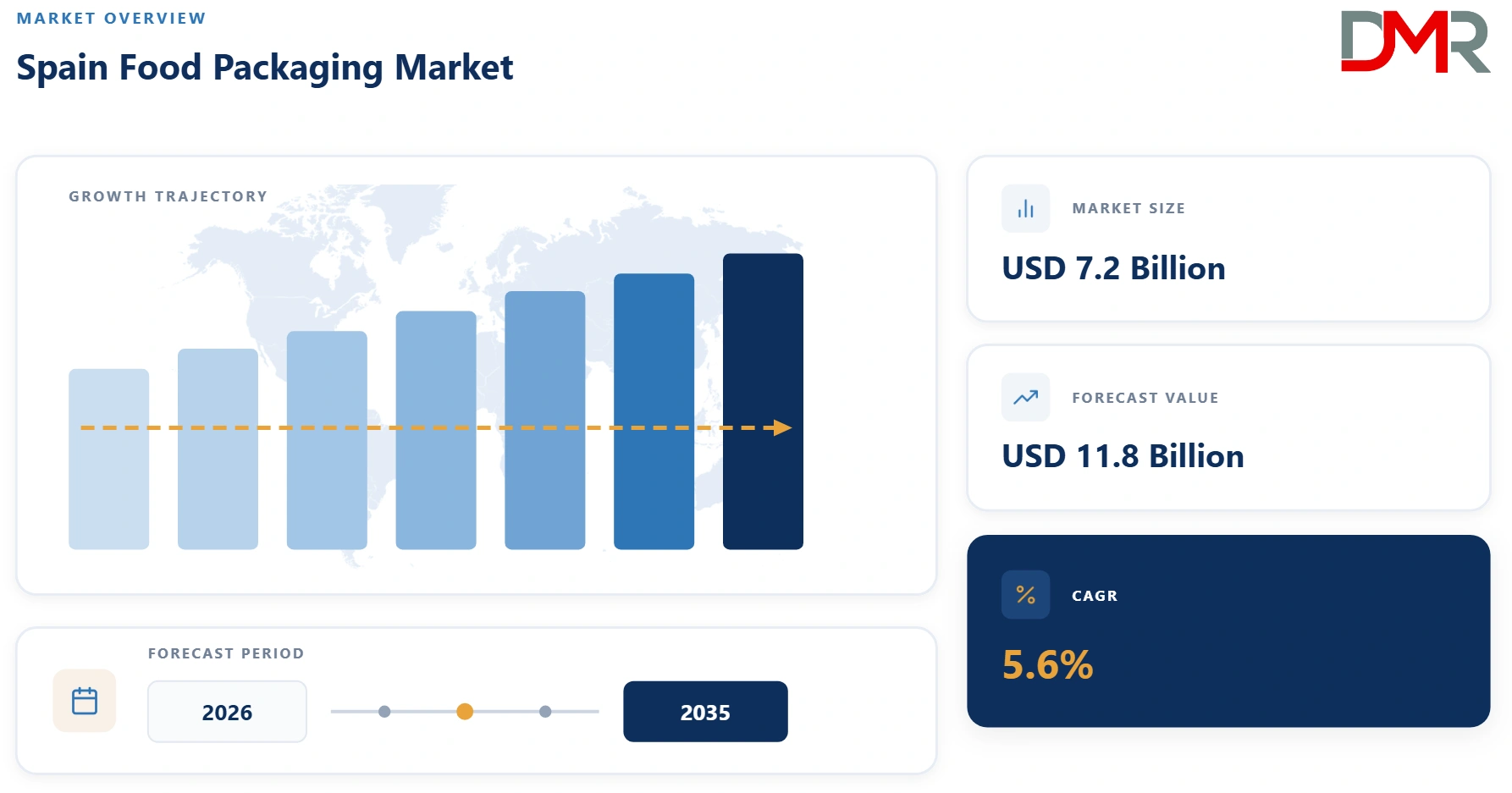
- Spain Food Packaging Market Size in 2026: USD 7.2 Billion
- Spain Food Packaging Market Size in 2035: USD 11.8 Billion
- Spain CAGR from 2026 to 2035: 5.6%
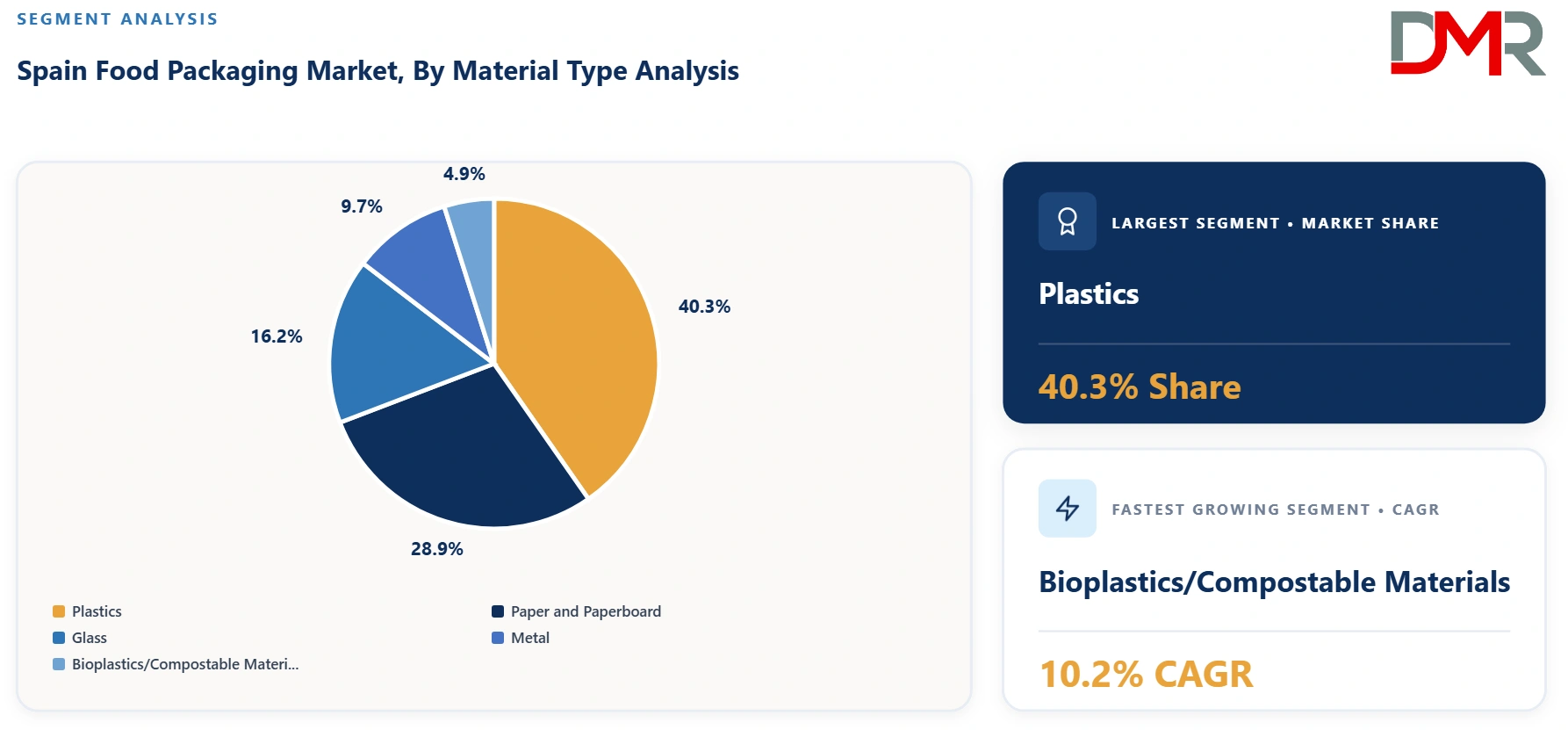
- Plastics is the leading material type segment in 2026: 40.3%
- Flexible Packaging is the leading packaging type segment in 2026: 44.9%
- Modified Atmosphere Packaging is the leading technology segment in 2026: 23.6%
- Fresh Produce is the leading application segment in 2026: 24.8%
- Food and Beverage Manufacturers is the leading end user segment in 2026: 67.4%
What is the Spain Food Packaging Market and its Market Size?
The Spain Food Packaging Market is projected to be valued at USD 7.2 Billion in 2026 and is projected to reach USD 11.8 Billion by 2035, expanding at a CAGR of 5.6% during the forecast period.
ℹ
To learn more about this report –
Download Your Free Sample Report Here
Growth is being propelled by Spain's position as one of Europe's largest fresh produce and agri-food exporting nations, requiring extensive protective and shelf-life-extending packaging across the country's substantial fruit, vegetable, and canned seafood processing industries, and tightening European Union and Spanish national packaging waste regulation under the country's extended producer responsibility framework. The maturing of recyclable and compostable packaging technologies capable of matching the barrier performance required for Spain's extensive fresh produce export trade, growing food manufacturer and retailer investment in sustainable packaging redesign to meet Spanish and broader EU plastics reduction targets, and continued expansion of the canned and preserved food packaging segment supporting Spain's globally recognized seafood and vegetable canning industries are reshaping the market from primarily protection-and-export-focused packaging toward a more sustainability-integrated category.
Use Cases
- Protective Packaging for Fresh Produce Export Trade: Spanish fruit and vegetable exporters, among the largest in Europe, rely on modified atmosphere packaging, ventilated film packaging, and protective crating solutions to preserve freshness and quality during extended transport to international, particularly Northern European, export markets.
- Canned and Preserved Food Packaging for Seafood and Vegetable Industries: Spain's globally significant canned seafood and preserved vegetable processing industries rely on metal can and glass jar packaging manufactured to precise specifications supporting both domestic consumption and substantial export demand for Spanish canned products.
- Flexible Packaging for Snack, Bakery, and Convenience Food Products: Spanish food manufacturers use flexible pouch and film packaging formats to provide cost-effective barrier protection for snacks, bakery products, and convenience foods, supporting both domestic retail distribution and growing export of Spanish packaged food brands.
- Recyclable and Compostable Packaging Redesign for Retailer Compliance: Food and beverage manufacturers reformulate packaging into recyclable mono-material or compostable formats to comply with Spain's extended producer responsibility program requirements and meet major grocery retailers' sustainability procurement standards.
Key Takeaways
- Market Size: The Spain Food Packaging Market is anticipated to be valued at USD 7.2 Billion in 2026 and is forecast to reach USD 11.8 Billion by 2035, expanding at a CAGR of 5.6%.
- Growth Outlook: Market expansion is sustained by Spain's position as a leading European fresh produce and processed food exporter, tightening national and EU packaging waste regulation, and continued growth in canned and preserved food packaging demand tied to Spain's globally significant seafood and vegetable processing industries.
- Primary Growth Drivers: Spain's substantial fresh produce and agri-food export trade requiring extensive protective packaging, tightening Spanish extended producer responsibility and single-use plastics regulation, sustained demand for canned and preserved food packaging, and growing retailer sustainability procurement standards are accelerating packaging innovation.
- By Material Type Analysis: Plastics is projected to lead the material type segment with a 40.3% share in 2026, reflecting continued cost-effectiveness and barrier performance for fresh produce export packaging despite regulatory pressure. Bioplastics/Compostable Materials is the fastest-growing material type segment at 10.2% CAGR, driven by expanding compostable packaging adoption in response to Spanish regulatory requirements.
- By Packaging Type Analysis: Flexible Packaging is expected to dominate with a 44.9% share in 2026, supported by widespread use across produce, snack, and bakery categories. Rigid Packaging remains significant given Spain's substantial canned seafood and preserved vegetable processing industries requiring metal can and glass jar formats.
- By Technology Analysis: Modified Atmosphere Packaging is poised to lead with a 23.6% share in 2026, reflecting its central role extending shelf life for Spain's extensive fresh produce export trade. Active and Intelligent Packaging is the fastest-growing technology segment at 8.9% CAGR, driven by rising demand for freshness indicators supporting extended-distance produce export.
- By Application Analysis: Fresh Produce is expected to command a 24.8% share in 2026, underpinned by Spain's position as one of Europe's largest fruit and vegetable exporters. Ready-to-Eat and Frozen Foods is the fastest-growing application segment at 7.6% CAGR, fuelled by sustained consumer demand for convenience-oriented meal formats.
- By End User Analysis: Food and Beverage Manufacturers are projected to dominate with a 67.4% share in 2026, reflecting their position as the primary purchasers of packaging materials. Retailers and Grocery Chains is the fastest-growing end user segment at 7.3% CAGR, driven by expanding private label packaging redesign initiatives tied to sustainability commitments.
Key Drivers in the Spain Food Packaging Market
Spain's Position as a Leading European Fresh Produce and Agri-Food Exporter
Spain's position as one of Europe's largest exporters of fresh fruits, vegetables, and processed agri-food products, particularly to Northern European markets, creates substantial and sustained demand for protective, shelf-life-extending packaging solutions capable of preserving product quality across extended transport distances and times. This export-oriented demand distinguishes the Spanish food packaging market from markets with primarily domestic-oriented food packaging needs, requiring packaging manufacturers to meet the more demanding barrier performance, temperature stability, and international regulatory compliance standards associated with cross-border food export trade.
Tightening Spanish Extended Producer Responsibility and Plastics Reduction Regulation
Spain's implementation of extended producer responsibility requirements under national packaging waste legislation, aligned with broader European Union circular economy and single-use plastics directives, is driving substantial reformulation activity across the Spanish food and beverage packaging industry. Manufacturers are increasingly required to fund recycling infrastructure and meet recyclability and recycled-content standards for packaging placed on the Spanish market, creating sustained regulatory pressure toward recyclable and compostable packaging adoption across food categories, particularly for the substantial plastic packaging volumes associated with Spain's fresh produce export industry.
Restraints in the Spain Food Packaging Market
Balancing Sustainability Regulation with Export Packaging Performance Requirements
Reconciling Spain's tightening domestic sustainability packaging regulation with the demanding barrier performance and durability requirements of extended-distance fresh produce and processed food export represents a meaningful restraint on the Spain Food Packaging Market. Packaging formats that meet recyclability or compostability standards must also maintain the protective performance necessary to preserve product quality across the extended transport times characteristic of Spain's substantial export trade, and achieving both objectives simultaneously can require additional research and development investment and, in some cases, cost premiums relative to conventional export packaging solutions.
Growth Opportunities in the Spain Food Packaging Market
Recyclable Packaging Innovation for Fresh Produce Export Applications
Growing need for fresh produce export packaging that meets both Spanish regulatory recyclability requirements and the demanding performance standards of international export trade presents a substantial opportunity for packaging manufacturers developing recyclable mono-material and paper-based alternatives specifically engineered for fresh produce protection and extended shelf life. Manufacturers capable of serving this dual requirement are well positioned to capture premium contracts from Spain's substantial fruit and vegetable export industry navigating evolving sustainability compliance requirements.
Premium Packaging for Canned and Preserved Food Export Brands
Rising international demand for premium, artisanally positioned Spanish canned seafood and preserved food products presents an opportunity for packaging manufacturers to develop distinctive, higher-value packaging formats supporting gourmet product positioning in export markets. Manufacturers offering distinctive can, jar, and label design capabilities that reinforce the premium quality perception associated with Spanish canned seafood and preserved vegetable brands can capture higher-margin contracts from processors pursuing premiumization strategies.
Trends in the Spain Food Packaging Market
Growing Adoption of Recyclable Mono-Material Flexible Packaging
Spanish food and beverage manufacturers are increasingly adopting recyclable mono-material flexible packaging structures in place of multilayer plastic laminates, aiming to comply with tightening extended producer responsibility recyclability requirements while maintaining necessary barrier protection for products ranging from fresh produce to snack foods. This transition is being supported by growing availability of recyclable barrier coating technologies capable of matching the performance of traditional multilayer structures.
Continued Investment in Metal and Glass Packaging for Traditional Canned Food Categories
Given Spain's globally significant canned seafood and preserved vegetable processing industries, metal can and glass jar packaging continues to receive sustained manufacturer investment, including in lightweighting technologies that reduce material usage and transportation costs while maintaining the product protection and premium perception associated with these traditional packaging formats. This continued investment reflects the enduring importance of canned and preserved food categories within both Spanish domestic consumption and export trade.
Research Scope and Analysis
The Spain Food Packaging Market is segmented by material type, packaging type, technology, application, and end user, covering plastics, paper and paperboard, glass, metal, bioplastics, flexible and rigid packaging, modified atmosphere and active packaging technologies, and manufacturer, foodservice, and retail end users.
ℹ
To learn more about this report –
Download Your Free Sample Report Here
By Material Type Analysis
Plastics is projected to dominate the Spain Food Packaging Market with 40.3% share in 2026, reflecting continued cost-effectiveness and barrier performance advantages, particularly for Spain's substantial fresh produce export packaging requirements, despite growing regulatory and consumer pressure toward alternatives. Bioplastics/Compostable Materials is expected to register the highest CAGR of 10.2% during 2026-2035, driven by expanding adoption in response to Spanish extended producer responsibility requirements and growing retailer sustainability procurement standards.
By Packaging Type Analysis
Flexible Packaging is anticipated to dominate the Spain Food Packaging Market by packaging type, accounting for 44.9% share in 2026, supported by widespread use across fresh produce, snack, and bakery categories requiring lightweight, cost-effective barrier protection. Rigid Packaging remains a substantial segment given Spain's significant canned seafood and preserved vegetable processing industries requiring metal can and glass jar formats for both domestic and export distribution.
By Technology Analysis
Modified Atmosphere Packaging is projected to lead the Spain Food Packaging Market by technology, accounting for 23.6% share in 2026, reflecting its central role extending shelf life for Spain's extensive fresh produce, seafood, and prepared food export trade across extended transport distances. Active and Intelligent Packaging is expected to register the fastest CAGR of 8.9% between 2026 and 2035, driven by rising demand for freshness indicators and shelf-life monitoring solutions supporting Spain's export-oriented fresh food trade.
By Application Analysis
Fresh Produce is projected to lead the Spain Food Packaging Market with an estimated 24.8% share in 2026, underpinned by Spain's position as one of Europe's largest fruit and vegetable producers and exporters requiring substantial protective packaging volumes. Ready-to-Eat and Frozen Foods is expected to register the fastest CAGR of 7.6% through 2035, driven by sustained consumer demand for convenience-oriented meal formats requiring durable, freezer-stable packaging solutions.
By End User Analysis
Food and Beverage Manufacturers are projected to dominate the Spain Food Packaging Market with 67.4% share in 2026, reflecting their position as the primary purchasers of packaging materials across fresh produce, canned food, and broader packaged food categories. Retailers and Grocery Chains are expected to register the fastest CAGR of 7.3% through 2035, driven by expanding private label packaging redesign initiatives tied to sustainability commitments and Spanish regulatory compliance requirements.
The Spain Food Packaging Market Report is segmented based on the following:
By Material Type
- Plastics
- Paper and Paperboard
- Glass
- Metal
- Bioplastics/Compostable Materials
By Packaging Type
- Flexible Packaging
- Rigid Packaging
By Technology
- Modified Atmosphere Packaging
- Vacuum Packaging
- Aseptic Packaging
- Active and Intelligent Packaging
- Conventional Packaging
By Application
- Canned and Preserved Foods
- Fresh Produce
- Meat, Poultry and Seafood
- Dairy Products
- Bakery and Confectionery
- Beverages
- Ready-to-Eat and Frozen Foods
- Others
By End User
- Food and Beverage Manufacturers
- Foodservice Operators
- Retailers and Grocery Chains
Technology Analysis
Technology development is increasingly shaping competitiveness in the Spain Food Packaging Market as manufacturers invest in recyclable mono-material film structures, lightweighted metal and glass packaging, and active packaging technologies suited to Spain's extensive fresh produce and canned food export trade. Growing use of intelligent packaging sensors capable of monitoring freshness and ripeness during extended export transit is helping exporters reduce spoilage-related losses across long-distance shipping routes. Opportunities are expanding for manufacturers investing in barrier coating alternatives that improve recyclability without compromising the extended shelf-life performance required for export applications, as well as premium can and jar design innovation supporting Spain's canned seafood and preserved food premiumization strategies. However, achieving consistent barrier performance and cost competitiveness while meeting Spain's increasingly stringent extended producer responsibility recyclability standards remains a persistent technical challenge.
Investment and White Space Analysis
Investment opportunities in the Spain Food Packaging Market are expanding alongside Spain's substantial fresh produce and processed food export trade, tightening national extended producer responsibility regulation, and continued strength of the country's canned and preserved food processing industries. Significant white space exists in recyclable packaging solutions engineered for fresh produce export performance requirements, premium packaging innovation for canned seafood and preserved food export brands, and intelligent packaging technologies supporting extended-distance export logistics. Manufacturers with strong export-oriented technical capability, proven recyclability and compostability certification, and established relationships with major Spanish agri-food and processed food exporters are positioned to capture premium, longer-duration contracts. However, the challenge of balancing sustainability compliance with demanding export packaging performance requirements, along with cost premiums for some sustainable material alternatives, can constrain adoption pace and pressure margins for smaller manufacturers.
Competitive Landscape
The Spain Food Packaging Market is moderately consolidated and increasingly competitive, comprising large diversified global and European packaging companies with Spanish operations, specialty Spanish packaging manufacturers serving the fresh produce and canned food export industries, and metal and glass packaging producers with deep expertise in traditional Spanish food processing categories. Competition centers on export-oriented barrier performance and durability, recyclability and compostability innovation, domestic manufacturing capacity, and established relationships with major Spanish agri-food exporters and food processors. Large diversified packaging companies benefit from scale and integrated material science capabilities, while specialty Spanish manufacturers compete on deep expertise in fresh produce export packaging and traditional canned food packaging categories. Companies increasingly differentiate through verified sustainability certification, export performance credentials, and premium packaging design capability rather than material cost alone.
Some of the prominent players in the Spain Food Packaging Market are:
- Amcor
- Smurfit WestRock
- Mondi
- International Paper
- SAICA Pack
- Hinojosa Packaging Group
- Grupo Lantero
- Armando Álvarez Group
- Vidrala
- Verallia España
- Crown Holdings
- Ball Corporation
- Tetra Pak
- Sonoco Products Company
- Constantia Flexibles
- Coveris
- Sealed Air
- Huhtamaki
- Plastipak
- BA Glass
- Auxiliar Conservera
- Enplater
- SP Group
- ITC Packaging
- IFlex Flexible Packaging
- Grupo Petit
- Envases Group
- García de Pou
- Coexpan
- Emsur
- Alzamora Group
- Cartonajes Pans
- Cartonajes Salinas
- Cartonajes International
- Flexomed
- Rotor Print
- Plastienvase
- Knauf Industries España
- Faerch
- ILIP
- Other Key Players
Recent Developments
- March 2026: Vidrala announced a planned investment of more than EUR 180 million at its Caudete, Castilla-La Mancha glass-packaging plant. The program includes furnace modernization, with the first phase expected to raise annual capacity by around 10% while improving energy efficiency and sustainability for food and beverage packaging.
- February 2026: Amcor installed an advanced 3D-printing additive manufacturing system at its Barcelona Innovation Center. The technology is intended to accelerate rigid-packaging design, prototyping, and commercialization across applications including food, beverages, nutrition, and other consumer products.
- January 2026: Smurfit Westrock progressed with the modernization of Paper Machine 3 at its Navarra mill, supporting improved efficiency and higher throughput for paper and corrugated packaging production in Spain.
- September 2025: Smurfit Westrock showcased sustainable packaging solutions for Spain's fruit and vegetable industry at Fruit Attraction 2025 in Madrid, emphasizing recyclable paper-based formats designed to protect fresh produce, improve logistics performance, and reduce environmental impact.
Report Details
| Report Characteristics |
| Market Size (2026) |
USD 7.2 Bn |
| Forecast Value (2035) |
USD 11.8 Bn |
| CAGR (2026–2035) |
5.6% |
| Historical Data |
2021 – 2025 |
| Forecast Data |
2026 – 2035 |
| Base Year |
2025 |
| Segments Covered |
By Material Type, By Packaging Type, By Technology, By Application, and By End User |
| Country Coverage |
Spain |
Frequently Asked Questions
How big is the Spain Food Packaging Market?
▾ The Spain Food Packaging Market is valued at USD 7.2 Billion in 2026 and is projected to reach USD 11.8 Billion by 2035, reflecting sustained demand for protective, export-oriented, and increasingly sustainable packaging across Spain's fresh produce, canned food, and broader food manufacturing industries.
What is the CAGR of the Spain Food Packaging Market from 2026 to 2035?
▾ The market is projected to expand at a compound annual growth rate (CAGR) of 5.6% between 2026 and 2035, supported by Spain's position as a leading European agri-food exporter, tightening national extended producer responsibility regulation, and continued strength of canned food packaging demand.
What factors are driving the growth of the Spain Food Packaging Market?
▾ Growth is driven by Spain's substantial fresh produce and agri-food export trade requiring extensive protective packaging, tightening Spanish extended producer responsibility and single-use plastics regulation, sustained demand for canned and preserved food packaging, and growing retailer sustainability procurement standards.
What are the major trends in the Spain Food Packaging Market?
▾ Major trends include growing adoption of recyclable mono-material flexible packaging, continued investment in metal and glass packaging innovation for traditional canned food categories, and rising use of intelligent packaging technologies supporting extended-distance export logistics.
Who are the key players in the Spain Food Packaging Market?
▾ Key market participants include Grupo Lantero, Saica Group, Mivisa Envases, Ferroplast, and Ardagh Group Spain, among other diversified and specialty Spanish and European packaging manufacturers.
How is the Spain Food Packaging Market segmented?
▾ The market is segmented by material type, packaging type, technology, application, and end user, with demand analysis concentrated across Andalusia, Catalonia, Valencia, and Galicia.