Market Snapshot
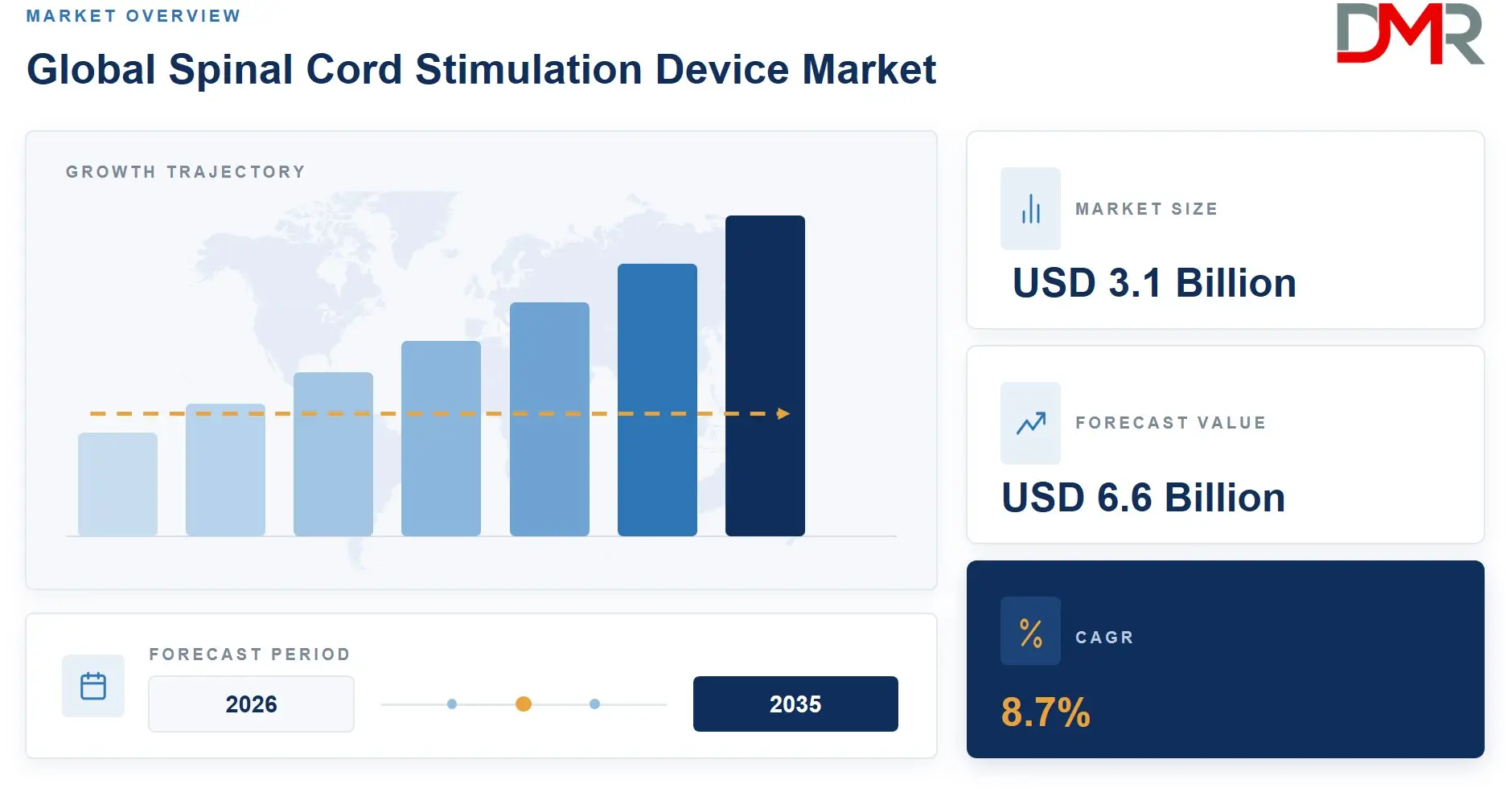
- Market Size (2026): USD 3.1 Bn
- Forecast Value (2035): USD 6.6 Bn
- CAGR (2026-2035): 8.7%
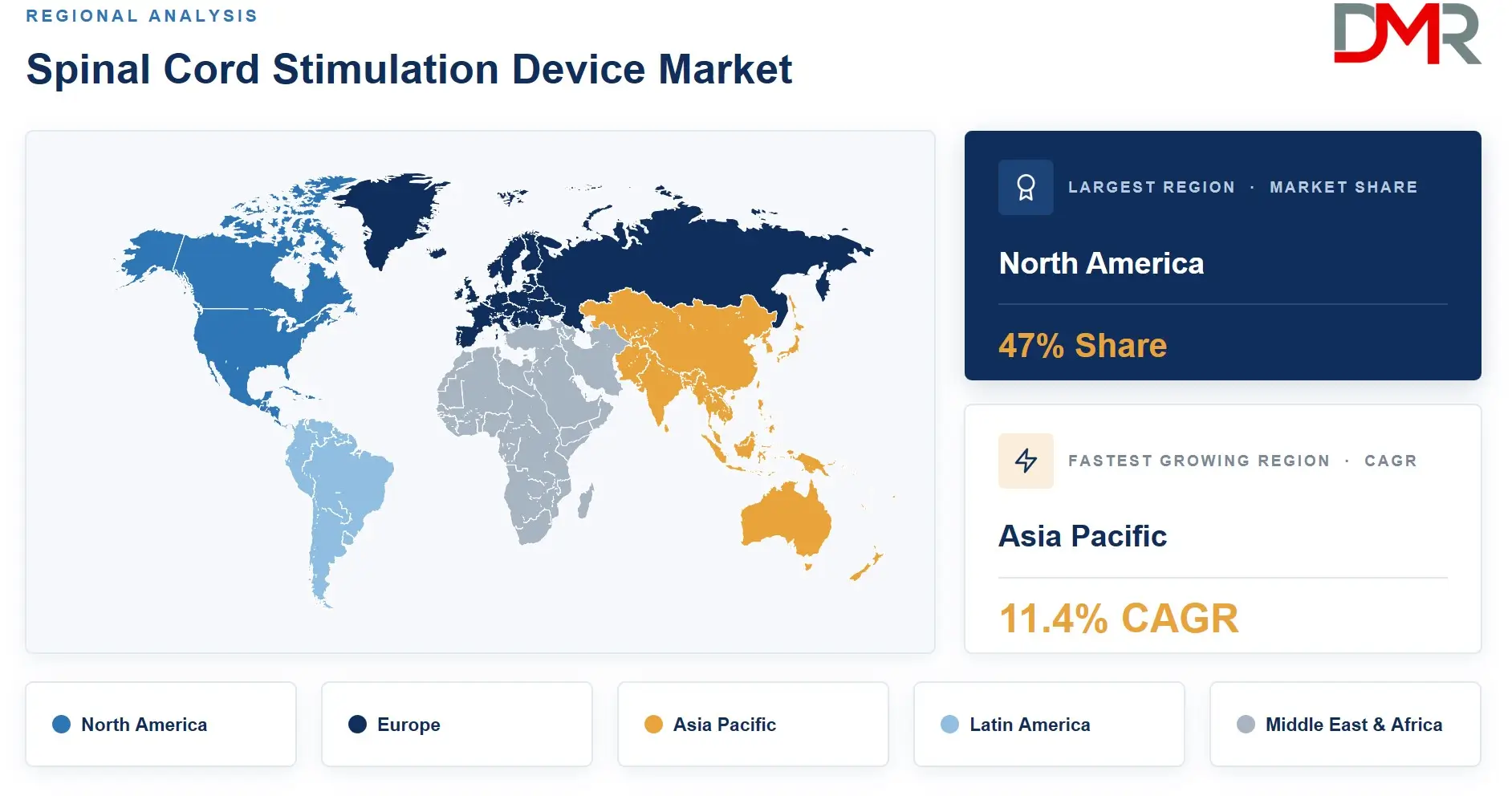
- Largest Region (2026): North America, approximately 47%
- Fastest-Growing Region: Asia-Pacific
- Leading Product (2026): Rechargeable Implantable Pulse Generators, around 38%
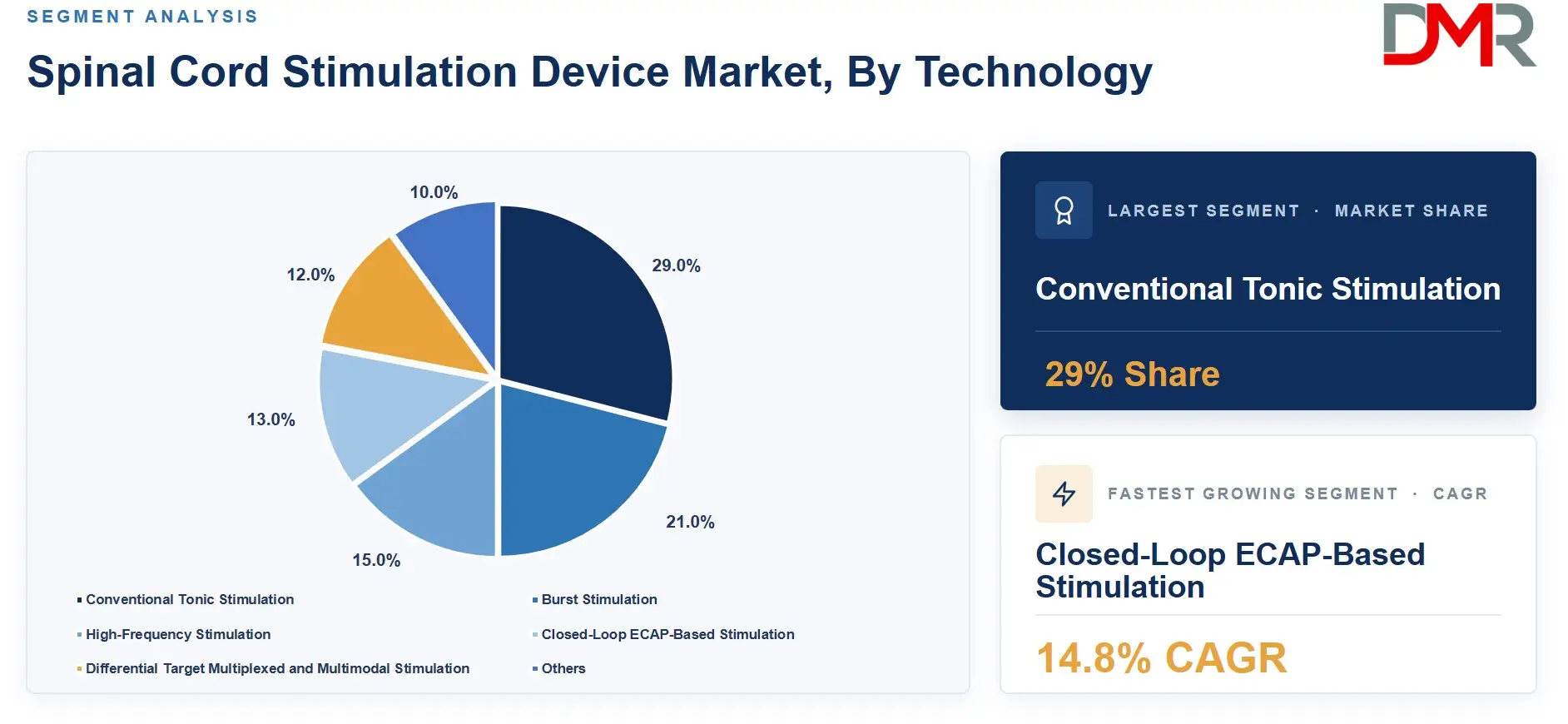
- Leading Technology (2026): Conventional Tonic Stimulation, close to 29%
- Key Players: Abbott, Medtronic, Boston Scientific Corporation and others
What is Spinal Cord Stimulation Device Market and its Market Size?
Global Spinal Cord Stimulation Device Market size is estimated to reach USD 3.1 Bn in 2026 and is further anticipated to reach USD 6.6 Bn by 2035, at a CAGR of 8.7%.
ℹ
To learn more about this report –
Download Your Free Sample Report Here
Spinal cord stimulation devices are implantable neuromodulation systems used to manage chronic, treatment-resistant pain by delivering controlled electrical pulses to neural structures in the dorsal spinal cord. A complete therapy pathway generally includes a temporary trial, implanted leads, an implantable pulse generator, clinician programming tools, patient controls, charging equipment where applicable, and follow-up programming. The commercial boundary of this industry includes implantable systems and directly associated hardware and software, while excluding peripheral nerve stimulation, deep brain stimulation, and non-invasive electrical pain therapies unless they are supplied as part of an SCS platform.
Demand is concentrated among patients whose pain persists despite medication, physical therapy, injections, surgery, or other conservative interventions. Pain specialists, anesthesiologists, neurosurgeons and spine surgeons influence device selection, while hospitals and ambulatory surgical centers control a large share of procurement. Clinical choice increasingly depends on waveform flexibility, MRI access, battery burden, lead design, programming efficiency, evidence by pain phenotype, and the ability to maintain a consistent therapeutic dose as posture and activity change.
Structurally, competition is moving from simple open-loop pulse delivery toward sensing, closed-loop adjustment, high-frequency stimulation, burst patterns and multiplexed programming. Manufacturers are also reducing implant size, extending battery life and shifting more follow-up activity into connected programming workflows. These changes broaden the addressable patient pool but raise the evidence threshold because payers and physicians increasingly expect durable functional improvement, fewer reprogramming visits and lower revision burden rather than pain-score improvement alone.
Use Cases
- Post-Surgical Neuropathic Pain Management: Multidisciplinary pain centers deploy SCS after persistent spinal pain continues despite decompression, fusion, medication and rehabilitation. A successful trial can move the patient toward permanent implantation, with programmable stimulation intended to reduce pain interference and improve daily function without another structural spine operation.
- Painful Diabetic Neuropathy Programs: Endocrinology-linked pain practices and hospital neuromodulation teams use SCS for selected patients with refractory lower-extremity neuropathic pain. The device adds an interventional option when pharmacologic therapy is inadequate, creating a new referral pathway between diabetes care, pain medicine and implanting specialists.
- Non-Surgical Refractory Back Pain: Spine centers evaluate patients who have severe chronic back pain but are not appropriate candidates for corrective surgery. SCS gives clinicians a reversible trial-based pathway before permanent implantation, allowing treatment response to be assessed before the hospital commits to the full implant episode.
- Complex Regional Pain Syndrome Care: Specialty pain clinics use SCS in carefully selected patients with persistent neuropathic limb pain, sensory disturbance and functional limitation. Programmable systems allow clinicians to tailor stimulation as symptoms and activity patterns change, while long-term follow-up focuses on sustained function, device integrity and revision avoidance.
Key Takeaways
- Market Size & Share: Global revenue is forecast to reach USD 6.6 Bn by 2035 as implant volumes and higher-value sensing platforms expand.
- Technology Analysis: Closed-Loop ECAP-Based Stimulation is projected to grow at a CAGR of 14.8% from 2026 to 2035.
- Regional Analysis: Asia-Pacific is expected to post the fastest regional CAGR at 11.4% through 2035 as specialist pain infrastructure expands.
- Application Mix: Persistent Spinal Pain Syndrome and Failed Back Surgery Syndrome is set to represent roughly 36% of 2026 revenue.
- Care Setting: Hospitals are projected to account for approximately 42% of end-user revenue in 2026.
- Channel Shift: Digital and Remote Support Channels are expected to expand at a CAGR of 12.2% between 2026 and 2035.
How AI/Gen AI is Transforming the Spinal Cord Stimulation Device Market?
AI is entering SCS mainly through programming support, patient stratification and operational analytics rather than autonomous clinical decision-making. Implant systems generate programming histories, stimulation parameters and, in sensing-enabled platforms, physiologic response data. Machine learning can organize these signals to help clinicians identify stable settings, detect patterns associated with inadequate therapy and reduce repetitive manual programming steps. The near-term value is therefore workflow compression and more consistent therapy management.
Generative AI has a narrower but useful role around documentation, patient education and service operations. It can summarize longitudinal device notes, structure adverse-event narratives, draft payer documentation from clinician-approved inputs and support field teams with searchable product knowledge. Any patient-facing or programming use still requires strong controls because implant therapy is safety-critical and regulated.
- Biomarker-Guided Programming: Algorithms can analyze evoked compound action potential patterns and programming responses to narrow the search space for therapeutic settings.
- Patient Selection Analytics: Predictive models can combine pain phenotype, prior procedures, functional measures and trial response to support multidisciplinary case review.
- Remote Service Triage: AI can prioritize device-support cases by symptoms, charging issues, impedance changes and programming history before a specialist contacts the patient.
- Regulatory Documentation: LLM-based document processing can organize complaint files, clinical evidence summaries and post-market records for human review.
Key Drivers in the Global Spinal Cord Stimulation Device Market
Growth is being pulled by a larger refractory-pain population and by device capabilities that make neuromodulation relevant to more clinical pathways.
- Expansion of Evidence-Backed Indications: Persistent spinal pain remains the largest application, with roughly 36% of 2026 revenue, but growth is increasingly supported by painful diabetic neuropathy and non-surgical refractory back pain. Each additional evidence-backed indication creates new referral routes beyond the traditional post-surgical patient. This matters commercially because implanting centers can build standardized screening and trial protocols around defined phenotypes rather than treating SCS as a last-resort procedure. As payer policies follow stronger comparative and durability evidence, manufacturers gain access to larger pools of patients who have failed conservative care but may not need another structural operation.
- Shift Toward Higher-Value Personalized Stimulation: Closed-loop ECAP-based stimulation is projected to grow at a CAGR of 14.8% through 2035, well above the overall market. The mechanism is practical: posture and movement change the distance between leads and neural tissue, so fixed-output therapy can feel inconsistent. Sensing platforms aim to measure neural response and adjust delivery, while other advanced systems use high-frequency, burst or multiplexed patterns to broaden programming choices. Hospitals may accept higher device prices when technology can reduce programming burden, support durable outcomes and differentiate a neuromodulation service line.
Restraints in the Global Spinal Cord Stimulation Device Market
Adoption is constrained by the invasive treatment pathway and by the economic consequences of variable long-term response.
- Revision, Explant and Long-Term Management Burden: Implantation does not end the treatment episode. Lead migration, infection, pocket discomfort, loss of efficacy, charging problems and hardware failure can require reprogramming, revision or removal. With hospitals expected to hold around 42% of 2026 end-user revenue, these downstream events affect operating-room capacity, clinical follow-up and total episode cost. Physicians therefore screen candidates carefully and may delay implantation when expectations are unrealistic or psychosocial and functional factors are unfavorable. Manufacturers face pressure to improve lead stability, battery reliability, MRI access and service responsiveness because a poor long-term experience can reduce referrals across an entire practice.
- Reimbursement Friction and Evidence Thresholds: SCS is a high-cost implant therapy that often requires prior authorization, documented conservative treatment failure, psychological assessment and a successful temporary trial. Specialty distributor networks still account for about 22% of 2026 channel revenue, reflecting the service intensity needed around implants, but payers increasingly scrutinize total cost and durability. Coverage variation can slow conversion from trial to permanent implant, especially for newer indications or premium stimulation modes. The commercial risk is that technical differentiation alone is insufficient; vendors must support comparative evidence, coding education, outcomes tracking and documentation workflows that fit payer requirements.
Growth Opportunities in the Global Spinal Cord Stimulation Device Market
White space is strongest where technology lowers follow-up burden or opens referral channels outside the historic failed-back-surgery population.
- Painful Diabetic Neuropathy Referral Networks: Painful diabetic neuropathy is expected to expand at a CAGR of 13.4% from 2026 to 2035, creating an opportunity to connect endocrinology, podiatry, neurology and pain medicine. The market impact extends beyond an additional indication. Vendors can develop patient-identification tools, referral education and center-of-excellence pathways that move suitable patients from medication-heavy management toward a structured SCS evaluation. The risk is uneven awareness and payer policy, but the opportunity is meaningful because diabetes care generates large, recurring patient populations and clear functional endpoints around sleep, mobility and lower-extremity pain.
- Ambulatory Implant and Remote Follow-Up Models: Ambulatory surgical centers are forecast to grow at a CAGR of 11.6% through 2035 as appropriate implant procedures migrate toward lower-cost outpatient settings. This creates demand for compact procedural kits, efficient trial workflows, simplified programming and reliable field support. Connected patient controllers and remote service triage can further reduce unnecessary clinic visits after implantation. Vendors that package hardware, training, reimbursement support and digital follow-up into a repeatable ASC model can expand beyond large academic hospitals, although patient selection and escalation protocols must remain rigorous for complex cases.
Trends in the Global Spinal Cord Stimulation Device Market
Technology competition is shifting from waveform claims toward measurable neural response, lower patient burden and service models that simplify lifetime device management.
- Closed-Loop Sensing Becomes a Core Competitive Axis: Closed-loop platforms represent about 13% of technology revenue in 2026 but are growing faster than conventional approaches. The important change is not simply automation. Sensing creates a feedback signal that can support more consistent dosing across posture and activity, giving manufacturers a new basis for clinical evidence and programming design. Competitors are responding with their own combinations of sensing, adaptive algorithms and multimodal therapy. Over time, buyers are likely to compare systems on the quality of feedback, programming efficiency, battery consequences and demonstrated functional outcomes rather than on waveform labels alone.
- Recharge Burden and MRI Access Shape Product Choice: Rechargeable implantable pulse generators account for around 38% of product revenue in 2026, while recharge-free systems remain relevant for patients who prioritize simplicity. The product trend is toward smaller implants, longer intervals between charging, faster recharge and broader conditional MRI access. These features influence lifetime satisfaction because chronic-pain patients often need diagnostic imaging for unrelated conditions. Device makers are therefore treating energy management, lead compatibility and MRI workflow as strategic design variables. This shifts competition toward the full ownership experience, not only stimulation performance during the initial trial.
Research Scope and Analysis
Segment performance is assessed across product, technology, application, end user and distribution channel. Each axis identifies where 2026 revenue is concentrated and which sub-segment is moving fastest through 2035, linking the numbers to procurement, clinical practice and technology adoption.
ℹ
To learn more about this report –
Download Your Free Sample Report Here
By Product
Rechargeable Implantable Pulse Generators are projected to lead product revenue in 2026 with around 38%, supported by their fit with energy-intensive high-frequency and advanced multi-program therapy, as well as patient demand for smaller implants with long service life. Their installed base also pulls recurring demand for chargers, controllers and replacement accessories. Growth is also concentrated in rechargeable systems, which are forecast to expand at a CAGR of 10.9% between 2026 and 2035 as battery density improves and recharge intervals become less burdensome. Non-rechargeable devices retain a meaningful role for patients who value minimal maintenance, but the ability to support complex waveforms without frequent surgical battery replacement gives rechargeable platforms a structural advantage in premium therapy categories.
By Technology
Conventional Tonic Stimulation is expected to hold the largest technology share in 2026 at close to 29%, reflecting a long clinical history, broad physician familiarity and a large installed base that continues to generate replacement and programming revenue. It remains useful where paresthesia-based coverage is acceptable and straightforward programming is preferred. Growth, however, is concentrated in Closed-Loop ECAP-Based Stimulation, advancing at a CAGR of 14.8% from 2026 to 2035. Sensing neural response allows the system to adjust therapy as the relationship between the lead and spinal cord changes with movement. The commercial pull comes from the prospect of more consistent dosing, lower manual adjustment burden and a stronger data layer for demonstrating therapy performance.
By Application
Persistent Spinal Pain Syndrome and Failed Back Surgery Syndrome is set to remain the largest application in 2026, representing roughly 36% of revenue because SCS has an established place in the treatment pathway for selected patients with chronic neuropathic back and leg pain after surgery. Referral patterns, payer criteria and specialist experience are deepest in this group. The steeper trajectory sits with Painful Diabetic Neuropathy, which is projected to grow at a CAGR of 13.4% through 2035. Expansion is being pulled by a large diabetes population, limited relief from medication for some patients and growing awareness of neuromodulation among non-spine specialists. Commercial success depends on building referral links between diabetes care and implanting pain centers.
By End User
Hospitals are projected to account for approximately 42% of end-user revenue in 2026, supported by access to operating rooms, imaging, anesthesia, infection management and multidisciplinary specialists needed for complex implant and revision cases. Large systems also have procurement scale and can support formal neuromodulation programs. Growth, however, is shifting toward Ambulatory Surgical Centers, expanding at a CAGR of 11.6% between 2026 and 2035 as suitable trials and permanent implants move into efficient outpatient settings. ASCs benefit from standardized workflows and lower facility cost, while manufacturers gain a scalable route into physician-led networks. The constraint is case selection, since patients with higher medical or surgical complexity may remain better suited to hospital-based implantation.
By Distribution Channel
Direct Hospital Sales are expected to lead distribution in 2026 with around 44% of revenue because SCS purchasing combines capital-like implant decisions with clinical education, procedure support, contracting and long-term account management. Major manufacturers therefore maintain direct specialist sales and field-clinical teams around high-volume centers. The fastest growth is expected in Digital and Remote Support Channels at a CAGR of 12.2% through 2035. These channels do not replace implant sales; they extend them through connected patient support, remote troubleshooting, education and software-enabled follow-up. As installed bases grow, service efficiency becomes commercially important. Vendors that resolve routine issues remotely can protect clinician time while keeping complex programming and safety decisions under qualified clinical oversight.
The Global Spinal Cord Stimulation Device Market Report is Segmented Based on the Following
By Product
- Rechargeable Implantable Pulse Generators
- Non-Rechargeable Implantable Pulse Generators
- External Trial Stimulators
- Leads and Extensions
- Programmers and Accessories
- Others
By Technology
- Conventional Tonic Stimulation
- Burst Stimulation
- High-Frequency Stimulation
- Closed-Loop ECAP-Based Stimulation
- Differential Target Multiplexed and Multimodal Stimulation
- Others
By Application
- Persistent Spinal Pain Syndrome and Failed Back Surgery Syndrome
- Complex Regional Pain Syndrome
- Painful Diabetic Neuropathy
- Non-Surgical Refractory Back Pain
- Ischemic and Neuropathic Limb Pain
- Others
By End User
- Hospitals
- Ambulatory Surgical Centers
- Specialty Pain Clinics
- Spine and Neurosurgery Centers
- Academic Medical Centers
- Others
By Distribution Channel
- Direct Hospital Sales
- Specialty Distributor Networks
- Group Purchasing and Integrated Delivery Networks
- Physician and Pain Center Contracting
- Digital and Remote Support Channels
- Others
Regional Analysis
Region with the Largest Revenue Share
North America is expected to remain the largest regional market, accounting for approximately 47% of global revenue in 2026. The concentration reflects high procedure volumes, established pain-specialist networks, broad availability of advanced implant systems and a reimbursement structure that supports trial-based neuromodulation for selected chronic-pain patients. The region also serves as the primary commercialization market for major SCS manufacturers, which accelerates physician training and introduction of new programming approaches. Competition is intense, however, and purchasing decisions increasingly depend on clinical evidence, MRI access, service quality and total management burden. As a result, revenue growth is tied as much to replacement cycles and indication expansion as to first-time adoption.
ℹ
To learn more about this report –
Download Your Free Sample Report Here
Region with the Highest CAGR
Asia-Pacific is forecast to record the highest regional CAGR at 11.4% from 2026 to 2035. Growth is supported by expanding private hospital capacity, a larger trained pain-management workforce and rising access to implantable neuromodulation in China, Japan, India, Australia and South Korea. The region starts from a smaller penetration base than North America, leaving room for procedure growth as referral pathways mature. Local manufacturers can also increase price competition in selected markets, while global vendors are expanding training and distribution coverage. Reimbursement remains uneven, so adoption will be strongest in metropolitan specialty centers and higher-income patient segments before broadening into national care pathways.
By Region
North America
Europe
- Germany
- France
- The UK
- Italy
- Spain
- Rest of Europe
Asia-Pacific
- China
- Japan
- India
- Australia
- South Korea
- Rest of APAC
Latin America
- Mexico
- Brazil
- Colombia
- Argentina
- Rest of LATAM
Middle East & Africa
- Saudi Arabia
- The UAE
- South Africa
- Rest of MEA
Competitive Landscape
Competition is concentrated around a small group of neuromodulation manufacturers with proprietary implant platforms, clinical evidence, regulatory approvals and field-support networks. Differentiation is moving toward closed-loop sensing, waveform portfolios, battery management, MRI conditionality, implant size and programming efficiency. Large incumbents use broad hospital relationships and reimbursement teams to defend accounts, while focused specialists compete through distinctive neural-response or stimulation technologies. Consolidation is also reshaping the field as larger musculoskeletal and medical-device companies add chronic-pain assets. Beyond branded implant vendors, a wider ecosystem of contract manufacturers, electrode and lead suppliers, precision component companies and electronics partners supports product development. The most defensible positions combine durable outcomes with a service model that reduces clinician workload across trial, implant, programming and long-term follow-up.
Some of the Prominent Players in the Global Spinal Cord Stimulation Device Market Are
- Abbott
- Medtronic
- Boston Scientific Corporation
- Globus Medical
- Saluda Medical
- Curonix
- Mainstay Medical
- SPR Therapeutics
- Nalu Medical
- Biotronik
- Beijing PINS Medical
- SceneRay Corporation
- GIMER Medical
- MicroPort NeuroTech
- Lepu Medical Technology
- Cirtec Medical
- Integer Holdings Corporation
- Resonetics
- Heraeus Medevio
- Phillips-Medisize
- TE Connectivity
- Molex
- Nordson MEDICAL
- Plexus Corp.
- Jabil
- Sanmina Corporation
- Celestica
- Flex
- Benchmark Electronics
- Viant
- Freudenberg Medical
- GW Plastics
- Trelleborg Healthcare & Medical
- Elkem
- Nitto Denko Corporation
- Nipro Corporation
- Terumo Corporation
- Nihon Kohden
- Stryker
- Zimmer Biomet
- Other Key Players
Recent Developments
- In June 2026, the FDA approved a firmware configuration update for Saluda Medical's Evoke implanted closed-loop stimulator, supporting continued lifecycle development of a sensing-based SCS platform and reinforcing software as an important part of implant performance.
- In April 2026, the FDA approved an Abbott manufacturing functional test intended to verify Bluetooth Low Energy communication before distribution of its SCS implantable pulse generators, highlighting the growing importance of wireless reliability in connected implant ecosystems.
- In March 2026, the FDA approved an Abbott manufacturing consolidation change for the Proclaim SCS implantable pulse generator, a supply-side move that can simplify production control for a high-volume neuromodulation platform.
- In April 2025, Globus Medical completed its acquisition of Nevro, bringing the HFX spinal cord stimulation platform into a broader musculoskeletal technology company and increasing strategic overlap between spine surgery and chronic-pain neuromodulation.
- In March 2025, Medtronic announced Canadian availability of the Inceptiv rechargeable closed-loop SCS system, extending real-time sensing and automatic stimulation adjustment into another developed pain-management market.
- In January 2025, Saluda Medical received FDA approval for its EVA automated programming platform for the Evoke system, adding biomarker-guided automation intended to reduce manual programming steps and clinician burden.
Report Details
| Report Characteristics |
| Market Size (2026) |
USD 3.1 Bn |
| Forecast Value (2035) |
USD 6.6 Bn |
| CAGR (2026-2035) |
8.7% |
| The US Market Size (2026) |
USD 1.1 Bn |
| Historical Data |
2021 - 2025 |
| Forecast Data |
2026 - 2035 |
| Base Year |
2025 |
| Segments Covered |
By Product, By Technology, By Application, By End User, and By Distribution Channel |
| Regional Coverage |
North America - The US and Canada; Europe - Germany, France, The UK, Italy, Spain, Rest of Europe; Asia-Pacific - China, Japan, India, Australia, South Korea, Rest of APAC; Latin America - Mexico, Brazil, Colombia, Argentina, Rest of LATAM; Middle East & Africa - Saudi Arabia, The UAE, South Africa, Rest of MEA |
Frequently Asked Questions
How big is the Global Spinal Cord Stimulation Device Market?
▾ Global Spinal Cord Stimulation Device Market revenue is estimated at USD 3.1 Bn in 2026. Demand is supported by persistent neuropathic pain, expansion into additional indications and adoption of rechargeable and sensing-enabled implants. The figure covers implantable SCS systems and directly associated leads, trial equipment, programmers and accessories, rather than the broader universe of peripheral or non-invasive neuromodulation.
What is the growth rate of the Global Spinal Cord Stimulation Device Market?
▾ The industry is projected to grow at a CAGR of 8.7% from 2026 to 2035. Growth is being driven by greater use of neuromodulation after conservative therapy fails, new clinical pathways such as painful diabetic neuropathy and technology that improves programming flexibility. Reimbursement requirements, revision risk and variable long-term response prevent the category from growing at a frontier-technology pace.
Which region holds the largest share in the Global Spinal Cord Stimulation Device Market?
▾ North America is expected to hold the largest share in 2026 at approximately 47%. The region benefits from established pain-management networks, strong manufacturer commercialization, high use of implantable therapies and reimbursement pathways that support SCS trials and permanent implantation for selected patients. Replacement procedures and adoption of advanced closed-loop and multimodal systems also sustain a high revenue base.
Who are the key players in the Global Spinal Cord Stimulation Device Market?
▾ Key participants include Abbott, Medtronic, Boston Scientific Corporation, Globus Medical, Saluda Medical, Curonix and Beijing PINS Medical. Competition centers on therapy consistency, waveform choice, MRI conditionality, battery performance, implant size, clinical evidence and field support. The market also depends on specialized manufacturing and component suppliers that produce implantable electronics, leads, connectors, enclosures and precision medical assemblies.
Which technology segment is growing fastest in the Spinal Cord Stimulation Device Market?
▾ Closed-Loop ECAP-Based Stimulation is projected to be the fastest-growing technology segment, with a CAGR of 14.8% from 2026 to 2035. Its appeal comes from measuring neural response and adjusting stimulation as patient posture and activity change. The approach can reduce dependence on fixed output settings and gives manufacturers a data-rich platform for programming, evidence generation and therapy personalization.
What factors are limiting adoption of spinal cord stimulation devices?
▾ The main constraints are invasive implantation, infection and lead-related risks, variable durability of pain relief, revision or explant costs and payer requirements before permanent implantation. Patients also face long-term device-management considerations such as charging, MRI conditions and programming visits. These factors make candidate selection and trial response central to adoption, while pushing manufacturers to demonstrate functional outcomes and lower lifetime treatment burden.
What is the outlook for the Global Spinal Cord Stimulation Device Market through 2035?
▾ The Spinal Cord Stimulation Device Market is expected to move toward sensing-enabled, smaller and more connected implants while expanding beyond traditional post-surgical pain. Revenue is forecast to reach USD 6.6 Bn by 2035. Competitive advantage will increasingly depend on durable clinical outcomes, simpler programming, lower recharge burden, broad imaging compatibility and service models that fit outpatient pain-care networks.