Market Snapshot
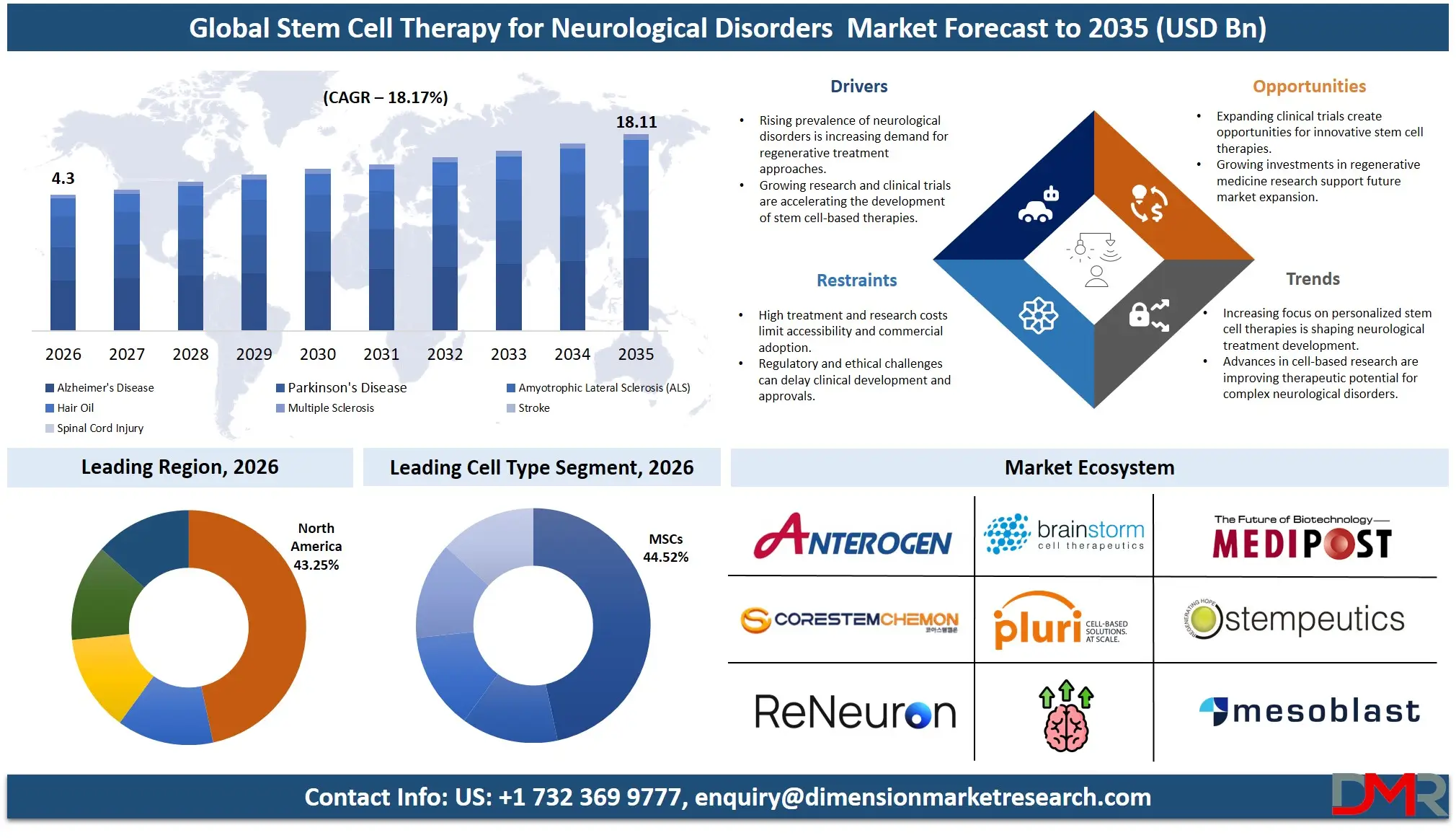
- Global Stem Cell Therapy for Neurological Disorders Market valued at USD 3.41 Billion in 2025, projected to reach USD 18.11 Billion by 2035 at a CAGR of 18.17%
- By Cell Type: Mesenchymal Stem Cells (MSCs) led with 44.52% revenue share in 2025
- By Disorder Type: Alzheimer's Disease captured 27.35% revenue share in 2025
- By Therapy Type: Allogeneic Stem Cell Therapy dominated with 67.21% revenue share in 2025
- By End-Use: Hospitals held 47.28% revenue share in 2025
- By Route of Administration: Intrathecal led with 40.25% revenue share in 2025
- By Region: North America held 43.25% revenue share in 2025
Market Overview
The Stem Cell Therapy for Neurological Disorders Market covers cell-based interventions targeting conditions including Parkinson's disease, Alzheimer's disease, amyotrophic lateral sclerosis, multiple sclerosis, stroke, and spinal cord injury. Excluded from this scope are small-molecule drugs, gene therapies without a cellular delivery component, and surgical interventions that do not rely on stem cell transplantation. The market sits at the intersection of regenerative medicine and neurology, drawing investment from pharmaceutical companies, academic medical centers, and specialist biotech firms.
Clinical pipeline activity defines the competitive structure of Stem Cell Therapy for Neurological Disorders Market . As reported by Nature Cell Biology, a Phase I trial transplanting stem-cell-derived dopaminergic neurons enrolled 12 Parkinson's disease patients, generating early clinical evidence that is now attracting broader trial investment. Each successful early-phase readout lowers perceived development risk, pulling institutional capital toward later-stage programs and expanding the commercial pipeline faster than the overall neurology therapeutics sector.
Market Size and Forecast
ℹ
To learn more about this report –
Download Your Free Sample Report Here
The Global Stem Cell Therapy for Neurological Disorders Market size is estimated at USD 4.03 Billion in 2026 from USD 3.41 Billion in 2025, and is projected to reach USD 18.11 Billion by 2035, exhibiting a CAGR of 18.17% during the forecast period.
The 18.17% CAGR reflects a pipeline that has moved from preclinical proof-of-concept to pivotal trials within a compressed timeframe. As reported by Bayer and BlueRock Therapeutics, BlueRock initiated the first Phase III trial of bemdaneprocel in Parkinson's disease in 2025, with a planned enrollment of approximately 102 patients. A trial at this scale signals that the field has reached the clinical maturity needed to attract the manufacturing investment required for commercial-scale supply.
Efficacy data underpins the forecast. Research published in Nature reports that high-dose patients in a Phase I Parkinson's study achieved an average 23-point improvement in MDS-UPDRS Part III OFF motor scores, with graft survival and clinical follow-up confirmed at 18 months. Outcomes at this magnitude shift the probability-adjusted commercial value of late-stage programs and justify the premium valuations applied to pipeline assets across the sector.
Cell Type Analysis
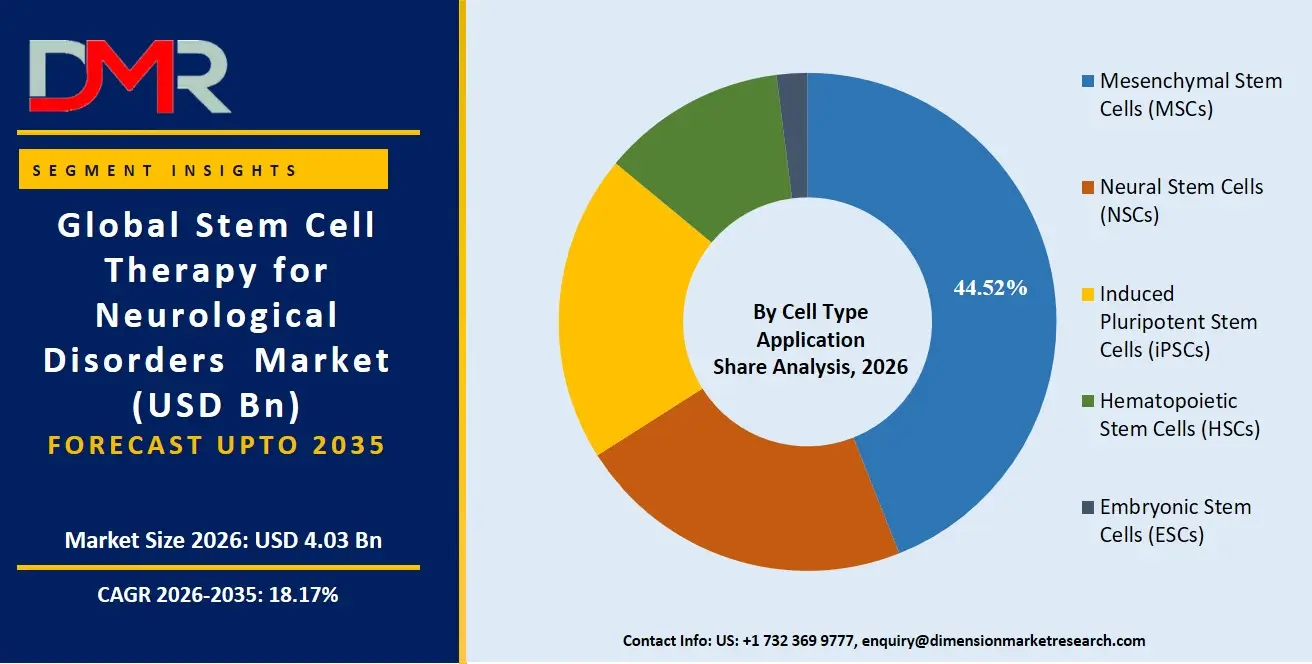
MSCs accounted for 44.52% of Cell Type demand in 2026, the highest of any category.
ℹ
To learn more about this report –
Download Your Free Sample Report Here
Mesenchymal Stem Cells dominate because they combine immunomodulatory properties with an established allogeneic manufacturing pathway. Sponsors can produce MSC-based therapies at commercial scale without custom patient-matched batches, reducing per-unit cost and accelerating site deployment. Based on data from Hope Biosciences, Parkinson's patients in one clinical study received 200 million stem cells per infusion, a dose volume that requires robust upstream manufacturing capacity — a capability MSC producers have developed more fully than other cell type manufacturers.
Neural Stem Cells represent the fastest-growing sub-category, propelled by growing clinical evidence that NSC grafts can integrate structurally into damaged neural circuits rather than acting purely through paracrine signaling. Induced Pluripotent Stem Cells carry the highest long-term commercial potential within the segment because patient-derived iPSCs eliminate allogeneic rejection risk, though manufacturing cost per patient currently limits broad hospital adoption. Hematopoietic and Embryonic Stem Cells occupy narrower clinical niches, with HSCs more relevant to neuro-immune overlap conditions and ESCs constrained by regulatory and ethical barriers that compress their near-term addressable opportunity.
Disorder Type Analysis
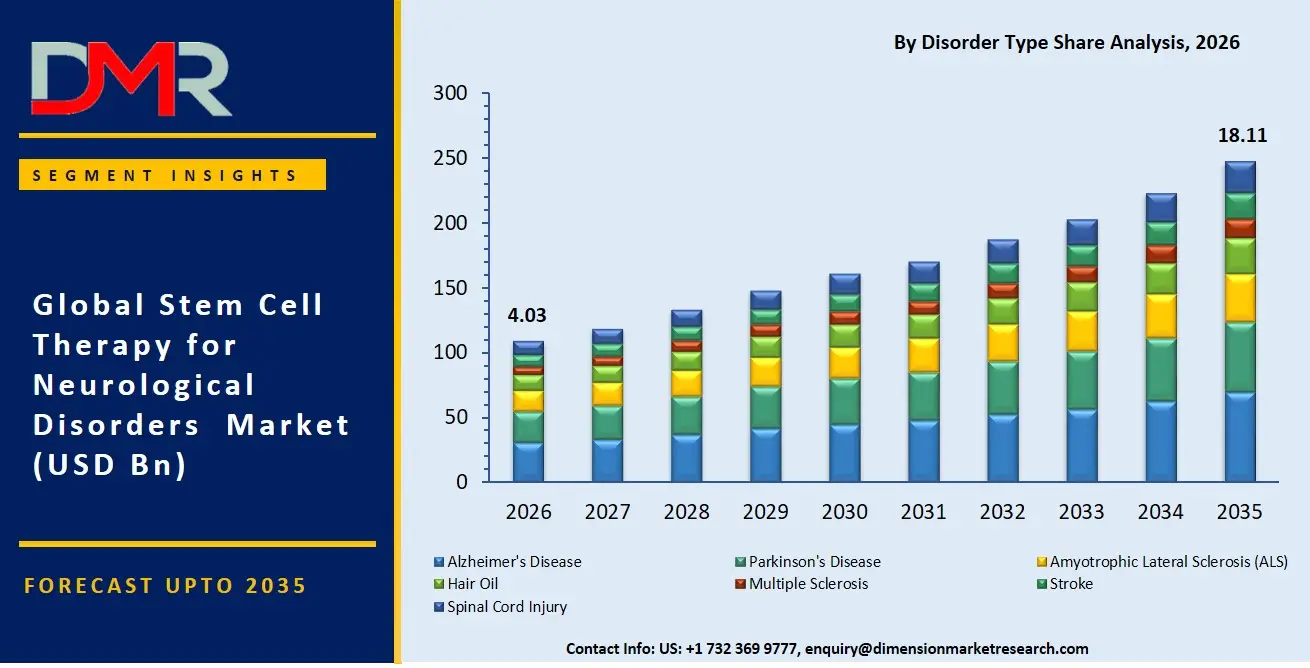
With a 27.35% share in 2026, Alzheimer's Disease outpaced all other Disorder Type categories.
ℹ
To learn more about this report –
Download Your Free Sample Report Here
Alzheimer's Disease leads because its patient population is large, its unmet need is clinically documented, and existing pharmacological options offer only symptomatic relief. Payers and health systems in high-income countries face escalating care costs for Alzheimer's patients, creating institutional pressure to fund curative-track alternatives. Stem cell programs targeting Alzheimer's benefit from established biomarker frameworks, including amyloid and tau markers, that allow trial sponsors to stratify patients and demonstrate proof-of-mechanism more efficiently than in conditions without validated endpoints.
Parkinson's Disease is the segment's fastest-growing disorder category. ALS and Multiple Sclerosis attract sustained academic and biotech investment despite smaller patient populations, because clear clinical staging tools allow sponsors to define tractable trial designs. Stroke and Spinal Cord Injury represent opportunities with distinct timing dynamics: stroke programs target acute intervention windows while spinal cord programs address chronic functional deficits. Vendors that develop disorder-specific delivery protocols will capture premium pricing relative to platforms pursuing broad-spectrum positioning.
Therapy Type Analysis
Allogeneic Stem Cell Therapy led the Therapy Type segment with a 67.21% share in 2026.
Allogeneic therapies hold two-thirds of the segment because off-the-shelf supply logistics allow hospitals to administer treatment without the multi-week lead time required for autologous manufacturing. For acute neurological conditions where intervention timing affects outcome, this delivery speed creates a clinical and commercial advantage that autologous approaches cannot currently replicate. BlueRock Therapeutics built its Phase III program around an allogeneic model specifically because hospital networks demanded inventory flexibility rather than made-to-order scheduling.
Autologous Stem Cell Therapy retains strategic relevance for conditions where immune rejection risk outweighs logistical cost. Patient-specific iPSC-derived programs at Mass General Brigham demonstrate that the autologous model remains scientifically viable. Vendors investing in automated cell processing and faster turnaround manufacturing will compress the cost differential between the two approaches, potentially shifting segment share toward autologous therapies by the mid-2030s.
End-Use Analysis
Hospitals captured 47.28% of the End-Use segment in 2026, ahead of all rivals.
Hospitals lead end-use because they house the neurology specialists, imaging infrastructure, and intensive care capability required to manage complex cell transplantation procedures and monitor post-infusion adverse events. Academic medical centers operating within hospital networks attract the clinical trial activity that generates real-world experience and builds institutional protocols, reinforcing hospital dominance over earlier-stage competitors.
Specialty Neurology Clinics are the fastest-growing end-use category, driven by outpatient administration models suited to intravenous delivery routes. Research Institutes and Academic Centers account for a meaningful share due to investigator-initiated trial activity. Regenerative Medicine Centers are an emerging category representing early-mover advantage for commercial-stage therapies as regulatory approvals accumulate outside Japan's existing conditional approval framework.
Route of Administration Analysis
A 40.25% share made Intrathecal the clear leader across Route of Administration categories in 2026.
Intrathecal delivery dominates because direct injection into the cerebrospinal fluid bypasses the blood-brain barrier, allowing higher cell concentrations to reach target neural tissue without systemic dose escalation. Neurology centers with existing lumbar puncture infrastructure can add intrathecal cell delivery with limited capital expenditure, reducing adoption friction for hospital procurement teams evaluating new therapy protocols.
Intravenous delivery is expanding rapidly because it eliminates the procedural complexity associated with intrathecal injection and enables outpatient administration. Intracerebral delivery remains a specialized route reserved for programs requiring precision placement of dopaminergic neurons in defined basal ganglia structures, as seen in bemdaneprocel's Phase III design. Route selection will increasingly become a product differentiation axis as competing cell therapies target the same disorders through divergent delivery strategies.
Key Market Segments
By Cell Type
- Mesenchymal Stem Cells (MSCs)
- Neural Stem Cells (NSCs)
- Induced Pluripotent Stem Cells (iPSCs)
- Hematopoietic Stem Cells (HSCs)
- Embryonic Stem Cells (ESCs)
By Disorder Type
- Alzheimer's Disease
- Parkinson's Disease
- Amyotrophic Lateral Sclerosis (ALS)
- Multiple Sclerosis
- Stroke
- Spinal Cord Injury
- Others
By Therapy Type
- Allogeneic Stem Cell Therapy
- Autologous Stem Cell Therapy
By End-Use
- Hospitals
- Specialty Neurology Clinics
- Research Institutes & Academic Centers
- Regenerative Medicine Centers
By Route of Administration
- Intrathecal
- Intravenous
- Intracerebral
- Others
Regional Analysis
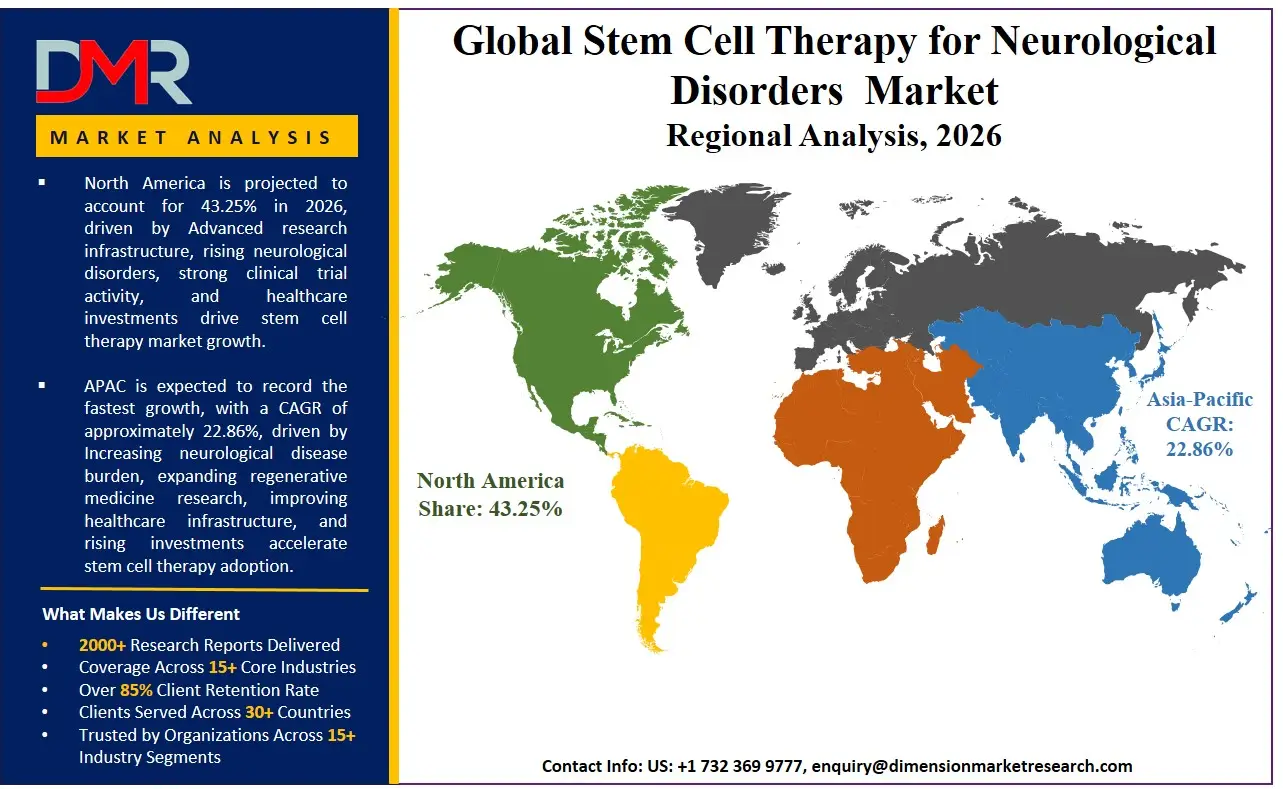
North America led all regions with a 43.25% revenue share in 2026, equivalent to USD 1.4 Billion in the US market alone.
North America dominates because US-based academic medical centers and biotech firms control the largest share of active Phase II and Phase III neurological cell therapy trials. Federal funding through NIH and a mature venture capital ecosystem sustain early-stage programs from discovery through clinical proof-of-concept, creating a pipeline depth that no other region replicates. Biopharma partnerships with academic centers embed commercial manufacturing know-how directly into clinical sites, accelerating the path from trial approval to commercial supply readiness.
ℹ
To learn more about this report –
Download Your Free Sample Report Here
Europe holds the second-largest position, anchored by Germany, the UK, and France, where national health systems provide centralized procurement channels that support technology uptake once conditional or full approvals are secured. Asia Pacific is the fastest-growing region: Japan's conditional approval mechanism has already enabled the first commercial iPSC-based neurological therapy, and China's domestic CRO and CDO sector is building cost-competitive trial infrastructure. Latin America and Middle East and Africa represent nascent markets where public health investment in neurology is concentrated in tertiary care centers within a small number of metropolitan areas, limiting near-term volume but offering long-run upside as insurance reimbursement frameworks develop.
Key Regions and Countries
North America
Europe
- Germany
- France
- The UK
- Spain
- Italy
- Rest of Europe
Asia Pacific
- China
- Japan
- South Korea
- India
- Australia
- Rest of APAC
Latin America
- Brazil
- Mexico
- Rest of Latin America
Middle East & Africa
- GCC
- South Africa
- Rest of MEA
Market Dynamics
Phase III Trials and Clinical Efficacy Data Validate Commercial Potential
Reuters confirms that more than 10 million people worldwide are currently living with Parkinson's disease, establishing a large, defined patient population for which existing treatments deliver incomplete motor control. This population size gives payers and regulators a clear health economics mandate to support curative-track alternatives rather than chronic symptom management. Sponsors can construct commercial models on a conservatively addressable patient pool that represents material revenue at even modest penetration rates.
As reported by Yahoo Finance, Hope Biosciences documented a 9.82-point improvement in MDS-UPDRS motor scores in Parkinson's patients treated with mesenchymal stem cells, against only 0.50 points in the placebo group. An effect size of that magnitude translates directly into functional patient outcomes — reduced caregiver dependency and lower hospitalization frequency — that health technology assessment bodies can price into reimbursement decisions. In September 2025, BlueRock Therapeutics dosed the first patient in its Phase III exPDite-2 trial of bemdaneprocel, marking the first time an allogeneic stem cell therapy for Parkinson's reached pivotal trial scale globally.
Manufacturing Scale and Autologous Cost Barriers Limit Broad Access
Autologous iPSC manufacturing requires patient-specific cell reprogramming, quality testing, and cryopreservation logistics that currently generate per-patient costs well above reimbursable thresholds in most national health systems outside the US and Japan. Hospital procurement teams cannot absorb costs that are multiples of existing biologic therapy prices without demonstrated health economic superiority over existing standards of care. Until automated manufacturing platforms compress per-batch costs substantially, autologous programs will face adoption constraints in mid-income markets regardless of clinical efficacy.
Regulatory Acceleration Opens Commercial Pathways for Early-Stage Programs
As reported by the FDA, the agency received 91 Regenerative Medicine Advanced Therapy designation requests during fiscal year 2025 and granted 50 RMAT designations in the same period. The RMAT pathway provides rolling review, early FDA interaction, and priority review eligibility, compressing the typical regulatory timeline for qualifying programs. Sponsors that secure RMAT designation gain a structural advantage in time-to-market that translates into an extended period of commercial exclusivity before generics or biosimilar cell therapies can enter.
Japan's conditional approval framework has already produced the first commercial iPSC-based therapy for a neurological indication, establishing a reimbursement and post-marketing surveillance template that European regulators are studying as a model for conditional market authorization. Programs generating strong Phase I data now have multiple regulatory jurisdictions to approach in parallel, expanding the commercial window and reducing binary dependence on any single agency's decision timeline.
Market Trends
iPSC-Based Programs Converge on Autologous Precision and Scalable Off-the-Shelf Models
Clinical programs are bifurcating into two distinct commercial architectures. Mass General Brigham's autologous study, designed to enroll 6 Parkinson's patients per Mass General Brigham data, targets conditions where rejection risk justifies per-patient manufacturing. Allogeneic iPSC programs pursue biobanked universal-donor cell lines that replicate the supply-chain simplicity of conventional pharmaceuticals. Vendors that can credibly operate in both architectures will capture the widest hospital contracting opportunities as clinical evidence accumulates across both models in parallel.
Market Competition Overview
The Stem Cell Therapy for Neurological Disorders Market is fragmented at the clinical stage, with more than fifteen companies active across different cell types, disorder targets, and delivery routes. No single sponsor holds a dominant commercial position because no program has yet received full regulatory approval in a major Western market. Competition today occurs primarily at the clinical trial layer: companies race to generate Phase II and Phase III readouts that de-risk acquisition, out-licensing, or independent commercialization. Sponsors with Phase III programs command premium valuations because they sit closest to the revenue inflection point.
As reported by Reuters, Bayer invested approximately USD 250 Million in cell-therapy manufacturing infrastructure supporting advanced regenerative medicine programs. Capital commitments of that scale by large pharmaceutical companies signal that the competitive dynamic is shifting from biotech discovery to manufacturing capability. Firms that control end-to-end cell therapy production will hold structural advantages over those dependent on contract manufacturers, especially as commercial volumes scale and quality assurance requirements intensify post-approval.
Company Profiles
Aspen Neuroscience has built its competitive position on a fully autologous iPSC platform targeting Parkinson's disease. In November 2025, Aspen closed a $115 million Series C financing round to advance ANPD001 and expand clinical and manufacturing capabilities. Patient-specific cell manufacturing eliminates allogeneic immune suppression requirements, a clinical differentiator that Aspen uses to argue for superior long-term graft survival in reimbursement discussions. Dependency on individualized manufacturing pipelines remains the primary execution risk as the program advances toward pivotal trial design.
BlueRock Therapeutics operates as a Bayer subsidiary and has advanced bemdaneprocel, an allogeneic pluripotent stem cell-derived dopaminergic neuron therapy, to Phase III. Bayer's manufacturing infrastructure and global regulatory capabilities give BlueRock a commercialization platform that pure-play biotechs cannot replicate independently. Mass General Brigham data confirmed that 3 of the planned 6 patients in a parallel autologous trial had received neuron transplants as of 2025, providing a competitive reference point that BlueRock must track closely as both programs generate comparative clinical data.
Key Players
- BrainStorm Cell Therapeutics
- Mesoblast
- ReNeuron Group
- Neuroplas
- Stempeutics Research
- CorestemChemon
- Medipost
- Anterogen
- Pluri
- Aspen Neuroscience
- BlueRock Therapeutics
- Century Therapeutics
- Fujifilm Cellular Dynamics
- Lineage Cell Therapeutics
- Sana Biotechnology
Supply Chain and Value Chain Analysis
The supply chain begins with cell sourcing either allogeneic donor material or patient-derived tissue for autologous programs — and progresses through reprogramming or expansion, quality control testing, cryopreservation, cold-chain logistics, and clinical administration. Maximum value is created at the cell engineering and quality assurance stages, where proprietary protocols for maintaining cell potency and viability differentiate premium suppliers from commodity contract manufacturers. The greatest bottleneck sits at clinical-grade manufacturing scale-up: most facilities currently operate at Phase II batch sizes, and few have completed the process validation required to meet commercial-scale GMP standards across multiple disorder indications.
Regulatory Landscape
The US FDA's RMAT designation pathway is the primary regulatory accelerant for the North American market. As reported by the FDA, the agency reviews RMAT designation requests within 60 calendar days, a compressed timeline that allows sponsors to confirm accelerated pathway eligibility early in development planning. RMAT designation opens rolling Biologics License Application review, significantly shortening the gap between Phase III completion and commercial approval. European regulators operate through the EMA's PRIME designation, which provides analogous early engagement but lacks the same statutory review timeline guarantees as the US pathway.
Japan's Act on the Safety of Regenerative Medicine and the Pharmaceutical and Medical Device Act together provide a conditional approval mechanism that has already enabled commercial iPSC-based therapy for a neurological indication. This framework requires post-marketing clinical data collection within defined timelines, creating a monitored commercial entry model that other regulators are assessing. Regulatory divergence across jurisdictions means sponsors must develop parallel submission strategies rather than sequential market entry plans, adding regulatory affairs complexity and cost that smaller biotechs struggle to absorb.
Investment and White Space Analysis
Investment is concentrating in allogeneic iPSC platforms and Phase III-stage Parkinson's disease programs because these carry the highest near-term probability of generating approval-dependent milestones that trigger partner payments or public market re-ratings. Autologous programs receive meaningful venture funding where clinical differentiation on immune rejection risk is credible, but institutional investors apply a cost-of-goods discount to valuations that constrains round sizes relative to allogeneic peers. Manufacturing infrastructure represents an underinvested category relative to clinical pipeline spending, creating white space for specialized CDOs that can offer process validation, scale-up, and GMP compliance services to biotech sponsors that cannot build captive facilities.
Geographically, Asia Pacific outside Japan is the most underserved region relative to patient population and economic growth trajectory. South Korea and Australia have regulatory frameworks capable of supporting cell therapy approvals but host fewer active late-stage programs than their healthcare infrastructure would support. Sponsors entering these markets with early regulatory engagement can establish precedent-setting approval pathways before competitive density increases. Alzheimer's disease remains underinvested relative to Parkinson's despite holding the largest disorder-type segment share, partly because the biological complexity of amyloid and tau pathology creates higher trial failure risk that institutional capital discounts heavily.
Report Details
| Report Characteristics |
| Market Value (2025) |
USD 3.41 Billion |
| Market Value (2026) |
USD 4.03 Billion |
| Forecast Revenue (2035) |
USD 18.11 Billion |
| CAGR (2026–2035) |
18.17% |
| Historical Data |
2020 – 2024 |
| Forecast Data |
2026 – 2035 |
| Base Year |
2025 |
| Estimate Year |
2026 |
| Report Coverage |
Revenue Forecast, Market Dynamics, Competitive Landscape, Recent Developments |
| Segments Covered |
By Cell Type (MSCs, NSCs, iPSCs, HSCs, ESCs); By Disorder Type (Alzheimer's Disease, Parkinson's Disease, ALS, Multiple Sclerosis, Stroke, Spinal Cord Injury, Others); By Therapy Type (Allogeneic, Autologous); By End-Use (Hospitals, Specialty Neurology Clinics, Research Institutes & Academic Centers, Regenerative Medicine Centers); By Route of Administration (Intrathecal, Intravenous, Intracerebral, Others) |
| Regional Coverage |
North America – US, Canada; Europe – Germany, France, UK, Spain, Italy, Rest of Europe; Asia-Pacific – China, Japan, South Korea, India, Australia, Rest of APAC; Latin America – Brazil, Mexico, Rest of Latin America; Middle East & Africa – GCC, South Africa, Rest of MEA |
| Prominent Players |
BrainStorm Cell Therapeutics, Mesoblast, ReNeuron Group, Neuroplas, Stempeutics Research, CorestemChemon, Medipost, Anterogen, Pluri, Aspen Neuroscience, BlueRock Therapeutics, Century Therapeutics, Fujifilm Cellular Dynamics, Lineage Cell Therapeutics, Sana Biotechnology, and Other Key Players |
| Customization Scope |
Customization for segments and region or country level will be provided. Additional customization can be done based on requirements. |
| Purchase Options |
Three license options: Single User License, Multi-User License (Up to 5 Users), and Corporate Use License (Unlimited Users and Printable PDF) |
Frequently Asked Questions
What is the biggest investment opportunity in Stem Cell Therapy for Neurological Disorders Market ?
▾ Cell therapy manufacturing infrastructure is the most underinvested category relative to clinical pipeline growth. Sponsors advancing toward Phase III trials require commercial-scale GMP manufacturing capacity that few CDOs currently provide, creating a structural gap that specialist suppliers can fill at premium margins. Allogeneic iPSC platform companies with validated biobanking and scale-up protocols represent the highest-value near-term entry point.
Who are the top companies in Stem Cell Therapy for Neurological Disorders Market ?
▾ BlueRock Therapeutics and Aspen Neuroscience are the two most clinically advanced companies, each operating at Phase III and Phase 1/2a respectively for Parkinson's disease. The broader competitive landscape includes BrainStorm Cell Therapeutics, Mesoblast, ReNeuron Group, Century Therapeutics, and Sana Biotechnology, among others. No single company holds a commercial approval in the US or EU as of 2025.
Which segment is growing fastest in Stem Cell Therapy for Neurological Disorders Market and why?
▾ Parkinson's Disease is the fastest-growing disorder type segment, driven by Phase III clinical activity and a confirmed patient population exceeding 10 million globally. Neural Stem Cells are the fastest-growing cell type because structural neural circuit integration offers a mechanism-of-action advantage over paracrine-dependent approaches for progressive neurodegenerative conditions. Both trends reinforce each other as NSC programs disproportionately target Parkinson's and ALS.
Which region is growing fastest in Stem Cell Therapy for Neurological Disorders Market and why?
▾ Asia Pacific is the fastest-growing region, anchored by Japan's conditional approval framework that has already enabled the first commercial iPSC-derived neurological therapy. China and South Korea are building trial infrastructure and domestic manufacturing capacity that will support local approval submissions within the forecast period. North America retains the largest absolute market share at 43.25%, but Asia Pacific's growth rate will outpace it through 2035.
What is the biggest challenge holding Stem Cell Therapy for Neurological Disorders Market back?
▾ Autologous manufacturing cost is the primary structural barrier preventing broad patient access outside high-income markets. Per-patient production costs exceed reimbursable thresholds for most national health systems, limiting commercial rollout to a small subset of tertiary care centers even after regulatory approval. Until automated cell processing platforms reduce per-batch costs to levels that health technology assessment bodies can accept, market penetration will remain concentrated in the US, Japan, and Germany.