Market Overview
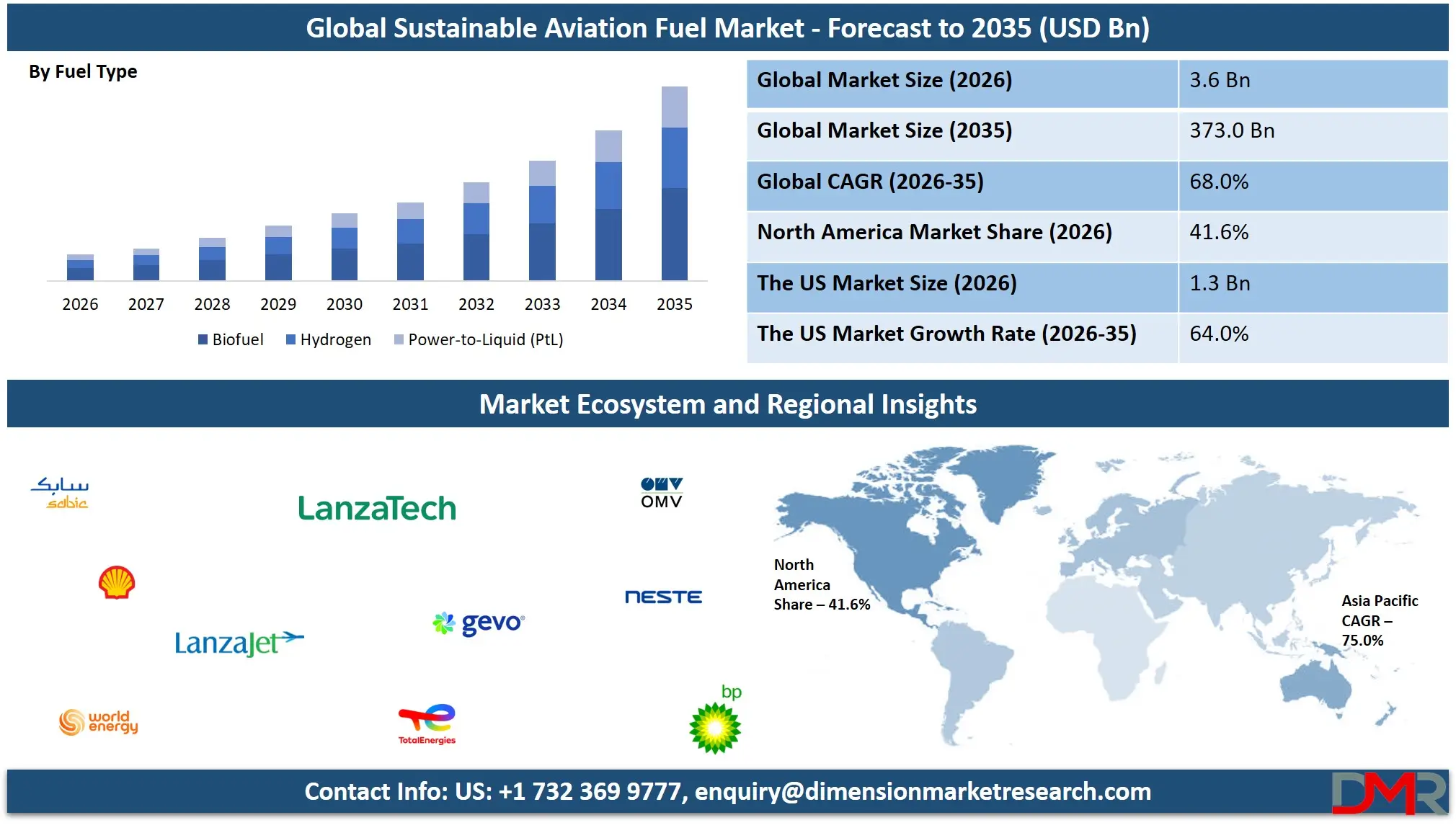
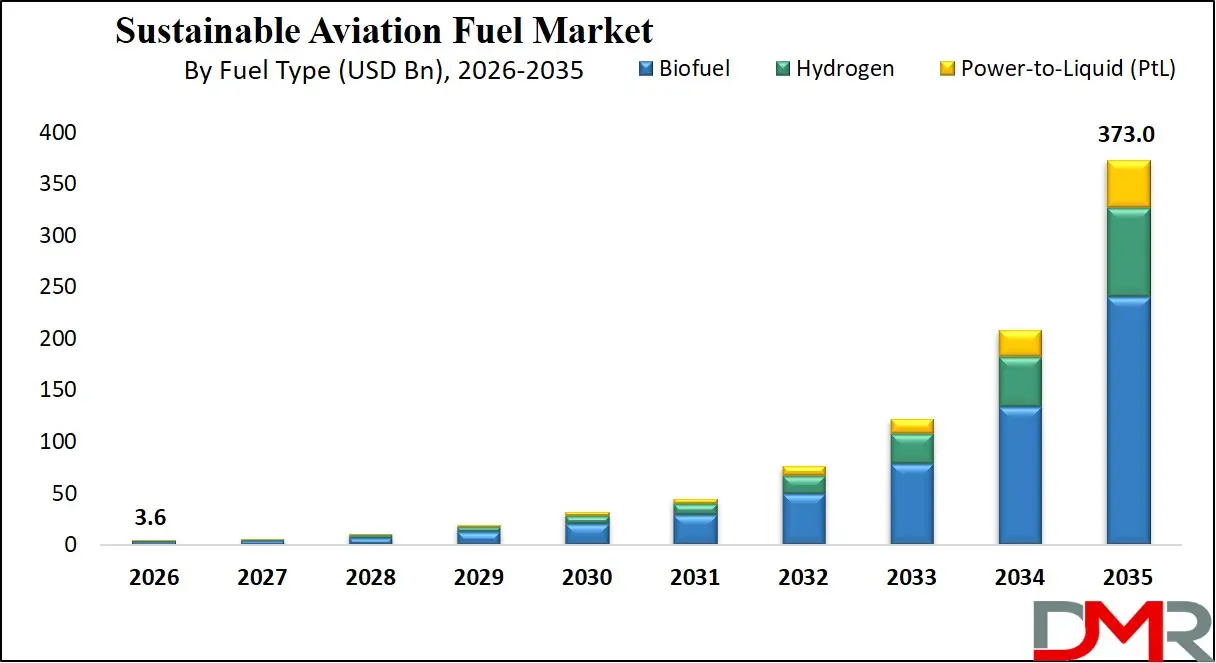
The Sustainable Aviation Fuel Market size is projected to reach USD 3.6 billion in 2026 and grow at a compound annual growth rate of 68.0% to reach a value of USD 373.0 billion in 2035, driven by emerging technologies such as power-to-liquid fuels is increasing feedstock opportunities, such as captured carbon emissions.
ℹ
To learn more about this report –
Download Your Free Sample Report Here
Sustainable Aviation Fuel can be instrumental in decarbonizing the aviation industry that is subjected to pressure of growing regulation and environmental concerns. New trends like advanced biofuel, power to liquid or government regulations are increasing the adoption of SAF around the world, and it is becoming a fundamental element of sustainable aviation.
ℹ
To learn more about this report –
Download Your Free Sample Report Here
The US Sustainable Aviation Fuel Market
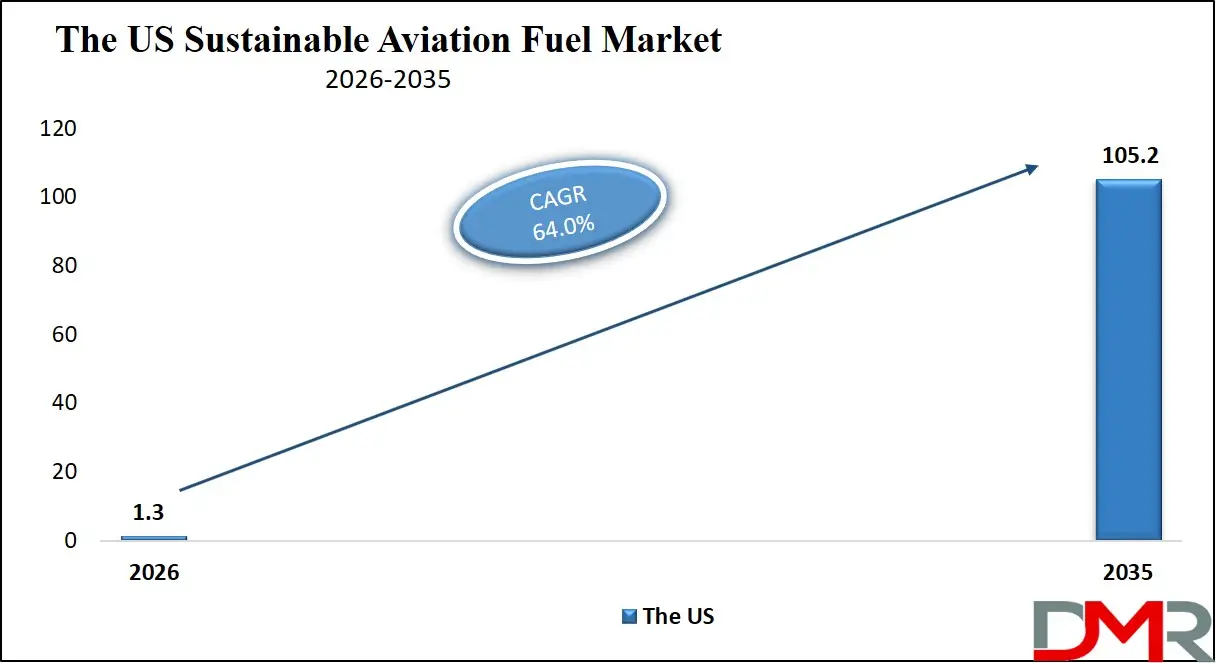
The US Sustainable Aviation Fuel Market size is projected to reach USD 1.3 billion in 2026 and grow at a CAGR of 64.0% during the forecast period.
ℹ
To learn more about this report –
Download Your Free Sample Report Here
The US SAF market is recording a good growth due to the federal incentives including tax credits in the Inflation Reduction Act and friendly policies by the aviation authorities. Large airlines and fuel companies are spending a lot of money on SAF production capacity and supply contracts. The availability of sophisticated biofuel technology, robust research and development, as well as alliances between the non-governmental bodies and the government are enhancing the growth of the market. Also, the growing corporate pledges to net-zero emissions are speeding up the demand of SAF in commercial and cargo aviation.
Europe Sustainable Aviation Fuel Market
The Europe Sustainable Aviation Fuel Market size is estimated to be USD 700 million in 2026 and its CAGR of 67.1% over the forecast period.
The SAF market in Europe is influenced by strict environmental policies and regulations such as the European Green Deal and ReFuelEU Aviation project. These requirements have led to the growing of SAF blending ratios, which has fuelled demand across member states. The area is highly innovative in terms of diversifying feedstock and synthetic fuels. The European countries are also investing in mass SAF production facilities and international collaboration. Nevertheless, the high cost of production and the constraint of feedstock is still a challenge even with rapid adoption fuelled by policy.
Japan Sustainable Aviation Fuel Market
Japan Sustainable Aviation Fuel Market size will be USD 144 million in 2026 and CAGR is 65.9% in the forecast period.
The SAF market in Japan is on the rise due to government-supported programs to become carbon neutral by 2050. The country is also concentrating on the domestic production of SAFs and establishing international relations to procure feedstock. Demand is undergoing growth due to urbanization and a powerful aviation network. Japan is also investing in new technology like hydrogen-based aviation fuel and power-to-liquid. Nevertheless, low availability of natural resources and high production cost is a challenge which promotes innovations and efficiency gains.
Sustainable Aviation Fuel Market: Key Takeaways & Influencing Factors
- Market Size & Forecast: The Sustainable Aviation Fuel Market size is projected to reach USD 3.6 billion in 2026 and is anticipated to have a value of USD 373.0 billion in 2035.
- Growth Rate & Outlook: The Sustainable Aviation Fuel Market size is set to grow at a compound annual growth rate of 68.0% during the forecast period of 2026 to 2035.
- Primary Growth Drivers: Some of the major growth drivers in the market include increasing regulatory pressure for decarbonization, advancements in fuel technologies, and more.
- Key Market Trends: Some of the major trends in the market are increasing adoption of blending mandates, digitalization & supply chain optimization, and more.
- By Fuel Type: The biofuel segment is anticipated to get the majority share of the Sustainable Aviation Fuel market in 2026.
- By End User: The airlines segment is expected to get the largest revenue share in 2026 in the Sustainable Aviation Fuel market.
- By Platform: The commercial aviation segment is expected to get the largest revenue share in 2026 in the Sustainable Aviation Fuel market.
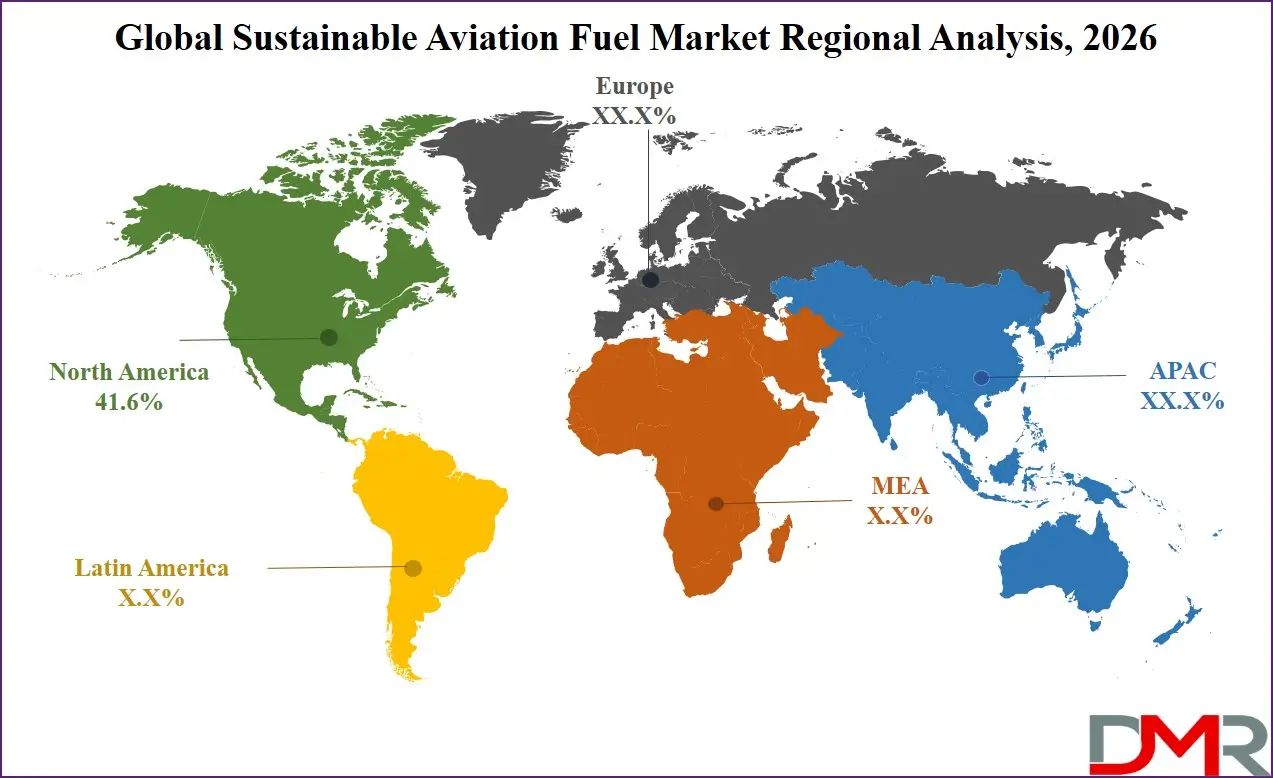
- Regional Leadership: North America is set to lead the Sustainable Aviation Fuel market with an estimated 41.6% share in 2026.
What is the Sustainable Aviation Fuel?
Sustainable Aviation Fuel (SAF) is the term used to describe alternative jet fuels that have renewable or waste-based feedstocks, which include used cooking oil, agricultural waste, municipal waste, and artificial sources like captured CO2. These fuels are primarily aimed at minimizing the environmentally harmful greenhouse gas emissions of the lifecycle relative to a conventional jet fuel and still be compatible with the existing aircraft engines and infrastructure.
Use Cases
- Commercial Aviation Decarbonization: SAF is widely used by airlines to reduce carbon emissions without modifying existing aircraft engines. It enables compliance with environmental regulations while maintaining operational efficiency and meeting sustainability targets.
- Military Aviation Applications: Defense sectors are adopting SAF to enhance energy security and reduce dependency on fossil fuels. It also aligns military operations with national climate goals while ensuring fuel reliability in diverse environments.
- Cargo and Logistics Operations: Cargo operators utilize SAF to lower emissions in freight transport, supporting greener supply chains. This is particularly important as global e-commerce growth increases demand for sustainable logistics solutions.
- Business & Private Aviation: Corporate jet operators are integrating SAF to meet ESG commitments and reduce carbon footprints. This segment is increasingly adopting higher blending ratios due to fewer regulatory constraints.
How AI Is Transforming the Sustainable Aviation Fuel Market
Artificial intelligence is changing the SAF production processes by optimizing the selection of feedstock, enhancing the efficiency of conversion, and lowering the cost of operation. With predictive analytics that are driven by AI, the demand forecasting and supply chain management can be improved, resulting in stable fuel supply and reducing wastage.
Moreover, AI can be used to improve research and development by enabling the identification of new pathways to fuels more quickly and enhancing lifecycle emission performance. It also facilitates real-time monitoring of production facilities resulting in improved efficiency, less downtime and better sustainability across the SAF value chain.
Market Dynamic
Driving Factors in the Sustainable Aviation Fuel Market
Increasing Regulatory Pressure for Decarbonization
Strict emission reduction targets on the aviation industry being introduced by governments across the globe are compelling airlines to use SAF. The regulatory frameworks, carbon pricing schemes, and blending requirements are pressurizing the stakeholders to shift to sustainable fuels. Regulatory pressure is a leading force in the development of the SAF market because they do not only generate demand, but also provide incentives to invest in production infrastructure.
Advancements in Fuel Production Technologies
The application of technological advancements in the processes of converting biofuels into usable fuels like HEFA, Fischer-Tropsch, and alcohol-to-jet is enhancing the efficiency of the yield and costs of production. The appearance of emerging technologies such as power-to-liquid fuels is increasing feedstock opportunities, such as captured carbon emissions. These developments are improving scalability and business feasibility, and are speeding up market acceptance and drawing investment in energy and aviation industries.
Restraints in the Sustainable Aviation Fuel Market
High Production Costs and Limited Scalability
The cost of production of SAF is still very high in comparison with conventional jet fuel because of advanced processing technologies and a low volume of the economy of scale. Large-scale production is also limited by feedstock availability and limitations in infrastructure. These issues remain obstacles to widespread adoption, particularly by smaller airlines, and need further policy backing and technological development to break.
Feedstock Supply Constraints
Sustainability in feedstocks like used cooking oil and agricultural residues is also low and in most cases, they are prone to competing interests by other industries. This establishes bottlenecks in the supply chains and volatile price fluctuations. Also, land use and resource distribution issues cause further sustainability challenges, which make feedstock sourcing more complicated and affect the development of the markets in the long term.
Opportunities in the Sustainable Aviation Fuel Market
Expansion of Power-to-Liquid and Synthetic Fuels
The production of synthetic SAF with renewable power and captured CO 2 is a significant growth potential. These fuels have almost infinite feedstock opportunities and can greatly lower lifecycle emissions. With the increase of renewable energy capacity across various places in the world, power-to-liquid technologies will become pivotal in the upscaling of SAF production.
Strategic Partnerships and Long-Term Offtake Agreements
Airlines, fuel producers, and governments are collaborating to establish a stable demand by signing long-term contracts on purchasing SAF. Such alliances minimize risks of investments and makes possible massive production ventures. These agreements play a vital role in establishing a strong SAF ecosystem, as well as having stable supply chains.
Trends in the Sustainable Aviation Fuel Market
Increasing Adoption of Blending Mandates
Governments are also instituting mandatory SAF blending requirements to increase the adoption. Such requirements are creating a steady demand and motivating airlines to adopt SAF in their business. This trend is especially high in Europe and North America, where the regulation systems are more developed.
Digitalization and Supply Chain Optimization
The incorporation of digital technologies is enhancing SAF supply chain transparency and efficiency. Sustainability credentials are being verified using blockchain and AI-based tracking systems, and logistics are optimized. This tendency increases the credibility of the stakeholders and promotes compliance with regulations.
Research Scope and Analysis
By Fuel Type Analysis
SAF that is based on biofuels takes a leading position in the market because of its developed production technologies and adherence to current aviation systems, taking up an estimated 64.3% market share in 2026. This segment is dominated by fuels based on HEFA due to their commercial maturity and the fact that they can utilize feedstocks such as used cooking oil, which is the most common solution worldwide. In the meantime, hydrogen fuel is taking the rapidest-expanding part as extra investments in hydrogen infrastructure and zero-emission flights get made. Power-to-liquid fuels are also becoming increasingly popular with better integration of renewable energy, it provides long-term scalability, energy diversification and can drastically lower lifecycle emissions in the aviation industry.
By Feedstock Analysis
Used Cooking Oil (UCO) continues to be the most popular feedstock segment with the estimated share at about 38.7% in market in the year 2026 owing to its popularity and affordability. UCO-based SAF is already established and has the backing of the already existing collection and refining infrastructure. Nevertheless, the most rapidly expanding feedstock to e-fuels is CO 2 feedstock, which is due to improved technology in carbon capture and utilization and is gaining interest in synthetic fuels. Residues of agricultural and forestry are also becoming considerations as alternative feedstocks, which contribute to decreasing dependence on a small amount of waste oils and increasing sustainability and allowing the diversification of the production in the region.
By Production Technology Analysis
The SAF market is dominated by HEFA-SPK technology that holds a 46.5% market share in 2026, due to its commercial readiness, efficiency, and scalability. It is highly employed because it has comparatively less complexity in production and it can be compatible with the current refinery system. Nevertheless, the most rapidly expanding one is PtL (Power-to-Liquid) because of the rise in renewable energy sources and the growing interest in carbon-neutral fuels based on green hydrogen and captured CO 2. Technologies of FT-SPK and ATJ-SPK develop as well, which contributes to the diversification of the SAF production pathways, long-term supply resilience.
By Blending Ratio Analysis
The segment of less than 30% blending ratio is set to be the market leader, with a share of about 57.2% in the year 2026 because it is within current regulatory approvals and aircraft certification requirements. Lower blends are favored by airlines because of cost efficiency, availability of fuel and flexibility in operations. The 50 percent segment above, however, will expand at a quick pace as technological progress, engine certification, and favorable regulations will allow more SAF to be used. This change will play a pivotal role in realizing more significant emission cuts and speeding up the process of a fully sustainable aviation activity within the next decade.
By Platform Analysis
The SAF market is characterized by commercial aviation, which holds an estimated 68.9 in 2026 due to the high amount of fuel consumption and growing sustainability pledges of world airlines. The industry is taking up SAF through long-term contracts and regulatory necessities. In the meantime, the quickest-growing is business and general aviation, with the personal operators being more flexible in implementing higher SAF blends and tend to be the first to embrace sustainability programs due to corporate ESG objectives and high service positioning.
By End User Analysis
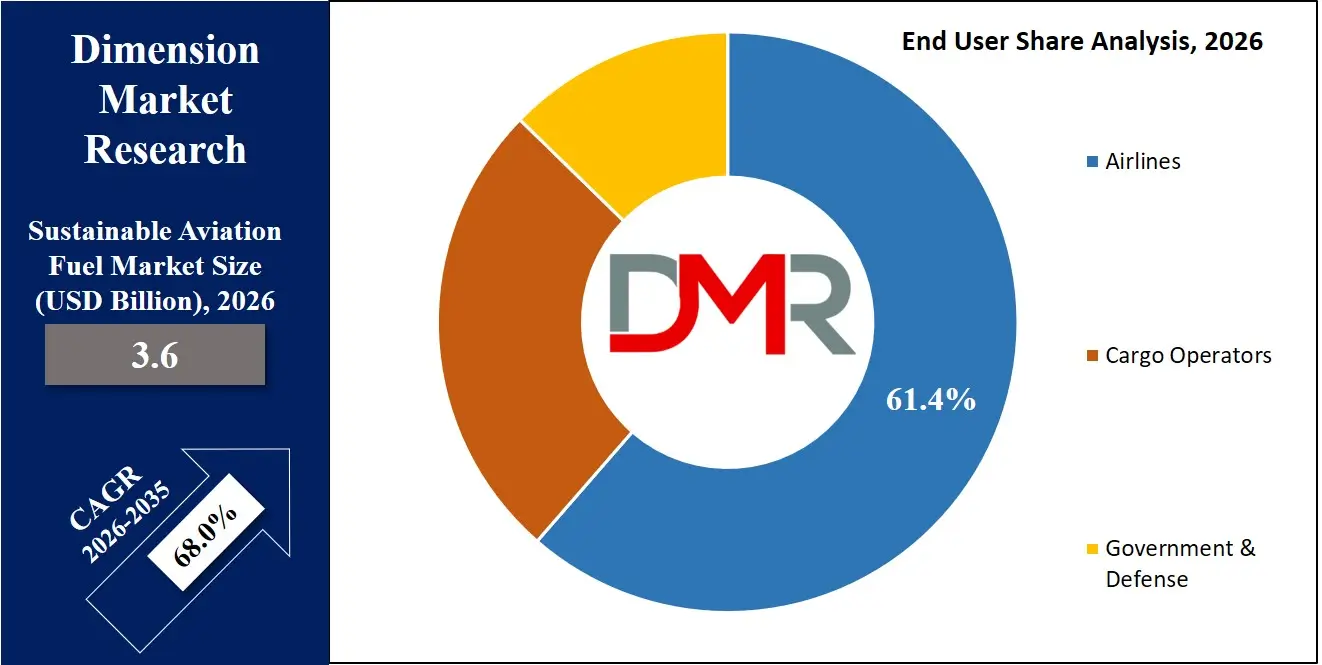
The biggest end-user segment is airlines which have approximately 61.4% market share in 2026 because they have direct contact with fuel consumption and emission targets. Key airlines are also developing strategic alliances with fuel producers and investing in SAF supply chains.
ℹ
To learn more about this report –
Download Your Free Sample Report Here
The quickest growing market is in government and defense sectors as it is driven by national energy security objectives, decarbonization requirements, and operational resiliency requirements. It is anticipated that, with more defense budgets and sustainability programs, SAF will even more gain ground in military aviation.
The Sustainable Aviation Fuel Market Report is segmented on the basis of the following:
By Fuel Type
- Biofuel
- HEFA-based
- FT-based
- ATJ-based
- Hydrogen Fuel
- Power-to-Liquid (PtL) Fuel
By Feedstock
- Used Cooking Oil (UCO)
- Animal Fats
- Agricultural Residues
- Forestry Residues
- Municipal Solid Waste
- CO₂ (for e-fuels)
By Production Technology
- HEFA-SPK
- FT-SPK
- ATJ-SPK
- PtL (Power-to-Liquid)
By Blending Ratio
- Below 30%
- 30% – 50%
- Above 50%
By Platform
- Commercial Aviation
- Military Aviation
- Business & General Aviation
By End User
- Airlines
- Cargo Operators
- Government & Defense
Regional Analysis
Leading Region in the Sustainable Aviation Fuel Market
North America is the highest region in the SAF market and is likely to have a market share of about 41.6% in 2026. The government has been very supportive of the region, through tax credits, subsidies and renewable fuel standards that promote SAF production and consumption. A rapid commercialization is supported by advanced biofuel infrastructure with a strong airlines and energy company investment. Moreover, the availability of major technology suppliers and ongoing innovations in the realm of R&D makes production more efficient. The dominant position of North America in the global SAF ecosystem is further enhanced by growing corporate sustainability commitments and the rising number of public-private partnerships.
ℹ
To learn more about this report –
Download Your Free Sample Report Here
Fastest Growing Region in the Sustainable Aviation Fuel Market
The fastest-evolving region of the SAF market is Asia-Pacific, where the economic development rate is high, the number of middle-income citizens and the need to travel by air are growing. SAF supply chains are being established through supportive policies and international collaborations made by governments across the region. Japan, and other emerging economies are spending on new production technologies and infrastructure. Also, the increase in environmental consciousness and the desire to be carbon neutral is driving airlines to embrace SAF. The high level of industrialization and increasing renewable energy potential in the region also makes it one of the prospective centers of SAF production and consumption.
By Region
North America
Europe
- Germany
- The U.K.
- France
- Italy
- Russia
- Spain
- Benelux
- Nordic
- Rest of Europe
Asia-Pacific
- China
- Japan
- South Korea
- India
- ANZ
- ASEAN
- Rest of Asia-Pacific
Latin America
- Brazil
- Mexico
- Argentina
- Colombia
- Rest of Latin America
Middle East & Africa
- Saudi Arabia
- UAE
- South Africa
- Israel
- Egypt
- Rest of MEA
Competitive Landscape
The SAF market is very competitive and entry barriers are very high because of the high capital requirements and complexity of technology. Firms are concentrating on strategic alliances, long term supply contracts and research and development investments to be able to attain a competitive advantage. One of the major points of differentiation is the feedstock usage and production technologies. Moreover, companies are increasing the number of units of production, and establishing partnerships with airlines and governments to secure their market share and stability of demand.
Some of the prominent players in the global Sustainable Aviation Fuel are:
- Neste
- TotalEnergies
- Shell
- BP
- World Energy
- Gevo
- LanzaTech
- LanzaJet
- Fulcrum BioEnergy
- Velocys
- SkyNRG
- Aemetis
- Red Rock Biofuels
- Green Plains
- Honeywell
- Chevron
- Repsol
- Eni
- OMV
- SABIC
- Other Key Players
Recent Developments
- In April 2026, the Sustainable Aviation Buyers Alliance (SABA) chose Project Atlas by Infinium to provide sustainable aviation fuel certificates via an advanced procurement. The project was selected among others with the American Airlines. It will have a planned capacity of 100,000 tonnes per year, reducing carbon intensity by 95 percent. Supported by multi-year offtake contracts, the project is to scale up the deployment of SAF, and its production should commence by 2029.
- In January 2026, Tangshan Jinlihai Biotechnology chose Topsoe as the supplier of technology to support a renewable fuels project. It will provide its Hydroflex 2 technology and services in a 300,000 tons/year industrial hub. When all the facilities are in place, it is estimated that the project will save approximately 700,000 metric tons of CO2e emissions annually, equal to the removal of approximately two million passenger flights between Beijing and Copenhagen.
- In May 2025, Wheels Up Experience Inc. introduced a Sustainable Aviation Fuel (SAF) program, which allows charter customers to contribute to aviation decarbonization. With this project, customers will be able to reserve individual or group flights by donating to the adoption of SAF. The company collaborates with Delta Air Lines to acquire SAF, which enables users to participate in it no matter the operator of the flight or the location of departure, but it can be easier to impact the environment less through the use of private aviation.
Report Details
| Report Characteristics |
| Market Size (2026) |
USD 3.6 Bn |
| Forecast Value (2035) |
USD 373.0 Bn |
| CAGR (2026–2035) |
68.0% |
| Historical Period |
2021 – 2025 |
| Forecast Period |
2027 – 2035 |
| Base Year |
2025 |
| Estimate Year |
2026 |
| Segments Covered |
By Fuel Type (Biofuel, Hydrogen Fuel, and Power-to-Liquid (PtL) Fuel), By Feedstock (Used Cooking Oil (UCO), Animal Fats, Agricultural Residues, Forestry Residues, Municipal Solid Waste, and CO₂ (for e-fuels)), By Production Technology (HEFA-SPK, FT-SPK, ATJ-SPK, PtL (Power-to-Liquid)), By Blending Ratio (Below 30%, 30% – 50%, and Above 50%), By Platform (Commercial Aviation, Military Aviation, and Business & General Aviation), By End User (Airlines, Cargo Operators, and Government & Defense) |
| Regional Coverage |
North America – The US and Canada; Europe – Germany, The UK, France, Russia, Spain, Italy, Benelux, Nordic, & Rest of Europe; Asia-Pacific – China, Japan, South Korea, India, ANZ, ASEAN, Rest of APAC; Latin America – Brazil, Mexico, Argentina, Colombia, Rest of Latin America; Middle East & Africa – Saudi Arabia, UAE, South Africa, Turkey, Egypt, Israel, & Rest of MEA |
Frequently Asked Questions
How big is the Sustainable Aviation Fuel Market?
▾ The Sustainable Aviation Fuel Market size is expected to reach USD 3.6 billion by 2026 and is projected to reach USD 373.0 billion by the end of 2035.
What is the CAGR of the Sustainable Aviation Fuel Market from 2026 to 2035?
▾ The market is growing at a CAGR of 68.0 percent over the forecasted period.
What factors are driving the growth of the Sustainable Aviation Fuel Market?
▾ Increasing regulatory pressure for decarbonization, advancements in fuel technologies, and more are the factors driving the growth of the Sustainable Aviation Fuel Market.
What are the major trends in the Sustainable Aviation Fuel Market?
▾ Increasing adoption of blending mandates, digitalization & supply chain optimization, and more are some of the major trends in the market.
Who are the key players in the Sustainable Aviation Fuel Market?
▾ Some of the key players in the Sustainable Aviation Fuel Market include Neste, Shell, BP, and more.
How is the Sustainable Aviation Fuel Market segmented?
▾ The Sustainable Aviation Fuel Market is segmented by fuel type, feedstock, production technology, blending ratio, platform, and end user.
Which region held the largest share of the Sustainable Aviation Fuel Market in 2026?
▾ North America is set to lead the Sustainable Aviation Fuel market with an estimated 41.6% share in 2026.
Which region is expected to grow the fastest in the Sustainable Aviation Fuel Market?
▾ Asia-Pacific is the fastest-growing region in the Sustainable Aviation Fuel market during the forecast period.