Sweden Pharmaceutical Market Snapshot
- Sweden Pharmaceutical Market Size in 2026: USD 6.21 billion
- Sweden Pharmaceutical Market Size in 2035: USD 9.70 billion
- Sweden CAGR from 2026 to 2035: 5.08%
- Prescription Drugs is the leading Drug Type segment in 2026: 87.3%
- Small Molecule Drugs is the leading Molecule Type segment in 2026: 63.5%
- Oral is the leading Formulation Type segment in 2026: 45.8%
- Cardiovascular Diseases is the leading Therapeutic Area segment in 2026: 15.1%
- Hospital Pharmacies is the leading Distribution Channel segment in 2026: 52.5%
What is the Sweden Pharmaceutical Market and Its Market Size?
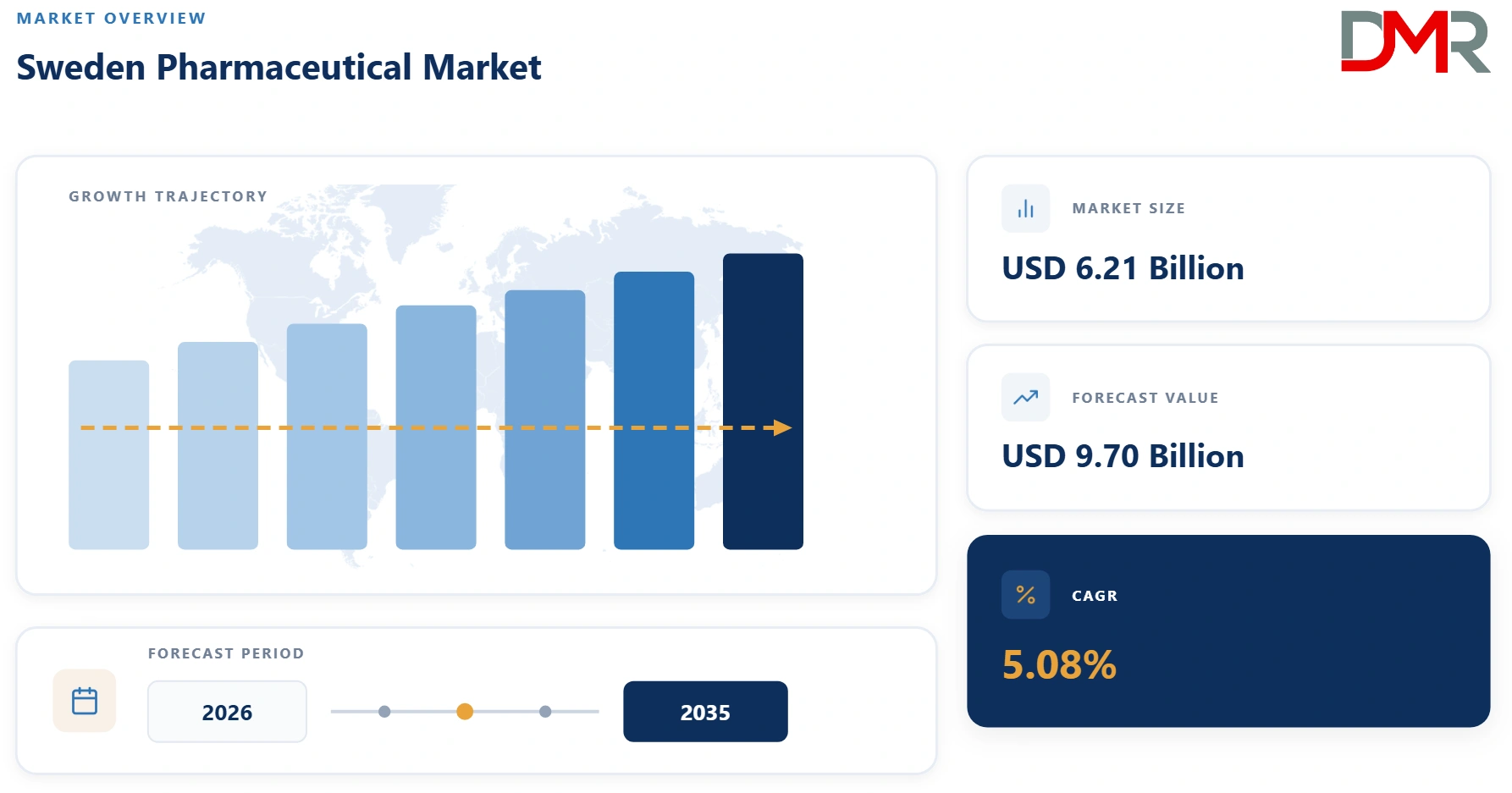
The Sweden Pharmaceutical Market is projected to reach USD 6.21 billion in 2026 and grow at a compound annual growth rate of 5.08% until 2035 to reach a value of USD 9.70 billion.
ℹ
To learn more about this report –
Download Your Free Sample Report Here
The market covers prescription and over-the-counter medicines supplied through hospitals, retail pharmacies, and digital channels across Sweden. Growth is supported by universal healthcare coverage, population aging, chronic disease prevalence, advanced pharmaceutical research, and demand for innovative therapies. Sweden has a strong life sciences ecosystem encompassing multinational manufacturers, domestic biotechnology companies, universities, clinical research centers, regulatory institutions, and technology-enabled pharmacy networks.
Use Cases
- Chronic Disease Management: Pharmaceutical products support the long-term management of cardiovascular disease, diabetes, respiratory disorders, neurological conditions, and inflammatory diseases. Physicians prescribe oral medicines, injectable therapies, and biologics to control symptoms, reduce complications, and improve patient outcomes. Sweden’s aging population, universal healthcare system, treatment guidelines, patient registries, and reimbursement mechanisms facilitate continued access to essential chronic disease therapies across care settings.
- Oncology Treatment: Hospitals and specialized cancer centers use cytotoxic medicines, targeted treatments, immunotherapies, monoclonal antibodies, and supportive care products across different cancer stages. Precision diagnostics increasingly guide therapy selection according to biomarkers and tumor characteristics. Expanding cancer incidence, screening programs, innovative reimbursement agreements, and participation in clinical research are supporting demand for advanced oncology medicines while creating opportunities for personalized and combination treatment approaches.
- Rare Disease Care: Specialized medicines address inherited, metabolic, hematological, immunological, and neurological disorders affecting comparatively small patient populations. Sweden’s national health registers, university hospitals, genomic capabilities, and specialist care pathways support patient identification and treatment monitoring. Orphan medicines, recombinant proteins, monoclonal antibodies, and gene-based therapies provide commercial opportunities, although high development costs, evidence requirements, and reimbursement negotiations influence market access and adoption.
- Self-Care and Digital Pharmacy: Consumers use non-prescription analgesics, allergy medicines, gastrointestinal treatments, dermatological products, vitamins, and smoking-cessation products for common health conditions. Retail and online pharmacies support product comparison, electronic prescription fulfilment, counseling, and home delivery. Sweden’s highly digitalized population and widespread electronic prescription infrastructure encourage omnichannel pharmaceutical access, while regulatory oversight protects medicine quality, appropriate advertising, patient safety, and responsible self-medication practices.
Key Takeaways
- Market Size: The Sweden Pharmaceutical Market is anticipated to be valued at USD 6.21 billion in 2026 and is forecast to reach USD 9.70 billion by 2035, expanding at a CAGR of 5.08%.
- Growth Outlook: Market expansion is supported by population aging, rising chronic disease treatment, growing oncology expenditure, advanced biologics, precision medicine, rare disease innovation, digital prescriptions, online pharmacies, clinical research capabilities, and the introduction of higher-value specialty medicines.
- Primary Growth Drivers: Increasing cardiovascular, oncology, metabolic, neurological, and immunological disease burdens are stimulating medicine demand. Universal healthcare coverage, patient registries, pharmaceutical research, digital healthcare infrastructure, favorable life sciences policies, and expanding access to innovative treatments are further supporting market development.
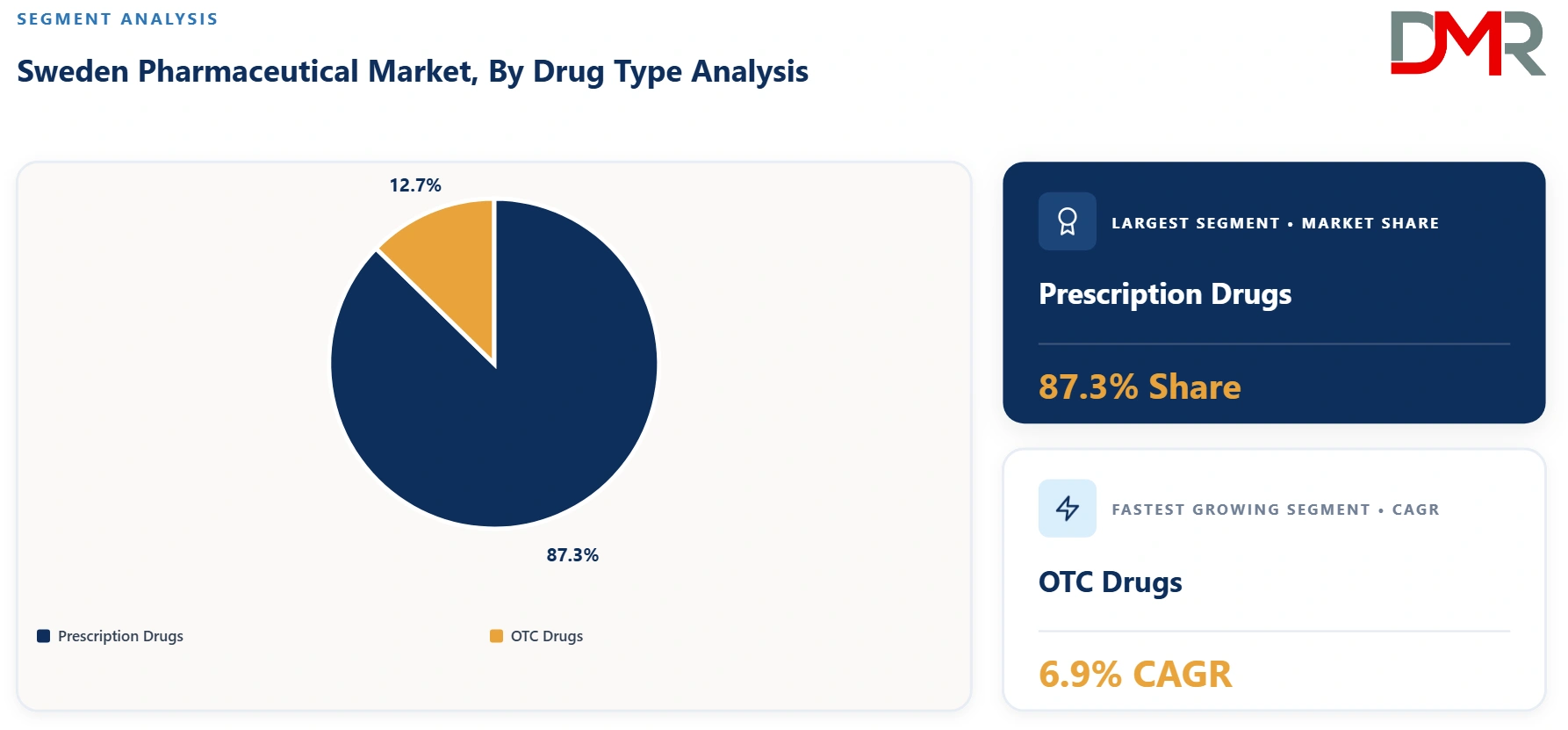
- By Drug Type Analysis: Prescription Drugs are projected to lead with an 87.3% share in 2026, supported by extensive reimbursement coverage and growing specialty medicine use. OTC Drugs are expected to record the highest CAGR of approximately 6.9%, driven by consumer self-care, digital pharmacies, and greater access to non-prescription treatments.
- By Molecule Type Analysis: Small Molecule Drugs are anticipated to dominate with a 63.5% share in 2026, reflecting their broad therapeutic availability, established manufacturing, and oral administration advantages. Biosimilars are projected to expand at the highest CAGR of approximately 8.1%, supported by biologic patent expirations and cost-containment initiatives.
- By Formulation Type Analysis: Oral formulations are expected to account for 45.8% of market revenue in 2026, supported by patient convenience and their extensive use in chronic disease management. Injectable formulations are likely to grow fastest at approximately 6.5% CAGR, driven by biologics, vaccines, oncology treatments, and long-acting therapies.
- By Therapeutic Area Analysis: Cardiovascular Diseases are projected to lead with a 15.1% share in 2026, reflecting considerable use of antihypertensive, lipid-lowering, antithrombotic, and heart failure medicines. Oncology is expected to record the highest CAGR of approximately 6.7%, supported by targeted therapies, immuno-oncology, and precision medicine.
- By Distribution Channel Analysis: Hospital Pharmacies are anticipated to dominate with a 52.5% share in 2026, reflecting the concentration of specialty and high-cost therapies in institutional care. Online and Mail-Order Pharmacies are projected to grow fastest at approximately 6.3% CAGR, supported by electronic prescriptions, home delivery, and digital adoption.
How Are AI and GenAI Transforming the Sweden Pharmaceutical Market?
AI and generative AI are improving drug discovery, molecular screening, clinical trial design, pharmacovigilance, demand forecasting, and personalized treatment development in Sweden. Pharmaceutical companies and research institutions use algorithms to identify therapeutic targets, predict candidate behavior, analyze real-world evidence, and select suitable trial participants. GenAI can accelerate medical writing, regulatory documentation, scientific literature assessment, and patient communication. Sweden’s health registers and digital infrastructure provide valuable research foundations, although responsible adoption requires strong privacy protection, explainability, cybersecurity, validated datasets, and compliance with European AI and pharmaceutical regulations.
Key Drivers in the Sweden Pharmaceutical Market
Aging Population and Expanding Chronic Disease Burden
Sweden’s aging demographic is increasing demand for medicines addressing cardiovascular disease, cancer, diabetes, neurological disorders, respiratory conditions, and multimorbidity. People aged 65 and older represented approximately 20.8% of Sweden’s population in 2025, creating sustained demand for long-term pharmacological management. Older patients frequently require multiple therapies, increasing prescription volumes while strengthening demand for adherence support and safer formulations. Pharmaceutical expenditure also increased by 36% in real terms between 2015 and 2025, according to TLV. Population aging, longer life expectancy, improved diagnosis, and earlier treatment initiation will continue supporting prescription and specialty medicine consumption.
Strong Digital Healthcare and Prescription Infrastructure
Sweden possesses one of Europe’s most developed digital healthcare environments, enabling efficient prescribing, dispensing, monitoring, and pharmaceutical access. Approximately 99% of prescriptions in Sweden are electronic, allowing patients to collect medicines from their preferred pharmacy and supporting more integrated medication management. Digital records, national quality registers, telemedicine, electronic identification, and online pharmacy platforms help reduce administrative friction and expand access, particularly for repeat prescriptions and chronic therapies. These systems also generate structured real-world data that can support outcomes research, safety monitoring, and reimbursement evaluation. Continued digitalization is strengthening online pharmaceutical distribution and enabling more personalized and data-informed care.
Restraints in the Sweden Pharmaceutical Market
Strict Pricing, Reimbursement, and Cost-Effectiveness Requirements
Sweden’s reimbursement environment emphasizes clinical benefit, cost-effectiveness, need, and responsible public spending. Pharmaceutical companies must demonstrate sufficient comparative value to receive reimbursement, particularly for expensive oncology, biologic, orphan, and advanced therapies. Negotiations, managed entry agreements, regional procurement, generic substitution, and confidential rebates can constrain realized prices and delay broad access. Pharmaceutical costs were forecast to rise from approximately SEK 38.7 billion in 2024 to SEK 46.4 billion in 2028, increasing pressure on authorities to control spending. Companies must generate Swedish real-world evidence and health-economic data to justify premium pricing while responding to regional budget limitations.
Complex Market Access for Specialty and Orphan Medicines
Advanced treatments for cancer, rare diseases, immunological disorders, and neurological conditions often carry high acquisition costs and uncertain long-term outcomes at launch. Small eligible populations make conventional evidence generation difficult, while regional implementation may produce differences in adoption. Manufacturers must address national reimbursement assessment, regional funding, hospital procurement, post-launch evidence requirements, and treatment pathway integration. Capacity limitations in diagnostic testing, specialist care, infusion services, and patient identification can further restrict uptake. These challenges are particularly important for gene therapies, cell therapies, personalized oncology medicines, and orphan drugs requiring complex administration or outcome-based payment arrangements.
Growth Opportunities in the Sweden Pharmaceutical Market
Expansion of Biologics, Biosimilars, and Precision Medicines
Biologics and precision medicines provide strong opportunities across oncology, immunology, rare diseases, hematology, and neurological care. Sweden’s academic research capabilities, biobanks, patient registries, molecular diagnostics, and clinical infrastructure can support biomarker-guided development and evidence generation. Meanwhile, patent expirations for major biologics create opportunities for biosimilar manufacturers to offer lower-cost alternatives and improve treatment access. Hospitals and reimbursement authorities are expected to encourage biosimilar competition where therapeutic equivalence is demonstrated. Companies combining innovative biologics with companion diagnostics, real-world evidence, and efficient market-access strategies can secure attractive positions while contributing to the sustainability of pharmaceutical expenditure.
Rare Disease and Neuroscience Innovation
Sweden offers an attractive environment for developing rare disease and neuroscience therapies due to specialist clinical expertise, advanced registries, genomic research, and internationally active domestic biotechnology companies. Businesses can target underserved patient groups through orphan medicines, monoclonal antibodies, recombinant proteins, RNA therapies, and drug-delivery technologies. BioArctic’s role in developing Leqembi and Sobi’s specialization in rare diseases demonstrate Sweden’s commercial and scientific capabilities. Opportunities also exist in earlier diagnosis, decentralized trials, patient identification, companion diagnostics, and cross-border Nordic studies. Partnerships between pharmaceutical companies, universities, hospitals, and biotechnology developers can accelerate development and international commercialization.
Trends in the Sweden Pharmaceutical Market
Shift Toward Specialty Medicines and Hospital-Based Treatment
Market value is increasingly influenced by specialty products used in oncology, immunology, hematology, rare diseases, and neurological care. These medicines frequently require specialist prescribing, biomarker testing, hospital administration, and structured monitoring, strengthening the role of hospital pharmacies. Oncology expenditure is expected to rise particularly quickly as targeted therapies, antibody-drug conjugates, immunotherapies, and combination regimens expand. The trend raises average treatment costs but can improve survival and disease control. Manufacturers are increasingly supporting launches through patient registries, outcomes-based evidence, diagnostic partnerships, and healthcare professional education to demonstrate value and facilitate appropriate use.
Rapid Development of Online and Omnichannel Pharmacy Services
Online pharmacies are expanding as consumers seek convenience, home delivery, digital counseling, and simplified repeat prescription fulfilment. Sweden’s electronic prescription penetration, reliable digital identity infrastructure, internet access, and established pharmacy brands support this transition. Digital channels are particularly useful for chronic medicines, OTC products, dermatology, allergy care, and consumer health purchases. Retail pharmacies are responding through omnichannel models connecting physical locations, mobile applications, digital prescriptions, and centralized fulfilment. Competition will increasingly depend on delivery speed, product availability, pricing transparency, patient support, data security, and responsible pharmaceutical counseling rather than store networks alone.
Research Scope and Analysis
Sweden Pharmaceutical Market is segmented by drug type into prescription and over the counter drugs, by molecule type into small molecules biologics and biosimilars, by formulation into oral injectable topical inhalation and others, by therapeutic area into oncology cardiovascular diabetes CNS infectious respiratory immunology rare diseases and others, by distribution through hospital retail and online pharmacies.
ℹ
To learn more about this report –
Download Your Free Sample Report Here
By Drug Type Analysis
Prescription Drugs are expected to lead the Drug Type segment with 87.3% of market revenue in 2026, supported by universal healthcare coverage, reimbursement, and extensive chronic disease treatment. Within this category, branded and specialty medicines generate substantial value. OTC Drugs are projected to record the highest CAGR of approximately 6.9%, exceeding the overall market CAGR due to growing self-care, pharmacy access, and digital purchasing.
By Molecule Type Analysis
Small Molecule Drugs are anticipated to dominate with a 63.5% share in 2026, reflecting their established use across cardiovascular, metabolic, infectious, neurological, and respiratory diseases. Biosimilars are expected to achieve the highest CAGR of approximately 8.1% through 2035. Their growth will be supported by biologic patent expirations, reimbursement pressure, hospital procurement, and policies encouraging economically sustainable access to biological therapies.
By Formulation Type Analysis
Oral formulations are projected to lead with a 45.8% market share in 2026, supported by convenience, treatment familiarity, scalable manufacturing, and widespread use in chronic disease management. Injectable formulations are forecast to record the highest CAGR of approximately 6.5%, above the overall market rate. Growth will be driven by monoclonal antibodies, vaccines, insulin, oncology medicines, and long-acting specialty therapies.
By Therapeutic Area Analysis
Cardiovascular Diseases are expected to dominate with a 15.1% share in 2026, supported by extensive use of medicines for hypertension, dyslipidemia, thrombosis, arrhythmia, and heart failure. Oncology is projected to register the highest CAGR of approximately 6.7% through 2035. Growth will reflect increasing cancer diagnoses, targeted therapy adoption, immuno-oncology, earlier treatment, biomarker testing, and expanding survival durations.
By Distribution Channel Analysis
Hospital Pharmacies are anticipated to lead with a 52.5% share in 2026, reflecting the institutional delivery of oncology products, biologics, orphan medicines, and other specialty therapies. Online and Mail-Order Pharmacies are projected to register the highest CAGR of approximately 6.3%. Electronic prescriptions, home delivery, digital counseling, and consumer preference for convenient medicine access will support channel expansion.
The Sweden Pharmaceutical Market Report Is Segmented Based on the Following
By Drug Type
- Prescription Drugs
- Branded Drugs
- Generic Drugs
- Specialty Drugs
- Over-the-Counter Drugs
By Molecule Type
- Small Molecule Drugs
- Biologics
- Monoclonal Antibodies
- Recombinant Proteins
- Other Biologics
- Biosimilars
By Formulation Type
- Oral
- Injectable
- Topical
- Inhalation
- Others
By Therapeutic Area
- Oncology
- Cardiovascular Diseases
- Anti-diabetic Disorders
- Central Nervous System Disorders
- Infectious Diseases
- Respiratory Diseases
- Immunology
- Rare Diseases
- Others
By Distribution Channel
- Hospital Pharmacies
- Retail Pharmacies
- Online and Mail-Order Pharmacies
Regulatory Landscape Analysis
The Swedish Medical Products Agency regulates medicine quality, safety, clinical trials, manufacturing, and pharmacovigilance, while the Dental and Pharmaceutical Benefits Agency evaluates reimbursement and pricing. European Medicines Agency authorization and EU pharmaceutical rules also shape product entry. Manufacturers must demonstrate clinical benefit, cost-effectiveness, ethical research practices, supply reliability, and appropriate risk management. Opportunities exist for innovative medicines addressing serious unmet needs, but demanding evidence standards can slow reimbursement. The evolving EU framework for clinical trials, health technology assessment, data governance, artificial intelligence, and pharmaceutical sustainability will affect development costs and commercialization strategies. Successful companies will align regulatory planning, market access, real-world evidence, and regional implementation early in development.
Pricing Analysis
Swedish pharmaceutical pricing is shaped by value-based reimbursement, generic substitution, hospital tenders, confidential rebates, international reference considerations, and regional budget management. Off-patent medicines face intense price competition through the substitution system, benefiting generic and biosimilar adoption but reducing supplier margins. Innovative products can receive higher prices when they demonstrate meaningful clinical improvement and acceptable cost-effectiveness. However, uncertainty around long-term outcomes often leads to managed entry agreements and evidence collection requirements. Rising expenditure on oncology, orphan drugs, and biologics will intensify pricing scrutiny. Manufacturers can improve access by offering outcomes-linked agreements, indication-specific evidence, transparent budget impact models, and efficient supply arrangements supporting equitable treatment across Swedish regions.
Competitive Landscape
The Sweden Pharmaceutical Market includes multinational pharmaceutical companies, domestic biotechnology specialists, generic manufacturers, and consumer health businesses. Competition centers on clinical differentiation, reimbursement access, patent-protected portfolios, specialty medicine pipelines, biosimilar pricing, supply reliability, and digital distribution. AstraZeneca maintains an important research and manufacturing presence, while Sobi is prominent in rare diseases and BioArctic in neuroscience. International companies compete strongly across oncology, diabetes, cardiovascular care, immunology, and vaccines. Strategic licensing, clinical partnerships, acquisitions, real-world evidence, and collaborations with Swedish hospitals and universities remain central competitive approaches.
Some of the Prominent Players in the Sweden Pharmaceutical Market Are
- AstraZeneca plc
- Swedish Orphan Biovitrum AB
- Pfizer Inc.
- Novartis AG
- Roche Holding AG
- Merck & Co. Inc.
- Sanofi S.A.
- Novo Nordisk A/S
- Eli Lilly and Company
- Johnson & Johnson
- GlaxoSmithKline plc
- Bayer AG
- Bristol Myers Squibb Company
- AbbVie Inc.
- Boehringer Ingelheim International GmbH
- Amgen Inc.
- Takeda Pharmaceutical Company Limited
- Astellas Pharma Inc.
- Gilead Sciences Inc.
- Biogen Inc.
- BioArctic AB
- Camurus AB
- Hansa Biopharma AB
- Calliditas Therapeutics AB
- Xbrane Biopharma AB
- BioInvent International AB
- Oncopeptides AB
- Orexo AB
- Moberg Pharma AB
- Vicore Pharma Holding AB
- Affibody Medical AB
- Ferring Pharmaceuticals
- Teva Pharmaceutical Industries Ltd.
- Viatris Inc.
- Sandoz Group AG
- Organon & Co.
- Lundbeck A/S
- Chiesi Farmaceutici S.p.A.
- CSL Limited
- Ipsen S.A.
- Other Key Players
Recent Developments
- August 2026: Sobi and Innate Pharma entered a strategic partnership to license lacutamab and support the TELLOMAK-3 confirmatory Phase III study in cutaneous T-cell lymphoma, including planned regulatory development for Sézary syndrome.
- May 2026: BioArctic reported continued advancement of its neurodegenerative disease portfolio and increasing commercialization-related income from Leqembi, the Alzheimer’s treatment developed with Eisai, strengthening Sweden’s position in neuroscience innovation.
- December 2025: Sobi agreed to acquire Arthrosi Therapeutics, adding the Phase III gout candidate pozdeutinurad to its pipeline. The transaction included USD 950 million upfront and potential milestone payments of up to USD 550 million.
- February 2025: The U.S. FDA granted Breakthrough Therapy Designation to lacutamab for relapsed or refractory Sézary syndrome, supporting accelerated development of a medicine subsequently partnered with Sweden-based Sobi.
Report Details
| Report Characteristics |
| Market Size (2026) |
USD 6.21 Bn |
| Forecast Value (2035) |
USD 9.70 Bn |
| CAGR (2026–2035) |
5.08% |
| Historical Data |
2021 – 2025 |
| Forecast Data |
2026 – 2035 |
| Base Year |
2025 |
| Segments Covered |
By Drug Type, By Molecule Type, By Formulation Type, By Therapeutic Area, By Distribution Channel |
Frequently Asked Questions
How big is the Sweden Pharmaceutical Market?
▾ The Sweden Pharmaceutical Market is projected to reach USD 6.21 billion in 2026 and USD 9.70 billion by 2035.
What is the CAGR of the Sweden Pharmaceutical Market from 2026 to 2035?
▾ The market is expected to expand at a CAGR of 5.08% during the forecast period from 2026 to 2035.
What factors are driving the growth of the Sweden Pharmaceutical Market?
▾ Growth is driven by population aging, chronic disease prevalence, demand for oncology treatments, biologic innovation, universal healthcare coverage, digital prescriptions, clinical research, and expanding specialty medicine adoption.
What are the major trends in the Swedish Pharmaceutical Market?
▾ Major trends include increased adoption of biologics and biosimilars, precision medicine, online pharmacy growth, specialty pharmaceutical expansion, AI-assisted drug development, and outcome-based reimbursement agreements.
Who are the key players in the Sweden Pharmaceutical Market?
▾ Key players include AstraZeneca, Sobi, Pfizer, Novartis, Roche, Novo Nordisk, Sanofi, Eli Lilly, BioArctic, Johnson & Johnson, AbbVie, and GlaxoSmithKline.
How is the Sweden Pharmaceutical Market segmented?
▾ Drug Type, Molecule Type, Formulation Type, Therapeutic Area, and Distribution Channel segment the market.