What is the Temperature Data Logger Market Size?
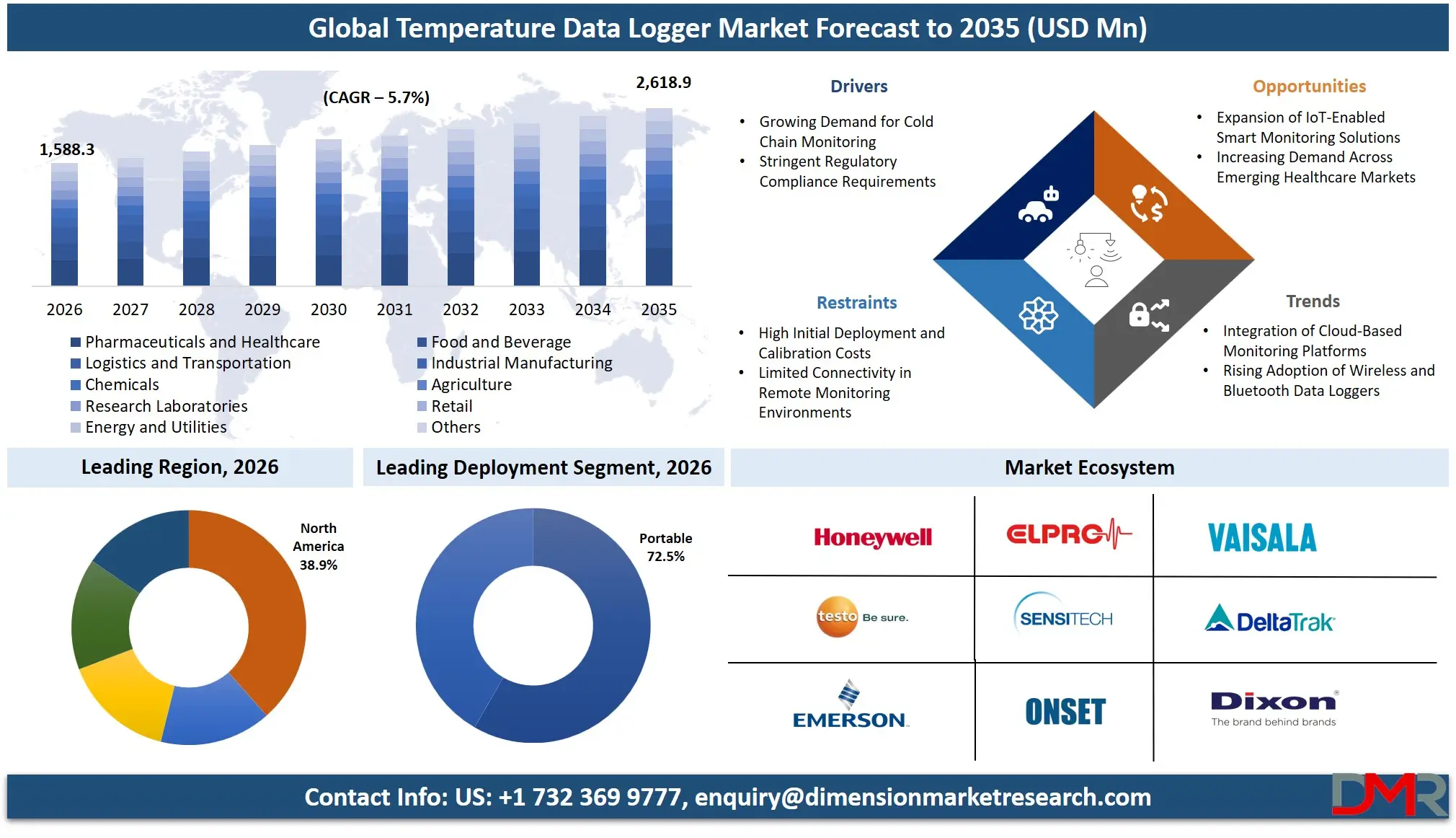
The Global Temperature Data Logger Market is expected to reach a value of USD 1,588.3 million in 2026, and it is further anticipated to reach USD 2,618.9 million by 2035, growing at a CAGR of 5.7% during the forecast period.
ℹ
To learn more about this report –
Download Your Free Sample Report Here
The temperature data logger market has been growing at a steady rate with enterprises increasing their focus on supply chain integrity, regulatory compliance, and the digital transformation of asset monitoring. The market consists of wireless, USB, Bluetooth, and multi-channel data loggers which assist organizations in monitoring temperature-sensitive products across pharmaceutical cold chains, food supply networks, and industrial processes. The increasing demand to implement real-time monitoring architecture, cloud-integrated data loggers, and AI-driven predictive analytics is driving the necessity of specialized, reliable monitoring solutions. Enterprises are the most frequent adopters, with wireless and Wi-Fi data loggers remaining the most popular because of their scalability and ability to provide centralized, real-time visibility. The pharmaceuticals and healthcare, food and beverage, and logistics and transportation industries are key players as they need secure, compliant, and highly available temperature monitoring ecosystems.
The US Temperature Data Logger Market
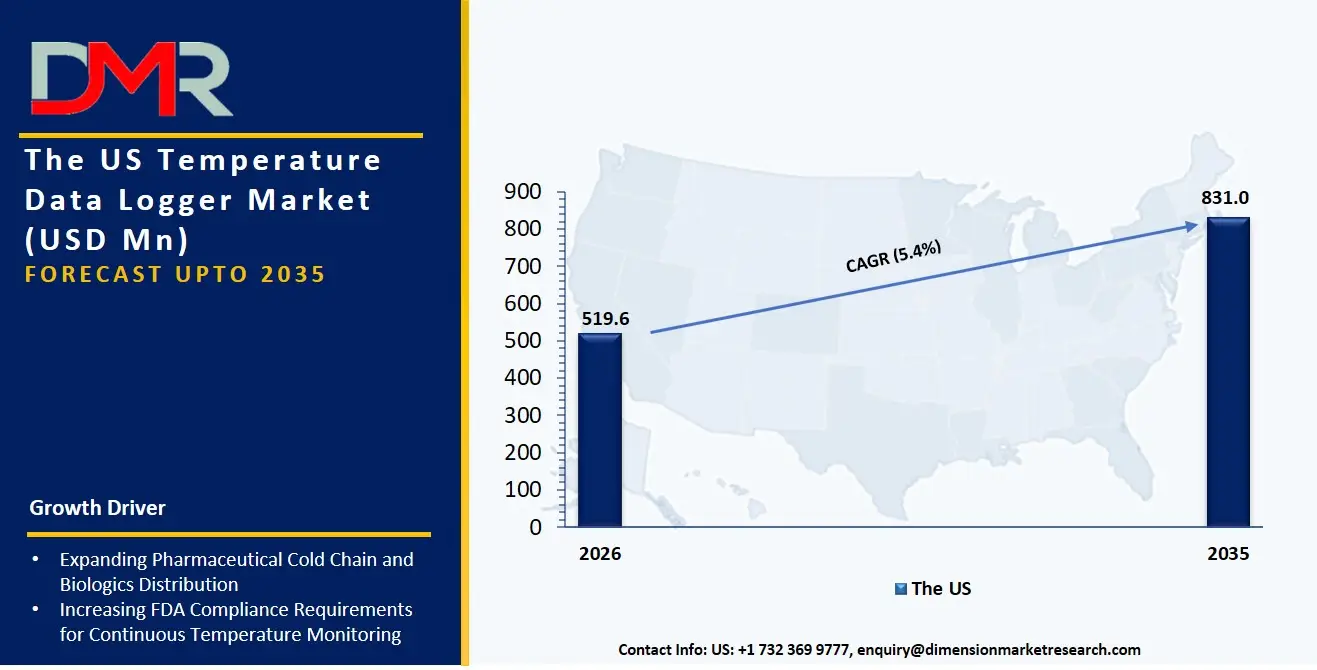
The US Temperature Data Logger Market is projected to reach USD 519.6 million in 2026 at a compound annual growth rate of 5.4% over its forecast period, culminating in a value of USD 831.0 million by 2035.
ℹ
To learn more about this report –
Download Your Free Sample Report Here
The US continues to be the largest and most developed market for temperature data loggers due to the stringent FDA and CDC mandates for pharmaceutical cold chain integrity and the growing distribution of temperature-sensitive biologics. The market has been typified by high demand for wireless and Bluetooth-enabled data loggers, whereby organizations are aimed at replacing manual logging processes with automated, cloud-native monitoring systems. Besides, the integration of predictive analytics tools into monitoring workflows is producing a similar need in high-precision multi-channel data loggers to manage complex data governance and excursion management protocols within the cold chain.
The Europe Temperature Data Logger Market
The Europe Temperature Data Logger Market is estimated to be valued at USD 457.9 million in 2026 and is further anticipated to reach USD 735.0 million by 2035 at a CAGR of 5.4%. The regulatory frameworks including Good Distribution Practice (GDP) and the stringent European Pharmacopoeia standards have a significant impact on the European market and drive the need to employ reusable and high-accuracy loggers for pharmaceutical storage and transportation. Accelerated growth of cold chain monitoring services is also being experienced in the region as the food and beverage industries in Germany and France are trying to strike a balance in operational efficiency with compliance to EU food safety regulations. In addition, efforts focused on environmental sustainability are challenging service providers to create dedicated single-use and recyclable data logger solutions to provide data residency and interoperability across European supply chain ecosystems.
The Japan Temperature Data Logger Market
The Japan Temperature Data Logger Market is projected to be valued at USD 168.1 million in 2026. It is further expected to witness robust growth, holding USD 262.2 million in 2035 at a CAGR of 5.1%. The Japanese market is unique, with a corporate drive toward logistics automation and quality assurance in response to a declining workforce and the need for ultra-efficient cold chains. High-precision fixed and portable deployment services make up a large part of the spending as large conglomerates monitor mission-critical shipments and storage facilities. There is also a strong need for deeply integrated local support to bridge the gaps between legacy warehouse management systems and industrial control systems to new cloud-based SaaS monitoring platforms, which forms a niche in cellular and Wi-Fi integrated logger systems.
Key Takeaways
- Market Size & Forecast: The Global Temperature Data Logger market is projected to reach USD 1,588.3 million in 2026, expanding steadily to USD 2,618.9 million by 2035, fueled by the dual drivers of regulatory stringency in healthcare and the mandatory modernization of cold chain logistics.
- Growth Rate & Outlook: Global market growth is expected at a CAGR of 5.7%, driven by a critical need to eliminate manual monitoring errors and the escalating complexity of managing end-to-end visibility in global pharmaceutical and fresh food supply chains.
- Primary Growth Drivers: Key forces include the widespread migration from reactive temperature excursion management to proactive, real-time analytics, the need for wireless connectivity to avoid data silos, and the integration of data loggers with cloud platforms requiring specialized IoT and calibration services.
- Key Market Trends: Major trends include the rise of application-specific monitoring solutions (e.g., cryogenic storage, last-mile delivery), the use of AI-powered predictive tools within cold chain management to pre-empt equipment failure, and the shift toward single-use and recyclable loggers as boards prioritize supply chain sustainability.
- By Deployment Analysis: Portable data loggers are expected to dominate shipment discussions due to the dynamic nature of goods in transit. Conversely, fixed monitoring solutions are increasingly required to build seamless data integration layers that connect warehouse and laboratory environments with centralized quality management systems.
- By Application Analysis: Pharmaceutical storage and transportation and food and beverage monitoring are the most lucrative applications due to stringent compliance needs. Cold chain monitoring is the fastest-growing sector as the proliferation of biopharmaceuticals and fresh e-commerce requires robust, real-time data across multi-modal logistics networks.
- Regional Leadership: North America is poised to dominate this market with 38.9% of the market share in 2026 due to its well-developed pharmaceutical and biotechnology ecosystem that mandates this infrastructure to its fullest, making it a leader in this market.
What is the Temperature Data Logger?
Temperature Data Loggers are specialized electronic devices and sensing solutions offered by hardware manufacturers, software providers, and system integrators to assist organizations in monitoring, recording, and validating temperature conditions throughout the entire product lifecycle. These services and devices, unlike basic thermometers, are related to the how of environmental monitoring. This involves Consulting to establish a strategic monitoring roadmap and validation plan, Implementation and Deployment to physically install and calibrate probes in warehouses and logistics vehicles without disrupting business, and Integration and Optimization to ensure that monitoring systems can effectively communicate with existing on-premise QMS and ERP tools. With 90% of pharmaceutical shipments requiring real-time oversight, professional-grade data loggers are needed to achieve regulatory compliance, data integrity, and operational efficiency, making monitoring investments translate into tangible product safety, as opposed to just data collection.
Use Cases
- Biopharmaceutical Cryogenic Shipment: Pharmaceutical logistics providers use ultra-low temperature data loggers and cellular connectivity to monitor gene and cell therapies during transit, which must be maintained at cryogenic temperatures, ensuring product viability and patient safety upon arrival.
- Restaurant Cold Chain Compliance: Food and beverage chains use Bluetooth reusable temperature data loggers and cloud dashboards to automatically monitor walk-in freezers and refrigerated prep tables, generating HACCP compliance reports and alerting managers to equipment malfunctions before food spoilage occurs.
- COVID-19 Vaccine Distribution: Government health agencies deploy single-use multi-channel data loggers to track the temperature of vaccine shipments from centralized ultra-cold storage down to the last-mile administration points, ensuring adherence to strict temperature ranges without requiring device retrieval.
- Aerospace Component Curing: Industrial manufacturers use high-temperature fixed data loggers to verify and validate the precise thermal profiles during the autoclave curing of carbon fiber composite materials for aircraft, ensuring structural integrity and adherence to engineering specifications.
How AI is Transforming the Temperature Data Logger Market?
AI is changing the temperature monitoring landscape by accelerating the shift from simple data recording to predictive and prescriptive analytics. In cold chain monitoring, AI-based algorithms have the potential to automatically analyze historical temperature profiles and transit routes, greatly improving the prediction of potential excursions before they occur and minimizing product loss. Meanwhile, AI-powered features in laboratory monitoring allow businesses to better control equipment utilization by detecting compressor degradation patterns, predicting and determining future maintenance needs, and suggesting recalibration schedules to reinforce Good Laboratory Practice (GLP) methods.
Governance and quality assurance projects are also revolving around AI. In the area of pharmaceutical storage, intelligent compliance-monitoring agents are used to continuously check distributed warehouse environments and identify data gaps, sensor drift, and policy breaches to keep organizations in line with frameworks like 21 CFR Part 11 and EU Annex 11. Moreover, generative AI assistants are complementing logistics planning by simulating the thermal impact of route changes and modeling future packaging configurations to give stakeholders a visualization of the risk profile before committing physical resources.
Market Dynamics
Key Drivers in the Global Temperature Data Logger Market
Growing Demand for Cold Chain Monitoring
The increasing transportation and storage of temperature-sensitive pharmaceuticals, vaccines, biologics, food products, and chemicals are driving demand for temperature data loggers worldwide. Organizations require continuous monitoring solutions to maintain product quality, comply with regulatory standards, and minimize spoilage throughout the supply chain. Temperature data loggers provide real-time visibility, automated alerts, and accurate historical records that improve operational efficiency and regulatory compliance. The expansion of global cold chain logistics, combined with rising investments in healthcare infrastructure and food safety, continues to strengthen demand for reliable temperature monitoring solutions across pharmaceutical, healthcare, logistics, and food industries.
Stringent Regulatory Compliance Requirements
Regulatory authorities worldwide require continuous environmental monitoring to ensure product quality and safety across pharmaceutical manufacturing, healthcare facilities, laboratories, and food processing operations. Temperature data loggers help organizations comply with regulations by maintaining accurate monitoring records, audit trails, and automated reporting capabilities. Increasing enforcement of Good Distribution Practices, Good Manufacturing Practices, and food safety standards has accelerated adoption of validated monitoring technologies. Organizations increasingly prioritize compliance-driven investments to reduce operational risks, prevent product loss, and improve quality assurance. These stringent regulatory requirements continue to drive sustained growth in the global temperature data logger market.
Restraints in the Global Temperature Data Logger Market
High Initial Deployment and Calibration Costs
Advanced temperature data logging systems often require investments in monitoring devices, cloud software, calibration services, maintenance, and validation processes. Organizations operating large facilities or complex cold chain networks may face significant implementation costs that limit widespread adoption. Regular calibration and certification are also necessary to maintain measurement accuracy and regulatory compliance, increasing long-term operational expenses. Small businesses with limited budgets may postpone technology upgrades or continue using manual monitoring systems. These financial barriers remain a significant restraint affecting adoption, particularly among cost-sensitive organizations across emerging markets.
Limited Connectivity in Remote Monitoring Environments
Many temperature-sensitive products are transported through remote or low-connectivity regions where wireless communication networks remain unreliable. Temperature data loggers operating in these environments may experience delayed data transmission or limited real-time visibility, reducing monitoring effectiveness. Logistics providers handling international shipments often encounter inconsistent connectivity across transportation routes, making continuous monitoring more challenging. Although offline data storage provides backup records, organizations increasingly expect uninterrupted remote access and instant alerts. Connectivity limitations continue to restrict the full utilization of advanced cloud-based monitoring solutions in geographically dispersed and infrastructure-constrained environments.
Growth Opportunities in the Global Temperature Data Logger Market
Expansion of IoT-Enabled Smart Monitoring Solutions
The growing adoption of Internet of Things technologies presents substantial opportunities for temperature data logger manufacturers. IoT-enabled devices provide continuous monitoring, remote accessibility, predictive analytics, and automated alerts through cloud platforms. Organizations increasingly seek intelligent monitoring systems capable of integrating with warehouse management, laboratory information, and enterprise resource planning systems. Smart monitoring improves operational efficiency while reducing manual intervention and product losses. As digital transformation accelerates across healthcare, pharmaceuticals, food processing, and logistics industries, demand for connected temperature monitoring solutions is expected to expand significantly over the coming years.
Increasing Demand Across Emerging Healthcare Markets
Rapid healthcare expansion in emerging economies is creating significant opportunities for temperature data logger providers. Governments and private healthcare organizations are investing heavily in vaccine distribution, pharmaceutical manufacturing, diagnostic laboratories, and healthcare infrastructure. These developments require reliable environmental monitoring to ensure product quality and regulatory compliance. Expanding cold storage facilities, biologics manufacturing, and medical logistics networks further increase demand for advanced temperature monitoring technologies. As healthcare modernization continues across developing regions, manufacturers offering cost-effective, reliable, and cloud-enabled monitoring solutions are expected to benefit from sustained long-term market growth.
Trends in the Global Temperature Data Logger Market
Integration of Cloud-Based Monitoring Platforms
Cloud-connected temperature data loggers are becoming increasingly popular because they enable centralized monitoring, remote accessibility, automated reporting, and instant notifications across multiple facilities. Organizations benefit from real-time dashboards, secure data storage, predictive maintenance insights, and simplified regulatory documentation. Cloud integration also supports enterprise-wide monitoring across warehouses, laboratories, hospitals, and transportation fleets. As businesses continue modernizing quality management and supply chain operations, cloud-based monitoring platforms are becoming a standard feature within advanced temperature logging systems, significantly improving operational visibility, compliance management, and decision-making capabilities.
Rising Adoption of Wireless and Bluetooth Data Loggers
Wireless and Bluetooth-enabled temperature data loggers are rapidly replacing traditional standalone monitoring devices due to their flexibility, ease of deployment, and real-time communication capabilities. These solutions eliminate manual data collection while enabling continuous monitoring through smartphones, tablets, and cloud platforms. Industries increasingly adopt wireless technologies to improve monitoring efficiency, reduce operational costs, and strengthen quality assurance processes. Growing demand for mobile monitoring, automated alerts, and remote access across pharmaceutical cold chains, healthcare facilities, laboratories, and food logistics continues driving innovation and widespread adoption of wireless temperature monitoring technologies worldwide.
Research Scope and Analysis
The Global Temperature Data Logger Market is segmented by Product Type, Connectivity, Deployment, Measurement Range, Application, and End User. It includes wireless, USB, Bluetooth, and Wi-Fi data loggers, portable and fixed devices, temperature monitoring applications across cold chains, laboratories, and industries, serving pharmaceuticals, food and beverage, logistics, manufacturing, chemicals, agriculture, retail, energy, and other sectors.
ℹ
To learn more about this report –
Download Your Free Sample Report Here
By Product Type Analysis
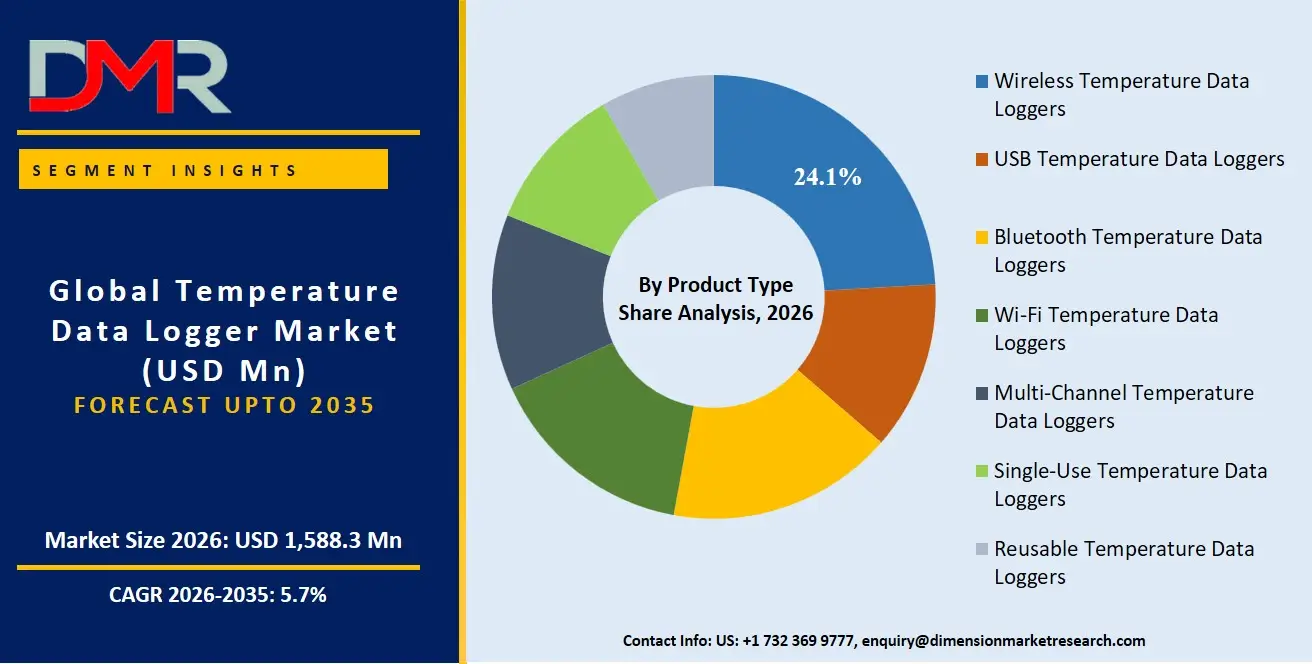
Wireless Temperature Data Loggers is poised to dominate the market due to their ability to provide real-time temperature monitoring, remote access, automated alerts, and seamless cloud connectivity. Industries such as pharmaceuticals, food and beverage, and logistics increasingly require continuous environmental monitoring to maintain product quality and regulatory compliance. Wireless solutions eliminate manual data retrieval, improve operational efficiency, and enable centralized monitoring across multiple facilities. Growing adoption of IoT technologies, digital cold chain management, and smart warehousing further accelerates demand. Their flexibility, scalability, and ability to support predictive monitoring make wireless temperature data loggers the leading product segment globally.
By Connectivity Analysis
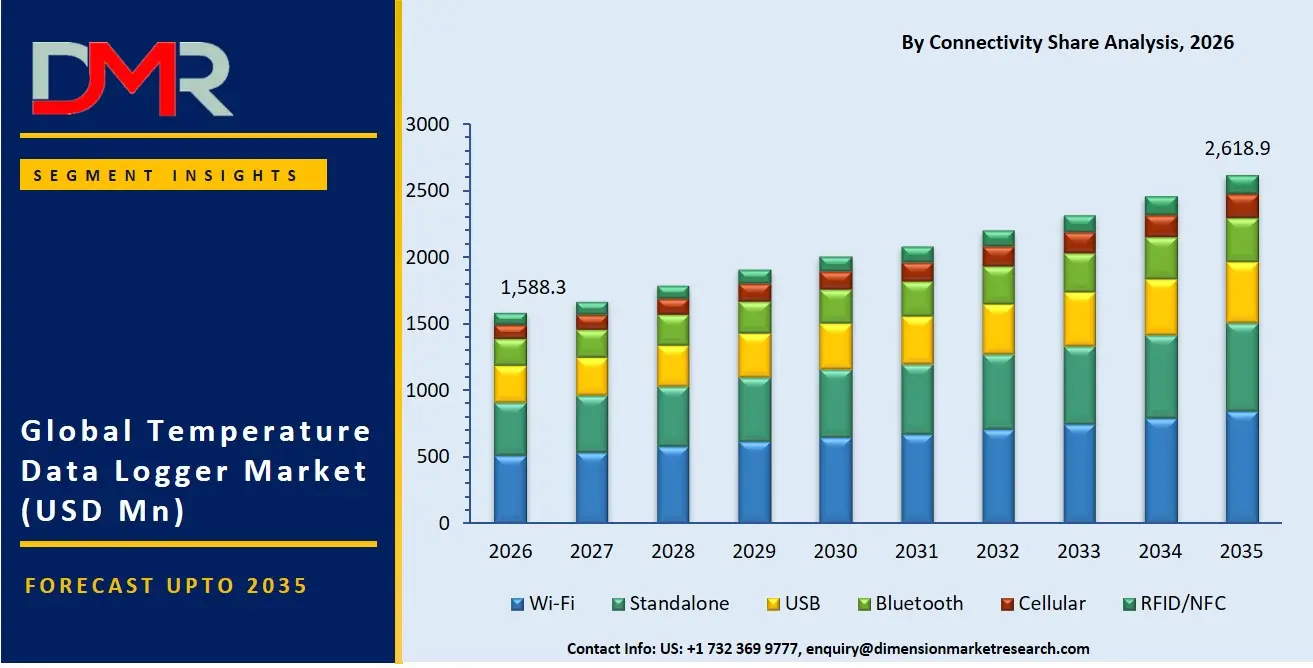
Wi-Fi connectivity is projected to dominate because it enables continuous real-time monitoring, automatic data transmission, and centralized management without requiring manual downloads. Organizations benefit from instant alerts, remote accessibility, cloud integration, and simplified compliance reporting across multiple monitoring locations.
ℹ
To learn more about this report –
Download Your Free Sample Report Here
Wi-Fi-enabled data loggers are widely adopted in pharmaceutical facilities, hospitals, laboratories, warehouses, and food processing plants where uninterrupted temperature visibility is essential. The expanding adoption of smart facilities, cloud-based monitoring platforms, and digital quality management systems continues to increase demand. Strong enterprise wireless infrastructure further supports Wi-Fi's leadership across commercial and industrial monitoring applications.
By Deployment Analysis
Portable temperature data loggers is poised to dominate because they offer flexibility for monitoring temperature-sensitive products during transportation, storage, and field operations. They are extensively used across pharmaceutical cold chains, food distribution, laboratory sample transport, and vaccine logistics. Their compact design, ease of deployment, and ability to provide accurate temperature records without permanent installation make them highly preferred. Organizations benefit from lower installation costs, operational mobility, and compliance with regulatory monitoring requirements. Growing global trade of temperature-sensitive goods and expanding cold chain logistics continue to strengthen demand for portable temperature monitoring solutions worldwide.
By Measurement Range Analysis
Low Temperature measurement us anticipated to dominate because many temperature-sensitive products, including pharmaceuticals, vaccines, biologics, blood products, and perishable food items, require refrigerated storage and transportation. Maintaining consistent low-temperature environments is essential for preserving product quality, safety, and regulatory compliance. Temperature data loggers designed for refrigerated applications provide continuous monitoring, automated alerts, and complete audit trails that support quality assurance. The rapid expansion of pharmaceutical cold chains, biologics manufacturing, and global food distribution networks continues driving demand. As cold storage infrastructure expands worldwide, low-temperature monitoring remains the largest measurement range segment.
By Application Analysis
Cold Chain Monitoring is expected to dominate the market because maintaining controlled temperatures throughout storage and transportation is critical for pharmaceuticals, vaccines, biologics, food products, and other temperature-sensitive goods. Temperature data loggers provide continuous monitoring, regulatory documentation, and immediate alerts that help prevent product spoilage and financial losses. Increasing international trade, vaccine distribution programs, biologics manufacturing, and stricter regulatory standards have significantly expanded demand for advanced monitoring solutions. Organizations increasingly prioritize real-time visibility and compliance across supply chains. These factors make cold chain monitoring the largest and fastest-growing application for temperature data logger technologies.
By End User Analysis
Pharmaceuticals and Healthcare is poised to dominate the Temperature Data Logger Market because strict regulatory requirements mandate continuous monitoring of temperature-sensitive medicines, vaccines, biologics, laboratory samples, and medical products throughout storage and transportation. Healthcare providers, pharmaceutical manufacturers, research institutions, and distributors rely on accurate monitoring systems to maintain product efficacy and patient safety. The expansion of biologics, personalized medicine, vaccine distribution, and advanced healthcare logistics continues increasing demand for reliable temperature monitoring technologies. Regulatory compliance, quality assurance, and growing investments in pharmaceutical cold chain infrastructure firmly establish pharmaceuticals and healthcare as the dominant end-user segment.
The Global Temperature Data Logger Market Report is segmented on the basis of the following:
By Product Type
- Wireless Temperature Data Loggers
- USB Temperature Data Loggers
- Bluetooth Temperature Data Loggers
- Wi-Fi Temperature Data Loggers
- Multi-Channel Temperature Data Loggers
- Single-Use Temperature Data Loggers
- Reusable Temperature Data Loggers
By Connectivity
- Wi-Fi
- Standalone
- USB
- Bluetooth
- Cellular
- RFID/NFC
By Deployment
By Measurement Range
- Low Temperature
- Medium Temperature
- High Temperature
- Ultra-Low Temperature
By Application
- Cold Chain Monitoring
- Pharmaceutical Storage and Transportation
- Food and Beverage Monitoring
- Warehouse and Logistics Monitoring
- Laboratory Monitoring
- Environmental Monitoring
- HVAC System Monitoring
- Industrial Process Monitoring
- Others
By End User
- Pharmaceuticals and Healthcare
- Food and Beverage
- Logistics and Transportation
- Industrial Manufacturing
- Chemicals
- Agriculture
- Research Laboratories
- Retail
- Energy and Utilities
- Others
Regional Analysis
Leading Region by Market Share
ℹ
To learn more about this report –
Download Your Free Sample Report Here
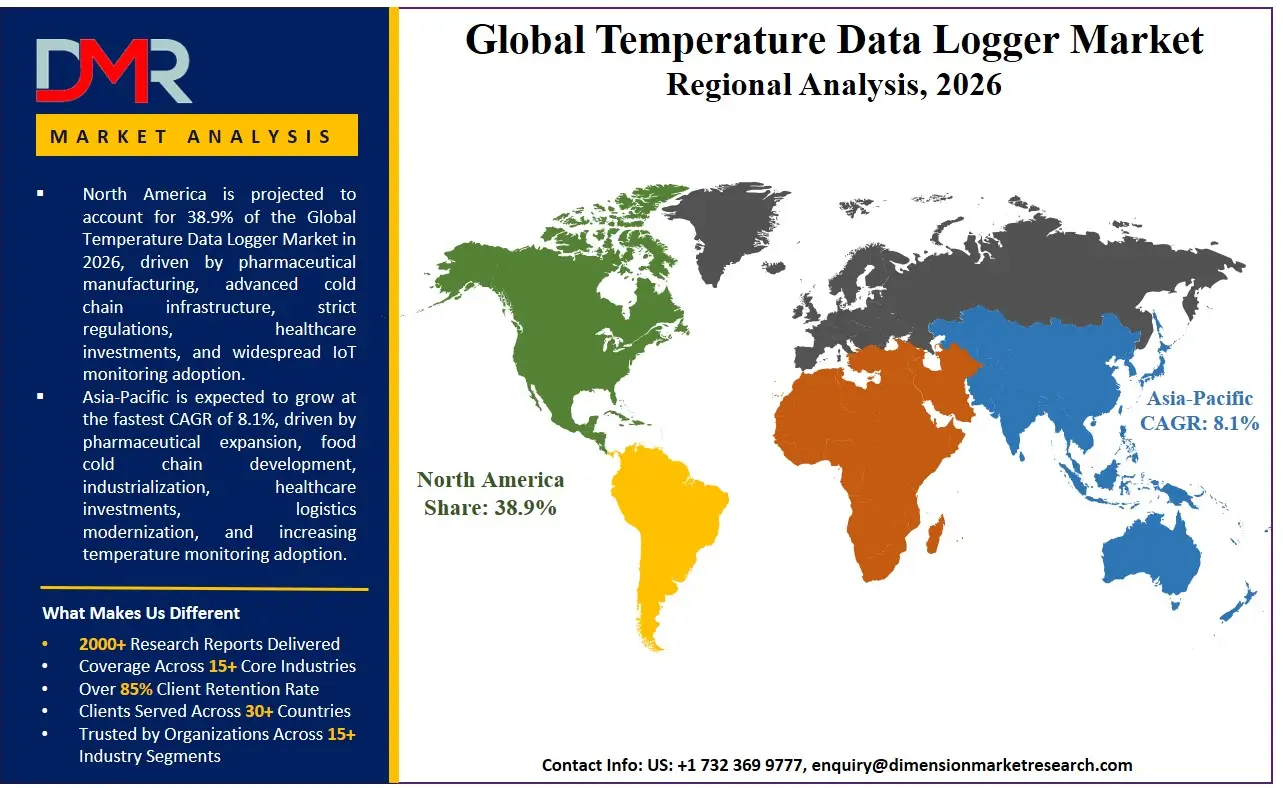
North America is poised to dominate the global temperature data logger market as it is projected to hold 38.9% of the market share by the end of 2026. The United States, which dominates North America, has the highest share in the temperature data logger market because of the unmatched concentration of leading pharmaceutical manufacturers and the aggressive digital transformation agendas of the logistics service providers. The area has an established ecosystem of global sensor manufacturers, boutique calibration labs, and a rich pool of talent in IoT architects and validation engineers. Enterprise investment in biologics, advanced cold chain analytics, and the overall retirement of manual chart recorders contribute to the continued demand for wireless and reusable logger systems along with continuous calibration and mapping services. Moreover, a robust venture capital climate persistently finances upcoming direct-to-consumer fresh food and meal kit enterprises that need expert monitoring solutions to achieve expeditious scale and FDA compliance.
Fastest-Growing Regional Market
Asia-Pacific is expected to be the most rapidly expanding temperature data logger market, driven by the government-led sweeping healthcare modernization initiatives in India, China, South Korea, and Southeast Asia. The fast-paced economic growth, the rise of a middle-income population, and the dynamic expansion of the e-commerce and food delivery economy is compelling established conglomerates and state agencies to discard inefficient cold storage infrastructure. Cold chain monitoring and pharmaceutical logistics consulting are in high demand to help these large organizations head in the direction of automated, data-driven quality assurance models. There is also a severe lack of qualified IoT and validation talent in the region, and it is necessary to outsource professional services for system design, deployment, and managed data services to cover the skills gap and enable faster investments in cold chain modernization projects.
By Region
North America
Europe
- Germany
- The U.K.
- France
- Italy
- Russia
- Spain
- Benelux
- Nordic
- Rest of Europe
Asia-Pacific
- China
- Japan
- South Korea
- India
- ANZ
- ASEAN
- Rest of Asia-Pacific
Latin America
- Brazil
- Mexico
- Argentina
- Colombia
- Rest of Latin America
Middle East & Africa
- Saudi Arabia
- UAE
- South Africa
- Israel
- Egypt
- Rest of MEA
Competitive Landscape
The competitive environment of global temperature data loggers has become highly dynamic with a heterogeneous array of multinational test and measurement conglomerates, specialized cold chain hardware innovators, and niche IoT platform consultancies. The key to success will be the profound strategic alliances with life science and logistics leaders because they will open the necessary co-selling opportunities and early access to the new requirements of therapeutic modalities like mRNA vaccines. The movement towards market consolidation is rapidly progressing with the traditional industrial sensor companies acquiring software and cloud integration specialized boutiques to stay afloat. Proprietary intellectual property, including automated predictive excursion frameworks and industry-specific validated templates, is becoming a more important basis of competitive differentiation than just hardware pricing or generic installation approaches.
Some of the prominent players in the Global Temperature Data Logger Market are:
- Emerson Electric Co.
- Honeywell International Inc.
- Testo SE & Co. KGaA
- ELPRO-BUCHS AG
- Sensitech Inc.
- Vaisala Oyj
- Dickson Company
- Onset Computer Corporation
- DeltaTrak Inc.
- Rotronic AG
- Omega Engineering Inc.
- Thermo Fisher Scientific Inc.
- Fluke Corporation
- MadgeTech Inc.
- T&D Corporation
- Signatrol Ltd.
- Berlinger & Co. AG
- Hanwell Solutions Ltd.
- InTemp by Onset
- Control Company (Cole-Parmer)
- Other Key Players
Recent Developments
- May 2026: Emerson launched the Rosemount™ Synchros™ IIoT platform, introducing the Rosemount Synchros Temperature Monitor and Wireless Repeater to expand wireless temperature monitoring and predictive asset maintenance across industrial facilities.
- August 2025: Emerson introduced the Rosemount™ 3144S Temperature Transmitter, featuring improved measurement accuracy, Bluetooth connectivity, advanced diagnostics, and simplified configuration for industrial temperature monitoring applications.
- July 2025: ELPRO released liberoMANAGER 3.0, enabling centralized management of USB, Bluetooth, and real-time IoT temperature data loggers for enhanced pharmaceutical cold chain visibility and compliance.
Report Details
| Report Characteristics |
| Market Size (2026) |
USD 1,588.3 Mn |
| Forecast Value (2035) |
USD 2,618.9 Mn |
| CAGR (2026–2035) |
5.7% |
| The US Market Size (2026) |
USD 519.6 Mn |
| Historical Data |
2021 – 2025 |
| Forecast Data |
2027 – 2035 |
| Base Year |
2025 |
| Estimate Year |
2026 |
| Segments Covered |
By Product Type, By Connectivity, By Deployment, By Measurement Range, By Application, and By End User |
| Regional Coverage |
North America – The US and Canada; Europe – Germany, The UK, France, Russia, Spain, Italy, Benelux, Nordic, & Rest of Europe; Asia-Pacific – China, Japan, South Korea, India, ANZ, ASEAN, Rest of APAC; Latin America – Brazil, Mexico, Argentina, Colombia, Rest of Latin America; Middle East & Africa – Saudi Arabia, UAE, South Africa, Turkey, Egypt, Israel, & Rest of MEA |
Frequently Asked Questions
How big is the Global Temperature Data Logger Market?
▾ The Global Temperature Data Logger market is poised to be valued at USD 1,588.3 million in 2026 and is projected to reach USD 2,618.9 million by 2035, driven by the universal need for specialized solutions in pharmaceutical cold chains, food safety monitoring, and regulatory compliance.
What is the CAGR of the Global Temperature Data Logger Market from 2026 to 2035?
▾ The market is expected to grow at a CAGR of 5.7% from 2026 to 2035, reflecting the accelerating complexity of global supply chains and the persistent mandate to eliminate product loss from temperature excursions.
What factors are driving the growth of the Global Temperature Data Logger Market?
▾ Key drivers include stringent global regulatory mandates for life sciences, the imperative to modernize manual monitoring processes, the management complexity of multi-modal cold chains, and the surge in demand for real-time Bluetooth and Wi-Fi data loggers amid evolving GxP and FSMA requirements.
Which region held the largest share of the Temperature Data Logger Market in 2026?
▾ North America is projected to hold 38.9% of the market share in 2026, driven by a mature pharmaceutical ecosystem and aggressive enterprise investment in IoT-enabled cold chain monitoring and ultra-low temperature biologic logistics.
Which region is expected to grow the fastest in the Temperature Data Logger Market?
▾ The Asia-Pacific region is expected to grow the fastest, fueled by rapid cold chain modernization in India, China, and South Korea, where food safety and pharmaceutical logistics consulting is critical for transitioning large populations to safe, compliant supply networks.
What are the major trends in the Global Temperature Data Logger Market?
▾ Major trends include the integration of predictive AI into monitoring workflows, the rise of single-use and recyclable logger solutions, the demand for application-specific ultra-low and high-temperature loggers, and the focus on creating data lakes for long-term analytics and regulatory reporting.
Who are the key players in the Global Temperature Data Logger Market?
▾ Key players include global test and measurement specialists like Vaisala and Testo, as well as cold chain-focused providers like Sensitech and ELPRO, and diversified industrial companies like Emerson, alongside specialized pure-play IoT monitor innovators.
How is the Global Temperature Data Logger Market segmented?
▾ The market is segmented by Product Type, Connectivity, Deployment, Measurement Range, Application, and End User.