What is the Testing, Inspection & Certification (TIC) for Metals & Minerals Market Size?
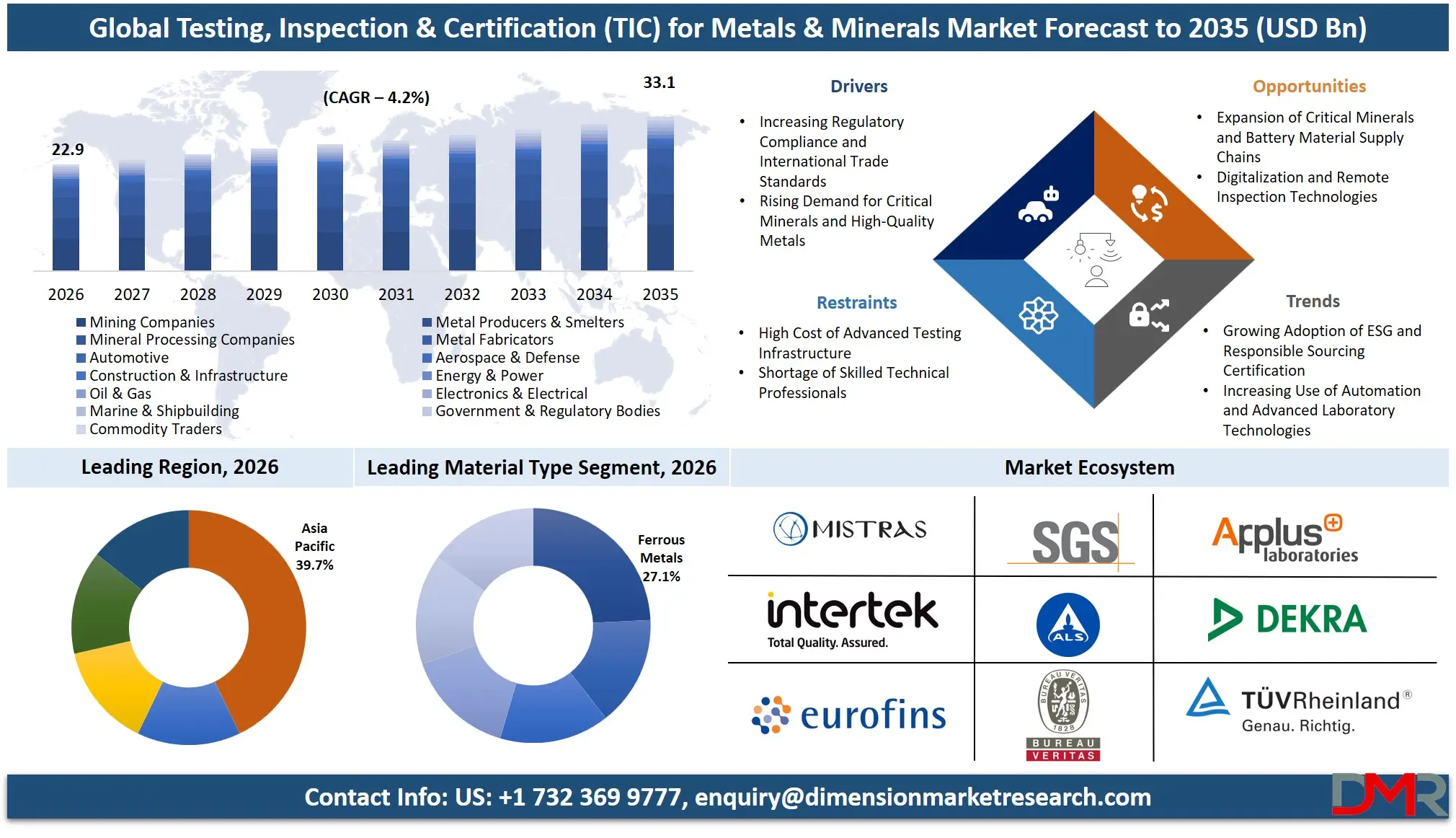
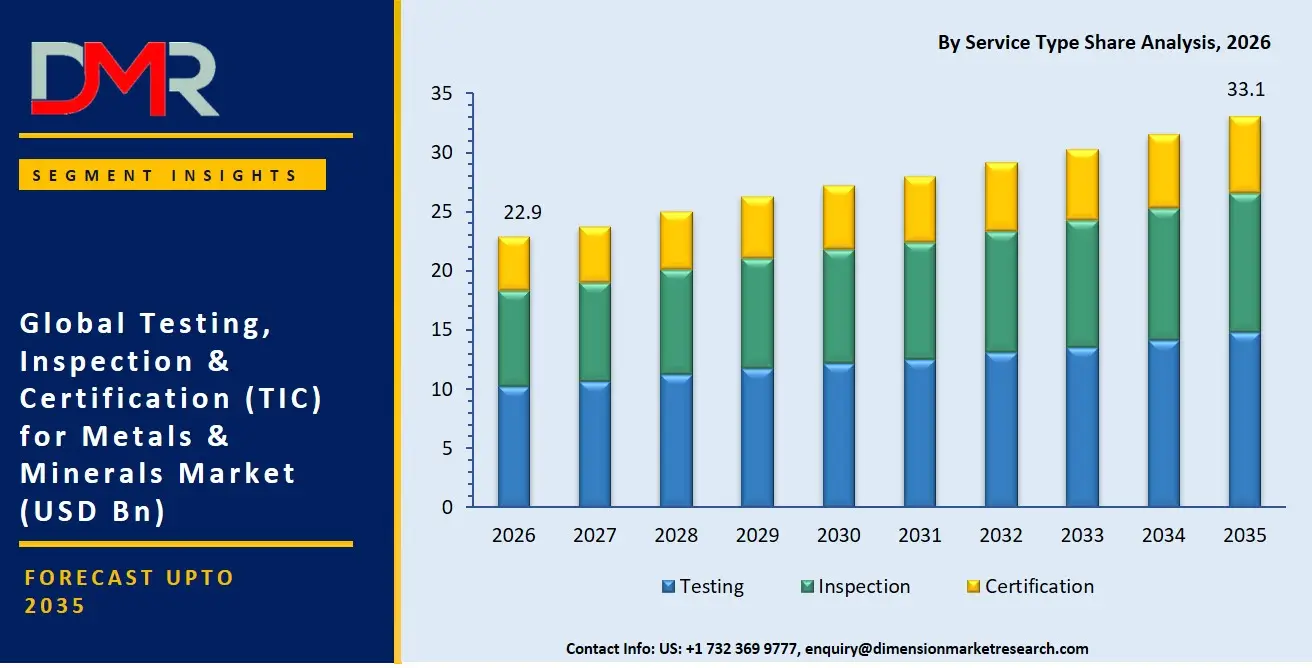
The Global Testing, Inspection & Certification (TIC) for Metals & Minerals Market is expected to reach a value of USD 22.9 billion in 2026, and it is further anticipated to reach USD 33.1 billion by 2035, growing at a CAGR of 4.2% during the forecast period.
ℹ
To learn more about this report –
Download Your Free Sample Report Here
The TIC market for metals and minerals is experiencing steady growth, underpinned by the escalating complexity of global supply chains and the non-negotiable demand for material integrity. This market encompasses a suite of conformity assessment services that verify the physical and chemical properties, safety, and ethical provenance of materials from the point of extraction through to final fabrication. Increasingly stringent regulatory mandates on carbon emissions and conflict minerals, coupled with the material science demands of the energy transition, are driving the necessity for specialized, independent third-party oversight. Mining companies, commodity traders, and downstream manufacturers are the most frequent users, with chemical analysis and mechanical testing remaining the bedrock of quality assurance in the trade and utilization of ferrous, non-ferrous, and critical battery minerals.
The US Testing, Inspection & Certification (TIC) for Metals & Minerals Market
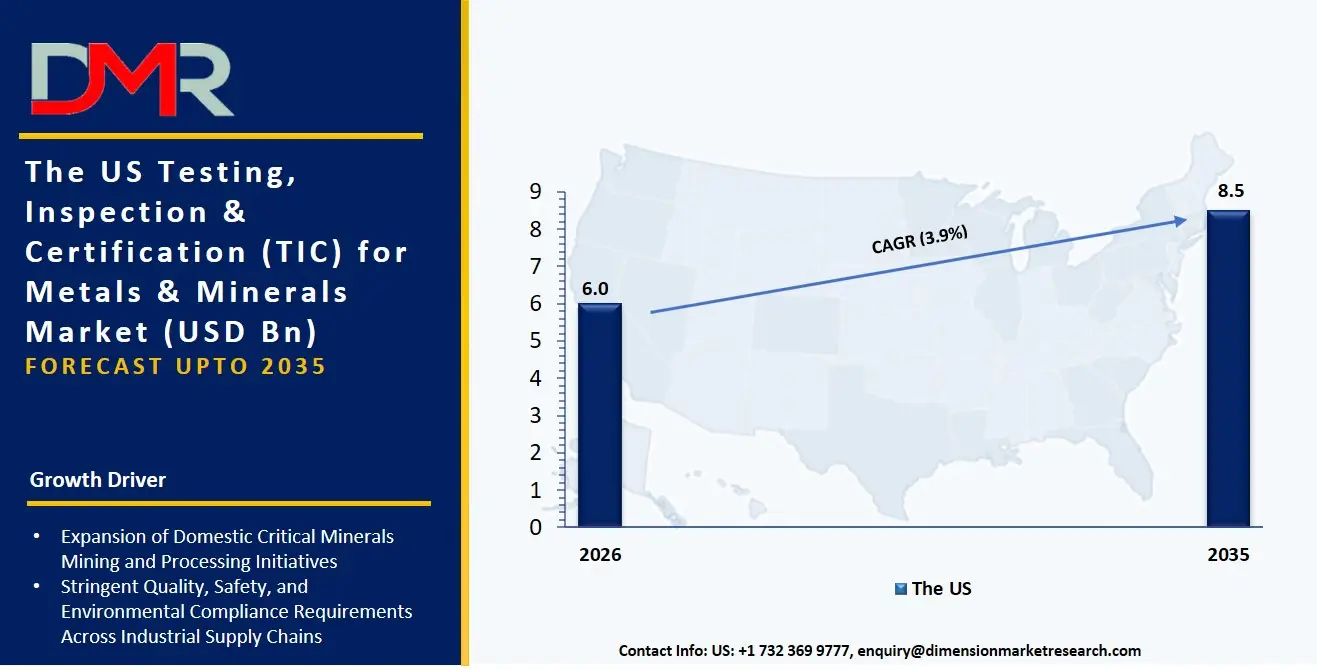
The US TIC for Metals & Minerals Market is projected to reach USD 6.0 billion in 2026, advancing at a compound annual growth rate of 3.9% over its forecast period, culminating in a value of USD 8.5 billion by 2035.
ℹ
To learn more about this report –
Download Your Free Sample Report Here
The United States remains a highly mature and technologically advanced market for material TIC services, driven by the reshoring of advanced manufacturing and the strategic imperative to secure domestic critical mineral supply chains. The market is characterized by high demand for Non-Destructive Testing (NDT) in the aerospace and defense sectors, where ultrasonic and radiographic techniques are essential for validating mission-critical alloy components. Furthermore, the operationalization of federal incentives for domestic battery production is creating a parallel surge in demand for Mineralogical Analysis of lithium and graphite deposits, alongside Sustainability & ESG Certification to satisfy the transparency requirements of the Inflation Reduction Act.
The Europe Testing, Inspection & Certification (TIC) for Metals & Minerals Market
The Europe TIC for Metals & Minerals Market is estimated to be valued at USD 6.5 billion in 2026 and is further anticipated to reach USD 8.8 billion by 2035 at a CAGR of 3.4% . This steady growth is propelled by a deeply embedded regulatory ecosystem that prioritizes circularity and product stewardship. Frameworks such as the EU Battery Regulation and the Carbon Border Adjustment Mechanism (CBAM) have a profound impact on the European market, creating binding requirements for Supply Chain & Responsible Sourcing Certification and the carbon footprint verification of imported steel and aluminum. The region is witnessing an accelerated growth in the verification of recycled content within secondary metal streams, as automotive and construction end-users in Germany and Scandinavia seek to decouple industrial output from virgin resource extraction, necessitating sophisticated Chemical Analysis and Quality Inspection to ensure parity between primary and secondary materials.
The Japan Testing, Inspection & Certification (TIC) for Metals & Minerals Market
The Japan TIC for Metals & Minerals Market is projected to reach USD 1.6 billion in 2026, maintaining a robust trajectory to achieve USD 2.2 billion by 2035 at a CAGR of 3.6%. The Japanese market is distinctive, defined by an industrial ecosystem that demands an exacting level of precision in metallurgical quality to service its world-leading automotive and electronics sectors. In-Service Inspection and Asset Integrity Inspection form a substantial portion of expenditure, as operators of aging energy and refining infrastructure employ advanced NDT methods to extend operational lifespans safely. There is also a deeply technical need for Metallurgical Testing to validate the microstructural integrity of specialized steel and non-ferrous alloys used in next-generation applications, creating a niche for high-precision laboratory services that bridge the gap between academic material science and industrial application.
Key Takeaways
- Market Size & Forecast: The Global TIC for Metals & Minerals market is projected to reach USD 22.9 billion in 2026, expanding steadily to USD 33.1 billion by 2035, fueled by the dual structural drivers of stringent environmental regulation and the material-intensive energy transition.
- Growth Rate & Outlook: Global market growth is expected at a CAGR of 4.2%, driven by the escalating fragmentation of mineral supply chains and the technical impossibility of verifying battery-grade material purity without independent Laboratory Testing.
- Primary Growth Drivers: Key forces include the enforcement of cross-border carbon tariffs necessitating certified emissions data, the exacting purity specifications for critical battery minerals like lithium carbonate, and mandatory Asset Integrity Management regimes in mature mining infrastructure.
- Key Market Trends: Major trends include the industrialization of Remote & Digital Inspection using drones and AI-powered visual analytics, the consolidation of accredited laboratories to provide one-stop-shop multi-element Chemical Analysis, and the meteoric rise of Sustainability & ESG Certification as a core requirement for project financing.
- By Service Type Analysis: Testing services like chemical analysis and mechanical testing are expected to dominate the testing segment as they are the foundational prerequisites for material specification and trade. Within inspection, pre-shipment inspection is critical for mitigating transactional risk in volatile commodity markets.
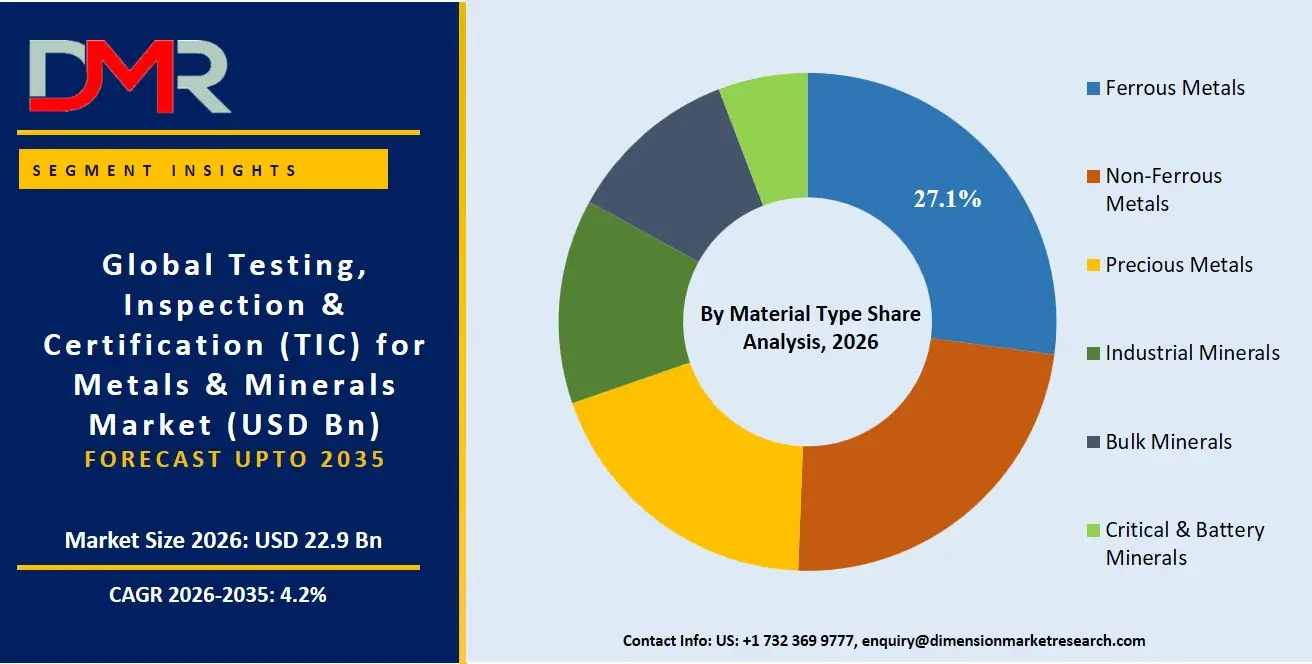
- By Material Type Analysis: Critical & Battery Minerals is the fastest-growing segment, with the lithium and rare earth elements (REEs) supply chain requiring exhaustive mineralogical verification. Ferrous metals remain the dominant segment by volume due to the sheer scale of global steel and iron ore trade, which relies on rapid Quality Inspection.
- By End User Analysis: Mining Companies and Commodity Traders are the most transaction-intensive end-users, relying on independent verification for price settlement. The Automotive and Aerospace & Defense sectors are the most technically demanding, driving the application of high-precision Non-Destructive Testing (NDT) for safety-critical components.
- Regional Leadership: North America is poised to dominate this market with 39.2% of the market share in 2026, underpinned by its mature energy and aerospace sectors and an aggressive strategic push to build a domestic critical minerals processing ecosystem from mine to cathode.
What is the Testing, Inspection & Certification (TIC) for Metals & Minerals Market?
Testing, Inspection, and Certification in the metals and minerals sector are the specialized technical and auditing activities performed by independent third parties to validate the physical identity, chemical composition, mechanical fitness, and ethical provenance of raw and processed materials. Unlike the act of production itself, TIC services are focused on objective verification. This involves Testing to precisely determine material properties like purity or tensile strength, Inspection to evaluate assets or cargo against a defined standard at a specific point in time, and Certification to provide an overarching assurance that a product, management system, or supply chain process consistently meets international standards such as ISO, ASTM, or the London Metal Exchange (LME) requirements.
Use Cases
- Lithium Battery-Grade Purity Verification: Mining companies contract Chemical Analysis and Mineralogical Analysis services to certify that lithium spodumene concentrate or lithium carbonate equivalent achieves the minimum 99.5% purity threshold required by cathode manufacturers, unlocking premium pricing and off-take agreements.
- Critical Asset Integrity in Smelting: Non-ferrous metal producers utilize In-Service Inspection and Non-Destructive Testing (NDT), specifically Ultrasonic Testing (UT) and Radiographic Testing (RT), to monitor the structural health of smelter furnaces and pressure vessels, preventing catastrophic failures and ensuring operational safety.
- Cross-Border Iron Ore Trade Settlement: Commodity traders and steel producers rely on Quantity & Weight Verification and independent Sampling & Monitoring at the port of loading and discharge to verify conformance to contractual specifications, using results from ISO-accredited laboratories as the neutral basis for financial settlement.
- Sustainable Steel Certification for Automotive OEMs: Automotive manufacturers seeking to lower Scope 3 emissions contract Sustainability & ESG Certification bodies to audit and certify that flat steel products are produced via the electric arc furnace route using a verified chain of custody of recycled scrap, enabling transparent product-level carbon declarations.
Market Dynamics
Key Drivers in the Global Testing, Inspection & Certification (TIC) for Metals & Minerals Market
Increasing Regulatory Compliance and International Trade Standards
Governments and international trade organizations continue to strengthen regulations governing mineral quality, environmental performance, workplace safety, and product traceability. Mining companies and metal producers must comply with standards such as ISO, ASTM, and various national mining regulations before exporting products or supplying industrial customers. Independent testing, inspection, and certification providers help verify compliance, reduce commercial disputes, and ensure product consistency. Growing cross-border trade in iron ore, steel, aluminum, copper, and critical minerals further increases the demand for accredited TIC services, making regulatory compliance one of the strongest drivers supporting sustained market expansion worldwide.
Rising Demand for Critical Minerals and High-Quality Metals
The rapid expansion of electric vehicles, renewable energy systems, aerospace manufacturing, and advanced electronics has significantly increased demand for lithium, cobalt, nickel, graphite, rare earth elements, and high-performance industrial metals. These materials require highly accurate testing and certification to confirm purity, composition, and performance characteristics before entering global supply chains. Mining companies increasingly depend on advanced laboratory analysis, non-destructive testing, and quality inspections to maximize resource recovery and satisfy customer specifications. Growing investments in new mining projects and downstream metal processing facilities continue to strengthen demand for comprehensive TIC services across the metals and minerals industry.
Restraints in the Global Testing, Inspection & Certification (TIC) for Metals & Minerals Market
High Cost of Advanced Testing Infrastructure
Modern TIC services require sophisticated laboratory instruments, automated inspection systems, certified reference materials, and highly trained technical personnel. Technologies such as X-ray fluorescence, ICP-MS, electron microscopy, and advanced non-destructive testing involve substantial capital investment and ongoing maintenance costs. Smaller mining operators and regional laboratories often struggle to justify these expenditures, particularly during periods of volatile commodity prices. The continuous need for equipment calibration, accreditation renewals, and skilled workforce development further increases operational expenses, limiting the adoption of advanced testing capabilities across cost-sensitive mining operations and emerging mineral-producing regions.
Shortage of Skilled Technical Professionals
Delivering reliable testing, inspection, and certification services requires experienced metallurgists, geologists, laboratory scientists, NDT specialists, and quality assurance professionals. However, many mining regions continue to experience shortages of qualified personnel capable of operating sophisticated analytical equipment and interpreting complex test results. Competition for skilled experts has intensified as mining activity expands into critical minerals and battery materials. Recruitment challenges, rising labor costs, and extensive certification requirements can delay project execution and reduce service capacity. The limited availability of specialized technical talent remains a significant operational constraint for TIC providers seeking global expansion.
Growth Opportunities in the Global Testing, Inspection & Certification (TIC) for Metals & Minerals Market
Expansion of Critical Minerals and Battery Material Supply Chains
Governments and private investors are rapidly developing new lithium, cobalt, nickel, graphite, and rare earth mining projects to secure raw materials for electric vehicles, renewable energy, and energy storage technologies. These strategic minerals require extensive laboratory testing, traceability verification, environmental monitoring, and certification before entering global manufacturing supply chains. Increasing emphasis on responsible sourcing and product quality creates significant opportunities for TIC providers to expand specialized analytical capabilities. As battery manufacturing capacity continues to grow worldwide, demand for high-precision testing and independent certification services is expected to accelerate across the critical minerals sector.
Digitalization and Remote Inspection Technologies
Mining companies are increasingly adopting digital inspection platforms, artificial intelligence, drones, robotics, cloud-based laboratory management systems, and IoT-enabled monitoring solutions to improve operational efficiency. These technologies enable real-time asset inspections, predictive maintenance, automated defect detection, and faster reporting while reducing manual intervention in hazardous mining environments. TIC providers that integrate digital workflows with advanced analytics can deliver faster, more accurate, and cost-effective services. Growing demand for remote inspection capabilities in large mining operations, offshore facilities, and geographically isolated sites presents substantial long-term growth opportunities for technology-enabled TIC service providers.
Trends in the Global Testing, Inspection & Certification (TIC) for Metals & Minerals Market
Growing Adoption of ESG and Responsible Sourcing Certification
Environmental, Social, and Governance (ESG) requirements have become central to global mining operations as investors, manufacturers, and governments demand greater transparency throughout mineral supply chains. Companies increasingly seek certification covering responsible mining, carbon emissions, environmental management, labor practices, and ethical sourcing to satisfy customer expectations and regulatory requirements. TIC providers are expanding sustainability auditing and ESG verification services to support compliance with evolving international frameworks. The growing importance of responsible sourcing for battery minerals and strategic metals continues to reshape certification priorities across the global metals and minerals industry.
Increasing Use of Automation and Advanced Laboratory Technologies
Automation is transforming laboratory testing and inspection through robotic sample preparation, AI-assisted mineral analysis, machine vision systems, digital reporting, and automated quality control. Modern laboratories increasingly utilize high-throughput analytical equipment to improve testing speed, accuracy, and reproducibility while minimizing human error. Mining companies benefit from faster turnaround times, improved operational decisions, and enhanced process optimization. At the same time, automated inspection technologies help reduce safety risks and maintenance costs across mining assets. This continued technological advancement is becoming a defining trend in the evolution of TIC services for metals and minerals.
Research Scope and Analysis
The Global Testing, Inspection & Certification (TIC) for Metals & Minerals Market analysis covers key service types, materials, deployment modes, testing methods, sourcing stages, applications, and end users. It highlights growing demand for quality assurance, regulatory compliance, operational efficiency, asset integrity, and sustainable mining practices driving TIC adoption across the metals and minerals value chain.
ℹ
To learn more about this report –
Download Your Free Sample Report Here
By Service Type Analysis
Testing is projected to dominate the Global Testing, Inspection & Certification (TIC) for Metals & Minerals Market because it is the foundation of quality assurance, regulatory compliance, and commercial transactions across the mining value chain.
ℹ
To learn more about this report –
Download Your Free Sample Report Here
Chemical, mechanical, and metallurgical analyses are mandatory to determine ore grade, purity, composition, and material performance before extraction, processing, export, and manufacturing. The rapid growth in battery minerals, stricter environmental regulations, and increasing demand for high-performance alloys have further expanded laboratory testing requirements. Mining companies, smelters, and manufacturers rely on testing to optimize recovery rates, reduce operational risks, ensure product consistency, and comply with international standards, making testing the largest service segment.
By Material Type Analysis
Ferrous metal is anticipated to dominate the market due to the massive global production and trade volumes of iron ore and steel. Steel remains the backbone of construction, automotive, infrastructure, shipbuilding, and industrial manufacturing, generating continuous demand for testing, inspection, and certification throughout mining, processing, transportation, and fabrication. Iron ore quality assessment, metallurgical testing, and compliance verification are essential for maintaining production efficiency and meeting customer specifications. The high volume of cross-border steel trade and stringent industrial quality standards further increase inspection requirements. Continuous investments in infrastructure and manufacturing worldwide ensure ferrous metals remain the largest material segment requiring TIC services.
By Deployment Mode Analysis
On-site testing and inspection is expected to dominate because mining operations require immediate quality verification, equipment assessment, and production monitoring directly at exploration sites, mines, processing plants, ports, and export terminals. Real-time inspections reduce delays, improve operational efficiency, and enable rapid decision-making before materials move through the supply chain. Portable analytical instruments, mobile laboratories, and advanced non-destructive testing technologies have significantly improved field-based inspections. Mining companies prefer on-site services to minimize transportation costs, avoid production interruptions, and quickly address quality issues. The need for continuous operational monitoring across large mining assets makes on-site deployment the leading segment.
By Testing Method Analysis
Non-Destructive Testing (NDT) is projected to dominate because it enables inspection of pipelines, storage tanks, processing equipment, structural steel, pressure vessels, and mining machinery without causing damage. Techniques such as ultrasonic, radiographic, magnetic particle, and eddy current testing help identify cracks, corrosion, fatigue, and structural defects while maintaining uninterrupted operations. Increasing emphasis on worker safety, asset integrity, predictive maintenance, and regulatory compliance has significantly increased NDT adoption. Mining operators seek to reduce downtime and extend equipment life while ensuring safe operations. These operational and economic advantages make NDT the most widely adopted testing method across the metals and minerals industry.
By Sourcing Stage Analysis
Mining and extraction is poised to dominate because the largest volume of testing, inspection, and certification activities occurs during ore extraction and initial quality assessment. Accurate grade determination, sampling, geological analysis, and environmental monitoring are critical before ores enter processing facilities. Regulatory agencies also require continuous inspections to ensure environmental compliance, workplace safety, and responsible mining practices. Early-stage quality verification minimizes downstream processing costs and improves recovery efficiency. As mining companies increasingly focus on operational optimization and sustainable resource extraction, TIC services at the mining and extraction stage remain the most critical and highest-volume application throughout the value chain.
By Application Analysis
Quality Assurance and Quality Control (QA/QC) is projected to dominate because maintaining consistent material quality is essential across every stage of mining, processing, refining, manufacturing, and export. TIC providers conduct routine testing, inspections, and certification to verify chemical composition, mechanical properties, dimensional accuracy, and product consistency. Effective QA/QC reduces production losses, minimizes customer disputes, supports premium pricing, and ensures compliance with international standards. Increasing demand for high-quality metals in automotive, aerospace, renewable energy, and electronics industries has strengthened quality management requirements. Consequently, QA/QC remains the largest application area for TIC services worldwide.
By End User Analysis
Mining companies is expected to dominate the end-user segment because they require comprehensive TIC services throughout exploration, extraction, processing, transportation, and export activities. They routinely conduct geological analysis, ore grade testing, environmental monitoring, equipment inspections, asset integrity assessments, and regulatory compliance verification. Rising investments in critical minerals, iron ore, copper, lithium, and rare earth projects have significantly expanded testing and certification requirements. Mining companies also rely on independent TIC providers to improve operational efficiency, reduce commercial disputes, support international trade, and meet ESG expectations. Their continuous need for comprehensive quality and compliance services makes them the largest consumers of TIC solutions.
The Global Testing, Inspection & Certification (TIC) for Metals & Minerals Market Report is segmented on the basis of the following:
By Service Type
- Testing
- Chemical Analysis
- Mechanical Testing
- Metallurgical Testing
- Mineralogical Analysis
- Environmental Testing
- Non-Destructive Testing (NDT)
- Laboratory Testing
- Inspection
- Pre-Shipment Inspection
- In-Service Inspection
- Asset Integrity Inspection
- Quality Inspection
- Quantity & Weight Verification
- Sampling & Monitoring
- Certification
- Product Certification
- Management System Certification
- Sustainability & ESG Certification
- Supply Chain & Responsible Sourcing Certification
- Regulatory Compliance Certification
By Material Type
- Ferrous Metals
- Steel
- Iron Ore
- Stainless Steel
- Cast Iron
- Non-Ferrous Metals
- Aluminum
- Copper
- Nickel
- Zinc
- Lead
- Tin
- Others
- Precious Metals
- Gold
- Silver
- Platinum
- Palladium
- Industrial Minerals
- Limestone
- Gypsum
- Silica
- Feldspar
- Kaolin
- Phosphate Rock
- Others
- Bulk Minerals
- Coal
- Bauxite
- Manganese Ore
- Chromite
- Others
- Critical & Battery Minerals
- Lithium
- Cobalt
- Graphite
- Rare Earth Elements (REEs)
- Molybdenum
- Tungsten
- Others
By Deployment Mode
- On-Site Testing & Inspection
- Off-Site Laboratory Testing
- Remote & Digital Inspection
By Testing Method
- Destructive Testing
- Non-Destructive Testing (NDT)
- Ultrasonic Testing (UT)
- Radiographic Testing (RT)
- Magnetic Particle Testing (MT)
- Liquid Penetrant Testing (PT)
- Eddy Current Testing (ECT)
- Visual Inspection (VT)
By Sourcing Stage
- Exploration
- Mining & Extraction
- Mineral Processing
- Smelting & Refining
- Manufacturing & Fabrication
- Trading & Export
- Recycling & Secondary Processing
By Application
- Quality Assurance & Quality Control (QA/QC)
- Regulatory Compliance
- Trade & Export Verification
- Asset Integrity Management
- Process Optimization
- Environmental Monitoring
- Health & Safety Compliance
- Sustainability & Responsible Mining
By End User
- Mining Companies
- Metal Producers & Smelters
- Mineral Processing Companies
- Metal Fabricators
- Automotive
- Aerospace & Defense
- Construction & Infrastructure
- Energy & Power
- Oil & Gas
- Electronics & Electrical
- Marine & Shipbuilding
- Government & Regulatory Bodies
- Commodity Traders
Regional Analysis
Leading Region by Market Share
ℹ
To learn more about this report –
Download Your Free Sample Report Here
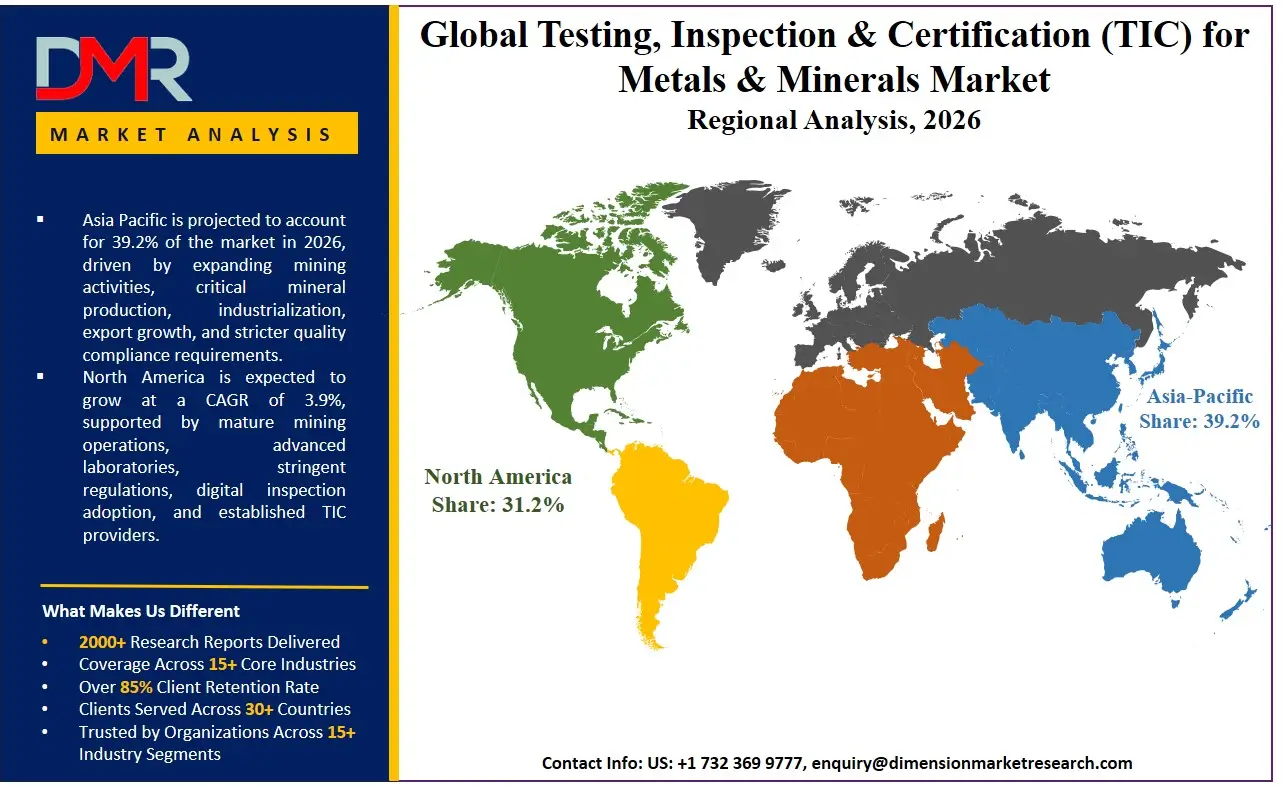
North America is poised to dominate the global TIC for metals and minerals market, commanding a projected 39.2% market share by the end of 2026. The United States, which dominates the North American region, holds the preeminent position due to its vast and technically complex end-use markets in aerospace, defense, and energy. The region possesses a high-density ecosystem of International Accreditation Bodies and a deep pool of Level III NDT experts and metallurgical engineers. A strategic investment cycle in the reshoring of advanced manufacturing particularly in semiconductor fabrication, electric vehicle battery gigafactories, and defense material stockpiles is fueling sustained demand for high-reliability Non-Destructive Testing (NDT) and advanced Metallurgical Testing. Furthermore, the formalization of federal policies for critical mineral independence is creating a long-term, structural need for Mineralogical Analysis and Supply Chain & Responsible Sourcing Certification, as new extraction and processing projects seek both project finance and the technical legitimacy to enter the market.
Fastest-Growing Regional Market
The Asia-Pacific region is projected to be the fastest-growing market for metals and minerals TIC, driven by the rapid industrialization and strategic nation-building infrastructure programs in India, China, and the ASEAN bloc. The region is not only the world's primary producer of steel and aluminum but is also moving aggressively down the midstream into the refining of battery-grade chemicals, requiring a massive scale-up in internationally accredited Off-Site Laboratory Testing capabilities. Commodity trading flows are becoming increasingly complex, moving from simple raw ore exports to processed specialized materials, which inherently requires a higher density of Pre-Shipment Inspection and Quality Inspection services to de-risk multi-jurisdictional transactions. Moreover, the drive to upgrade and verify the quality of steel and non-ferrous metal used in domestic urban mega-projects is creating a significant demand pull for Mechanical Testing and Asset Integrity Inspection in nations seeking to raise national building and safety standards.
By Region
North America
Europe
- Germany
- The U.K.
- France
- Italy
- Russia
- Spain
- Benelux
- Nordic
- Rest of Europe
Asia-Pacific
- China
- Japan
- South Korea
- India
- ANZ
- ASEAN
- Rest of Asia-Pacific
Latin America
- Brazil
- Mexico
- Argentina
- Colombia
- Rest of Latin America
Middle East & Africa
- Saudi Arabia
- UAE
- South Africa
- Israel
- Egypt
- Rest of MEA
Competitive Landscape
The competitive landscape of the global TIC for metals and minerals market is a hybrid structure, shaped by a leading cohort of multinational quality assurance conglomerates and a fragmented tail of highly specialized geological and metallurgical laboratories. The key to commercial success is built on three pillars: the density of ISO/IEC 17025 accredited facilities in strategic mining hubs and trading ports, the technical capability to perform complex and low-tolerance assays for critical battery minerals, and the strategic move towards an Integrated Digital Assurance model. Competition is intensifying as major players consolidate, acquiring niche providers of Non-Destructive Testing (NDT) and asset integrity services to create a one-stop-shop offering from the exploration drill hole to the final fabricated component. Proprietary technology is becoming a key differentiator, with market leaders investing in automated robotic sample preparation systems, centralized digital certificates via LIMS portals, and AI-driven metallurgical image analysis to improve accuracy, speed, and data integrity beyond the capabilities of smaller regional competitors.
Some of the prominent players in the Global Testing, Inspection & Certification (TIC) for Metals & Minerals Market are:
- SGS SA
- Bureau Veritas
- Intertek Group plc
- ALS Limited
- Eurofins Scientific
- TÜV SÜD
- TÜV Rheinland
- Applus+ Laboratories
- DEKRA SE
- MISTRAS Group, Inc.
- Element Materials Technology
- Inspectorate International (Bureau Veritas)
- Alex Stewart International
- Cotecna Inspection SA
- CCIC (China Certification & Inspection Group)
- Mitra SK Pvt. Ltd.
- GeoAssay Group
- Veritas Petroleum Services (VPS)
- Mintek
- SRC (Saskatchewan Research Council)
- Other Key Players
Recent Developments
- March 2026: SGS SA announced a strategic investment to expand its geochemistry network, opening a new purpose-built, automated Laboratory Testing facility in a major Western Australian lithium province to provide high-throughput, multi-element Chemical Analysis and Mineralogical Analysis for spodumene exploration and grade control.
- January 2026: Bureau Veritas acquired a specialized provider of data-driven asset integrity services, enhancing its capability in Remote & Digital Inspection and Non-Destructive Testing (NDT) for the downstream oil & gas and metals smelting sectors, integrating AI-powered predictive analytics into its existing Asset Integrity Inspection portfolio.
- September 2025: Intertek Group plc launched a comprehensive "Circular Assured" service, combining advanced Chemical Analysis and metallurgical testing with blockchain-enabled Supply Chain & Responsible Sourcing Certification, specifically designed to verify and certify recycled content percentages in secondary aluminum and copper streams for automotive OEMs.
Report Details
| Report Characteristics |
| Market Size (2026) |
USD 22.9 Bn |
| Forecast Value (2035) |
USD 33.1 Bn |
| CAGR (2026–2035) |
4.2% |
| The US Market Size (2026) |
USD 6.0 Bn |
| Historical Data |
2021 – 2025 |
| Forecast Data |
2027 – 2035 |
| Base Year |
2025 |
| Estimate Year |
2026 |
| Segments Covered |
By Service Type, By Material Type, By Deployment Mode, By Testing Method, By Sourcing Stage, By Application, and By End User |
| Regional Coverage |
North America – The US and Canada; Europe – Germany, The UK, France, Russia, Spain, Italy, Benelux, Nordic, & Rest of Europe; Asia-Pacific – China, Japan, South Korea, India, ANZ, ASEAN, Rest of APAC; Latin America – Brazil, Mexico, Argentina, Colombia, Rest of Latin America; Middle East & Africa – Saudi Arabia, UAE, South Africa, Turkey, Egypt, Israel, & Rest of MEA |
Frequently Asked Questions
How big is the Global TIC for Metals & Minerals Market?
▾ The Global TIC for Metals & Minerals market is poised to be valued at USD 22.9 billion in 2026 and is projected to reach USD 33.1 billion by 2035, driven by the universal requirement for independent verification of purity, mechanical properties, and ethical provenance across global metal and mineral supply chains.
What is the CAGR of the Global TIC for Metals & Minerals Market from 2026 to 2035?
▾ The market is expected to grow at a CAGR of 4.2% from 2026 to 2035, reflecting a stable and non-discretionary demand growth fueled by the technical complexities of the energy transition and the steady tightening of environmental and supply chain due diligence regulations worldwide.
What factors are driving the growth of the Global TIC for Metals & Minerals Market?
▾ Key drivers include the demand for ultra-pure battery-grade materials like lithium, the enforcement of carbon border taxes like the EU’s CBAM, the systemic need for Asset Integrity Management in aging mining and smelting infrastructure, and the legal requirement for independent Supply Chain & Responsible Sourcing Certification to combat conflict minerals.
Which region held the largest share of the TIC for Metals & Minerals Market in 2026?
▾ North America is projected to hold a 39.2% market share in 2026, driven by a concentrated base of high-specification aerospace and defense manufacturing, a strong ecosystem of accredited laboratories, and a strategic government-led investment surge in a domestic critical minerals processing chain.
Which region is expected to grow the fastest in the TIC for Metals & Minerals Market?
▾ The Asia-Pacific region is expected to grow the fastest, fueled by the rapid expansion and quality-upgrading of mineral processing and metal fabrication capacity across India, China, and ASEAN nations, driving a massive requirement for Quality Inspection and internationally recognized Product Certification to facilitate trade.
What are the major trends in the Global TIC for Metals & Minerals Market?
▾ Major trends include the use of drones and robotic crawlers for Remote & Digital Inspection of hazardous assets, the integration of blockchain technology to create a tamper-proof digital chain of custody, the automation of Laboratory Testing through advanced robotics for sample preparation, and the strategic shift of certification from a transactional output to a continuous, data-driven assurance model.
Who are the key players in the Global TIC for Metals & Minerals Market?
▾ Key players include global quality assurance conglomerates like SGS, Bureau Veritas, Intertek, and ALS Limited, which have extensive global laboratory networks, as well as specialized engineering-critical TIC providers like MISTRAS Group and Element Materials Technology, which focus on high-value Non-Destructive Testing and metallurgical evaluation.
How is the Global TIC for Metals & Minerals Market segmented?
▾ The market is segmented by Service Type, Material Type, Deployment Mode, Testing Method, Sourcing Stage, Application, and End User, providing a comprehensive framework for analyzing the industry’s full value chain