What is the Thermal Runaway Prevention Chemical Market Size?
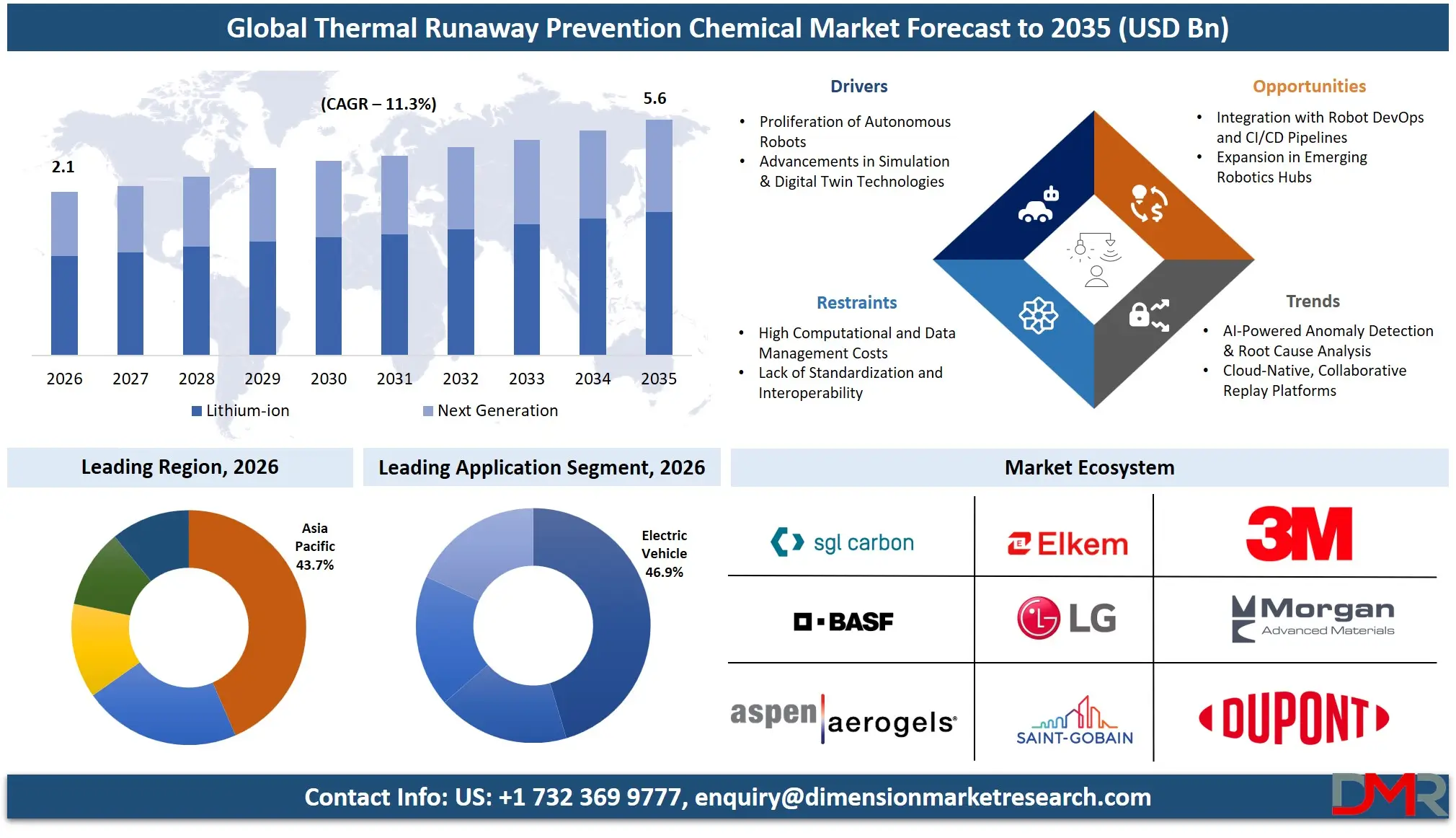
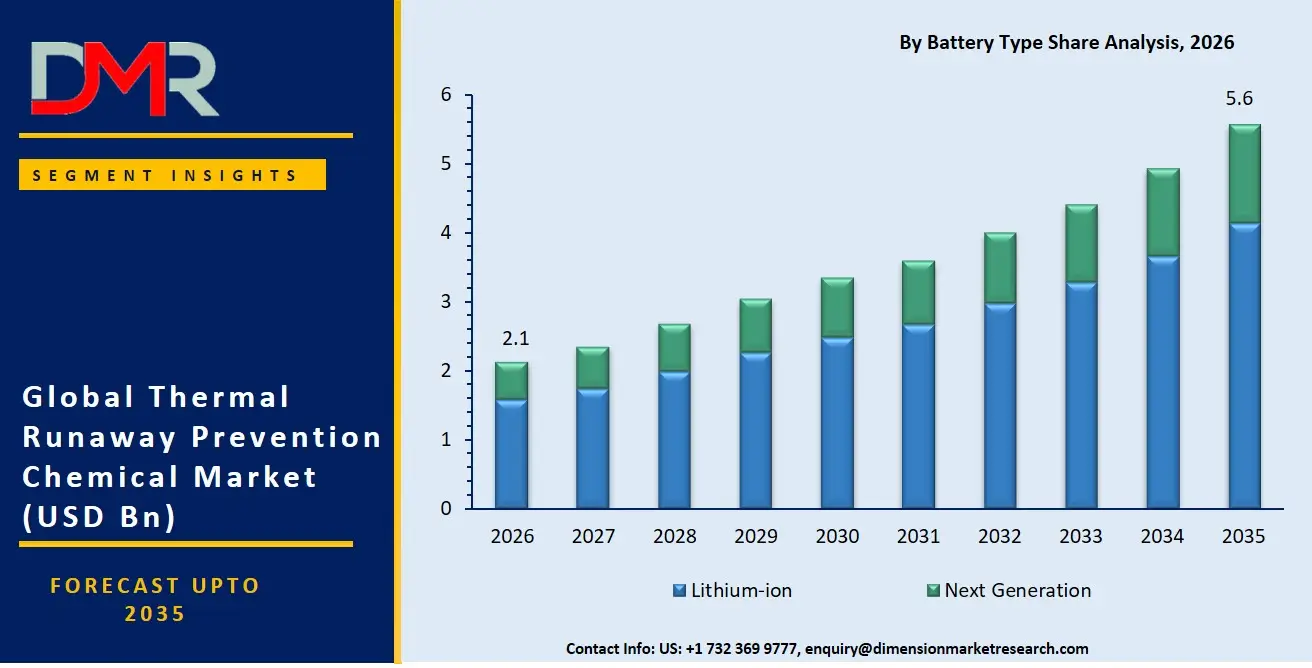
The Thermal Runaway Prevention Chemical Market size is expected to be USD 2.1 billion in 2026 and increase at a compound annual growth rate of 11.3% to USD 5.6 billion in 2035 due to rapid rise in the production of electric vehicles across the world.
ℹ
To learn more about this report –
Download Your Free Sample Report Here
Thermal Runaway Prevention Chemicals Market includes special chemicals, additives, coatings, flame retardants, phase change materials, electrolyte stabilizing chemicals, and thermal barriers that are used for preventing and controlling the occurrence of thermal runaways in lithium-ion and future battery systems. This market is being fueled by a number of factors including increased penetration of electric vehicles, rising use of renewable energy storage systems, strict regulations surrounding safety of batteries, as well as developments in energy-intensive battery technologies. Growing focus on advanced technology batteries, including solid-state batteries, non-flammable electrolytes, aerogels, ceramic coatings, and artificial intelligence-based battery monitoring systems is propelling innovations within this market.
ℹ
To learn more about this report –
Download Your Free Sample Report Here
The US Thermal Runaway Prevention Chemical Market
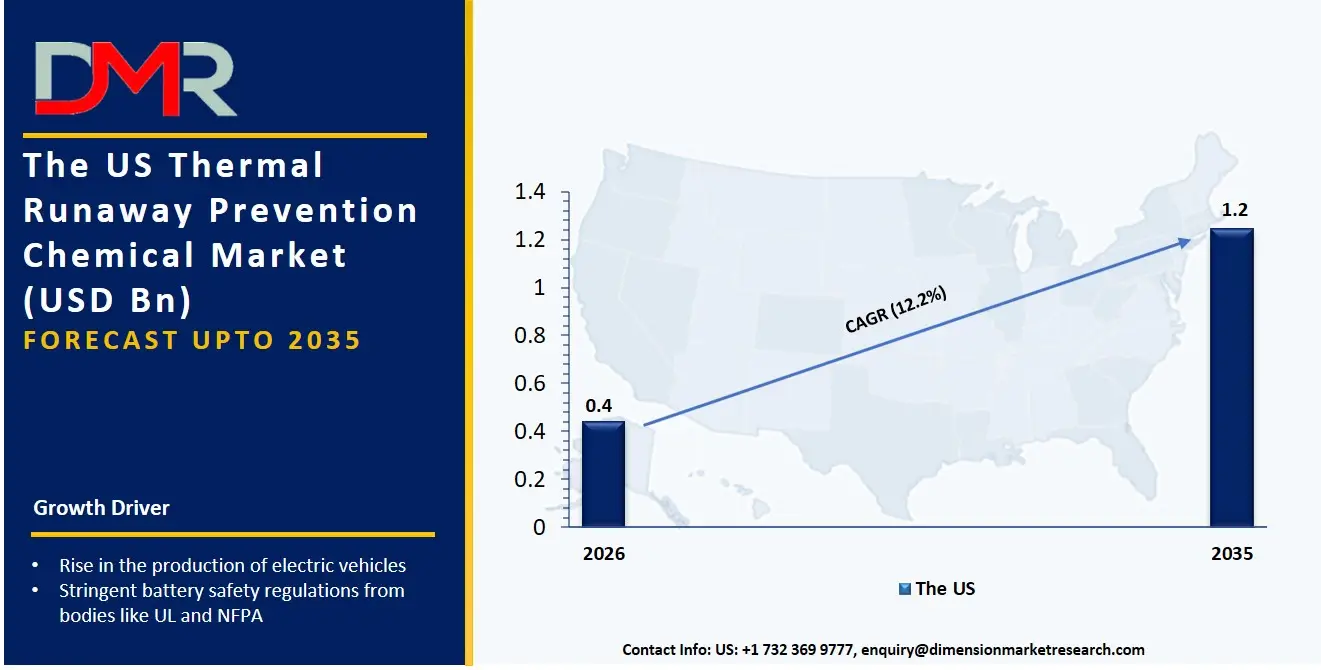
The US Thermal Runaway Prevention Chemical Market size is estimated to be USD 400 million in 2026 and is expected to increase at a CAGR of 12.2% over the forecast period.
The US Thermal Runaway Prevention Chemicals Market is flourishing owing to the rise in the production of electric vehicles, battery energy storage systems installations, and stringent battery safety regulations from bodies like UL and NFPA. Local battery production backed by the Inflation Reduction Act has been pushing up the use of thermal barrier chemicals, fire retardants, and electrolytes. Ceramic coating, aerogel, and non-flammable electrolyte solutions have become popular choices within the US Thermal Runaway Prevention Chemicals Market. Significant research and development, battery safety concerns, and strategic partnerships between chemical and battery companies have been driving the market.
ℹ
To learn more about this report –
Download Your Free Sample Report Here
Europe Thermal Runaway Prevention Chemical Market
The Europe Thermal Runaway Prevention Chemical Market size is estimated to be USD 462 million in 2026 and is expected to increase at a CAGR of 10.7% over the forecast period.
Europe continues to be a very regulated and innovation-friendly region because of the European Green Deal, sustainability regulations related to batteries, and the high priority placed on EV safety and decarbonization. Nations like Germany, France, and Sweden are making huge investments in battery gigafactories and energy storage solutions, leading to an increased need for thermal propagation inhibitors and fire retardants. The battery regulations in Europe that emphasize battery safety, battery recycling, and battery fire protection encourage the use of high-performance insulators, silicon-containing barriers, and phase-change materials.
Japan Thermal Runaway Prevention Chemical Market
The market size of Japan Thermal Runaway Prevention Chemical will be USD 126 million in 2026 and at a CAGR of 10.1% in the forecast period.
The market for Japan's Thermal Runaway Prevention Chemicals benefits from its robust battery technology base, modern automobile industry, and innovations in battery materials technology. In Japan, the current focus for battery material producers has shifted towards producing thermal insulation material, electrolyte stabilizers, and ceramic thermal barrier. With increased government investment into battery research & development activities, energy storage systems and carbon neutrality, there is an emerging demand for battery safety chemicals. The strength in the electronics industry and hybrid cars production also plays an important role in driving the demand for battery safety chemicals.
Key Takeaways
- Market Size & Forecast: The Thermal Runaway Prevention Chemical Market size is projected to reach USD 2.1 billion in 2026 and is anticipated to have a value of USD 5.6 billion in 2035.
- Growth Rate & Outlook: The Thermal Runaway Prevention Chemical Market size is set to grow at a compound annual growth rate of 11.3% during the forecast period of 2026 to 2035.
- Primary Growth Drivers: Some of the major growth drivers in the market include Need for Chemicals that Avoid Thermal Runaway Because of High Manufacturing of Electric Vehicles, and more.
- Key Market Trends: Some of the major trends in the market are Use of Advanced Phase Change and Aerogel Materials, and more.
- By Battery Type: The lithium-ion segment is anticipated to get the majority share of the Thermal Runaway Prevention Chemical market in 2026.
- By Function: Heat Management is expected to get the largest revenue share in 2026 in the Thermal Runaway Prevention Chemical market.
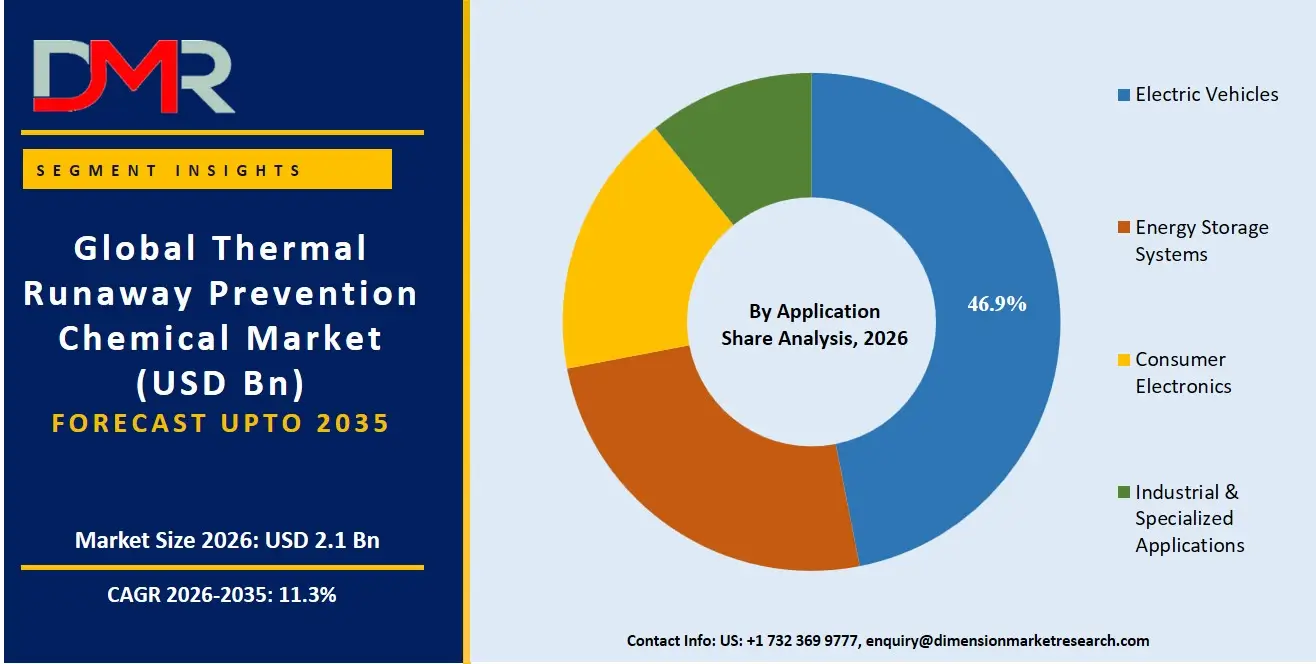
- By Application: The Electric Vehicles segment is expected to get the largest revenue share in 2026 in the Thermal Runaway Prevention Chemical market.
- Regional Leadership: Asia Pacific is set to lead the Thermal Runaway Prevention Chemical market with an estimated 43.7% share in 2026.
What is the Thermal Runaway Prevention Chemical?
Thermal Runaway Prevention Chemical is defined as a unique substance that can prevent, slow down, or manage thermal runaway processes in lithium-ion and advanced batteries. Such chemicals have become an integral part of electric vehicles, energy storage systems, consumer electronics, and other industries that use batteries. The growing popularity of electric vehicles, more stringent battery safety norms, higher use of energy storage systems, and advancements in solid-state batteries have been instrumental in boosting innovations in flame-retardant electrolytes, aerogels, ceramic barriers, silicone-based chemicals, and AI-enabled battery safety monitoring solutions among others.
Use Cases
- Battery Safety in Electric Vehicles: Chemicals that suppress thermal runaway in batteries are commonly employed in electric vehicle batteries to prevent fires, stabilize the electrolyte, and provide thermal insulation between battery cells. The chemicals are employed by EV battery pack producers to enhance the safety, reliability, and consumer safety of the battery.
- Energy Storage for Grid Scale: Industrial-scale energy storage facilities employ materials that inhibit flames, phase change materials, and additives that suppress gases to avoid overheating of the battery storage systems. The chemicals are utilized in large battery storage facilities to guarantee system stability and prevent system failure during operation.
- Consumer Electronic Products: Mobile phones, laptops, portable computers, and other portable electronics are coated with flame retardants to protect against overheating of battery components. The chemicals are used in consumer electronic batteries to enhance battery performance, stability, and longevity.
- Aerospace & Military Applications: Aerospace and military applications demand sophisticated battery protection systems that prevent thermal runaway during battery operation at high temperatures and high performance. The chemicals play an essential role in aerospace systems, military hardware, and industrial robotics.
How AI Is Transforming the Thermal Runaway Prevention Chemical Market
The emergence of AI-based technology in the Thermal Runaway Prevention Chemical Market will revolutionize the industry by ensuring the implementation of predictive safety management and real-time monitoring of battery thermal characteristics. With AI-based battery management solutions, it is possible to analyze parameters such as temperature, voltage, pressure, and gas emissions to determine the early onset of thermal instability and prevent thermal runaway.
AI technology is also facilitating innovations in materials by allowing scientists to perform simulations for the thermal behavior of substances. Artificial intelligence algorithms are increasingly being adopted in battery factories to detect faults in batteries during the production process, enhance the quality of products, and facilitate better fire prevention measures.
Market Dynamic
Driving Factors in the Thermal Runaway Prevention Chemical Market
Need for Chemicals that Avoid Thermal Runaway Because of High Manufacturing of Electric Vehicles
The rapid rise in the production of electric vehicles across the world has become very important to increase the requirement for chemicals that will avoid thermal runaway. There are very strict guidelines for batteries set by governments of China, Europe, USA, and Japan that require sophisticated thermal propagation system to avoid fires. Electric vehicle manufacturers use flame-retardants, ceramics, and insulators.
Restraints in the Thermal Runaway Prevention Chemical Market
High Cost of Materials and Difficulties of Integration
The use of cutting-edge technologies for preventing thermal runaways like aerogel technology, ceramic coating, and high-end silicone-based compounds is very costly. Many battery producers have found it difficult to balance between cost efficiency, energy density, and safety effectiveness. Moreover, integrating these technologies into small-scale batteries requires high costs and complex processes, which discourage their application by budget-conscious companies.
Opportunities in the Thermal Runaway Prevention Chemical Market
Development of Solid State and Next Generation Batteries
Commercialization of solid state batteries, sodium-ion batteries, and lithium-sulfur batteries offers lucrative growth avenues for companies involved in the production of thermal runaway protection chemicals. Advanced battery types would need improved electrolyte stabilizers, thermal shields, and insulation chemicals for efficient and safe operations. Growing interest in the development of new generation batteries is likely to boost demand.
Trends in the Thermal Runaway Prevention Chemical Market
Use of Advanced Phase Change and Aerogel Materials
It is becoming common for companies to use advanced phase change and aerogel materials, since they possess high abilities to absorb and insulate heat. The materials play an important role in delaying heat transfer, improving safety and energy performance. Advanced ceramic-based gels and aerogels are becoming more popular among EV battery packs.
Research Scope and Analysis
The Thermal Runaway Prevention Chemical Market research scope includes an analysis of critical chemical type, function, battery technology, application, and regional factors impacting industry growth. The study considers important market drivers, restraints, opportunities, competitive landscape, and innovations within the electric vehicle, energy storage system, consumer electronic, and industrial battery segments.
ℹ
To learn more about this report –
Download Your Free Sample Report Here
By Chemical Type Analysis
The flame retardants are anticipated to hold the largest share in terms of chemical type at 31.8% by 2026 owing to its wide range of applications in EV battery packs, energy storage systems, and consumer electronics. The use of organophosphorus materials and halogen-free flame retardants is on the rise owing to its capability to inhibit the spread of flames along with ensuring compliance with environmental standards. In addition, regulatory developments related to EV battery safety as well as increasing demand for safe high-energy density batteries is positively influencing the segment's growth. In the meantime, phase change materials are predicted to become the fastest growing segment due to the growing preference of using heat absorbing technology in order to slow down the rate of thermal propagation.
By Function Analysis
Heat management is anticipated to continue to be the top function segment, accounting for 38.6% of the market in 2026 because of the urgent requirement for effective temperature regulation in the lithium-ion battery systems. Heat absorption materials and heat storage substances have become increasingly popular in the electric vehicle batteries and other energy storage applications that aim to enhance battery efficiency and lifespan. The increased energy capacity and fast charging capacity of lithium-ion batteries have resulted in the growing demand for heat management systems. The thermal propagation prevention segment will prove to be the fastest-growing segment owing to the increasing number of battery fire incidents and stringent regulations.
By Battery Type Analysis
Lithium-ion batteries are projected to hold a market share of around 74.2% by the year 2026, owing to their high popularity in electric cars, mobile devices, and stationary storage batteries. The contribution made by NMC and LFP batteries is significant, considering the fact that these batteries have a need for thermal runaway prevention technology. High demand for thermal barrier chemicals and flame retardant materials is fueled by increased manufacturing activities of both electric vehicles and renewable energy storage units. On the contrary, solid-state and sodium-ion batteries are forecasted to be the fastest-growing batteries in the coming years.
By Application Analysis
Electric vehicles will hold the dominant position in the application sector with a projected market share of 46.9% by 2026 owing to widespread use of electric cars across the globe and the rising demand for enhanced battery safety standards. Passenger electric vehicles constitute the largest application segment in the market as companies focus on developing thermal run propagation technology, fire extinguishing equipment, and innovative insulation materials in accordance with stringent safety guidelines. Government initiatives promoting electric mobility solutions and rising manufacturing capabilities of electric vehicles are additional factors leading to the segment's dominance. Energy storage systems are forecasted to witness the highest growth rate among all other applications due to increased investment in renewable energy sources and battery storage facilities.
The Thermal Runaway Prevention Chemical Market Report is segmented on the basis of the following:
By Chemical Type
- Flame Retardant Chemicals
- Phosphate esters
- Organophosphorus compounds
- Halogen-free flame retardants
- Intumescent additives
- Phase Change Materials (PCM)
- Paraffin-based PCM
- Salt hydrate PCM
- Bio-based PCM
- Thermal Barrier Materials
- Ceramic coatings
- Aerogels
- Mica-based barriers
- Silicone-Based Materials
- Silicone foams
- Silicone encapsulants
- Silicone thermal pads
- Specialty Polymer Materials
- Polyimides
- High-temperature polymers
- Engineering thermoplastics
- Electrolyte Safety Additives
- Non-flammable electrolyte additives
- Thermal shutdown additives
- Separator stabilizers
- Others
By Function
- Heat Management
- Heat absorption materials
- Heat dissipation materials
- Thermal storage materials
- Thermal Propagation Prevention
- Cell isolation materials
- Thermal barrier materials
- Fire containment materials
- Fire Suppression & Safety
- Flame suppression chemicals
- Gas mitigation materials
- Smoke suppression additives
By Battery Type
- Lithium-Ion Batteries
- Next-Generation Batteries
- Solid-state batteries
- Sodium-ion batteries
- Lithium-sulfur batteries
By Application
- Electric Vehicles
- Passenger EVs
- Commercial EVs
- Electric buses
- Two-wheelers
- Energy Storage Systems
- Utility-scale ESS
- Commercial ESS
- Residential ESS
- Consumer Electronics
- Smartphones
- Laptops & tablets
- Wearables
- Industrial & Specialized Applications
- Industrial equipment
- Aerospace & defense
- Data centers
Regional Analysis
Leading Region in the Thermal Runaway Prevention Chemical Market
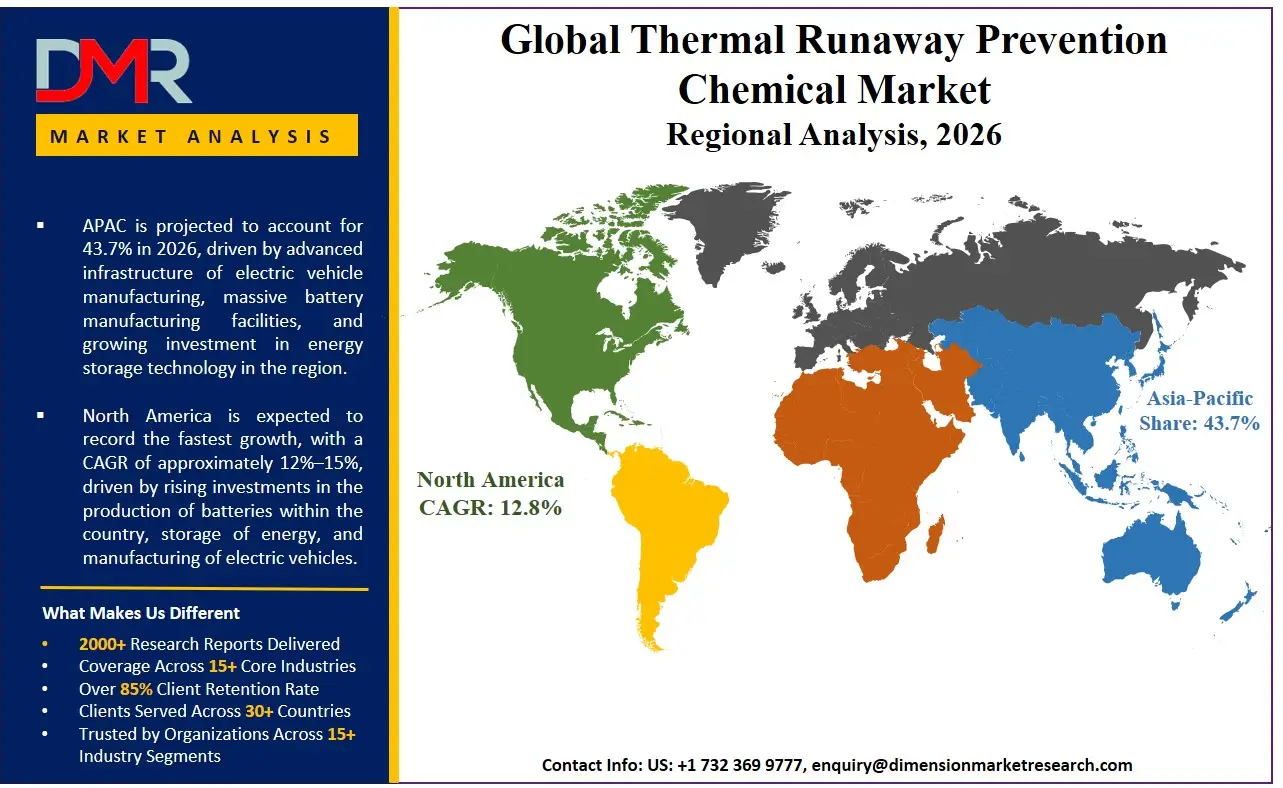
The Asia-Pacific region will dominate the Thermal Runaway Prevention Chemical Market with a market share of 43.7% in 2026, owing to the advanced infrastructure of electric vehicle manufacturing, massive battery manufacturing facilities, and growing investment in energy storage technology in the region. Countries like China, Japan, and South Korea are among the main players in the market owing to their dominance in lithium-ion batteries manufacturing and battery material development. Stringent battery safety guidelines and quick growth in the production of electric vehicles are fueling the demand for flame retardants, thermal barriers, and electrolyte safety enhancers in China.
ℹ
To learn more about this report –
Download Your Free Sample Report Here
Fastest Growing Region in the Thermal Runaway Prevention Chemical Market
The North American market is expected to become the fastest-growing region for the Thermal Runaway Prevention Chemicals market because of rising investments in the production of batteries within the country, storage of energy, and manufacturing of electric vehicles. The Inflation Reduction Act and several clean energy policies are motivating manufacturers to localize the battery supply chain and driving up the need for next-generation battery safety chemicals. Rising concerns over lithium-ion battery fires and the rise in battery storage projects at the utility scale are also driving the growth of the market.
By Region
North America
Europe
- Germany
- The U.K.
- France
- Italy
- Russia
- Spain
- Benelux
- Nordic
- Rest of Europe
Asia-Pacific
- China
- Japan
- South Korea
- India
- ANZ
- ASEAN
- Rest of Asia-Pacific
Latin America
- Brazil
- Mexico
- Argentina
- Colombia
- Rest of Latin America
Middle East & Africa
- Saudi Arabia
- UAE
- South Africa
- Israel
- Egypt
- Rest of MEA
Competitive Landscape
The Thermal Runaway Prevention Chemicals Market is distinguished by a culture of constant innovation, higher research and development expenditures, and partnerships among chemical suppliers, battery makers, and electric vehicle makers. Market players are working hard to design lightweight and environmentally friendly thermal management chemicals that will enhance their competitive advantage. Innovations such as flame-retardant chemicals, aerogels, and phase change materials are being introduced to comply with new battery safety guidelines. The market continues to be influenced by the high entry barriers caused by regulatory issues, expertise in chemical production, and product tests.
Some of the prominent players in the global Thermal Runaway Prevention Chemical are:
- 3M
- DuPont
- BASF SE
- Morgan Advanced Materials
- Saint-Gobain
- Aspen Aerogels
- Rogers Corporation
- Henkel AG & Co. KGaA
- Covestro AG
- SGL Carbon
- Elkem ASA
- KULR Technology Group
- Unifrax (Alkegen)
- LG Chem
- Sumitomo Bakelite
- Boyd Corporation
- Mersen
- Arkema
- Celanese Corporation
- SABIC
- Other Key Players
Recent Developments
- In May 2026, Full Circle Lithium Corp. has made its first significant retail launch of the FCL-X™ lithium-ion battery fire extinguisher via a strategic alliance with one of the top home improvement stores. This product is specifically targeted at increasing consumer access to fire safety products geared towards combating the rising number of risks that arise from the growing number of lithium-ion batteries found in various applications.
- In March 2026, An integrated battery safety solution was unveiled by LG Chem during InterBattery 2026 that helps to prevent and delay the onset of thermal runaway. This is because there is a rising concern for battery safety due to increased cases of overheating of batteries in electric cars. The battery safety solution uses flame-retardant engineering plastics and Nexula® aerogel thermal barrier materials to restrict the spread of heat, flames, and pressure between adjacent battery cells.
- In September 2025, GELRAMIC™ is a technology that was invented by DIC Corporation as a fire suppression pad for lithium-ion batteries aimed at lowering possible dangers from thermal runaway processes. It consists of a special gel that can absorb heat and prevent temperature rises as well as fire propagation. At high temperatures, it becomes a solid ceramic layer that serves as insulation and protects from possible debris and heat transfer. DIC Corporation has tested this material among its customers with the application to batteries recycling and plans further deployment on bicycles and EV batteries.
Report Details
| Report Characteristics |
| Market Size (2026) |
USD 2.1 Bn |
| Forecast Value (2035) |
USD 5.6 Bn |
| CAGR (2026–2035) |
11.3% |
| Historical Period |
2021 – 2025 |
| Forecast Period |
2027 – 2035 |
| Base Year |
2025 |
| Estimate Year |
2026 |
| Segments Covered |
By Chemical Type, By Function, By Battery Type, By Application |
| Regional Coverage |
North America – The US and Canada; Europe – Germany, The UK, France, Russia, Spain, Italy, Benelux, Nordic, & Rest of Europe; Asia-Pacific – China, Japan, South Korea, India, ANZ, ASEAN, Rest of APAC; Latin America – Brazil, Mexico, Argentina, Colombia, Rest of Latin America; Middle East & Africa – Saudi Arabia, UAE, South Africa, Turkey, Egypt, Israel, & Rest of MEA |
Frequently Asked Questions
How big is the Thermal Runaway Prevention Chemical Market?
▾ The Thermal Runaway Prevention Chemical Market size is expected to reach USD 2.1 billion by 2026 and is projected to reach USD 5.6 billion by the end of 2035.
What is the CAGR of the Thermal Runaway Prevention Chemical Market from 2026 to 2035?
▾ The market is growing at a CAGR of 11.3 percent over the forecasted period.
What factors are driving the growth of the Thermal Runaway Prevention Chemical Market?
▾ Need for Chemicals that Avoid Thermal Runaway Because of High Manufacturing of Electric Vehicles, and more are the factors driving the growth of the Thermal Runaway Prevention Chemical Market.
What are the major trends in the Thermal Runaway Prevention Chemical Market?
▾ Use of Advanced Phase Change and Aerogel Materials, and more are some of the major trends in the market.
Who are the key players in the Thermal Runaway Prevention Chemical Market?
▾ Some of the key players in the Thermal Runaway Prevention Chemical Market include LG, BASF, 3M, and more.
How is the Thermal Runaway Prevention Chemical Market segmented?
▾ The Thermal Runaway Prevention Chemical Market is segmented by chemical type, function, battery type, application.
Which region held the largest share of the Thermal Runaway Prevention Chemical Market in 2026?
▾ Asia pacific is set to lead the Thermal Runaway Prevention Chemical market with an estimated 43.7% share in 2026.
Which region is expected to grow the fastest in the Thermal Runaway Prevention Chemical Market?
▾ North America is the fastest-growing region in the Thermal Runaway Prevention Chemical market during the forecast period.