What is the Thermoplastic Polyurethane Market Size?
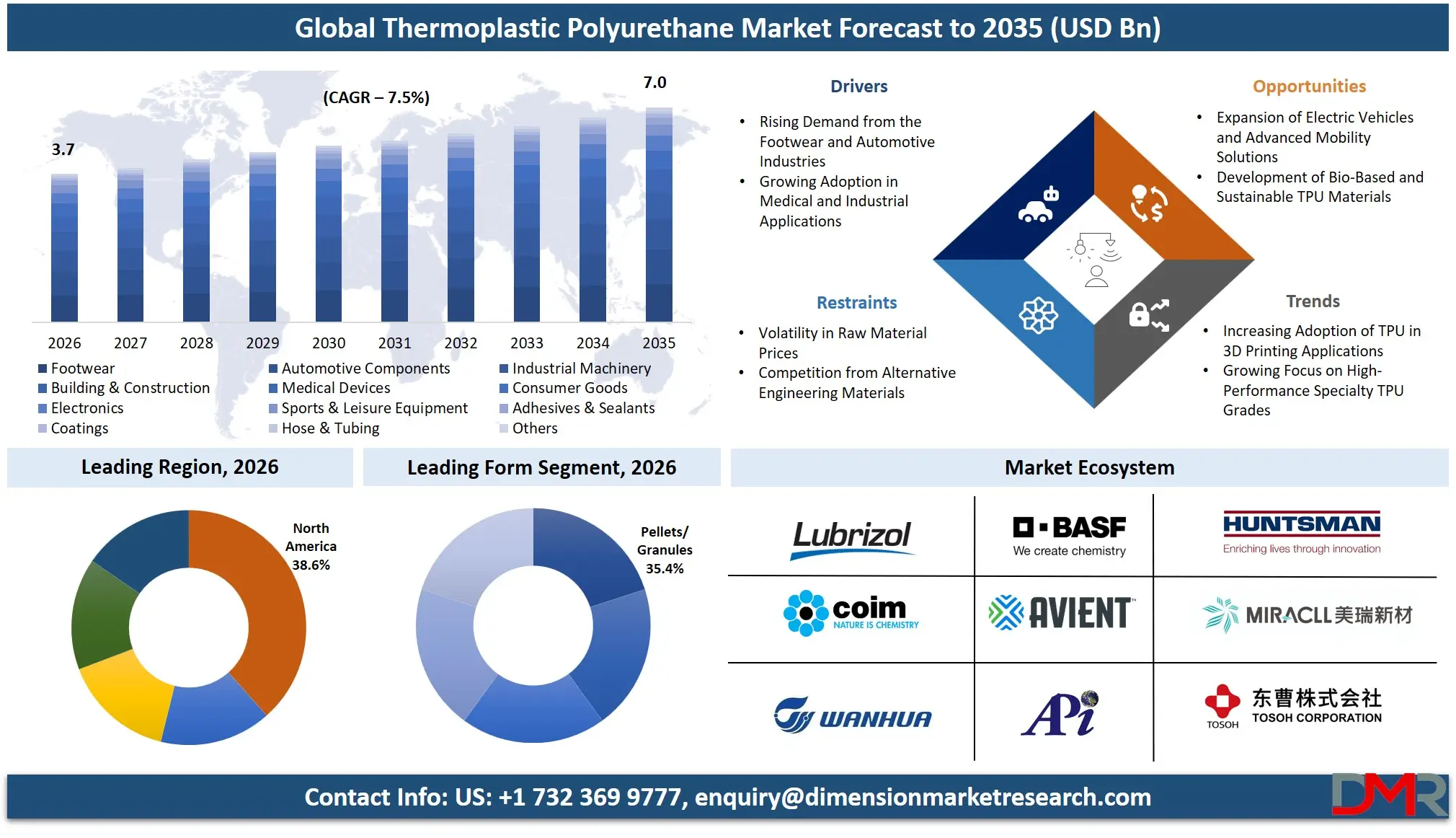
The Global Thermoplastic Polyurethane (TPU) Market is expected to reach a value of USD 3.7 billion in 2026, and it is further anticipated to reach USD 7.0 billion by 2035, growing at a CAGR of 7.5% during the forecast period.
ℹ
To learn more about this report –
Download Your Free Sample Report Here
The TPU market has been growing at a robust rate, driven by industries seeking high-performance materials that bridge the gap between rigid plastics and flexible rubber. The market consists of diverse raw material chemistries, including polyether, polyester, and bio-based variants, which are processed through methods like injection molding, extrusion, and 3D printing to create advanced components. The increasing demand for lightweight automotive parts, durable footwear, and biocompatible medical devices is driving the necessity for specialized TPU grades. Consumer goods and industrial applications remain the most frequent adopters, with aromatic TPU and polyether-based types continuing to be the most popular due to their balanced mechanical properties and cost-effectiveness. The footwear, automotive, and medical device industries are key players, as they need materials that offer a combination of flexibility, chemical resistance, and high tensile strength.
The US Thermoplastic Polyurethane Market
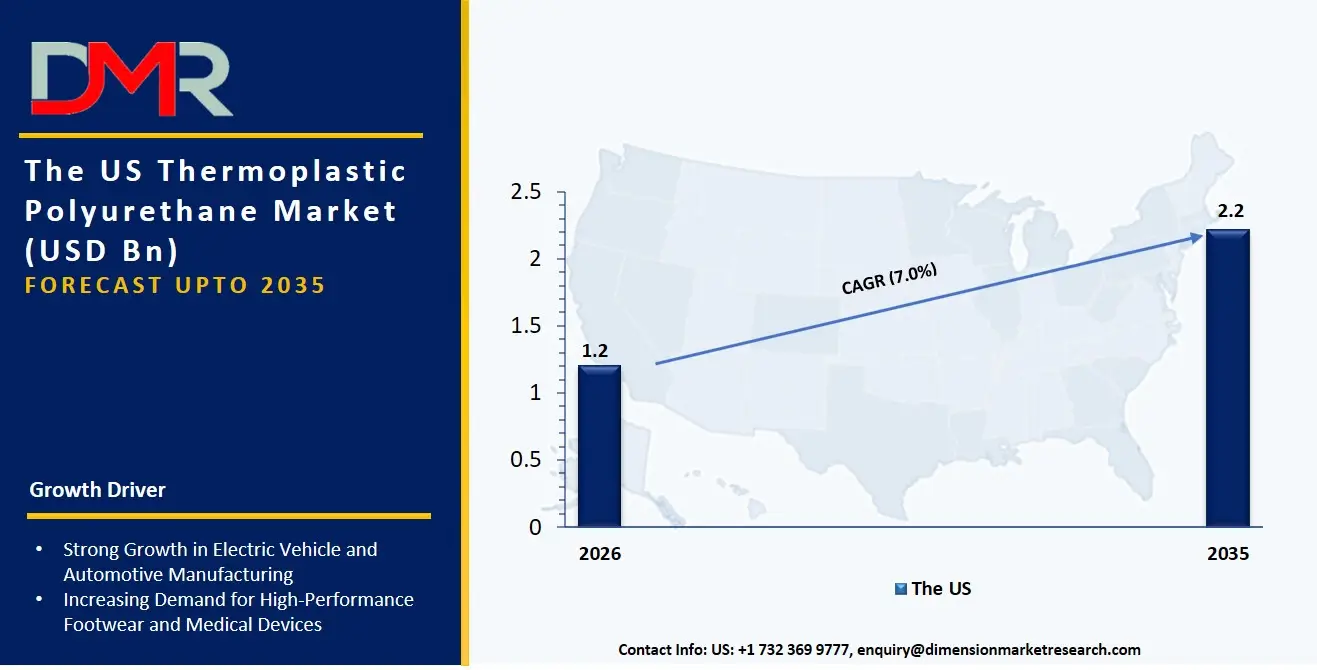
The US Thermoplastic Polyurethane Market is projected to reach USD 1.2 billion in 2026 at a compound annual growth rate of 7.0% over its forecast period, culminating in a value of USD 2.2 billion by 2035.
ℹ
To learn more about this report –
Download Your Free Sample Report Here
The US continues to be a dominant and technologically advanced market for TPU, driven by stringent regulatory standards in medical devices and the rapid pace of innovation in additive manufacturing. The market has been typified by high demand for polycarbonate-based TPU in healthcare applications, where durability and biostability are paramount. Besides, the shift toward high-performance athletic and athleisure footwear is producing a parallel need for advanced polyester-based TPU grades that offer superior cushioning and energy return.
The Europe Thermoplastic Polyurethane Market
The Europe Thermoplastic Polyurethane Market is estimated to be valued at USD 1.1 billion in 2026 and is further anticipated to reach USD 2.0 billion by 2035 at a CAGR of 6.8%. Regulatory frameworks including REACH and the EU's circular economy action plan have a significant impact on the European market and drive the need to employ bio-based TPU and advanced mechanical recycling processes. Accelerated growth in extrusion-grade TPU for automotive lightweighting is also being experienced in the region as manufacturers in Germany and France strive to replace traditional rubber and metal components with durable, processable polymers. In addition, the push for sustainability is challenging raw material suppliers to create dedicated circular solutions that maintain material performance while ensuring end-of-life recyclability.
The Japan Thermoplastic Polyurethane Market
The Japan Thermoplastic Polyurethane Market is projected to be valued at USD 245.9 million in 2026 at a CAGR of 5.8%. The Japanese market is unique, with a corporate drive toward precision manufacturing and miniaturization in the electronics and robotics sectors. Aliphatic TPU for non-yellowing protective films and soft-grade TPU for advanced elastomeric components make up a large part of the specialized spending. There is also a strong need for high-purity TPU pellets to bridge the gap between traditional rubber molding and advanced over-molding techniques in consumer electronics, forming a niche in hydrolysis-resistant and adhesion-modified grades.
Key Takeaways
- Market Size & Forecast: The Global Thermoplastic Polyurethane market is projected to reach USD 3.7 billion in 2026, expanding significantly to USD 7.0 billion by 2035, fueled by the dual drivers of lightweight material substitution and the mandatory search for sustainable polymer solutions.
- Growth Rate & Outlook: Global market growth is expected at a CAGR of 7.5%, driven by a critical demand for high-durability components in electric vehicles and the escalating complexity of producing multi-material assemblies without adhesives.
- Primary Growth Drivers: Key forces include the widespread migration from conventional rubbers to TPU in automotive interiors, the need for soft-touch, chemical-resistant materials in consumer electronics, and the validation of 3D printing filaments for on-demand industrial parts.
- Key Market Trends: Major trends include the rise of bio-based TPU derived from plant-based polyols, the use of AI-driven simulation tools within injection molding processes to predict warpage and shrinkage, and the shift toward aliphatic TPU grades in optical applications requiring permanent clarity.
- By Type Analysis: Aromatic TPU types are expected to dominate volume discussions due to their cost-performance balance. However, aliphatic TPU is increasingly required for premium applications where UV stability and non-yellowing optical properties are non-negotiable.
- By Application Analysis: Footwear and Automotive are the most lucrative verticals due to high-volume performance needs. Medical Devices is the fastest-growing sector as biocompatible, sterilizable polycarbonate-based TPU becomes critical for wearable drug delivery and surgical instruments.
- Regional Leadership: North America is poised to dominate this market with 38.6% of the market share in 2026 due to its advanced healthcare infrastructure and the rapid adoption of 3D printing technologies in manufacturing.
What is the Thermoplastic Polyurethane (TPU)?
Thermoplastic Polyurethanes are a versatile class of linear segmented block copolymers offered by raw material manufacturers, compounders, and distributors to assist product designers in navigating the full material selection lifecycle. These materials, unlike commodity thermoplastics, are defined by a combination of hard and soft segments that deliver rubber-like elasticity alongside plastic-like processability. This involves Polyester and Polyether chemistries for establishing a strategic performance baseline, Bio-Based formulations to reduce carbon footprints, and Aliphatic types for applications where UV color stability is paramount. With 80% of new consumer products requiring some form of soft-touch or durable flexible component, TPU is needed to achieve impact resistance, abrasion performance, and haptic quality, making polymer investments translate into tangible product differentiation, as opposed to mere material cost reduction.
Use Cases
- Footwear Cushioning Systems: Footwear brands utilize expanded polyester-based TPU pellets processed via extrusion and injection molding to create midsoles that fuse lightweight cushioning with extreme resilience, providing superior energy return in high-performance running shoes.
- Medical Catheter Liners: Medical device manufacturers use polycarbonate-based TPU film and pellets to produce thin-walled, torqueable catheter liners that maintain structural integrity during sterilization and invasive procedures, meeting stringent USP Class VI standards.
- Automotive Interior Skins: Automotive tier-1 suppliers deploy aromatic TPU powders in slush molding and calendering processes to manufacture soft-touch instrument panel skins that resist UV degradation, scratching, and chemical exposure from common cleaning agents.
- Additive Manufacturing of Orthotics: Design firms use TPU filament in 3D printing to produce customized flexible orthotic insoles, leveraging lattice structures impossible to create with traditional compression molding, to provide patient-specific support and comfort.
How AI is Transforming the Thermoplastic Polyurethane Market?
AI is changing the TPU industry by accelerating formulation chemistry, as well as enhancing operational efficiency. In extrusion and injection molding processing, AI-based finite element analysis tools have the potential to automatically predict complex flow patterns and cooling rates, greatly minimizing manual trial-and-error and project timelines. Meanwhile, AI-powered sensors in compounding facilities allow manufacturers to better control batch-to-batch consistency by detecting subtle viscosity shifts and suggesting real-time parameter adjustments to reinforce quality assurance protocols.
Product development and sustainability projects are also revolving around AI. In the realm of raw material formulation, intelligent generative chemistry models are used to continuously screen virtual molecular combinations, identifying bio-based polyol candidates that meet specific hardness and hydrolysis resistance targets years faster than traditional lab work. Moreover, machine vision systems are complementing quality inspection by simulating human visual checks, visualizing microscopic surface defects in extruded film or printed filaments before significant material waste occurs.
Market Dynamics
Key Drivers in the Global Thermoplastic Polyurethane Market
Rising Demand from the Footwear and Automotive Industries
The expanding footwear and automotive industries are major drivers of the global thermoplastic polyurethane (TPU) market. TPU offers excellent abrasion resistance, flexibility, durability, and lightweight characteristics, making it ideal for shoe soles, automotive interior components, seals, gaskets, cable insulation, and protective parts. Automotive manufacturers increasingly adopt TPU to reduce vehicle weight and improve fuel efficiency while maintaining performance. Similarly, premium sports footwear brands rely on TPU for enhanced cushioning and durability. Continuous growth in electric vehicle production and global footwear consumption is expected to sustain robust demand for TPU across both industries.
Growing Adoption in Medical and Industrial Applications
TPU is increasingly utilized in healthcare and industrial applications because of its biocompatibility, chemical resistance, flexibility, and sterilization compatibility. Medical-grade TPU is widely used in catheters, tubing, wound dressings, surgical components, and wearable healthcare devices. Industrial sectors employ TPU in conveyor belts, rollers, hoses, seals, and protective films due to its excellent wear resistance and long operational life. Rising healthcare investments, aging populations, and expanding industrial automation have significantly increased demand for high-performance engineering materials. These factors continue to strengthen TPU consumption across medical and industrial sectors, supporting sustained market growth globally.
Restraints in the Global Thermoplastic Polyurethane Market
Volatility in Raw Material Prices
The TPU market faces significant challenges from fluctuating prices of key raw materials, including diisocyanates and polyols, which are largely derived from petrochemical feedstocks. Changes in crude oil prices, supply disruptions, geopolitical uncertainties, and transportation costs directly affect production expenses and manufacturer profitability. Smaller manufacturers often struggle to absorb these cost increases, leading to pricing pressures throughout the supply chain. Price volatility also creates uncertainty for long-term procurement contracts and investment planning. Consequently, unstable raw material costs remain one of the primary restraints limiting predictable growth in the global TPU industry.
Competition from Alternative Engineering Materials
Thermoplastic polyurethane competes with several alternative materials, including thermoplastic elastomers (TPEs), polyvinyl chloride (PVC), silicone rubber, thermoplastic vulcanizates (TPVs), and conventional rubber compounds. In cost-sensitive applications, manufacturers frequently select lower-cost alternatives despite TPU's superior performance characteristics. Certain specialized applications also require materials with higher heat resistance or unique chemical properties unavailable in standard TPU formulations. This competitive landscape limits TPU adoption in price-driven industries and creates pricing pressure for manufacturers. Continuous innovation is therefore necessary to differentiate TPU and maintain its competitive advantage across diverse industrial applications.
Growth Opportunities in the Global Thermoplastic Polyurethane Market
Expansion of Electric Vehicles and Advanced Mobility Solutions
The rapid expansion of electric vehicles presents substantial growth opportunities for TPU manufacturers. Electric vehicles require lightweight, durable, and electrically insulating materials for battery protection, charging cables, connectors, interior components, seals, and vibration-dampening parts. TPU's excellent flexibility, abrasion resistance, and mechanical performance make it highly suitable for these demanding applications. Governments worldwide continue promoting vehicle electrification through supportive regulations and incentives, accelerating EV production. As battery technologies evolve and automotive manufacturers seek advanced lightweight materials, TPU demand is expected to increase significantly throughout the global mobility sector.
Development of Bio-Based and Sustainable TPU Materials
Growing environmental awareness and stricter sustainability regulations are encouraging the development of bio-based thermoplastic polyurethane produced from renewable raw materials. Manufacturers are investing in innovative formulations that reduce dependence on fossil-based feedstocks while maintaining high mechanical performance and durability. Sustainable TPU solutions appeal to footwear, automotive, consumer goods, and medical manufacturers seeking environmentally responsible materials without compromising product quality. Increasing corporate sustainability commitments and circular economy initiatives are expected to accelerate commercialization of recyclable and bio-based TPU products, creating attractive long-term growth opportunities for global market participants.
Trends in the Global Thermoplastic Polyurethane Market
Increasing Adoption of TPU in 3D Printing Applications
The use of TPU in additive manufacturing is growing rapidly due to its flexibility, elasticity, and excellent layer adhesion. TPU filaments enable manufacturers to produce customized prototypes, medical devices, footwear components, industrial tools, and functional end-use parts with complex geometries. Industries increasingly utilize TPU-based 3D printing for rapid product development, low-volume production, and personalized manufacturing solutions. Advancements in printing technologies and expanding adoption of digital manufacturing are making TPU one of the preferred flexible materials for additive manufacturing. This trend is expected to continue as industrial 3D printing applications expand globally.
Growing Focus on High-Performance Specialty TPU Grades
Manufacturers are increasingly developing specialty TPU grades designed for demanding applications requiring enhanced chemical resistance, flame retardancy, transparency, UV stability, conductivity, and antimicrobial performance. These advanced materials are finding greater acceptance in medical devices, electronics, aerospace, electric vehicles, and high-end consumer products. Continuous investment in research and development is enabling companies to create customized TPU formulations tailored to specific industry requirements. As end users seek higher-performance materials capable of meeting increasingly stringent technical standards, specialty TPU products are becoming an important trend shaping the future of the global market.
Research Scope and Analysis
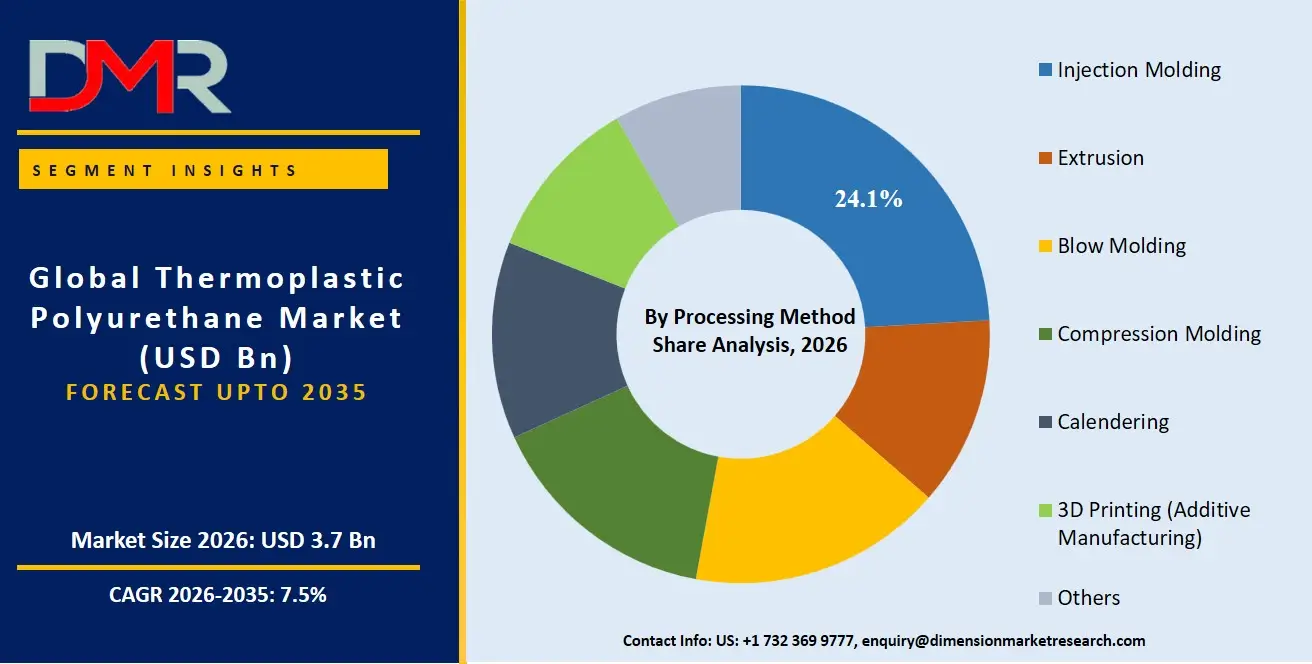
The global thermoplastic polyurethane (TPU) market is segmented by raw material, type, processing method, hardness, form, application, and distribution channel. These segments reflect the material's wide range of performance characteristics and manufacturing processes, enabling its use across diverse industrial and commercial applications while addressing varying customer requirements and end-use demands.
ℹ
To learn more about this report –
Download Your Free Sample Report Here
By Raw Material Analysis
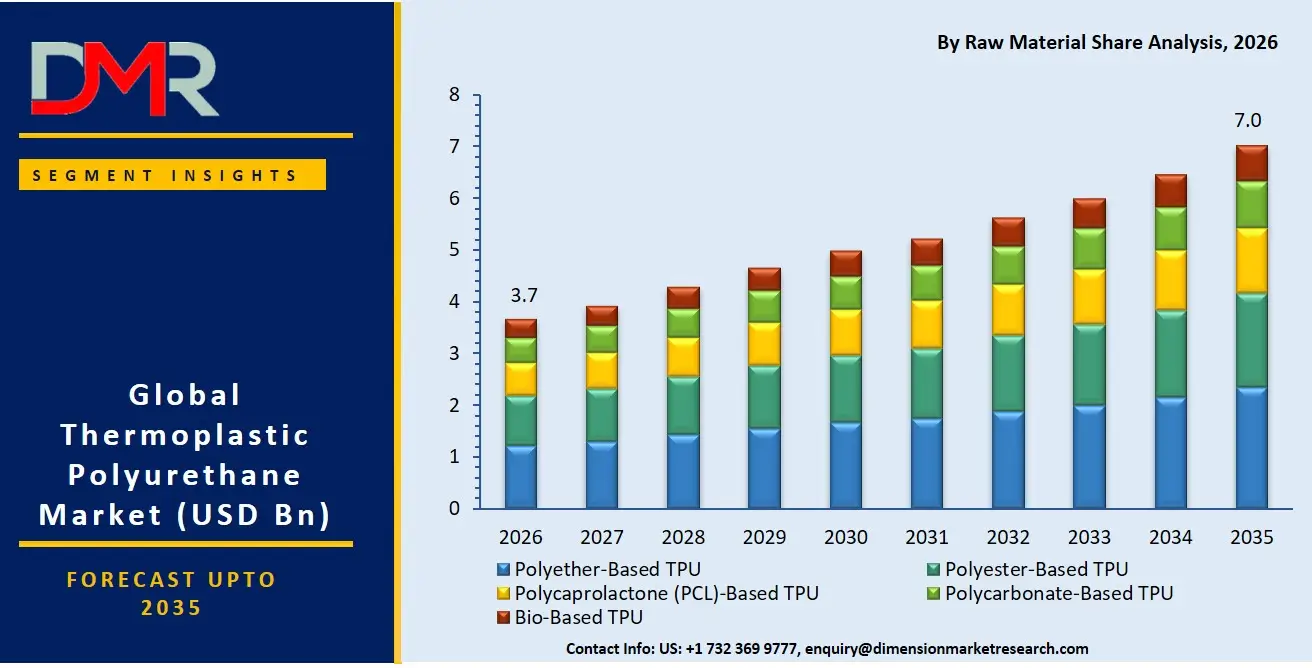
Polyether-based TPU is projected to dominate the raw material segment due to its superior hydrolysis resistance, excellent low-temperature flexibility, microbial resistance, and long-term durability in demanding environments. These properties make it the preferred choice for automotive components, medical tubing, industrial hoses, wire and cable jacketing, and outdoor applications exposed to moisture and harsh conditions.
ℹ
To learn more about this report –
Download Your Free Sample Report Here
Manufacturers also favor polyether-based TPU because it provides excellent dynamic performance, abrasion resistance, and elasticity while maintaining mechanical strength over prolonged use. Growing demand for durable, weather-resistant, and high-performance TPU materials across transportation, healthcare, and industrial sectors continues to reinforce the leadership of polyether-based TPU in the global market.
By Type Analysis
Aromatic TPU is anticipated to hold the dominant position because it offers an excellent balance of mechanical strength, abrasion resistance, elasticity, and cost-effectiveness. It is widely utilized in footwear, automotive interiors, industrial components, conveyor belts, cables, films, and consumer goods where UV stability is not the primary requirement. Aromatic TPU is easier to manufacture and more economical than aliphatic grades, making it suitable for large-volume production across multiple industries. Continuous demand from footwear manufacturers and industrial processing applications, combined with its versatility in injection molding and extrusion, enables aromatic TPU to account for the largest share of the global thermoplastic polyurethane market.
By Processing Method Analysis
Injection molding is expected to dominate the processing method segment owing to its capability for high-volume, precision manufacturing of complex TPU components with minimal material waste. The process is extensively used to produce footwear soles, automotive interior parts, consumer products, electronics housings, and industrial components requiring dimensional accuracy and excellent surface finish. Its short production cycles, automation compatibility, and cost efficiency make it highly attractive for large-scale manufacturing. The growing adoption of TPU in lightweight automotive components, wearable electronics, and medical devices further strengthens the demand for injection molding, ensuring its leading position among TPU processing technologies worldwide.
By Hardness Analysis
Medium-grade TPU is projected to dominate the hardness segment because it provides an optimal balance between flexibility, toughness, abrasion resistance, and load-bearing capability. These materials are extensively used in footwear, automotive parts, industrial rollers, conveyor belts, hoses, consumer goods, and protective equipment where moderate hardness is essential for performance and durability. Manufacturers prefer medium-grade TPU because it offers excellent processing characteristics across injection molding and extrusion while meeting diverse application requirements. Its broad usability across numerous industries, combined with increasing demand for durable yet flexible engineering materials, allows medium-grade TPU to maintain the largest share of the global market.
By Form Analysis
Pellets and granules are projected to represent the dominant form because they serve as the standard feedstock for virtually all TPU processing methods, including injection molding, extrusion, blow molding, and 3D printing filament production. Their uniform size, ease of storage, efficient transportation, and consistent melting behavior improve manufacturing productivity while minimizing processing defects. TPU producers primarily supply materials in pellet form to compounders and manufacturers for conversion into finished products. Increasing industrial automation and growing production of automotive, footwear, medical, and consumer products continue driving demand for pelletized TPU, making this form the largest contributor to global TPU consumption.
By Application Analysis
Footwear is poised to dominate the application segment due to TPU's exceptional abrasion resistance, flexibility, resilience, lightweight properties, and superior cushioning performance. TPU is extensively used in athletic shoes, safety footwear, sandals, sports shoes, midsoles, outsoles, and decorative components because it enhances durability and wearer comfort. Global sportswear brands increasingly incorporate TPU to improve product performance and design flexibility. Rising consumer spending on premium footwear, expanding athletic participation, and continuous product innovation have significantly increased TPU consumption in footwear manufacturing. The industry's massive production volumes ensure footwear remains the largest application segment within the global thermoplastic polyurethane market.
By Distribution Channel Analysis
Direct sales are projected to dominate the distribution channel because TPU manufacturers primarily supply large industrial customers, OEMs, and converters through long-term contractual relationships. Direct procurement enables customers to obtain customized material grades, consistent product quality, technical assistance, competitive pricing, and reliable supply chain support. Major automotive, footwear, medical, and electronics manufacturers require specialized TPU formulations that are typically delivered directly from producers rather than intermediaries. As TPU applications become increasingly customized and technically demanding, direct manufacturer-to-customer partnerships continue expanding, reinforcing direct sales as the leading distribution channel in the global thermoplastic polyurethane market.
The Global Thermoplastic Polyurethane Market Report is segmented on the basis of the following:
By Raw Material
- Polyether-Based TPU
- Polyester-Based TPU
- Polycaprolactone (PCL)-Based TPU
- Polycarbonate-Based TPU
- Bio-Based TPU
By Type
- Aromatic TPU
- Aliphatic TPU
By Processing Method
- Injection Molding
- Extrusion
- Blow Molding
- Compression Molding
- Calendering
- 3D Printing (Additive Manufacturing)
- Others
By Hardness
- Medium Grade TPU
- Soft Grade TPU
- Hard Grade TPU
By Form
- Pellets/Granules
- Powder
- Film
- Sheet
- Filament
By Application
- Footwear
- Automotive Components
- Industrial Machinery
- Building & Construction
- Medical Devices
- Consumer Goods
- Electronics
- Sports & Leisure Equipment
- Adhesives & Sealants
- Coatings
- Hose & Tubing
- Others
By Distribution Channel
- Direct Sales
- Distributors & Wholesalers
- Online Sales
Regional Analysis
Leading Region by Market Share
ℹ
To learn more about this report –
Download Your Free Sample Report Here
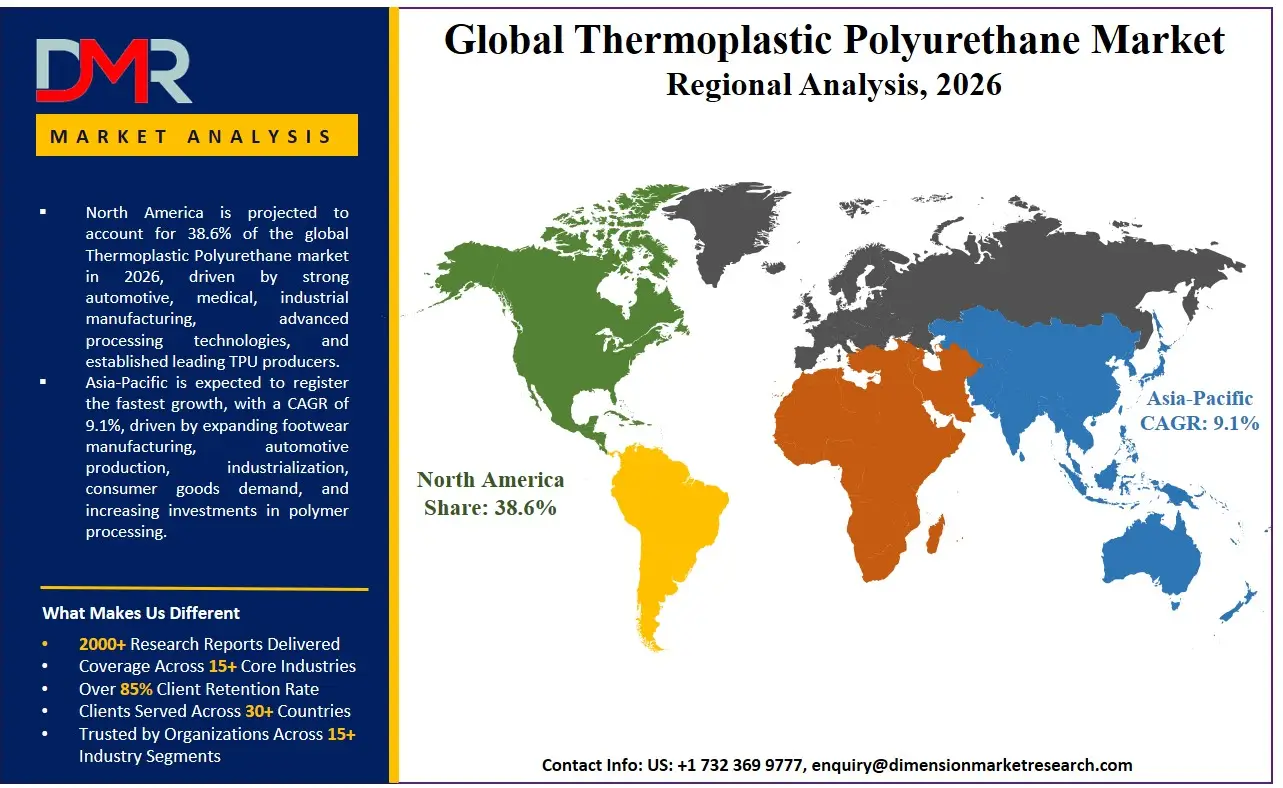
North America is poised to dominate the global TPU market, as it is projected to hold 38.6% of the market share by the end of 2026. The United States, which dominates North America, has the highest share in the TPU market because of the unmatched concentration of advanced medical device manufacturers and the aggressive lightweighting agendas of the automotive "Big Three." The area has an established ecosystem of global chemical conglomerates, boutique custom compounders, and a rich pool of application engineers and polymer scientists. Enterprise investment in wearable medical sensors, high-durability EV components, and the overall substitution of PVC with phthalate-free materials contribute to the continued demand for medical-grade TPU, aliphatic film, and bio-based feedstocks along with on-demand additive manufacturing filaments. Moreover, a robust sports and outdoor culture persistently finances upcoming athletic footwear brands that need expert material suppliers to achieve expeditious design cycles and certified biodegradability claims.
Fastest-Growing Regional Market
Asia-Pacific is expected to be the most rapidly expanding TPU market, driven by the government-led sweeping infrastructure and manufacturing initiatives in China, India, and Vietnam. The fast-paced economic growth, the rise of a middle-income consumer class, and the dynamic expansion of the electronics and footwear contract manufacturing bases are compelling established global brands and local giants to discard legacy PVC and rubber compounds. Extrusion-grade and injection-molding-grade TPU is in high demand to help these large producers head in the direction of automated, high-speed material conversion. There is also a severe lack of qualified material science talent in the region for specialized synthesis, and it is necessary to outsource technical services from global raw material leaders to implement polyester chemistry and cover the skills gap to enable faster investments in local compounding projects.
By Region
North America
Europe
- Germany
- The U.K.
- France
- Italy
- Russia
- Spain
- Benelux
- Nordic
- Rest of Europe
Asia-Pacific
- China
- Japan
- South Korea
- India
- ANZ
- ASEAN
- Rest of Asia-Pacific
Latin America
- Brazil
- Mexico
- Argentina
- Colombia
- Rest of Latin America
Middle East & Africa
- Saudi Arabia
- UAE
- South Africa
- Israel
- Egypt
- Rest of MEA
Competitive Landscape
The competitive environment of the global TPU industry has become highly dynamic, with a heterogeneous array of multinational chemical giants, specialized niche compounders, and the material science divisions of large footwear brands. The key to success will be profound strategic backward integration into bio-polyols, because secure access to sustainable feedstocks will unlock the necessary premium pricing and early specification in next-generation consumer goods platforms. The movement towards market consolidation is rapidly progressing, with traditional petrochemical players acquiring bio-succinic acid and additive manufacturing filament specialists to stay afloat. Proprietary intellectual property, including patented hydrolysis-resistant formulations and industry-specific application acceleration testing protocols, is becoming a more important basis of competitive differentiation than just unit price or generic technical data sheets.
Some of the prominent players in the Global Thermoplastic Polyurethane Market are:
- BASF SE
- Covestro AG
- Lubrizol Corporation
- Huntsman Corporation
- Wanhua Chemical Group Co., Ltd.
- COIM Group
- Miracll Chemicals Co., Ltd.
- American Polyfilm, Inc.
- Tosoh Corporation
- Avient Corporation
- Epaflex Polyurethanes S.p.A.
- DIC Corporation
- Kuraray Co., Ltd.
- RTP Company
- The Dow Chemical Company
- DuPont de Nemours, Inc.
- PolyOne Polska Sp. z o.o.
- Novitex Italiana S.p.A.
- Teknor Apex Company
- Mitsui Chemicals, Inc.
- Other Key Players
Recent Developments
- March 2026: BASF SE announced the start of commercial production of its Elastollan® Flame-Retardant (FR) TPU grades at its Shanghai facility. The expansion strengthens BASF's local TPU portfolio for industrial automation, robotics, and electric vehicle charging cable applications across the Asia-Pacific region.
- December 2025: Lubrizol Corporation highlighted multiple TPU innovation initiatives, including the launch of ESTANE® BCX TPU technology for lightweight foamed footwear midsoles and the expansion of its Film Center of Excellence in Shanghai. However, no official announcement was found regarding a collaboration with a sports equipment manufacturer involving advanced aliphatic film solutions and supercritical foaming integration.
- August 2025: Covestro AG completed the acquisition of Pontacol AG, a Swiss manufacturer of multilayer thermoplastic adhesive films. The acquisition expands Covestro's specialty films business for medical technology, mobility, textiles, and industrial applications. No official evidence was found that Covestro acquired a European TPU powder specialist specifically for 3D printing materials.
Report Details
| Report Characteristics |
| Market Size (2026) |
USD 3.7 Bn |
| Forecast Value (2035) |
USD 7.0 Bn |
| CAGR (2026–2035) |
7.5% |
| The US Market Size (2026) |
USD 1.2 Bn |
| Historical Data |
2021 – 2025 |
| Forecast Data |
2027 – 2035 |
| Base Year |
2025 |
| Estimate Year |
2026 |
| Segments Covered |
By Raw Material, By Type, By Processing Method, By Hardness, By Form, By Application, and By Distribution Channel |
| Regional Coverage |
North America – The US and Canada; Europe – Germany, The UK, France, Russia, Spain, Italy, Benelux, Nordic, & Rest of Europe; Asia-Pacific – China, Japan, South Korea, India, ANZ, ASEAN, Rest of APAC; Latin America – Brazil, Mexico, Argentina, Colombia, Rest of Latin America; Middle East & Africa – Saudi Arabia, UAE, South Africa, Turkey, Egypt, Israel, & Rest of MEA |
Frequently Asked Questions
How big is the Global Thermoplastic Polyurethane Market?
▾ The Global Thermoplastic Polyurethane market is poised to be valued at USD 3.7 billion in 2026 and is projected to reach USD 7.0 billion by 2035, driven by the universal need for high-performance, processable elastomers in footwear, automotive, and medical devices.
What is the CAGR of the Global Thermoplastic Polyurethane Market from 2026 to 2035?
▾ The market is expected to grow at a CAGR of 7.5% from 2026 to 2035, reflecting the accelerating complexity of sustainable product design and the persistent substitution of rubber and PVC with advanced polyurethane elastomers.
What factors are driving the growth of the Global Thermoplastic Polyurethane Market?
▾ Key drivers include the global shift to lightweight electric vehicles, the imperative to create fully recyclable footwear, the processing advantages over thermoset rubber, and the surge in demand for biocompatible medical materials amid evolving sterilization standards.
Which region held the largest share of the Thermoplastic Polyurethane Market in 2026?
▾ North America is projected to hold the 38.6% market share in 2026, driven by a mature medical device ecosystem and aggressive enterprise investment in additive manufacturing and aliphatic TPU for premium optics and protection.
Which region is expected to grow the fastest in the Thermoplastic Polyurethane Market?
▾ The Asia-Pacific region is expected to grow the fastest, fueled by rapid footwear and electronics manufacturing expansion in China, Vietnam, and India, where polyester-based TPU is critical for transitioning high-volume factories to premium, automated production lines.
What are the major trends in the Global Thermoplastic Polyurethane Market?
▾ Major trends include the integration of generative AI into chemical formulation, the rise of bio-based and mass-balanced raw materials, the demand for self-healing paint protection films, and the focus on powder-bed additive manufacturing within complex lattice structures.
Who are the key players in the Global Thermoplastic Polyurethane Market?
▾ Key players include integrated chemical conglomerates like BASF, Covestro, and Lubrizol, as well as specialized compounders and film producers like Avery Dennison, Hexpol, and Wanhua Chemical, alongside niche bio-based TPU innovators.
How is the Global Thermoplastic Polyurethane Market segmented?
▾ The market is segmented by Raw Material, Type, Processing Method, Hardness, Form, Application, and Distribution Channel.