Market Overview
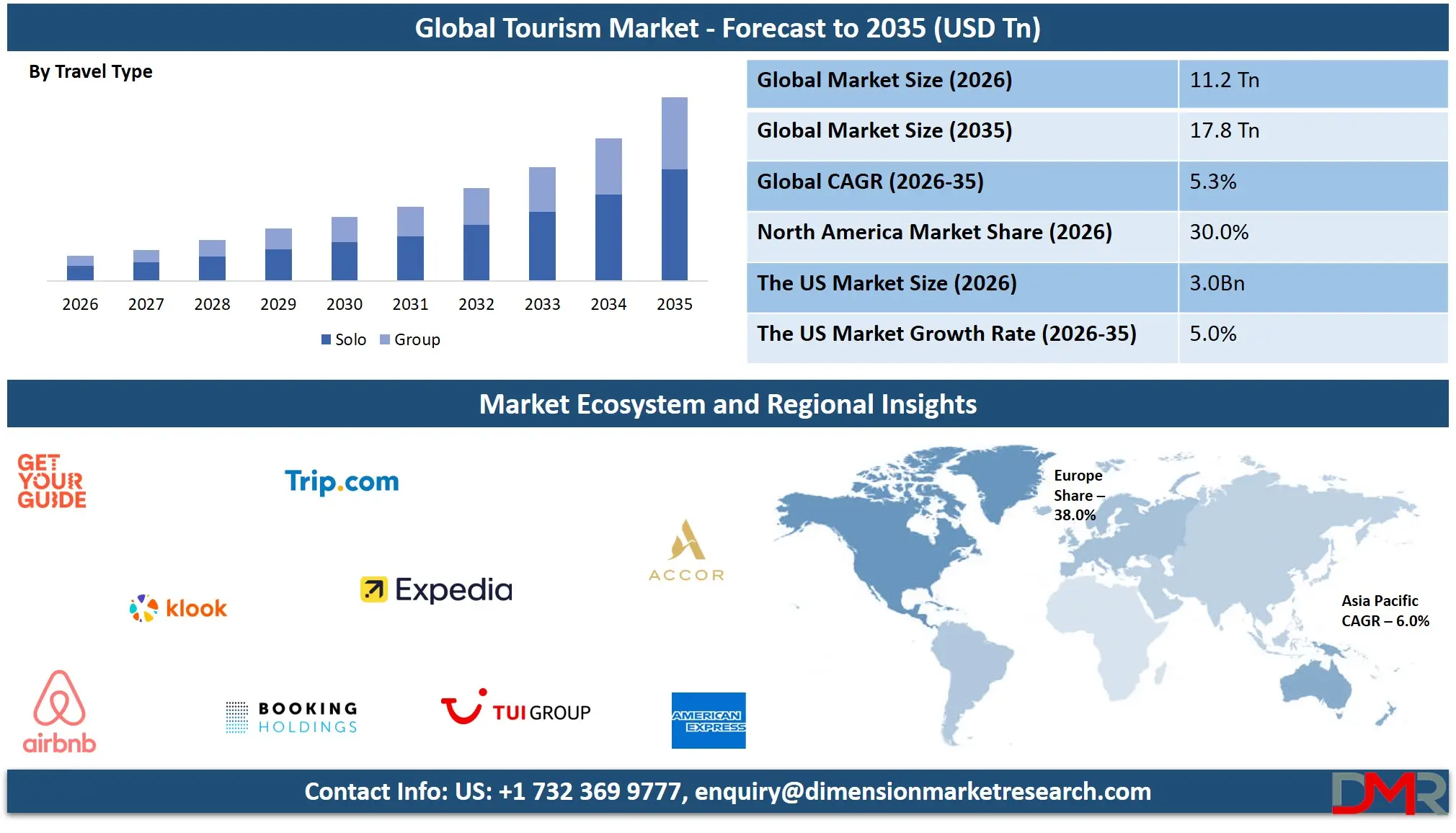
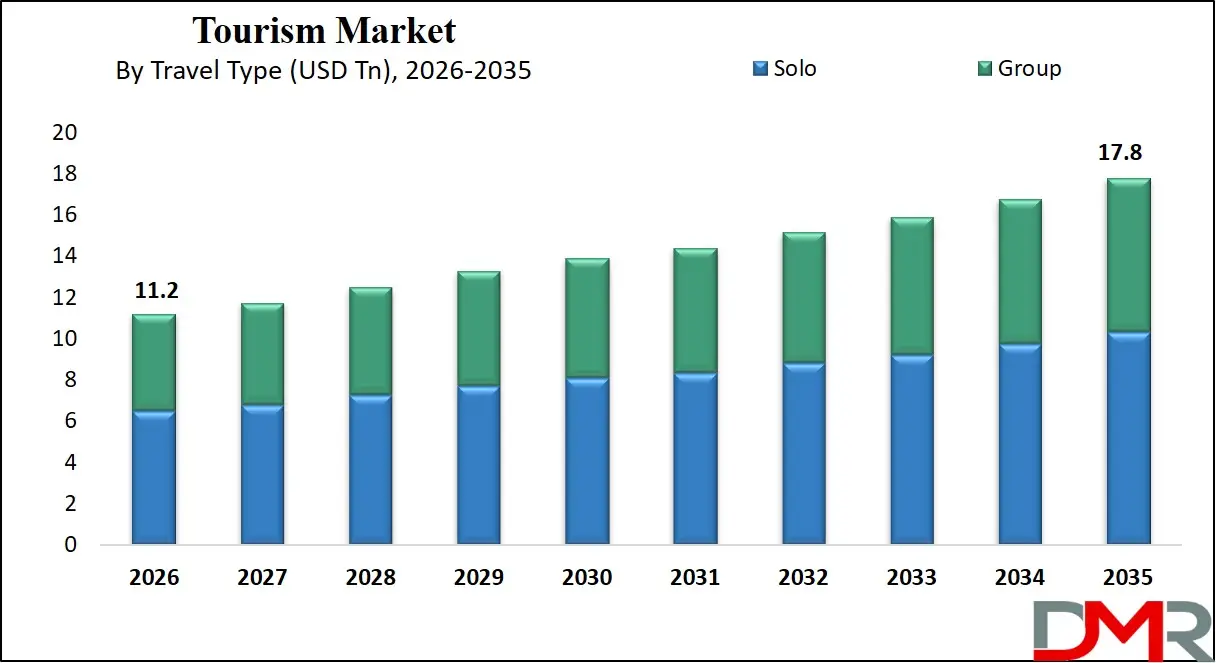
The Global Tourism Market size is projected to reach USD 11.2 trillion in 2026 and grow at a compound annual growth rate of 5.3% to reach a value of USD 17.8 trillion in 2035.
ℹ
To learn more about this report –
Download Your Free Sample Report Here
Tourism refers to the movement of individuals outside their usual environment for leisure, business, medical, or other purposes, typically for a limited duration. It encompasses a wide range of services including transportation, accommodation, food and beverage, travel planning, and entertainment. The sector integrates industries such as hospitality, aviation, and cultural services, making it a key contributor to global economic development, employment generation, and cross-cultural exchange.
The tourism ecosystem has evolved significantly with the integration of digital technologies, enabling seamless booking, personalized travel experiences, and real-time information access. The rise of online platforms, mobile applications, and data-driven insights has transformed how travelers plan and experience journeys. Additionally, niche segments such as eco-tourism, wellness tourism, and experiential travel are gaining traction, reflecting changing traveler expectations toward sustainability and authenticity.
ℹ
To learn more about this report –
Download Your Free Sample Report Here
Recent shifts include increased focus on sustainable tourism practices, smart destination development, and resilience against global disruptions. Governments and private stakeholders are investing in infrastructure modernization and digital transformation. The growing middle-class population, increasing disposable incomes, and expanding global connectivity are further accelerating tourism activities, positioning it as a dynamic and adaptive global industry.
The US Tourism Market
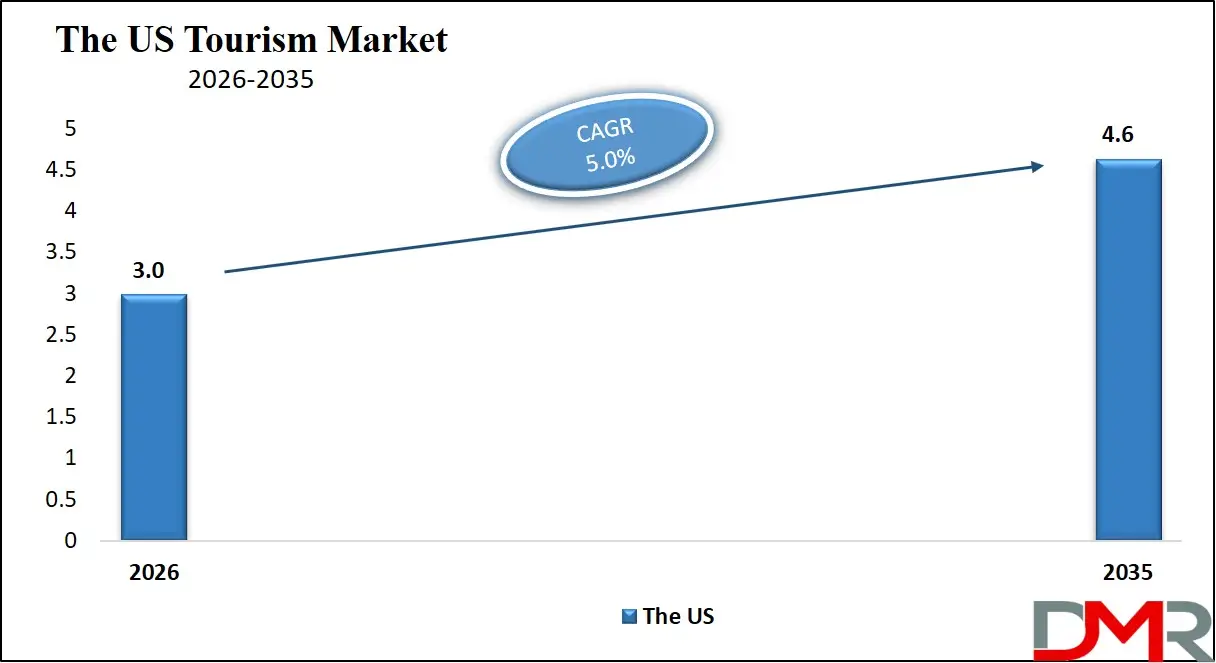
The US Tourism Market size is projected to reach USD 3.0 trillion in 2026 at a compound annual growth rate of 5.0% over its forecast period.
ℹ
To learn more about this report –
Download Your Free Sample Report Here
The US tourism market is characterized by strong domestic travel demand and a highly developed infrastructure network. Growth is supported by advanced transportation systems, diverse attractions, and a mature hospitality sector. Government initiatives promoting national parks, cultural heritage, and urban tourism play a crucial role in sustaining visitor inflow. Technological adoption, including AI-driven booking systems and personalized travel recommendations, enhances customer experience. The presence of global tourism service providers and continuous investments in smart tourism infrastructure further strengthen the market. Additionally, business and conference tourism contribute significantly, supported by world-class convention centers and corporate travel demand.
Europe Tourism Market
Europe Tourism Market size is projected to reach USD 4.3 trillion in 2026 at a compound annual growth rate of 4.7% over its forecast period.
Europe’s tourism market benefits from its rich cultural heritage, historical landmarks, and strong regional cooperation policies. Initiatives aligned with sustainability and climate goals are reshaping tourism practices, encouraging eco-friendly travel and responsible tourism. High-speed rail networks and integrated transport systems facilitate seamless cross-border travel. Countries in the region are focusing on digital tourism strategies and smart destination management to enhance visitor engagement. Seasonal tourism remains prominent, while diversification into wellness and rural tourism is increasing. Regulatory frameworks emphasizing environmental protection and cultural preservation continue to influence tourism development across the region.
Japan Tourism Market
Japan Tourism Market size is projected to reach USD 556.1 billion in 2026 at a compound annual growth rate of 4.8% over its forecast period.
Japan’s tourism market is expanding due to strong government support, infrastructure development, and global promotional campaigns. Urban centers and cultural destinations attract international travelers, while advancements in transportation, including high-speed rail, enhance accessibility. The country is leveraging technology to improve visitor experiences through smart tourism solutions and multilingual services. Growth is also driven by increasing inbound tourism and domestic travel trends. However, challenges such as demographic shifts and capacity constraints in peak seasons persist. Opportunities lie in regional tourism development and diversification into niche segments such as cultural, culinary, and wellness tourism.
Tourism Market: Key Takeaways
- Market Growth: The Tourism Market size is expected to grow by USD 6.1 trillion, at a CAGR of 5.3%, during the forecasted period of 2027 to 2035.
- By Travel Type: The solo segment is anticipated to get the majority share of the Tourism market in 2026.
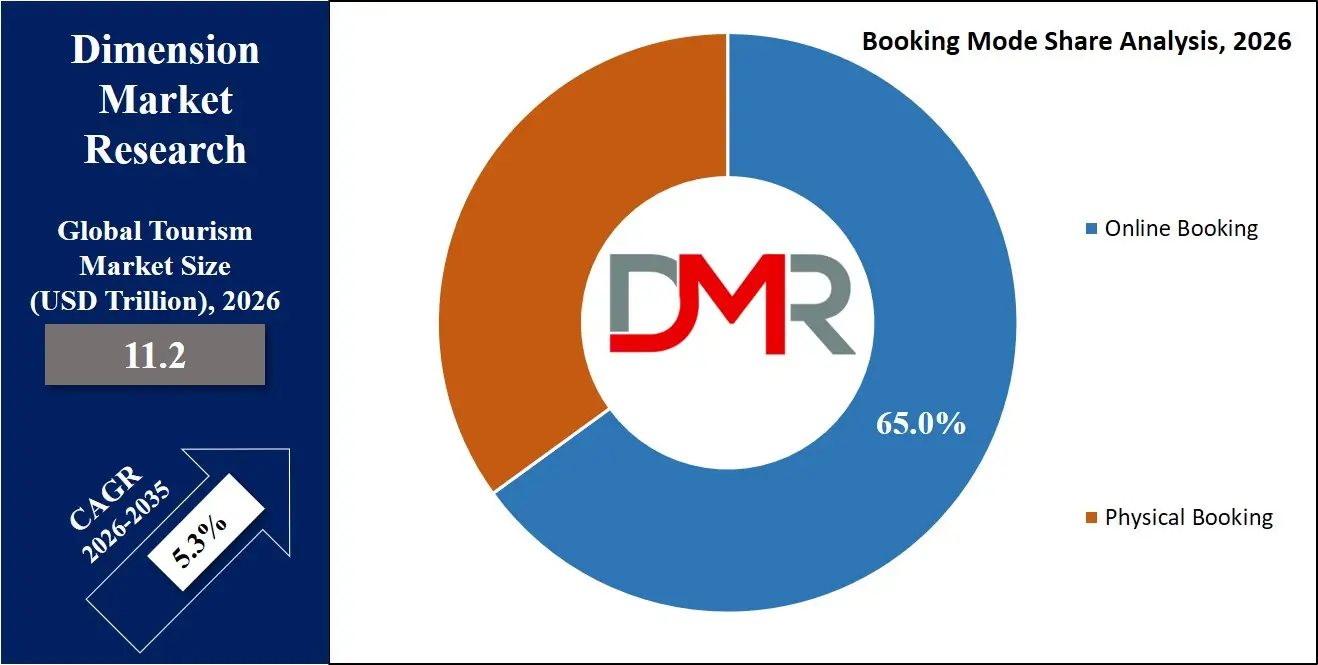
- By Booking Mode: The online segment is expected to get the largest revenue share in 2026 in the Tourism market.
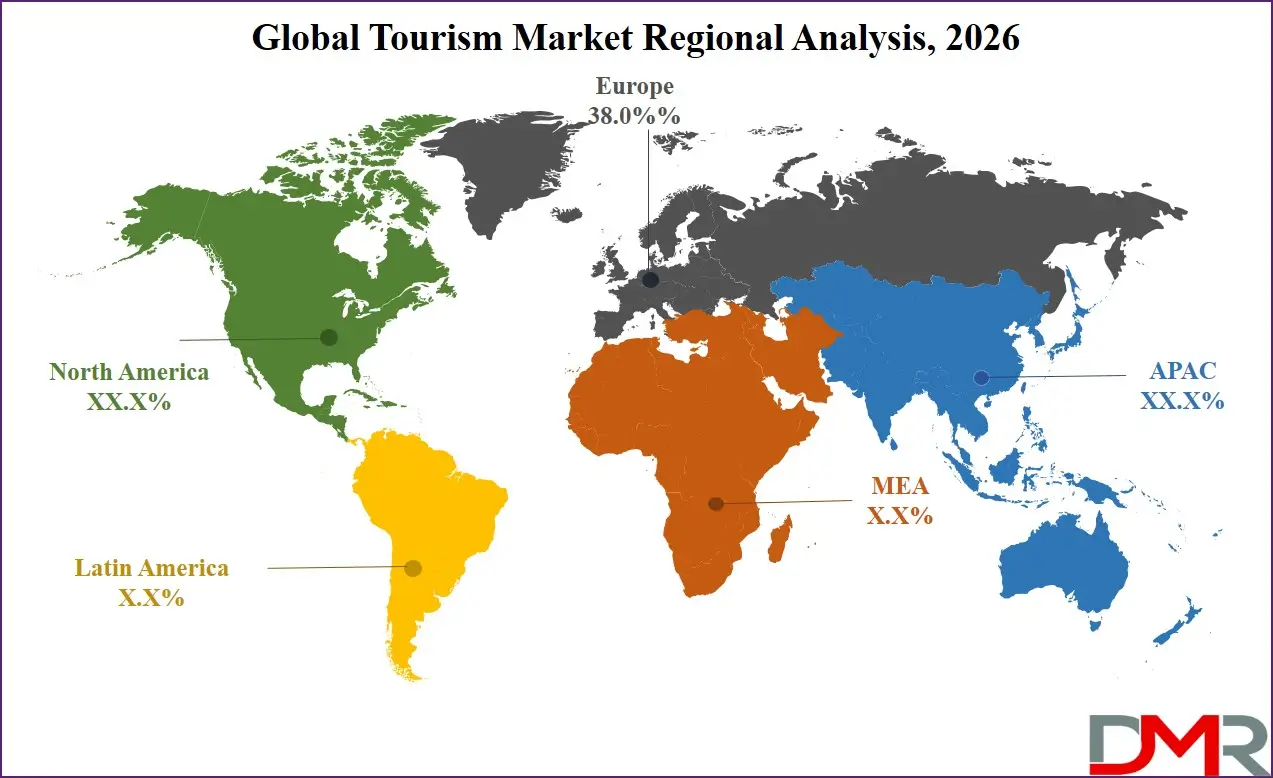
- Regional Insight: Europe is expected to hold a 38.0% share of revenue in the global Tourism market in 2026.
- Use Cases: Some of the use cases of Tourism include leisure travel, medical travel, and more.
Tourism Market: Use Cases
- Leisure Travel: Individuals travel for relaxation, entertainment, and exploration. This includes beach holidays, adventure tourism, and cultural visits, driving demand for accommodation and recreational services.
- Medical Travel: Patients travel to access affordable or specialized healthcare services. This segment combines healthcare with hospitality services and often includes post-treatment recovery tourism.
- Business Travel: Professionals travel for meetings, conferences, and corporate events. It supports industries like aviation, hotels, and event management services.
- Educational Travel: Students and researchers travel for academic purposes, including exchange programs, training, and study tours, fostering knowledge exchange.
- Religious Travel: Pilgrimage and spiritual tourism attract travelers to religious sites, significantly impacting local economies and seasonal travel trends.
- Adventure Travel: Travelers seek thrilling experiences such as trekking, diving, or wildlife safaris, contributing to niche tourism markets.
- Eco-Tourism: Focuses on sustainable travel to natural areas, promoting environmental conservation and community engagement.
Stats & Facts
- World Tourism Organization reported that international tourist arrivals reached approximately 1.3 billion in 2024.
- World Bank stated that tourism contributed around 9% to global GDP in 2024.
- International Air Transport Association recorded a 10% increase in global passenger traffic in 2025.
- United Nations noted that tourism employment accounted for over 300 million jobs globally in 2024.
- European Commission reported that tourism contributed nearly 10% to the EU’s GDP in 2024.
- US Department of Commerce indicated that travel exports exceeded USD 200 billion in 2025.
- Ministry of Tourism India recorded over 9 million foreign tourist arrivals in 2024.
- Japan National Tourism Organization reported more than 30 million inbound visitors in 2025.
- OECD highlighted that domestic tourism accounted for nearly 75% of total tourism spending in 2024.
- World Economic Forum noted that tourism competitiveness improved across 70% of countries in 2025.
- UK Office for National Statistics reported over 40 million inbound visits in 2024.
- Australian Bureau of Statistics recorded tourism consumption growth of 8% in 2025.
Market Dynamic
Driving Factors in the Tourism Market
Rising Disposable Income and Middle-Class Expansion
The expansion of the global middle class and rising disposable incomes are significantly driving tourism growth. As more individuals gain financial stability, spending on travel experiences has increased. Emerging economies are witnessing a surge in outbound tourism, supported by improved living standards and access to affordable travel options. Additionally, flexible work arrangements and increased paid leave policies encourage frequent travel. This shift is transforming tourism from a luxury activity into a regular lifestyle choice, boosting demand across multiple segments including leisure, business, and wellness tourism.
Digital Transformation and Online Booking Platforms
The rapid adoption of digital technologies is reshaping the tourism landscape. Online booking platforms, mobile applications, and digital payment systems have simplified travel planning and execution. Travelers can compare prices, read reviews, and customize itineraries with ease. Data analytics and AI enable personalized recommendations, improving customer satisfaction. This digital ecosystem enhances operational efficiency for service providers while expanding market reach. The integration of virtual tours and real-time updates further strengthens engagement, making technology a critical driver of tourism market expansion.
Restraints in the Tourism Market
Geopolitical Instability and Global Uncertainties
Political tensions, conflicts, and global uncertainties can significantly impact tourism flows. Travel restrictions, safety concerns, and fluctuating visa policies discourage international travel. Destinations affected by instability often experience reduced visitor numbers, impacting local economies. Additionally, unpredictable global events can disrupt travel plans and reduce consumer confidence. These factors create volatility in the market, making it challenging for stakeholders to maintain consistent growth and long-term planning strategies.
Environmental Concerns and Over-Tourism
Environmental degradation and over-tourism pose major challenges to sustainable tourism development. Popular destinations face issues such as overcrowding, pollution, and resource depletion. Governments are implementing regulations to control tourist inflow, which may limit market growth. Increasing awareness among travelers regarding environmental impact also influences destination choices. Balancing tourism growth with environmental preservation requires significant investment and policy coordination, making it a critical restraint for the industry.
Opportunities in the Tourism Market
Growth of Sustainable and Eco-Friendly Tourism
Sustainable tourism presents a significant opportunity as travelers increasingly prioritize environmentally responsible travel. Destinations adopting green practices, such as renewable energy use and waste management, attract conscious tourists. Governments and organizations are promoting eco-tourism initiatives, creating new revenue streams. This shift encourages innovation in sustainable infrastructure and services, positioning eco-friendly tourism as a long-term growth avenue.
Expansion of Emerging Travel Destinations
Untapped destinations in developing regions offer immense growth potential. Investments in infrastructure, marketing, and connectivity are opening new tourism markets. These regions provide unique cultural and natural experiences, attracting global travelers seeking authenticity. Government incentives and public-private partnerships further accelerate development, making emerging destinations a key opportunity for market expansion.
Trends in the Tourism Market
Rise of Experiential and Personalized Travel
Travelers are increasingly seeking unique and personalized experiences rather than conventional tourism packages. This trend emphasizes cultural immersion, local interactions, and customized itineraries. Technology plays a crucial role in enabling personalization through data-driven insights. Service providers are adapting by offering tailored experiences, enhancing customer satisfaction and loyalty.
Integration of Smart Tourism Technologies
Smart tourism is transforming the industry through the use of IoT, AI, and big data. Destinations are implementing smart solutions for crowd management, transportation, and visitor engagement. Digital tools improve operational efficiency and enhance traveler experiences. This trend is driving innovation and shaping the future of tourism infrastructure globally.
Impact of Artificial Intelligence in Tourism Market
- Personalized Travel Planning: AI analyzes user preferences to create customized itineraries, improving traveler satisfaction and engagement.
- Chatbots and Virtual Assistants: AI-powered chatbots provide instant customer support, handling bookings and inquiries efficiently.
- Dynamic Pricing Optimization: AI algorithms adjust pricing based on demand, competition, and customer behavior, maximizing revenue.
- Predictive Analytics: AI forecasts travel trends and demand patterns, helping businesses plan resources effectively.
- Smart Recommendations: AI suggests destinations, hotels, and activities based on past behavior and preferences.
- Fraud Detection and Security: AI enhances transaction security by identifying suspicious activities in bookings and payments.
- Operational Efficiency: Automation reduces manual processes, improving service delivery and cost management.
- Language Translation Tools: AI-powered translation enables seamless communication for international travelers.
- Customer Experience Enhancement: AI-driven insights help businesses deliver personalized services and improve satisfaction levels.
Research Scope and Analysis
By Travel Purpose Analysis
Leisure tourism dominates the market due to increasing consumer preference for vacations, relaxation, and experiential travel. In 2026, this segment is projected to hold approximately 52% market share, driven by rising disposable income, global connectivity, and diverse destination offerings. Travelers are increasingly prioritizing unique experiences such as beach holidays, cultural immersion, and adventure-based activities, which further strengthens demand. The rapid expansion of digital platforms has made it easier for consumers to plan and customize trips according to their preferences. Additionally, promotional travel packages, seasonal discounts, and the growing influence of social media are encouraging more frequent travel, reinforcing leisure tourism as a fundamental pillar of the global tourism industry.
Medical tourism is the fastest-growing segment, fueled by the availability of cost-effective healthcare services and access to advanced medical treatments in emerging destinations. Patients increasingly travel across borders to seek high-quality treatments at lower costs, often combining medical procedures with leisure activities for recovery. The growth of internationally accredited hospitals, skilled healthcare professionals, and improved infrastructure is enhancing trust among patients. Governments in various countries are also promoting this segment through supportive policies, visa facilitation, and healthcare investments. In addition, advancements in telemedicine and digital health consultations are enabling better pre- and post-treatment coordination, significantly contributing to the rapid expansion of medical tourism globally.
By Travel Type Analysis
Solo travel holds a leading position with an estimated 58% share in 2026, driven by the growing desire for independence and self-exploration among travelers. Individuals increasingly prefer traveling alone to gain personalized experiences and flexibility in planning their itineraries. The availability of user-friendly digital booking platforms, safety-focused travel services, and community-based accommodations has made solo travel more accessible and secure. Social media influence and the rise of digital nomad culture further contribute to this trend. Additionally, travel companies are designing packages specifically tailored for solo travelers, offering curated experiences, local interactions, and safety assurance, thereby strengthening the segment’s dominance in the tourism market.
Group travel is expanding rapidly due to its affordability and the appeal of shared experiences among travelers. It remains a popular choice for families, corporate teams, educational institutions, and social groups seeking organized travel solutions. Tour operators offer cost-effective packages that include transportation, accommodation, and guided activities, making travel planning more convenient. The segment also benefits from increasing corporate travel for team-building activities and conferences. Furthermore, group travel enhances safety and social interaction, which is particularly attractive for first-time travelers. With the growing availability of customizable group packages and themed tours, this segment continues to witness steady growth across various demographics and regions.
By Booking Mode Analysis
Online booking dominates the tourism market with an estimated 65% share in 2026, primarily due to its convenience, accessibility, and transparency. Travelers increasingly rely on digital platforms and mobile applications to compare prices, read reviews, and book services instantly. The integration of secure payment gateways, AI-driven recommendations, and real-time availability has significantly improved user experience. Online platforms also offer competitive pricing, discounts, and personalized travel suggestions, making them the preferred choice for modern travelers. The widespread use of smartphones and increasing internet penetration across emerging economies further support this trend, solidifying online booking as a key driver of efficiency and growth in the tourism sector.
ℹ
To learn more about this report –
Download Your Free Sample Report Here
Physical booking, although declining, continues to play an important role in the tourism market, particularly for complex travel arrangements and customers who prefer personalized assistance. Travel agencies provide expert guidance, customized itineraries, and support for visa processing, making them valuable for international and multi-destination trips. This mode is especially relevant for older travelers and those less familiar with digital technologies. Additionally, physical booking offers a sense of reliability and trust, as customers can directly interact with travel consultants. Despite the rise of online platforms, the human touch and specialized services provided by physical agencies ensure their continued relevance in niche segments of the market.
By Travel Days Analysis
The 7 to 15 days travel segment leads the market with an estimated 44% share in 2026, as it offers an ideal balance between cost, time, and travel experience. This duration is particularly suitable for international vacations and multi-destination itineraries, allowing travelers to explore multiple attractions without extended time commitments. Tour operators frequently design packages within this timeframe, making it a convenient choice for both leisure and business travelers. Additionally, this duration aligns well with standard work leave policies in many countries. The segment benefits from growing interest in immersive travel experiences, enabling tourists to engage more deeply with local culture, cuisine, and activities.
Long-duration travel exceeding 15 days is gaining popularity, driven by evolving work patterns such as remote work and digital nomad lifestyles. Travelers are increasingly seeking extended stays to explore destinations in greater depth and engage in cultural immersion. This segment is also supported by flexible accommodation options, including vacation rentals and long-stay packages offered by hotels. Additionally, retirees and gap-year travelers contribute significantly to this category. The rise of slow travel trends, where individuals prioritize meaningful experiences over fast-paced itineraries, is further boosting demand. As a result, long-duration travel is emerging as a key growth segment within the global tourism market.
By Age Group Analysis
The 30 to 41 years age group dominates the tourism market with an estimated 36% share in 2026, primarily due to higher disposable income, career stability, and a strong inclination toward premium travel experiences. Individuals in this age group often seek a balance between leisure and comfort, opting for well-planned vacations that include luxury accommodations and curated experiences. They are also more likely to travel internationally and spend on value-added services such as guided tours and exclusive packages. The integration of digital tools for travel planning further enhances their engagement. This demographic continues to drive demand across multiple tourism segments, making it a key contributor to market growth.
Travelers below 30 years represent the fastest-growing segment, driven by a strong inclination toward adventure, exploration, and social experiences. This group is heavily influenced by social media, travel blogs, and peer recommendations, which inspire frequent and spontaneous trips. Budget travel options, including hostels, low-cost airlines, and shared accommodations, make travel more accessible for younger individuals. Additionally, this demographic shows a high preference for unique and offbeat destinations, contributing to the growth of niche tourism segments. The increasing popularity of digital platforms and mobile booking solutions further supports their travel behavior, positioning this group as a significant driver of future tourism demand.
The Tourism Market Report is segmented on the basis of the following:
By Travel Purpose
- Medical Tourism
- Leisure Tourism
- Business Tourism
- Others
By Travel Type
By Booking Mode
- Physical Booking
- Online Booking
By Travel Days
- Less than 7 Days
- 7 to 15 Days
- More than 15 Days
By Age Group
- Below 30 years
- 30 to 41 years
- 42 to 49 years
- 50 years & above
Regional Analysis
Leading Region in the Tourism Market
Europe is expected to lead the tourism market with an estimated 38% share in 2026, supported by its rich cultural heritage, diverse attractions, and highly developed infrastructure. The region benefits from strong intra-regional connectivity, including extensive rail and air transport networks that facilitate seamless travel across countries. Government policies promoting sustainable tourism and heritage conservation enhance its global appeal. Europe also attracts a high volume of international tourists due to its historical landmarks, festivals, and cultural diversity. Investments in smart tourism technologies and digital solutions are improving visitor experiences. Additionally, the presence of well-established hospitality services and favorable visa policies further strengthen Europe’s position as the dominant region in the global tourism market.
ℹ
To learn more about this report –
Download Your Free Sample Report Here
Fastest Growing Region in the Tourism Market
Asia-Pacific is the fastest-growing region in the tourism market, driven by rapid economic growth, urbanization, and a rising middle-class population with increasing spending power. Governments across the region are heavily investing in tourism infrastructure, including airports, hotels, and transportation networks, to attract international visitors. The region’s rich cultural diversity, natural landscapes, and emerging destinations make it highly attractive to global travelers. Additionally, digital adoption and the expansion of online booking platforms are enhancing accessibility and convenience. Regional promotional campaigns and relaxed visa policies are further accelerating tourism growth, positioning Asia-Pacific as a key driver of future expansion in the global tourism industry.
By Region
North America
Europe
- Germany
- The U.K.
- France
- Italy
- Russia
- Spain
- Benelux
- Nordic
- Rest of Europe
Asia-Pacific
- China
- Japan
- South Korea
- India
- ANZ
- ASEAN
- Rest of Asia-Pacific
Latin America
- Brazil
- Mexico
- Argentina
- Colombia
- Rest of Latin America
Middle East & Africa
- Saudi Arabia
- UAE
- South Africa
- Israel
- Egypt
- Rest of MEA
Competitive Landscape
The tourism market is highly competitive, characterized by a mix of global and regional service providers. Companies focus on differentiation through personalized experiences, digital innovation, and strategic partnerships. Investment in technology, including AI and data analytics, enhances customer engagement and operational efficiency. Market entry barriers include high capital requirements and regulatory compliance. Businesses are increasingly adopting sustainable practices to align with consumer preferences and regulatory standards. Collaborations across airlines, hotels, and travel agencies create integrated service offerings, strengthening market positioning and expanding customer reach.
Some of the prominent players in the global Tourism are:
- TUI Group
- Booking Holdings
- Expedia Group
- Airbnb
- Trip.com Group
- American Express Global Business Travel
- Marriott International
- Hilton Worldwide
- Accor
- InterContinental Hotels Group
- Hyatt Hotels Corporation
- Wyndham Hotels & Resorts
- Tripadvisor
- Klook
- GetYourGuide
- Thomas Cook India
- Cox & Kings
- Abercrombie & Kent
- Kuoni Travel
- Club Med
- Other Key Players
Recent Developments
- In March 2025, Booking Holdings announced a significant investment in sustainable tourism projects across Europe and Asia. The initiative focuses on promoting eco-friendly accommodations, reducing carbon footprints, and supporting local communities. The company partnered with environmental organizations to implement green certification programs for hotels and travel services. This strategic move aligns with increasing consumer demand for sustainable travel options and regulatory emphasis on environmental responsibility, positioning Booking Holdings as a leader in responsible tourism development.
- In January 2025, Airbnb introduced an advanced AI-powered travel assistant designed to enhance user experience through personalized recommendations. The tool integrates user preferences, travel history, and real-time data to suggest destinations, accommodations, and activities. It also supports multilingual interaction and dynamic itinerary planning. The initiative aims to streamline the booking process and increase customer engagement.
Report Details
| Report Characteristics |
| Market Size (2026) |
USD 11.2 Tn |
| Forecast Value (2035) |
USD 17.8 Tn |
| CAGR (2026–2035) |
5.3% |
| The US Market Size (2026) |
USD 3.0 Tn |
| Historical Data |
2021 – 2025 |
| Forecast Data |
2027 – 2035 |
| Base Year |
2025 |
| Estimate Year |
2026 |
| Report Coverage |
Market Revenue Estimation, Market Dynamics, Competitive Landscape, Growth Factors and etc. |
| Segments Covered |
By Travel Purpose (Medical Tourism, Leisure Tourism, Business Tourism, Others), By Travel Type (Solo, Group), By Booking Mode (Physical Booking, Online Booking), By Travel Days (Less than 7 Days, 7 to 15 Days, More than 15 Days), By Age Group (Below 30 years, 30 to 41 years, 42 to 49 years, 50 years & above) |
| Regional Coverage |
North America – The US and Canada; Europe – Germany, The UK, France, Russia, Spain, Italy, Benelux, Nordic, & Rest of Europe; Asia-Pacific – China, Japan, South Korea, India, ANZ, ASEAN, Rest of APAC; Latin America – Brazil, Mexico, Argentina, Colombia, Rest of Latin America; Middle East & Africa – Saudi Arabia, UAE, South Africa, Turkey, Egypt, Israel, & Rest of MEA |
| Prominent Players |
TUI Group, Booking Holdings, Expedia Group, Airbnb, Trip.com Group, American Express Global Business Travel, Marriott International, Hilton Worldwide, Accor, InterContinental Hotels Group, Hyatt Hotels Corporation, Wyndham Hotels & Resorts, Tripadvisor, Klook, GetYourGuide, Thomas Cook India, Cox & Kings, Abercrombie & Kent, Kuoni Travel, Club Med, and Other Key Players |
| Purchase Options |
We have three licenses to opt for: Single User License (Limited to 1 user), Multi-User License (Up to 5 Users) and Corporate Use License (Unlimited User) along with free report customization equivalent to 0 analyst working days, 3 analysts working days and 5 analysts working days respectively. |
Frequently Asked Questions
How big is the Global Tourism Market?
▾ The Global Tourism Market size is expected to reach USD 11.2 trillion by 2026 and is projected to reach USD 17.8 trillion by the end of 2035.
Which region accounted for the largest Global Tourism Market?
▾ Europe is expected to have the largest market share in the Global Tourism Market, with a share of about 38% in 2026.
How big is the Tourism Market in the US?
▾ The US Tourism market is expected to reach USD 3.0 trillion by 2026.
Who are the key players in the Tourism Market?
▾ Some of the major key players in the Global Tourism Market include TUI, Airbnb, Expedia, and others.
What is the growth rate in the Global Tourism Market?
▾ The market is growing at a CAGR of 5.3 percent over the forecasted period.