UAE Equine Genetics Market Snapshot
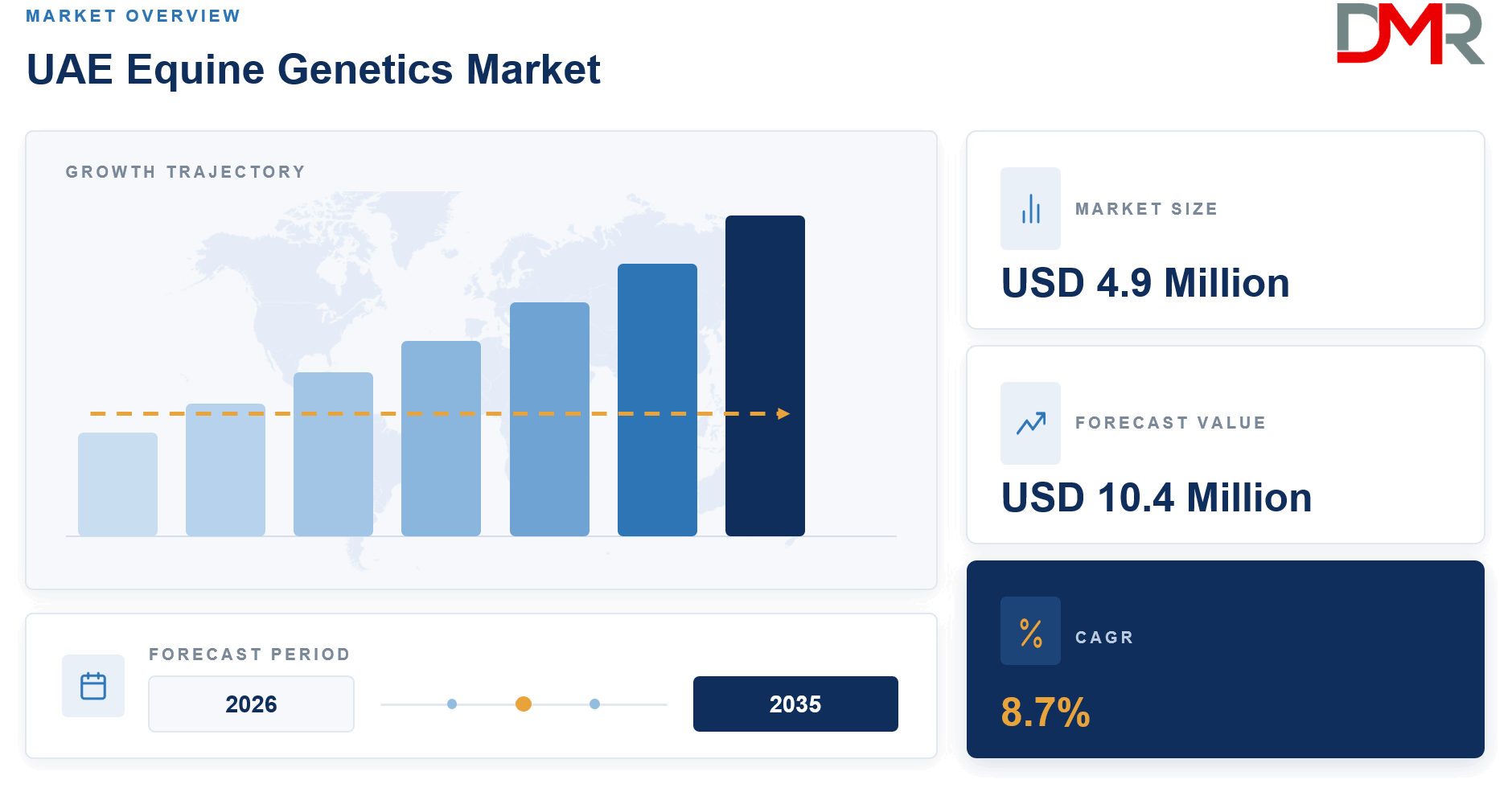
- Market Value: UAE equine genetics market is valued at USD 4.9 million in 2026 and is projected to reach USD 10.4 million by 2035.
- CAGR: UAE equine genetics market is expected to grow at a CAGR of 8.7% from 2026 to 2035.
- By Type Segment Analysis: Genetic Disease Testing led the type segment with a 42.6% share in 2026.
- By Application Segment Analysis: Breeding & Reproduction held a 46.8% share in 2026.
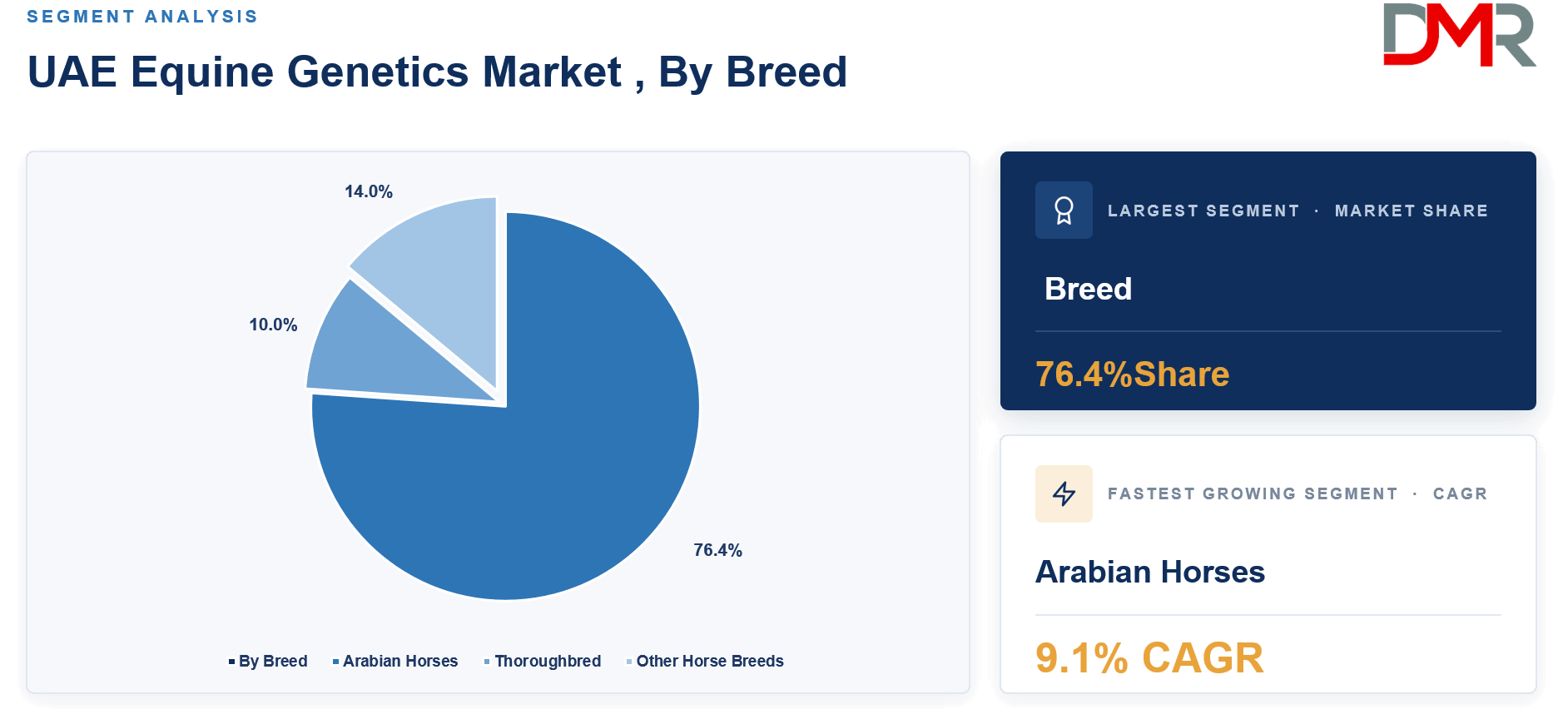
- By Breed Segment Analysis: Arabian Horses dominated the breed segment with a 76.4% share in 2026.
- By End User Segment Analysis: Horse Breeders & Stud Farms accounted for a 59.7% share in 2026.
- By Emirate Segment Analysis: Abu Dhabi held the leading position with an estimated 41.5% share in 2026.
- Major Players: Zoetis Inc., Animal Genetics, Inc., UC Davis Veterinary Genetics Laboratory (VGL), Etalon Diagnostics, and EquiSeq Inc.
What is the UAE Equine Genetics Market and its Market Size?
The UAE equine genetics market size is projected to be valued at USD 4.9 million in 2026 and is projected to reach USD 10.4 million by 2035, expanding at a CAGR of 8.7% during the forecast period. The market covers DNA-based parentage verification, genetic disease screening, breed identification, trait testing, DNA profiling, and broader genomic testing used across breeding, racing, veterinary care, and equine research. Demand is supported by the UAE's established equestrian culture, high-value Arabian horse population, professional breeding programs, racing activities, and growing interest in evidence-based selection. The country's equestrian sector has also developed substantial commercial infrastructure. The UAE Ministry of Economy has reported nearly AED 2.1 billion in spending on racehorse training and average annual spending of AED 367 million by equestrian clubs, illustrating the economic scale surrounding the horse industry.
ℹ
To learn more about this report –
Download Your Free Sample Report Here
Genetic testing is becoming increasingly important because breeders can use DNA information before making costly mating and ownership decisions. UC Davis Veterinary Genetics Laboratory, for example, provides Arabian-specific health testing and parentage analysis, including tests relevant to inherited conditions such as severe combined immunodeficiency and occipitoatlantoaxial malformation. Parentage testing can compare DNA profiles from offspring and possible parents, supporting accurate pedigree records. The UAE market therefore has a strong foundation for continued adoption as breeders seek better genetic health management, verified bloodlines, and more predictable breeding outcomes.
Use Cases
- Parentage Verification: DNA profiles confirm sire and dam relationships and strengthen pedigree records.
- Disease Screening: Genetic tests identify inherited risks before breeding decisions are made.
- Breeding Selection: Genomic information supports selection of horses with preferred traits.
- Performance Programs: Genetic data can complement racing and performance records.
- Breed Management: DNA testing supports identity, lineage control, and Arabian horse conservation.
How AI/Gen AI is Transforming the UAE Equine Genetics Market?
AI is strengthening equine genetics by helping laboratories and breeding programs process large genomic and pedigree datasets faster. Machine learning can identify relationships between genetic markers and measurable traits, supporting more informed breeding decisions. A 2024 horse-breeding study found that supervised machine learning models could predict breeding values for gait traits with accuracy comparable to traditional approaches, although further validation is required. A 2026 study using 255 Yili mares combined genome-wide association analysis with machine learning and identified 238 significant genetic loci and 277 candidate genes linked with body measurements. These findings show how computational methods can expand the value of equine genomic data beyond simple disease screening.
In the UAE, Gen AI can support the next stage by connecting genetic test results with pedigree, reproductive history, performance records, and veterinary observations. This can help breeders rank mating options, identify genetic risks, summarize complex laboratory reports, and flag horses that need additional testing. The UAE already has national strategies supporting AI, secure genomic data infrastructure, research capabilities, and responsible data governance. While these programs are primarily designed for human healthcare, the broader technology ecosystem can support investment in genomic analytics and biotechnology. UAE policy also emphasizes privacy, data security, and responsible AI use, which are important for commercial animal genetics platforms handling valuable breeding records.
Key Drivers in the UAE Equine Genetics Market
Expansion of High-Value Horse Breeding
The UAE's premium horse breeding ecosystem is a major driver of genetic testing demand. Arabian horses account for an estimated 76.4% of the UAE equine genetics market by breed in 2026, reflecting the importance of pedigree, appearance, health, and inherited traits in this segment. Genetic testing can reduce uncertainty when selecting breeding pairs and can help identify inherited disease risks before reproduction. As stud farms invest more in systematic breeding records, demand for parentage verification, genetic disease panels, and trait testing is expected to rise. The country's established equestrian infrastructure further supports recurring laboratory demand.
Greater Focus on Genetic Health Management
Growing awareness of inherited disorders is encouraging breeders and veterinarians to use DNA testing as a preventive tool. Arabian horses have several documented genetic conditions for which diagnostic testing is available, including SCID and OAAM. UC Davis currently lists an Arabian Health Panel covering four genetic diseases and provides dedicated Arabian testing options. Such services allow breeding programs to identify carriers and reduce the risk of producing affected foals. As owners become more focused on long-term animal health and breeding quality, genetic disease testing is likely to remain a leading contributor to UAE equine genetics market growth.
Restraints in the UAE Equine Genetics Market
Limited Local Genomic Testing Capacity
A key restraint is the limited depth of specialized equine genomic infrastructure compared with larger international veterinary genetics markets. Advanced testing often depends on specialized laboratories, international sample logistics, validated databases, and expert interpretation. Turnaround time, shipping requirements, and laboratory coordination can affect adoption when breeders need rapid decisions around foaling or mating schedules. UC Davis notes that horse parentage testing requires properly collected samples and can take at least 10 business days under standard conditions. Developing more local capabilities could reduce logistical friction and improve access for UAE breeders.
High Cost and Interpretation Requirements
Genetic testing can create additional costs for breeders managing large horse populations, particularly when multiple animals require disease panels, parentage verification, and trait testing. Test results also require appropriate interpretation because a genetic marker does not always provide a complete assessment of future performance, fertility, or overall health. The value of testing therefore depends on combining DNA results with veterinary examination, pedigree, phenotype, and breeding history. Limited access to specialists who can translate genomic findings into practical mating strategies may slow adoption among smaller breeders and owners.
Growth Opportunities in the UAE Equine Genetics Market
Development of Integrated Genomic Breeding Platforms
An important opportunity lies in combining genetic testing, pedigree management, reproductive records, and performance data within a single digital platform. Such systems could allow UAE stud farms to compare candidate breeding pairs and screen for inherited risks before conception. Research shows that reproductive technologies and genomic selection can accelerate genetic progress when integrated into structured breeding programs. The UAE's investment environment, biotechnology activity, and strong equestrian sector provide a suitable base for specialist genomic platforms designed around Arabian horses and regional breeding objectives.
Expansion of Equine Biotechnology and Biobanking
Biobanking and advanced animal biotechnology offer another long-term opportunity. Abu Dhabi is developing capabilities in genetics, biotechnology, and biobanking for animal health and biodiversity applications. These capabilities can support future equine genomic databases, research partnerships, reproductive programs, and preservation of valuable genetic lines. Building UAE-based reference datasets for Arabian horses could improve the accuracy and relevance of genetic analysis for local populations. Collaboration between laboratories, stud farms, veterinarians, universities, and technology companies could also create new services around genomic selection and preventive genetic health.
Trends in the UAE Equine Genetics Market
Shift Toward Data-Driven Breeding
The UAE equine sector is moving toward more structured use of genetic, pedigree, and performance information. DNA parentage verification is already an established tool, while genomic testing is expanding into inherited disease and trait assessment. Research indicates that genome-wide SNP data can complement traditional parentage systems and support genomic selection. This trend is especially relevant to premium Arabian breeding programs where small improvements in health, conformation, fertility, and performance can influence long-term breeding value.
Integration of AI With Genomic Decision Support
AI-assisted genomic interpretation is emerging as a complementary trend rather than a replacement for laboratory testing. Machine learning can analyze complex genetic and phenotype datasets and identify patterns that may be difficult to detect through conventional analysis. UAE policies promoting AI adoption and genomic data infrastructure create a favorable technology environment for future equine applications. Over time, breeder dashboards could combine genetic risk, pedigree compatibility, performance history, and reproductive data to produce practical decision-support recommendations.
Research Scope and Analysis
The UAE equine genetics market study evaluates market size, growth, demand patterns, competitive positioning, testing technologies, applications, breed dynamics, end-user adoption, and emirate-level opportunities from 2026 to 2035. The analysis considers genetic disease testing, DNA profiling, parentage testing, breed identification, genetic trait testing, and genomic testing across the UAE equine ecosystem. The study also reviews technology trends, breeding practices, veterinary applications, and the increasing role of data analytics in genetic decision-making.
The UAE equine genetics market is segmented based on Type, Application, Breed, End User, Emirate, and other relevant categories. The study provides an in-depth analysis of key segments and sub-segments, covering their applications, industry adoption, demand patterns, and contribution to overall market growth.
ℹ
To learn more about this report –
Download Your Free Sample Report Here
By Type
Genetic Disease Testing leads the UAE equine genetics market by type, with a 42.6% share in 2026. Its position reflects the growing need to identify inherited disorders before breeding and to protect the health and value of foals. Arabian horses are particularly relevant because several breed-associated genetic disorders have established diagnostic tests. Disease screening is also relatively easy to integrate into routine breeding workflows because DNA samples can be collected without complex procedures. As breeders seek to reduce avoidable genetic risk, demand is expected to expand from individual tests toward bundled health panels. The market opportunity is also supported by the increasing availability of validated molecular tests and better awareness among veterinarians and owners.
By Application
Breeding & Reproduction accounted for a 46.8% share in 2026, making it the leading application segment. Genetic information is especially valuable in breeding because decisions can affect multiple generations and substantial financial investments. Parentage verification helps maintain accurate pedigrees, while disease and trait testing can inform mating decisions. Genomic information can also complement reproductive technologies by improving selection accuracy and reducing uncertainty. Academic research indicates that reproductive management, genomic selection, and earlier selection can increase genetic progress in horse breeding programs. The UAE's concentration of premium Arabian breeding operations gives this application a strong base for sustained demand through 2035.
The UAE Equine Genetics Market Report is segmented on the basis of the following:
By Type
- Genetic Testing
- Genetic Disease Testing
- Parentage Testing
- Breed Identification
- Genetic Trait Testing
- DNA Profiling & Parentage Testing
- Genetic Disease Testing
- Genomic Testing
By Application
- Breeding & Reproduction
- Racing & Performance
- Pedigree Verification
- Genetic Disease Screening
By Breed
- Arabian Horses
- Thoroughbred
- Other Horse Breeds
By End User
- Horse Breeders & Stud Farms
- Racing Organizations
- Veterinary Clinics & Hospitals
- Equine Research & Genetic Laboratories
Competitive Landscape
The UAE equine genetics market remains specialized, with competition centered on laboratory accuracy, test coverage, turnaround time, breed-specific knowledge, international credibility, and the ability to serve breeders and veterinarians efficiently. International providers have an important position because equine genetic testing requires validated assays, reference databases, and specialist interpretation. UC Davis Veterinary Genetics Laboratory provides Arabian health panels, parentage testing, coat-color testing, and other horse genetic services, demonstrating the breadth of the global testing portfolio available to UAE customers. Other suppliers compete through disease panels, DNA profiling, genomic analysis, and veterinary genetics services. Local biotechnology development may gradually shift competition toward faster regional sample processing, integrated data platforms, and customized breeding analytics. As demand grows, partnerships between international laboratories, UAE veterinary providers, stud farms, and biotechnology companies are likely to become a central competitive strategy.
Some of the prominent players in the UAE equine genetics industry are:
- Zoetis Inc.
- Animal Genetics, Inc.
- UC Davis Veterinary Genetics Laboratory (VGL)
- Etalon Diagnostics
- EquiSeq Inc.
- Neogen Corporation
- Weatherbys Scientific
- Genomia s.r.o.
- VHLGenetics
- Generatio GmbH
- VetGen
- Equinome Labs
- Victory Genomics
- Practical Genetics LLC
- CAG GmbH
- MBG Lab
- Others
Regulatory Landscape
The UAE equine genetics market operates within a regulatory environment shaped by veterinary practice, animal welfare, biosecurity, animal movement, laboratory testing, and import-export controls. Federal veterinary legislation requires animal consignments to meet prescribed health and documentation requirements, while the Federal Law No. 6 of 2025 on Veterinary Quarantine gives supervising veterinarians authority to examine consignments and conduct visual and laboratory examinations where required. For horses entering the UAE, official procedures include an import permit, veterinary documentation, vaccination records, laboratory reports, and examination at the entry point. Arabian horses can also require a no-objection document from the Emirates Arabian Horse Society. The regulatory framework is relevant to genetics providers because cross-border movement of horses, biological samples, reproductive material, and laboratory specimens can require specific approvals. UAE veterinary practice rules also require veterinary establishments to maintain animal records and establish controls over the transfer of animal samples outside the country. Animal welfare regulations further require owners and facilities to provide appropriate veterinary care and maintain records covering genetic lineage, health, nutrition, productivity, and daily routines. These requirements support the use of verified genetic records and create demand for compliant laboratories, documented sample handling, and traceable testing services. Export-related procedures also require veterinary health certification, while dedicated services exist for exporting equine semen, creating a regulatory pathway for reproductive genetics and related biotechnology services.
Investment and White Space Analysis
The UAE equine genetics market offers attractive white-space opportunities in localized testing, integrated genomic platforms, Arabian horse databases, reproductive genetics, and AI-supported breeding analytics. The market is estimated at USD 4.9 million in 2026 and is projected to reach USD 10.4 million by 2035, creating room for specialist providers that can reduce dependence on overseas testing and improve turnaround times. A major opportunity is the development of UAE-based equine genetic laboratories offering disease panels, parentage verification, trait testing, DNA profiling, and genomic analysis under one service model. Another gap exists in integrated breeder platforms that connect DNA results with pedigree, reproductive history, veterinary records, and performance data. Abu Dhabi is particularly positioned for investment because its biotechnology ecosystem includes capabilities related to genomics, biobanking, animal health, and biodiversity. The country's broader policy direction also encourages technology use to strengthen animal resources and sustainability. Investors can also target equine reproductive biotechnology, including genetic screening of breeding stock and testing linked with semen export and international breeding programs. The growing movement of high-value horses across borders creates additional demand for reliable identification, health documentation, and laboratory services. Further white space exists in AI-enabled genomic decision support, subscription-based testing for large stud farms, mobile sample collection, and regional Gulf partnerships. These opportunities can help providers move beyond individual diagnostic tests toward recurring, data-rich services for professional breeders, racing organizations, veterinary clinics, and research institutions.
Recent Developments
- March 2026: Zoetis Inc. agreed to acquire Neogen Corporation’s animal-genomics business for approximately USD 160 million, a move expected to expand genomic testing, predictive analytics and precision-animal-health services worldwide. For the UAE, the transaction could strengthen access to integrated genetic screening for elite horses and broader livestock programs through Zoetis’ international network.
- March 2026: UC Davis Veterinary Genetics Laboratory (VGL) developed an equine cloning assessment capable of helping distinguish cloned horses from their genetic originals and evaluate parentage where cloning is suspected. The capability is relevant to UAE pedigree verification, high-value breeding, registration integrity and royal or commercial stud-book management.
Report Details
| Report Characteristics |
| Market Size (2026) |
USD 4.9 Mn |
| Forecast Value (2035) |
USD 10.4 Mn |
| CAGR (2026-2035) |
8.7% |
| Historical Data |
2021-2025 |
| Forecast Data |
2027-2035 |
| Base Year |
2025 |
| Estimate Year |
2026 |
| Segments Covered |
By Type (Genetic Testing {Genetic Disease Testing, Parentage Testing, Breed Identification, and Genetic Trait Testing}, DNA Profiling & Parentage Testing, Genetic Disease Testing, and Genomic Testing), By Application (Breeding & Reproduction, Racing & Performance, Pedigree Verification, and Genetic Disease Screening), By Breed (Arabian Horses, Thoroughbred, and Other Horse Breeds), By End User (Horse Breeders & Stud Farms, Racing Organizations, Veterinary Clinics & Hospitals, and Equine Research & Genetic Laboratories), By Emirate (Abu Dhabi, Dubai, Sharjah, and Other Emirates) |
| Regional Coverage |
United Arab Emirates |
Frequently Asked Questions
What is the current size of the UAE Equine Genetics Market?
▾ The UAE equine genetics market is valued at USD 4.9 million in 2026 and is projected to reach USD 10.4 million by 2035.
What is the growth rate of the UAE Equine Genetics Market during 2026-2035?
▾ The UAE equine genetics market is expected to grow at a CAGR of 8.7% during the forecast period from 2026 to 2035.
What factors are driving the growth of the UAE Equine Genetics Market?
▾ Premium Arabian horse breeding, genetic disease screening, pedigree verification, and growing demand for data-driven breeding are key growth factors.
What are the major challenges restraining the UAE Equine Genetics Market?
▾ High testing costs, limited local genomic capacity, specialist shortages, and sample logistics can constrain UAE equine genetics adoption.
Which segment holds the largest share of the UAE Equine Genetics Market?
▾ Genetic Disease Testing leads the type segment with a 42.6% share, while Breeding & Reproduction leads applications at 46.8%.
Who are the leading companies in the UAE Equine Genetics Market?
▾ Leading companies include Zoetis Inc., Animal Genetics, Inc., UC Davis Veterinary Genetics Laboratory (VGL), Etalon Diagnostics, EquiSeq Inc., Neogen Corporation, Weatherbys Scientific, Genomia s.r.o., VHLGenetics, Generatio GmbH, VetGen, Equinome Labs, Victory Genomics, Practical Genetics LLC, CAG GmbH, MBG Lab, and others.
How is AI influencing the UAE Equine Genetics Market?
▾ AI is improving genomic data analysis, breeding decisions, genetic risk assessment, pedigree management, and predictive analytics for UAE equine programs.
What are the future opportunities and trends in the UAE Equine Genetics Market?
▾ Future opportunities include localized genomic laboratories, AI-based breeding platforms, Arabian horse databases, biobanking, and reproductive genetics.