United States Sustainable Food Packaging Market Snapshot
- United States Sustainable Food Packaging Market Size in 2026: USD 24.6 Billion
- United States Sustainable Food Packaging Market Size in 2035: USD 48.3 Billion
- United States CAGR from 2026 to 2035: 7.8%
- Paper and Paperboard is the leading material type segment in 2026: 36.9%
- Flexible Packaging is the leading packaging type segment in 2026: 41.2%
- Ready-to-Eat and Prepared Meals is the leading application segment in 2026: 22.7%
- Foodservice and QSR Operators is the leading end user segment in 2026: 43.5%
What is the United States Sustainable Food Packaging Market and its Market Size?
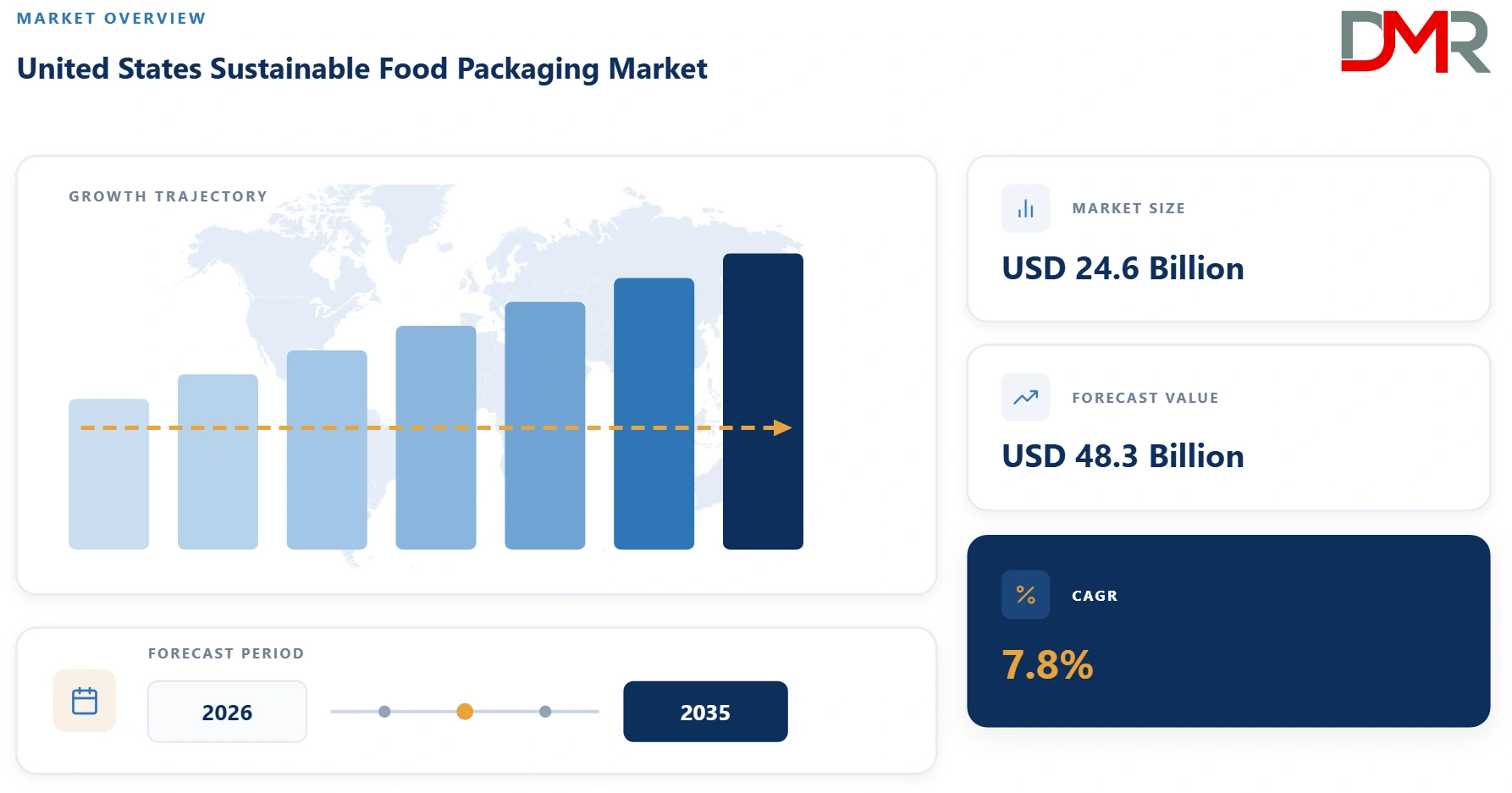
The United States Sustainable Food Packaging Market is projected to be valued at USD 24.6 Billion in 2026 and is projected to reach USD 48.3 Billion by 2035, expanding at a CAGR of 7.8% during the forecast period.
ℹ
To learn more about this report –
Download Your Free Sample Report Here
Growth is being propelled by tightening state-level extended producer responsibility and single-use plastics legislation, sustained consumer preference for brands demonstrating credible environmental commitments, and large food, beverage, and foodservice companies' corporate sustainability pledges that increasingly mandate recyclable, compostable, or reduced-plastic packaging across their supply chains. The maturing of compostable and molded-fiber packaging technologies capable of matching the performance and cost profile of conventional plastic formats, growing retailer and quick-service restaurant investment in packaging redesign to meet state compliance deadlines, and expanding domestic recycling and composting infrastructure investment are reshaping the market from niche, premium-positioned eco-packaging into a mainstream procurement requirement across food and beverage categories. Investment is accelerating as packaging manufacturers scale plant-fiber and bioplastic production capacity while navigating a fragmented and rapidly evolving state-by-state regulatory landscape.
Use Cases
- Quick-Service Restaurant Foodservice Disposables Transition: National and regional QSR chains replace conventional plastic cups, clamshells, and cutlery with compostable and fiber-based alternatives to comply with state and municipal single-use plastics restrictions and meet corporate sustainability commitments.
- Flexible Packaging Redesign for Packaged Snacks and Bakery Products: Packaged food manufacturers reformulate multilayer plastic flexible packaging into recyclable mono-material or paper-based structures to improve recyclability while maintaining barrier protection and shelf life.
- Molded Fiber Packaging for Fresh Produce and Protein: Grocery retailers and fresh food suppliers adopt molded pulp and plant-fiber trays and clamshells for produce, meat, and seafood packaging, replacing polystyrene and rigid plastic formats to meet retailer sustainability procurement standards.
- Compostable Packaging for Meal Kit and Prepared Food Delivery: Meal kit companies and prepared food delivery services adopt compostable insulated packaging and plant-based films to align with environmentally conscious consumer expectations and reduce packaging waste associated with direct-to-consumer food delivery.
Key Takeaways
- Market Size: The United States Sustainable Food Packaging Market is anticipated to be valued at USD 24.6 Billion in 2026 and is forecast to reach USD 48.3 Billion by 2035, expanding at a CAGR of 7.8%.
- Growth Outlook: Market expansion is sustained by tightening state single-use plastics and extended producer responsibility regulation, sustained consumer and corporate sustainability commitments, and continued technological improvement in compostable and fiber-based packaging performance.
- Primary Growth Drivers: Expanding state-level plastics legislation and extended producer responsibility programs, growing corporate net-zero and packaging sustainability pledges among major food and beverage companies, rising consumer willingness to pay for sustainably packaged products, and improving cost-competitiveness of compostable materials are accelerating adoption.
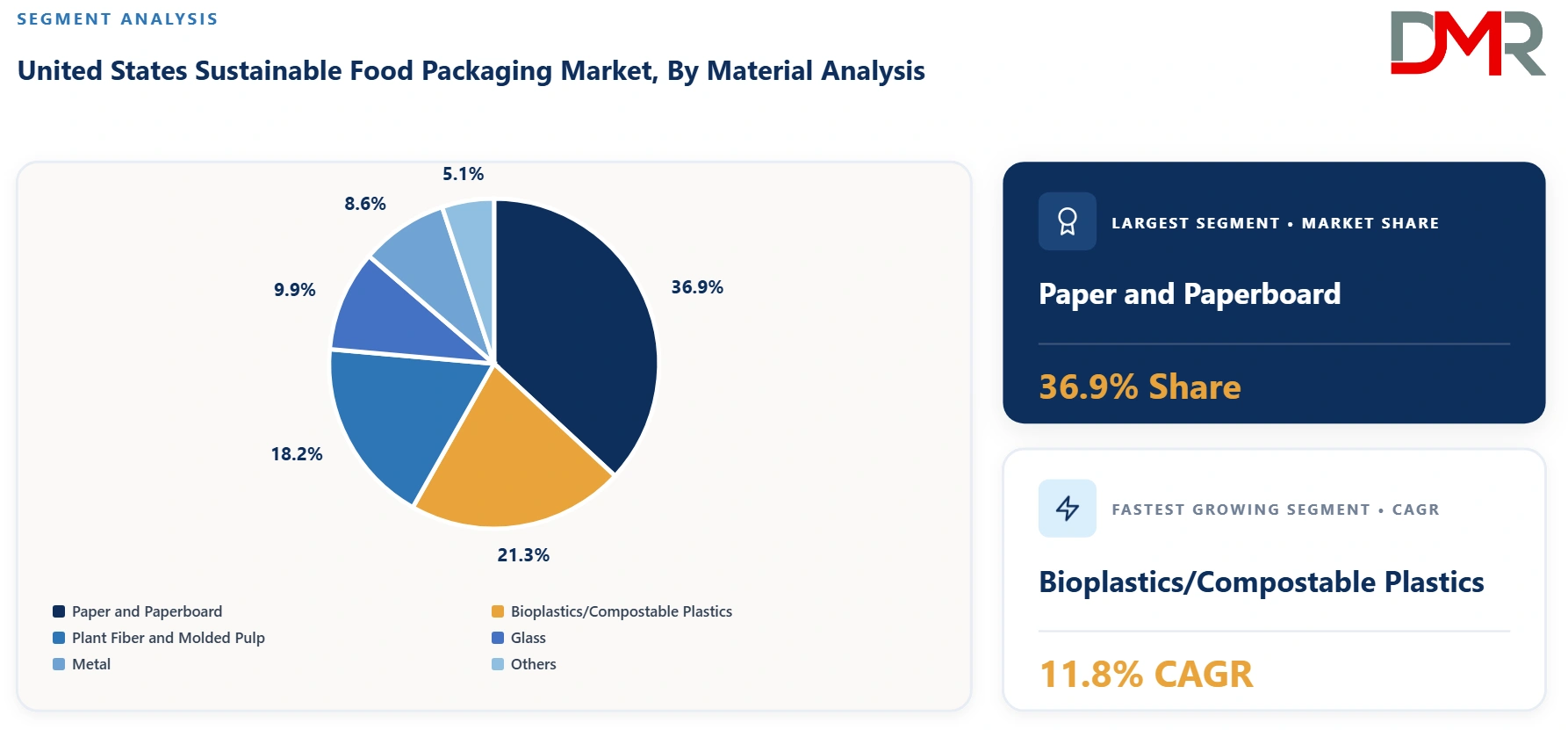
- By Material Type Analysis: Paper and Paperboard is projected to lead the material type segment with a 36.9% share in 2026, reflecting broad applicability and established recycling infrastructure. Bioplastics/Compostable Plastics is the fastest-growing material type segment at 11.8% CAGR, driven by expanding compostable film and rigid packaging applications across foodservice and packaged food categories.
- By Packaging Type Analysis: Flexible Packaging is expected to dominate with a 41.2% share in 2026, supported by its widespread use across snacks, bakery, and prepared food categories. Foodservice Disposables is the fastest-growing packaging type segment at 9.6% CAGR, driven by accelerating QSR and restaurant transition away from conventional plastic disposables.
- By Application Analysis: Ready-to-Eat and Prepared Meals is poised to lead with a 22.7% share in 2026, reflecting high packaging turnover and strong consumer sustainability expectations in this category. Fresh Produce is the fastest-growing application segment at 9.3% CAGR, driven by retailer transition away from rigid plastic clamshells toward fiber-based and compostable alternatives.
- By End User Analysis: Foodservice and QSR Operators are projected to dominate with a 43.5% share in 2026, reflecting the scale and visibility of restaurant packaging transitions under state legislative deadlines. Retailers and Grocery Chains is the fastest-growing end user segment at 9.1% CAGR, fuelled by expanding private label sustainable packaging procurement standards.
Key Drivers in the United States Sustainable Food Packaging Market
Expanding State-Level Single-Use Plastics and Extended Producer Responsibility Legislation
A growing number of U.S. states have enacted or proposed extended producer responsibility laws and single-use plastics restrictions that directly affect food and beverage packaging decisions. These regulations increasingly require producers to fund recycling infrastructure, meet minimum recycled-content thresholds, or phase out specific plastic formats such as polystyrene foodservice ware. Food and beverage companies operating nationally must navigate this fragmented, state-by-state regulatory landscape, often adopting the most stringent state's requirements across their broader packaging strategy to simplify compliance, which is accelerating sustainable packaging adoption well beyond the states with direct legislative mandates.
Corporate Sustainability Commitments Among Major Food and Beverage Companies
Large food, beverage, and quick-service restaurant companies have increasingly published public packaging sustainability commitments, including pledges to achieve fully recyclable, reusable, or compostable packaging by defined target years. These corporate commitments are cascading through supply chains, requiring co-manufacturers, packaging suppliers, and private label producers to align with brand-level sustainability specifications. This dynamic is expanding sustainable packaging demand beyond regulatory compliance alone, embedding it as a standard procurement criterion across major food and beverage company supply chains.
Restraints in the United States Sustainable Food Packaging Market
Inconsistent Recycling and Composting Infrastructure Across Regions
Uneven availability of municipal recycling and industrial composting infrastructure across the United States represents a significant restraint on the Sustainable Food Packaging Market. Compostable packaging, in particular, requires access to industrial composting facilities that remain unavailable in many regions, limiting the practical end-of-life benefit of compostable formats regardless of their design intent. This infrastructure gap can create consumer confusion, undermine sustainability claims, and complicate manufacturers' ability to make consistent, nationally applicable sustainable packaging claims across all markets they serve.
Growth Opportunities in the United States Sustainable Food Packaging Market
Recyclable Mono-Material Flexible Packaging Innovation
Growing demand for flexible packaging that maintains barrier performance while improving recyclability presents a substantial opportunity for packaging manufacturers developing mono-material film structures that can be processed through existing recycling streams. Manufacturers capable of replacing multilayer plastic laminates with recyclable mono-material alternatives, without compromising shelf life or product protection, are well positioned to capture reformulation contracts from major packaged food and snack brands facing corporate recyclability commitments.
Domestic Fiber and Compostable Packaging Manufacturing Capacity Expansion
Rising demand for molded fiber and compostable packaging, combined with supply chain risk associated with imported sustainable packaging materials, presents an opportunity for domestic manufacturers to expand plant-fiber and bioplastic production capacity. Companies investing in U.S.-based manufacturing can offer shorter lead times, reduced supply chain risk, and improved cost competitiveness relative to imported alternatives, capturing market share as foodservice and retail demand for compostable formats continues to scale.
Trends in the United States Sustainable Food Packaging Market
Convergence of Packaging Redesign with Broader Corporate ESG Reporting
Sustainable packaging decisions are increasingly integrated into broader corporate environmental, social, and governance reporting frameworks, with packaging-related metrics such as recycled content percentage and packaging carbon footprint appearing in company sustainability disclosures. This convergence is elevating packaging procurement decisions from operational sourcing choices to metrics tracked at the executive and board level, increasing the strategic priority placed on credible, verifiable sustainable packaging performance data.
Growing Adoption of Digital Packaging Traceability and Certification Labeling
Food and beverage companies are increasingly adopting digital traceability tools and standardized certification labeling, such as How2Recycle and compostability certification marks, to help consumers correctly dispose of packaging and to substantiate sustainability claims amid rising scrutiny of greenwashing. This trend is encouraging packaging manufacturers to invest in clearer, standardized labeling systems and digital tools that improve end-of-life disposal accuracy and strengthen brand credibility around sustainability claims.
Research Scope and Analysis
The United States Sustainable Food Packaging Market is segmented by material type, packaging type, application, and end user, covering paper and paperboard, bioplastics, molded pulp, glass, metal, flexible and rigid packaging, foodservice disposables, and food and beverage manufacturer, foodservice, and retail end users.
ℹ
To learn more about this report –
Download Your Free Sample Report Here
By Material Type Analysis
Paper and Paperboard is projected to dominate the United States Sustainable Food Packaging Market with approximately 36.9% share in 2026, reflecting its broad applicability across categories and well-established municipal recycling infrastructure relative to newer material alternatives. Bioplastics/Compostable Plastics is expected to register the highest CAGR of 11.8% during 2026-2035, driven by expanding use in compostable films, rigid foodservice containers, and flexible packaging applications across packaged food and QSR categories.
By Packaging Type Analysis
Flexible Packaging is anticipated to dominate the United States Sustainable Food Packaging Market by packaging type, accounting for approximately 41.2% share in 2026, supported by its widespread use across snacks, bakery, and prepared food categories requiring lightweight, barrier-protective formats. Foodservice Disposables is projected to register the highest CAGR of 9.6% between 2026 and 2035, driven by accelerating transition among restaurants and quick-service chains away from conventional plastic cups, clamshells, and cutlery.
By Application Analysis
Ready-to-Eat and Prepared Meals is projected to lead the United States Sustainable Food Packaging Market with an estimated 22.7% share in 2026, reflecting high packaging turnover and strong consumer sustainability expectations within convenience-oriented food categories. Fresh Produce is expected to register the fastest CAGR of 9.3% through 2035, driven by retailer transition away from rigid plastic clamshells and trays toward fiber-based and compostable produce packaging formats.
By End User Analysis
Foodservice and QSR Operators are projected to dominate the United States Sustainable Food Packaging Market with approximately 43.5% share in 2026, reflecting the scale and public visibility of restaurant packaging transitions driven by state legislative compliance deadlines. Retailers and Grocery Chains are expected to register the fastest CAGR of 9.1% through 2035, fuelled by expanding private label sustainable packaging procurement standards and store-brand packaging redesign initiatives.
The United States Sustainable Food Packaging Market Report is segmented based on the following:
By Material Type
- Paper and Paperboard
- Bioplastics/Compostable Plastics
- Plant Fiber and Molded Pulp
- Glass
- Metal
- Others
By Packaging Type
- Flexible Packaging
- Rigid Packaging
- Foodservice Disposables
By Application
- Bakery and Confectionery
- Beverages
- Dairy and Frozen Foods
- Fresh Produce
- Meat, Poultry and Seafood
- Ready-to-Eat and Prepared Meals
- Others
By End User
- Food and Beverage Manufacturers
- Foodservice and QSR Operators
- Retailers and Grocery Chains
Technology Analysis
Technology investment is increasingly shaping competitiveness in the United States Sustainable Food Packaging Market as manufacturers develop advanced barrier coatings for paper-based packaging, improved compostable resin formulations, and mono-material flexible film structures compatible with existing recycling streams. Growing use of digital printing and smart labeling technology is supporting standardized recyclability and compostability certification communication to consumers. Opportunities are expanding for manufacturers investing in bio-based barrier coating alternatives to PFAS and traditional plastic laminates, as well as chemical recycling and advanced sorting technologies that can improve end-of-life outcomes for complex packaging formats. However, achieving barrier performance parity with conventional plastic packaging while maintaining cost competitiveness remains a persistent technical challenge across the industry.
Investment and White Space Analysis
Investment opportunities in the United States Sustainable Food Packaging Market are expanding alongside tightening state regulation, sustained corporate sustainability commitments, and growing consumer demand for credible, verifiable sustainable packaging. Significant white space exists in PFAS-free barrier coating technology, domestic compostable and fiber packaging manufacturing capacity, recyclable mono-material flexible packaging, and digital traceability and certification labeling solutions. Manufacturers with strong domestic production capacity, proven barrier-performance innovation, and established retailer and QSR customer relationships are positioned to capture premium, longer-duration supply contracts. However, infrastructure gaps in recycling and composting access, regulatory fragmentation across states, and persistent cost premiums for some sustainable materials can constrain adoption pace and pressure margins for smaller manufacturers.
Competitive Landscape
The United States Sustainable Food Packaging Market is moderately consolidated and increasingly competitive, comprising large diversified global packaging companies, specialty sustainable and compostable packaging manufacturers, and paper and pulp-based packaging producers expanding into food-grade applications. Competition centers on barrier performance innovation, domestic manufacturing capacity, certification and regulatory compliance breadth, and established relationships with major food, beverage, and foodservice brand clients. Large diversified packaging companies benefit from scale, integrated material science research capabilities, and broad customer relationships, while specialty manufacturers compete on category-specific innovation and faster development cycles for emerging compostable and fiber-based formats. Companies increasingly differentiate through PFAS-free barrier technology, verified compostability certification, and domestic supply chain resilience rather than material cost alone.
Some of the prominent players in the United States Sustainable Food Packaging Market are:
- Amcor plc
- Sealed Air Corporation
- Smurfit WestRock plc
- Sonoco Products Company
- Graphic Packaging Holding Company
- International Paper Company
- Huhtamaki Oyj
- Tetra Pak International S.A.
- Crown Holdings, Inc.
- Ball Corporation
- Silgan Holdings Inc.
- ProAmpac LLC
- Novolex Holdings LLC
- Genpak, LLC
- Dart Container Corporation
- Sabert Corporation
- Anchor Packaging LLC
- Winpak Ltd.
- PPC Flex Company LLC
- Flair Flexible Packaging Corporation
- Constantia Flexibles Group GmbH
- UFlex Limited
- Mondi plc
- Greif, Inc.
- Green Bay Packaging Inc.
- Pratt Industries, Inc.
- Georgia-Pacific LLC
- Cascades Inc.
- Pregis LLC
- Ranpak Holdings Corp.
- Eco-Products, Inc.
- World Centric
- Footprint, LLC
- Elevate Packaging, Inc.
- EcoEnclose LLC
- TemperPack Technologies, Inc.
- NatureWorks LLC
- TIPA Corp Ltd.
- Be Green Packaging LLC
- Tekni-Plex, Inc.
- Other Key Players
Recent Developments
- In May 2026, Amcor introduced its PP Revolution™ recycle-ready polypropylene dip cups in the U.S. for sauces, dressings, and condiments, offering an alternative to traditional polystyrene foodservice packaging.
- In May 2026, Graphic Packaging highlighted that access to paper cup recycling reached 20% of the U.S. population, supported by investments in fiber recovery and circular paper-based packaging infrastructure.
- In April 2026, Sealed Air expanded its focus on sustainable meat packaging solutions using recycled-content, recyclable, fiber-based, and compostable tray technologies as alternatives to conventional EPS trays.
- In April 2026, Amcor launched upgraded Apex™ lightweight PET jars with Elevate™ technology for pasta sauces, designed to reduce transportation costs, breakage, and material-related impacts compared with traditional glass packaging.
Report Details
| Report Characteristics |
| Market Size (2026) |
USD 24.6 Bn |
| Forecast Value (2035) |
USD 48.3 Bn |
| CAGR (2026–2035) |
7.8% |
| Historical Data |
2021 – 2025 |
| Forecast Data |
2026 – 2035 |
| Base Year |
2025 |
| Segments Covered |
By Material Type, By Packaging Type, By Application, By End User |
| Country Coverage |
The US |
Frequently Asked Questions
How big is the United States Sustainable Food Packaging Market?
▾ The United States Sustainable Food Packaging Market is valued at USD 24.6 Billion in 2026 and is projected to reach USD 48.3 Billion by 2035, reflecting sustained demand for recyclable, compostable, and fiber-based packaging across food and beverage manufacturing and foodservice channels.
What is the CAGR of the United States Sustainable Food Packaging Market from 2026 to 2035?
▾ The market is projected to expand at a compound annual growth rate (CAGR) of 7.8% between 2026 and 2035, supported by tightening state plastics regulation, corporate sustainability commitments, and improving cost-competitiveness of compostable materials.
What factors are driving the growth of the United States Sustainable Food Packaging Market?
▾ Growth is driven by expanding state-level single-use plastics and extended producer responsibility legislation, corporate net-zero and packaging sustainability pledges among major food and beverage companies, rising consumer willingness to pay for sustainable packaging, and improving compostable material performance and cost competitiveness.
What are the major trends in the United States Sustainable Food Packaging Market?
▾ Major trends include the convergence of packaging redesign with broader corporate ESG reporting, growing adoption of digital packaging traceability and certification labeling, and continued innovation in recyclable mono-material flexible packaging structures.
Who are the key players in the United States Sustainable Food Packaging Market?
▾ Key market participants include International Paper, WestRock, Graphic Packaging International, Sealed Air Corporation, and Amcor, among other diversified and specialty sustainable packaging manufacturers.
How is the United States Sustainable Food Packaging Market segmented?
▾ The market is segmented by material type, packaging type, application, and end user, with demand analysis concentrated across major U.S. packaging manufacturing and food and beverage production regions.