US Aesthetic Medicine Market Snapshot
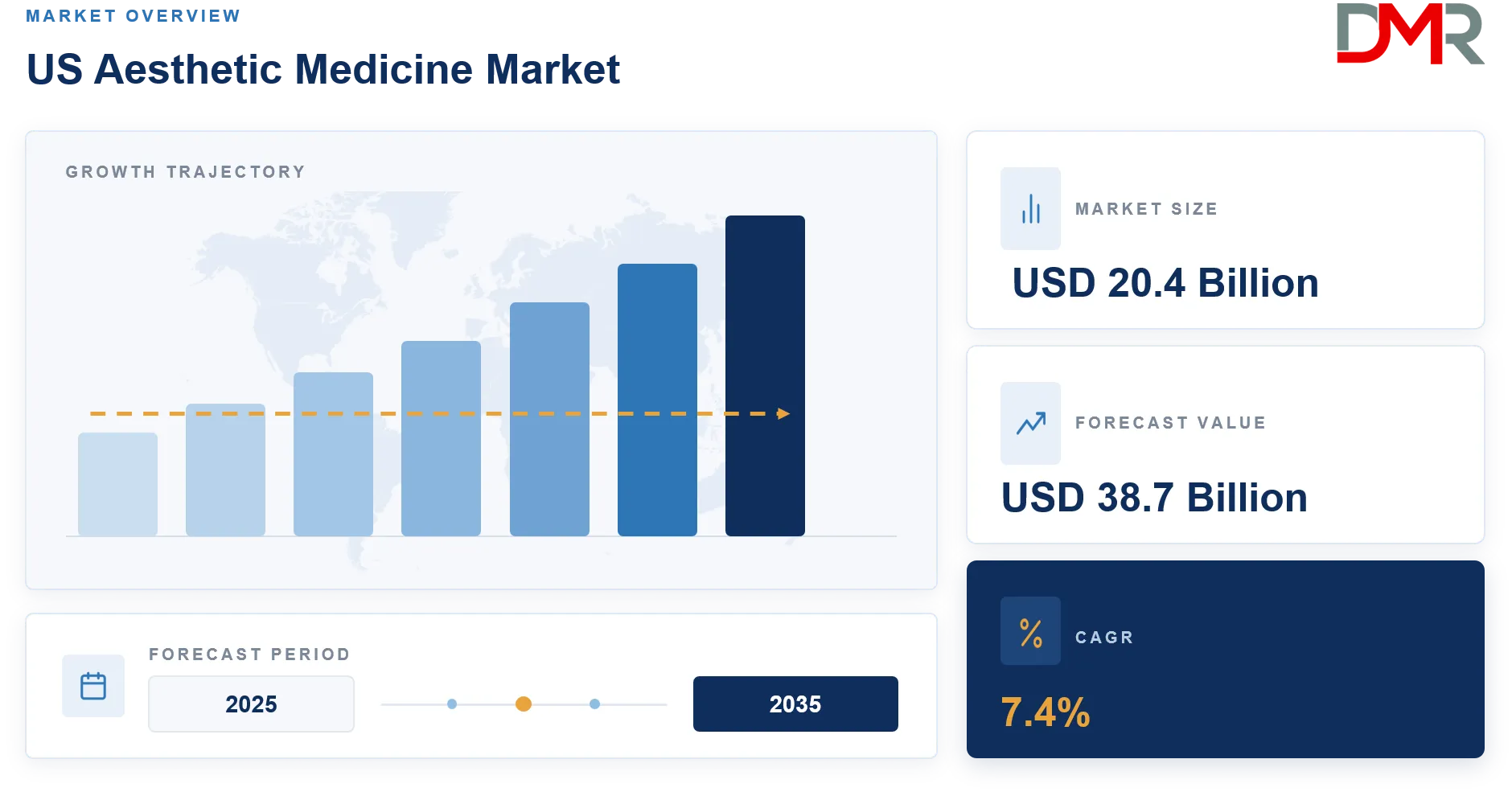
- Market Value: The US aesthetic medicine market is projected to reach USD 20.4 billion in 2026 and USD 38.7 billion by 2035.
- CAGR: The US aesthetic medicine market is expected to grow at a CAGR of 7.4% from 2026 to 2035.
- By Procedure Segment Analysis: Non-invasive procedures dominated the market with a 59.0% share in 2026.
- By Invasive Procedure Sub-Segment Analysis: Liposuction led invasive procedures with a 23.5% share in 2026.
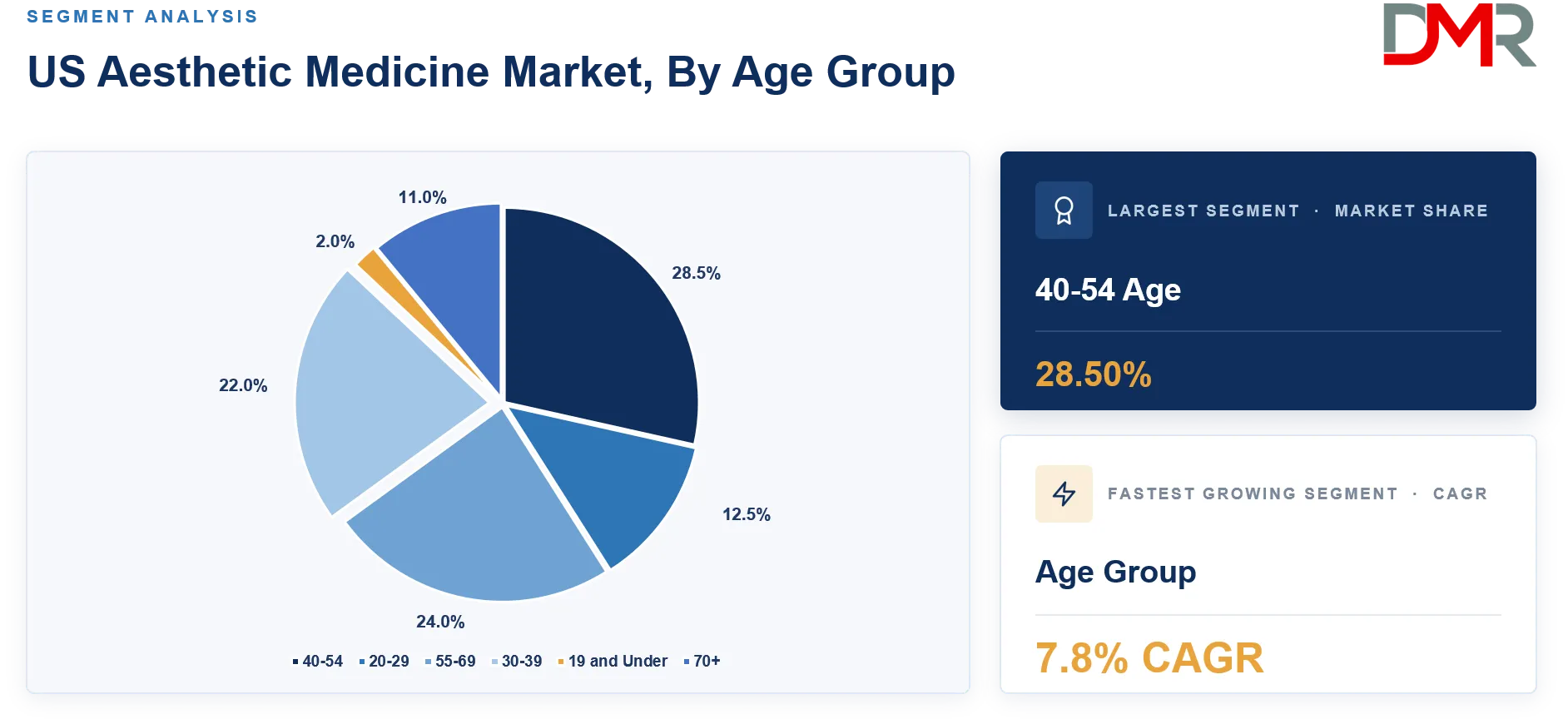
- By Age Group Segment Analysis: The 40-54 age group held the largest share at 28.5% in 2026.
- By End-Use Segment Analysis: Medspas accounted for the largest share at 44.0% in 2026.
- Major Players: Ideal Image Inc., LaserAway, Milan Laser Hair Removal, SkinSpirit, Sono Bello and Others.
What is the US Aesthetic Medicine Market and its Market Size?
The US aesthetic medicine market size is projected to be valued at USD 20.4 billion in 2026 and is projected to reach USD 38.7 billion by 2035, expanding at a CAGR of 7.4% during the forecast period. Aesthetic medicine covers physician-led and medically supervised procedures designed to improve facial appearance, body contours, skin condition, hair removal outcomes, and visible signs of aging. The industry spans injectable treatments, laser-based procedures, skin resurfacing, body contouring, and surgical interventions delivered through medspas, specialized aesthetic centers, hospitals, and plastic surgery practices.
ℹ
To learn more about this report –
Download Your Free Sample Report Here
The US aesthetic medicine market growth is increasingly tied to repeat-use, low-downtime services. American Society of Plastic Surgeons data show that minimally invasive procedures continue to account for the overwhelming majority of reported aesthetic procedural volume. Neuromodulator injections, fillers, skin treatments, and other minimally invasive options have benefited from consumer interest in subtle outcomes, shorter recovery periods, and treatments that can be scheduled without extended absence from work or daily activities.
Use Cases
- Facial Line and Wrinkle Reduction: Botulinum toxin injections are widely used to temporarily reduce the appearance of dynamic facial lines. Their short treatment time and repeat-treatment model make neuromodulators an important source of recurring demand for medspas and aesthetic practices.
- Facial Volume Restoration: Soft tissue fillers are used for facial contouring, wrinkle correction and volume enhancement in areas such as the cheeks, lips and chin. FDA-regulated dermal filler products have become a major part of physician-led injectable aesthetics.
- Hair Reduction: Laser hair removal provides a recurring service opportunity across large aesthetic chains, dermatology practices and medspas. Multi-session treatment protocols support customer retention and allow operators to combine hair removal with skin and injectable services.
- Body Contouring: Liposuction, tummy tuck procedures and technology-assisted body treatments address localized fat and body-shape concerns. Demand is also being influenced by consumers experiencing body composition and skin changes following substantial weight loss.
- Skin Rejuvenation: Chemical peels, microdermabrasion, energy-based treatments and resurfacing services address pigmentation, texture, fine lines and signs of photodamage. These procedures broaden the customer base beyond injectables and support treatment packages across different age groups.
How AI/Gen AI is Transforming the US Aesthetic Medicine Market?
Digital imaging, automated facial assessment and data-assisted consultation tools are changing how aesthetic practices evaluate patients and communicate possible treatment outcomes. Clinics can use standardized photography, skin analysis, patient records and visualization software to support consultations for injectables, facial treatments and surgical procedures. These technologies can also improve lead qualification, appointment management and personalized follow-up. For multi-location operators such as LaserAway, Ideal Image and SkinSpirit, data-driven systems can help standardize customer journeys while identifying treatment preferences and repeat-purchase patterns across locations.
Generative technologies are also influencing consumer expectations before a patient reaches a clinic. Digitally altered photographs and highly modified beauty imagery can shape requests for facial symmetry, lips, jawlines and skin appearance. Practitioners therefore have a growing need to separate visual simulation from medically achievable outcomes. Recent discussion among surgeons has highlighted the risk that generated or heavily edited images may create unrealistic expectations because digital systems cannot fully predict anatomy, healing response or clinical complications. In commercial practice, the stronger opportunity lies in supporting education, scheduling, documentation and responsible visualization rather than treating generated images as guaranteed clinical outcomes.
Key Drivers in the US Aesthetic Medicine Market
Rising Preference for Minimally Invasive Aesthetic Procedures
US consumers increasingly favor treatments that combine visible cosmetic improvement with limited recovery time. ASPS reported more than 28 million minimally invasive procedures in its 2024 procedural data, compared with about 1.6 million cosmetic surgical procedures. Neuromodulators, fillers and skin treatments benefit from shorter appointments and the ability to repeat or adjust treatment over time. This behavior directly supports demand for Botox injections, soft tissue fillers, laser procedures and skin rejuvenation, reinforcing the 59.0% share held by non-invasive procedures in 2026.
Rapid Expansion of the Medspa Business Model
Medspas are becoming a central distribution channel for US aesthetic medicine services. American Med Spa Association research reported that the number of medical spas increased from 8,899 to 10,488, while average annual location revenue rose from approximately USD 1.31 million to USD 1.40 million in its 2024 industry review. The combination of retail-style access, recurring injectable treatments, laser services and membership programs is widening treatment availability. This operating model supports the 44.0% end-use share attributed to medspas in 2026.
Restraints in the US Aesthetic Medicine Market
Clinical Safety and Regulatory Compliance Requirements
Aesthetic medicine combines elective consumer demand with medical risk, making provider qualifications, product sourcing and clinical supervision important constraints on expansion. The FDA regulates dermal fillers as medical devices and warns that filler injection can produce serious complications when product enters a blood vessel. Botulinum toxin products also carry specific safety warnings. These requirements increase the need for qualified injectors, patient screening, adverse-event protocols and compliant procurement, adding operational complexity for fast-growing aesthetic networks.
Fragmented State-Level Oversight of Medspas
The US medspa market operates within state-specific rules covering medical ownership, scope of practice, delegation and physician oversight. As aesthetic chains expand across multiple states, they may face different requirements governing nurses, physician assistants, physicians and other practitioners. The rapid increase in medspa locations has intensified scrutiny of clinical standards and supervision. This fragmented framework can slow geographic expansion, increase legal and compliance costs and make standardized national operating models more difficult to implement.
Growth Opportunities in the US Aesthetic Medicine Market
Post-Weight-Loss Aesthetic Treatment Demand
Growth in medical weight-loss treatment is creating an adjacent opportunity for aesthetic providers. Significant weight reduction may leave some consumers seeking facial volume restoration, skin tightening, breast procedures or body contouring. In 2026, aesthetics companies including Apyx Medical, InMode, Establishment Labs and Evolus were reported to be targeting demand linked to patients using GLP-1 weight-loss therapies. This trend can expand the addressable population for fillers, energy-based skin tightening and body procedures while creating opportunities for bundled treatment pathways.
Younger Consumer Entry into Preventive Aesthetics
The 20-29 age group represents the fastest-growing demographic in the supplied market model, creating a long-duration customer opportunity for providers. Younger adults increasingly enter aesthetic care through laser hair removal, skin treatments, lip enhancement and lower-intensity injectable procedures rather than major surgery. Early adoption can increase lifetime customer value because several treatments require maintenance or repeat sessions. Providers that combine education, conservative treatment planning and digital appointment access can build relationships before customers transition into broader facial and body aesthetic services.
Trends in the US Aesthetic Medicine Market
Shift Toward Subtle and Low-Downtime Results
The US aesthetic medicine market trend is moving toward procedures designed to preserve natural facial characteristics while reducing visible signs of aging. ASPS has linked continued minimally invasive demand with consumer preferences for subtle results, affordability and limited recovery time. This shift favors neuromodulators, hyaluronic acid fillers, resurfacing and energy-based treatments that can be delivered incrementally. Providers are consequently moving from one-time transformations toward maintenance programs, combination therapies and personalized treatment plans that support recurring revenue.
Consolidation and Multi-Location Aesthetic Platforms
Large operators are developing branded aesthetic networks that combine centralized marketing, standardized treatment menus, technology platforms and repeat-patient programs. Ideal Image, LaserAway, Milan Laser Hair Removal, SkinSpirit and other chains compete alongside physician-owned practices and independent medspas. Scale provides advantages in customer acquisition, training, device utilization and purchasing, while local providers can compete through specialized clinical expertise and patient relationships. Rising medspa revenue and location counts are making the sector increasingly attractive for expansion capital and platform-building strategies.
Research Scope and Analysis
The US aesthetic medicine market is segmented based on procedure, age group and end-use. The study analyzes major segments and sub-segments through their procedure utilization, consumer profile, treatment setting, demand patterns and contribution to overall US aesthetic medicine market growth. The scope includes invasive and non-invasive procedures delivered through medspas, hospitals, clinics and aesthetic centers.
By Procedure
Non-invasive procedures led the US aesthetic medicine market with a 59.0% share in 2026. Botox injections represented 34.0% of non-invasive procedures, making neuromodulation a major contributor to recurring treatment demand, while soft tissue fillers accounted for 26.5%. The segment benefits from comparatively short procedure times, limited downtime and the ability to perform treatments in outpatient aesthetic environments. Supporting demand is visible in national procedure statistics, where minimally invasive services materially outnumber cosmetic surgeries. Laser hair removal, chemical peels and microdermabrasion further diversify the segment by targeting hair reduction, texture, pigmentation and skin rejuvenation needs.
Within invasive procedures, liposuction held the leading 23.5% share in 2026, followed by breast augmentation at 22.0% and eyelid surgery at 16.5%. Liposuction retains a strong market position because it directly addresses localized fat deposits and can be incorporated into broader body-contouring treatment plans. Breast augmentation remains an established surgical category, while eyelid procedures benefit from facial rejuvenation demand. ASPS reporting has also identified liposuction among the most frequently performed cosmetic surgical procedures in the United States, reinforcing its role within the invasive aesthetic treatment mix.
ℹ
To learn more about this report –
Download Your Free Sample Report Here
By Age Group
The 40-54 age group accounted for the largest US aesthetic medicine market share at 28.5% in 2026. Consumers in this range can have overlapping demand for neuromodulators, fillers, skin resurfacing, eyelid surgery and body contouring, allowing providers to address multiple aesthetic concerns within one patient relationship. Meanwhile, the 20-29 cohort is the fastest-growing demographic at 21.0%. Its growth expands the market toward preventive and appearance-maintenance services, including laser hair removal, injectables and skin treatments, creating a wider customer funnel for medspas and aesthetic clinics.
By End-Use
Medspas led the end-use segment with a 44.0% share in 2026, ahead of clinics & aesthetic centers at 34.5% and hospitals at 21.5%. Their position reflects a service model built around accessibility, repeat visits and portfolios combining injectables, lasers, skin treatments and body services. AmSpa reported more than 10,000 medical spas in the United States in its 2024 industry review and now describes the sector as exceeding USD 17 billion in industry revenue. Specialized clinics remain important for physician-led treatments and complex procedures, while hospitals participate mainly where surgical infrastructure and advanced clinical support are required.
The US Aesthetic Medicine Market Report is Segmented on the Basis of the Following:
By Procedure
- Invasive Procedures
- Nose Reshaping
- Breast Augmentation
- Tummy Tuck
- Eyelid Surgery
- Liposuction
- Others
- Non-invasive Procedures
- Laser Hair Removal
- Soft Tissue Fillers
- Microdermabrasion
- Botox Injections
- Chemical Peel
- Others
By Age Group
- 40-54
- 20-29
- 55-69
- 30-39
- 19 and Under
- 70+
By End-Use
- Medspas
- Hospitals
- Clinics & Aesthetic Centers
Competitive Landscape
The US aesthetic medicine market features a fragmented competitive landscape in which national chains, regional medspas, specialist cosmetic surgery groups and physician-owned aesthetic practices compete for recurring treatment demand. Ideal Image and LaserAway operate broad portfolios spanning hair removal, injectables, skin treatments and body services, while Milan Laser Hair Removal and SEV Laser maintain stronger positioning around laser hair reduction. SkinSpirit, OrangeTwist and Chapter Aesthetic Studio compete through medspa-style facial, injectable and skin services. Sono Bello, AirSculpt Technologies and Mia Aesthetics have greater exposure to body contouring and surgical aesthetics. Competition is increasingly influenced by location density, clinical reputation, practitioner recruitment, customer acquisition costs, digital booking, membership structures and the ability to cross-sell multiple procedures. The continuing expansion of the US medspa sector creates room for new clinics, but rising location counts also increase the importance of differentiation, safety standards and patient retention.
Some of the prominent players in the US aesthetic medicine industry are:
- Ideal Image Inc.
- LaserAway
- Milan Laser Hair Removal
- SkinSpirit
- Sono Bello
- AirSculpt Technologies
- OrangeTwist
- Mia Aesthetics
- SEV Laser
- Chapter Aesthetic Studio
- Others
Regulatory Landscape
The US aesthetic medicine market operates under a layered regulatory framework covering medical devices, injectable products, practitioner licensing, advertising, facility standards and patient safety. The US Food and Drug Administration regulates dermal fillers as medical devices and oversees approved botulinum toxin products, while state medical and nursing boards determine who can administer treatments and the level of physician supervision required. Rules affecting medspas differ by state, particularly for corporate practice of medicine, ownership, delegation and use of lasers or energy-based devices. This creates added compliance requirements for multi-state operators such as Ideal Image, LaserAway and SkinSpirit. Growing use of injectables has also increased attention on counterfeit or unapproved products, proper sourcing and adverse-event management. As medspas expand their 44.0% end-use share, companies with standardized clinical protocols, licensed practitioners, documented consent processes and state-specific compliance systems are better positioned to scale while protecting patient trust and brand value.
Investment and White Space Analysis
The US aesthetic medicine market presents investment opportunities across scalable medspa networks, injectable services, laser platforms, body contouring and technology-enabled patient acquisition. Market expansion from USD 20.4 billion in 2026 to USD 38.7 billion by 2035 creates room for both consolidation and organic location growth. Medspas represent a particularly attractive channel with a 44.0% end-use share, while the fragmented provider base creates opportunities for platform acquisitions and regional roll-ups. White space is also emerging around younger consumers, as the 20-29 cohort is the fastest-growing demographic, and around post-weight-loss aesthetic care involving skin tightening, facial volume restoration and body contouring. Non-invasive procedures, which hold 59.0% of the procedure market, provide recurring revenue potential through Botox, fillers and laser treatments. Investors can also target underserved secondary cities, membership-led treatment models and integrated clinics that cross-sell injectables, skin, laser and body services to improve customer lifetime value.
Recent Developments
Report Details
| Report Characteristics |
| Market Size (2026) |
USD 20.4 Bn |
| Forecast Value (2035) |
USD 38.7 Bn |
| CAGR (2026–2035) |
7.4% |
| Historical Data |
2021 – 2025 |
| Forecast Data |
2027 – 2035 |
| Base Year |
2025 |
| Estimate Year |
2026 |
| Segments Covered |
By Procedure (Invasive Procedures {Nose Reshaping, Breast Augmentation, Tummy Tuck, Eyelid Surgery, Liposuction, and Others}, and Non-invasive Procedures {Laser Hair Removal, Soft Tissue Fillers, Microdermabrasion, Botox Injections, Chemical Peel, and Others}), By Age Group (40-54, 20-29, 55-69, 30-39, 19 and under, and 70+), By End-use (Medspas, Hospitals, and Clinics & Aesthetic Centers) |
| Regional Coverage |
The US |
Frequently Asked Questions
What is the current size of the US Aesthetic Medicine Market?
▾ The US aesthetic medicine market is valued at around USD 20.4 billion in 2026 and is forecast to reach USD 38.7 billion by 2035.
What is the growth rate of the US Aesthetic Medicine Market during the forecast period?
▾ The US aesthetic medicine market is expected to grow at a CAGR of 7.4% during the forecast period from 2026 to 2035.
What factors are driving the growth of the US Aesthetic Medicine Market?
▾ Rising demand for minimally invasive treatments, expanding medspas, repeat injectable procedures, and growing cosmetic awareness drive the US aesthetic medicine market.
What are the major challenges restraining the US Aesthetic Medicine Market?
▾ Strict safety requirements, state-level medspa regulations, treatment costs, and risks associated with invasive and injectable procedures restrain the US aesthetic medicine market.
Which segment holds the largest share of the US Aesthetic Medicine Market?
▾ Non-invasive procedures hold the largest US aesthetic medicine market share at 59.0% in 2026, led by Botox injections and soft tissue fillers.
Who are the leading companies in the US Aesthetic Medicine Market?
▾ Ideal Image Inc., LaserAway, Milan Laser Hair Removal, SkinSpirit, Sono Bello, AirSculpt Technologies, OrangeTwist, Mia Aesthetics, SEV Laser, and Chapter Aesthetic Studio are prominent companies in the US aesthetic medicine market.
How is AI influencing the US Aesthetic Medicine Market?
▾ AI is influencing the US aesthetic medicine market through facial and skin assessment, treatment visualization, patient engagement, scheduling, and personalized aesthetic consultations.
What are the future opportunities and trends in the US Aesthetic Medicine Market?
▾ Personalized injectables, post-weight-loss aesthetics, younger consumer adoption, medspa expansion, and low-downtime treatments offer opportunities in the US aesthetic medicine market.