Market Overview
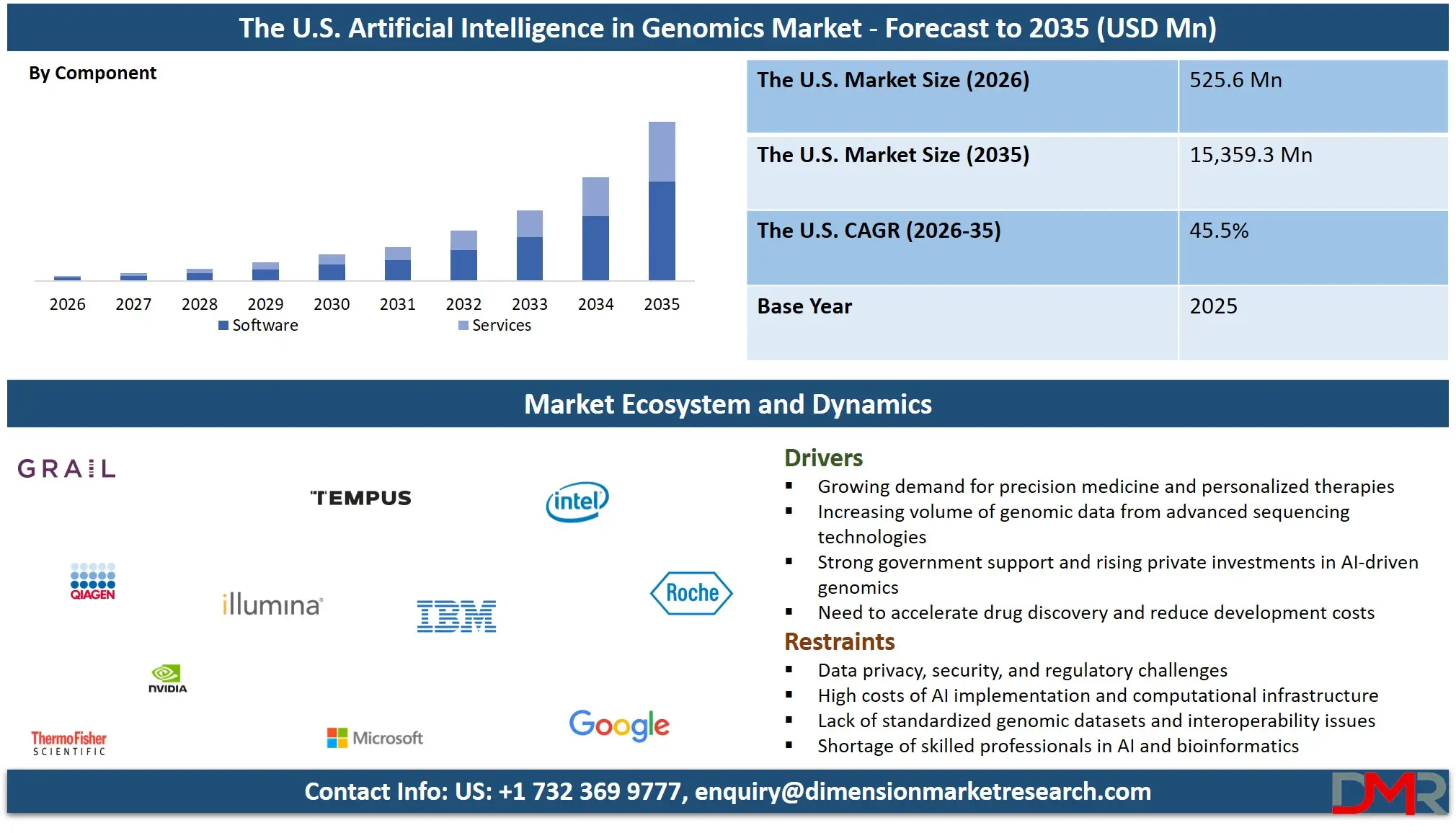
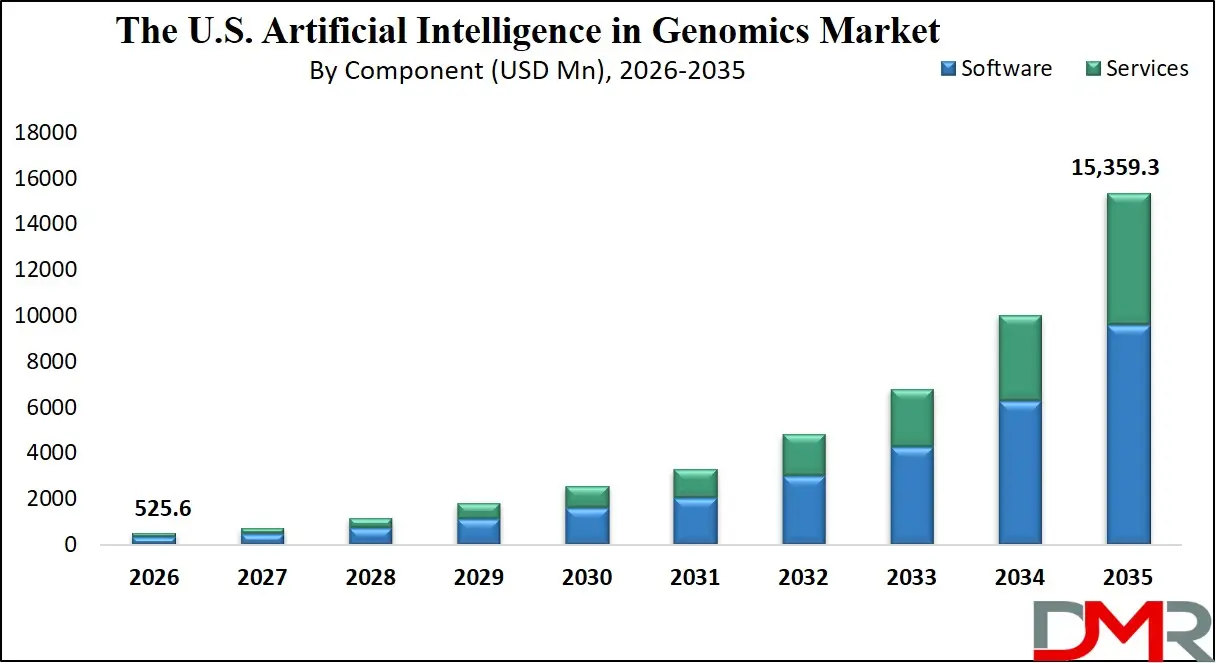
The U.S. Artificial Intelligence in Genomics Market size is projected to reach USD 525.6 million in 2026 and grow at a compound annual growth rate of 45.5% to reach a value of USD 15,359.3 million in 2035.
ℹ
To learn more about this report –
Download Your Free Sample Report Here
Artificial intelligence in genomics refers to the integration of advanced computational algorithms, including machine learning and deep learning, with genomic data analysis to extract meaningful biological insights. This domain encompasses tools and platforms designed to interpret DNA sequences, identify genetic variations, and predict disease risks or treatment outcomes. It combines bioinformatics, big data analytics, and high-throughput sequencing technologies to accelerate research and clinical applications. The growing volume of genomic data generated through next-generation sequencing has made AI-driven approaches essential for efficient analysis and interpretation.
The U.S. artificial intelligence in genomics market is witnessing rapid expansion due to increasing adoption of precision medicine, advancements in sequencing technologies, and expanding healthcare digitization. AI models are being used to improve diagnostic accuracy, optimize drug discovery pipelines, and enhance clinical decision-making. The convergence of cloud computing and genomics is enabling scalable data processing, while collaborations between research institutions and technology providers are strengthening innovation. Increasing awareness of personalized healthcare solutions is also reshaping the landscape.
ℹ
To learn more about this report –
Download Your Free Sample Report Here
The market is progressing from early-stage adoption toward a more mature ecosystem characterized by regulatory engagement and commercial deployment. Investments in genomic research, coupled with government initiatives supporting AI integration in healthcare, are fostering growth. Additionally, the emergence of multi-omics data integration and real-time analytics is transforming how genetic information is utilized, driving efficiency and enabling new therapeutic possibilities.
The U.S. Artificial Intelligence in Genomics Market: Key Takeaways
- Market Growth: The U.S. Artificial Intelligence in Genomics Market size is expected to grow by USD 14,618.5 million, at a CAGR of 45.5%, during the forecasted period of 2027 to 2035.
- By Component: The software segment is anticipated to get the majority share of the U.S. Artificial Intelligence in Genomics market in 2026.
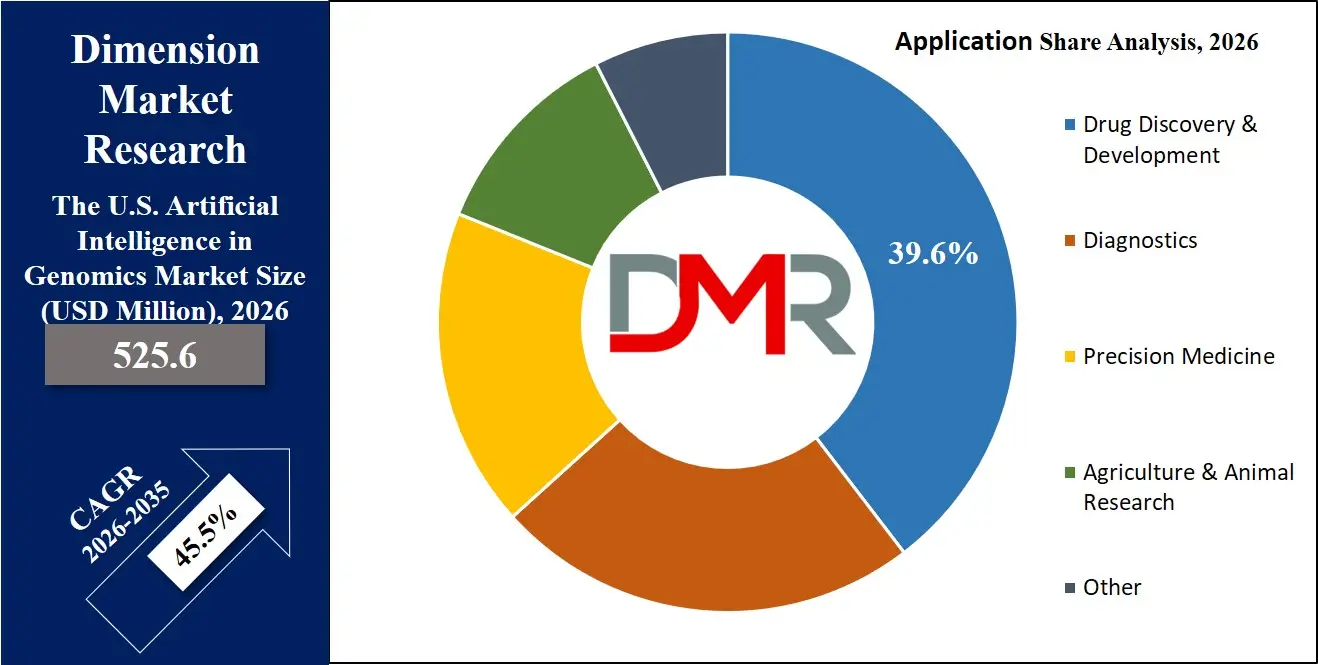
- By Application: The drug discovery & development segment is expected to get the largest revenue share in 2026 in the U.S. Artificial Intelligence in Genomics market.
- Use Cases: Some of the use cases of artificial intelligence in genomics include precision medicine, clinical diagnostics, and more.
The U.S. Artificial Intelligence in Genomics Market: Use Cases
- Drug Discovery Optimization: AI models analyze genomic datasets to identify potential drug targets faster, reducing time and cost in pharmaceutical R&D while improving success rates of clinical trials.
- Disease Risk Prediction: AI-driven genomic tools assess individual genetic profiles to predict susceptibility to diseases such as cancer or cardiovascular disorders, enabling early intervention strategies.
- Precision Medicine: Personalized treatment plans are developed by integrating genomic data with AI, ensuring therapies are tailored to individual patient genetics and improving treatment outcomes.
- Clinical Diagnostics Enhancement: AI assists clinicians in interpreting complex genomic reports, increasing diagnostic accuracy and supporting early detection of rare genetic disorders.
- Agricultural Genomics: AI is used to enhance crop resilience and livestock productivity by analyzing genetic traits, supporting sustainable agricultural practices.
- Gene Editing Insights: AI helps optimize CRISPR-based gene editing by predicting off-target effects and improving editing precision.
- Population Genomics Studies: Large-scale genomic datasets are analyzed using AI to understand population health trends and genetic diversity, aiding public health planning.
Stats & Facts
- National Institutes of Health reported in 2024 that over 3.5 million human genomes have been sequenced under federally funded programs.
- U.S. Food and Drug Administration stated in 2025 that AI-enabled diagnostic tools in genomics have increased approval submissions by 28% year-over-year.
- Centers for Disease Control and Prevention noted in 2024 that genetic testing adoption in the U.S. grew by 18% annually.
- National Human Genome Research Institute confirmed in 2025 that sequencing costs have dropped below USD 500 per genome for large-scale projects.
- U.S. Department of Energy reported in 2024 that genomic data volume is doubling approximately every seven months.
- National Science Foundation indicated in 2025 that AI-based bioinformatics projects received over USD 1.2 billion in federal funding.
- Centers for Medicare & Medicaid Services stated in 2024 that reimbursement coverage for genomic testing increased by 22%.
- National Cancer Institute reported in 2025 that 65% of oncology trials now incorporate genomic profiling.
- U.S. Bureau of Labor Statistics highlighted in 2024 that bioinformatics and AI-related jobs in healthcare grew by 19%.
- National Institutes of Health indicated in 2025 that precision medicine initiatives cover over 1 million participants.
- U.S. Department of Health and Human Services reported in 2024 that digital health data integration improved genomic workflow efficiency by 30%.
- National Library of Medicine stated in 2025 that over 40% of genomic studies now use AI-based analytical tools.
Market Dynamic
Driving Factors in the U.S. Artificial Intelligence in Genomics Market
Rising Demand for Precision Medicine
The increasing focus on precision medicine is a major force shaping the market. Healthcare providers are shifting from generalized treatments to individualized care based on genetic profiles. AI plays a critical role in analyzing complex genomic datasets, enabling clinicians to tailor therapies more effectively. This demand is particularly strong in oncology, rare diseases, and chronic conditions where genetic factors are significant. Government initiatives and funding programs supporting personalized healthcare are further accelerating adoption. As patients and providers recognize the value of targeted therapies, the integration of AI in genomics becomes essential for improving outcomes and reducing healthcare costs.
Advancements in Sequencing and Data Analytics Technologies
Technological progress in next-generation sequencing and computational biology is significantly boosting market expansion. Sequencing technologies have become faster and more cost-effective, generating massive datasets that require AI for interpretation. Advanced algorithms can process and analyze these datasets in real time, uncovering patterns that would be impossible to detect manually. The integration of cloud computing and high-performance computing infrastructures has also enhanced scalability and accessibility. These innovations are enabling research institutions and healthcare providers to adopt AI-driven genomics solutions more efficiently, contributing to widespread market growth.
Restraints in the U.S. Artificial Intelligence in Genomics Market
High Implementation Costs and Infrastructure Requirements
Despite its benefits, the adoption of AI in genomics involves substantial financial investment. Organizations must invest in advanced computing infrastructure, data storage solutions, and skilled personnel to manage and interpret genomic data. Smaller healthcare providers and research centers often face budget constraints, limiting their ability to adopt such technologies. Additionally, the cost of integrating AI tools with existing healthcare systems can be significant. These financial barriers slow down widespread adoption and create disparities between large institutions and smaller entities, ultimately affecting market expansion.
Data Privacy and Regulatory Challenges
Genomic data is highly sensitive, raising concerns about privacy and security. Strict regulations governing data protection and patient confidentiality can complicate the deployment of AI solutions. Compliance with evolving regulatory frameworks requires continuous monitoring and adaptation, increasing operational complexity for market participants. Additionally, ethical concerns related to data usage and consent can hinder data sharing, which is crucial for AI model training. These challenges can delay innovation and limit the scalability of AI-driven genomics solutions across the U.S. healthcare ecosystem.
Opportunities in the U.S. Artificial Intelligence in Genomics Market
Expansion of Multi-Omics Integration
The integration of genomics with other biological data types, such as proteomics and metabolomics, presents significant growth potential. AI technologies can analyze multi-dimensional datasets to provide comprehensive insights into biological systems. This approach enhances disease understanding and supports the development of more effective therapies. As research institutions increasingly adopt multi-omics strategies, the demand for advanced AI tools is expected to rise, creating new opportunities for market players to innovate and expand their offerings.
Government Support and Funding Initiatives
Strong government backing is creating favorable conditions for market growth. Federal agencies are investing heavily in genomic research and AI development, encouraging collaboration between public and private sectors. Funding programs aimed at advancing precision medicine and digital health are driving innovation and adoption. These initiatives not only reduce financial barriers but also promote standardization and regulatory clarity. As a result, companies operating in this space can leverage these opportunities to accelerate product development and market penetration.
Trends in the U.S. Artificial Intelligence in Genomics Market
Integration of AI with Cloud-Based Platforms
Cloud computing is becoming a cornerstone of AI-driven genomics solutions. By leveraging cloud infrastructure, organizations can store and process large genomic datasets efficiently. This trend is enabling real-time data analysis and facilitating collaboration across geographic boundaries. Cloud-based platforms also reduce the need for expensive on-premise infrastructure, making advanced genomics tools more accessible. As digital transformation continues, the adoption of cloud-integrated AI solutions is expected to grow significantly.
Growing Adoption of Automated Genomic Workflows
Automation is transforming genomic research and clinical applications. AI-powered tools are streamlining workflows, from data collection to analysis and reporting. Automated systems reduce human error, improve efficiency, and accelerate turnaround times for genomic testing. This trend is particularly important in clinical settings where timely decision-making is critical. As automation technologies continue to evolve, they are expected to play a key role in enhancing productivity and scalability within the market.
Research Scope and Analysis
By Component Analysis
The software segment dominates the U.S. artificial intelligence in genomics market and is projected to hold approximately 62.4% share in 2026. This leadership is driven by rising demand for advanced platforms that can efficiently process and interpret vast genomic datasets. AI-powered software enables sequence alignment, variant detection, and predictive analytics, making it essential in both research and clinical environments. Continuous innovation in algorithms and interface design is improving usability and adoption rates. Additionally, cloud-based deployment models are enhancing scalability, reducing infrastructure costs, and enabling real-time collaboration, further strengthening the segment’s position across healthcare and life sciences organizations.
The services segment is witnessing rapid growth due to the increasing requirement for specialized expertise in deploying and managing AI-based genomics solutions. Organizations often lack in-house capabilities, leading to reliance on external providers for consulting, integration, and data interpretation. The complexity of genomic datasets and AI workflows necessitates expert support to ensure accuracy and efficiency. Service providers also assist in regulatory compliance and workflow optimization. As adoption expands among healthcare institutions and research centers, demand for managed and professional services is expected to surge, making this segment a critical enabler of market expansion and long-term operational success.
By Technology Analysis
Machine learning remains the leading technology segment, accounting for an estimated 48.7% share in 2026. Its dominance stems from its ability to process structured genomic data and generate reliable, actionable insights. Machine learning algorithms are widely applied in disease prediction, biomarker identification, and drug discovery workflows. Their efficiency, scalability, and relatively lower computational requirements make them accessible to a broad range of organizations. Continuous improvements in model accuracy and training techniques are further driving adoption. As genomic datasets continue to expand, machine learning remains a foundational technology supporting both research advancements and clinical decision-making processes.
Deep learning is emerging as the fastest-growing technology segment due to its ability to analyze highly complex and unstructured genomic data. It is particularly effective in applications such as image-based genomic analysis, gene expression modeling, and multi-omics integration. The increasing availability of high-performance computing and large-scale datasets is accelerating its adoption. Deep learning models can uncover intricate patterns that traditional methods may miss, enhancing research outcomes. As organizations invest in advanced computational infrastructure, deep learning is expected to play a pivotal role in transforming genomic analytics and expanding the capabilities of AI-driven solutions.
By Functionality Analysis
Genome sequencing leads the functionality segment with an estimated 44.9% share in 2026. The growing adoption of next-generation sequencing technologies is driving demand for AI tools that can efficiently process and interpret sequencing data. These solutions are essential for identifying genetic mutations, understanding disease mechanisms, and supporting clinical diagnostics. Continuous reductions in sequencing costs and speed improvements are further boosting accessibility. AI enhances data accuracy and accelerates analysis timelines, making sequencing more effective for both research and healthcare applications. This strong combination of technological advancement and clinical relevance sustains the segment’s dominant position.
Gene editing is the fastest-growing functionality segment, driven by advancements in CRISPR and related technologies. AI plays a vital role in optimizing editing precision, predicting off-target effects, and improving overall efficiency. Increased research activities and expanding applications in therapeutics and agriculture are fueling demand. Organizations are leveraging AI to accelerate experimentation and reduce risks associated with gene modification. As regulatory frameworks evolve and technology matures, gene editing is expected to gain wider acceptance. This rapid progress positions the segment as a key growth driver within the broader AI in genomics landscape.
By Application Analysis
Drug discovery and development dominate the application segment, with a projected 39.6% share in 2026. AI-driven genomics is transforming the pharmaceutical landscape by enabling faster identification of drug targets and streamlining clinical trial processes. These technologies significantly reduce research timelines and costs while improving success rates. Pharmaceutical companies are increasingly integrating AI tools to enhance efficiency and innovation in their pipelines. The growing need for novel therapies, particularly for complex and rare diseases, is further driving adoption. This strong alignment with industry priorities ensures the continued leadership of this segment.
ℹ
To learn more about this report –
Download Your Free Sample Report Here
Diagnostics is the fastest-growing application segment due to rising demand for early and accurate disease detection. AI-powered genomic tools enhance diagnostic precision by analyzing genetic variations and identifying disease markers. This is particularly impactful in oncology, rare diseases, and hereditary conditions. The shift toward preventive healthcare and personalized medicine is accelerating adoption among healthcare providers. Faster turnaround times and improved clinical decision-making are key benefits driving growth. As awareness and accessibility increase, diagnostics is expected to expand rapidly, playing a crucial role in advancing patient care and outcomes.
By End User Analysis
Pharmaceutical and biotech companies are set to lead the end-user segment, accounting for approximately 46.3% share in 2026. Their dominance is supported by significant investments in research and development and early adoption of advanced technologies. These organizations use AI in genomics to accelerate drug discovery, optimize clinical trials, and improve therapeutic outcomes. Access to extensive datasets and strong technical capabilities further enhance their position. Strategic collaborations with technology providers and research institutions also contribute to innovation. This combination of resources and expertise ensures their continued leadership in the evolving market landscape.
Healthcare providers represent the fastest-growing end-user segment as they increasingly integrate AI-driven genomics into clinical practice. The shift toward precision medicine and personalized treatment is encouraging adoption across hospitals and diagnostic centers. Integration with electronic health records allows for better data utilization and improved patient outcomes. AI tools help clinicians interpret complex genomic information, enhancing decision-making and treatment planning. As infrastructure improves and costs decline, more providers are expected to adopt these technologies. This growing acceptance highlights the expanding role of genomics in routine healthcare delivery.
The U.S. Artificial Intelligence in Genomics Market Report is segmented on the basis of the following:
By Component
By Technology
- Machine Learning
- Deep Learning
- Natural Language Processing (NLP)
- Computer Vision
- Others
By Functionality
- Genome Sequencing
- Gene Editing
- Clinical Workflow
- Predictive Gene Testing
By Application
- Drug Discovery & Development
- Diagnostics
- Precision Medicine
- Agriculture & Animal Research
- Other
By End User
- Pharmaceutical and Biotech Companies
- Healthcare Providers
- Research Centers
- Others
Competitive Landscape
The U.S. artificial intelligence in genomics market is characterized by intense competition driven by innovation, technological advancements, and strategic collaborations. Companies focus on enhancing their AI capabilities, expanding product portfolios, and integrating advanced analytics into genomic platforms. High entry barriers, including significant capital requirements and regulatory compliance, limit new entrants while favoring established players.
ℹ
To learn more about this report –
Download Your Free Sample Report Here
Strategic partnerships with research institutions and healthcare providers are common, enabling access to large datasets and accelerating innovation. Continuous investment in research and development, along with the adoption of cloud-based solutions, is helping organizations maintain a competitive edge and expand their market presence.
Some of the prominent players in the U.S. Artificial Intelligence in Genomics are:
- Illumina
- Thermo Fisher Scientific
- Roche
- QIAGEN
- IBM
- Microsoft
- Google
- NVIDIA Corporation
- Intel Corporation
- Tempus Labs
- DNAnexus
- Fabric Genomics
- Deep Genomics
- Verge Genomics
- Freenome Holdings
- GRAIL
- 23andMe
- Invitae Corporation
- PathAI
- Data4Cure
- Other Key Players
Recent Developments
- In June 2025, Thermo Fisher Scientific completed a strategic acquisition of a bioinformatics startup specializing in AI-driven genomic data analytics. This acquisition is intended to enhance its capabilities in predictive genomics and multi-omics integration. The newly integrated technologies will enable faster and more accurate identification of genetic variants, supporting drug discovery and clinical research.
- In February 2025, Illumina Inc. launched an advanced AI-powered genomic analysis platform designed to accelerate sequencing workflows and improve data interpretation accuracy. The platform integrates machine learning algorithms with high-throughput sequencing systems, enabling researchers to analyze complex genomic datasets in real time. This launch aims to support precision medicine initiatives and enhance clinical diagnostics capabilities.
Report Details
| Report Characteristics |
| Market Size (2026) |
USD 525.6 Mn |
| Forecast Value (2035) |
USD 15,359.3 Mn |
| CAGR (2026–2035) |
45.5% |
| Historical Data |
2021 – 2025 |
| Forecast Data |
2027 – 2035 |
| Base Year |
2025 |
| Estimate Year |
2026 |
| Report Coverage |
Market Revenue Estimation, Market Dynamics, Competitive Landscape, Growth Factors and etc. |
| Segments Covered |
By Component (Software, Services), By Technology (Machine Learning, Deep Learning, Natural Language Processing (NLP), Computer Vision, Others), By Functionality (Genome Sequencing, Gene Editing, Clinical Workflow, Predictive Gene Testing), By Application (Drug Discovery & Development, Diagnostics, Precision Medicine, Agriculture & Animal Research, Other), By End User (Pharmaceutical and Biotech Companies, Healthcare Providers, Research Centers, Others) |
| Country Coverage |
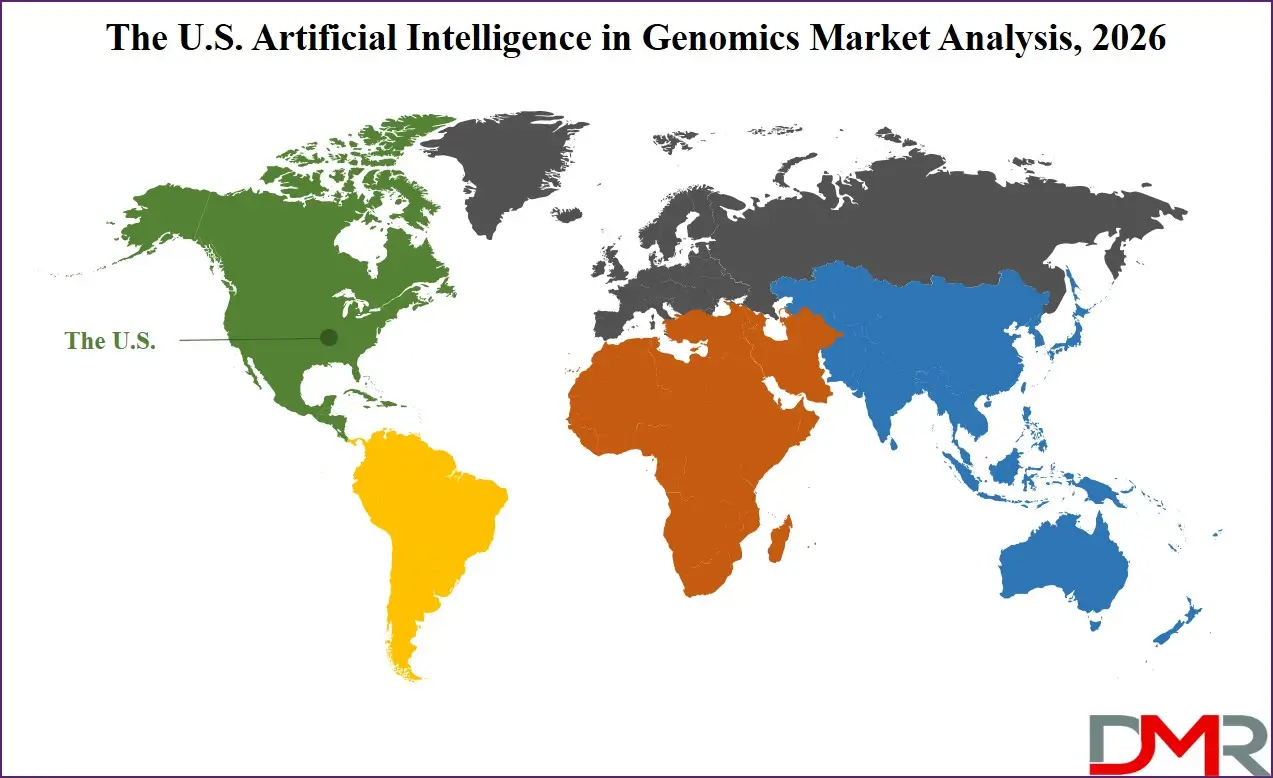
The US |
| Prominent Players |
Illumina, Thermo Fisher Scientific, Roche, QIAGEN, IBM, Microsoft, Google, NVIDIA Corporation, Intel Corporation, Tempus Labs, DNAnexus, Fabric Genomics, Deep Genomics, Verge Genomics, Freenome Holdings, GRAIL, 23andMe, Invitae Corporation, PathAI, Data4Cure, and Other Key Players |
| Purchase Options |
We have three licenses to opt for: Single User License (Limited to 1 user), Multi-User License (Up to 5 Users) and Corporate Use License (Unlimited User) along with free report customization equivalent to 0 analyst working days, 3 analysts working days and 5 analysts working days respectively. |
Frequently Asked Questions
How big is the U.S. Artificial Intelligence in Genomics Market?
▾ The U.S. Artificial Intelligence in Genomics Market size is expected to reach USD 525.6 million by 2026 and is projected to reach USD 15,395.3 million by the end of 2035.
Who are the key players in the U.S. Artificial Intelligence in Genomics Market?
▾ Some of the major key players in the U.S. Artificial Intelligence in Genomics Market include Roche, IBM, Google and others.
What is the growth rate in the U.S. Artificial Intelligence in Genomics Market?
▾ The market is growing at a CAGR of 45.5 percent over the forecasted period.