Market Overview
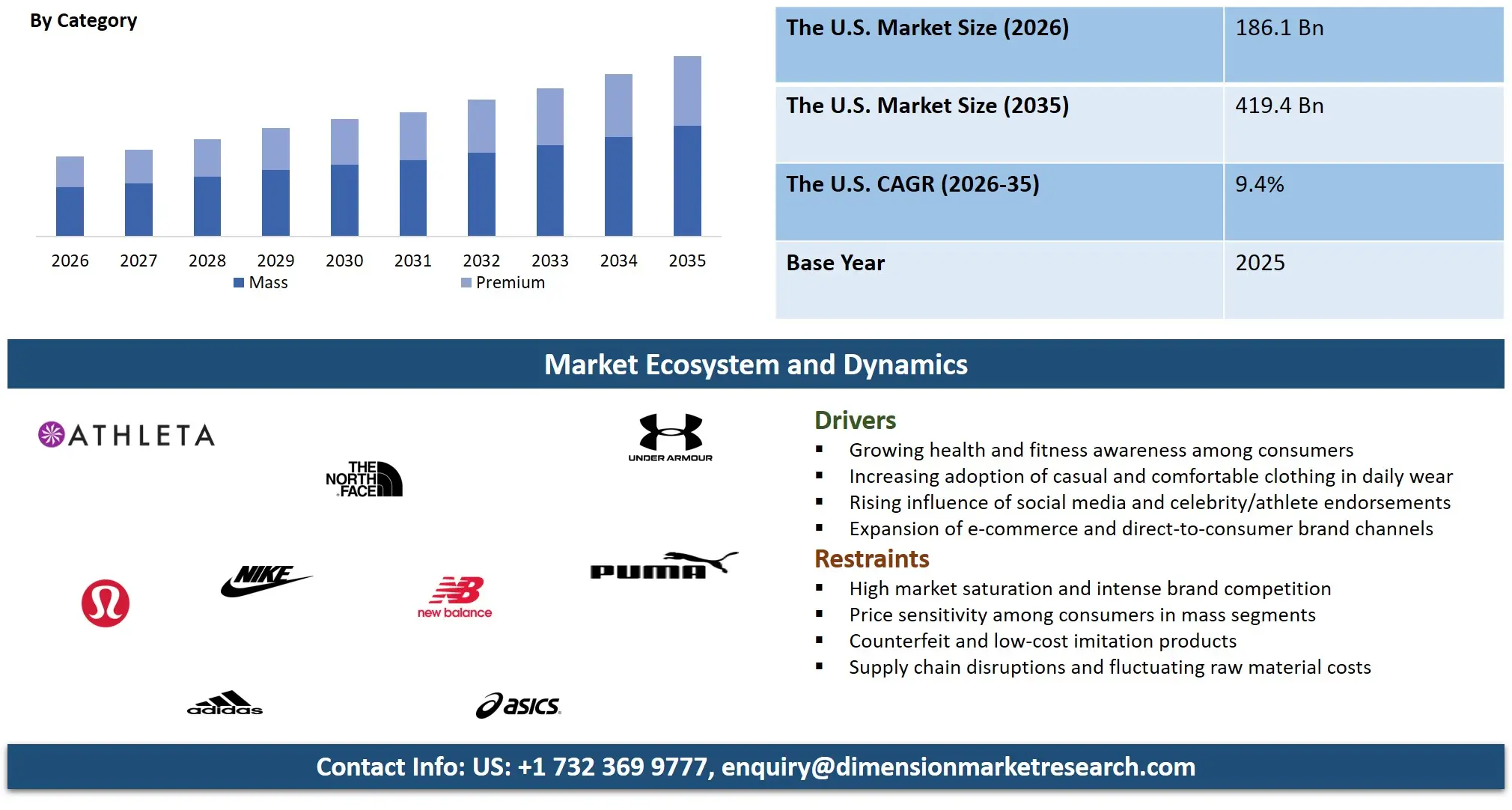
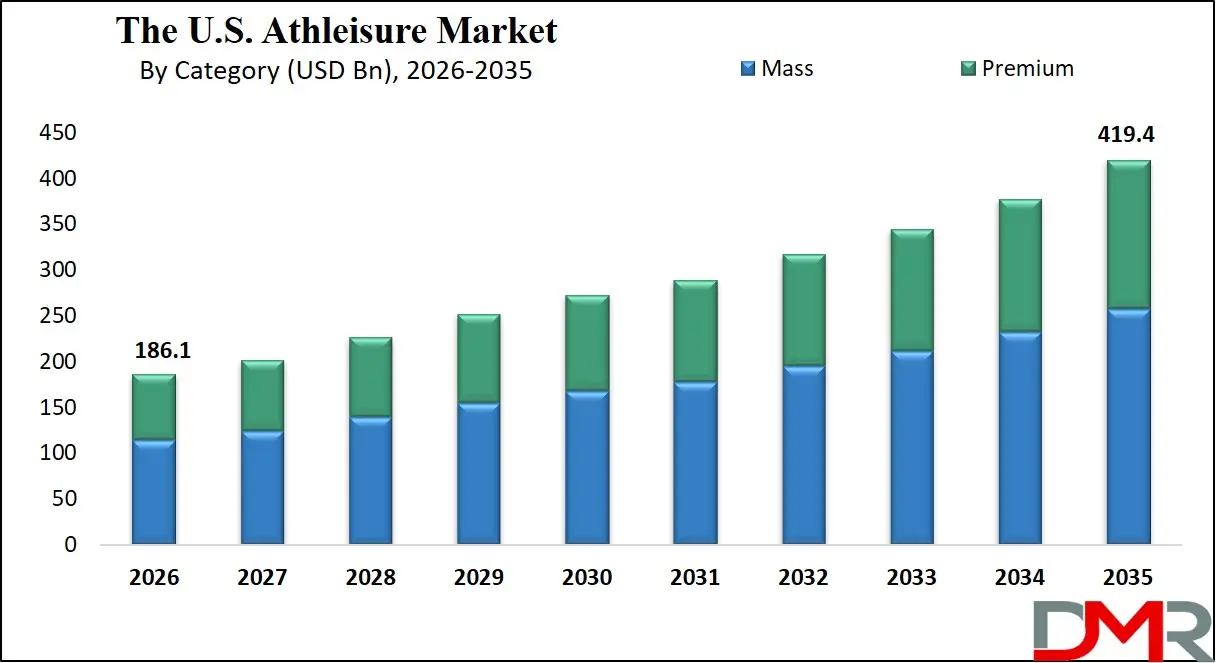
US Athleisure Market size is projected to reach USD 186.1 billion in 2026 and grow at a compound annual growth rate of 9.4% to reach a value of USD 419.4 billion in 2035.
ℹ
To learn more about this report –
Download Your Free Sample Report Here
Athleisure refers to a category of apparel that blends athletic functionality with everyday casual fashion, designed to be worn both for physical activities and daily lifestyle settings. It includes garments such as leggings, joggers, hoodies, yoga apparel, and performance T-shirts made using advanced fabrics like polyester blends, spandex, and moisture-wicking materials. These products prioritize comfort, stretchability, durability, and breathability while maintaining a fashionable appearance. Athleisure integrates elements of sportswear, activewear, and lifestyle clothing, enabling consumers to transition seamlessly between fitness, work-from-home routines, travel, and leisure activities without changing outfits.
In the U.S., the category has become an essential part of modern apparel consumption as health consciousness and fitness participation increase across different age groups. Consumers increasingly prefer multifunctional clothing that supports active lifestyles while offering aesthetic appeal for casual wear. Technological developments in textile engineering such as odor-resistant fabrics, sustainable fibers, and temperature-regulating materials have enhanced product performance and comfort. At the same time, fashion brands and sportswear companies continue to experiment with innovative designs that appeal to a broad consumer base, including professionals, athletes, and younger demographics seeking versatile wardrobe options.
ℹ
To learn more about this report –
Download Your Free Sample Report Here
The industry is also witnessing a transition toward sustainability and digital retail integration. Manufacturers are investing in eco-friendly fabrics, recycled materials, and ethical manufacturing practices to meet growing environmental expectations. Digital channels, social media marketing, and influencer collaborations are shaping purchasing behavior, particularly among millennials and Gen Z consumers. Additionally, hybrid work models and evolving lifestyle patterns have increased demand for comfortable yet stylish clothing, reinforcing the long-term relevance of athleisure within the broader U.S. fashion and sportswear ecosystem.
The U.S. Athleisure Market: Key Takeaways
- Market Growth: The U.S. Athleisure Market size is expected to grow by USD 217.5 billion, at a CAGR of 9.4%, during the forecasted period of 2027 to 2035.
- By Category: The mass segment is anticipated to get the majority share of the U.S. Athleisure market in 2026.
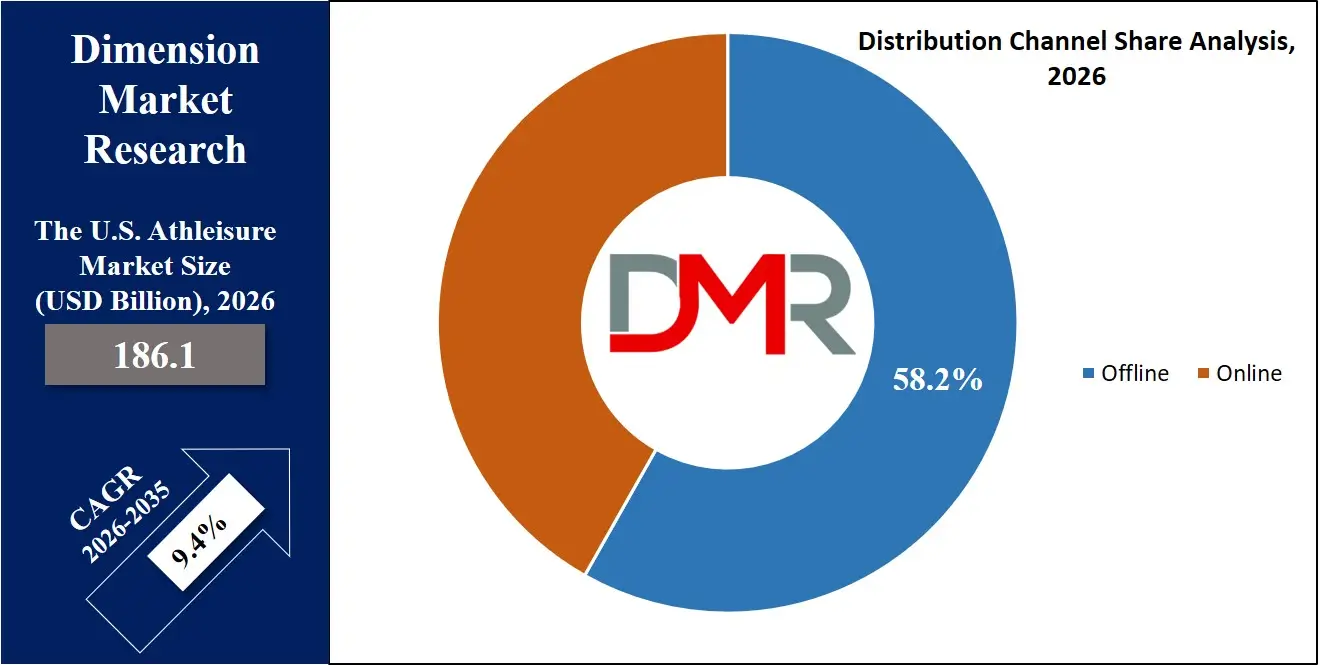
- By Distribution Channel: The offline segment is expected to get the largest revenue share in 2026 in the U.S. Athleisure market.
- Use Cases: Some of the use cases of athleisure include casual everyday wear, school & youth activities, and more.
The U.S. Athleisure Market: Use Cases
- Fitness and Gym Activities: Athleisure garments such as leggings, moisture-wicking shirts, and joggers are widely used for workouts, yoga, running, and gym training. These clothes offer flexibility, breathability, and durability that support high-performance physical activities while maintaining comfort during extended use.
- Casual Everyday Wear: Consumers increasingly wear athleisure apparel as daily casual clothing. Hoodies, joggers, and T-shirts provide a comfortable alternative to traditional casual wear, making them suitable for errands, social outings, and relaxed office environments.
- Work-from-Home Apparel: With the growth of hybrid and remote work culture in the United States, athleisure clothing has become a preferred choice for home-office settings. Comfortable fabrics and relaxed fits allow individuals to remain productive while maintaining a professional yet casual appearance.
- Travel and Outdoor Activities: Athleisure products are commonly used during travel due to their lightweight materials, stretchable fabrics, and versatility. Travelers prefer these garments for long flights, road trips, and outdoor exploration where comfort and functionality are essential.
- Sports and Recreational Activities: Many consumers wear athleisure apparel for recreational sports such as cycling, hiking, tennis, and casual running. The clothing’s technical fabrics enhance mobility and sweat management, improving overall performance and comfort.
- Streetwear and Fashion Styling: Athleisure has become a major element of contemporary street fashion in the U.S. Fashion influencers and younger consumers integrate leggings, sneakers, and hoodies into trendy outfits that blend comfort with style.
- School and Youth Activities: Students and younger consumers frequently wear athleisure apparel for school, extracurricular sports, and casual social events. Durable materials and easy-care fabrics make these garments practical for everyday youth activities.
Stats & Facts
- U.S. Bureau of Labor Statistics reported in 2024 that American households spent an average of about USD 1,945 annually on apparel and related services.
- U.S. Census Bureau stated in 2024 that e-commerce accounted for roughly 15.4% of total U.S. retail sales, supporting strong online apparel sales growth.
- U.S. Department of Commerce noted in 2025 that the sports and fitness industry contributes billions annually to the U.S. economy, supporting demand for athletic and lifestyle apparel.
- Centers for Disease Control and Prevention (CDC) reported in 2024 that over 53% of U.S. adults meet federal aerobic physical activity guidelines, indicating a strong base of active consumers.
- U.S. Bureau of Economic Analysis stated in 2024 that consumer spending increased by around 5.2% in recreational goods and apparel categories.
- National Sporting Goods Association reported in 2025 that more than 240 million Americans participated in at least one sport or fitness activity during the year.
- U.S. Environmental Protection Agency highlighted in 2024 that over 13 million tons of textile waste are generated annually in the United States, encouraging sustainable apparel innovation.
- U.S. Department of Health and Human Services confirmed in 2024 that regular physical activity participation among Americans continues to rise, supporting demand for activewear.
- U.S. Census Bureau reported in 2025 that online clothing and accessories sales recorded year-over-year growth exceeding 8%.
- U.S. Bureau of Labor Statistics stated in 2024 that the apparel manufacturing industry employed more than 95,000 workers in the United States.
- National Retail Federation reported in 2025 that U.S. retail sales grew by approximately 4% year-over-year, with apparel being one of the important lifestyle categories.
- U.S. Department of Agriculture reported in 2024 that cotton production in the United States exceeded 14 million bales, supporting textile and clothing manufacturing.
Market Dynamic
Driving Factors in the U.S. Athleisure Market
Rising Health Awareness and Fitness Participation
Increasing health consciousness among U.S. consumers has significantly contributed to the growth of athleisure apparel. People across different age groups are actively participating in fitness activities such as running, yoga, cycling, and gym workouts. This shift toward healthier lifestyles has increased the demand for clothing that offers comfort, flexibility, and performance support during physical activities. Athleisure products provide moisture-wicking fabrics, stretchable materials, and ergonomic designs that improve comfort during workouts. Additionally, the growing popularity of fitness communities, wellness programs, and outdoor recreational activities has expanded the consumer base for athleisure apparel. As more Americans prioritize active living, demand for versatile sports-inspired clothing continues to strengthen.
Expansion of Digital Retail and Direct-to-Consumer Channels
The rapid growth of e-commerce and direct-to-consumer (DTC) business models has accelerated athleisure sales across the U.S. Online platforms allow brands to reach wider audiences and offer personalized shopping experiences through targeted advertising and product recommendations. Social media marketing, influencer partnerships, and digital fashion campaigns play an important role in promoting athleisure styles among younger demographics. Additionally, online channels provide access to exclusive collections, customization options, and competitive pricing, encouraging consumers to purchase apparel digitally. The convenience of home delivery, easy returns, and mobile shopping apps has further strengthened the adoption of athleisure products through digital retail channels.
Restraints in the U.S. Athleisure Market
Intense Market Competition and Brand Saturation
The U.S. athleisure industry is highly competitive, with numerous global sportswear brands, fashion labels, and emerging direct-to-consumer companies competing for market share. This saturation creates pricing pressure and reduces profit margins for many manufacturers and retailers. Established brands invest heavily in marketing, endorsements, and product innovation to maintain visibility, making it difficult for smaller or newer companies to compete effectively. Additionally, constant fashion trends require brands to frequently launch new collections, increasing operational costs. The intense competition also leads to rapid product turnover and inventory management challenges, which can limit profitability and slow market expansion for certain players.
Environmental Concerns and Textile Waste
Sustainability challenges represent another significant restraint for the athleisure industry in the United States. Many athleisure garments are produced using synthetic fibers such as polyester and spandex, which are derived from petroleum and can contribute to environmental pollution. The fashion industry also faces criticism for textile waste, water consumption, and carbon emissions associated with production and distribution processes. Increasing environmental awareness among consumers and regulators is putting pressure on brands to adopt sustainable materials and responsible manufacturing practices. However, transitioning to eco-friendly alternatives often increases production costs and requires new supply chain investments, creating operational challenges for companies.
Opportunities in the U.S. Athleisure Market
Growth of Sustainable and Eco-Friendly Apparel
Sustainability is emerging as a major opportunity within the U.S. athleisure industry. Consumers are increasingly seeking apparel made from recycled materials, organic cotton, and environmentally responsible fabrics. Brands that integrate sustainable textile technologies and transparent supply chains can attract environmentally conscious customers and strengthen brand loyalty. Innovations such as recycled polyester fibers, biodegradable fabrics, and water-efficient dyeing processes are gaining attention. Additionally, government initiatives and corporate sustainability goals are encouraging apparel manufacturers to reduce carbon emissions and waste. Companies investing in eco-friendly production methods and circular fashion models are expected to benefit from growing demand for responsible clothing.
Expansion of Athleisure in Workplace and Lifestyle Fashion
Another key opportunity lies in the increasing acceptance of athleisure apparel in professional and lifestyle settings. As workplace dress codes become more relaxed and hybrid work environments continue to expand, consumers prefer clothing that combines comfort with modern style. Athleisure brands are responding by designing products that resemble traditional casual wear while maintaining athletic functionality. Sleek joggers, performance shirts, and stylish hoodies are increasingly worn in semi-formal environments. This shift broadens the application of athleisure beyond sports and fitness, enabling brands to reach new consumer segments and expand product portfolios.
Trends in the U.S. Athleisure Market
Integration of Advanced Performance Fabrics
Athleisure brands are increasingly integrating advanced fabric technologies to improve product performance and comfort. Moisture-wicking textiles, temperature-regulating fabrics, antimicrobial coatings, and four-way stretch materials enhance durability and user experience. These innovations allow consumers to wear athleisure clothing during intense workouts as well as daily activities. Textile manufacturers are also experimenting with lightweight materials that improve breathability while maintaining structural strength. Such technological improvements have become a major differentiator for brands competing in the premium athleisure segment, enabling them to offer clothing that combines fashion with functional performance.
Rising Influence of Fashion and Celebrity Culture
The influence of fashion culture and celebrity endorsements has become a defining trend in the U.S. athleisure industry. Athletes, influencers, and fashion icons frequently promote athleisure styles through social media platforms, increasing consumer interest in sports-inspired clothing. Limited-edition collections and collaborations between sportswear brands and fashion designers have become common strategies to attract younger audiences. Streetwear aesthetics, bold color combinations, and stylish silhouettes are increasingly integrated into athleisure collections. This fusion of performance wear and high-fashion design continues to reshape consumer perceptions and strengthen the popularity of athleisure apparel.
Impact of Artificial Intelligence in the U.S. Athleisure Market
- AI-Driven Demand Forecasting: Retailers use AI algorithms to analyze consumer purchasing behavior, seasonal trends, and sales data to forecast demand more accurately and optimize inventory levels.
- Personalized Product Recommendations: AI-powered recommendation engines on e-commerce platforms suggest athleisure products based on customer preferences, browsing history, and previous purchases, improving shopping experiences.
- Smart Supply Chain Optimization: AI helps manufacturers track raw materials, production schedules, and logistics in real time, reducing delays and improving supply chain efficiency.
- Automated Design and Trend Analysis: Fashion brands use AI tools to analyze fashion trends, consumer feedback, and social media data to design new athleisure products that match market preferences.
- Virtual Try-On Technology: AI-based augmented reality tools allow customers to virtually try athleisure apparel online, helping them choose correct sizes and styles before purchasing.
- Quality Control Automation: Manufacturers integrate AI-driven inspection systems to detect fabric defects and ensure consistent product quality during production.
- Customer Sentiment Analysis: AI systems analyze reviews and social media discussions to understand consumer perceptions and improve product development strategies.
- Dynamic Pricing Strategies: AI tools enable retailers to adjust product prices based on demand, competitor pricing, and seasonal trends, maximizing sales and profitability.
- Sustainability Monitoring: AI technologies assist companies in tracking environmental impact, monitoring energy consumption, and optimizing resource utilization during apparel production.
Research Scope and Analysis
By Product Analysis
Shirts and T-shirts represent one of the most widely adopted product segments within the U.S. athleisure industry due to their versatility, affordability, and everyday usability. These garments are commonly used for gym workouts, running, yoga sessions, and casual wear, making them a staple in consumers’ wardrobes. The segment benefits from innovations such as moisture-wicking fabrics, odor-resistant textiles, and lightweight breathable materials that enhance performance during physical activities. In addition, the rising popularity of athleisure as streetwear has expanded demand for stylish graphic tees and performance tops that can be worn in both athletic and casual settings. The growing participation in fitness programs and recreational sports in the United States also supports consistent demand for these products. By 2026, shirts and T-shirts are projected to account for 22.8% of the U.S. athleisure market share, reflecting their strong consumer acceptance and wide availability across online and offline retail channels.
Leggings are among the fastest-growing segments in the U.S. athleisure market due to their high comfort, flexibility, and adaptability for both fitness and lifestyle use. Consumers increasingly prefer leggings for activities such as yoga, running, gym workouts, and even casual social settings. Advanced fabric technologies including compression materials, four-way stretch fabrics, and sweat-absorbing textiles have improved the functional performance of leggings, encouraging higher adoption among fitness enthusiasts. Additionally, fashion trends promoting body-fit silhouettes and athleisure styling have boosted the popularity of leggings among younger consumers. Brands are also introducing sustainable leggings made from recycled fibers, which further enhances their appeal to environmentally conscious buyers and accelerates the segment’s growth trajectory.
By Material Analysis
Polyester remains the dominant material used in athleisure apparel due to its durability, moisture-wicking properties, and lightweight nature. It is widely utilized in shirts, leggings, joggers, and performance wear because it helps regulate body temperature and dries quickly during intense workouts. Polyester fabrics are also resistant to shrinking and stretching, making them suitable for high-performance sportswear. Manufacturers often blend polyester with elastane or spandex to enhance flexibility and comfort. In addition, recycled polyester derived from plastic waste is gaining traction as brands focus on sustainability and circular fashion initiatives. The cost-effectiveness and functional benefits of polyester make it a preferred material for large-scale apparel production. By 2026, polyester is estimated to hold 38.6% share of the U.S. athleisure market by material, reflecting its widespread use across product categories and strong demand among consumers seeking durable performance clothing.
Spandex is the fastest-growing material segment within the U.S. athleisure industry due to its exceptional elasticity and flexibility. This fiber allows garments to stretch significantly while maintaining their original shape, making it ideal for high-movement activities such as yoga, pilates, and fitness training. Athleisure brands frequently blend spandex with other materials like cotton and polyester to create garments that offer both comfort and structural support. As consumers increasingly prioritize comfort and mobility in clothing, demand for spandex-blended fabrics continues to grow. The expansion of yoga apparel, leggings, and compression garments has particularly contributed to the rapid growth of this segment across the country.
By Category Analysis
The mass category dominates the U.S. athleisure market due to its affordability and accessibility for a broad consumer base. Products in this segment are typically offered by large retailers and sportswear brands at competitive prices, allowing consumers to purchase functional athleisure clothing without significant financial investment. Mass-market products often include basic T-shirts, joggers, leggings, and hoodies that combine comfort with simple design aesthetics. The availability of these items through large retail chains, supermarkets, and online marketplaces significantly expands their reach. Increasing consumer demand for everyday comfort clothing further strengthens the segment’s market position. By 2026, the mass category is projected to account for 61.4% of the U.S. athleisure market, driven by strong demand among middle-income households and value-oriented shoppers seeking affordable activewear options.
The premium category is witnessing rapid expansion as consumers increasingly seek high-quality athleisure products that offer superior performance and style. Premium brands emphasize advanced textile technologies, innovative designs, and enhanced durability to justify higher pricing. These products often feature specialized fabrics such as compression materials, eco-friendly textiles, and temperature-regulating fibers. Additionally, fashion-forward designs and limited-edition collections attract style-conscious consumers who view athleisure as a lifestyle statement rather than simply workout clothing. Celebrity endorsements, designer collaborations, and luxury branding strategies also contribute to the strong growth of this segment in the urban markets in the U.S.
By Distribution Channel Analysis
Offline retail channels continue to dominate the U.S. athleisure market as consumers prefer to physically evaluate apparel quality, fit, and fabric before purchasing. Hypermarkets, supermarkets, sporting goods retailers, brand-owned stores, and department stores provide extensive product displays and personalized shopping experiences that enhance customer confidence. Retail outlets also allow consumers to try different sizes and styles, reducing the risk of returns. Additionally, major sportswear brands maintain strong physical retail networks that promote brand loyalty and provide immersive shopping experiences through product demonstrations and in-store promotions. By 2026, offline distribution channels are expected to account for 58.2% of the U.S. athleisure market, reflecting the continued importance of brick-and-mortar retail in apparel purchasing behavior.
ℹ
To learn more about this report –
Download Your Free Sample Report Here
Online distribution channels are the fastest-growing segment due to the increasing adoption of e-commerce platforms and mobile shopping applications. Consumers benefit from convenient browsing, competitive pricing, and access to a wider variety of athleisure products compared to physical stores. Online platforms often offer personalized recommendations, customer reviews, and easy return policies, which enhance consumer confidence in digital purchases. Additionally, direct-to-consumer brand websites allow manufacturers to maintain stronger relationships with customers while collecting valuable data on consumer preferences. Social media marketing, influencer campaigns, and digital fashion promotions further support the rapid expansion of online athleisure sales in the U.S.
By End User Analysis
Women represent the dominant end-user segment in the U.S. athleisure market due to strong participation in fitness activities and greater adoption of athleisure as everyday fashion. Women’s athleisure apparel includes leggings, yoga pants, sports tops, and hoodies designed with both functional and aesthetic features. The popularity of yoga, pilates, and boutique fitness studios has significantly increased demand for stylish and performance-oriented clothing among female consumers. Additionally, fashion trends that emphasize comfort, flexibility, and athleisure styling have further strengthened this segment’s growth. Brands frequently launch women-focused collections with vibrant colors, flattering fits, and advanced fabric technologies. By 2026, the women segment is estimated to account for 47.9% of the U.S. athleisure market, reflecting strong demand across multiple product categories.
The men’s segment is experiencing rapid growth as more male consumers adopt athleisure clothing for both fitness and casual wear. Products such as performance T-shirts, joggers, sweatpants, and athletic shorts are increasingly worn during workouts as well as everyday activities. Changing fashion trends and the rise of fitness culture among men have significantly increased interest in comfortable sports-inspired clothing. In addition, brands are expanding their men’s collections with stylish yet functional designs that appeal to younger consumers. The growth of gym memberships, outdoor sports, and recreational activities in the United States further supports the rising adoption of athleisure apparel among male consumers.
The U.S. Athleisure Market Report is segmented on the basis of the following:
By Product
- Shirts & T-Shirts
- Yoga Apparel
- Tops
- Pants
- Shorts
- Unitards
- Capris
- Others
- Leggings
- Hoodies & Sweatshirts
- Joggers & Sweatpants
- Shorts
- Others
By Material
- Cotton
- Polyester
- Nylon
- Spandex
- Others
By Category
By Distribution Channel
- Offline
- Hypermarkets & Supermarkets
- Sporting Goods Retailers
- Brand-Owned Stores
- Department Stores
- Online
- E-commerce Platforms
- Brand Websites
By End-user
Competitive Landscape
The U.S. athleisure market is characterized by intense competition, innovation, and continuous product development. Companies operating in this industry focus heavily on research and development to introduce advanced fabrics, performance technologies, and stylish designs that differentiate their offerings. Strategic collaborations with athletes, influencers, and fashion designers play a key role in strengthening brand visibility and consumer engagement.
ℹ
To learn more about this report –
Download Your Free Sample Report Here
Many companies are expanding their direct-to-consumer channels to build stronger relationships with customers while improving profit margins. Sustainability initiatives such as recycled fabrics and eco-friendly manufacturing processes are also becoming important competitive strategies. Additionally, investments in digital marketing, omnichannel retail strategies, and supply chain optimization allow companies to maintain market relevance in a rapidly evolving apparel landscape.
Some of the prominent players in the U.S. Athleisure are:
- Nike
- Adidas
- Lululemon Athletica
- Under Armour
- New Balance
- ASICS
- Puma
- Athleta
- Fabletics
- Alo Yoga
- Vuori
- Gymshark
- Reebok
- Skechers
- Columbia Sportswear
- The North Face
- Patagonia
- Outdoor Voices
- Beyond Yoga
- Varley
- Other Key Players
Recent Developments
- In September 2025, Lululemon Athletica Inc. announced a significant investment to expand its athleisure product development and manufacturing capabilities in the United States. The initiative focused on strengthening supply chain resilience and accelerating innovation in performance fabrics used for yoga apparel and training gear. The company invested in advanced textile research and digital manufacturing technologies to enhance product quality and shorten development cycles. This expansion also aimed to increase domestic production capacity while supporting sustainable manufacturing practices.
- In January 2025, Nike Inc. introduced a new sustainable athleisure apparel collection designed using recycled polyester fibers and environmentally responsible manufacturing processes. The collection included performance leggings, running shirts, and lightweight hoodies aimed at consumers seeking eco-friendly sportswear options. The company stated that the garments were produced using advanced textile technology that reduces water usage and carbon emissions during production. The launch was part of Nike’s broader sustainability initiative to increase the use of recycled materials across its product portfolio.
Report Details
| Report Characteristics |
| Market Size (2026) |
USD 186.1 Bn |
| Forecast Value (2035) |
USD 419.4 Bn |
| CAGR (2026–2035) |
9.4% |
| Historical Data |
2021 – 2025 |
| Forecast Data |
2027 – 2035 |
| Base Year |
2025 |
| Estimate Year |
2026 |
| Report Coverage |
Market Revenue Estimation, Market Dynamics, Competitive Landscape, Growth Factors and etc. |
| Segments Covered |
By Product (Shirts & T-Shirts, Yoga Apparel, Leggings, Hoodies & Sweatshirts, Joggers & Sweatpants, Shorts, Others), By Material (Cotton, Polyester, Nylon, Spandex, Others), By Category (Mass, Premium), By Distribution Channel (Offline, Online), By End-user (Men, Women, Children) |
| Country Coverage |
The U.S. |
| Prominent Players |
Nike, Adidas, Lululemon Athletica, Under Armour, New Balance, ASICS, Puma, Athleta, Fabletics, Alo Yoga, Vuori, Gymshark, Reebok, Skechers, Columbia Sportswear, The North Face, Patagonia, Outdoor Voices, Beyond Yoga, Varley, and Other Key Players |
| Purchase Options |
We have three licenses to opt for: Single User License (Limited to 1 user), Multi-User License (Up to 5 Users) and Corporate Use License (Unlimited User) along with free report customization equivalent to 0 analyst working days, 3 analysts working days and 5 analysts working days respectively. |
Frequently Asked Questions
How big is the U.S. Athleisure Market?
▾ The U.S. Athleisure Market size is expected to reach USD 186.1 billion by 2026 and is projected to reach USD 419.4 billion by the end of 2035.
Who are the key players in the U.S. Athleisure Market?
▾ Some of the major key players in the U.S. Athleisure Market include Nike, Puma, Adidas and others
What is the growth rate in the U.S. Athleisure Market?
▾ The market is growing at a CAGR of 9.4 percent over the forecasted period.