Market Overview
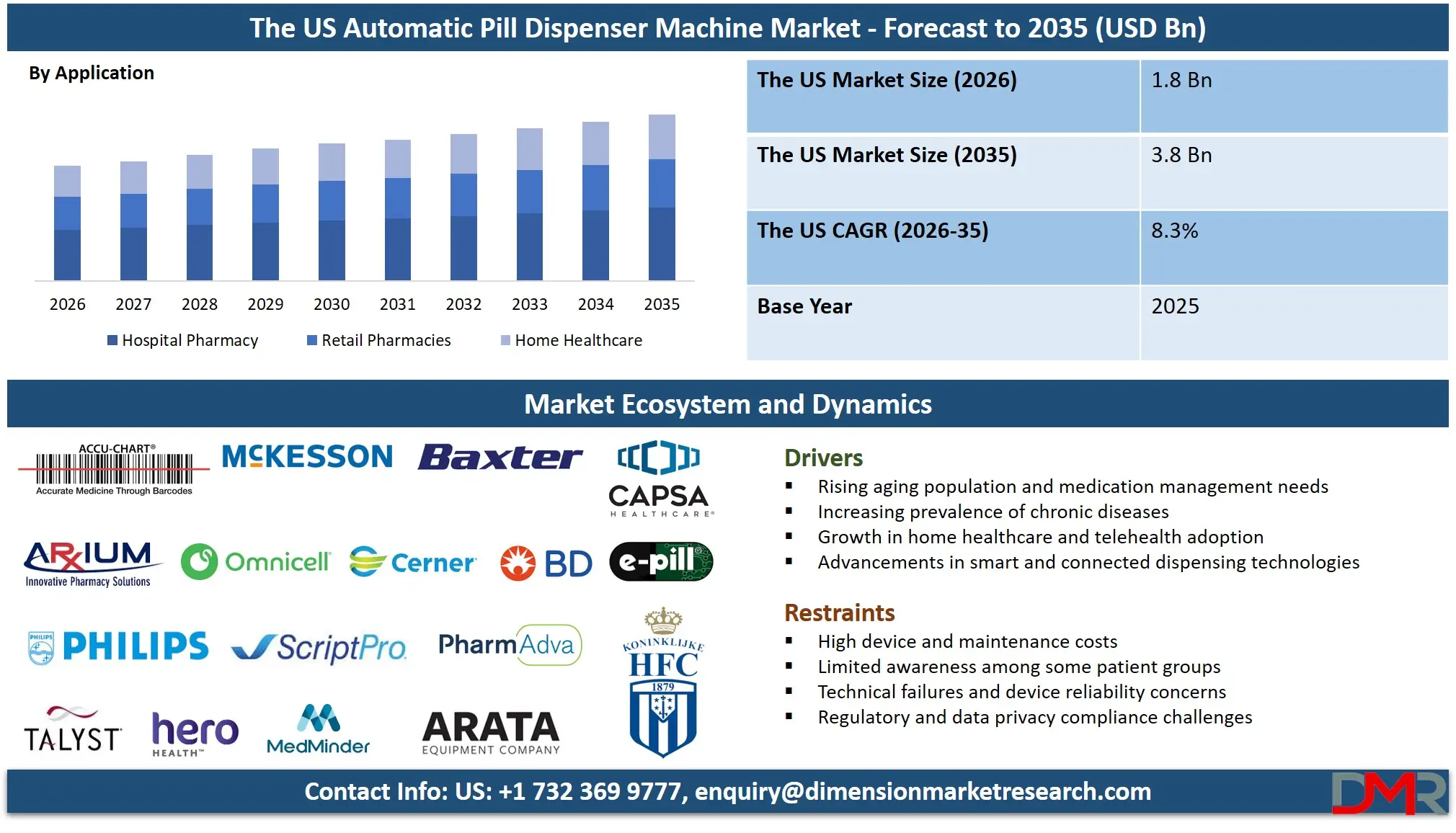
The US Automatic Pill Dispenser Machine Market size is expected to reach a value of USD 1.8 billion in 2026, and it is further anticipated to reach a Market value of USD 3.8 billion by 2035 at a CAGR of 8.3%.
ℹ
To learn more about this report –
Download Your Free Sample Report Here
The market for U.S. Automatic Pill Dispenser Machine is showing strong growth owing to the presence of a highly fragmented but expensive health delivery network, chronic disease management programs, and the push towards avoiding hospital penalties for readmissions instituted by the Centers for Medicare & Medicaid Services. Rapidly increasing adoption of the devices is occurring through large IDNs, long-term care facilities, and even retail pharmacies trying to streamline their operations in view of the national pharmacy technician shortage. In addition, strong market growth is being facilitated by the rising trend of opioid protocol and the need for stringent accountability of narcotics in medical settings, both of which can be handled effectively through automated dispensing.
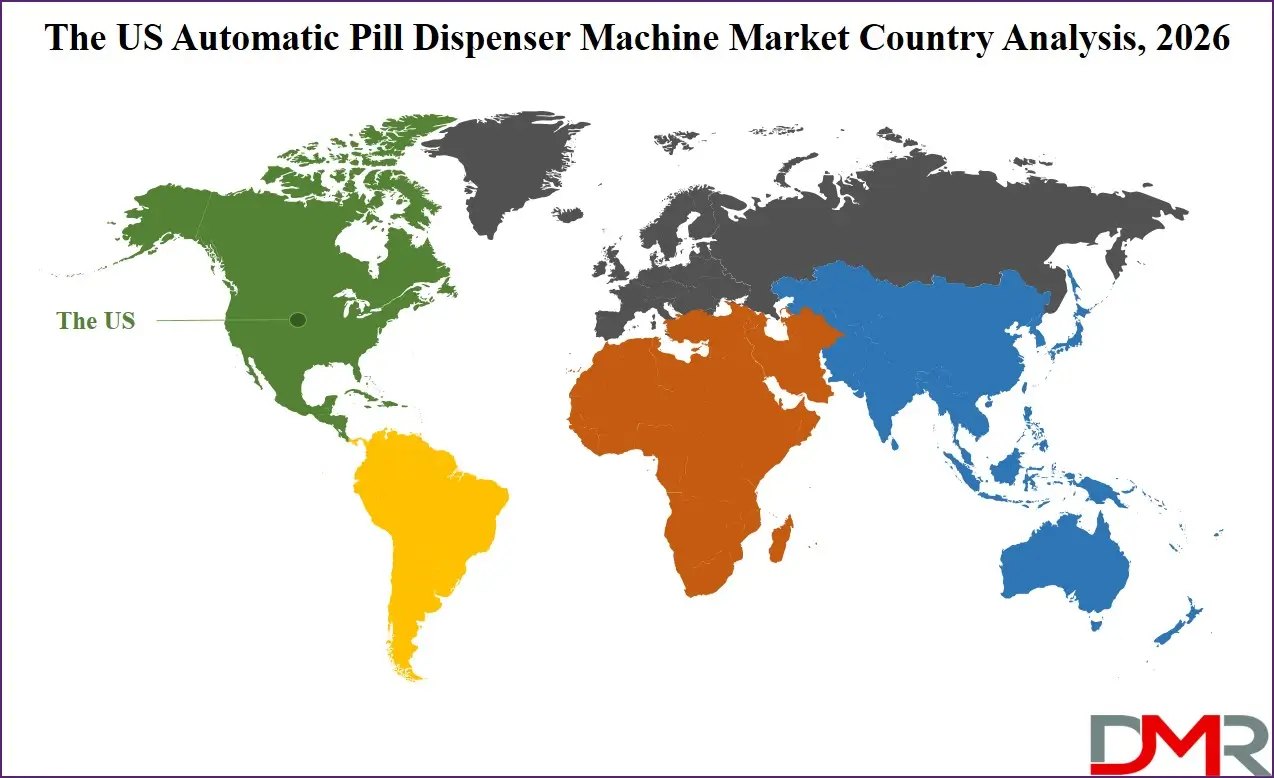
RFID technology, barcode scanners, etc., are being incorporated into the big Electronic Health Record software such as Epic and Cerner across the U.S. in order to create a seamless closed loop for medication management. The Western and Northeastern regions have emerged as market leaders because of the presence of many academic medical centers and also high per capita health expenditure. Some of the important states that have contributed to market growth are California, Texas, and New York.
ℹ
To learn more about this report –
Download Your Free Sample Report Here
The US Automatic Pill Dispenser Machine Market: Key Takeaways and Other Influencing Factors
- The US Market Value: The United States Automatic Pill Dispenser Machine Market size was estimated at USD 1.8 billion in 2026 and is expected to reach USD 3.8 billion in 2035 owing to developments in cloud-based pharmacy management platforms, the aging demographic or "silver tsunami," and the financial need to enhance HCAHPS score via superior patient experience.
- The US Growth Rate: The growth of the United States automatic pill dispenser machine market is projected at a CAGR of 8.3% driven by the automation of pre-existing workflows for prior authorizations, growing prevalence of lifestyle-induced metabolic conditions, and the necessity to protect themselves from costly litigation associated with improper administration.
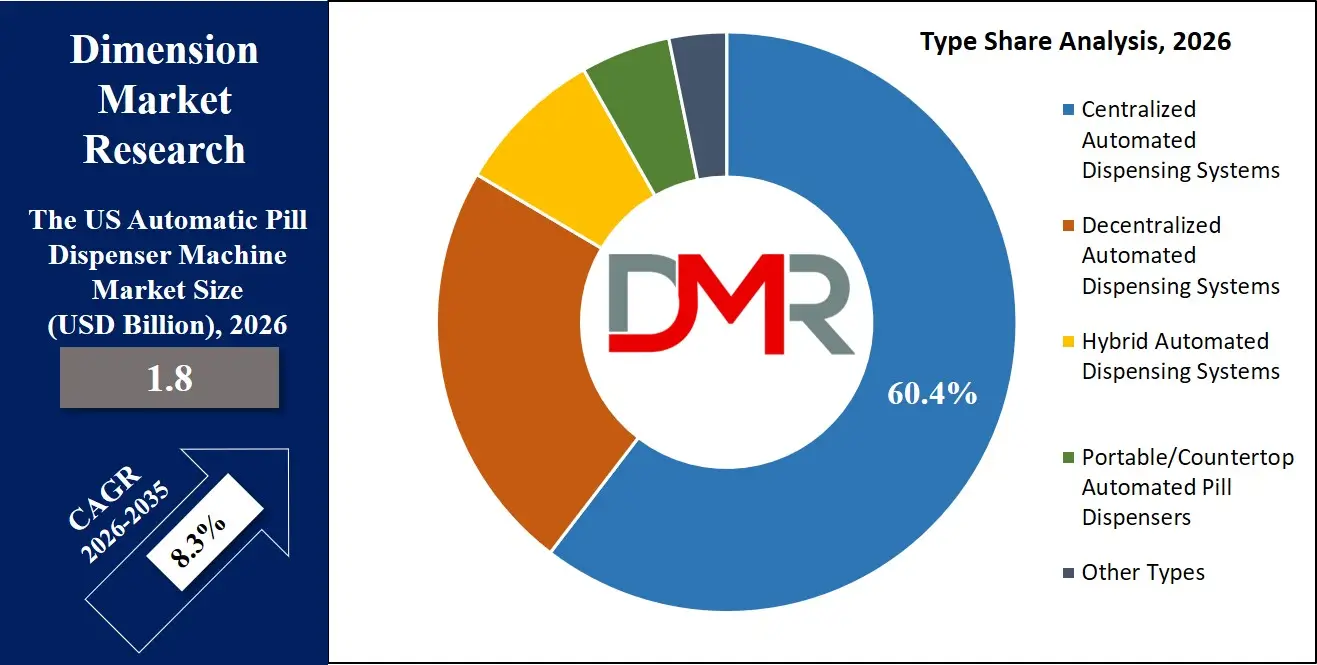
- By Type Segment Analysis: The centralized automatic dispensing systems constitute a significant 60.4% share in 2026 as they are essential in managing the stock inventory in vast health system campuses and adhering to the regulations for track-and-trace serialization under the DSCSA.
- By Technology Segment Analysis: Barcode-based machines currently dominate the technology segments because of their economical price point and compatibility with legacy systems used in hospitals across the nation along with US hospital accreditations standards for bedside verification.
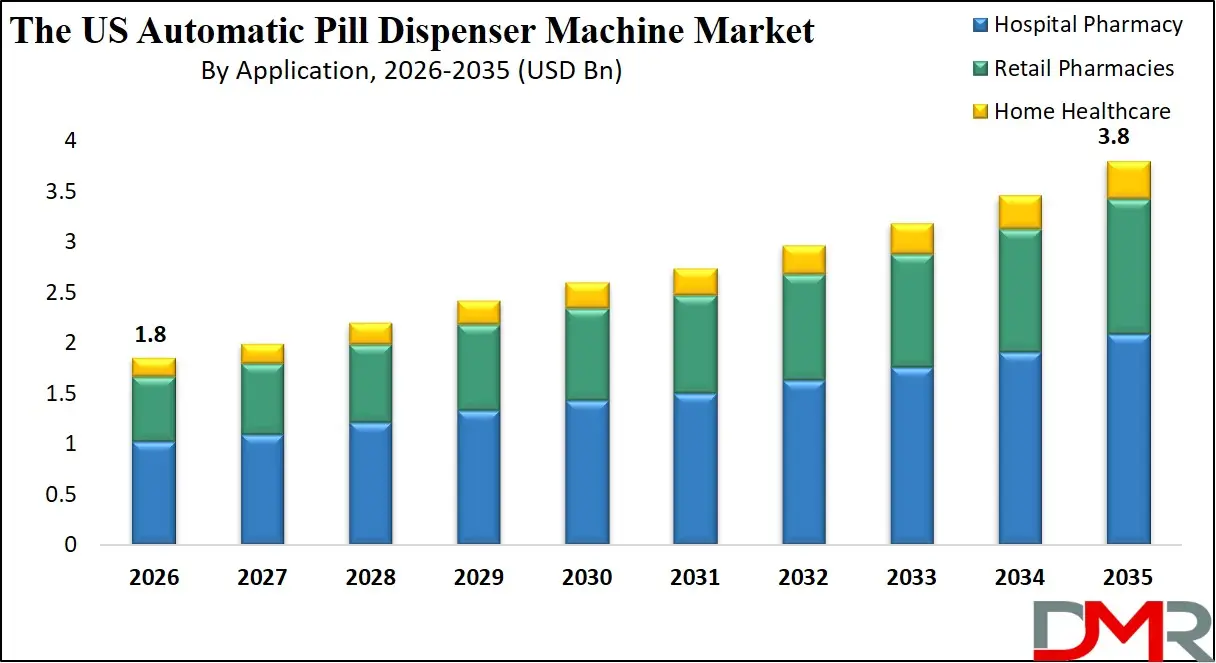
- By Application Segment Analysis: The Hospital Pharmacy application segment accounts for the largest market share at 42.1% in 2026, owing to the high demand from hospital pharmacies arising out of the intense operational nature of such facilities that have to comply with Joint Commission guidelines. In contrast, the Long Term Care (LTC) Pharmacy application segment witnesses rapid growth, due to requirements from assisted and skilled nursing facilities.
- Food and Drug Administration (FDA) / U.S. Regulatory Bodies: Adverse drug events contribute to patient harm being experienced in American hospitals, which led to the FDA issuing guidance documents relating to safety factors that need to be considered when implementing an automated dispensing system. Technology solutions are recommended by the FDA to facilitate closed loop medication administration.
- Institute for Safe Medication Practices (ISMP) / U.S. Data: Medication errors affect at least 1.5 million patients suffer from medication error every year in the healthcare environment in the United States. Many of the incidents arise out of medication dispensing issues. This highlights the importance of automation technology.
- Agency for Healthcare Research and Quality (AHRQ): The cost associated with potentially preventable medication errors occurring in the United States hospital system is in the billions annually, with automated dispensing systems known as a critical safety measure to mitigate medication errors through interception prior to patient use.
Impact of Iran Conflict on the US Automatic Pill Dispenser Machine Market
The Iran conflict is indirectly affecting the U.S. automatic pill dispensing machine market via disruptions in the supply chain, cost pressures, and changing demand trends. Automatic pill dispensers rely on electronic parts, semiconductors, and plastic materials found all over the world. Shipping can be interrupted by geopolitical tensions in the Middle East, especially in the areas of major oil transit routes, which can raise the costs of transportation and slow down the production and delivery schedule.
Increased crude oil prices also increase the cost of petrochemical-based inputs in the production of devices, increasing the total cost of production and could raise the end user price. Furthermore, unpredictability of drug supply chains can lead to implementation of automated medication management policies by healthcare providers to enhance efficiency, and lessen reliance on manual medication management.
In spite of this, the U.S. market is still relatively stable because of solid domestic strengths, but the long-term confrontation can reduce the growth rates.
The US Automatic Pill Dispenser Machine Market: Use Cases
- Long-Term Care and Senior Living Use: The implementation of automated pill dispenser technology at assisted living facilities and skilled nursing facilities allows facility staff to quickly organize and dispense complicated medications for their patients, avoiding diversion risks, complying with the standards set forth by state boards of pharmacy, and allowing patient families to monitor adherence.
- Correctional Facility and Behavioral Health Use: These devices offer secure and monitored access to dangerous and controlled medications such as psychotropics in a prison environment, minimizing any theft opportunities as well as staff injuries from dispensing large amounts of medications while still providing exact dosing for fragile patients.
- Central Fill Mail Order Pharmacy Use: High-volume automated dispensers will be used by large pharmacy benefit management companies to dispense thousands of pills an hour in order to meet the economies of scale necessary for servicing national contracts while ensuring zero error counts in the process.
The US Automatic Pill Dispenser Machine Market: Market Dynamic
Market Trends in the US Automatic Pill Dispenser Machine Market
Shift Toward Cloud-Based Analytics and Inventory Optimization
Increasingly, American hospitals are switching from stand-alone dispensing software solutions to cloud-based platforms, which allow them to collect inventory information for the whole organization. AI-powered analytics help health facilities identify obsolete drugs, prevent wastage, and optimize par levels according to predictive models. In addition to freeing up cash flows invested in pharmaceutical stocks, such measures give decision-makers in pharmacies evidence-based grounds to purchase drugs. With the ongoing problem of medicine shortage and instability in logistics, automated cloud-connected platforms become a source of competitive advantage for health organizations.
Growth of "Meds to Beds" and Ambulatory Integration
The American healthcare system is increasingly focused on discharging patients and transitioning them into post-discharge care settings. Automated dispensing machines are being deployed in the emergency discharge area and outpatient clinics under the "Meds to Beds" initiative. It allows patients to receive the initial doses and prescriptions before being discharged from hospitals, significantly increasing first-fill compliance and decreasing readmission rates. The approach aligns with the priorities of value-based care facilities and accountable care organizations pursuing improved Star Ratings.
Growth Drivers in the US Automatic Pill Dispenser Machine Market
The Silver Tsunami and Medicare Advantage Penetration
The US is undergoing its largest demographic transformation ever as the Baby Boomers move into Medicare age, resulting in a large segment of people who have several chronic diseases and take several medications. The term "Silver Tsunami" refers to this trend, which increases the need for adherence tools not only at home but also in facilities. Meanwhile, the expansion of Medicare Advantage programs, which are rewarded when patients remain healthy and avoid hospitalization, is pushing payers toward the development of automated dispensers as a benefit to cover high-risk patients.
Mitigating Workforce Shortages and Clinician Burnout
The US healthcare system is suffering from a significant and continuous shortage of pharmacists and pharmacy technicians, along with unprecedented levels of burnout among clinicians since the pandemic period. These machines provide a "force multiplier," where one pharmacist can dispense drugs on a much larger scale than before without putting in much physical effort. By delegating repetitive counting and sorting duties, pharmacists can use more of their time to perform clinical activities, such as conducting med recs and pharmacotherapy consults, at the top of their license.
Growth Opportunities in the US Automatic Pill Dispenser Machine Market
Penetration of Rural and Critical Access Hospitals (CAHs)
Whereas the larger urban campuses of academia have a very strong presence of automation, there is tremendous growth potential in the more than 1,300 Critical Access Hospitals scattered across rural America. Such smaller institutions may not have the capital budget necessary for million dollar robots, but they face the same safety concerns and need for better staff management just like their counterparts. There is tremendous room for companies that can provide more affordable automation options suited to the needs of smaller institutions.
AI-Enhanced Diversion Monitoring Software
The problem of opioid abuse in the US persists. Apart from dispensing medication, the software embedded in such dispensing cabinets can now also play an essential role in identifying drug diversion from staff within healthcare institutions. Algorithms and other forms of analysis can be applied on the high resolution data from transactions to identify any unusual withdrawal or access attempts by the staff members. The provision of such software-as-a-service provides a high growth and margin opportunity to companies.
Market Restraints in the US Automatic Pill Dispenser Machine Market
Capital Expenditure Freeze and Hospital Financial Pressures
Hospitals in the United States continue to experience financial strain because of escalating costs of personnel, payer mix favoring less reimbursing government agencies, and the lack of pandemic-relief funding. Consequently, many health systems have restricted their spending on capital investments to include holding back on acquiring new equipment, which may involve installing automated dispensing cabinets.
Interoperability Gaps and Cybersecurity Vulnerabilities
Although the integration has been achieved to some extent, there is still an issue of smooth interfacing among the Automated Dispensing Cabinets and the numerous Electronic Health Records systems utilized by hospitals in the U.S. health care sector. Since the use of Automated Dispensing Cabinets in hospitals entails the need to integrate them with the EHR system in order to optimize the process, a problem emerges when such systems operate under two distinct vendor environments. Moreover, because automated dispensing cabinets can be potentially compromised by cyber threats and ransomware attacks, the HIPPA requirements and FDA guidelines present another challenge for manufacturers and users.
The US Automatic Pill Dispenser Machine Market: Research Scope and Analysis
By Type Analysis
Centralized dispensing systems are projected to remain more prevalent in the US, since they fit with the structure of the pharmacy operation within the health system and with GPO contracts. Centralized robotic systems are usually installed during construction of new hospitals or renovations to the central pharmacy, whereby the entire health system inventory can be controlled from one point.
ℹ
To learn more about this report –
Download Your Free Sample Report Here
With such a system, a lower level of inventory can be maintained, thereby reducing the cost of inventory management. Additionally, compliance with the Drug Supply Chain Security Act is facilitated through centralized systems. Larger health care organizations in the US are increasingly moving towards the adoption of centralized dispensing systems to form hub and spoke networks.
By Technology Analysis
RFID-based automatic pill dispenser machine systems have emerged as the leading segment in the U.S., owing to their efficiency and advanced technology that enables real-time monitoring and inventory management along with ensuring higher levels of safety for patients. The technology supports non-line-of-sight scanning and automation, which makes them suitable for use in healthcare facilities. On the other hand, there is significant demand for barcode-based systems due to their economic viability, ease of integration, and legacy use in the U.S. healthcare facilities. Barcode technology has traditionally seen high usage in hospitals and in the management of medications within pharmacies. In general, although barcode systems have been popular choices among healthcare providers, RFID-based automatic pill dispenser machines are becoming a more popular choice.
By Application Analysis
The Hospital Pharmacy category is poised to dominate the automatic pill dispenser machine industry in the United States because of the vast volumes of medications that need to be distributed within such institutions. Joint Commission and CMS star ratings put pressure on hospitals to make sure that medication is safe and hence the high costs associated with medication automation. In addition to the Joint Commission surveys and CMS star ratings, the volume of doses being distributed daily – often amounting to tens of thousands – necessitates automation just to stay afloat. Despite the fact that the hospital pharmacy category dominates expenditures in the US, Retail and LTC pharmacies are expanding at an alarming rate.
The US Automatic Pill Dispenser Machine Market Report is segmented on the basis of the following:
By Type
- Centralized Automated Dispensing Systems
- Decentralized Automated Dispensing Systems
- Hybrid Automated Dispensing Systems
- Portable/Countertop Automated Pill Dispensers
- Other Types
By Technology
- RFID-Based Systems
- Barcode-Based Systems
By Application
- Hospital Pharmacy
- Retail Pharmacies
- Home Healthcare
Impact of Artificial Intelligence in the US Automatic Pill Dispenser Machine Market
The adoption of AI technology by automatic pill dispensers greatly boosts their strategic advantage for use in the US marketplace. The capability of an AI system to review historic dispensing activity helps achieve predictive inventory management, which involves ensuring adequate stocks ahead of the season or before the onset of medication shortages. By analyzing interactions with cabinets through distributed networks, hospitals can pinpoint inefficiencies in the process and strategically locate cabinets to minimize travel time for nurses between patient stations. The resulting benefits include direct cost savings on wages and nurse job satisfaction improvements.
The adoption of AI technology in automatic pill dispensing machines also enhances their potential as instruments for RTM programs. Individuals managing difficult-to-treat cardiac or pulmonary diseases at home gain great advantage from algorithms that relate medication usage statistics to vital signs monitored using connected devices. This is especially relevant in the US healthcare market, characterized by value-based care practices, where a case of preventable heart failure admission is worth thousands of dollars in penalties.
The US Automatic Pill Dispenser Machine Market: Competitive Landscape
The United States Automatic Pill Dispenser Machine Market features a highly concentrated landscape with tight integration. There are only a handful of players who control the enterprise health system sub-market, while there is an abundance of startups that aim at providing automatic pill dispensers directly to consumers and for home health applications. Market giants like Omnicell, Inc. and Becton, Dickinson and Company have established strong entry barriers through software interface patents and lengthy sole-source contracts with large GPOs and IDNs.
ℹ
To learn more about this report –
Download Your Free Sample Report Here
Key competitive advantages consist of the sophistication level of software analytics platforms, integration with Epic and Cerner electronic health records, and cybersecurity compliance strength. Price wars occur mainly during the negotiation process of GPO contracts, where hardware, software, and maintenance services are packaged in long-term bundled contracts. One of the frequent strategies used by companies for growth and development is the acquisition of software analytics firms and specialty pharmacy automation companies.
Some of the prominent players in the US Automatic Pill Dispenser Machine Market are:
- Becton, Dickinson and Company
- McKesson Corporation
- Omnicell Inc.
- Capsa Healthcare
- ScriptPro LLC
- Baxter International Inc.
- ARxIUM Inc.
- Talyst Inc.
- Cerner Corporation
- Hero Health Inc.
- MedMinder Systems Inc.
- PharmAdva LLC
- e-pill LLC
- Accu-Chart Plus Healthcare Systems Inc.
- Parata Systems LLC
- Pearson Medical Technologies
- TouchPoint Medical
- TriaTech Medical Systems
- Swisslog Healthcare
- Koninklijke Philips N.V.
- Other Key Players
The US Automatic Pill Dispenser Machine Market: Recent Developments
- December 2025: Omnicell launched its concept of "Autonomous Pharmacy" integration using ambient intelligence technology that allows the XT Series cabinets to anticipate the need for resupply based on nurse workflow analysis and changes in census data at partner health systems in the U.S.
- November 2025: The U.S. Department of Veterans Affairs signed off on a national contract expansion involving the acquisition of automated dispensing cabinets by its 171 medical centers, underpinning stringent adherence to FIPS 140-2 encrypted technology as well as compatibility with Oracle Cerner Millennium EHR rollouts.
- October 2025: Capsa Healthcare unveiled its latest compact and modular narcotics cabinet intended specifically for use in emergency departments and freestanding micro-hospitals that have sprouted in many suburban U.S. locations.
- September 2025: As a result of new CMS guidelines relating to remote patient monitoring, a number of prominent U.S. health insurance companies revealed plans to pilot reimbursement of FDA-approved home drug dispensers for patients having Heart Failure and Chronic Obstructive Pulmonary Disease (COPD) in their Medicare Advantage plans.
Report Details
| Report Characteristics |
| Market Size (2026) |
USD 1.8 Bn |
| Forecast Value (2035) |
USD 3.8 Bn |
| CAGR (2026–2035) |
8.3% |
| Historical Data |
2021 – 2025 |
| Forecast Data |
2026 – 2035 |
| Base Year |
2025 |
| Estimate Year |
2026 |
| Report Coverage |
Market Revenue Estimation, Market Dynamics, Competitive Landscape, Growth Factors and etc. |
| Segments Covered |
By Type (Centralized Automated Dispensing Systems, Decentralized Automated Dispensing Systems, Hybrid Automated Dispensing Systems, Portable/Countertop Automated Pill Dispensers, and Other Types), By Technology (RFID-Based Systems, and Barcode-Based Systems), By Application (Hospital Pharmacy, Retail Pharmacies, and Home Healthcare) |
| Country Coverage |
The US |
| Prominent Players |
Becton, Dickinson and Company, McKesson Corporation, Omnicell Inc., Capsa Healthcare, ScriptPro LLC, Baxter International Inc., ARxIUM Inc., Talyst Inc., Cerner Corporation, Hero Health Inc., MedMinder Systems Inc., PharmAdva LLC, e-pill LLC, Accu-Chart Plus Healthcare Systems Inc., Parata Systems LLC, Pearson Medical Technologies, TouchPoint Medical, TriaTech Medical Systems, Swisslog Healthcare, Koninklijke Philips N.V., and Other Key Players |
| Purchase Options |
We have three licenses to opt for: Single User License (Limited to 1 user), Multi-User License (Up to 5 Users), and Corporate Use License (Unlimited User) along with free report customization equivalent to 0 analyst working days, 3 analysts working days, and 5 analysts working days respectively. |
Frequently Asked Questions
How big is the United States Automatic Pill Dispenser Machine Market?
▾ The United States Automatic Pill Dispenser Machine Market size is estimated to have a value of USD 1.8 billion in 2026 and is expected to reach USD 3.8 billion by the end of 2035.
Who are the key players in the United States Automatic Pill Dispenser Machine Market?
▾ Some of the major key players in the United States Automatic Pill Dispenser Machine Market are Baxter International Inc., ScriptPro LLC, Talyst Inc., Yuyama Co., Ltd., Koninklijke Philips N.V., Oracle Cerner Corporation, ARxIUM Inc., Accu-Chart Plus Healthcare Systems Inc., and many others.
What is the growth rate in the United States Automatic Pill Dispenser Machine Market?
▾ The Market is growing at a CAGR of 8.3 percent over the forecasted period.