Market Overview
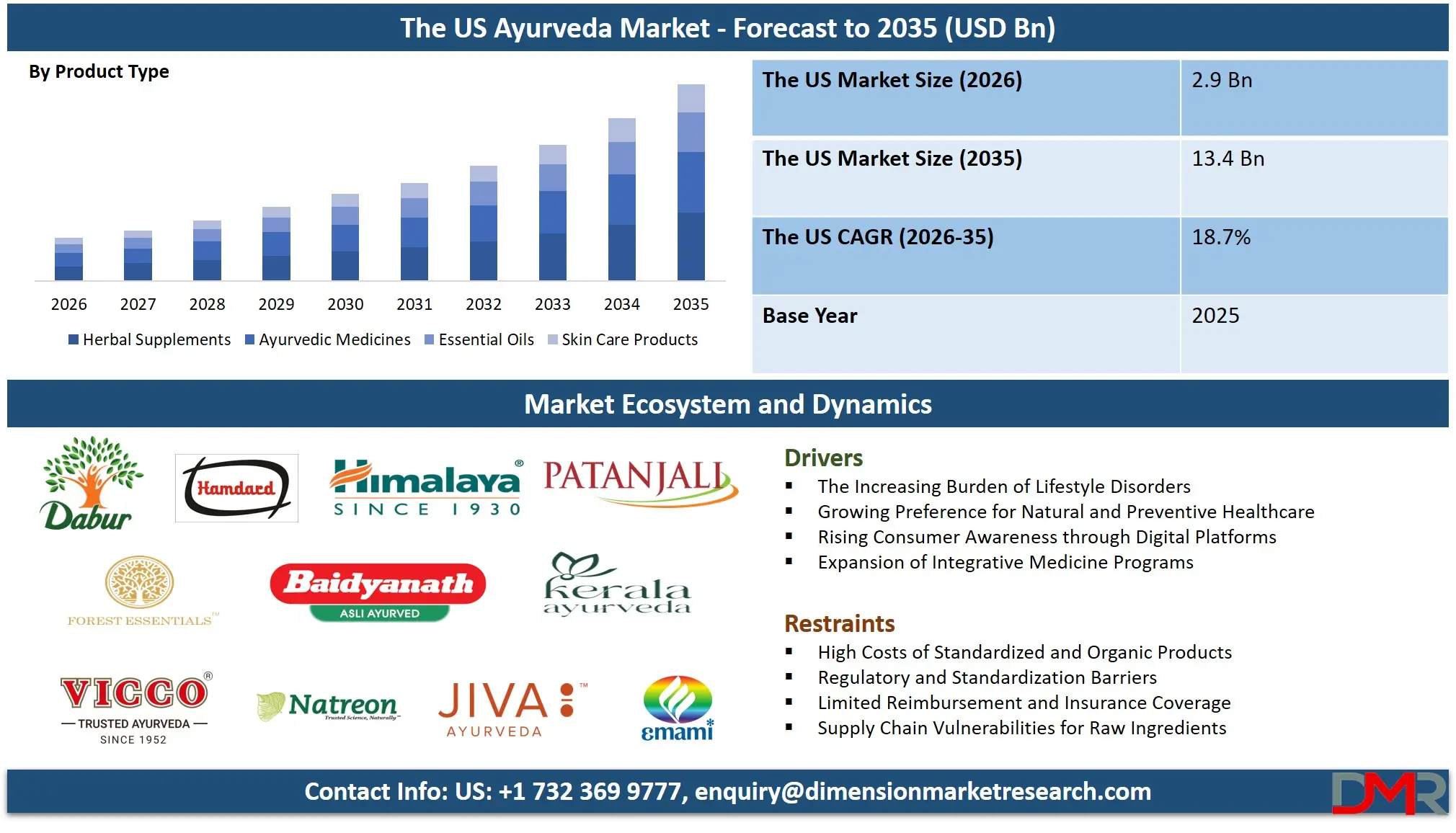
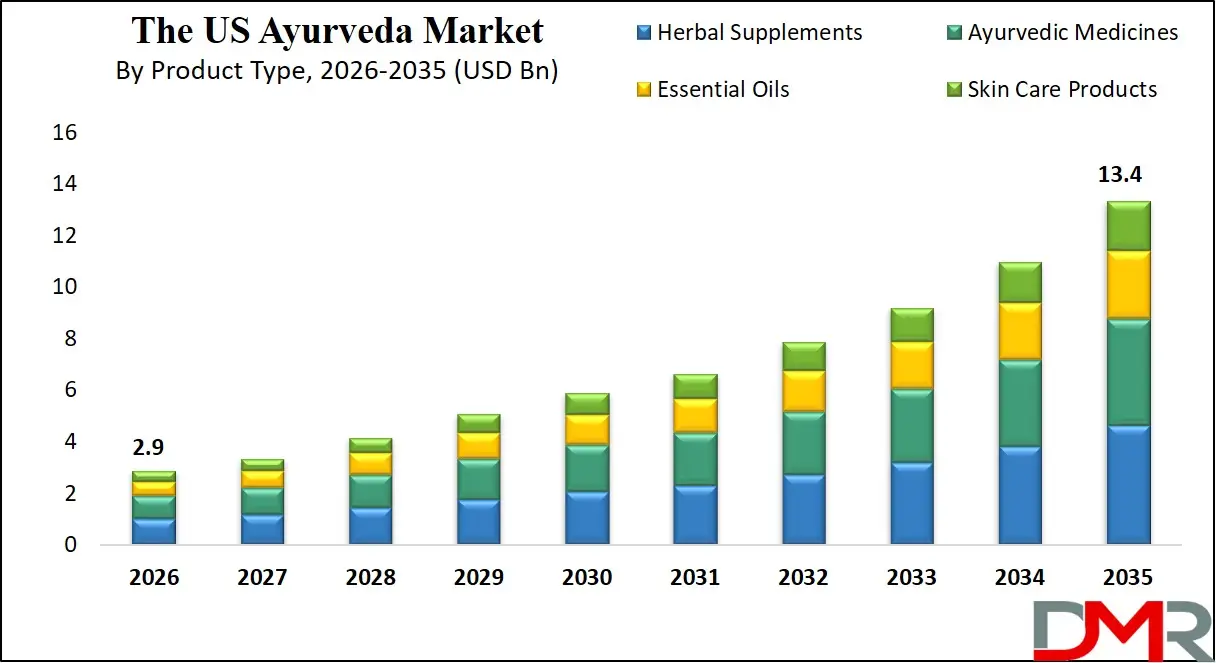
The US market size of Ayurveda is expected to grow from USD 2.9 billion in 2026 to USD 13.4 billion in 2035, with a compound annual growth rate (CAGR) of 18.7% during the forecast period from 2026 to 2035.
ℹ
To learn more about this report –
Download Your Free Sample Report Here
Ayurveda is a traditional medicine system that works on a principle of balance between the bodily systems by means of diet, herbal remedies and yogic breathing techniques. Ayurveda is gaining traction as a medicine in the US due to its holistic method when it comes to wellness and disease management.
The US Ayurveda Market is switching to more integrated health solution forms not just in specialized wellness settings, but also mainstream retail and home environments due to rising lifestyle related disorders, high demands for natural/ preventive medicine along with the growing trend of personalized wellness programs; growth of digital Health technology enabling real time tracking and thus better consumer engagement into their own development planning.
ℹ
To learn more about this report –
Download Your Free Sample Report Here
The US Ayurveda Market: Key Takeaways and Other Influencing Factors
- Strong Market Expansion Outlook: The US market is expected to grow to USD 13.4 billion by 2035 from USD 2.9 billion in 2026. This growth is motivated by the growing need for natural, preventive healthcare and greater adoption via digital and e-commerce channels.
- High Growth Rate Momentum: The market is expected to grow at a CAGR of 18.7% during 2026–2035, supported by the owing to an increase in chronic health conditions, the integration of preventive medicine and eventually AI-based wellness personalization.
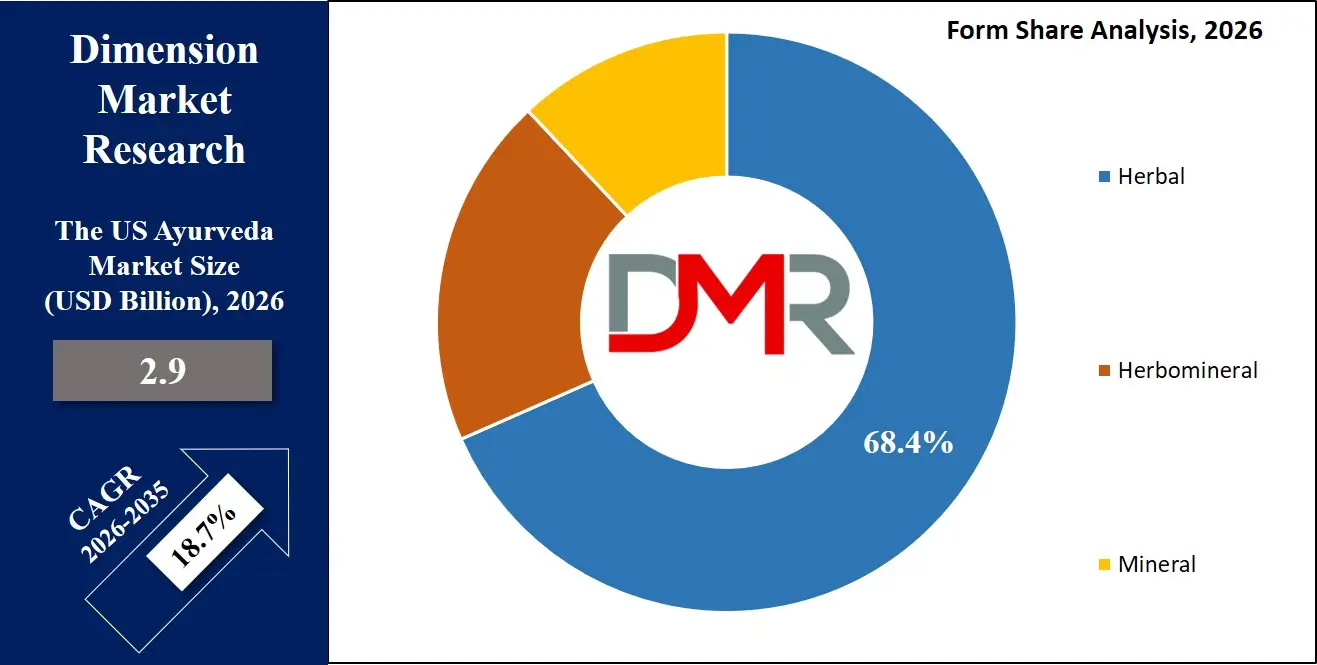
- Segment Leadership Structure: Herbal formulations lead the form segment with 68.4% share in 2026, while herbal supplements dominate the product type segment with a significant share.
- Shift towards Consumer Driven Care: The market is also seeing a growing shift away from the older delivery care model towards personalized wellness solutions along with lifestyle personalization through AI-based approaches and e-commerce-driven distribution. This change is aiding treatment adherence rates and decreasing reliance on in-office visits.
- The Vast Scope of Chronic Illness: According to the CDC, six in 10 adults in the US have at least one chronic health condition, heart disease, diabetes and obesity are examples.
- Soaring Healthcare Expenditure: Chronic diseases contribute to nearly 90 percent of the annual healthcare expenditures, which stand at over USD 4.1 trillion, as cited by the National Council on Aging. This underscores the economic rationale for cost-effective integrative medicine like Ayurvedic wellness programs.
- Powerful Consumer Shift towards Preventive Care: A 2025 survey conducted by McKinsey revealed that nearly three out of four US consumers are actively investing in preventative health and wellness programs, with herbal supplements and natural remedies ranking among the most frequently purchased items.
Impact of the Iran conflict on the US Ayurveda Market
Tensions between the US and Iran are causing disruptions in the global supply chain related to the supply of raw herbs, essential oils, and other ingredients used in Ayurvedic medicine. The rise in oil prices is also causing an increase in the price of the product. The shortage of botanical extracts and organic materials is also causing disruptions in the supply chain. The cybersecurity threat is also creating disruptions for US-based wellness companies. The conflict between the US and Iran is also causing supply chain disruptions due to the continuous demand for Ayurvedic medicine in the US market.
The US Ayurveda Market: Use Cases
- Lifestyle Disease Management: Ayurveda provides a combination of personalized herbal remedies, along with appropriate dietary and lifestyle interventions, to manage lifestyle diseases such as diabetes, hypertension, and stress. This approach enables patients to achieve a higher level of wellness.
- Remote Wellness Monitoring: Ayurveda can be integrated with digital health platforms to provide effective remote wellness monitoring. This includes telehealth consultations and wellness apps, where patients can track their sleep, stress, and eating habits, along with real-time guidance from practitioners. This will enable patients to access personalized Ayurvedic care regardless of geographical constraints.
- Post-Treatment Recovery: Ayurveda promotes recovery from illness or surgery through the use of herbal adaptogens that help regain vitality. The use of natural remedies aids in quick recovery from illness without adverse side effects. Detoxification programs help in the recovery of health.
- Preventive Health Screening: Ayurveda helps in early risk assessment through lifestyle and physiological imbalances before the occurrence of illness. Detailed assessments are conducted on dietary habits, stress levels, and digestive health, which provide a platform for individuals to stay healthy.
The US Ayurveda Market: Market Dynamic
Driving Factors in the US Ayurveda Market
The Increasing Burden of Lifestyle Disorders
The growing incidence of chronic lifestyle diseases like obesity, stress, and gastrointestinal diseases in the US is also fueling the demand for preventive healthcare solutions. Today, consumers are increasingly looking for preventive approaches to healthcare. Ayurveda is one such practice that is witnessing greater adoption as it provides individualized treatment approaches. It is also showing promise as a preventive measure for long-term health. Such preventive approaches to healthcare are thus supporting the growing demand for Ayurvedic products among different sections of the population.
Growing Preference for Natural and Preventive Healthcare
There is a significant change in the pattern of consumption, with consumers showing greater interest in natural, plant-based, and preventive healthcare solutions, largely because of the side effects of these solutions. Moreover, the incorporation of digital health technology is also acting as a catalyst for this change. Digital health technology is showing promise in terms of real-time health monitoring and personalized advice, which is in line with the Ayurvedic way of life. As such, Ayurvedic supplements are being increasingly consumed as part of the daily health routine.
Restraints in the US Ayurveda Market
High Costs of Standardized and Organic Products
The premium pricing of certified organic and standardized Ayurvedic formulations is one of the major challenges for the widespread acceptance of these products. The high cost of production of these products, such as the cost of raw materials, is also a factor for the premium pricing of these products. Thus, though there is a demand for these products, there are certain factors that are affecting the market penetration of these products.
Regulatory and Standardization Barriers
The complex nature of the US regulatory environment for supplements and botanicals can be a barrier to market growth. The stringent compliance norms in terms of safety, labeling, and marketing can be a barrier to entry for new and international companies. The absence of standardization in Ayurvedic formulations can also be a barrier to market growth, as there is a lack of standardization in these formulations.
Opportunities in the US Ayurveda Market
Rise of AI-Driven Personalized Wellness
Incorporating the concept of Artificial Intelligence into wellness platforms can act as a transformative opportunity for the Ayurveda market. It can help in analyzing individual health data to offer personalized herbal suggestions and health predictions. It can add greater scale to Ayurvedic consultations while maintaining individualized approaches to care. As the digital health ecosystem develops, the incorporation of Artificial Intelligence is expected to improve treatment outcomes and consumer engagement with Ayurvedic solutions.
Expansion of Home Healthcare and Self-Care
The growing importance of home-based healthcare and self-management is providing a conducive environment for the adoption of Ayurvedic products. Today, people are looking for products that can offer them ease of usage and can be easily integrated into their daily life. Ayurvedic products can play a significant role in this direction because these products can be easily consumed to maintain healthy well-being. This is important for the management of chronic health conditions.
Trends in the US Ayurveda Market
Shift Toward Standardized and Evidence-Based Formulations
There is a significant transition from traditional and home-based solutions to clinically tested and scientifically developed Ayurvedic products. Consumers are increasingly becoming aware of the effectiveness and safety of products and are putting a focus on the research and clinical studies conducted by businesses to prove the health benefits of the product. This is increasing the level of trust among consumers and is promoting the adoption of Ayurveda into traditional health practices.
Rapid Growth of E-Commerce and Direct-to-Consumer Channels
The rise of e-commerce and direct-to-consumer platforms is also changing the way Ayurvedic products are being distributed in the U.S. market. The digital world has given consumers access to a variety of products, learning materials, and virtual consultations. The mobile application and internet platforms can also allow a consumer to have a personalized wellness experience. This digital world can take the Ayurveda market to a whole new level.
The US Ayurveda Market: Research Scope and Analysis
By Form Analysis
Herbal formulations are projected to lead the form segment with an approximate 68.4% share in the year 2026, attributed to high consumer trust, perceived safety, and increasing application in daily wellness and disease management. These products assist in consistent health maintenance and better management of chronic conditions, contributing to increased usage.
ℹ
To learn more about this report –
Download Your Free Sample Report Here
Conversely, mineral-based formulations continue to be applicable in targeted therapeutic applications due to their potency, albeit concerns around heavy metal content and standardization limit their development as compared to herbal products.
By Product Type Analysis
Herbal supplements are expected to dominate the product type segment with a significant share in 2026 due to increasing demand for preventive healthcare and natural alternatives for managing cardiovascular and nervous system disorders. Focus on integrative wellness also supports this growth. The skin care products segment is driven by the rising use of natural beauty products and clean-label trends, where Ayurvedic formulations help maintain skin health and enable real-time management of dermatological conditions.
By Indication Analysis
The cardiovascular system segment holds a prominent position due to the high prevalence of heart-related conditions and the proven efficacy of Ayurvedic herbs like Arjuna and Ashwagandha in supporting cardiac health. Growing consumer awareness of preventive cardiology and natural heart health solutions further drives this segment. Conversely, the nervous system segment follows closely, with adaptogenic herbs gaining widespread acceptance for stress, anxiety, and sleep disorders, though varying consumer awareness levels impact adoption rate.
By Consumer Type Analysis
Adults represent the largest consumer segment, accounting for a substantial share of Ayurvedic product consumption, driven by proactive health management and lifestyle disease prevention. This demographic demonstrates the highest awareness and willingness to invest in natural wellness solutions. Conversely, the elderly segment is growing steadily as aging populations seek natural solutions for age-related conditions, though product accessibility and affordability remain considerations for this group.
By Application Analysis
Lifestyle disease management holds the largest share within medical and therapy applications, driven by the rising prevalence of diabetes, hypertension, and obesity, with Ayurveda offering sustainable long-term management solutions. The holistic approach addressing root causes rather than symptoms resonates strongly with health-conscious consumers. Conversely, immunity enhancement has gained significant momentum in the post-pandemic era, with consumers prioritizing preventive health measures, though seasonal fluctuations in demand present ongoing challenges.
By Distribution Channel Analysis
Retail and institutional sales continue to dominate the distribution landscape, with Ayurvedic products increasingly available in major pharmacy chains, supermarkets, and specialty health stores across the US. The established trust and accessibility of brick-and-mortar channels support their sustained leadership. Conversely, e-sales and online retail represent the fastest-growing channel, driven by direct-to-consumer brands and subscription models, though competition for digital visibility remains intense
By End Use Analysis
Hospitals and clinics are expected to dominate the end-use segment with around 54.0% market share in 2026 due to high patient inflow for integrative medicine programs, advanced wellness infrastructure, and strong preference for standardized Ayurvedic formulations for accurate diagnosis and treatment. These settings widely use Ayurvedic products for both acute and chronic condition management. Conversely, home settings are growing steadily with increasing shift toward self-care, preventive wellness, and cost-effective health maintenance, where Ayurvedic products enable continuous health support outside institutional environments.
The US Ayurveda Market Report is segmented on the basis of the following:
By Form
- Herbal
- Herbomineral
- Mineral
By Product Type
- Herbal Supplements
- Ayurvedic Medicines
- Essential Oils
- Skin Care Products
By Indication
- Nervous System
- Cardiovascular System
- Reproductive System
- Infectious Diseases
- Others
By Consumer Type
- Adults
- Elderly
- Children
- Pregnant Women
By Application
- Medical/Therapy
- Lifestyle Disease Management
- Immunity Enhancement
- Digestive Health
- Respiratory Conditions
- Personal Care
- Skin Care
- Hair Care
- Oral Care
- Food & Nutraceuticals
By Distribution Channel
- Retail & Institutional Sales
- E-sales / Online Retail
- Direct/Distance Sales
By End Use
- Hospitals & Clinics
- Home Settings
Impact of Artificial Intelligence in the US Ayurveda Market
Artificial intelligence is contributing to the growth of the US Ayurveda market by providing a platform for personalization in wellness plans and quick analysis of health data with high degrees of accuracy. An artificial intelligence-based platform for Ayurveda helps in real-time monitoring of lifestyle, early diagnosis of imbalances in health, and providing personalization with high degrees of accuracy. The integration of artificial intelligence with a remote wellness system helps in improving predictive capabilities, reducing practitioner workloads, and promoting Ayurvedic care.
Machine learning algorithms help in processing large amounts of health and wellness data with high degrees of accuracy, which helps in identifying patterns in data and providing customized herbal formulations with high degrees of accuracy. Machine learning algorithms help in bridging the gap between traditional Ayurvedic care and modern technological capabilities, which helps in promoting its credibility among evidence-based consumers.
The US Ayurveda Market: Competitive Landscape
The US Ayurveda industry is a highly competitive market with a strong focus on innovation in natural wellness products. Companies are launching highly advanced Ayurvedic products in terms of purity, effectiveness, and sustainability. The Ayurveda industry is witnessing a surge in the adoption of personalized wellness and AI-based health analysis, thus raising the level of competition in the industry.
ℹ
To learn more about this report –
Download Your Free Sample Report Here
Companies are focusing on innovation in Ayurvedic products and regulatory approvals as a major growth strategy in the industry. Companies are expanding their distribution networks by entering into strategic partnerships with major retailers in the industry. The high level of competition is due to consolidation activities in the industry, wherein major nutraceutical and pharmaceutical companies are acquiring successful Ayurvedic brands in the industry.
Some of the prominent players in the US Ayurveda Market are:
- Dabur India Ltd.
- Himalaya Global Holdings Ltd.
- Patanjali Ayurved Limited
- Shree Baidyanath Ayurveda Bhawan Pvt. Ltd.
- Kerala Ayurveda Limited
- Emami Ltd.
- Vicco Laboratories
- Banyan Trading Company, Inc.
- Organic India Private Limited
- Ayush Herbs Inc.
- Jiva Ayurveda (USA) LLC
- The Ayurveda Experience Inc.
- Kottakkal Arya Vaidya Sala
- Art of Living Foundation
- Charak Pharma Pvt. Ltd.
- Amrutanjan Health Care Limited
- Natreon, Inc.
- Forest Essentials Private Limited
- Biotique Pharma Limited
- Hamdard Laboratories
- Other Key Players
Recent Developments in the US Ayurveda Market
- March 2026: Forest Essentials Private Limited became a wholly owned subsidiary of Estée Lauder, strengthening its strategy for the expansion of international operations by utilizing a premium international distribution network for promoting Ayurvedic skincare products globally.
- May 2025: Dabur India Ltd. continued the expansion of international operations in the consumer care business segment, with a strong emphasis on herbal healthcare and personal care products globally, including the Americas.
- February 2025: Emami Ltd. continued the expansion of international operations in herbal personal care products by capitalizing on the rising demand for herbal personal care products globally.
- July 2024: Himalaya Global Holdings Ltd. expanded the international operations of herbal healthcare and personal care products in the North American region by strengthening the retail channel, in sync with the rising demand for herbal personal care products.
Report Details
| Report Characteristics |
| Market Size (2026) |
USD 2.9 Bn |
| Forecast Value (2035) |
USD 13.4 Bn |
| CAGR (2026–2035) |
18.7% |
| Historical Data |
2021 – 2025 |
| Forecast Data |
2027 – 2035 |
| Base Year |
2025 |
| Estimate Year |
2026 |
| Report Coverage |
Market Revenue Estimation, Market Dynamics, Competitive Landscape, Growth Factors and etc. |
| Segments Covered |
By Form (Herbal, Herbomineral, Mineral), By Product Type (Herbal Supplements, Ayurvedic Medicines, Essential Oils, Skin Care Products), By Indication (Nervous System, Cardiovascular System, Reproductive System, Infectious Diseases, Others), By Consumer Type (Adults, Elderly, Children, Pregnant Women), By Application (Medical/Therapy, Personal Care, Food & Nutraceuticals), By Distribution Channel (Retail & Institutional Sales, E-sales / Online Retail, Direct/Distance Sales), By End Use (Hospitals & Clinics, Home Settings) |
| Country Coverage |
The US |
| Prominent Players |
Dabur India Ltd., Himalaya Global Holdings Ltd., Patanjali Ayurved Limited, Shree Baidyanath Ayurveda Bhawan Pvt. Ltd., Kerala Ayurveda Limited, Emami Ltd., Vicco Laboratories, Banyan Trading Company, Inc., Organic India Private Limited, Ayush Herbs Inc., Jiva Ayurveda (USA) LLC, The Ayurveda Experience Inc., Kottakkal Arya Vaidya Sala, Art of Living Foundation, Charak Pharma Pvt. Ltd., Amrutanjan Health Care Limited, Natreon, Inc., Forest Essentials Private Limited, Biotique Pharma Limited, Hamdard Laboratories, and Other Key Players |
| Purchase Options |
We have three licenses to opt for: Single User License (Limited to 1 user), Multi-User License (Up to 5 Users) and Corporate Use License (Unlimited User) along with free report customization equivalent to 0 analyst working days, 3 analysts working days and 5 analysts working days respectively. |
Frequently Asked Questions
How big is the US Ayurveda Market?
▾ The US Ayurveda Market is valued at USD 2.9 billion in 2026 and is projected to reach USD 13.4 billion by the end of 2035.
What is the growth rate for the US Ayurveda Market?
▾ The market is growing at a robust compound annual growth rate (CAGR) of 18.7% over the forecast period of 2026 to 2035.
Who are the key players in the US Ayurveda Market?
▾ Some of the major key players in the US Ayurveda Market are Dabur India Ltd., Himalaya Global Holdings Ltd., Patanjali Ayurved Limited, Kerala Ayurveda Limited, Emami Ltd., Natreon, Inc., and Forest Essentials Private Limited, and many others.