Market Overview
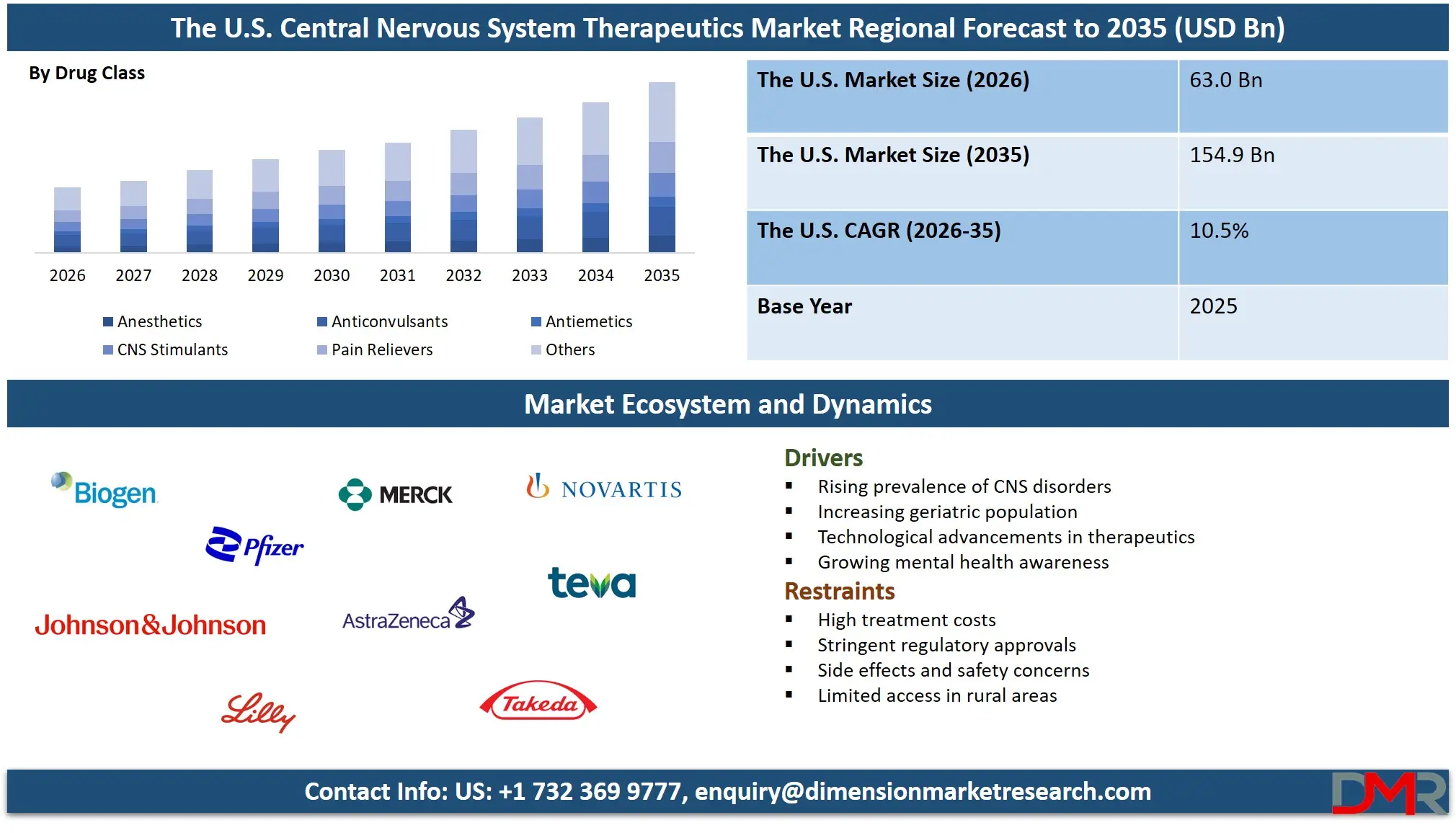
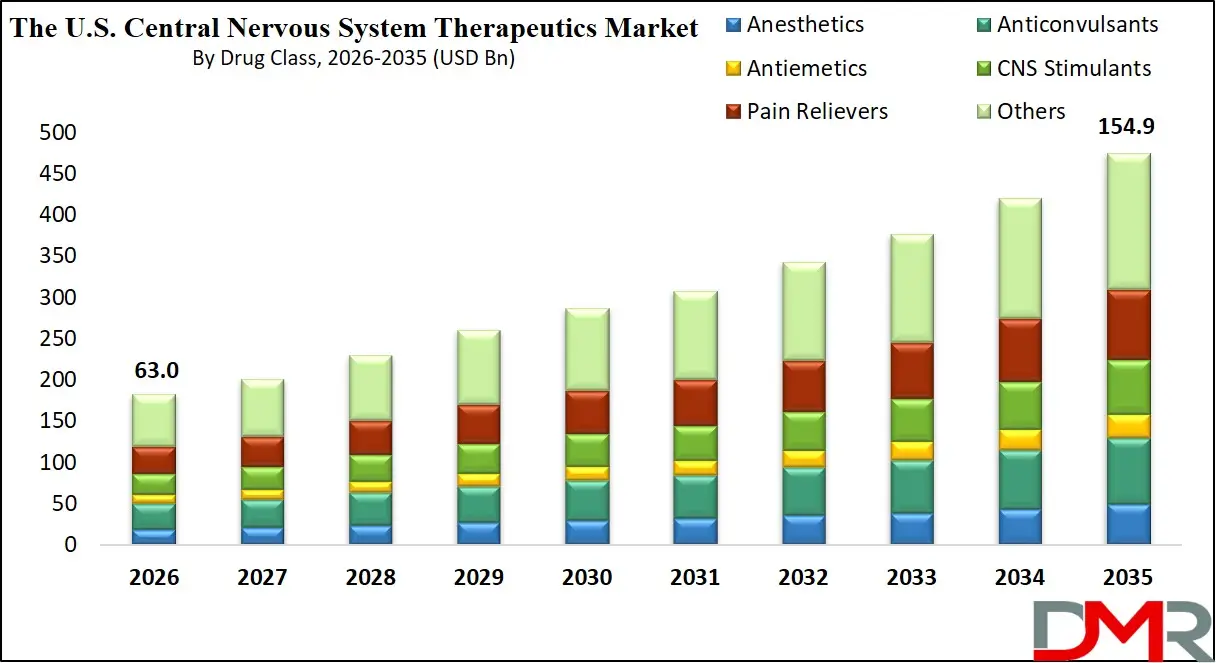
US central nervous system therapeutics market is projected to reach USD 63.0 billion in 2026 and grow at a CAGR of 10.5% to reach USD 154.9 billion by 2035, driven by increasing prevalence of neurological disorders, rising mental health awareness, and demand for advanced CNS therapies and innovative drug treatments.
ℹ
To learn more about this report –
Download Your Free Sample Report Here
Central Nervous System therapeutics encompass a broad class of pharmaceutical products and interventions designed to prevent, manage, or treat disorders affecting the brain, spinal cord, and peripheral nerves. These therapeutics include medications for neurodegenerative diseases, psychiatric disorders, neurovascular conditions, and seizure-related illnesses, as well as specialized pain management and anesthetic agents. The scope of CNS therapeutics extends from traditional small molecule drugs to advanced biologics and targeted therapies, reflecting the complexity of neurological pathways and the need for precision in treatment. Innovations in drug delivery systems, such as controlled-release formulations and minimally invasive neuromodulation techniques, further enhance the efficacy and safety of these therapies. The ultimate objective of CNS therapeutics is to improve cognitive function, regulate mood and behavior, alleviate pain, and slow disease progression while minimizing adverse effects, thereby addressing a growing global burden of neurological and mental health conditions.
The U.S. central nervous system therapeutics market represents one of the most dynamic and technologically advanced segments of the pharmaceutical industry. It is driven by a high prevalence of neurological disorders such as Alzheimer’s disease, Parkinson’s disease, epilepsy, and multiple sclerosis, as well as increasing cases of anxiety, depression, and other mental health conditions. Rising awareness of mental wellness and an expanding geriatric population have intensified demand for effective CNS treatments, while advancements in molecular biology and neuropharmacology have enabled the development of innovative therapies with improved efficacy. The market encompasses a wide range of prescription drugs, including anticonvulsants, CNS stimulants, anesthetics, pain relievers, and antiemetics, alongside emerging biologics and gene therapies targeting complex neurological pathways.
ℹ
To learn more about this report –
Download Your Free Sample Report Here
The U.S. central nervous system therapeutics market is supported by growing patient demand for effective treatments for neurological and psychiatric conditions. Increased awareness of mental health, rising prevalence of neurodegenerative disorders, and an aging population are major factors driving adoption of CNS medications. Hospital and retail pharmacies serve as the primary distribution channels, ensuring widespread accessibility of therapies across urban and semi-urban regions. Ongoing advancements in drug formulation, targeted therapies, and precision medicine continue to enhance treatment outcomes, while research in novel biologics and gene-based interventions expands options for complex conditions. Despite challenges such as high treatment costs and regulatory requirements, the market demonstrates strong growth potential due to the persistent need for innovative and effective CNS therapeutics.
The US Central Nervous System Therapeutics Market: Key Takeaways
- Market Size and Growth: The U.S. CNS therapeutics market is projected at USD 63.0 billion in 2026 and is expected to reach USD 154.9 billion by 2035, reflecting a CAGR of 10.5%.
- Leading Disease Segment: Neurodegenerative diseases dominate the market with an anticipated 37.0% share in 2026, driven by Alzheimer’s, Parkinson’s, and multiple sclerosis prevalence.
- Dominant Drug Class: The “Others” category, including antidepressants and antipsychotics, is expected to capture 38.0% of the total market in 2026, reflecting the high demand for mental health treatments.
- Key Distribution Channel: Hospital pharmacies lead distribution with a 46.0% share, emphasizing the importance of clinical settings for complex CNS therapies.
- Mental Health Prevalence: Up to 40% of high school students reported depressive symptoms in 2023, and 19% of adults were diagnosed with depression or anxiety in 2024, highlighting strong demand for CNS therapeutics.
The US Central Nervous System Therapeutics Market: Use Cases
- Alzheimer’s Disease Management: CNS therapeutics help slow cognitive decline and manage symptoms with cholinesterase inhibitors and NMDA receptor antagonists, driven by a growing elderly population and rising neurodegenerative disease prevalence.
- Parkinson’s disease Treatment: Dopamine-regulating therapies like levodopa and dopamine agonists improve motor function and reduce tremors, supported by advances in precision medicine and targeted drug delivery.
- Mental Health and Mood Disorders: Antidepressants, antipsychotics, and CNS stimulants stabilize mood, balance neurotransmitters, and enhance quality of life amid rising mental health awareness in the U.S.
- Epilepsy and Seizure Management: Anticonvulsants and anti-epileptic drugs control seizures and minimize neurological complications, with improved formulations enhancing adherence for adult and pediatric patients.
Impact of Iran Conflict on the US Central Nervous System Therapeutics Market
- Supply Chain Disruptions and Drug Availability: The conflict has disrupted key global logistics routes such as the Strait of Hormuz and major Middle East transit hubs, affecting pharmaceutical shipments and raw material flows. Delays in cargo movement and air freight restrictions increase the risk of drug shortages, particularly for CNS medications that rely on global supply chains and cold-chain logistics.
- Rising Production and Drug Costs: Surging oil and petrochemical prices due to the conflict are increasing manufacturing and packaging costs for pharmaceuticals. As CNS therapeutics depend on petroleum-based inputs and complex formulations, higher input and transportation costs are likely to raise overall drug pricing and create pressure on healthcare systems.
- Increased Market Volatility and Strategic Shifts: Geopolitical instability is creating uncertainty across the U.S. pharmaceutical sector, leading companies to diversify supply chains, increase inventory levels, and invest in domestic manufacturing. This shift toward supply chain resilience and risk mitigation is expected to influence long-term strategies in CNS drug production and distribution.
The US Central Nervous System Therapeutics Market: Stats & Facts
- CDC Mental Health Conditions & Care & Data Channel
- In 2023, 40 % of U.S. high school students reported experiencing symptoms of depression in the past 12 months.
- In 2024, 5 % of U.S. adults regularly reported feelings of depression.
- In 2024, 19 % of U.S. adults were ever told they had any type of depression disorder.
- In 2024, 12 % of U.S. adults regularly reported feelings of anxiety.
- In 2024, 19 % of U.S. adults were ever diagnosed with an anxiety disorder.
- In 2024, 14 % of U.S. adults received therapy or counseling in the last 12 months.
- 29 % of U.S. high school students reported poor mental health most of the time or always in the past 30 days.
- 19 % of U.S. adults were ever told they had any type of depression disorder.
- 82 % of U.S. adults felt they received social and emotional support they needed.
- CDC FastStats Mental Health
- 12.1 % of U.S. adults age 18+ had regular feelings of worry, nervousness, or anxiety.
- 4.8 % of U.S. adults age 18+ had regular feelings of depression.
- Physician office visits with mental disorders as primary diagnosis reached 57.2 million.
- Emergency department visits with mental disorders/behavioral diagnoses were 5.9 million.
- There were 49,316 suicide deaths in the U.S., rate 14.7 per 100,000 population in 2023
The US Central Nervous System Therapeutics Market: Market Dynamic
Driving Factors in the US Central Nervous System Therapeutics Market
Rising Prevalence of Neurological Disorders
The increasing incidence of Alzheimer’s disease, Parkinson’s disease, epilepsy, and multiple sclerosis in the U.S. is a primary growth driver for CNS therapeutics. Growing cases of mental health disorders such as depression, anxiety, and bipolar disorder further boost demand for prescription medications, biologics, and advanced neuropharmacological interventions.
Advancements in CNS Drug Development
Technological innovations in drug formulation, targeted therapies, and gene-based treatments enhance therapeutic efficacy and safety. The adoption of precision medicine and novel delivery systems such as extended-release and minimally invasive devices improves patient outcomes, accelerating market expansion.
Restraints in the US Central Nervous System Therapeutics Market
High Treatment Costs
CNS therapeutics often involve long-term therapy, expensive biologics, and advanced formulations, making them financially burdensome for patients and healthcare providers. Limited insurance coverage and high out-of-pocket expenses can restrict adoption.
Stringent Regulatory Approvals
Regulatory requirements for CNS drugs are rigorous due to potential side effects and safety concerns. Lengthy clinical trials, complex approval processes, and compliance with FDA guidelines can delay market entry and affect revenue growth.
Opportunities in the US Central Nervous System Therapeutics Market
Expansion of Mental Health Services
Rising awareness of mental wellness and early diagnosis of mood and anxiety disorders provide opportunities for CNS drug manufacturers to develop specialized therapies and digital therapeutic solutions. Integration with telemedicine and behavioral health programs enhances accessibility and patient adherence.
Emergence of Biologics and Gene Therapies
The development of biologic drugs, monoclonal antibodies, and gene-based interventions targeting neurodegenerative and rare CNS disorders presents significant growth potential. These therapies can address unmet medical needs and improve long-term patient outcomes.
Trends in the US Central Nervous System Therapeutics Market
Focus on Personalized and Precision Medicine
There is a growing shift toward personalized treatment plans based on genetic profiling, disease biomarkers, and patient-specific factors. Precision medicine enables targeted therapy for complex neurological and psychiatric conditions, reducing adverse effects and improving efficacy.
Integration of Digital Health Solutions
The adoption of digital therapeutics, mobile health apps, and remote monitoring platforms is increasing in CNS care. These solutions support treatment adherence, symptom tracking, and patient engagement, complementing pharmacological interventions and driving market evolution.
The US Central Nervous System Therapeutics Market: Research Scope and Analysis
By Disease Analysis
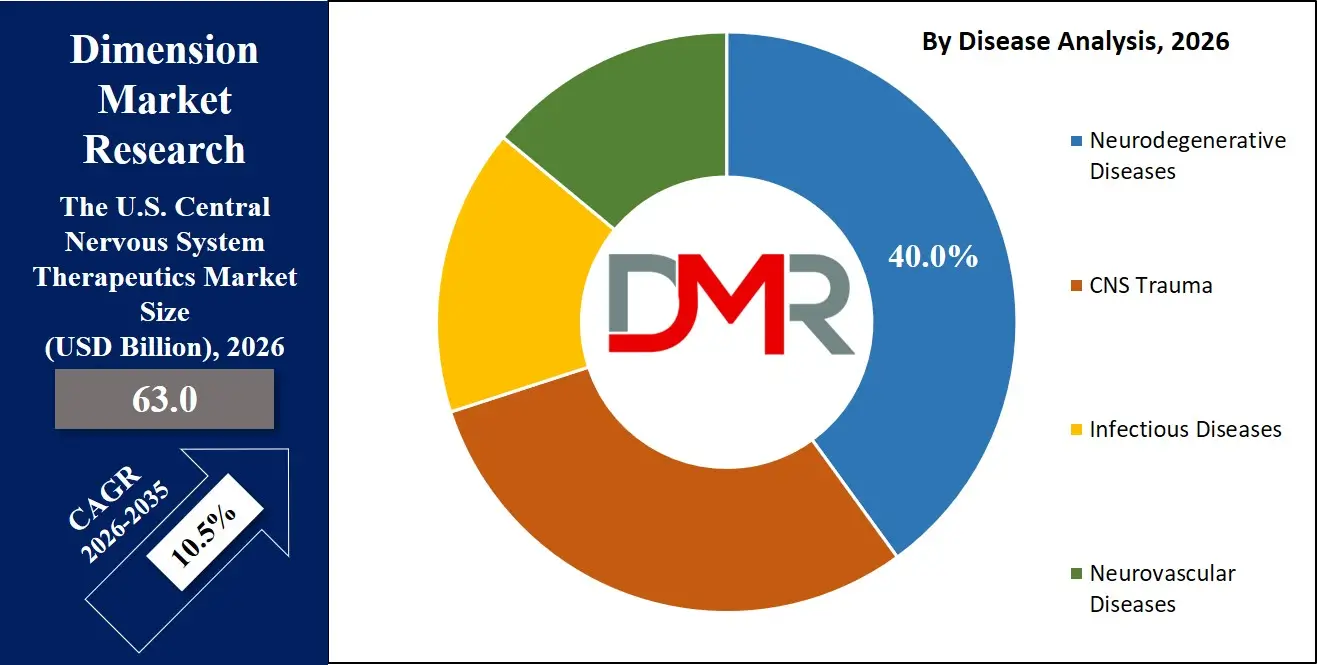
Neurodegenerative diseases are expected to lead the U.S. central nervous system therapeutics market, accounting for approximately 40.0% of the total market share in 2026. This dominance is largely driven by the high prevalence of conditions such as Alzheimer’s disease, Parkinson’s disease, multiple sclerosis, and amyotrophic lateral sclerosis, which collectively contribute to a significant patient population requiring long-term and specialized treatment. The growing elderly population in the U.S., coupled with increased awareness and early diagnosis of neurodegenerative disorders, further reinforces the demand for targeted therapies, including advanced small molecules, biologics, and emerging gene-based interventions. These therapies aim not only to manage symptoms but also to slow disease progression, improve cognitive and motor functions, and enhance the overall quality of life, making this segment a critical revenue generator within the CNS therapeutics market.
ℹ
To learn more about this report –
Download Your Free Sample Report Here
CNS trauma, which includes conditions arising from injuries to the brain or spinal cord, represents another important segment within the market. Although it accounts for a smaller share compared to neurodegenerative diseases, the demand for therapeutic interventions in this category is significant due to the complexity of treatment and the potential for long-term neurological deficits. CNS trauma treatments focus on preventing secondary complications, reducing inflammation, and promoting neural recovery through pharmacological agents such as neuroprotective drugs, pain relievers, and anesthetics, as well as emerging regenerative therapies. The segment is further influenced by advancements in critical care, rehabilitation protocols, and hospital-based therapeutic delivery systems, reflecting the ongoing need for effective management of trauma-related neurological conditions.
By Drug Class Analysis
The “Others” category, which includes antidepressants, antipsychotics, and other central nervous system medications, is expected to dominate the U.S. CNS therapeutics market, capturing approximately 38.0% of the total market share in 2026. This dominance is driven by the rising prevalence of mental health disorders, including depression, anxiety, bipolar disorder, and schizophrenia, which require ongoing pharmacological management. These drugs help regulate neurotransmitters, stabilize mood, and improve cognitive and behavioral functions, addressing both acute symptoms and long-term quality-of-life outcomes. The segment benefits from continuous innovation, including new-generation antidepressants and antipsychotics with improved efficacy and reduced side effects, as well as increasing awareness and diagnosis of mental health conditions among adults and adolescents.
Pain relievers form another significant segment within the CNS therapeutics market, focusing on managing acute and chronic neurological pain, including neuropathic pain, migraine, and post-surgical pain. This category includes opioid and non-opioid analgesics, as well as adjuvant therapies that modulate pain signaling pathways in the central nervous system. Growing incidences of chronic pain conditions, coupled with an aging population and rising patient demand for effective symptom control, drive the adoption of these medications. Innovations in sustained-release formulations, combination therapies, and targeted drug delivery systems further enhance treatment outcomes, making pain relievers a vital component of the U.S. CNS therapeutics landscape.
By Distribution Channel Analysis
Hospital pharmacies are expected to dominate the U.S. CNS therapeutics market, capturing approximately 46.0% of the total market share in 2026. This leadership is largely due to the complexity of treatment protocols for neurological and psychiatric conditions, which often require physician supervision, specialized dosing, and ongoing monitoring of patient response. Hospital pharmacies play a crucial role in delivering a wide range of CNS medications, including advanced biologics, injectable therapies, and neuroprotective agents, directly to patients within clinical settings. The segment is further supported by the increasing number of hospital admissions for neurodegenerative disorders, CNS trauma, and severe mental health conditions, as well as by the integration of pharmacy services with inpatient and outpatient care to ensure timely access and adherence to treatment regimens.
Retail pharmacies, on the other hand, serve as a key distribution channel for outpatient and chronic care patients who require ongoing access to CNS therapeutics such as antidepressants, anticonvulsants, pain relievers, and other prescription medications. They provide convenient access to therapies for individuals managing long-term neurological or psychiatric conditions at home, supporting treatment adherence and patient compliance. The segment benefits from strong pharmacy networks, expanded coverage through insurance programs, and growing demand for home-based care, making retail pharmacies a significant contributor to the overall distribution of CNS medications in the U.S. market.
The US Central Nervous System Therapeutics Market Report is segmented on the basis of the following:
By Disease
- Neurovascular Diseases
- CNS Trauma
- Mental Health
- Anxiety Disorders
- Epilepsy
- Mood Disorders
- Psychotic Disorders
- Others
- Neurodegenerative Diseases
- Alzheimer’s Disease
- Parkinson’s Disease
- Multiple Sclerosis
- Huntington’s Disease
- Amytrophic Lateral Sclerosis
- Others
- Infectious Diseases
By Drug Class
- Anesthetics
- Anticonvulsants
- Antiemetics
- CNS Stimulants
- Pain Relievers
- Others
By Distribution Channel
- Hospital Pharmacies
- Retail Pharmacies
- Others
Impact of Artificial Intelligence in the US Central Nervous System Therapeutics Market
Artificial intelligence is increasingly shaping the U.S. central nervous system therapeutics market by enhancing drug discovery, development, and clinical trial efficiency. Machine learning algorithms and predictive analytics help identify novel drug targets for neurodegenerative and psychiatric disorders, optimize molecular design, and forecast patient responses. AI-driven platforms can analyze large datasets from genomics, proteomics, and real-world evidence to accelerate the development of targeted therapies for conditions such as Alzheimer’s, Parkinson’s, and epilepsy. This reduces time-to-market, lowers research costs, and enables pharmaceutical companies to design personalized treatment regimens with higher efficacy and fewer adverse effects.
In addition to drug development, AI is transforming patient care and disease management in the CNS therapeutics space. Intelligent monitoring systems, wearable devices, and digital health applications powered by AI enable real-time tracking of neurological and psychiatric symptoms, adherence to therapy, and treatment outcomes. Clinicians can leverage these insights to make data-driven decisions, adjust dosages, and provide early interventions for CNS trauma or mood disorders. The integration of AI with telemedicine and remote monitoring also expands patient access to specialized care, supporting better long-term management of chronic neurological conditions and strengthening the overall growth potential of the U.S. CNS therapeutics market.
The US Central Nervous System Therapeutics Market: Competitive Landscape
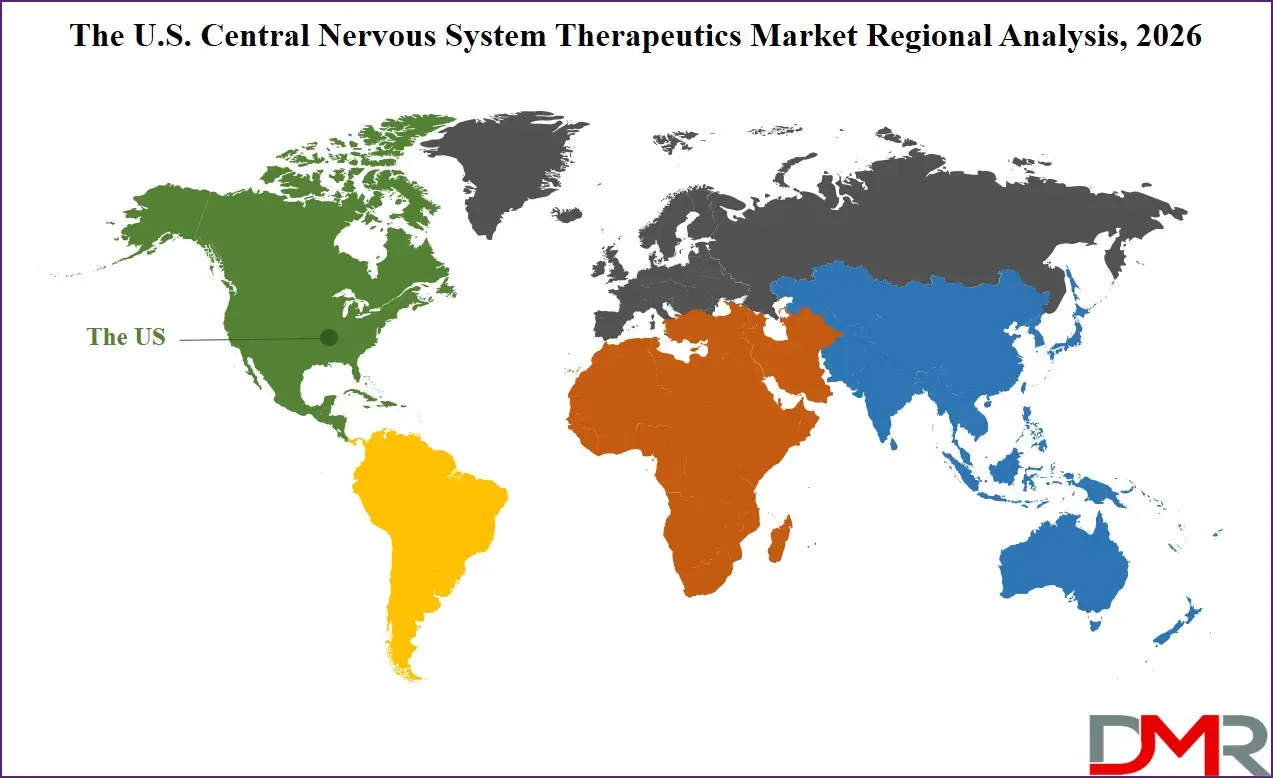
The competitive landscape of the U.S. central nervous system therapeutics market is characterized by intense innovation and strategic investments in research and development. Companies are focusing on developing advanced therapies for neurodegenerative disorders, psychiatric conditions, and CNS trauma, with an emphasis on precision medicine, biologics, and novel drug delivery systems.
ℹ
To learn more about this report –
Download Your Free Sample Report Here
Collaboration with research institutions, clinical trial optimization, and portfolio diversification are common strategies to address unmet medical needs and expand market reach. The market is also influenced by regulatory compliance, patent protections, and technological advancements, which shape competitive positioning and drive continuous improvement in treatment efficacy and patient outcomes.
Some of the prominent players in the US Central Nervous System Therapeutics Market are:
- Biogen Inc.
- Pfizer Inc.
- Johnson & Johnson
- Eli Lilly and Company
- Merck & Co., Inc.
- AstraZeneca plc
- Novartis AG
- Teva Pharmaceutical Industries Ltd.
- Takeda Pharmaceutical Company Limited
- Otsuka Pharmaceutical Co., Ltd.
- AbbVie Inc.
- Bristol Myers Squibb Company
- GlaxoSmithKline plc
- Sanofi S.A.
- Neurocrine Biosciences, Inc.
- Sage Therapeutics, Inc.
- Supernus Pharmaceuticals, Inc.
- Axsome Therapeutics, Inc.
- Neuraxpharm Group
- Alkermes plc
- Other Key Players
Recent Developments in the US Central Nervous System Therapeutics Market
- March 2026: Oryon Cell Therapies launches with a $21 million funding round to advance its experimental Parkinson’s disease therapy, underscoring investment confidence in neurodegenerative disease treatments.
- February 2026: Alkermes plc completes the acquisition of Avadel Pharmaceuticals, broadening its portfolio and market presence in the neuroscience and CNS therapeutic space.
- December 2025: The FDA accepts and grants priority review to a supplemental New Drug Application for a novel CNS treatment targeting Alzheimer’s disease agitation, marking a significant regulatory milestone ahead of potential U.S. launch.
Report Details
| Report Characteristics |
| Market Size (2026) |
USD 63.0 Bn |
| Forecast Value (2035) |
USD 154.9 Bn |
| CAGR (2026–2035) |
10.5% |
| Historical Data |
2021 – 2025 |
| Forecast Data |
2027 – 2035 |
| Base Year |
2025 |
| Estimate Year |
2026 |
| Report Coverage |
Market Revenue Estimation, Market Dynamics, Competitive Landscape, Growth Factors and etc. |
| Segments Covered |
By Disease (Neurovascular Diseases, CNS Trauma, Mental Health, Neurodegenerative Diseases, Infectious Diseases, CNS Cancer, and Others), By Drug Class (Anesthetic, Anticonvulsants, Antiemetics, CNS Stimulants, Pain Relievers, and Others), By Distribution Channel (Hospital Pharmacies, Retail Pharmacies, and Others) |
| Country Coverage |
The US |
| Prominent Players |
Biogen, Pfizer, Johnson & Johnson, Eli Lilly and Company, Merck & Co., AstraZeneca, Novartis, Teva Pharmaceutical Industries, Takeda Pharmaceutical, Otsuka Pharmaceutical, AbbVie, Bristol Myers Squibb, GlaxoSmithKline, Sanofi, Neurocrine Biosciences, Sage Therapeutics, Supernus Pharmaceuticals, Axsome Therapeutics, Neuraxpharm Group, Alkermes, and Other Key Players |
| Purchase Options |
We have three licenses to opt for: Single User License (Limited to 1 user), Multi-User License (Up to 5 Users) and Corporate Use License (Unlimited User) along with free report customization equivalent to 0 analyst working days, 3 analysts working days and 5 analysts working days respectively. |