Market Overview
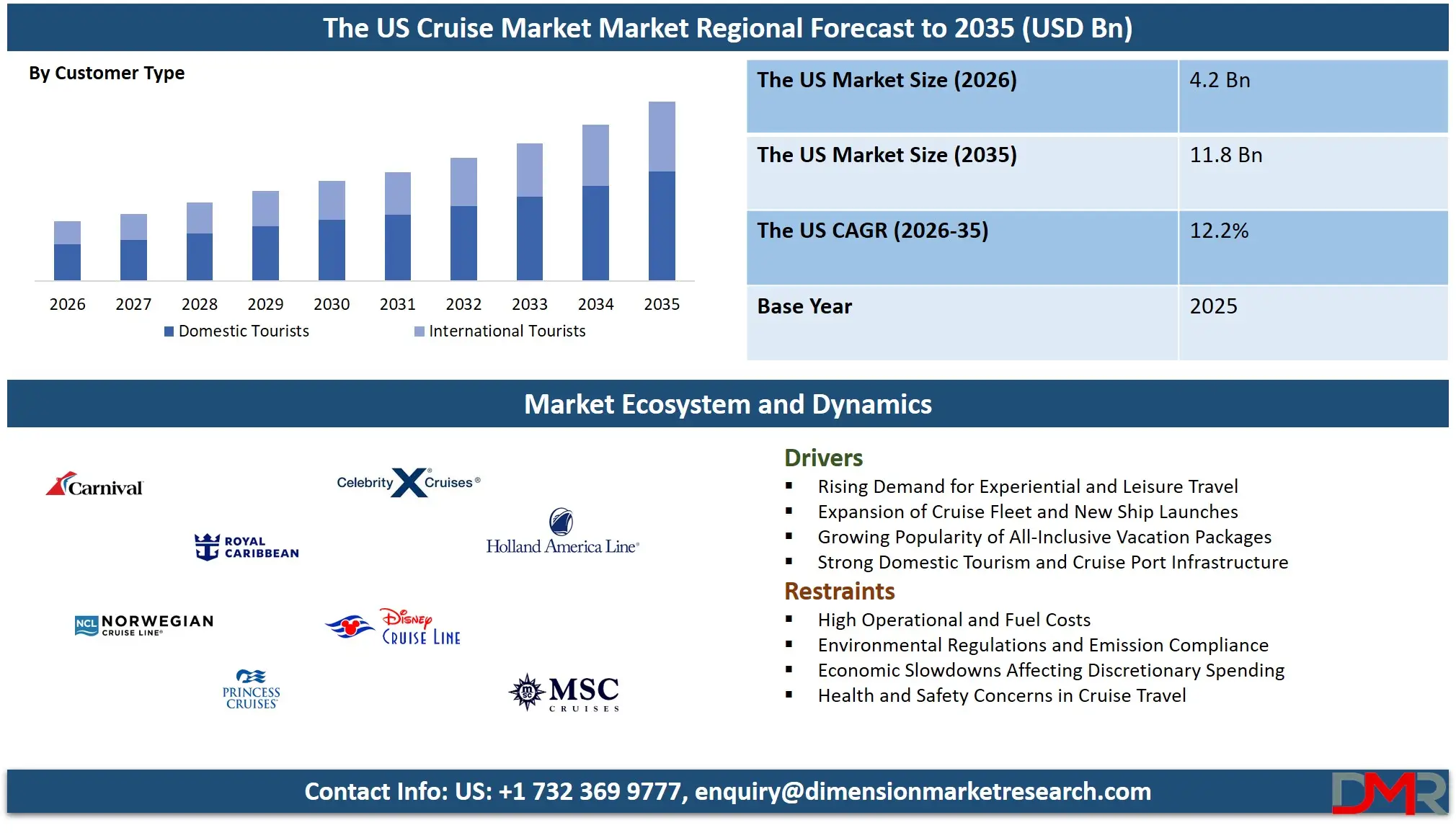
The US cruise market size is estimated to reach USD 4.2 billion in 2026 and is projected to grow at a CAGR of 12.2%, reaching USD 11.8 billion by 2035, driven by rising demand for cruise tourism, expanding cruise ship fleets, increasing leisure travel spending, and growing popularity of luxury and expedition cruise experiences.
ℹ
To learn more about this report –
Download Your Free Sample Report Here
A cruise is a leisure travel experience where passengers journey on a large passenger ship for recreation, relaxation, and tourism while visiting multiple destinations during a single voyage. Unlike traditional transportation focused solely on reaching a destination, a cruise emphasizes the journey itself by offering accommodation, dining, entertainment, and recreational amenities onboard. Cruise ships function as floating resorts that provide services such as fine dining restaurants, live performances, wellness facilities, sports activities, and guided shore excursions at ports of call. Travelers choose cruises for their convenience, all-inclusive vacation structure, and the ability to explore several coastal cities or islands without repeated travel arrangements, making them a popular form of maritime tourism worldwide.
The US cruise market represents one of the most developed and influential segments of the global cruise tourism industry, supported by a large consumer base, well established port infrastructure, and the presence of major cruise operators. Key departure hubs such as Florida, California, and Texas connect travelers to popular itineraries across the Caribbean, Alaska, Mexico, and the Pacific. The market benefits from strong domestic travel demand, advanced cruise terminal facilities, and continuous investments in next generation vessels that integrate digital services, sustainable technologies, and premium onboard experiences.
ℹ
To learn more about this report –
Download Your Free Sample Report Here
Growth in the US cruise market is also shaped by evolving traveler preferences and increasing diversification of cruise offerings. Cruise companies are expanding themed voyages, luxury expeditions, family oriented packages, and short duration itineraries to attract a wider demographic of passengers. In addition, digital booking platforms, travel agencies, and loyalty programs play an important role in influencing consumer decisions. Rising interest in experiential travel, coastal tourism, and multi destination vacations continues to strengthen the market outlook while cruise operators enhance onboard entertainment, wellness services, and culinary experiences to maintain competitive positioning.
The US Cruise Market: Key Takeaways
- Market Size and Growth: The US cruise market is expected to reach USD 4.2 billion in 2026 and grow at a CAGR of 12.2%, reaching USD 11.8 billion by 2035.
- Dominant Cruise Type and Propulsion: Ocean cruises hold 78% of the type segment, while diesel-powered ships account for 74% of propulsion, reflecting traditional fleet preferences.
- Key Passenger Demographics: Travelers aged 31–50 years represent 36% of passengers, and domestic tourists make up 61%, showing the focus on mid-aged domestic leisure travelers.
- Amenity and End User Trends: Entertainment and live performances cover 26% of amenities, while families comprise 41% of end users, highlighting the importance of experiences and multi-generational packages.
- Booking Channels: Travel agents lead with 48% market share, though online travel agencies are growing, emphasizing the role of personalized and digital booking options.
The US Cruise Market: Use Cases
- Leisure and Vacation Tourism: Cruises offer all-inclusive vacation experiences, combining travel, accommodation, dining, and entertainment while visiting multiple destinations, driving US cruise tourism growth.
- Family and Multi-Generational Travel: Family friendly cruises provide kids programs, recreational activities, and group excursions, catering to multi-generational travelers.
- Luxury and Premium Travel: High end cruises offer gourmet dining, spa services, and exclusive shore excursions, attracting affluent leisure travelers.
- Adventure and Expedition Travel: Expedition cruises provide unique experiences like wildlife tours, polar exploration, and cultural excursions, boosting niche maritime tourism demand.
Impact of US-Iran War on the US Cruise Market
- Safety and Itinerary Disruptions: Geopolitical tensions lead cruise operators to reroute or cancel voyages near the Middle East, affecting planned itineraries and passenger confidence.
- Higher Operational Costs: Conflict driven oil price volatility increases fuel and insurance costs, raising operating expenses and potentially ticket prices.
- Reduced Booking Demand: Safety concerns and travel advisories result in cancellations or deferments of long haul and luxury cruises, softening overall demand.
- Global Travel Chain Disruptions: Closed airspace and rerouted flights disrupt connectivity to key cruise departure hubs, indirectly affecting US cruise bookings.
The US Cruise Market: Stats & Facts
- Bureau of Transportation Statistics (U.S. Department of Transportation)
- In 2023, total cruise passengers counted at U.S. ports reached 26.9 million across all embarkations and debarkations at ports including Miami and Port Canaveral.
- CDC Vessel Sanitation Program / Public Health Reporting
- In 2024, more than 20 million passengers embarked from North American ports for cruise vacations.
- The CDC monitors illness and sanitation compliance across cruise vessels embarking and disembarking from U.S. ports annually as part of public health oversight.
- U.S. Travel and Transportation Guest Movements
- U.S. cruise passenger volume projected for 2025 reached 19 million Americans, representing continued recovery in travel demand.
- The 2025 projected cruise count reflects a 34% increase over pre‑pandemic benchmark levels for U.S. based cruise vacationers.
The US Cruise Market: Market Dynamic
Driving Factors in the US Cruise Market
Rising Demand for Experiential Travel
Passengers are seeking immersive vacation experiences combining sightseeing, entertainment, and recreational activities. Themed itineraries, onboard wellness programs, and luxury dining are attracting families, millennials, and leisure travelers, boosting cruise tourism.
Expansion of Cruise Fleet and Modern Ships
Investment in modern vessels with advanced amenities, eco-friendly propulsion, and enhanced passenger comfort supports market growth. New ships with entertainment zones, family programs, and fine dining enable larger passenger capacity and wider itinerary coverage.
Restraints in the US Cruise Market
Environmental and Regulatory Challenges
Strict maritime regulations on emissions and waste management increase operational costs. Compliance with sustainability standards and installation of eco-friendly systems may limit fleet expansion and affect profit margins.
Economic Volatility and Fuel Price Fluctuations
The industry is sensitive to fuel price changes, inflation, and discretionary spending. Economic uncertainty can reduce cruise bookings, especially for luxury and long haul itineraries, impacting overall market growth.
Opportunities in the US Cruise Market
Growth of Luxury and Expedition Cruises
Targeting affluent travelers with premium services, personalized hospitality, and expedition itineraries can increase revenue per passenger and expand market share.
Digital Booking and Technology Integration
Online travel agencies, mobile apps, and AI driven personalization improve customer engagement, simplify bookings, and attract younger and international travelers.
Trends in the US Cruise Market
Sustainability and Green Cruise Initiatives
Adoption of LNG ships, hybrid propulsion, and energy efficient operations is gaining focus as passengers demand eco-friendly and sustainable tourism options.
Onboard Entertainment and Experiential Services
Live shows, themed events, wellness programs, and adventure activities are being enhanced to improve passenger experience and encourage repeat bookings.
The US Cruise Market: Research Scope and Analysis
By Type Analysis
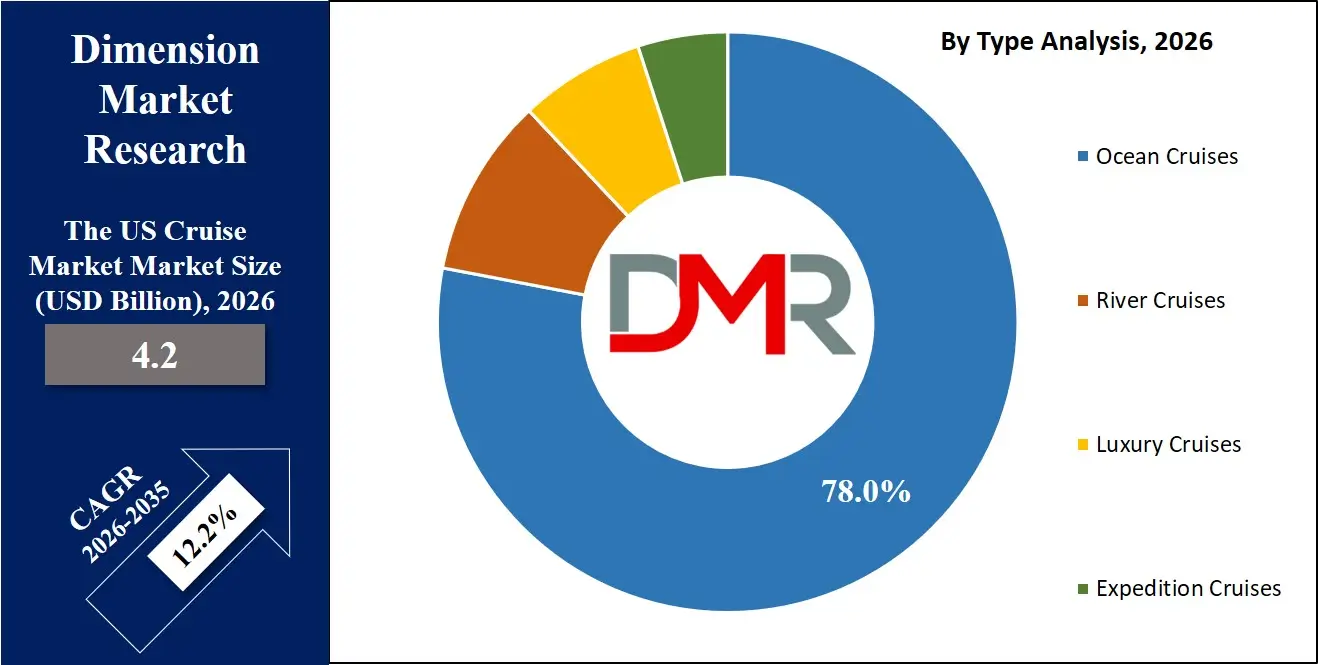
In the US cruise market, ocean cruises are expected to dominate the type segment, accounting for approximately 78.0% of the total market share in 2026. This dominance is largely driven by the popularity of Caribbean, Alaska, and Mexico itineraries, which attract a wide range of travelers seeking all-inclusive vacation experiences. Ocean cruises benefit from larger vessels that offer extensive onboard amenities such as fine dining, entertainment, wellness programs, and recreational activities, making them a preferred choice for both leisure and family travelers. The scale and capacity of these ships also allow cruise lines to operate efficiently across multiple routes, further reinforcing their leading position in the market.
ℹ
To learn more about this report –
Download Your Free Sample Report Here
River cruises, while capturing a smaller share of the market, play an important role in catering to travelers seeking intimate and culturally immersive experiences. These cruises typically navigate scenic rivers across the United States and abroad, providing access to historic towns, wine regions, and cultural landmarks that larger ocean vessels cannot reach. River cruises appeal particularly to older travelers and luxury tourists who prioritize personalized service, serene travel experiences, and curated excursions over large scale entertainment. Although their market share is modest compared to ocean cruises, river cruises contribute to the diversity of offerings in the US cruise market and represent a growing niche segment.
By Amenity and Service Analysis
In the US cruise market, entertainment and live performances are expected to dominate the amenity and service offerings segment, capturing around 26.0% of the total market share in 2026. Cruise lines are increasingly focusing on providing passengers with immersive experiences such as Broadway style shows, themed parties, live music, and interactive performances that enhance the overall travel experience. These offerings attract a wide range of travelers, from families to young adults, by combining leisure, fun, and cultural experiences onboard. The emphasis on high quality entertainment not only differentiates cruise operators in a competitive market but also encourages repeat bookings and stronger passenger engagement.
Fine dining and culinary experiences also play a significant role in this segment by appealing to passengers seeking premium gastronomic journeys during their voyage. Cruise ships feature a variety of dining options, including specialty restaurants, chef curated menus, and international cuisines, offering a rich and diverse culinary experience. Travelers often consider the quality of onboard dining when selecting a cruise, making it a key factor in market growth. This focus on culinary excellence complements entertainment offerings, creating a comprehensive vacation experience that attracts both leisure travelers and luxury tourists.
By Propulsion Type Analysis
In the US cruise market, diesel powered cruise ships are expected to dominate the propulsion type segment, capturing approximately 74.0% of the total market share in 2026. These vessels remain the backbone of the industry due to their established technology, reliability, and widespread availability of fuel infrastructure at major ports. Diesel engines allow cruise lines to operate large ships with high passenger capacity efficiently, supporting extensive itineraries across the Caribbean, Alaska, and other popular routes. The dominance of diesel powered ships is also driven by the cost effectiveness of retrofitting existing fleets and the operational familiarity cruise operators have with diesel propulsion systems.
LNG powered cruise ships, while representing a smaller share of the market, are gaining traction due to increasing environmental regulations and passenger demand for sustainable travel options. These vessels use liquefied natural gas as a cleaner fuel alternative, reducing emissions and improving compliance with maritime environmental standards. LNG powered ships are particularly attractive for newer vessels and luxury cruise lines looking to promote eco-friendly tourism. Although adoption is gradual, LNG propulsion represents a strategic opportunity for cruise operators to enhance sustainability, attract environmentally conscious travelers, and align with global maritime decarbonization trends.
By Age Group of Travelers Analysis
In the US cruise market, travelers aged 31–50 years are expected to dominate the age group segment, capturing approximately 36.0% of the total market share in 2026. This demographic is highly active in leisure and family travel, often seeking vacations that combine relaxation, adventure, and diverse onboard experiences. Passengers in this age group are drawn to cruises offering entertainment, fine dining, recreational activities, and wellness programs, which cater to both solo travelers and families. Their strong disposable income and preference for multi destination itineraries contribute significantly to cruise bookings, making them a key driver of market growth.
Travelers aged 51–70 years also represent an important segment of the market, particularly for premium and luxury cruise offerings. This age group often prioritizes comfort, personalized services, and culturally immersive experiences such as guided shore excursions, heritage tours, and wellness retreats. While smaller than the 31–50 age segment, the 51–70 demographic contributes to higher per passenger revenue and supports demand for upscale cruise packages, luxury cabins, and long haul voyages, reinforcing the market’s focus on diversified travel experiences.
By Booking Channel Analysis
In the US cruise market, travel agents are expected to dominate the booking channel segment, capturing approximately 48.0% of the total market share in 2026. Travel agents remain a preferred choice for many passengers due to their expertise in planning complex itineraries, bundling shore excursions, and offering personalized travel advice. They assist travelers in selecting the right cruise line, cabin type, and onboard amenities, ensuring a seamless vacation experience. Their role is particularly important for families, luxury travelers, and first time cruisers who value guidance and support in navigating the variety of cruise options available.
Online travel agencies (OTAs) also play a significant role in the market by providing convenience and accessibility for tech savvy travelers. OTAs allow passengers to compare cruise options, read reviews, and complete bookings from anywhere, often offering competitive pricing and exclusive deals. While their market share is smaller than traditional travel agents, OTAs are growing rapidly due to increasing digital adoption, mobile booking trends, and the preference of younger demographics for self-guided planning and instant reservation capabilities.
By Customer Type Analysis
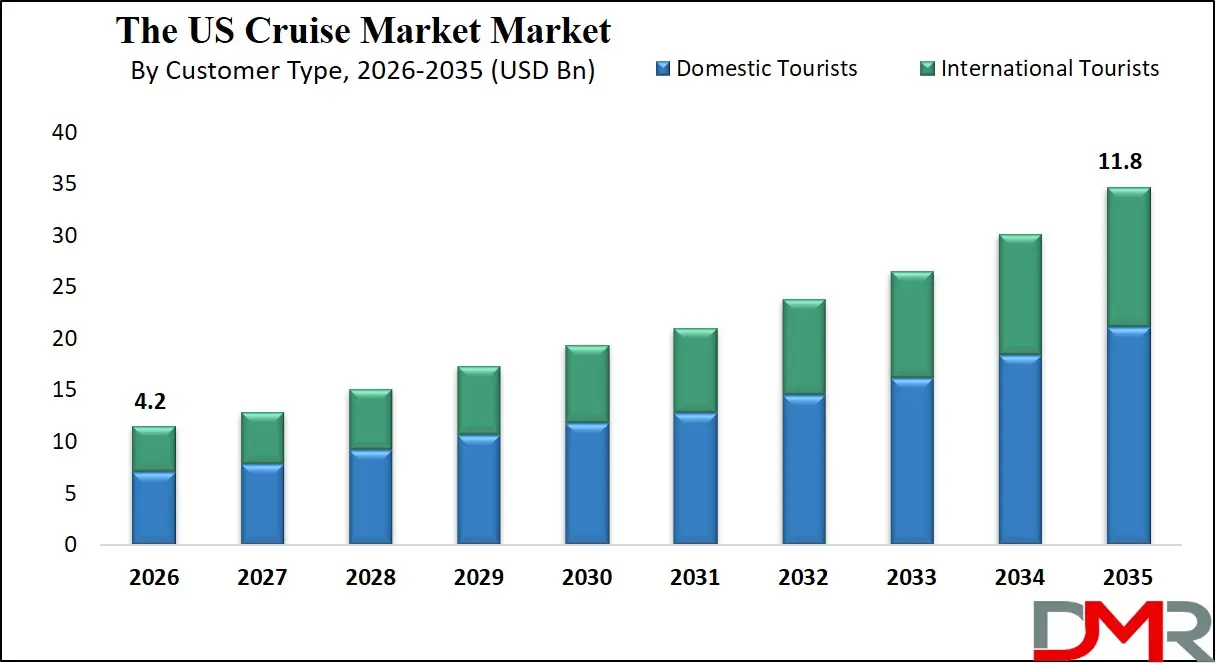
In the US cruise market, domestic tourists are expected to dominate the customer type segment, capturing approximately 61.0% of the total market share in 2026. The strong presence of domestic travelers is driven by the accessibility of major departure ports along the East and West coasts, including Florida, California, and Texas, which connect passengers to popular destinations such as the Caribbean, Alaska, and Mexico. Domestic tourists benefit from convenient travel options, all-inclusive cruise packages, and family oriented itineraries, making cruises a preferred choice for leisure and short vacations. Their consistent demand contributes significantly to the overall growth and stability of the US cruise market.
International tourists, while accounting for a smaller share, remain an important segment by bringing diversity and higher spending potential to the market. These travelers often seek unique itineraries, luxury cruise experiences, and multi destination voyages that combine US ports with international stops. Cruise operators cater to this segment through premium cabins, specialized services, and culturally immersive excursions. Although smaller in number compared to domestic passengers, international tourists help enhance occupancy rates, support high end cruise offerings, and contribute to the expansion of the US cruise market.
By End User Analysis
In the US cruise market, families are expected to dominate the end user segment, capturing approximately 41.0% of the total market share in 2026. Cruise lines cater to this segment by offering family friendly amenities such as kids clubs, recreational activities, entertainment programs, and group shore excursions that appeal to both parents and children. Multi-generational travel is also a key factor, as cruises provide convenient, all-inclusive vacations where families can enjoy diverse experiences together without the hassle of separate accommodations or travel arrangements. This focus on family oriented services drives strong bookings and supports consistent market growth.
Solo travelers, while representing a smaller share of the market, are becoming an increasingly important segment due to the rise in independent leisure travel. Cruise lines are designing solo cabins, social events, and group activities to attract individual passengers seeking community and engagement during their voyage. This segment values personalized experiences, flexibility in itineraries, and opportunities to meet other travelers, contributing to niche demand and encouraging cruise operators to diversify offerings beyond traditional family and group packages.
The US Cruise Market Report is segmented on the basis of the following:
By Type
- Ocean Cruises
- River Cruises
- Expedition Cruises
- Luxury Cruises
By Amenity and Service Offerings
- Fine Dining and Culinary Experiences
- Entertainment and Live Performances
- Spa and Wellness Services
- Recreational and Sports Activities
- Kids and Family Programs
- Shopping and Duty-Free Retail
By Propulsion Type
- Diesel-Powered Cruise Ships
- LNG-Powered Cruise Ships
- Hybrid Cruise Ships
- Electric Cruise Ships
By Age Group of Travelers
- 18–30 Years
- 31–50 Years
- 51–70 Years
- 71+ Years
By Booking Channel
- Online Travel Agencies (OTAs)
- Cruise Line Direct Booking
- Travel Agents
- Corporate/Group Bookings
By Customer Type
- Domestic Tourist
- International Tourist
By End User
- Solo Travelers
- Families
- Business Travelers
Impact of Artificial Intelligence in the US Cruise Market
Artificial Intelligence is increasingly transforming the US cruise market by enhancing operational efficiency and passenger experiences. Cruise operators are leveraging AI powered systems for itinerary optimization, predictive maintenance of vessels, and fuel management, reducing operational costs and improving reliability. AI driven analytics also help in forecasting passenger demand, personalizing services, and optimizing onboard staffing, ensuring smoother cruise operations. This technological integration allows cruise lines to manage large fleets more effectively while maintaining high standards of safety and service quality.
On the passenger side, AI is reshaping the travel experience by enabling personalized recommendations for dining, entertainment, and shore excursions based on individual preferences and behavior. Chatbots, virtual assistants, and AI powered booking platforms streamline reservations, provide real time support, and enhance customer engagement. AI also supports targeted marketing and loyalty programs, helping cruise operators attract specific demographics such as families, millennials, and luxury travelers. Overall, AI adoption strengthens competitiveness, passenger satisfaction, and revenue growth in the US cruise market.
The US Cruise Market: Competitive Landscape
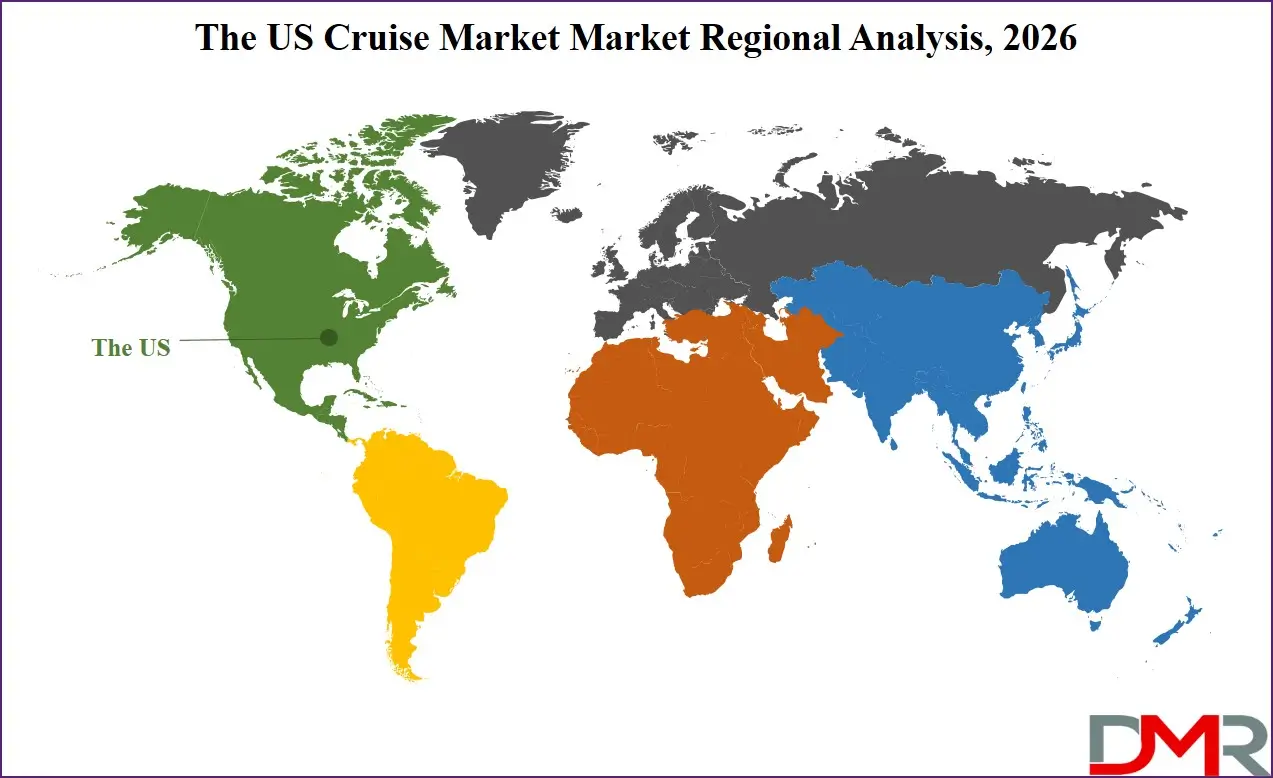
The US cruise market is highly competitive, characterized by a mix of large scale operators and niche service providers vying to attract diverse passenger segments. Companies compete through fleet expansion, innovative ship designs, and differentiated onboard experiences such as luxury accommodations, themed entertainment, and wellness programs.
ℹ
To learn more about this report –
Download Your Free Sample Report Here
Pricing strategies, promotional offers, and personalized services play a crucial role in capturing market share, while digital booking platforms and loyalty programs enhance customer engagement. Operators also focus on sustainability initiatives and technology integration to strengthen brand positioning, improve operational efficiency, and meet evolving traveler expectations in a dynamic and growing market.
Some of the prominent players in the US Cruise Market are:
- Carnival Cruise Line
- Royal Caribbean International
- Norwegian Cruise Line
- Princess Cruises
- Celebrity Cruises
- Disney Cruise Line
- Holland America Line
- MSC Cruises
- Virgin Voyages
- Seabourn Cruise Line
- Regent Seven Seas Cruises
- Oceania Cruises
- Silversea Cruises
- Windstar Cruises
- Azamara
- Crystal Cruises
- American Cruise Lines
- Lindblad Expeditions
- UnCruise Adventures
- Viking Cruises
- Other Key Players
Recent Developments in the US Cruise Market
- February 2026: Activist investor Elliott Management built a stake exceeding 10% in Norwegian Cruise Line Holdings, pushing for board changes and strategic shifts, representing a significant capital market development for the cruise operator.
- January 2026: Two major Chinese operators, Adora Cruises and Astro Ocean International Cruise, merged, leading to reallocation of a surplus vessel and broader industry implications for consolidation in the global cruise supply chain.
- October 2025: The Star Princess, a new LNG‑powered cruise ship designed for expanded amenities and longer itineraries, completed sea trials and entered service, adding fresh capacity and guest offerings in the cruise sector.
Report Details
| Report Characteristics |
| Market Size (2026) |
USD 4.2 Bn |
| Forecast Value (2035) |
USD 11.8 Bn |
| CAGR (2026–2035) |
12.2% |
| Historical Data |
2021 – 2025 |
| Forecast Data |
2027 – 2035 |
| Base Year |
2025 |
| Estimate Year |
2026 |
| Report Coverage |
Market Revenue Estimation, Market Dynamics, Competitive Landscape, Growth Factors and etc. |
| Segments Covered |
By Type (Ocean Cruises, River Cruises, Expedition Cruises, Luxury Cruises), By Amenity and Service Offerings (Fine Dining and Culinary Experiences, Entertainment and Live Performances, Spa and Wellness Services, Recreational and Sports Activities, Kids and Family Programs, Shopping and Duty-Free Retail), By Propulsion Type (Diesel-Powered Cruise Ships, LNG-Powered Cruise Ships, Hybrid Cruise Ships, Electric Cruise Ships), By Age Group of Travelers (18–30 Years, 31–50 Years, 51–70 Years, 71+ Years), By Booking Channel (Online Travel Agencies (OTAs), Cruise Line Direct Booking, Travel Agents, Corporate/Group Bookings), By Customer Type (Domestic Tourist, International Tourist), and By End User (Solo Travelers, Families, Business Travelers). |
| Country Coverage |
The US |
| Prominent Players |
Carnival Cruise Line, Royal Caribbean International, Norwegian Cruise Line, Princess Cruises, Celebrity Cruises, Disney Cruise Line, Holland America Line, MSC Cruises, Virgin Voyages, Seabourn Cruise Line, Regent Seven Seas Cruises, Oceania Cruises, Silversea Cruises, Windstar Cruises, Azamara, Crystal Cruises, American Cruise Lines, Lindblad Expeditions, UnCruise Adventures, Viking Cruises, and Other Key Players. |
| Purchase Options |
We have three licenses to opt for: Single User License (Limited to 1 user), Multi-User License (Up to 5 Users) and Corporate Use License (Unlimited User) along with free report customization equivalent to 0 analyst working days, 3 analysts working days and 5 analysts working days respectively. |
Frequently Asked Questions
How big is the US Cruise Market?
▾ The US Cruise Market size is estimated to have a value of USD 4.2 billion in 2026 and is expected to reach USD 11.8 billion by the end of 2035.
What is the growth rate in the US Cruise Market in 2026?
▾ The market is growing at a CAGR of 12.2% over the forecasted period of 2026.
Who are the key players in the US Cruise Market?
▾ Some of the major key players in the US Cruise Market are Carnival Cruise Line, Royal Caribbean International, Norwegian Cruise Line, Princess Cruises, Celebrity Cruises, Disney Cruise Line, Holland America Line, MSC Cruises, Virgin Voyages, Seabourn Cruise Line, Regent Seven Seas Cruises, Oceania Cruises, and many others.