Market Overview
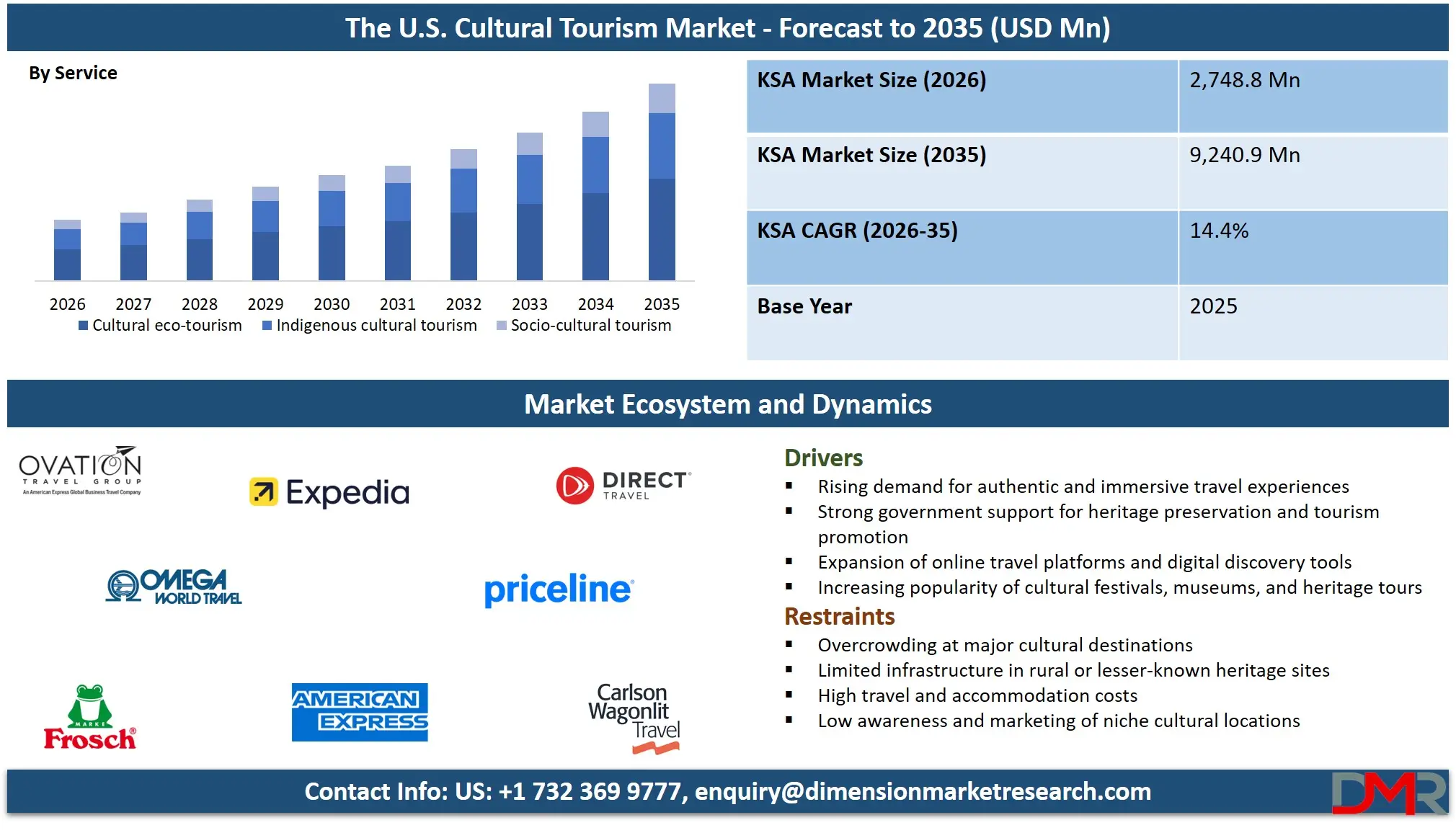
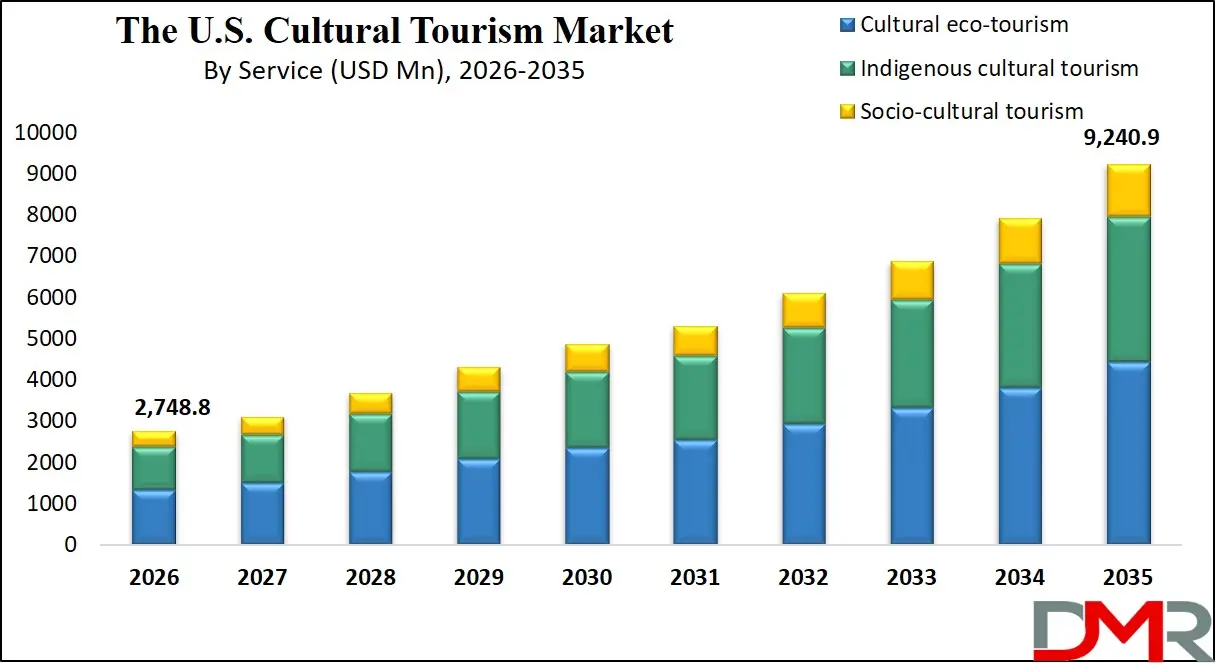
The U.S. Cultural Tourism Market size is projected to reach USD 2,748.8 million in 2026 and grow at a compound annual growth rate of 14.4% to reach a value of USD 9,240.9 million in 2035.
ℹ
To learn more about this report –
Download Your Free Sample Report Here
Cultural Tourism refers to travel activities centered on experiencing the cultural, historical, artistic, and heritage aspects of destinations across the United States. It encompasses visits to heritage sites, museums, festivals, monuments, and indigenous communities, along with participation in local traditions, arts, and lifestyles. This domain integrates sectors such as hospitality, transportation, and entertainment, making it a vital contributor to the broader tourism and service economy. Its significance lies in preserving cultural identity while generating economic value for local communities and supporting sustainable tourism initiatives.
The market is evolving with the integration of digital tools, immersive storytelling, and experiential travel offerings that enhance visitor engagement. Increasing interest in authentic, educational, and meaningful travel experiences is reshaping how destinations design and promote cultural assets. Travelers are seeking deeper connections with local traditions, leading to the rise of community-based tourism, heritage conservation programs, and curated cultural itineraries that emphasize storytelling and authenticity.
ℹ
To learn more about this report –
Download Your Free Sample Report Here
Growth is further influenced by technological advancements such as virtual reality tours, mobile travel applications, and data-driven personalization. Shifts toward sustainable tourism and increased funding for cultural preservation projects are also shaping the trajectory. Additionally, partnerships between public institutions and private organizations are expanding access to cultural experiences, ensuring continued innovation and long-term sector resilience.
The U.S. Cultural Tourism Market: Key Takeaways
- Market Growth: The U.S. Cultural Tourism Market size is expected to grow by USD 6,136.4 million, at a CAGR of 14.4%, during the forecasted period of 2027 to 2035.
- By Service: The cultural eco-tourism segment is anticipated to get the majority share of the U.S. Cultural Tourism market in 2026.
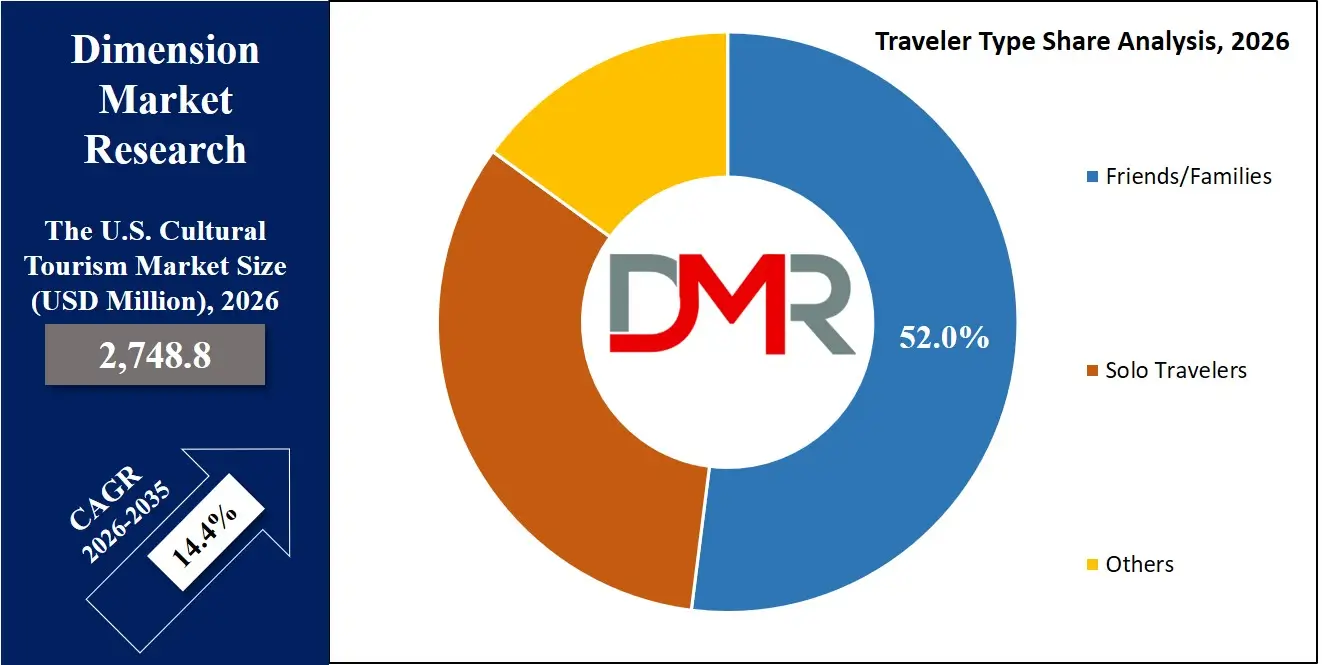
- By Traveler Type: The friends/family segment is expected to get the largest revenue share in 2026 in the U.S. Cultural Tourism market.
- Use Cases: Some of the use cases of cultural tourism include heritage exploration, festival participation and more.
The U.S. Cultural Tourism Market: Use Cases
- Heritage Exploration: Visitors engage with historical landmarks, battlefields, and preserved towns, gaining insights into national history through guided tours and interactive exhibits. These experiences often include storytelling elements that bring past events to life.
- Museum-Based Learning: Travelers explore art, science, and history museums, benefiting from curated exhibitions, educational programs, and digital installations that enhance cultural understanding.
- Festival Participation: Cultural festivals provide immersive experiences in music, food, and traditions, allowing tourists to interact directly with local communities and celebrate regional identities.
- Indigenous Community Tourism: Visitors participate in authentic cultural exchanges with Native communities, learning about traditions, crafts, and heritage while supporting local economies.
- Culinary Tourism: Food-focused travel experiences highlight regional cuisines, local ingredients, and traditional cooking methods, offering cultural insights through gastronomy.
- Art and Performance Tourism: Travelers attend theater performances, art exhibitions, and live cultural shows, contributing to the creative economy and supporting artists.
- Eco-Cultural Experiences: Tourists combine cultural exploration with environmental awareness, visiting culturally significant natural landscapes and participating in conservation activities.
Stats & Facts
- U.S. Travel Association states that cultural and heritage travelers accounted for over 40% of all domestic trips in 2024.
- National Park Service reports that cultural and historical parks recorded more than 325 million visits in 2024.
- Bureau of Economic Analysis notes that travel and tourism contributed approximately USD 2.6 trillion to the U.S. economy in 2024.
- U.S. Department of Commerce highlights that international cultural tourists spent an average of 20% more than leisure travelers in 2025.
- National Endowment for the Arts indicates that over 55% of U.S. adults attended at least one cultural event in 2024.
- Smithsonian Institution reports annual museum visits exceeding 30 million across its network in 2025.
- U.S. Census Bureau data shows that heritage tourism-related employment grew by 6.5% in 2024.
- Bureau of Labor Statistics notes that jobs in arts, entertainment, and recreation increased by 7% in 2025.
- National Trust for Historic Preservation estimates that heritage tourism generates over $192 billion annually in economic impact.
- U.S. Department of Transportation reports a 9% rise in domestic leisure travel linked to cultural destinations in 2025.
- World Tourism Organization highlights that cultural tourism represents nearly 39% of global tourism activities in 2024.
- Federal Reserve Economic Data indicates consumer spending on recreational and cultural services rose by 8.2% in 2025.
Market Dynamic
Driving Factors in the U.S. Cultural Tourism Market
Rising Demand for Experiential Travel
Travelers increasingly prefer meaningful and immersive experiences over traditional sightseeing, which is significantly boosting cultural tourism demand. Visitors are seeking authentic engagement with local traditions, arts, and heritage, encouraging destinations to design interactive and participatory offerings. This shift is supported by higher disposable incomes and a growing interest in educational travel. Cultural tourism aligns well with these preferences by offering storytelling-driven experiences, guided heritage tours, and community interactions. The emphasis on personalization and unique experiences has also encouraged tour operators to diversify offerings, making cultural tourism a central pillar of modern travel trends.
Government Support and Cultural Preservation Initiatives
Federal and state-level initiatives promoting heritage conservation and tourism development play a crucial role in market growth. Investments in restoring historical landmarks, funding museums, and supporting cultural events have enhanced destination appeal. Policies encouraging sustainable tourism and community involvement further strengthen the sector. Public-private partnerships are enabling infrastructure improvements and better accessibility to cultural sites. These initiatives not only preserve cultural assets but also generate employment and economic growth, creating a favorable environment for long-term expansion of cultural tourism across diverse regions in the U.S.
Restraints in the U.S. Cultural Tourism Market
High Maintenance and Preservation Costs
Maintaining historical sites, museums, and cultural landmarks requires substantial financial investment. Preservation efforts often involve specialized skills, materials, and ongoing maintenance, which can strain budgets for local authorities and organizations. Limited funding can lead to reduced accessibility or deterioration of cultural assets, negatively impacting visitor experiences. Additionally, compliance with preservation regulations can increase operational complexity. These financial constraints may limit the development of new cultural attractions or the expansion of existing ones, thereby slowing overall market growth.
Seasonality and Uneven Visitor Distribution
Cultural tourism often experiences seasonal fluctuations, with peak travel periods leading to overcrowding while off-season periods see reduced visitor numbers. This imbalance affects revenue stability for local businesses and tourism operators. Some regions struggle to attract consistent tourist flows due to limited promotion or accessibility challenges. Seasonal dependence also puts pressure on infrastructure during high-demand periods, potentially diminishing visitor satisfaction. Addressing these challenges requires strategic planning, diversified offerings, and year-round promotional efforts to ensure steady growth and sustainability.
Opportunities in the U.S. Cultural Tourism Market
Expansion of Digital and Virtual Experiences
The integration of digital technologies such as virtual tours, augmented reality, and mobile apps presents significant growth opportunities. These tools enhance accessibility to cultural sites and allow travelers to preview experiences before visiting. They also attract younger audiences who prefer tech-enabled interactions. Virtual experiences can generate additional revenue streams while promoting lesser-known destinations. As digital adoption increases, cultural institutions can leverage these technologies to expand their reach globally and improve visitor engagement both online and offline.
Growth in Community-Based Tourism
There is increasing interest in locally driven tourism experiences that directly benefit communities. This trend supports small businesses, artisans, and indigenous groups, creating unique cultural offerings. Community-based tourism promotes sustainable practices and authentic interactions, making it highly attractive to modern travelers. It also helps preserve traditions and cultural heritage while generating income for local populations. Expanding such initiatives can unlock untapped potential in rural and less-visited areas, contributing to balanced regional development.
Trends in the U.S. Cultural Tourism Market
Integration of Technology and Smart Tourism
The adoption of advanced technologies such as AI-driven recommendations, mobile ticketing, and interactive exhibits is transforming cultural tourism. Smart tourism solutions improve visitor convenience and enhance engagement through personalized experiences. Digital platforms enable seamless trip planning and real-time information access, making cultural tourism more accessible. These innovations are also helping institutions analyze visitor behavior and optimize services, contributing to improved operational efficiency and customer satisfaction.
Sustainability and Responsible Tourism Practices
Sustainability is becoming a central focus, with efforts to minimize environmental impact and preserve cultural heritage. Travelers are increasingly choosing eco-friendly and socially responsible options, prompting destinations to adopt sustainable practices. Initiatives such as reducing carbon footprints, promoting local products, and preserving cultural authenticity are gaining traction. This trend not only enhances the appeal of cultural tourism but also ensures long-term viability by protecting resources and supporting community well-being.
Impact of Artificial Intelligence on the U.S. Cultural Tourism Market
- Personalized Travel Recommendations: AI analyzes user preferences to suggest tailored cultural itineraries, enhancing traveler satisfaction and engagement.
- Virtual Tour Enhancements: AI-powered virtual guides and simulations provide immersive previews of cultural sites, increasing accessibility.
- Chatbots and Customer Support: AI chatbots offer instant assistance for bookings, queries, and travel planning, improving customer experience.
- Predictive Analytics for Demand: AI forecasts visitor trends, helping operators manage crowds and optimize resource allocation.
- Smart Ticketing Systems: Automated systems streamline entry processes and reduce wait times at cultural attractions.
- Language Translation Tools: AI-driven translation enhances communication for international tourists, improving inclusivity.
- Content Creation and Storytelling: AI helps create engaging narratives and digital content for cultural experiences.
- Operational Efficiency: Automation reduces administrative tasks, allowing organizations to focus on visitor engagement.
- Fraud Detection and Security: AI enhances security systems, ensuring safe and reliable tourism operations.
Research Scope and Analysis
By Type Analysis
Heritage sites dominate the U.S. cultural tourism market, accounting for an estimated 45% share in 2026. Their prominence is driven by the country’s rich historical legacy, including preserved landmarks, historic districts, and UNESCO-recognized sites. These locations attract both domestic and international tourists seeking educational and immersive experiences. Government funding and preservation initiatives further strengthen this segment by maintaining infrastructure and enhancing accessibility. Additionally, the integration of digital tools such as guided apps and augmented reality experiences has increased visitor engagement. Heritage sites also benefit from strong promotional campaigns and partnerships with travel operators, ensuring consistent footfall. Their ability to combine education, entertainment, and cultural value makes them the cornerstone of cultural tourism in the U.S.
Museums represent the fastest-growing segment, driven by technological innovation and evolving visitor expectations. Interactive exhibits, digital storytelling, and immersive installations have transformed traditional museum experiences. Increased funding and collaborations with educational institutions further support growth. Museums are also expanding their reach through virtual tours and online collections, attracting global audiences. The rising interest in art, science, and history among younger demographics is contributing to increased visitation. Additionally, special exhibitions and cultural events hosted by museums are enhancing their appeal, positioning them as dynamic and evolving cultural hubs.
By Services Analysis
Cultural eco-tourism leads this category with a projected 48% share in 2026, driven by the growing emphasis on sustainability and responsible travel. This segment combines cultural exploration with environmental conservation, attracting travelers who value ethical tourism practices. Activities such as visiting heritage-rich natural landscapes and participating in conservation programs are gaining popularity. Government policies promoting eco-friendly tourism and increasing awareness about environmental issues further boost this segment. Operators are integrating sustainable practices into their offerings, including low-impact accommodations and community engagement initiatives. The alignment of cultural experiences with sustainability goals ensures strong growth and long-term relevance.
Indigenous cultural tourism is the fastest-growing segment, fueled by increasing interest in authentic and community-driven experiences. Travelers are seeking deeper connections with native traditions, crafts, and lifestyles. This segment benefits from initiatives supporting indigenous communities and promoting cultural preservation. Collaborations between tourism boards and local groups are enhancing visibility and accessibility. As awareness grows, indigenous tourism is expected to play a vital role in diversifying the cultural tourism landscape while supporting economic development in underserved regions.
By Traveler Type Analysis
The friends and families segment holds the largest share, estimated at 52% in 2026, due to the appeal of cultural tourism as a group activity. Families and social groups often seek educational and recreational experiences, making cultural attractions ideal choices. Destinations are increasingly offering family-friendly programs, guided tours, and interactive exhibits to cater to this demographic. Group travel also benefits from cost-sharing and structured itineraries, enhancing accessibility. The emphasis on bonding experiences and shared learning further drives demand in this segment, ensuring its continued dominance.
ℹ
To learn more about this report –
Download Your Free Sample Report Here
Solo travelers represent the fastest-growing segment, driven by increasing independence and the desire for personalized experiences. This group values flexibility and often seeks niche cultural activities such as workshops, local tours, and immersive experiences. Digital platforms and travel apps have made it easier for solo travelers to plan and navigate trips. सुरक्षा, affordability, and curated experiences tailored to individual preferences are further supporting growth. As solo travel continues to gain popularity, this segment is expected to expand significantly.
The U.S. Cultural Tourism Market Report is segmented on the basis of the following:
By Type
- Heritage Sites
- Religious Sites
- Parks & Gardens
- Museums
- Monuments
- Others
By Services
- Cultural eco-tourism
- Indigenous cultural tourism
- Socio-cultural tourism
By Traveler Type
- Solo Travelers
- Friends/Families
- Others
Competitive Landscape
The U.S. cultural tourism market is characterized by a mix of public institutions, private operators, and community-based organizations competing to attract diverse visitor segments. Market participants focus on enhancing visitor experiences through innovation, digital integration, and strategic partnerships. High entry barriers exist due to the need for significant investment in infrastructure and cultural asset development.
ℹ
To learn more about this report –
Download Your Free Sample Report Here
Organizations are increasingly investing in research and development to create immersive and interactive offerings. Collaborations with local communities and technology providers are also common strategies to differentiate services. Additionally, marketing initiatives emphasizing authenticity and sustainability play a crucial role in maintaining competitive advantage and expanding market reach.
Some of the prominent players in the U.S. Cultural Tourism are:
- Expedia Group
- Priceline Group (Booking Holdings)
- American Express Global Business Travel
- Carlson Wagonlit Travel
- BCD Travel
- Travel Leaders Group
- Fareportal
- AAA Travel
- Altour
- Direct Travel
- World Travel Inc.
- Omega World Travel
- Frosch
- Ovation Travel Group
- World Travel Holdings
- Mountain Travel Sobek
- Natural Habitat Adventures
- Abercrombie & Kent USA
- Tauck
- Lindblad Expeditions
- Other Key Players
Recent Developments
- In June 2025, the National Park Service announced a strategic partnership with leading technology firms to implement smart tourism solutions across key cultural and heritage sites. The collaboration focuses on AI-driven visitor management, real-time data analytics, and enhanced mobile applications for seamless navigation. The initiative also includes sustainability measures such as monitoring environmental impact and optimizing resource usage. This move aims to improve visitor experiences while addressing challenges like overcrowding and resource management.
- In January 2025, the Smithsonian Institution introduced a new suite of AI-powered immersive digital exhibits across multiple museums in the U.S. This initiative integrates augmented reality and interactive storytelling to enhance visitor engagement. The project aims to attract younger audiences and international visitors through hybrid experiences combining physical and virtual access. The rollout includes multilingual support and personalized tour features, allowing users to customize their journeys.
Report Details
| Report Characteristics |
| Market Size (2026) |
USD 2,748.8 Mn |
| Forecast Value (2035) |
USD 9,240.9 Mn |
| CAGR (2026–2035) |
14.4% |
| Historical Data |
2021 – 2025 |
| Forecast Data |
2027 – 2035 |
| Base Year |
2025 |
| Estimate Year |
2026 |
| Report Coverage |
Market Revenue Estimation, Market Dynamics, Competitive Landscape, Growth Factors and etc. |
| Segments Covered |
By Type (Heritage Sites, Religious Sites, Parks & Gardens, Museums, Monuments, and Others), By Services (Cultural eco-tourism, Indigenous cultural tourism, and Socio-cultural tourism), By Traveler Type (Solo Travelers, Friends/Families, and Others) |
| Country Coverage |
The US |
| Prominent Players |
Expedia Group, Priceline Group (Booking Holdings), American Express Global Business Travel, Carlson Wagonlit Travel, BCD Travel, Travel Leaders Group, Fareportal, AAA Travel, Altour, Direct Travel, World Travel Inc., Omega World Travel, Frosch, Ovation Travel Group, World Travel Holdings, Mountain Travel Sobek, Natural Habitat Adventures, Abercrombie & Kent USA, Tauck, Lindblad Expeditions, and Other Key Players |
| Purchase Options |
We have three licenses to opt for: Single User License (Limited to 1 user), Multi-User License (Up to 5 Users) and Corporate Use License (Unlimited User) along with free report customization equivalent to 0 analyst working days, 3 analysts working days and 5 analysts working days respectively. |
Frequently Asked Questions
How big is the U.S. Cultural Tourism Market?
▾ The U.S. Cultural Tourism Market size is expected to reach USD 2,748.8 million by 2026 and is projected to reach USD 9,240.9 million by the end of 2035.
Who are the key players in the U.S. Cultural Tourism Market?
▾ Some of the major key players in the U.S. Cultural Tourism Market include Expedia, BCD, AAA Travel and others.
What is the growth rate in the U.S. Cultural Tourism Market?
▾ The market is growing at a CAGR of 14.4 percent over the forecasted period.