Market Overview
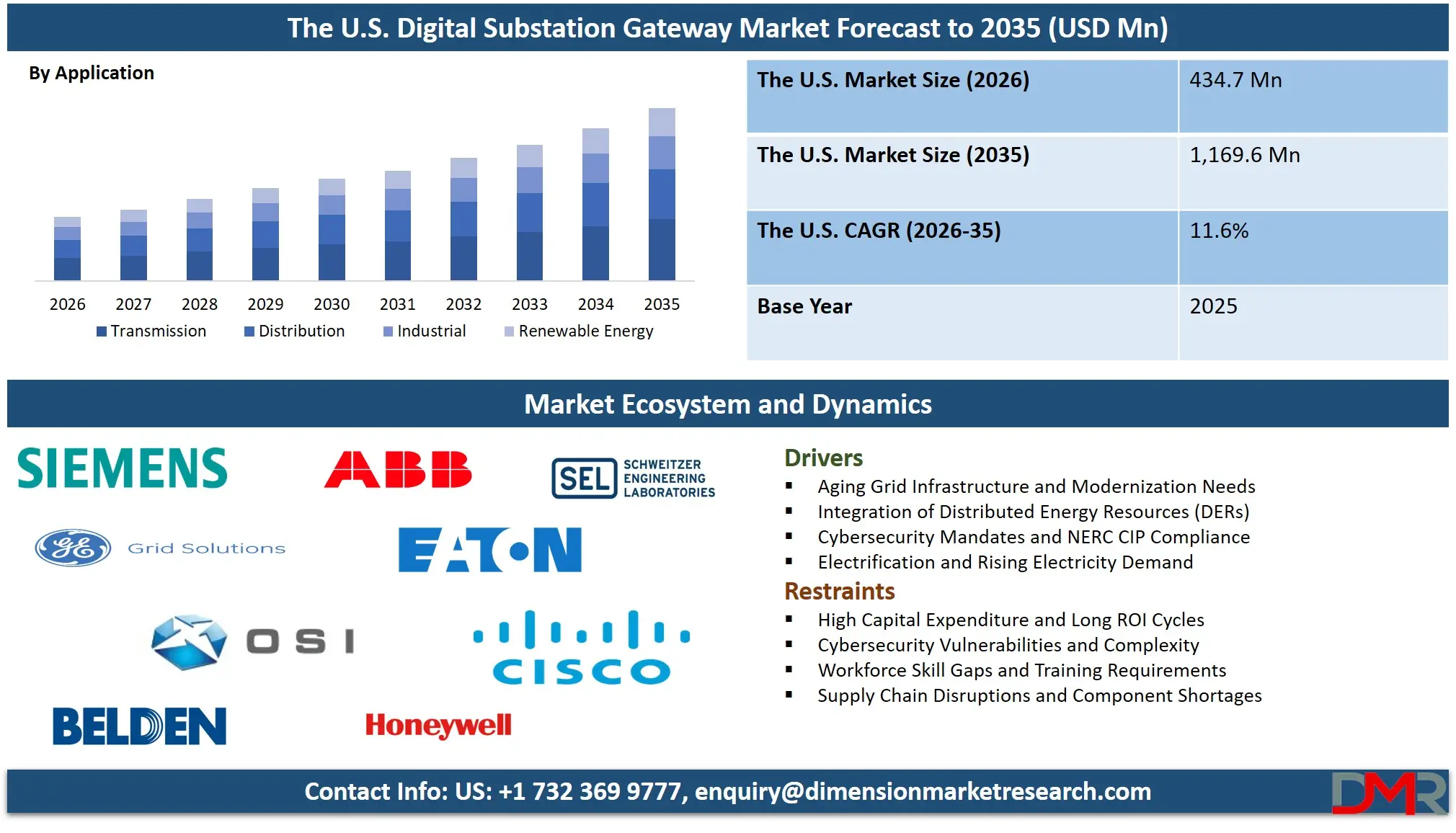
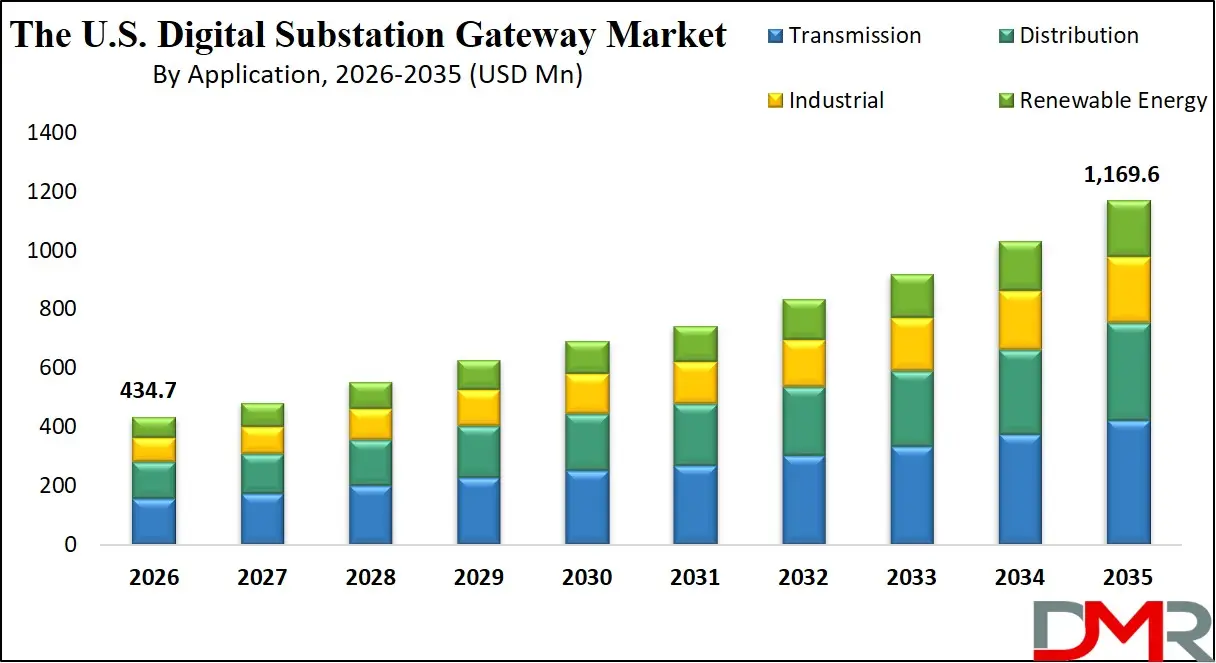
The U.S. Digital Substation Gateway Market is projected to reach USD 434.7 million in 2026 and grow at a compound annual growth rate of 11.6% from there until 2035 to reach a value of USD 1,169.6 million.
ℹ
To learn more about this report –
Download Your Free Sample Report Here
A digital substation gateway refers to a critical hardware and software platform that enables secure and reliable communication, data aggregation, and protocol conversion within modern digital substations. It acts as the central communication hub, collecting data from intelligent electronic devices (IEDs), merging units, and protection relays, and translating various communication protocols (such as IEC 61850, DNP3, and Modbus) for transmission to supervisory control and data acquisition (SCADA) systems and enterprise networks. These gateways are essential for enabling interoperability between legacy field devices and modern digital control systems, supporting functions like real-time monitoring, control, and predictive maintenance. The digital substation gateway plays a crucial role in modernizing the aging U.S. power grid, enhancing grid reliability, improving operational efficiency, and bolstering cybersecurity for critical energy infrastructure.
In the U.S. digital substation gateway landscape, the accelerating modernization of the nation's aging electrical grid is a primary driver. Utilities are under increasing pressure to integrate renewable energy sources like solar and wind, which require more sophisticated monitoring and control capabilities provided by digital substations. This shift necessitates robust gateway solutions capable of managing bi-directional power flows and handling the variability of distributed energy resources (DERs). The U.S. focus on grid hardening against extreme weather events and physical/cyber threats has further amplified the need for advanced substation automation, with gateways acting as the frontline defense for secure data communication. The transition from proprietary communication protocols to open standards like IEC 61850 is fundamentally reshaping the market, pushing for more intelligent and interoperable gateway devices.
ℹ
To learn more about this report –
Download Your Free Sample Report Here
The sector is experiencing significant technological evolution, with vendors embedding advanced cybersecurity features, edge computing capabilities, and AI-driven analytics directly into gateway hardware and software. Strategic collaborations between established automation vendors and cybersecurity firms are accelerating innovation, particularly in developing gateways that can perform real-time threat detection and data validation at the substation edge. Regulatory mandates from agencies like the North American Electric Reliability Corporation (NERC) and the Federal Energy Regulatory Commission (FERC), particularly Critical Infrastructure Protection (CIP) standards, are compelling utilities to adopt next-generation gateway solutions that ensure secure remote access and compliance. These factors, combined with substantial federal funding for grid resilience, are shaping the trajectory of digital substation gateway adoption across the U.S.
The U.S. Digital Substation Gateway Market: Key Takeaways
- Market Growth: The U.S. Digital Substation Gateway Market size is expected to grow by USD 734.9 million, at a CAGR of 11.6%, during the forecasted period of 2027 to 2035.
- By Component: The hardware segment is anticipated to get the majority share of the U.S. Digital Substation Gateway market in 2026.
- By Deployment Mode: The new installations segment is expected to get the largest revenue share in 2026 in the U.S. Digital Substation Gateway market.
- Use Cases: Some of the use cases of Digital Substation Gateway include IT infrastructure performance optimization, application performance management, and more.
The U.S. Digital Substation Gateway Market: Use Cases
- Grid Modernization and Smart Grid Integration: Utilities deploy digital substation gateways to modernize aging infrastructure. These gateways enable seamless integration of legacy equipment with modern smart grid systems by converting legacy protocols to standards like IEC 61850, facilitating advanced monitoring and automated control for improved grid stability and efficiency.
- Renewable Energy Integration: As solar and wind farms connect to the transmission grid, digital substation gateways are critical for managing the variable nature of these power sources. They aggregate data from inverters and other DERs, ensuring smooth communication with utility control centers and enabling grid operators to balance supply and demand effectively.
- Predictive Maintenance and Asset Management: By continuously collecting and processing data from substation assets like transformers and circuit breakers, gateways enable predictive maintenance. They transmit operational and health data to analytics platforms, allowing utilities to identify potential equipment failures before they occur, reducing costly downtime and extending asset life.
- Cybersecurity and Perimeter Defense: Digital substation gateways serve as a first line of cyber defense. They incorporate robust security features such as firewalls, intrusion detection systems, and secure authentication protocols to protect critical substation networks from unauthorized access and cyber threats, ensuring compliance with NERC CIP standards.
- Centralized Substation Control and Automation: Gateways act as the central point for substation automation, executing control commands from SCADA systems to devices like switches and relays. They enable automated responses to grid events, such as fault isolation and service restoration, significantly improving grid reliability and reducing outage times.
- Data Aggregation for Operational Visibility: Substation gateways collect and normalize data from hundreds of IEDs, providing a single, unified data source for utility operations. This consolidated view enhances situational awareness for grid operators, enabling faster and more informed decision-making during normal and emergency conditions.
Impact of the U.S.-Iran Conflict on the U.S. Digital Substation Gateway Market
- Rising demand for advanced grid monitoring and control systems: Geopolitical tensions and increased awareness of physical and cyber threats to critical energy infrastructure have heightened the need for resilient grid technologies. This encourages the adoption of integrated substation gateway platforms, advanced remote monitoring and control systems, and automated substation communication infrastructure to ensure reliable and secure power delivery across the U.S. electrical grid.
- Increased focus on cybersecurity in substation automation systems: Modern digital substations rely heavily on networked control systems and automated protection architectures. Conflict-related cyber threats, including state-sponsored attacks, malware targeting industrial control systems, and ransomware risks, are pushing utilities and grid operators to invest in secure substation gateway architecture, encrypted communication systems, and cyber-resilient substation control platforms to protect the nation's bulk power system.
- Growth in U.S. grid hardening and modernization programs: Heightened regional tensions often lead to increased federal funding and accelerated grid resilience initiatives. This drives demand for advanced digital substation gateway systems, intelligent power management solutions, and automated monitoring technologies across U.S. critical infrastructure, particularly in transmission and distribution networks deemed vital to national security.
- Acceleration of remote monitoring and automated grid management technologies: Security risks in sensitive geopolitical environments encourage the development of unmanned substation operations and remotely controlled grid monitoring systems. These technologies depend on advanced digital substation gateway infrastructure, AI-enabled grid analytics, and integrated control systems that can operate autonomously or with minimal human intervention during heightened threat levels.
- Increased emphasis on grid reliability and real-time substation visibility: Rising threats to energy infrastructure, including potential attacks on substations in strategic locations, encourage utilities to deploy advanced gateway platforms, real-time alarm monitoring systems, and predictive maintenance tools. These investments ensure continuous monitoring of substation operations, enhanced situational awareness for grid operators, and improved overall reliability of the U.S. power system.
The U.S. Digital Substation Gateway Market: Stats & Facts
- U.S. Department of Energy reported that the U.S. has more than 70,000 substations, with a significant portion of their equipment beyond its 40-year expected life.
- The North American Electric Reliability Corporation (NERC) stated in 2025 that over 85% of new substation automation projects now mandate compliance with the latest IEC 61850 edition standards.
- Federal Energy Regulatory Commission (FERC) data indicates that investment in transmission infrastructure is projected to grow by over 15% annually through 2030 to support new generation interconnections.
- U.S. Energy Information Administration (EIA) reported that utility-scale solar and wind capacity is expected to account for over 30% of total U.S. generation capacity by 2030, driving demand for advanced interconnection solutions.
- U.S. Department of Energy (DoE) Grid Deployment Office documented over $10 billion in federal funding allocated for grid resilience and smart grid investments between 2023 and 2025.
- Cybersecurity and Infrastructure Security Agency (CISA) documented a 40% increase in cyber incidents targeting energy sector industrial control systems (ICS) from 2022 to 2024.
- National Institute of Standards and Technology (NIST) published updated cybersecurity guidelines for smart grid systems in 2024, emphasizing secure remote access and data integrity.
- U.S. Energy Information Administration (EIA) recorded that U.S. electricity demand is projected to increase by nearly 15% by 2035, driven by data centers, electrification, and industrial growth.
- The Smart Electric Power Alliance (SEPA) stated in 2025 that over 60% of U.S. utilities have active digital transformation programs for their transmission and distribution networks.
- International Energy Agency (IEA) reported that the United States is the world's largest market for grid-scale digitalization investment.
- World Bank data indicates that the U.S. spends approximately 0.5% of its GDP on grid infrastructure annually, with a growing share dedicated to digital technologies.
- Organisation for Economic Co-operation and Development (OECD) analysis shows that U.S. utility R&D spending on digital grid technologies has doubled since 2020.
The U.S. Digital Substation Gateway Market: Market Dynamic
Driving Factors in The U.S. Digital Substation Gateway Market
Aging Grid Infrastructure and Modernization Needs
A significant portion of the U.S. electrical grid, including substations, was built in the 1960s and 1970s and is operating beyond its intended lifespan. This aging infrastructure is prone to failures and inefficient for managing modern power flows. Digital substation gateways are fundamental to modernization efforts, enabling the transition from electromechanical relays and analog systems to digital, software-defined automation. They provide the necessary interface to connect new digital IEDs with existing legacy equipment, allowing utilities to modernize incrementally and cost-effectively, thereby enhancing grid reliability and reducing the risk of costly blackouts.
Integration of Distributed Energy Resources (DERs)
The rapid growth of distributed energy resources, particularly utility-scale solar and wind, is transforming the power grid. These resources are often located in remote areas and introduce bi-directional power flows and intermittency challenges that legacy substations cannot handle. Digital substation gateways are essential for integrating these assets. They facilitate real-time communication and control between the renewable generation site and the grid operator, ensuring stable and efficient power injection. The need to manage this complexity is a primary driver for adopting advanced, protocol-agnostic gateway solutions.
Restraints in the U.S. Digital Substation Gateway Market
High Capital Expenditure and Long ROI Cycles
Upgrading a substation with digital technology, including advanced gateways, involves significant upfront investment in hardware, software, and specialized engineering services. For investor-owned utilities, the return on investment (ROI) for such projects can be spread over many years, making budget approvals challenging. Furthermore, the cost is not just in the equipment but also in training personnel and overhauling operational procedures. This financial hurdle can slow down the pace of adoption, particularly for smaller municipal utilities and rural electric cooperatives with tighter capital budgets.
Cybersecurity Vulnerabilities and Complexity
While gateways enhance security, they also introduce new potential attack surfaces. As substations become more connected and data-rich, they become more vulnerable to sophisticated cyberattacks. Ensuring the cybersecurity of thousands of distributed gateways, managing software updates, and complying with stringent NERC CIP standards is a complex and ongoing challenge. The fear of introducing vulnerabilities during the modernization process can make some utilities cautious, potentially delaying deployment and acting as a short-term restraint on market growth.
Opportunities in the U.S. Digital Substation Gateway Market
Expansion of Edge Computing and Analytics
The integration of edge computing capabilities directly into digital substation gateways presents a massive opportunity. Instead of just transmitting raw data to central SCADA systems, next-generation gateways can perform real-time data processing, compression, and advanced analytics at the substation level. This reduces latency for critical control actions, lowers bandwidth costs, and enables new applications like real-time power quality monitoring and predictive analytics for asset health. Vendors that offer gateways with powerful, secure edge computing capabilities are poised to capture significant market share.
Growth of the U.S. Offshore Wind Industry
The U.S. is poised for a significant expansion in offshore wind energy, with numerous projects planned along the East Coast. These large-scale installations require new, high-voltage offshore substations to collect and transmit power to the onshore grid. These offshore platforms demand exceptionally reliable, compact, and robust digital substation gateways capable of operating in harsh marine environments. This greenfield opportunity represents a specialized, high-growth niche for gateway vendors, requiring solutions designed for remote monitoring, minimal maintenance, and seamless integration with onshore control centers.
Trends in the U.S. Digital Substation Gateway Market
Convergence of IT and OT
The traditional separation between Information Technology (IT) and Operational Technology (OT) networks is blurring within digital substations. This trend is driving the development of gateways that not only handle industrial protocols (OT) but also incorporate standard IT security features and cloud-connectivity protocols. These converged gateways facilitate secure data exchange between the substation and enterprise business systems, enabling utilities to leverage operational data for broader business intelligence, asset management, and workforce efficiency improvements.
Adoption of Software-Defined Networking (SDN) and Virtualization
There is a growing trend towards virtualizing some substation functions. Instead of dedicated physical hardware for every task, software-defined gateways and virtualized applications are running on standard industrial servers. This "software-defined substation" approach allows for greater flexibility, easier upgrades, and reduced hardware footprints. Gateways are evolving to support this virtualized environment, acting as the secure communication fabric that connects virtualized protection and control applications with physical field devices.
The U.S. Digital Substation Gateway Market: Research Scope and Analysis
By Component Analysis
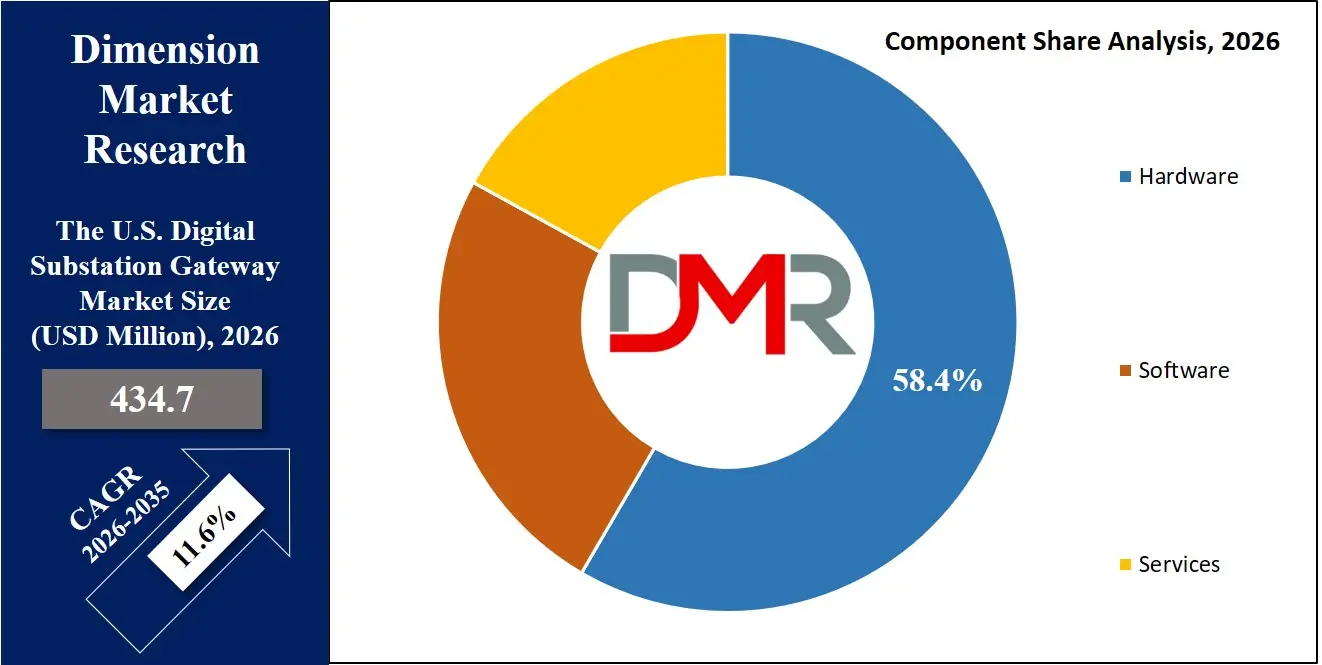
Hardware represents the dominant segment in the U.S. digital substation gateway market and is expected to account for approximately 58.4% of the market share in 2026. The foundational need for rugged, reliable physical devices to operate in harsh substation environments drives this dominance. Protocol gateways must withstand extreme temperatures, electromagnetic interference, and vibration while ensuring 24/7 operational continuity. Communication interfaces, including fiber optic transceivers and network switches, are critical for high-speed, noise-immune data transmission within the substation. Embedded data aggregators are increasingly in demand, as they combine data concentration functions with the physical robustness required for deployment in switchyards and control houses. Utilities undertaking large-scale greenfield projects and brownfield retrofits are making significant capital investments in this physical infrastructure.
ℹ
To learn more about this report –
Download Your Free Sample Report Here
Services are emerging as the fastest-growing segment. As digital substation technology becomes more sophisticated, utilities are relying heavily on external expertise for successful deployment and long-term management. Installation and commissioning services are critical, requiring specialized knowledge of protection schemes and communication networks to ensure gateways are configured correctly without disrupting grid operations. Cybersecurity consulting and monitoring services are seeing explosive growth, driven by the need to meet evolving NERC CIP compliance and defend against advanced threats. Maintenance and support contracts provide utilities with predictable costs for software updates, patch management, and hardware sparing, ensuring the long-term reliability and security of their gateway infrastructure.
By Communication Protocol Analysis
IEC 61850 dominates the market and is projected to hold about 62.4% of the market share in 2026. As the global standard for communication in substations, its object-oriented data model and high-speed Generic Object-Oriented Substation Event (GOOSE) messaging are essential for advanced automation and protection schemes. Its adoption is mandated or strongly preferred by most major U.S. utilities for new digital substation projects. Gateways with native IEC 61850 support are fundamental to enabling interoperability between IEDs from different vendors, a key goal of digitalization. The standard’s ability to describe the substation's entire automation system in a standardized configuration language (SCL) simplifies engineering and integration.
DNP3 is experiencing steady demand, particularly in brownfield retrofit applications. Its long-standing presence in the North American utility market means a vast installed base of Remote Terminal Units (RTUs) and IEDs communicate using DNP3. Digital substation gateways must therefore offer robust DNP3 support to bridge the gap between this legacy equipment and new IEC 61850-based systems. As utilities modernize incrementally, the need for high-performance protocol conversion from DNP3 to IEC 61850 is a critical function, ensuring a gradual and cost-effective transition without stranding legacy assets.
By Deployment Type Analysis
Brownfield retrofits are the leading segment and are expected to account for around 71.4% of the market share in 2026. Given the age of the U.S. substation fleet, the primary market opportunity lies in upgrading existing sites rather than building new ones. Retrofitting involves replacing old electromechanical relays and control systems with digital IEDs and installing gateways to manage communication. These projects are complex, as they must be executed with minimal system downtime and often involve integrating with legacy equipment still in operation. The demand for gateways that simplify this integration, ensure cybersecurity, and provide a clear migration path to full digitalization is extremely high.
New installations, while a smaller share, represent the fastest-growing segment. This growth is fueled by the need for new substations to interconnect the massive wave of renewable energy projects (solar, wind, battery storage) and to support new large-scale industrial loads like data centers and EV manufacturing plants. These greenfield projects can be designed from the ground up as fully digital substations, leveraging the latest gateway technology and communication protocols without the constraints of legacy equipment, thus representing the cutting edge of the market.
By Voltage Level Analysis
High Voltage (HV) transmission substations (typically 69kV-230kV) are the leading segment and are expected to account for around 39.8% of the market share in 2026. These substations form the backbone of the interstate power grid. Their failure can have widespread, catastrophic consequences, making their reliability and security paramount. The push for grid resilience and wide-area situational awareness drives significant investment in advanced monitoring and control at this level, with digital gateways playing a central role in enabling these capabilities.
Extra High Voltage (EHV) substations (above 230kV) are the fastest-growing segment. This growth is directly linked to the interconnection of large-scale renewable energy projects and the need to reinforce the transmission grid to carry power from remote generation zones to population centers. EHV substations are complex and handle immense power flows, requiring the most sophisticated protection and control systems. The gateways deployed here must offer the highest levels of performance, redundancy, and cybersecurity, representing a premium segment of the market.
By Application Analysis
Transmission Substations lead the market and are projected to hold approximately 42.1% of the market share in 2026. This dominance is due to their critical role in bulk power transfer and grid stability. Utilities prioritize investments in transmission-level monitoring and automation to comply with NERC reliability standards and to prevent widespread outages. The deployment of digital gateways in these substations enables functions like synchro phasor data concentration and wide-area monitoring, which are key priorities for transmission system operators.
Renewable Energy Substations represent the fastest-growing application segment. Every new utility-scale solar or wind farm requires a collector substation to connect to the grid. These substations are invariably built as digital substations from the start to manage the unique challenges of renewable generation. The need for real-time data on power output, weather conditions, and equipment status to be communicated reliably to grid operators makes the digital gateway an indispensable component of these facilities, driving explosive growth in this specific application area.
By End User Industry Analysis
Utilities dominate the U.S. digital substation gateway market and are projected to hold approximately 73.8% of the market share in 2026. This includes investor-owned utilities (IOUs), public power utilities, and rural electric cooperatives. They own and operate the vast majority of the nation's transmission and distribution substations. Their investment decisions are driven by the need for grid reliability, regulatory compliance, integration of renewables, and long-term asset management. As regulated entities, their capital expenditure plans are large and long-term, making them the primary customers for gateway vendors.
Independent Power Producers represent the fastest-growing segment. IPPs are the primary developers of the new solar, wind, and battery storage projects connecting to the grid. For each new project, they must build a substation and ensure it meets the interconnection requirements of the regional grid operator. This requirement creates a direct and rapidly growing demand for digital substation gateways from IPPs, who seek reliable, standards-compliant, and cost-effective solutions to ensure their generation assets can operate and communicate effectively with the grid.
The U.S. Digital Substation Gateway Market Report is segmented on the basis of the following:
By Component
- Hardware
- Protocol Gateways
- Communication Interfaces
- Embedded Data Aggregators
- Software
- Protocol Conversion Software
- Data Aggregation Tools
- Cybersecurity Software
- Services
- Installation and Commissioning
- Cybersecurity Consulting and Monitoring
- Maintenance and Support Contracts
By Communication Protocol
- IEC 61850
- DNP3
- Modbus
- PROFIBUS/PROFINET
- Others
By Deployment Type
- New Installations
- Retrofit Brownfield Upgrades
By Voltage Level
- Low Voltage (LV)
- Medium Voltage (MV)
- High Voltage (HV)
- Extra High Voltage (EHV)
By Application
- Transmission Substations
- Distribution Substations
- Industrial Substations
- Renewable Energy Substations
By End-User
- Utilities
- Independent Power Producers (IPPs)
- Industrial Enterprises
- Commercial Establishments
Impact of Artificial Intelligence in The U.S. Digital Substation Gateway Market
- Predictive Analytics for Asset Health: AI algorithms embedded in or connected to gateways analyze data from transformers, breakers, and other assets to predict failures, enabling condition-based maintenance.
- Automated Anomaly and Fault Detection: AI models can analyze power system data in real-time to instantly detect faults or abnormal grid conditions, triggering automated protection and control schemes.
- Intelligent Cybersecurity Threat Hunting: Gateways with AI can analyze network traffic patterns within the substation to identify subtle, anomalous behaviors that may indicate a sophisticated cyber intrusion.
- Self-Healing Grid Capabilities: AI-driven gateways can execute complex, localized control schemes to automatically reconfigure the grid after a fault, isolating the problem and restoring power to unaffected sections without central SCADA intervention.
- Real-Time Data Processing and Compression: AI algorithms optimize the vast amounts of data flowing from IEDs, compressing it and prioritizing critical information for transmission, reducing bandwidth loads on utility networks.
- Enhanced Situational Awareness for Operators: By correlating data from multiple sources, AI provides grid operators with a synthesized, high-level view of substation and grid health, highlighting potential issues before they escalate.
- Dynamic Load Forecasting and Management: AI analyzes historical and real-time load data to forecast demand at the substation level, allowing for proactive voltage control and load balancing.
- Optimized Renewable Energy Integration: AI helps manage the variability of renewables by forecasting power output and coordinating with energy storage systems through the substation gateway.
- Operational Efficiency Improvements: AI automates routine data analysis and reporting tasks, freeing up utility engineers and IT teams to focus on strategic grid planning and improvement projects.
The U.S. Digital Substation Gateway Market: Competitive Landscape
The U.S. digital substation gateway market is characterized by intense competition, driven by the convergence of traditional power systems, industrial automation, and information technology. Market participants are heavily focused on research and development to embed advanced cybersecurity, AI-powered analytics, and edge computing capabilities into their gateway solutions.
ℹ
To learn more about this report –
Download Your Free Sample Report Here
Companies are also expanding their portfolios to cover the full spectrum of communication protocols, from legacy serial standards to modern IEC 61850 and beyond. Strategic partnerships with utility engineering firms, system integrators, and cybersecurity specialists are common for delivering comprehensive, turnkey solutions. High entry barriers exist due to the stringent reliability requirements, the need for deep domain expertise in power systems, and the long-standing relationships and trust that established players have built with utility customers.
Some of the prominent players in The U.S. Digital Substation Gateway Market are:
• General Electric (GE) Vernova
• Schweitzer Engineering Laboratories (SEL)
• Cisco Systems, Inc.
• Honeywell International Inc.
• Eaton Corporation plc
• Belden, Inc.
• NovaTech LLC
• Open Systems International (OSI)
• Schneider Electric SE
• ABB Ltd.
• Siemens AG
• Hitachi Energy Ltd.
• Toshiba Energy Systems & Solutions Corporation
• Moxa Inc.
• Rockwell Automation, Inc.
• Emerson Electric Co.
• Trilliant Holdings Inc.
• Itron, Inc.
• Advantech Co., Ltd.
• Other Key Players
Recent Developments in The U.S. Digital Substation Gateway Market
- February 2026: Siemens AG introduced the SIPROTEC V virtualized protection and control platform for digital substations. The solution enables utilities to consolidate multiple protection and control functions into a server-based environment, reducing hardware requirements and enabling scalable, software-defined grid operations. The platform is designed to support modern digital substation architectures and improve operational flexibility and cybersecurity for power networks.
- February 2026: GE Vernova introduced GridBeats APS (Automation and Protection System), a new grid-automation solution designed to simplify substation protection and control architectures. The system consolidates multiple protection and automation functions into a unified platform, helping utilities modernize digital substations and improve grid reliability and operational efficiency.
- October 2025: Schweitzer Engineering Laboratories announced plans to expand its manufacturing and engineering facilities in Idaho and North Carolina with an investment of approximately USD 90 million, adding new production capacity to support growing global demand for power-system protection, automation, and grid modernization technologies.
- September 2025: Hitachi Energy Ltd. announced a USD 1 billion investment to expand manufacturing capacity for power-grid infrastructure in the United States, aimed at supporting grid modernization and increasing demand for transmission equipment. The investment strengthens production of critical grid technologies used in modern substations and transmission systems as utilities upgrade infrastructure to support electrification and renewable energy integration.
Report Details
| Report Characteristics |
| Market Size (2026) |
USD 18.0 Bn |
| Forecast Value (2035) |
USD 78.3 Bn |
| CAGR (2026–2035) |
17.7% |
| Historical Data |
2021 – 2025 |
| Forecast Data |
2027 – 2035 |
| Base Year |
2025 |
| Estimate Year |
2026 |
| Report Coverage |
Market Revenue Estimation, Market Dynamics, Competitive Landscape, Growth Factors and etc. |
| Segments Covered |
By Component (Hardware, Software and Services), By Communication Protocol (IEC 61850, DNP3, Modbus, PROFIBUS/PROFINET, Others), By Deployment Type (New Installations and Retrofit Brownfield Upgrades), By Voltage Level (Low Voltage (LV), Medium Voltage (MV), High Voltage (HV) and Extra High Voltage (EHV)), By Application (Transmission Substations, Distribution Substations, Industrial Substations and Renewable Energy Substations), By End-User (Utilities, Independent Power Producers (IPPs), Industrial Enterprises and Commercial Establishments) |
| Country Coverage |
The US |
| Prominent Players |
General Electric (GE) Vernova, Schweitzer Engineering Laboratories (SEL), Cisco Systems, Inc., Honeywell International Inc., Eaton Corporation plc, Belden, Inc., NovaTech LLC, Open Systems International (OSI), Schneider Electric SE, ABB Ltd., Siemens AG, Hitachi Energy Ltd., Toshiba Energy Systems & Solutions Corporation, Moxa Inc., Rockwell Automation, Inc., Emerson Electric Co., Trilliant Holdings Inc., Itron, Inc., Advantech Co., Ltd., Other Key Players |
| Purchase Options |
We have three licenses to opt for: Single User License (Limited to 1 user), Multi-User License (Up to 5 Users) and Corporate Use License (Unlimited User) along with free report customization equivalent to 0 analyst working days, 3 analysts working days and 5 analysts working days respectively. |
Frequently Asked Questions
How big is The U.S. Digital Substation Gateway Market?
▾ The U.S. Digital Substation Gateway Market size is estimated to have a value of USD 434.7 million in 2026 and is expected to reach USD 1,169.6 million by the end of 2035.
What is the growth rate in The U.S. Digital Substation Gateway Market in 2026?
▾ The market is growing at a CAGR of 11.6% over the forecasted period of 2026.
Who are the key players in The U.S. Digital Substation Gateway Market?
▾ Some of the major key players in The U.S. Digital Substation Gateway Market are General Electric (GE) Vernova, Schweitzer Engineering Laboratories (SEL), Cisco Systems, Inc., Honeywell International Inc., Eaton Corporation plc, and many others.