Market Snapshot
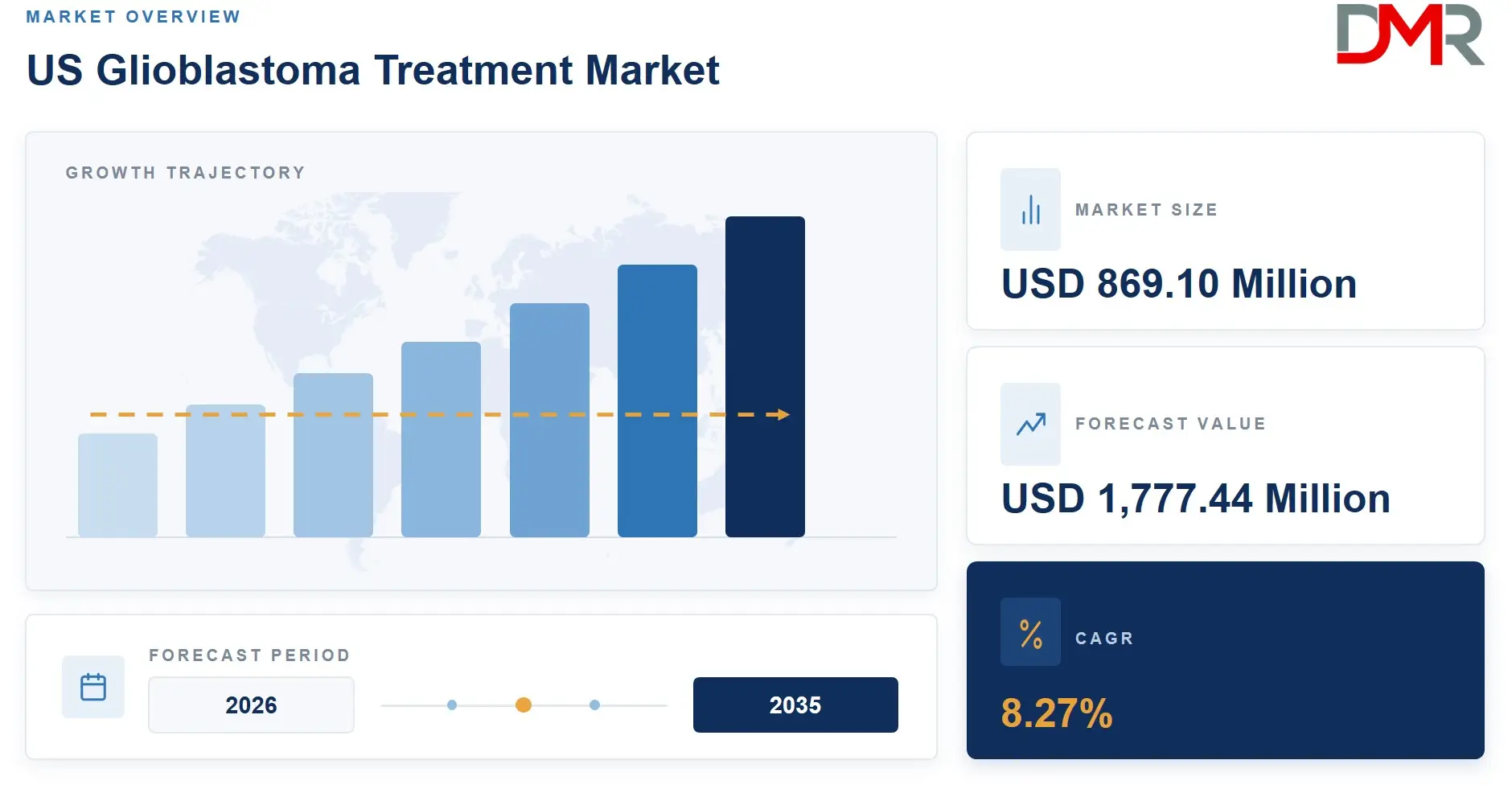
- The U.S. Glioblastoma Multiforme Treatment Market was valued at USD 802.74 Million in and is projected to reach USD 1,777.44 Million by 2035, growing at a CAGR of 8.27% from 2026 to 2035.
- By Treatment, Surgery led with a 33.2% share in 2025; Radiation Therapy is the fastest-growing treatment sub-segment.
- By Drug Class, Temozolomide (TMZ) held the largest share in 2025; Bevacizumab is the fastest-growing drug sub-segment through 2035.
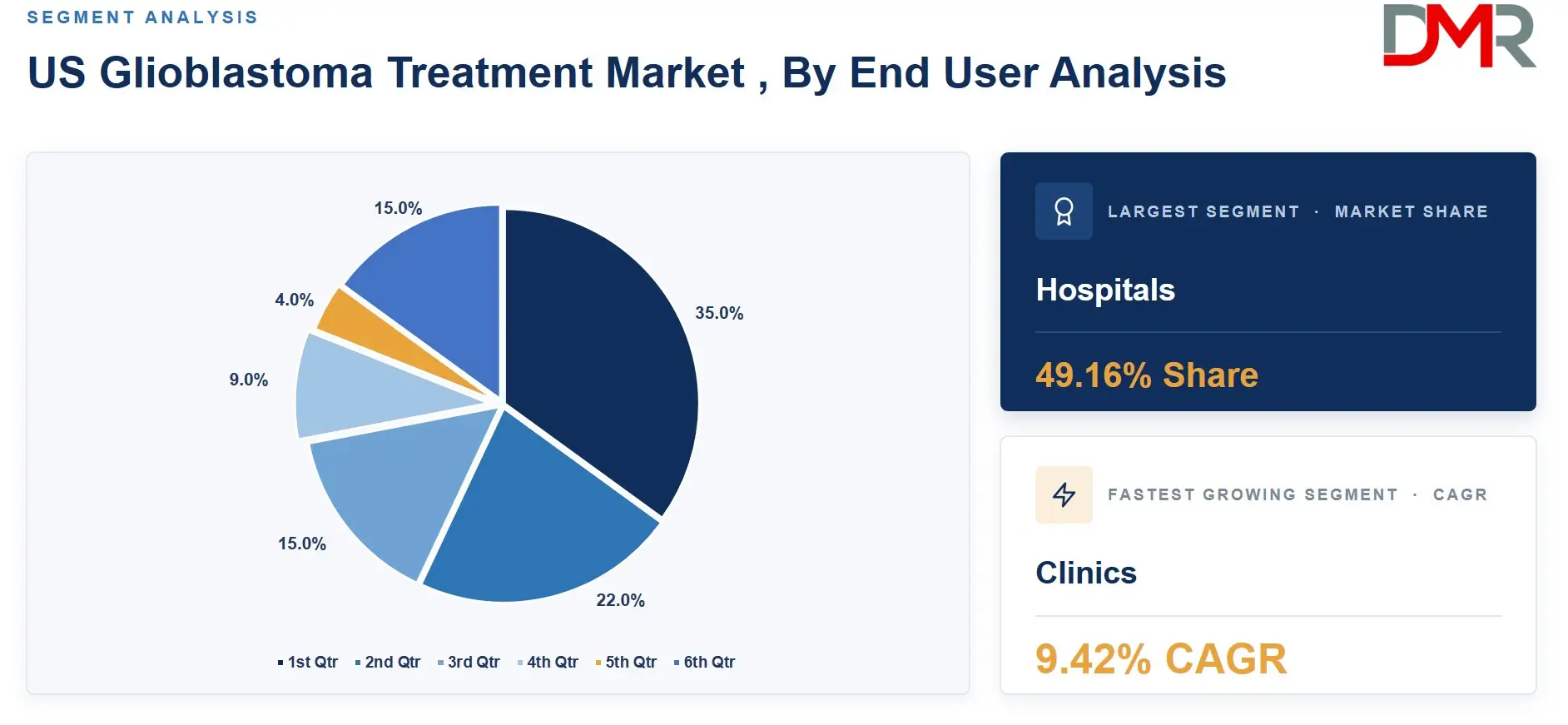
- By End User, Hospitals dominated with a 49.16% share in 2025; Clinics represent the fastest-growing end-user category.
- North America leads all regions given the report's U.S.-market scope.
Market Overview
The U.S. Glioblastoma Multiforme (GBM) Treatment Market covers the full spectrum of therapeutic and diagnostic interventions for GBM, the most aggressive primary brain malignancy classified as a WHO Grade IV astrocytoma. Covered modalities include surgical resection, radiation therapy, chemotherapy, Tumor Treating Field (TTF) therapy, targeted agents, and immunotherapy. The market excludes low-grade gliomas, brain metastases from systemic cancers, and pediatric diffuse intrinsic pontine glioma unless explicitly indicated.
GBM accounts for 50.9% of all malignant primary brain tumors diagnosed in the United States, as reported by the National Cancer Institute. That concentration of disease burden within a single histological subtype creates a structurally deep, high-value commercial opportunity that sustains premium pricing across approved therapies and investigational pipelines alike. The severity of unmet need positions GBM treatment investment as an area where clinical differentiation commands outsized economic returns.
Corporate consolidation is reshaping the pipeline landscape. Merck & Co. completed an approximately $1.3 billion acquisition of Modifi Biosciences and its lead GBM candidate KL-50 in December 2025, signaling that large pharmaceutical players view late-stage GBM assets as strategically essential rather than speculative. Acquisitions at that scale compress the window for independent biotech players to reach commercialization before being absorbed or outbid by established oncology franchises.
Market Size and Forecast
The US Glioblastoma Multiforme Treatment Market size is estimated at USD 869.10 Million in 2026 from USD 802.74 Million in 2025, and is projected to reach USD 1,777.44 Million by 2035, exhibiting a CAGR of 8.27% during the forecast period.
GBM represents 14.2% of all primary brain and CNS tumors diagnosed in the United States, as published in PMC. That baseline prevalence acts as a structural demand floor, ensuring a consistent patient population flowing into treatment pathways each year regardless of cyclical healthcare spending. Approximately 18,330 annual U.S. deaths are attributed to brain and nervous system tumors, according to data from the National Cancer Institute, anchoring the addressable patient pool that drives commercial forecasting assumptions through 2035.
ℹ
To learn more about this report –
Download Your Free Sample Report Here
The 2025 SEER-based analysis published in Springer confirmed that TTFields increased median overall survival by 4.9 months compared with chemotherapy alone. That independently verified survival advantage underpins the forecast assumption that TTFields will capture an expanding share of first-line treatment combinations, sustaining revenue growth across device and drug categories simultaneously. Lantern Pharma's August 2025 FDA clearance for a clinical trial of STAR-001 combined with spironolactone, supported by the company's AI-driven RADR drug development platform, reflects the broadening pipeline feeding future market entrants.
Treatment Analysis
Surgery led the Treatment segment with a 33.2% share in 2026.
Surgical resection holds the largest single treatment share because maximal safe resection remains the universally accepted first step across all GBM management protocols. No pharmacological agent or device-based therapy begins until debulking is complete. That procedural dependency makes hospitals the entry point for every subsequent treatment dollar spent, reinforcing surgery's structural dominance even as downstream modalities attract greater clinical and commercial investment.
Radiation Therapy is the fastest-growing sub-segment by CAGR through 2035, reflecting increasing adoption of stereotactic radiosurgery and hypofractionation protocols that reduce treatment duration and expand outpatient delivery. TTFields compliance data shows that patients maintaining above 90% monthly device usage achieved a median survival of 24.9 months and a 5-year survival rate of 29.3%, as reported in Springer. Compliance gains even begin at a threshold of 50% device usage, lowering the behavioral bar for clinical benefit and expanding the eligible population of treatment-adherent patients. Targeted Therapy, Chemotherapy, and Immunotherapy form a consolidating mid-tier where combination regimens rather than monotherapy will define competitive differentiation by 2030.
Drug Class Analysis
Temozolomide (TMZ) accounted for the largest share of Drug Class demand in 2026, the highest of any category.
TMZ holds its leading position because Stupp Protocol, concurrent TMZ with radiation followed by adjuvant TMZ cycles, remains the standard of care for newly diagnosed GBM patients with adequate performance status. No competing drug class has displaced this combination as the foundational regimen in over a decade. Generic TMZ availability keeps treatment economics accessible for payers, sustaining high prescription volume even as branded agents compete at the margin.
Bevacizumab is the fastest-growing drug sub-segment through 2035, driven by expanding use in recurrent GBM settings where VEGF inhibition extends progression-free survival in patients who have exhausted standard options. Cisplatin and Carboplatin occupy niche roles in heavily pre-treated populations, while the Others category encompasses emerging agents entering early-access programs. The shift toward combination biologics signals that future drug-class competition will center on rational sequencing rather than head-to-head monotherapy displacement.
End User Analysis
With a 49.16% share in 2026, Hospitals outpaced all other End User categories.
Hospitals dominate end-user demand because GBM's diagnostic complexity, surgical requirements, and intensive monitoring protocols demand the concentrated infrastructure that only academic medical centers and large hospital systems provide. Neurosurgical suites, radiation oncology units, and inpatient neuro-ICU capacity are not replicable in outpatient settings, and those constraints will protect the hospital share floor through the forecast period.
ℹ
To learn more about this report –
Download Your Free Sample Report Here
Clinics are the fastest-growing end-user sub-segment, reflecting the industry-wide push to shift post-surgical and maintenance therapy into lower-cost ambulatory settings. Ambulatory Surgical Centers capture a smaller but growing slice of less complex resections and day-case procedures, reducing per-procedure cost. The rebalancing between sites of care creates pressure on hospital revenue-per-patient while opening a volume-growth opportunity for clinic and ASC operators who can credential for GBM follow-up protocols.
Key Market Segments
By Treatment
- Surgery
- Radiation Therapy
- Tumor Treating Field (TTF) Therapy
- Targeted Therapy
- Chemotherapy
- Immunotherapy
By Drug Class
- Temozolomide (TMZ)
- Bevacizumab
- Cisplatin
- Carboplatin
- Others
By End User
- Hospitals
- Clinics
- Ambulatory Surgical Centers
Market Dynamics
Survival Evidence Drives Clinical Adoption of Combination Therapy
Phase III data from the EF-14 trial showed patients receiving TTFields plus temozolomide achieved a median overall survival of 20.9 months versus 16.0 months for temozolomide alone, as reported by NCBI Bookshelf. A 4.9-month survival extension is clinically meaningful in a disease where weeks matter. Payers who once viewed TTFields as adjunctive now face pressure to include it in first-line reimbursement pathways across commercial and Medicare plans.
At 24 months, the EF-14 trial recorded a survival rate of 43.1% in the TTFields-plus-temozolomide arm compared with 30.7% for temozolomide alone, per NCBI Bookshelf. TTFields also reduced the risk of death by 37% (HR 0.63; p less than 0.001) versus standard therapy. Those two figures together make the strongest commercial argument the TTFields category has ever had: both absolute and relative survival benefits are large enough to sustain premium pricing and resist substitution by standard chemotherapy regimens. FDA clearance for GT Medical Technologies' FG001 U.S. registration trial in February 2026 signals that the field-based therapy category is expanding beyond Novocure's Optune into next-generation device competition.
Poor Real-World Outcomes Limit Commercial Ceiling
The five-year relative survival rate for malignant brain and CNS tumors stands at only 35.7%, as published in PMC. That figure reflects a patient population whose treatment compliance and follow-up duration are structurally limited by disease severity. Shorter survival windows reduce lifetime revenue per patient for device manufacturers and pharmacies, capping market size growth even as annual incidence rates remain stable.
Registry-based analyses from CBTRUS place real-world GBM median survival at approximately 8 months, far below the 20.9-month figure achieved in controlled trial settings, as referenced by brain cancer advocacy experts. That gap between trial performance and real-world outcomes undermines payer confidence in cost-effectiveness models. Multifocal GBM patients face a compounding barrier: restrictive clinical trial eligibility criteria frequently exclude them from investigational access, as documented in PMC, shrinking the patient pool that can access next-generation treatment options.
Combination Immunotherapy Trials Open New Revenue Pathways
EF-14 subgroup analyses demonstrated survival improvements across both MGMT methylated and unmethylated patient populations, as reported by NCBI Bookshelf. Methylation status is the single most important predictive biomarker in GBM treatment decisions. Demonstrating benefit irrespective of methylation removes the segmentation barrier that had limited TTFields commercial uptake to MGMT-methylated patients, effectively doubling the addressable patient population for combination device-plus-chemotherapy protocols.
The EF-41 Phase III trial is evaluating TTFields combined with pembrolizumab and temozolomide in newly diagnosed GBM, as listed on ClinicalTrials at UCSF. A positive outcome would create the first validated three-modality protocol in newly diagnosed GBM, enabling device, drug, and checkpoint inhibitor revenues to coexist in a single standard-of-care pathway. Alpha Tau Medical received FDA clearance in June 2026 to complete enrollment in its REGAIN recurrent GBM trial and add two U.S. sites after interim findings showed 100% local disease control, validating alpha radiation as a commercially viable direction in the recurrent setting.
Market Trends
Molecular Stratification Redefines Trial Design and Commercial Targeting
Long-term Optune users frequently sustain above 90% monthly device compliance, as documented in PMC, demonstrating that behavioral adherence at commercially viable levels is achievable in real-world practice. Active U.S. GBM trials increasingly stratify patients by molecular markers, treatment history, and recurrence status, according to the National Cancer Institute. Siren Biotechnology's FDA Fast Track Designation for SRN-101, an immunogene therapy for high-grade glioma, received in February 2026, illustrates how molecular targeting is reshaping both regulatory pathways and the competitive landscape for earlier-stage pipeline entrants. Companies that build commercial infrastructure around molecular subtype identification will reach the right patient faster and generate stronger trial enrollment data.
Market Competition Overview
The U.S. GBM treatment market is moderately consolidated at the approved-therapy layer and highly fragmented at the investigational layer. A small number of established pharmaceutical and device companies control standard-of-care revenue streams, while more than a dozen early-stage biotechs compete for position in recurrent and newly diagnosed trial populations. No single competitor holds commanding share across all three treatment pillars of surgery, radiation, and pharmacotherapy simultaneously, creating a structural opening for platform-level players who can span modalities.
Early-stage CAR-T and cell therapy entrants are generating competitive pressure from outside traditional GBM treatment frameworks. A 2025 CAR-TEAM cell therapy case report documented tumor volume reduction of 18.5% within 2 days of treatment and 60.7% by day 69 in a recurrent GBM patient, as reported by Pharmacy Times. A 2025 meta-analysis published in Neuro-Oncology evaluated objective response rate, progression-free survival, and overall survival from CAR-T studies through May 2025, quantifying outcomes that, if replicated at scale, would challenge the current chemotherapy and device revenue base. The speed of that early clinical data is compressing the timeline between proof-of-concept and competitive threat.
Company Profiles
Karyopharm Therapeutics, Inc. is advancing selinexor, a selective inhibitor of nuclear export, in recurrent GBM populations where standard regimens have failed. Karyopharm's strategy centers on targeting a genetically defined subset of GBM patients who overexpress XPO1, a pathway that mainstream chemotherapy cannot address. That molecular precision positions the company to build a high-margin specialty franchise in a population that larger oncology players have historically deprioritized as too small for their commercial models.
Pfizer Inc. brings large-scale commercial infrastructure to GBM through its existing oncology distribution network and manufacturing capacity. The ImmunityBio QUILT 3.078 January 2026 update reported 23 patients enrolled with 19 remaining alive at data cutoff, and 139 doses of combination immunotherapy administered across 14 evaluable patients, cited by ImmunityBio. The ASCO May 2026 update from the same program showed 50% of evaluable patients remained on treatment. While these data originate from ImmunityBio, Pfizer's platform deals and co-development agreements across the GBM space mean that durable immunotherapy data at this scale will attract partnership interest from exactly the kind of large-volume commercial partner Pfizer represents in adjacent oncology categories.
Key Players
Recent Developments
- June 2026, Telix Pharmaceuticals announced U.S. FDA acceptance of the New Drug Application for TLX101-Px (Pixclara), a PET imaging agent for recurrent or progressive glioma assessment, advancing diagnostic capabilities for glioma management across U.S. clinical sites.
- March 2026, CRISM Therapeutics received FDA Orphan Drug Designation for its irinotecan-based ChemoSeed platform for malignant glioma, expanding regulatory scope beyond glioblastoma to cover all high-grade gliomas.
- May 2025, The National Brain Tumor Society reported a Phase II glioblastoma clinical trial opened at 8 U.S. sites with plans to expand to 20 centers nationwide, broadening patient access to investigational therapies outside major academic centers.
- December 2025, A Yale-affiliated GBM drug program acquired by Merck & Co. for approximately $1.3 billion through the Modifi Biosciences deal continued progressing toward potential patient availability for lead candidate KL-50.
Report Details
| Report Characteristics |
| Market Value (2025) |
USD 802.74 Million |
| Market Value (2026) |
USD 869.10 Million |
| Forecast Revenue (2035) |
USD 1,777.44 Million |
| CAGR (2026–2035) |
8.27% |
| Historical Data |
2020 – 2024 |
| Forecast Data |
2026 – 2035 |
| Base Year |
2025 |
| Estimate Year |
2026 |
| Report Coverage |
Revenue Forecast, Market Dynamics, Competitive Landscape, Recent Developments |
| Segments Covered |
By Treatment (Surgery, Radiation Therapy, Tumor Treating Field Therapy, Targeted Therapy, Chemotherapy, Immunotherapy); By Drug Class (Temozolomide, Bevacizumab, Cisplatin, Carboplatin, Others); By End User (Hospitals, Clinics, Ambulatory Surgical Centers) |
| Regional Coverage |
North America – US, Canada; Europe – Germany, France, UK, Spain, Italy, Rest of Europe; Asia-Pacific – China, Japan, South Korea, India, Australia, Rest of APAC; Latin America – Brazil, Mexico, Rest of Latin America; Middle East & Africa – GCC, South Africa, Rest of MEA |
| Prominent Players |
Karyopharm Therapeutics, Inc., Pfizer Inc., Amneal Pharmaceuticals, Sumitomo Dainippon Pharma Oncology, Inc., Amgen, Inc., Arbor Pharmaceuticals, LLC, and Other Key Players |
| Customization Scope |
Customization for segments and region or country level will be provided. Additional customization can be done based on requirements. |
| Purchase Options |
Three license options: Single User License, Multi-User License (Up to 5 Users), and Corporate Use License (Unlimited Users and Printable PDF) |
Frequently Asked Questions
What is the biggest investment opportunity in US Glioblastoma Treatment Market ?
▾ Combination immunotherapy protocols represent the highest-value investment opportunity. Phase III data confirming TTFields-plus-chemotherapy survival benefits across MGMT methylation status groups has opened a patient population estimated at roughly double the previously addressable base. Companies that secure early leadership in validated three-modality protocols will capture both device and drug revenue streams simultaneously.
Who are the top companies in US Glioblastoma Treatment Market ?
▾ Key players include Karyopharm Therapeutics, Inc., Pfizer Inc., Amneal Pharmaceuticals, Sumitomo Dainippon Pharma Oncology, Inc., Amgen, Inc., and Arbor Pharmaceuticals, LLC. Karyopharm's XPO1-targeting strategy in recurrent GBM and Pfizer's commercial infrastructure across oncology position both as structurally differentiated competitors in a market where most pipeline entrants remain pre-revenue.
Which segment is growing fastest in US Glioblastoma Treatment Market and why?
▾ Radiation Therapy is the fastest-growing treatment sub-segment and Bevacizumab is the fastest-growing drug class through 2035. Radiation's growth reflects hypofractionation protocols shortening treatment courses and enabling outpatient delivery. Bevacizumab's acceleration reflects its expanding role in recurrent GBM settings where anti-VEGF therapy extends progression-free survival after standard regimens have been exhausted.
Which region is growing fastest in US Glioblastoma Treatment Market and why?
▾ The report covers the U.S. market exclusively. Within the United States, the South and Mountain West sub-geographies are underpenetrated relative to GBM incidence, and represent the fastest-growing opportunity for commercial expansion. Expanding access through telehealth-supported follow-up and satellite clinic credentialing in those regions would accelerate patient capture without proportional infrastructure investment.
What is the biggest challenge holding US Glioblastoma Treatment Market back?
▾ The gap between clinical trial survival outcomes and real-world performance is the market's primary structural constraint. Registry-based data from CBTRUS places real-world GBM median survival at approximately 8 months against the 20.9-month figure achieved under controlled trial conditions. That disparity weakens cost-effectiveness arguments for premium-priced therapies and limits payer willingness to approve broad reimbursement for device-based treatments at current price levels.