Market Overview
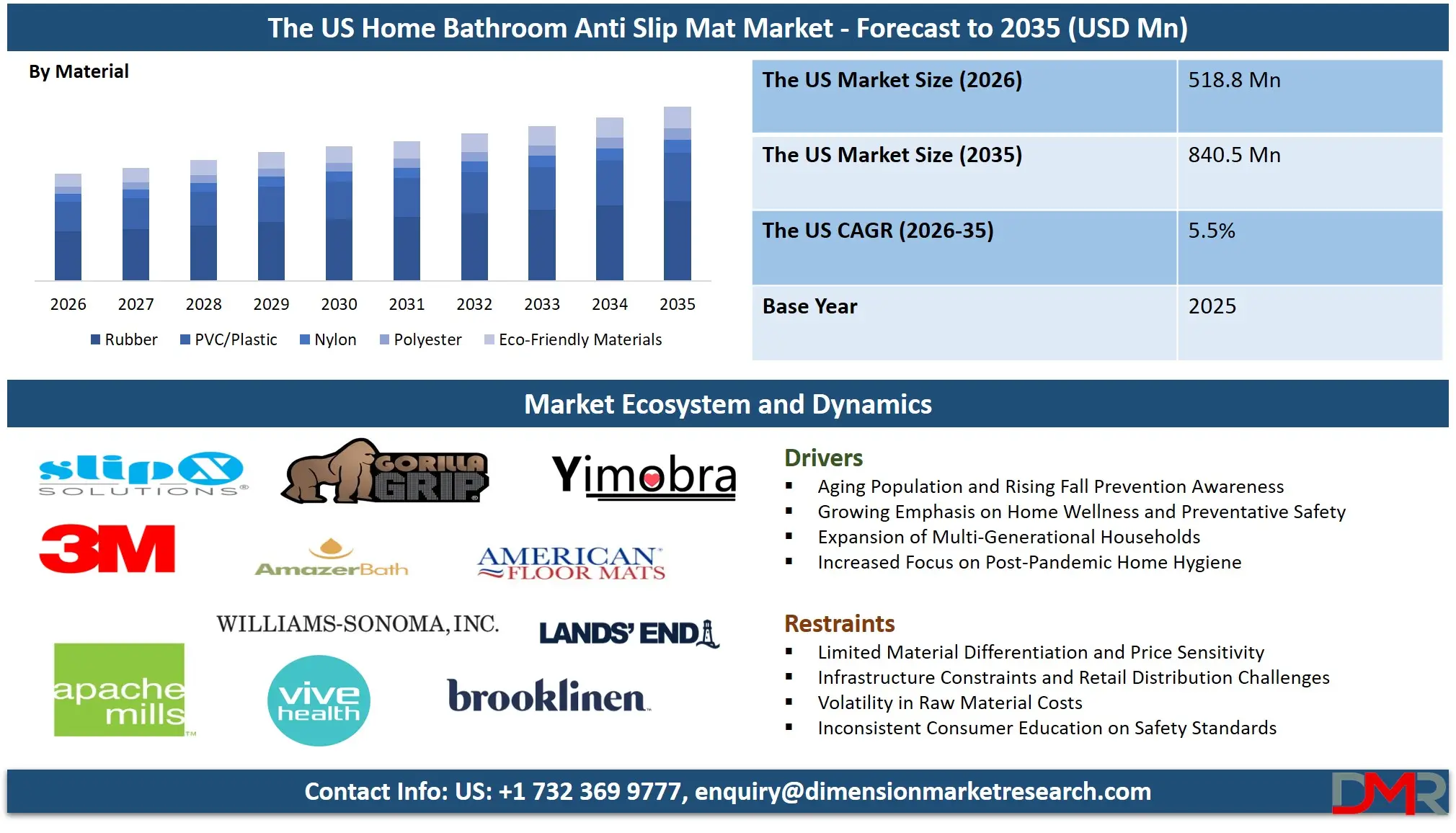
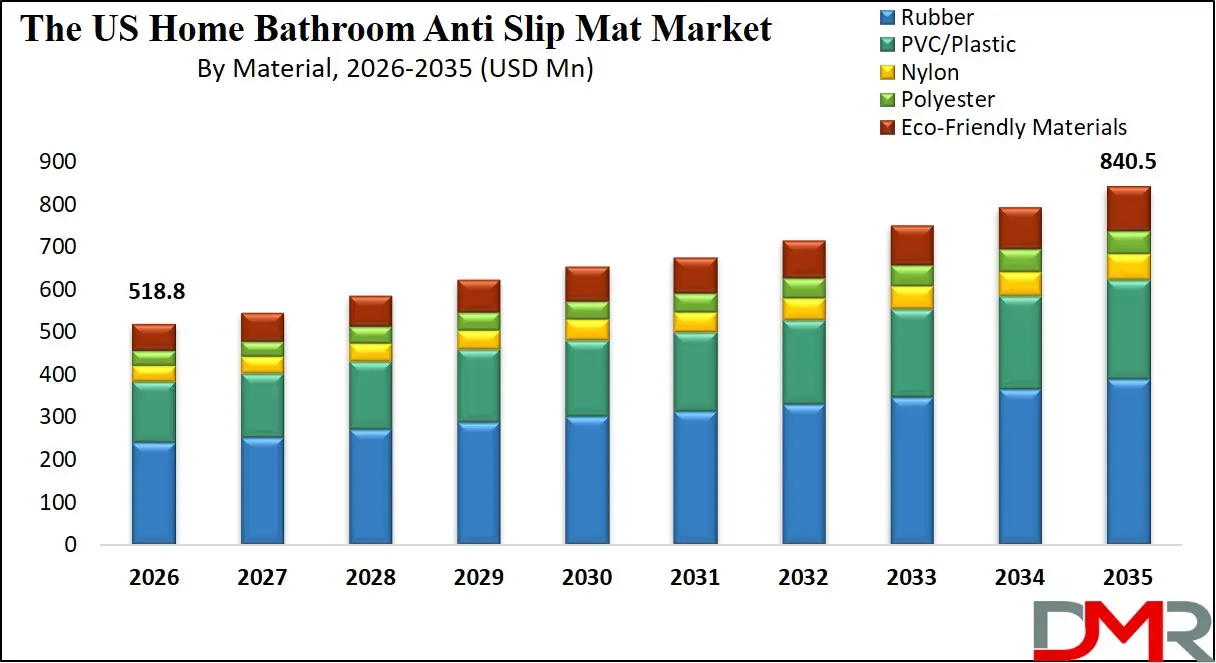
The US Home Bathroom Anti Slip Mat Market is projected to reach USD 518.8 million in 2026 and is expected to grow at a CAGR of 5.5% from 2026 to 2035, reaching approximately USD 840.5 million by 2035. The market growth is driven by the increasing focus on home safety, rising awareness of fall-related injuries among aging populations, and growing consumer demand for functional yet aesthetically pleasing bathroom accessories across the United States. Additionally, advancements in material science, antimicrobial surface treatments, rapid-drying fiber technologies, and non-toxic manufacturing processes are accelerating the development of high-performance anti slip mats that balance safety, durability, and design appeal. These innovations are helping manufacturers enhance slip resistance, improve hygiene standards, and meet the evolving needs of modern households.
ℹ
To learn more about this report –
Download Your Free Sample Report Here
The American home safety landscape presents unique characteristics that amplify anti slip mat adoption. A growing senior population prioritizing aging-in-place solutions; a design-conscious consumer base seeking bathroom accessories that blend safety features with modern aesthetics; and a home improvement sector undergoing significant product innovation, with established home goods brands and direct-to-consumer specialists competing fiercely on material quality and design differentiation.
Regulatory momentum has reached an inflection point. Updated consumer product safety guidelines, reinforced by the Consumer Product Safety Commission in 2024, have established stricter slip resistance testing standards for bathroom flooring accessories, requiring enhanced coefficient of friction benchmarks and improved durability testing protocols for anti slip products. This regulatory framework establishes a non-negotiable safety floor, compelling every bathroom mat manufacturer operating in the US to integrate advanced grip technologies, microbial protection, and compliance documentation as standard practice. Simultaneously, increased federal focus on fall prevention initiatives through the Administration for Community Living channels funding into home modification awareness programs, accelerating consumer education around bathroom safety and expanding the addressable market for premium anti slip solutions.
ℹ
To learn more about this report –
Download Your Free Sample Report Here
The competitive landscape reflects this dynamism. Traditional home goods manufacturers, including Mohawk Home, InterDesign, and Style Selections, compete alongside specialty safety brands like Gorilla Grip, Home Safety Solutions, and LivingXL, while direct-to-consumer innovators like MatsDirect and WellAway push the boundaries of custom sizing and subscription-based replacement programs. Mass retailers themselves are increasingly investing in private label bath safety lines, with Target's Room Essentials, Walmart's Mainstays, and AmazonBasics representing strategic expansion into value-engineered anti slip offerings.
The US Home Bathroom Anti Slip Mat Market: Key Takeaways
- Sustained Growth Trajectory: The US market is projected to surge from USD 518.8 million in 2026 to USD 840.5 million by 2035, driven by a potent mix of aging-in-place home modifications, increased consumer safety awareness, and rapid material innovation across traditional and eco-friendly product categories.
- Safety-Led Volume Acceleration: Rising awareness of bathroom fall risks, most notably among households with seniors, young children, and individuals with mobility challenges, is the single most powerful force driving anti slip mat demand across all material types, from budget rubber options to premium antimicrobial polyester.
- The Eco-Friendly Frontier: Beyond traditional PVC and rubber, the massive US consumer shift toward sustainable home goods represents a high-growth opportunity. Shoppers are rapidly adopting anti slip mats made from recycled materials, natural rubber, and biodegradable fibers not just for safety, but for tangible environmental impact reduction through non-toxic formulations and plastic-free packaging.
- AI-Powered Product Recommendations: The market is shifting from generic safety accessories to personalized solution matching. US home goods platforms are leading the development of AI that recommends optimal mat materials, sizes, and grip configurations by analyzing bathroom layouts, floor surface types, household demographics, and user mobility requirements.
- Omnichannel Integration with Smart Home Platforms: E-commerce growth from the Infrastructure Investment and digital retail expansion is accelerating the deployment of augmented reality tools at major home goods retailers. This integration with virtual room planning technologies allows consumers to visualize mat fit and finish before purchase, addressing concerns around sizing, color coordination, and aesthetic compatibility.
The US Home Bathroom Anti Slip Mat Market: Use Cases
- Senior Living Fall Prevention: With older adults representing a growing demographic segment, specialized anti slip mats are now engineered to provide maximum coefficient of friction on wet surfaces, utilizing high-density rubber compounds and beveled edges to eliminate tripping hazards in aging-in-place bathroom installations.
- Family Household Safety Solutions: In homes with young children, advanced consolidation platforms combine quick-drying materials with machine-washable designs, providing durable, low-maintenance safety solutions that accommodate daily use while maintaining antimicrobial protection against mold and mildew.
- Medical Recovery and Post-Surgery Support: Leveraging specialized grip technologies, healthcare-focused brands supply anti slip mats designed for temporary or permanent use in post-surgical recovery environments, addressing mobility limitations with ultra-high-traction surfaces and seamless, easy-to-clean constructions.
- Eco-Conscious Home Upgrade Coordination: Sustainable material sourcing and plastic-free packaging are evolving into comprehensive green home platforms that use recycled ocean plastics, natural cork, and organic cotton backing to serve environmentally conscious consumers seeking to reduce household plastic usage.
- Rental Property Compliance and Liability Management: Property management companies and landlords are integrating commercial-grade anti slip mats into unit turnover processes, automating replacement schedules and ensuring consistent safety standards across multifamily housing portfolios to mitigate liability exposure.
The US Home Bathroom Anti Slip Mat Market: Stats & Facts
Consumer Product Safety Commission (CPSC) – United States
- Approximately 235,000 bathroom-related injuries occur annually in US homes, with slips and falls accounting for over 80% of incidents.
- Anti slip mats with certified slip resistance ratings reduce fall risk by up to 65% in wet bathroom environments.
- More than USD 12 billion is spent annually on fall-related medical expenses for older adults in the US.
- Antimicrobial-treated bath mats account for nearly 40% of all anti slip mat revenue in the US market.
- In 2023, the CPSC reported over 1,200 product recalls related to slip and fall hazards in home goods.
- By 2029, smart bath mats with moisture sensors are projected to capture over 15% of premium segment sales.
- US household penetration for dedicated bathroom anti slip mats exceeded 55% in 2024.
- Around 60% of all anti slip mat purchases by value consist of mid-range and premium products with advanced safety features.
National Association of Home Builders (NAHB) – Aging-in-Place Data
- Home safety modifications generate approximately USD 8.5 billion in annual consumer spending.
- Bathroom safety upgrades, including anti slip flooring accessories, grew by 18% annually since 2020.
- Certified aging-in-place specialists recommend anti slip mats as a first-line safety intervention in over 70% of bathroom assessments.
- E-commerce-related bath safety product volumes increased by over 25% year-over-year since 2021.
- Premium anti slip mats with eco-friendly certifications require compliance with GREENGUARD and OEKO-TEX standards.
United States Department of Commerce – International Trade Administration
- The US imported over USD 450 million worth of bath mats and safety flooring accessories annually.
- Top import categories include rubber-based mats, PVC designs, and specialty antimicrobial textiles.
- The first US-Mexico trade agreements aimed to expand nearshoring opportunities for bath safety product manufacturing.
The US Environmental Protection Agency (EPA)
- Safer Choice certification programs now cover over 300 bathroom safety products meeting stringent chemical safety standards.
- Eco-label requirements now mandate full material disclosure and verified recycled content for certified sustainable bath mat products.
The US Home Bathroom Anti Slip Mat Market: Market Dynamic
Driving Factors in the US Home Bathroom Anti Slip Mat Market
Aging Population and Rising Fall Prevention Awareness
A major growth driver in the US home bathroom anti slip mat market is the sustained expansion of the senior population, combined with increasing awareness of fall prevention strategies. Home modifications focused on bathroom safety are becoming standard practice, significantly boosting reliance on slip-resistant flooring accessories. Additionally, healthcare providers and occupational therapists influence home safety investments by setting clear recommendations that directly impact patient outcomes and quality of life. In response, manufacturers are enhancing their capabilities through integrated safety solutions, including high-traction surfaces and color-contrast edge designs, to efficiently serve diverse household needs.
Growing Emphasis on Home Wellness and Preventative Safety
Anti slip mats are increasingly being used as a foundational component of home wellness strategies in the United States. What was once considered a basic utility item is now routinely selected by homeowners and renters to create safe, accessible bathroom environments amid rising healthcare costs and aging-in-place priorities. Lessons learned from pandemic-related focus on home hygiene have strengthened consumer attention on safety, leading to greater willingness to invest in premium anti slip products. This shift is accelerating the adoption of antimicrobial materials, quick-dry technologies, and machine-washable designs, enabling more hygienic and durable safety solutions.
Restraints in the US Home Bathroom Anti Slip Mat Market
Limited Material Differentiation and Price Sensitivity
Despite improvements in material science and design, consumer education around slip resistance ratings remains limited, especially in mass-market retail channels. This knowledge gap leads to commoditization of products and significant price competition. As a result, manufacturers, particularly those offering premium eco-friendly options, face challenges in communicating value propositions effectively. The issue is more pronounced for specialty materials or during economic downturns, where limited consumer discretionary spending and higher costs can impact purchase decisions and brand loyalty.
Infrastructure Constraints and Retail Distribution Challenges
The growth in SKU proliferation and e-commerce volume is placing increasing pressure on fulfillment operations and inventory management across the US. Even minor logistical disruptions at major distribution centers can lead to stockouts and delayed replenishment. Labor shortages in warehousing and last-mile delivery further contribute to inefficiencies, resulting in order backlogs and increased operational costs. Additionally, variations in retail planograms, promotional cycles, and inventory systems across different store formats add complexity, requiring brands to adapt to channel-specific requirements and increasing the need for diversified distribution strategies.
Opportunities in the US Home Bathroom Anti Slip Mat Market
Expansion of Eco-Friendly and Sustainable Product Line
The US consumer shift toward sustainable home goods presents a significant growth opportunity for anti slip mat manufacturers. Strict consumer preferences for non-toxic materials and increasing demand for plastic-free, biodegradable, and recycled-content products are driving the need for advanced sustainable manufacturing solutions. With eco-conscious households exceeding 40% of US consumers, ensuring environmental responsibility through verified certifications has become critical. The emergence of advanced bio-based materials, such as natural rubber and organic cotton, further elevates the importance of specialized product development capabilities. Failure to meet sustainability expectations can result in brand erosion, making eco-friendly innovation a key competitive differentiator.
Adoption of Smart Home Integration and IoT-Enabled Safety
The integration of smart home technologies into bathroom safety products is transforming the anti slip mat landscape in the US. Advanced platforms now leverage moisture sensors, temperature monitoring, and usage analytics to provide proactive safety alerts and maintenance reminders. These systems enable consumers to move beyond passive safety products toward intelligent home health management. By identifying potential hazards in advance, such as persistent dampness or mat degradation, users can take corrective actions such as replacing mats or adjusting ventilation, improving overall household safety. Enhanced connectivity features are also enabling more accurate replacement cycle predictions and automated reorder capabilities.
Trends in the US Home Bathroom Anti Slip Mat Market
Shift Toward Direct-to-Consumer and Digital-First Brands
The industry is undergoing a significant transition from traditional retail distribution to digital-first platforms that allow direct consumer engagement, customized product recommendations, and subscription-based replenishment. Modern anti slip mat brands integrate material selection, sizing tools, and design coordination into centralized e-commerce platforms, enabling faster and more personalized purchasing experiences. This shift toward direct-to-consumer models enhances brand loyalty, reduces intermediary costs, and improves customer experience through seamless ordering and home delivery.
Rising Adoption of Antimicrobial and Quick-Dry Technologies
Hygiene is becoming a key focus area in the US home bathroom anti slip mat market, with increasing adoption of antimicrobial treatments, moisture-wicking fibers, and rapid-drying constructions. Companies are incorporating microbial resistance strategies, including silver ion technologies and copper-infused materials, to meet post-pandemic consumer expectations around cleanliness. Industry initiatives aligned with health-conscious home trends are accelerating the transition toward higher-performance bath safety products. Major retailers are also investing in exclusive hygiene-focused lines, supporting the broader shift toward wellness-oriented home accessories.
The US Home Bathroom Anti Slip Mat Market: Research Scope and Analysis
By Material Analysis
In the United States home bathroom anti slip mat market, rubber materials are currently projected to dominate shipment volumes. Among these, natural rubber and synthetic rubber compounds are the most significant categories due to their superior slip resistance, durability, and water-resistant properties. As consumer awareness of safety standards drives demand for reliable grip, rubber remains the foundation of anti slip mat operations.
However, the fastest-growing segment is eco-friendly materials. These products utilize recycled content, bio-based fibers, or sustainably harvested materials that differentiate them from conventional petrochemical-based mats. Manufacturers are developing dedicated sustainable product lines as a requirement for serving environmentally conscious consumers. Beyond recycled rubber, next-generation eco-friendly capabilities are evolving to include plant-based foams, organic cotton, and fully compostable constructions, which can provide end-of-life environmental benefits for zero-waste households.
Nylon and polyester materials are also widely used and increasingly require antimicrobial treatment and rapid-drying integration. These products support consumer preferences for softness, colorfastness, and machine-washable convenience. Another important material category is PVC/plastic, which remains prevalent in economy segments due to low cost and availability. These products offer basic slip resistance but face growing consumer skepticism around chemical content and environmental impact. Advanced material innovation in anti slip mats is increasingly focused on combining sustainability, hygiene, and design versatility.
By Shape Analysis
The shape landscape of anti slip mats in the United States is built primarily on rectangle designs, representing the majority of unit volume and revenue in most retail operations. Rectangular mats provide maximum coverage for standard shower floors, bathtub approaches, and vanity areas, forming the foundation of functional bathroom safety.
A key emerging trend is the development of oval-shaped mats, an advanced form factor offering aesthetic softness and improved fit for curved bathtub surrounds and corner shower units. Unlike traditional straight-edged designs, oval options provide reduced tripping risk due to eliminated corners, improving safety for users with mobility limitations. This shape specialization enhances the appeal of anti slip products in design-conscious households.
The next major shape category includes other configurations such as contoured, round, and runner styles, particularly for specific bathroom layouts. These shapes combine aesthetic customization with safety functionality to serve walk-in showers, freestanding tubs, and elongated vanity spaces. Leading brands are investing heavily in modular design tools and visualization technology to help consumers select optimal shapes. The industry's competitive focus is increasingly shifting from basic size availability to shape customization and fit precision.
One emerging approach is the direct-to-consumer custom-cut strategy, which synchronizes online measurement tools with made-to-order manufacturing to enable precise fit for non-standard bathroom dimensions. In contrast, traditional retailers prefer standardized shape assortments, using common sizes for mass-market shelf placement.
Another important shape trend is the expansion of runner and mat sets, including coordinated collections for multiple bathroom zones. As design trends evolve toward cohesive bathroom aesthetics, consumers are increasingly purchasing matching shape families for shower, tub, and sink areas. Additionally, bundled shape packages allow retailers to increase average order value while providing comprehensive safety coverage.
By Price Range Analysis
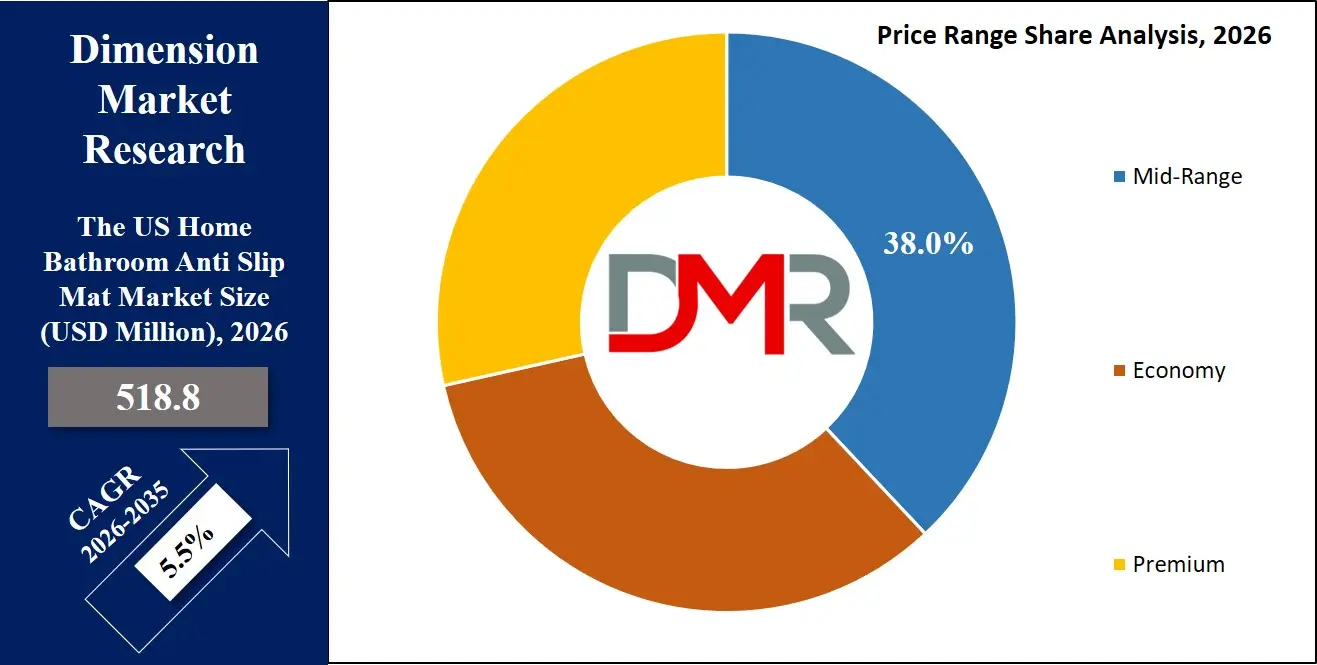
In the US home bathroom anti slip mat market, mid-range products represent the largest segment by revenue and volume. This dominance is largely driven by consumers seeking optimal balance between safety features, durability, and design appeal. The widespread preference for value-oriented quality has accelerated the integration of antimicrobial treatments, machine-washable constructions, and certified slip resistance across mainstream price points.
However, premium products are emerging as the fastest-growing segment for anti slip mats. Design-conscious households and safety-focused consumers face significant expectations for superior materials, advanced hygiene features, and aesthetic coordination. As a result, manufacturers are increasingly investing in premium-optimized solutions to support elevated consumer requirements and improve brand positioning. Compliance with sustainability certifications and improved warranty offerings are also key drivers of premium segment adoption.
ℹ
To learn more about this report –
Download Your Free Sample Report Here
The rapid growth of the wellness economy has significantly increased consumer willingness to invest in higher-priced bath safety products. Premium mats frequently require specialized materials, OEKO-TEX certifications, and extended durability testing. To address these requirements, brands are deploying technologies such as copper-infused antimicrobial surfaces, smart home connectivity, and subscription-based replacement programs.
Another important segment driving service innovation is the economy market. Budget-conscious consumers increasingly require anti slip solutions that offer baseline safety features without advanced functionality. Mass retailers such as Walmart and Target with value-focused private labels are integrating economy-tier products directly into high-traffic home goods sections. Consequently, economy products are increasingly serving as entry points for first-time safety buyers and rental property applications.
By Application Analysis
Application segmentation plays a crucial role in shaping the anti slip mat market in the United States. Most products currently move through general bathroom applications, where consumers place mats at vanity areas, in front of sinks, and on dry bathroom floors for basic slip protection. General bathroom applications include basic safety with aesthetic considerations for high-traffic household zones.
Premium applications are evolving into specialized solutions for shower rooms, where consumers require mats with superior drainage, suction cup adhesion, and rapid-drying capabilities. Examples include perforated rubber designs or mats with channeled surfaces that allow water flow while maintaining grip. These applications allow households to address wet-area safety requirements with dedicated products optimized for continuous water exposure, reducing mold accumulation and maintaining hygiene.
Shower room applications command premium attention and require specific material constructions. Notable examples include Gorilla Grip's shower-specific designs with 200+ suction cups and mildew-resistant treatments, offering guaranteed stability with easy-clean maintenance. Shower-specific products are essential for households with curbless entries and walk-in showers where slip risk is highest.
Meanwhile, bathtub applications are typically reserved for solutions requiring specialized features including extended lengths for full tub coverage, textured surfaces for wet conditions, and quick-release features for easy cleaning. Companies such as InterDesign and Home Basics specialize in tub-specific designs with end-to-end coverage. Despite functional simplicity, bathtub mats remain essential for specific use cases including children's bath safety and senior accessibility.
By Distribution Channel Analysis
In the United States home bathroom anti slip mat market, offline retail overwhelmingly dominates revenue. Most modern consumer purchases require physical inspection of texture, thickness, and material quality, including buy decisions among big-box home improvement centers, mass merchants, and specialty bath boutiques. Because of this tactile requirement, purchase decisions must typically be supported by in-store product demonstration rather than arranged exclusively online.
Retailers integrate merchandising strategies directly into their value propositions to ensure consumer confidence, competitive pricing, and reliable inventory availability. Additionally, packaging considerations and ease of return make physical retail the preferred approach for both economy and mid-range consumers. As shopping behaviors evolve into digitally influenced but physically fulfilled models, many purchase decisions are embedded within the retailer's in-store assortment and display expertise. This deep integration makes it extremely difficult to replicate the same sensory validation and instant gratification through self-managed online arrangements.
Nevertheless, online distribution still plays an important role, particularly within the premium and eco-friendly product sectors. E-commerce platforms often offer expanded size variations, specialized materials, and direct-to-consumer brand access that may not be available in physical stores. Major platforms such as Amazon and Wayfair offer integrated e-commerce solutions as part of comprehensive home goods marketplaces. Online channels also serve consumers seeking subscription models, customer reviews, and broad selection unavailable locally.
The US Home Bathroom Anti Slip Mat Market Report is segmented on the basis of the following:
By Material
- Rubber
- PVC/Plastic
- Nylon
- Polyester
- Eco-Friendly Materials
By Shape
By Price Range
- Economy
- Mid-Range
- Premium
By Application
- Shower Room
- Bathtub
- General Bathroom
By Distribution Channel
Impact of Artificial Intelligence in the US Home Bathroom Anti Slip Mat Market
- Deep Learning for Demand Forecasting: AI, particularly machine learning algorithms, is used to predict regional purchasing patterns, enabling manufacturers to optimize inventory allocation, reduce stockouts, and improve supply chain efficiency across thousands of retail locations.
- Predictive Product Development: AI algorithms analyze consumer reviews, return patterns, and material performance data to predict durability issues and recommend design improvements, enabling proactive product lifecycle management.
- Intelligent Customer Support: AI serves as the virtual assistant that monitors thousands of consumer inquiries in real-time, automatically identifying common concerns about sizing, material care, and slip resistance, and initiating automated responses without human intervention.
- Visual Search for Style Coordination: High-performance image recognition systems enable consumers to upload bathroom photos and receive real-time mat color, shape, and style recommendations, allowing shoppers to coordinate safety products with existing decor with greater accuracy.
- Fleet Learning (The Consumer Insight Model): Manufacturers use anonymized behavioral data from their entire e-commerce network to continuously train and improve their central design and merchandising models. When one consumer segment shows preference for a particular material or shape, the learning can be applied network-wide to optimize assortment planning.
- Customer Experience & Personalization: AI analyzes browsing behavior, purchase history, and household demographics to personalize product recommendations, automate replenishment reminders, and provide proactive care instructions tailored to individual customer requirements.
The US Home Bathroom Anti Slip Mat Market: Competitive Landscape
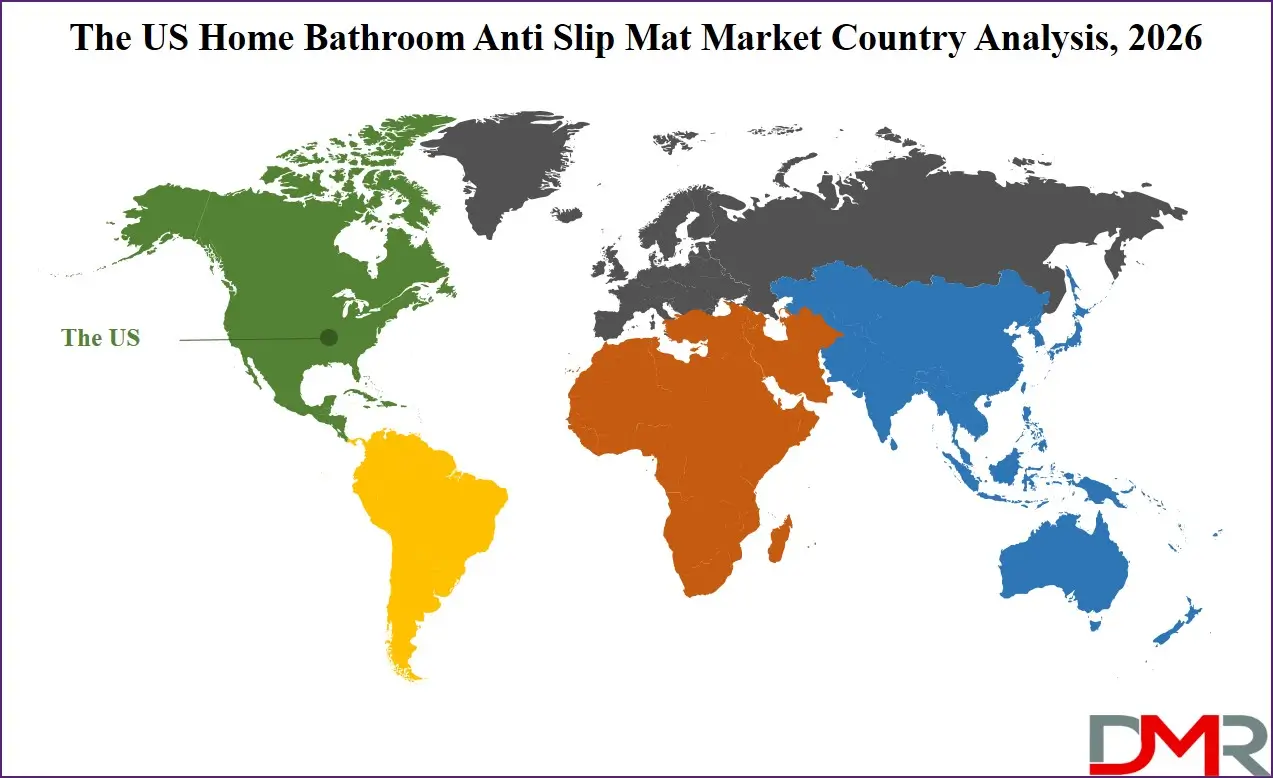
The US home bathroom anti slip mat market is a highly dynamic and fragmented competitive landscape characterized by the presence of national home goods brands, mass-market retailers with private label programs, digital-native direct-to-consumer companies, and specialized safety product manufacturers. Leading national brands such as Mohawk Home, InterDesign, and Style Selections maintain strong market positions by supplying coordinated bath collections, fashion-forward designs, and reliable safety features to major US retailers, including big-box home centers and mass merchants operating across the United States. Alongside these brands, mass-market retailers are becoming increasingly influential in shaping consumer expectations. Companies such as Walmart, Target, and Costco provide the accessible price points, private label offerings, and in-store merchandising that power mainstream bath safety purchases.
ℹ
To learn more about this report –
Download Your Free Sample Report Here
In addition, direct-to-consumer brands such as Gorilla Grip, WellAway, and MatsDirect play a key role in developing technology-forward online shopping experiences and subscription-based replacement models. The United States also hosts leading e-commerce platforms including Amazon and Wayfair, which are focused on improving product discovery while reducing purchase friction. At the same time, specialty safety companies like Home Safety Solutions and LivingXL are pursuing vertical focus strategies through ergonomic design and senior-focused product development, strengthening their competitive position in the accessible living segment.
Some of the prominent players in the US Home Bathroom Anti Slip Mat Market are:
- 3M
- Gorilla Grip
- SlipX Solutions
- AmazerBath
- Epica
- Vive Health
- Yimobra
- InterDesign, Inc. (iDesign)
- mDesign
- Apache Mills Inc.
- American Floor Mats LLC
- Brooklinen, Inc.
- Lands' End, Inc.
- Gorilla Products, LLC
- Maytex Mills Inc.
- Tike Smart LLC
- Genteele LLC
- Williams-Sonoma, Inc.
- Frontgate
- Parachute Home, Inc.
- Other Key Players
Recent Developments in the US Home Bathroom Anti Slip Mat Market
- December 2025: 3M continued advancing its Safety-Walk anti-slip solutions, supporting residential applications such as bathtubs and showers, with ongoing enhancements in durability, water-resistant adhesion, and surface grip performance to improve safety in wet environments.
- November 2025: Mohawk Industries expanded its home textile portfolio through Mohawk Home, introducing bath mats with memory foam cushioning, enhanced absorbency, and comfort-focused designs to strengthen its positioning in the premium and hospitality-driven segments.
- November 2025: SlipX Solutions introduced and promoted a first‑of‑its‑kind weighted safety bath mat designed to stay securely in place on textured tubs and tiled shower floors without suction cups, featuring premium antimicrobial protection and engineered drainage channels for enhanced slip resistance.
- October 2025: Amazon continued strengthening its AmazonBasics bath accessories portfolio, with ongoing SKU expansion and marketplace optimization strategies improving accessibility and value positioning across the home safety category.
- September 2025: Vive Health updated its official non-slip bath and shower mat offerings, showcasing a range of textured, suction-cup-backed mats in multiple sizes, with traction surfaces and antimicrobial features aimed at reducing slips and falls in tubs and showers.
Report Details
| Report Characteristics |
| Market Size (2026) |
USD 518.8 Mn |
| Forecast Value (2035) |
USD 840.5 Mn |
| CAGR (2026–2035) |
5.5% |
| Historical Data |
2021 – 2025 |
| Forecast Data |
2027 – 2035 |
| Base Year |
2025 |
| Estimate Year |
2026 |
| Report Coverage |
Market Revenue Estimation, Market Dynamics, Competitive Landscape, Growth Factors and etc. |
| Segments Covered |
By Material (Rubber, PVC/Plastic, Nylon, Polyester, Eco-Friendly Materials), By Shape (Rectangle, Oval, Others), By Price Range (Economy, Mid-Range, Premium), By Application (Shower Room, Bathtub, General Bathroom Floor), By Distribution Channel (Offline, Online) |
| Country Coverage |
The US |
| Prominent Players |
3M, Gorilla Grip, SlipX Solutions, AmazerBath, Epica, Vive Health, Yimobra, InterDesign, Inc. (iDesign), mDesign, Apache Mills Inc., American Floor Mats LLC, Brooklinen, Inc., Lands' End, Inc., Gorilla Products, LLC, Maytex Mills Inc., Tike Smart LLC, Genteele LLC, Williams-Sonoma, Inc., Frontgate, Parachute Home, Inc., and Other Key Players |
| Purchase Options |
We have three licenses to opt for: Single User License (Limited to 1 user), Multi-User License (Up to 5 Users) and Corporate Use License (Unlimited User) along with free report customization equivalent to 0 analyst working days, 3 analysts working days and 5 analysts working days respectively. |
Frequently Asked Questions
How big is the US Home Bathroom Anti Slip Mat Market?
▾ The US Home Bathroom Anti Slip Mat Market is valued at USD 518.8 million in 2026 and is projected to reach USD 840.5 million by the end of 2035.
What is the growth rate for the US Home Bathroom Anti Slip Mat Market?
▾ The market is growing at a robust compound annual growth rate (CAGR) of 5.5% over the forecast period of 2026 to 2035.
Who are the key players in the US Home Bathroom Anti Slip Mat Market?
▾ Some of the major key players in the US Home Bathroom Anti Slip Mat Market are 3M, Gorilla Grip, SlipX Solutions, AmazerBath, Epica, Vive Health, and many others.