U.S. Human Papillomavirus Market Snapshot
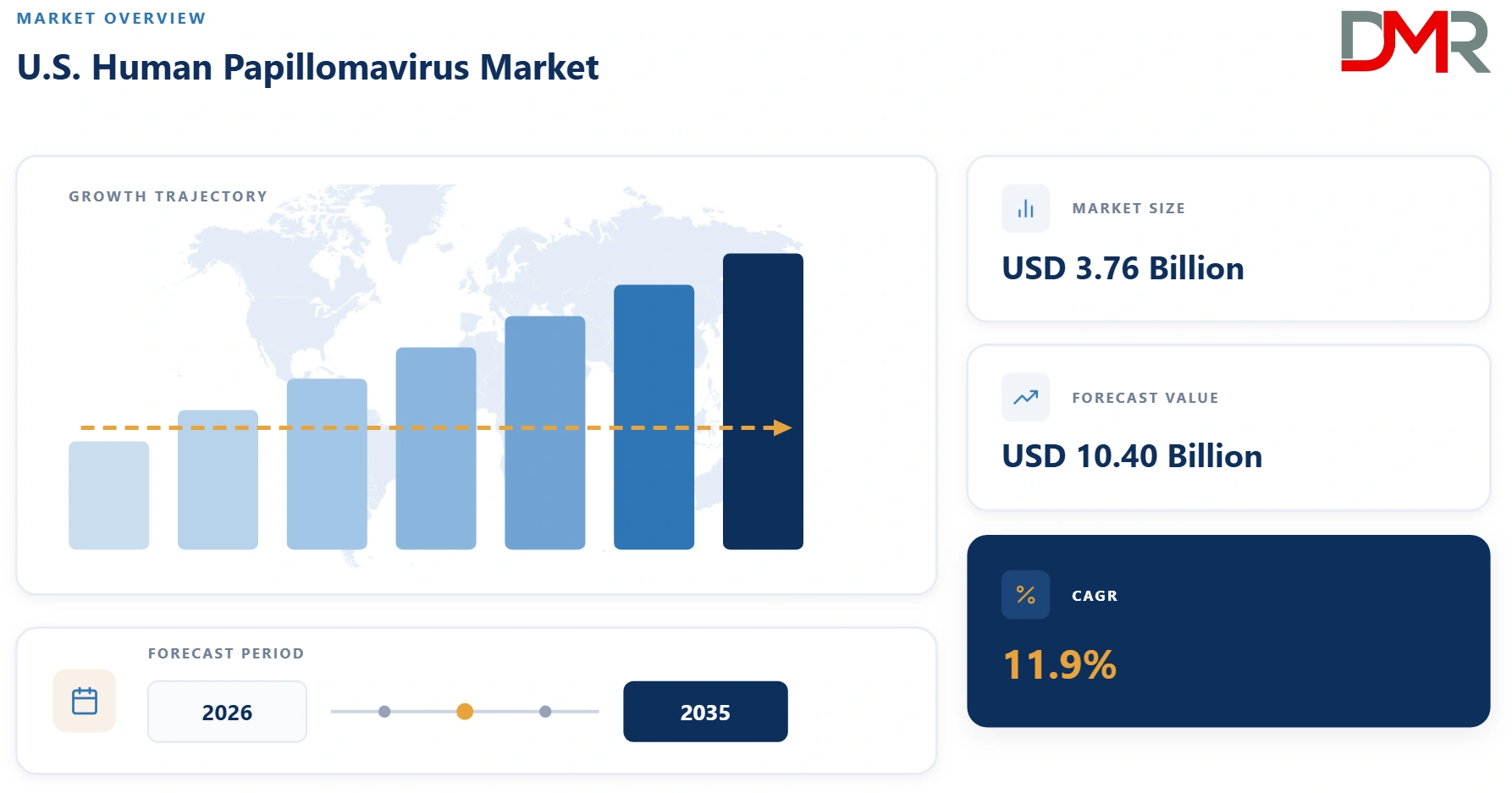
- U.S. Human Papillomavirus Market Size in 2026: USD 3.76 Billion
- U.S. Human Papillomavirus Market Size in 2035: USD 10.40 Billion
- U.S. CAGR from 2026 to 2035: 11.9%
- Vaccines is the leading Product Type segment in 2026: 79.4%
- Nonavalent is the leading Vaccine Type segment in 2026: 92.6%
- Cervical Cancer is the leading Disease Indication segment in 2026: 48.7%
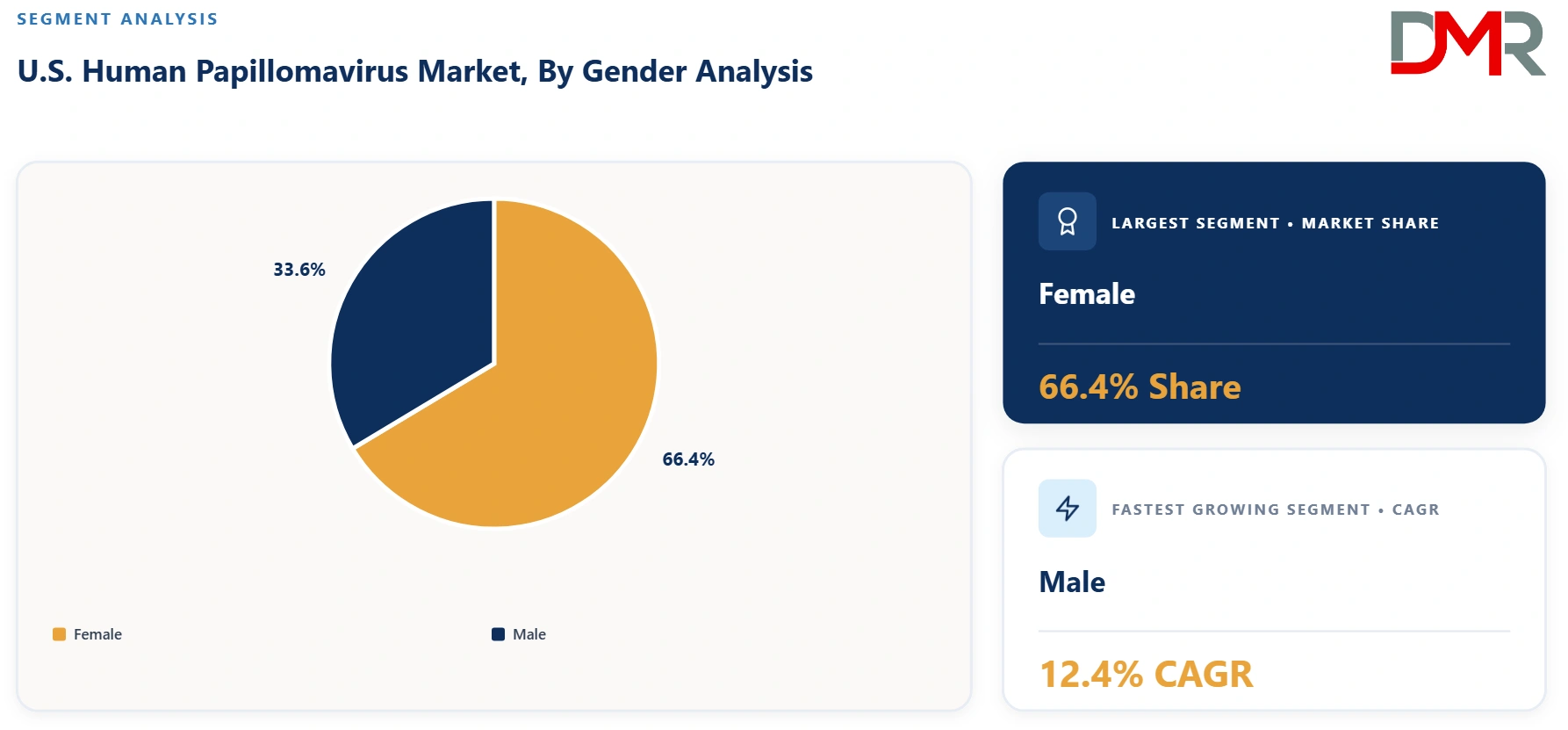
- Female is the leading Gender segment in 2026: 66.4%
- Vaccination Centers is the leading End User segment in 2026: 38.6%
What is the U.S. Human Papillomavirus Market and its Market Size?
The U.S. Human Papillomavirus Market is projected to reach USD 3.76 billion in 2026 and grow at a compound annual growth rate of 11.9% from there until 2035 to reach a value of USD 10.40 billion.
ℹ
To learn more about this report –
Download Your Free Sample Report Here
Human papillomavirus is a group of viruses associated with cervical, anal, oropharyngeal, penile, vulvar, and vaginal cancers, genital warts, and precancerous lesions. The market includes prophylactic vaccines, molecular diagnostic assays, specimen-collection products, screening services, and therapies used to manage HPV-associated diseases. Growth is supported by adolescent immunization, catch-up vaccination, gender-neutral prevention, molecular screening, self-collection solutions, expanded genotyping, public health campaigns, and continued research into therapeutic vaccines and immunotherapies. Increasing recognition of HPV-related cancers among both females and males is broadening prevention and diagnostic demand across the United States.
Use Cases
- Preventive Immunization: HPV vaccines are administered routinely to adolescents to establish protection before exposure to cancer-associated HPV types. Catch-up vaccination also supports eligible young adults who were not adequately vaccinated earlier. Gender-neutral immunization reduces viral transmission and protects against cervical, anal, penile, and oropharyngeal cancers, along with genital warts, while supporting broader population immunity and long-term cancer prevention programs nationwide.
- Cervical Cancer Screening: High-risk HPV assays detect viral DNA or messenger RNA associated with cervical precancer and cancer. Laboratories use these products for primary HPV screening, co-testing with cytology, and triage of abnormal cervical findings. Extended genotyping identifies individual high-risk types, helping clinicians assess progression risk, determine follow-up intervals, and direct patients toward colposcopy or additional diagnostic evaluation when clinically required.
- Self-Collection and Screening Access: Self-collection systems allow eligible individuals to obtain vaginal specimens privately at home or within healthcare settings for laboratory HPV testing. These solutions address barriers related to discomfort, appointment availability, geography, privacy, and limited access to gynecological services. Expanded availability can improve screening participation among under-screened populations and support earlier identification of high-risk infections requiring clinical follow-up and treatment.
- Management of HPV-Associated Disease: Therapeutic products and clinical interventions are used to manage genital warts, precancerous lesions, persistent infections, and HPV-associated malignancies. Treatment may include topical medicines, surgical procedures, immunotherapy, chemotherapy, radiation, and investigational therapeutic vaccines. Molecular testing and biomarker assessment support disease classification, patient monitoring, clinical-trial enrollment, and treatment planning across specialty clinics, hospitals, oncology centers, and research institutions nationwide.
Key Takeaways
- Market Size: The U.S. Human Papillomavirus Market is anticipated to be valued at USD 3.76 billion in 2026 and is forecast to reach USD 10.40 billion by 2035, expanding at a CAGR of 11.9%.
- Growth Outlook: Market expansion is supported by adolescent and catch-up immunization, broader male vaccination, rising awareness of HPV-associated cancers, improved screening access, self-collected specimens, molecular genotyping, public health campaigns, pharmacy-based vaccination, and clinical research focused on therapeutic vaccines and treatments for persistent HPV infections.
- Primary Growth Drivers: Increasing recognition of preventable HPV-associated cancers, continuing gaps in vaccination and screening, expanded diagnostic access, healthcare recommendations supporting routine vaccination, growing uptake of primary HPV testing, development of at-home collection systems, and rising demand for precise identification of high-risk genotypes are strengthening market development.
- By Product Type Analysis: Vaccines are projected to lead the product type segment with a 79.4% share in 2026, supported by routine adolescent immunization, catch-up vaccination, cancer-prevention programs, insurance coverage, pharmacy availability, and protection against multiple high-risk and wart-associated HPV types. Diagnostic products are expected to record the highest CAGR at approximately 12.8% through 2035.
- By Vaccine Type Analysis: Nonavalent vaccines are expected to dominate with a 92.6% share in 2026, reflecting the established use of Gardasil 9 and its coverage against nine HPV types. Other vaccine types, primarily investigational broader-spectrum and therapeutic candidates, are projected to grow at approximately 13.2%, supported by pipeline development and demand for expanded strain coverage and simplified dosing.
- By Disease Indication Analysis: Cervical cancer is projected to lead with a 48.7% share in 2026, owing to established screening pathways, the strong association between persistent high-risk HPV infection and cervical malignancy, and continuing preventive vaccination. Oropharyngeal cancer is anticipated to grow at approximately 12.6%, supported by increasing awareness of HPV-associated head and neck cancers, particularly among males.
- By Gender Analysis: Females are expected to dominate with a 66.4% share in 2026, supported by established cervical cancer prevention, screening, vaccination, and follow-up programs. The male segment is projected to expand at approximately 12.4%, driven by gender-neutral vaccination, growing recognition of oropharyngeal and anal cancers, and initiatives encouraging timely vaccination of adolescent boys and eligible adults.
- By End User Analysis: Vaccination centers are anticipated to lead with a 38.6% share in 2026, supported by immunization programs delivered through physician practices, pharmacies, public health clinics, schools, and community services. Diagnostic laboratories are projected to grow at approximately 12.7%, driven by molecular screening, self-collected specimens, automated testing platforms, and expanding demand for high-risk HPV genotyping.
How AI and GenAI are Transforming the U.S. Human Papillomavirus Market?
Artificial intelligence is improving cervical screening by supporting digital cytology, image classification, risk stratification, and identification of patients requiring follow-up. Machine learning can combine HPV genotype, cytology, biomarker, vaccination, and clinical data to estimate progression risk more precisely. Generative AI supports patient education, vaccination reminders, multilingual outreach, clinical documentation, and trial recruitment. Manufacturers and healthcare providers are also applying predictive analytics to forecast vaccine demand, identify under-screened populations, optimize laboratory workflows, and improve public health campaign targeting while maintaining privacy, clinical validation, and professional oversight.
Key Drivers in the U.S. Human Papillomavirus Market
Increasing Burden of Preventable HPV-Associated Cancers
Persistent high-risk HPV infection is associated with cancers affecting the cervix, oropharynx, anus, penis, vulva, and vagina. CDC estimates indicate that approximately 36,400 HPV-associated cancers could be prevented by the nine-valent vaccine, demonstrating a substantial addressable prevention opportunity. Rising awareness that HPV affects both females and males is widening vaccination and screening activity beyond cervical cancer programs. Increasing attention to oropharyngeal cancer is particularly important for male vaccination. Public health education, provider recommendations, cancer-prevention initiatives, and expanded vaccination access are encouraging individuals and healthcare systems to invest in prophylactic immunization and earlier detection.
Vaccination Gaps and Expanding Preventive Programs
The remaining difference between current vaccination coverage and national prevention objectives creates significant room for market expansion. In 2024, approximately 78.2% of U.S. adolescents aged 13 to 17 had received at least one HPV vaccine dose, while 62.9% were up to date with the recommended series. This completion gap supports reminder systems, provider outreach, pharmacy vaccination, school-linked programs, and catch-up initiatives. CDC recommendations covering routine vaccination at ages 11 or 12, initiation from age nine, catch-up vaccination through age 26, and shared clinical decision-making for selected adults aged 27 to 45 continue to sustain demand.
Restraints in the U.S. Human Papillomavirus Market
Vaccine Hesitancy and Uneven Series Completion
Misinformation, concerns about vaccine safety, limited awareness of cancer-prevention benefits, cultural attitudes, and the association of HPV with sexual transmission can delay parental consent and adolescent immunization. Receiving an initial dose does not guarantee completion of the recommended vaccination series, creating leakage across prevention programs. Coverage also varies by state, healthcare access, insurance status, socioeconomic conditions, and the strength of provider recommendations. These disparities limit consistent nationwide demand and reduce population-level protection. Manufacturers and healthcare organizations must support evidence-based education, reminder systems, culturally appropriate communication, and community partnerships without creating distrust through overly promotional messaging.
Fragmented Screening Access and Follow-Up Challenges
Screening participation remains uneven among uninsured, rural, low-income, minority, immigrant, and gender-diverse populations. Transportation constraints, limited appointment availability, discomfort with pelvic examinations, lack of a regular healthcare provider, and uncertainty regarding insurance coverage can delay testing. Self-collection addresses several access barriers but still requires laboratory processing, clear instructions, result communication, and clinical follow-up after a positive high-risk HPV result. Failure to complete colposcopy or treatment can limit the health impact of expanded testing. Laboratories and health systems must therefore connect convenient collection with navigation, confirmatory evaluation, data exchange, reimbursement support, and continuity of care.
Growth Opportunities in the U.S. Human Papillomavirus Market
Expansion of At-Home and Self-Collected HPV Screening
FDA-authorized self-collection is creating a new pathway for individuals who avoid or cannot access clinician-collected cervical specimens. At-home solutions can extend screening beyond traditional gynecology offices through telehealth, prescription fulfillment, centralized laboratories, and digital result management. In May 2025, the FDA approved Teal Health’s at-home cervical cancer screening device, enabling eligible users to collect a vaginal sample and send it to a laboratory for high-risk HPV testing. Wider insurer coverage, integration with primary care, and reliable follow-up could create substantial opportunities for device developers, diagnostic laboratories, telehealth providers, retailers, and care-navigation platforms.
Therapeutic Vaccines and Precision Treatment Development
Current prophylactic vaccines prevent new infections but do not eliminate established HPV infections or directly treat existing cancers. This limitation creates white-space opportunities for therapeutic vaccines, immune checkpoint combinations, engineered T-cell therapies, viral-vector platforms, DNA vaccines, and treatments targeting HPV E6 and E7 antigens. Developers can focus on persistent high-grade lesions, recurrent respiratory papillomatosis, anal dysplasia, and HPV-associated cervical, anal, and head and neck cancers. Biomarker-driven trial designs, circulating tumor DNA, genotype assessment, and immune profiling may improve patient selection. Successful therapies could diversify the market beyond prevention and screening while addressing patients with active HPV-associated disease.
Trends in the U.S. Human Papillomavirus Market
Transition Toward Primary HPV Testing and Extended Genotyping
Cervical screening is moving from cytology-dependent pathways toward high-risk HPV testing as a primary screening method. Molecular assays offer high sensitivity and can support longer screening intervals for eligible individuals with negative results. Extended genotyping is gaining importance because individual high-risk HPV types carry different probabilities of persistent infection and progression. Assays capable of separately identifying HPV 16, 18, 31, 45, 51, 52, and other genotype groups can improve risk-based clinical management. Automated platforms, dual-stain triage, integrated laboratory information systems, and standardized follow-up algorithms are consequently becoming important areas of competitive differentiation.
Gender-Neutral Vaccination and Broader Cancer Prevention
The market is shifting from a predominantly cervical cancer narrative toward comprehensive prevention of HPV-associated cancers in females and males. Increasing recognition of anal, penile, and particularly oropharyngeal cancers is strengthening vaccination outreach to adolescent boys and adult men who remain eligible under clinical recommendations. Providers are positioning HPV vaccination as routine cancer prevention rather than solely protection against a sexually transmitted infection. Evidence supporting sustained vaccine effectiveness, community-level protection, and reductions in precancerous lesions is reinforcing this shift. Gender-neutral communication can improve acceptance, reduce stigma, and expand demand through pediatric practices, pharmacies, educational institutions, and public health programs.
Research Scope and Analysis
The United States Human Papillomavirus Market covers vaccines diagnostic products therapeutics bivalent quadrivalent nonavalent and other vaccines cervical anal oropharyngeal penile vulvar vaginal cancers genital warts and other indications female and male populations hospitals diagnostic laboratories specialty clinics vaccination centers cancer and research centers and other healthcare settings across prevention screening diagnosis disease management treatment research and patient monitoring applications.
ℹ
To learn more about this report –
Download Your Free Sample Report Here
By Product Type Analysis
Vaccines are projected to dominate the product type segment with a 79.4% market share in 2026, supported by routine adolescent immunization, catch-up programs, insurance coverage, and cancer-prevention initiatives. Diagnostic products are expected to register the highest CAGR of approximately 12.8%, driven by primary HPV testing, self-collection, automation, and extended genotyping.
By Vaccine Type Analysis
Nonavalent vaccines are expected to lead the vaccine type segment with a 92.6% share in 2026, owing to their coverage of nine clinically important HPV types and established use in the United States. Other vaccines, including investigational multivalent and therapeutic candidates, are projected to expand at approximately 13.2%, as clinical development progresses.
By Disease Indication Analysis
Cervical cancer is anticipated to dominate the disease indication segment with a 48.7% share in 2026, supported by structured vaccination, primary screening, cytology, genotyping, colposcopy, and treatment pathways. Oropharyngeal cancer is projected to record the highest CAGR of approximately 12.6%, compared with the overall 11.9%, as awareness of HPV-associated head and neck malignancies increases.
By Gender Analysis
Females are expected to account for 66.4% of the market in 2026, driven by cervical cancer vaccination, screening, diagnosis, and treatment programs. Males are forecast to register the highest CAGR of approximately 12.4%, supported by gender-neutral vaccination and growing awareness of anal, penile, and HPV-associated oropharyngeal cancers.
By End User Analysis
Vaccination centers are projected to lead the end-user segment with a 38.6% share in 2026, supported by immunization delivery through pharmacies, clinics, physician practices, schools, and public health programs. Diagnostic laboratories are anticipated to grow at approximately 12.7%, due to molecular testing, automated platforms, self-collected specimens, and genotype-specific screening.
The U.S. Human Papillomavirus Market Report is Segmented Based on the following:
By Product Type
- Vaccines
- Diagnostic Products
- Therapeutics
By Vaccine Type
- Bivalent
- Quadrivalent
- Nonavalent
- Others
By Disease Indication
- Cervical Cancer
- Anal Cancer
- Oropharyngeal Cancer
- Penile Cancer
- Vulvar and Vaginal Cancer
- Genital Warts
- Others
By Gender
By End User
- Hospitals
- Diagnostic Laboratories
- Specialty Clinics
- Vaccination Centers
- Cancer and Research Centers
- Others
Regulatory Landscape
The U.S. regulatory landscape is shaped by FDA oversight of vaccines, molecular diagnostic assays, collection devices, therapeutic products, labeling changes, manufacturing quality, and post-market surveillance. CDC and the Advisory Committee on Immunization Practices influence vaccine schedules, catch-up eligibility, dosing, and provider practices, while screening guidelines affect diagnostic demand. Recent FDA decisions permitting self-collected vaginal specimens in healthcare settings and approving at-home collection have expanded screening pathways. However, companies face requirements involving clinical validation, specimen stability, laboratory processing, risk communication, privacy, and follow-up. Regulatory expansion creates opportunities for decentralized screening, although reimbursement uncertainty, changing recommendations, post-approval obligations, and differing guideline adoption can affect commercialization speed and market penetration.
Epidemiology Analysis
HPV epidemiology creates sustained demand across vaccination, diagnostics, and disease management because infections are widespread and several high-risk types cause preventable cancers. Disease burden differs by age, vaccination status, gender, sexual behavior, geography, healthcare access, and screening participation. Cervical cancer remains central to organized screening, while oropharyngeal cancer contributes increasingly to the male disease burden. CDC estimates suggest that 36,400 HPV-associated cancers could be prevented by the nine-valent vaccine. Epidemiological surveillance helps manufacturers, health systems, and public agencies identify vaccination gaps, under-screened populations, genotype distribution, and regional disparities. Opportunities remain in adolescent series completion, catch-up vaccination, male prevention, self-collection, targeted outreach, earlier lesion detection, and therapeutic development.
Competitive Landscape
The U.S. Human Papillomavirus Market combines a highly concentrated prophylactic vaccine segment with a more diversified diagnostics, laboratory services, and therapeutic-development environment. Merck holds a central vaccine position through Gardasil 9, while Roche, Abbott, BD, Hologic, and Qiagen compete through molecular assays, genotyping, automation, and collection solutions. Quest Diagnostics and Labcorp expand patient access through national laboratory networks. Emerging companies focus on at-home screening, therapeutic vaccines, immune-based treatments, and digital care navigation. Competition centers on clinical accuracy, genotype coverage, regulatory approvals, convenience, reimbursement, laboratory compatibility, vaccine access, and evidence demonstrating improved screening and prevention outcomes.
Some of the Prominent Players in the U.S. Human Papillomavirus Market Are
- Merck & Co. Inc.
- F. Hoffmann-La Roche Ltd.
- Abbott Laboratories
- Becton Dickinson and Company
- Hologic Inc.
- Qiagen N.V.
- Thermo Fisher Scientific Inc.
- Bio-Rad Laboratories Inc.
- Danaher Corporation
- Cepheid
- Siemens Healthineers AG
- Fujirebio Diagnostics Inc.
- Seegene Inc.
- Sysmex Corporation
- QuidelOrtho Corporation
- DiaSorin S.p.A.
- Revvity Inc.
- Agilent Technologies Inc.
- Takara Bio Inc.
- Promega Corporation
- Quest Diagnostics Incorporated
- Laboratory Corporation of America Holdings
- Sonic Healthcare USA
- NeoGenomics Laboratories Inc.
- Exact Sciences Corporation
- Teal Health Inc.
- LetsGetChecked
- Nurx
- Naveris Inc.
- Inovio Pharmaceuticals Inc.
- Precigen Inc.
- Hookipa Pharma Inc.
- Transgene S.A.
- ISA Pharmaceuticals B.V.
- Vaccitech plc
- GeneOne Life Science Inc.
- Anixa Biosciences Inc.
- Cue Biopharma Inc.
- Akeso Inc.
- PDS Biotechnology Corporation
- Other Key Players
Recent Developments
- April 2026: The FDA cleared Waters Corporation’s Onclarity HPV Self-Collection Kit and approved its use with the BD Onclarity HPV Assay for at-home cervical cancer screening, expanding decentralized access to HPV testing.
- March 2026: Merck presented long-term Gardasil 9 effectiveness and immunogenicity data showing sustained protection for approximately 14 years after three-dose vaccination, alongside evidence supporting prevention for females and males.
- December 2025: Abbott reported that its simpli-COLLECT HPV Collection Kit had received U.S. FDA approval for self-collection in healthcare settings for testing with the Alinity m high-risk HPV assay.
- May 2025: Teal Health received FDA approval for the first U.S. at-home cervical cancer screening collection device, allowing eligible users to collect specimens privately for laboratory-based high-risk HPV testing.
Report Details
| Report Characteristics |
| Market Size (2026) |
USD 3.76 Bn |
| Forecast Value (2035) |
USD 10.40 Bn |
| CAGR (2026–2035) |
11.9% |
| Historical Data |
2021 – 2025 |
| Forecast Data |
2026 – 2035 |
| Base Year |
2025 |
| Segments Covered |
By Product Type, By Vaccine Type, By Disease Indication, By Gender, By End User |
Frequently Asked Questions
How big is the U.S. Human Papillomavirus Market?
▾ The U.S. Human Papillomavirus Market is projected to reach USD 3.76 billion in 2026 and USD 10.40 billion by 2035.
What is the CAGR of the U.S. Human Papillomavirus Market from 2026 to 2035?
▾ The market is expected to expand at a compound annual growth rate of 11.9% during the forecast period from 2026 to 2035.
What factors are driving the growth of the U.S. Human Papillomavirus Market?
▾ Growth is driven by HPV vaccination programs, increasing awareness of HPV-associated cancers, screening expansion, self-collection, extended genotyping, male vaccination, public health initiatives, and therapeutic research.
What are the major trends in the U.S. Human Papillomavirus Market?
▾ Major trends include primary HPV screening, at-home specimen collection, molecular genotyping, gender-neutral immunization, simplified vaccine dosing research, digital patient outreach, and therapeutic vaccine development.
Who are the key players in the U.S. Human Papillomavirus Market?
▾ Key players include Merck, Roche, Abbott, BD, Hologic, Qiagen, Thermo Fisher Scientific, Quest Diagnostics, Labcorp, Teal Health, Inovio Pharmaceuticals, Precigen, and PDS Biotechnology.
How is the U.S. Human Papillomavirus Market segmented?
▾ The market is segmented by product type, vaccine type, disease indication, gender, and end user, covering vaccines, diagnostics, therapeutics, HPV-associated diseases, female and male populations, and multiple healthcare settings.