Market Overview
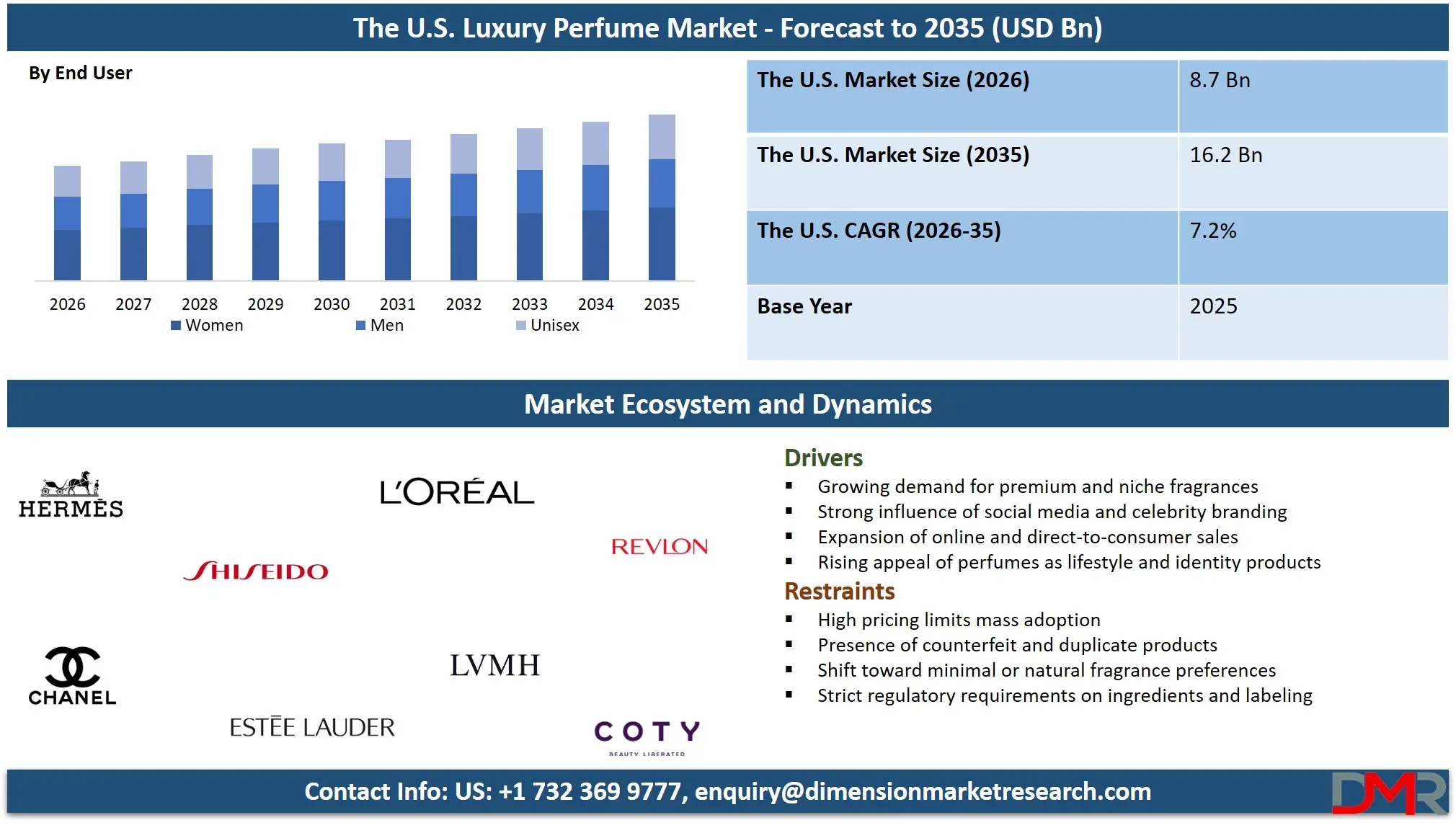
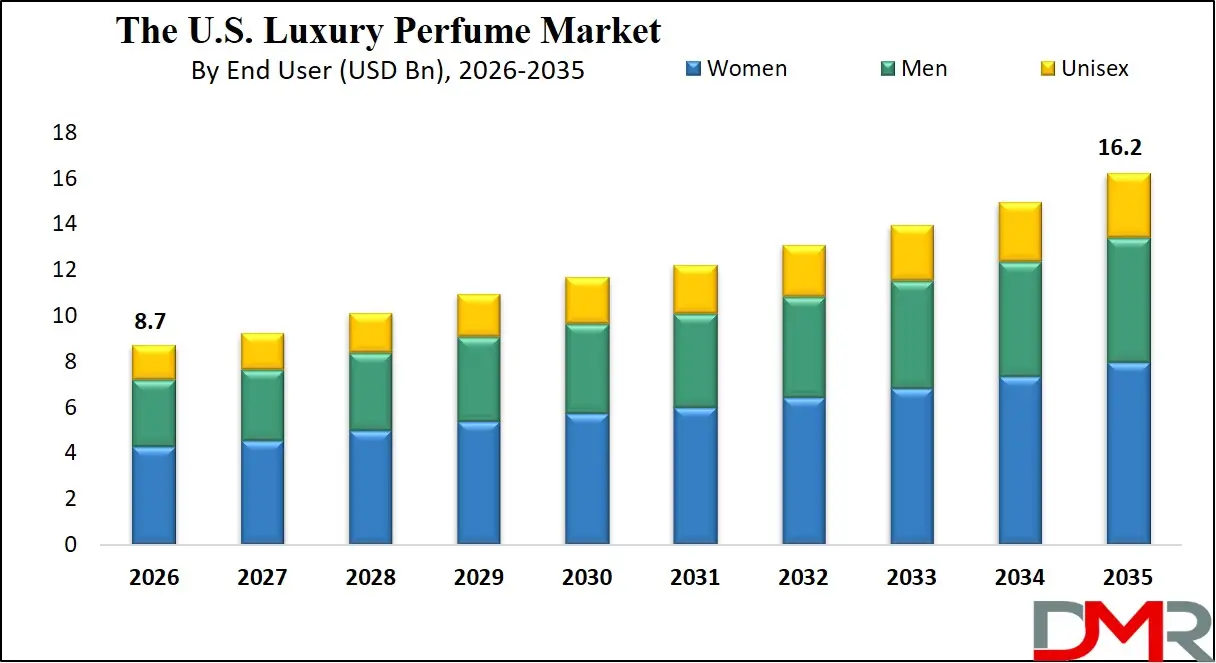
The U.S. Luxury Perfume Market size is projected to reach USD 8.7 billion in 2026 and grow at a compound annual growth rate of 7.2% to reach a value of USD 16.2 billion in 2035.
ℹ
To learn more about this report –
Download Your Free Sample Report Here
The luxury perfume market comprises high-end fragrances crafted with premium ingredients, sophisticated formulations, and distinctive branding that appeal to affluent and aspirational consumers. These products include parfum, eau de parfum, and other concentrated fragrance types known for long-lasting scents and artistic compositions. The segment spans designer labels, niche fragrance houses, and artisanal creators offering exclusivity, personalization, and refined olfactory experiences. It holds a significant position within the broader beauty and personal care industry, contributing more value than volume through premium pricing, while also symbolizing lifestyle, identity, and status among consumers.
In the U.S. luxury perfume market, growing preference for exclusivity and personalization is reshaping demand, with consumers increasingly seeking unique scent profiles and limited-edition collections. Technological advancements such as molecular distillation and synthetic ingredient innovation are enabling more complex and sustainable fragrances. At the same time, regulatory frameworks around ingredient transparency and environmental impact are influencing product development. The category has reached a mature stage where established brands retain strong loyalty, while niche players disrupt traditional norms, and digital transformation continues to expand direct-to-consumer and virtual discovery channels.
ℹ
To learn more about this report –
Download Your Free Sample Report Here
Further, innovation in sustainable packaging and clean-label formulations is gaining momentum, with brands investing in biodegradable materials and ethically sourced ingredients. Collaborations between fragrance houses and fashion or lifestyle brands are expanding reach and enhancing storytelling. Increasing mergers and acquisitions are helping companies diversify portfolios and strengthen their presence in niche segments. Additionally, omnichannel retail strategies are redefining consumer engagement by blending immersive in-store experiences with digital platforms, while evolving regulations on sustainability and ingredient disclosure continue to shape long-term market dynamics.
The U.S. Luxury Perfume Market: Key Takeaways
- Market Growth: The U.S. Luxury Perfume Market size is expected to grow by USD 6.9 billion, at a CAGR of 7.2%, during the forecasted period of 2027 to 2035.
- By End User: Women are anticipated to get the majority share of the U.S. Luxury Perfume market in 2026.
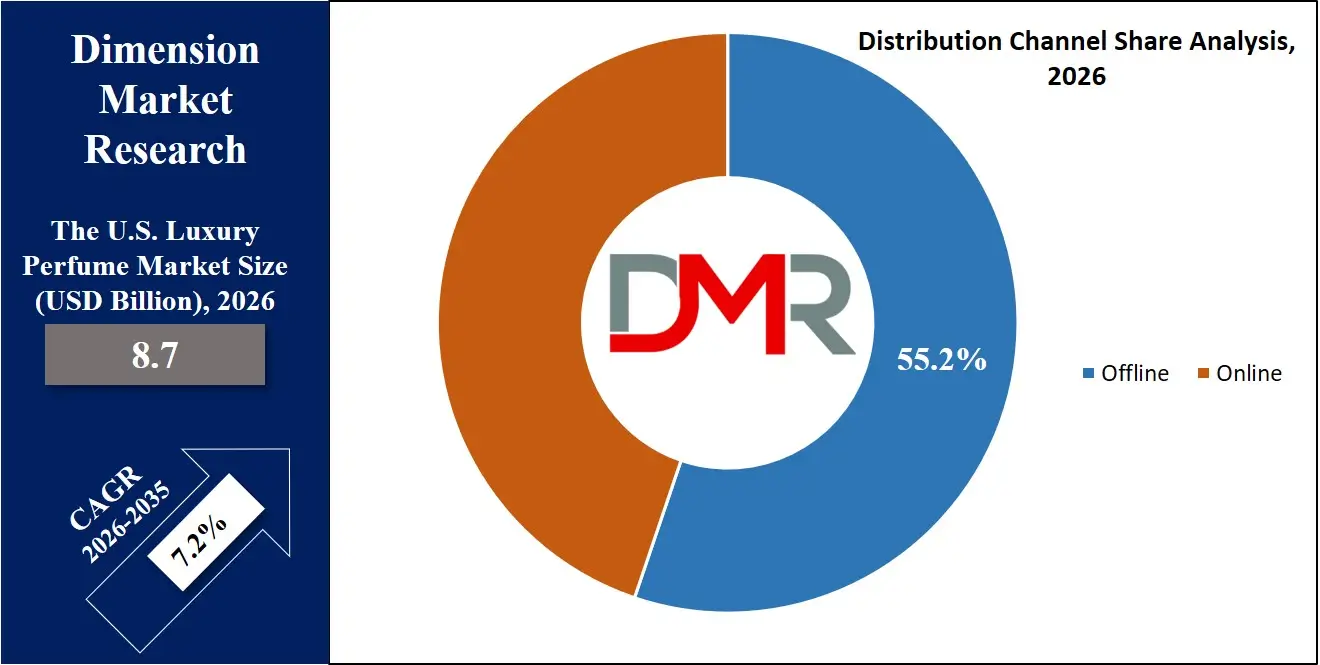
- By Distribution Channel: The offline segment is expected to get the largest revenue share in 2026 in the U.S. Luxury Perfume market.
- Use Cases: Some of the use cases of Luxury Perfume include personal identity expression, professional & social presence and more.
The U.S. Luxury Perfume Market: Use Cases
- Personal Identity Expression: Consumers use luxury perfumes to reflect individuality and personal style. High-end fragrances offer unique scent compositions that allow users to stand out while reinforcing emotional and psychological connections to scent memory.
- Gifting and Special Occasions: Luxury perfumes are widely used as premium gifts for events such as anniversaries, weddings, and holidays. Their elegant packaging and brand prestige make them desirable tokens of appreciation and celebration.
- Professional and Social Presence: Individuals often use luxury fragrances to enhance confidence and leave a lasting impression in professional and social environments, reinforcing personal branding.
- Aromatherapy and Mood Enhancement: Certain luxury perfumes incorporate essential oils and natural extracts that contribute to relaxation, stress relief, or mood elevation, blending wellness with luxury.
- Collector’s Items: Limited-edition releases and niche fragrances are often collected by enthusiasts, driven by exclusivity, craftsmanship, and artistic value.
- Hospitality and Retail Ambience: Luxury perfumes are used in hotels, boutiques, and luxury retail spaces to create signature scents that enhance customer experience and brand identity.
- Customization and Bespoke Fragrance Creation: High-end brands offer personalized scent creation services, allowing customers to design bespoke perfumes tailored to their preferences.
Stats & Facts
- U.S. Census Bureau reported that retail e-commerce sales in the U.S. reached approximately USD 1.1 trillion in 2024, supporting online luxury fragrance sales growth.
- Bureau of Economic Analysis stated that personal consumption expenditures on personal care products grew by over 5.2% in 2024.
- U.S. Department of Commerce indicated that luxury goods imports, including perfumes, increased by 6.8% in 2025.
- International Trade Administration highlighted that the U.S. beauty and personal care market exports surpassed USD 12 billion in 2024.
- U.S. Bureau of Labor Statistics reported that consumer spending on fragrances rose by 4.7% in 2024.
- Environmental Protection Agency noted a 15% increase in sustainable packaging adoption across cosmetics sectors in 2025.
- U.S. Small Business Administration reported a 9% rise in niche fragrance startups in 2024.
- Federal Trade Commission stated that digital advertising spending in beauty categories grew by 8.5% in 2025.
- U.S. Department of Labor recorded a 6% employment growth in cosmetic manufacturing in 2024.
- World Bank reported U.S. high-income consumer spending remained stable with a 3.1% increase in discretionary categories in 2025.
- OECD data showed premium product demand in developed markets grew by 4.3% in 2024.
- U.S. Energy Information Administration highlighted a 10% rise in eco-friendly manufacturing adoption in cosmetics in 2025.
Market Dynamic
Driving Factors in the U.S. Luxury Perfume Market
Rising Demand for Premium and Personalized Products
The increasing consumer inclination toward premiumization is a key driver of growth. High-income and aspirational consumers are seeking exclusive, long-lasting fragrances that reflect individuality and sophistication. Personalization services, including bespoke scent creation and engraving, are gaining traction, enhancing customer engagement and willingness to pay premium prices. Additionally, social media influence and celebrity endorsements are amplifying brand desirability. This shift toward experiential luxury, where the product represents both identity and lifestyle, is significantly shaping purchasing patterns and encouraging brands to innovate continuously.
Expansion of Digital and Omnichannel Retail
The rapid growth of e-commerce and omnichannel retail strategies is transforming accessibility and consumer reach. Luxury perfume brands are leveraging digital platforms to offer virtual scent exploration, AI-based recommendations, and seamless online-to-offline experiences. Direct-to-consumer models allow brands to build stronger relationships and capture higher margins. Enhanced logistics and global shipping capabilities further support market expansion. These advancements reduce dependency on traditional retail while enabling brands to tap into younger, tech-savvy audiences who prefer convenience and digital engagement.
Restraints in the U.S. Luxury Perfume Market
High Product Costs and Price Sensitivity
Luxury perfumes are characterized by premium pricing due to high-quality ingredients, branding, and packaging. This limits accessibility to a relatively narrow consumer base, making demand vulnerable to economic fluctuations. During periods of financial uncertainty, consumers may shift toward more affordable alternatives or reduce discretionary spending. Additionally, high costs associated with research, development, and marketing further pressure profit margins, especially for emerging brands attempting to compete with established players.
Stringent Regulatory and Sustainability Challenges
Regulatory requirements regarding ingredient safety, labeling, and environmental impact pose significant challenges for manufacturers. Compliance with evolving standards increases operational complexity and costs. Moreover, the growing demand for sustainable and ethically sourced ingredients requires significant investment in supply chain transparency and innovation. Limited availability of certain natural raw materials further complicates production, potentially leading to supply disruptions and increased prices, which can hinder market expansion.
Opportunities in the U.S. Luxury Perfume Market
Growth of Niche and Artisanal Fragrance Brands
The rising popularity of niche fragrances presents a major growth opportunity. Consumers are increasingly drawn to unique, small-batch creations that offer exclusivity and storytelling. This trend allows smaller brands to carve out distinct identities and compete effectively with established players. The emphasis on craftsmanship, authenticity, and innovative scent profiles aligns with evolving consumer preferences, creating opportunities for differentiation and premium pricing.
Sustainability and Clean Beauty Innovations
The shift toward sustainability offers significant potential for market expansion. Brands investing in eco-friendly packaging, refillable bottles, and ethically sourced ingredients are gaining consumer trust and loyalty. Clean beauty trends, emphasizing transparency and non-toxic formulations, are further driving innovation. Companies that successfully integrate sustainability into their value proposition can capture a growing segment of environmentally conscious consumers while enhancing brand reputation.
Trends in the U.S. Luxury Perfume Market
Rise of Gender-Neutral and Inclusive Fragrances
A major trend reshaping the market is the growing acceptance of gender-neutral fragrances. Consumers are moving away from traditional classifications, embracing scents that appeal across genders. This shift reflects broader societal changes toward inclusivity and self-expression. Brands are responding by launching unisex collections and adopting more inclusive marketing strategies, expanding their target audience and fostering greater brand engagement.
Integration of Technology in Fragrance Discovery
Technological advancements are revolutionizing how consumers explore and purchase perfumes. Virtual try-on tools, AI-driven scent recommendations, and digital scent profiling are enhancing the shopping experience. These innovations help bridge the sensory gap in online purchases, increasing consumer confidence and conversion rates. Additionally, data analytics enables brands to better understand consumer preferences, leading to more targeted product development and marketing strategies.
Impact of Artificial Intelligence in the U.S. Luxury Perfume Market
- AI-driven fragrance creation: AI algorithms analyze scent combinations to develop innovative and personalized fragrances faster and more efficiently.
- Consumer preference prediction: Machine learning models predict customer preferences based on purchase history and behavior, improving targeting accuracy.
- Virtual scent assistants: AI-powered tools help users discover fragrances online through guided recommendations and quizzes.
- Supply chain optimization: AI enhances inventory management, reducing waste and ensuring timely product availability.
- Personalized marketing campaigns: AI enables hyper-targeted advertising, improving engagement and conversion rates.
- Fraud detection in e-commerce: AI systems identify counterfeit products and unauthorized sellers, protecting brand integrity.
- Product development acceleration: AI reduces R&D timelines by simulating ingredient interactions and scent longevity.
- Customer experience enhancement: Chatbots and virtual assistants provide real-time support and product suggestions.
Research Scope and Analysis
By Product Type Analysis
Parfum (pure perfume) represents the most dominant segment within the product type category and is projected to account for approximately 38.6% of the market in 2026. Its leading position is primarily due to the high concentration of fragrance oils, typically ranging between 20% and 40%, which ensures superior longevity and intensity compared to other fragrance formats. Consumers in the luxury segment place a strong emphasis on exclusivity, craftsmanship, and long-lasting performance, making parfum a preferred choice despite its premium pricing. Additionally, the rise of niche and artisanal fragrance brands has further reinforced this segment’s growth, as these players often specialize in high-concentration formulations. Continuous innovation in ingredient sourcing, such as ethically harvested botanicals and synthetic alternatives, is also enhancing product appeal. Strong brand loyalty, coupled with repeat purchases and collector behavior, continues to support sustained demand in this segment.
Eau de Parfum (EDP) is emerging as the fastest-growing segment within the product type category, driven by its optimal balance between quality, longevity, and affordability. Typically containing 15% to 20% fragrance oil concentration, EDP offers a long-lasting scent experience without the high price point associated with pure parfum, making it accessible to a wider consumer base. This segment is particularly appealing to younger consumers and first-time luxury buyers who seek premium experiences at relatively lower costs. The expansion of online retail platforms has significantly contributed to its growth by increasing accessibility and offering a broader range of options. Furthermore, brands are actively launching diverse EDP collections, including seasonal, limited-edition, and celebrity-endorsed variants, to cater to evolving preferences. The segment also benefits from frequent product usage patterns, encouraging repeat purchases and enhancing its growth trajectory.
By Distribution Channel Analysis
Offline channels continue to dominate the distribution landscape, with an expected market share of approximately 55.2% in 2026. The strength of this segment lies in its ability to provide a sensory and immersive shopping experience, which is critical in the luxury perfume market. Consumers prefer visiting high-end retail stores, department stores, and exclusive boutiques where they can physically test fragrances before making a purchase decision. Personalized consultations, expert recommendations, and curated in-store environments further enhance the customer experience and reinforce brand loyalty. Additionally, luxury brands invest heavily in store aesthetics and experiential marketing to create a strong emotional connection with consumers. The offline channel also benefits from impulse purchases and gifting occasions, making it a key revenue contributor despite the rise of digital platforms.
ℹ
To learn more about this report –
Download Your Free Sample Report Here
The online segment is witnessing rapid growth and is considered the fastest-expanding distribution channel in the luxury perfume market. Increasing internet penetration, smartphone usage, and consumer preference for convenience are major factors driving this growth. Digital platforms are transforming the purchasing journey by offering features such as AI-driven recommendations, virtual scent discovery tools, and detailed product descriptions that help consumers make informed decisions. The rise of direct-to-consumer strategies allows brands to engage more closely with customers, gather valuable data, and improve personalization. Influencer marketing and social media campaigns also play a crucial role in driving online sales, particularly among younger demographics. Moreover, flexible return policies and sample programs are reducing the perceived risk associated with online fragrance purchases, further accelerating adoption.
By End User Analysis
The women segment leads the luxury perfume market and is projected to hold approximately 48.9% of the total share in 2026. This dominance is driven by a combination of factors, including a wider range of product offerings, higher frequency of usage, and stronger brand engagement compared to other segments. Luxury perfume brands consistently prioritize female consumers by launching innovative collections that emphasize elegance, sophistication, and emotional storytelling. Marketing strategies often target women through personalized campaigns, celebrity endorsements, and experiential retail initiatives. Additionally, women are more likely to experiment with different fragrances, leading to higher repeat purchases and brand switching within the luxury category. The availability of diverse scent profiles, from floral and fruity to woody and oriental, further strengthens this segment’s leading position in the market.
The unisex segment is rapidly emerging as the fastest-growing category within the end-user segmentation, reflecting changing societal norms and evolving consumer preferences. Increasing acceptance of gender-neutral products has encouraged consumers to explore fragrances beyond traditional classifications, focusing more on personal taste rather than gender labels. This shift is particularly prominent among younger consumers who value inclusivity, individuality, and self-expression. Luxury brands are responding by introducing versatile scent profiles that blend traditionally masculine and feminine notes, appealing to a broader audience. Additionally, minimalist packaging and inclusive marketing campaigns are helping brands attract diverse consumer groups. The growing popularity of niche fragrance houses, which often emphasize unisex offerings, is further accelerating the expansion of this segment and shaping the future direction of the market.
The U.S. Luxury Perfume Market Report is segmented on the basis of the following:
By Product Type
- Parfum (Pure Perfume)
- Eau de Parfum (EDP)
- Eau de Toilette (EDT)
- Eau de Cologne (EDC)
- Eau Fraiche
By Distribution Channel
By End User
Competitive Landscape
The U.S. luxury perfume market is highly competitive, driven by innovation, exclusivity, and strong brand positioning. Companies invest heavily in research and development to create unique fragrance compositions and sustainable solutions, while leveraging brand heritage and storytelling to maintain customer loyalty. High entry barriers, including significant capital requirements and established consumer preferences, limit new entrants.
ℹ
To learn more about this report –
Download Your Free Sample Report Here
Players strengthen their market presence through strategic collaborations, limited-edition launches, and expansion into niche segments. Additionally, the growing adoption of digital channels and direct-to-consumer strategies is enhancing customer engagement and profitability, further intensifying competition across the U.S. luxury perfume market.
Some of the prominent players in the U.S. Luxury Perfume are:
- Estée Lauder Companies
- L’Oréal Groupe
- LVMH (Moët Hennessy Louis Vuitton)
- Chanel
- Coty Inc.
- Revlon Inc.
- Shiseido Americas
- Puig
- Kering Beauté
- Hermès
- Richemont
- Tom Ford Beauty
- Creed
- Byredo
- Le Labo
- Jo Malone London
- Diptyque
- Maison Francis Kurkdjian
- Kilian Paris
- Bond No. 9
- Other Key Players
Recent Developments
- In June 2025, LVMH expanded its fragrance division by acquiring a niche perfume brand known for artisanal and small-batch production. The acquisition aimed to enhance its presence in the fast-growing niche fragrance segment and diversify its luxury portfolio. The deal included integration of the acquired brand’s unique scent formulations and creative expertise into LVMH’s global distribution network.
- n February 2025, Estée Lauder Companies introduced a new sustainable luxury fragrance line under its premium portfolio, focusing on refillable packaging and ethically sourced ingredients. The launch included advanced biodegradable materials and carbon-neutral manufacturing processes, aligning with growing consumer demand for eco-conscious products. The company also integrated AI-driven personalization tools on its digital platform, allowing customers to customize scent profiles based on preferences.
Report Details
| Report Characteristics |
| Market Size (2026) |
USD 8.7 Bn |
| Forecast Value (2035) |
USD 16.2 Bn |
| CAGR (2026–2035) |
7.2% |
| Historical Data |
2021 – 2025 |
| Forecast Data |
2027 – 2035 |
| Base Year |
2025 |
| Estimate Year |
2026 |
| Report Coverage |
Market Revenue Estimation, Market Dynamics, Competitive Landscape, Growth Factors and etc. |
| Segments Covered |
By Product Type (Parfum (Pure Perfume), Eau de Parfum (EDP), Eau de Toilette (EDT), Eau de Cologne (EDC), Eau Fraiche), By Distribution Channel (Offline, Online), By End User (Women, Men, Unisex) |
| Country Coverage |
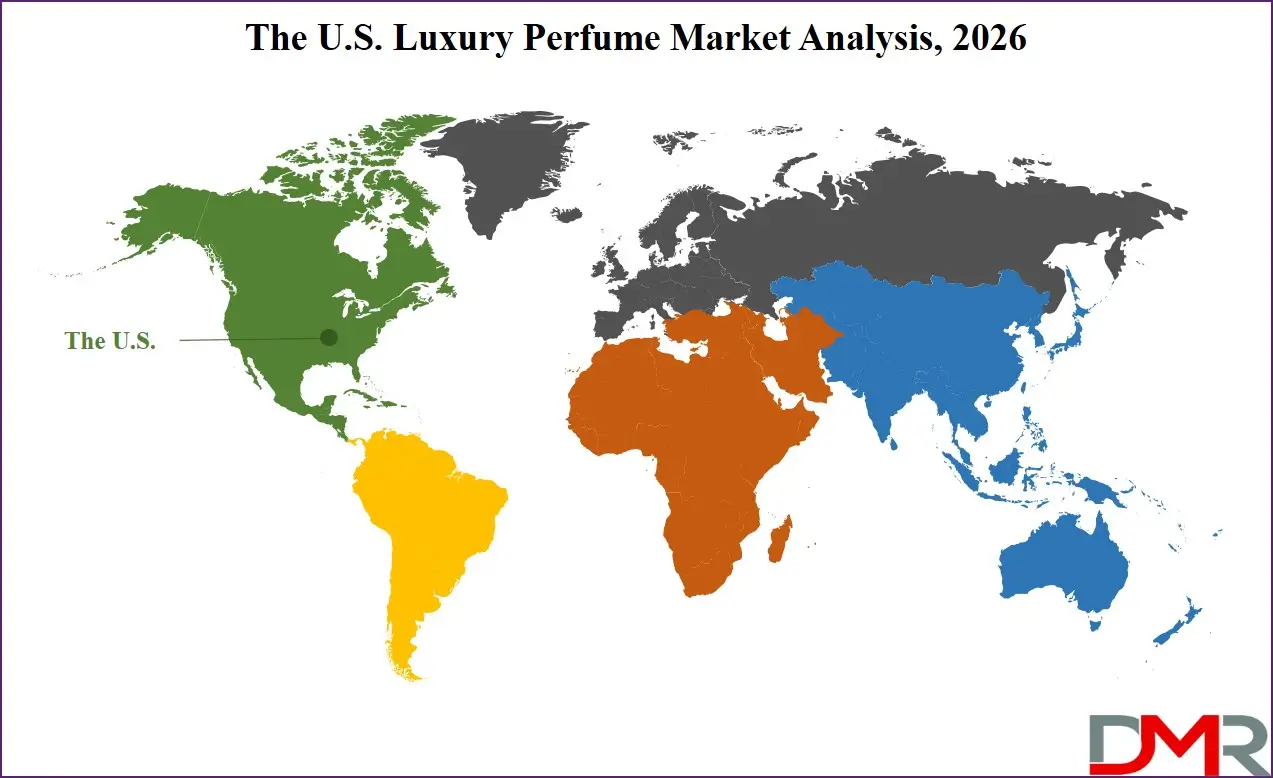
The US |
| Prominent Players |
Estée Lauder Companies, L’Oréal Groupe, LVMH (Moët Hennessy Louis Vuitton), Chanel, Coty Inc., Revlon Inc., Shiseido Americas, Puig, Kering Beauté, Hermès, Richemont, Tom Ford Beauty, Creed, Byredo, Le Labo, Jo Malone London, Diptyque, Maison Francis Kurkdjian, Kilian Paris, Bond No. 9, and Other Key Players |
| Purchase Options |
We have three licenses to opt for: Single User License (Limited to 1 user), Multi-User License (Up to 5 Users) and Corporate Use License (Unlimited User) along with free report customization equivalent to 0 analyst working days, 3 analysts working days and 5 analysts working days respectively. |
Frequently Asked Questions
How big is the U.S. Luxury Perfume Market?
▾ The U.S. Luxury Perfume Market size is expected to reach USD 8.7 billion by 2026 and is projected to reach USD 16.2 billion by the end of 2035.
Who are the key players in the U.S. Luxury Perfume Market?
▾ Some of the major key players in the U.S. Luxury Perfume Market include LOreal, LVMH, Revlon and others.
What is the growth rate in the U.S. Luxury Perfume Market?
▾ The market is growing at a CAGR of 7.2 percent over the forecasted period.