Market Overview
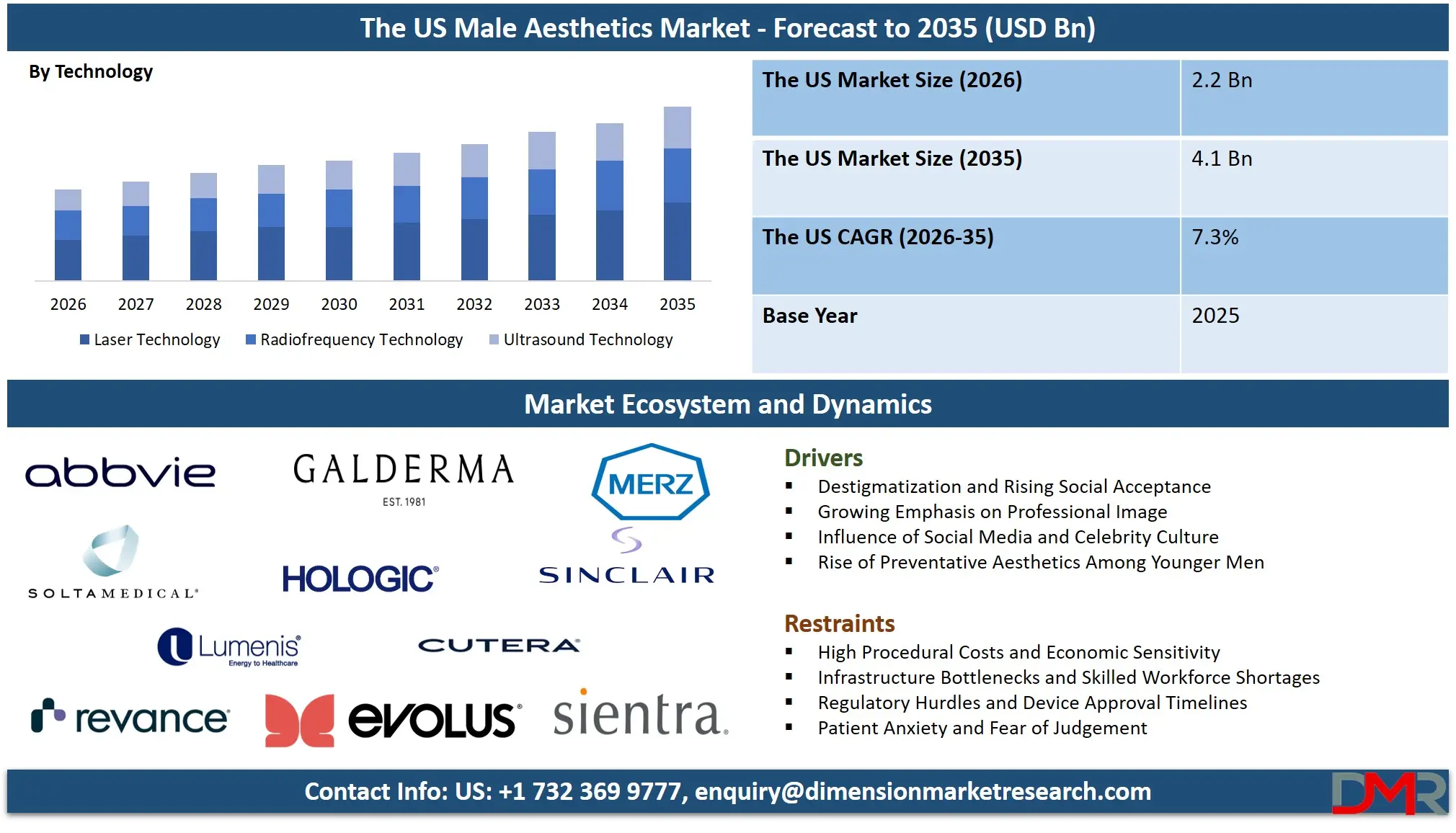
The US Male Aesthetics Market is projected to reach USD 2.2 billion in 2026 and is expected to grow at a CAGR of 7.3% from 2026 to 2035, reaching approximately USD 4.1 billion by 2035. The market expansion is fueled by shifting cultural norms that have reduced the stigma around men seeking cosmetic enhancements, a surge in demand for minimally invasive procedures with little to no downtime, and the growing influence of social media and professional image management across the country. At the same time, continuous innovation in non-surgical technologies, such as next-generation injectables, advanced laser platforms, and energy-based devices, is improving the safety, precision, and comfort of aesthetic treatments in both clinical and med-spa settings. These developments allow practitioners to deliver more subtle, natural-looking results while catering to the specific anatomical and lifestyle needs of male patients.
ℹ
To learn more about this report –
Download Your Free Sample Report Here
The American male aesthetic landscape is shaped by distinct characteristics that encourage adoption. As the world's largest consumer market, the US is home to over 160 million men who are increasingly viewing aesthetic treatments as part of personal and professional upkeep. A cultural shift now favors proactive grooming and aging management, supported by a medical aesthetics industry undergoing its most significant technological evolution since the introduction of botulinum toxin. Established pharmaceutical companies and agile device manufacturers compete fiercely on clinical outcomes, patient comfort, and convenience.
Regulatory developments have reached a pivotal point. The full implementation of the Modernization of Cosmetics Regulation Act (MoCRA) in 2024 marks the most consequential regulatory update for aesthetic devices and topical products in decades, introducing stricter safety protocols, streamlined adverse event reporting, and modernized manufacturing requirements. This creates a new operational baseline, requiring all aesthetic providers in the US to embed advanced safety, documentation, and compliance measures into their daily practice. Meanwhile, the Food and Drug Administration's evolving stance on energy-based devices and combination treatments is accelerating the availability of next-generation technologies, paving the way for more personalized and less invasive male aesthetic procedures.
ℹ
To learn more about this report –
Download Your Free Sample Report Here
The competitive landscape reflects this momentum. Major medical device and pharmaceutical players, including Allergan Aesthetics (an AbbVie company), Galderma, Merz Aesthetics, and Bausch Health, compete alongside innovative disruptors such as Cutera, Cynosure, and Alma Lasers. Digital-native platforms like RealSelf and Zwivel are pushing the boundaries of patient education and provider connectivity. Service providers themselves are increasingly investing in dedicated male-focused practices, with franchise chains like Ideal Image and specialist clinics representing strategic expansions in service offerings and patient engagement models.
The US Male Aesthetics Market: Key Takeaways
- Sustained Growth Trajectory: The US market is projected to surge from USD 2.2 billion in 2026 to USD 4.1 billion by 2035, driven by a potent mix of increased male acceptance of aesthetic procedures, the rise of minimally invasive technologies, and the rapid expansion of dedicated male-focused service providers.
- The Injectables Revolution: Neurotoxins and dermal fillers represent the single most powerful force driving market demand, with men increasingly seeking preventative treatments and subtle enhancements to maintain a youthful, refreshed appearance without the stigma associated with traditional cosmetic surgery.
- The Hair Restoration Frontier: Beyond facial aesthetics, the massive US male demographic experiencing androgenetic alopecia represents a high-growth opportunity. Men are rapidly adopting specialized surgical and non-surgical hair restoration solutions not just for cosmetic reasons, but for tangible psychological and professional confidence benefits.
- AI-Powered Treatment Planning: The market is shifting from standardized procedures to personalized, data-driven treatment protocols. US clinics are leading the development of artificial intelligence that analyzes facial anatomy, skin conditions, and aging patterns to optimize treatment selection, predict outcomes, and enhance patient satisfaction.
- Integration of Digital Consultations: Government and private investment in telehealth infrastructure is accelerating the deployment of virtual consultation platforms. This integration with digital imaging technologies allows providers to achieve more seamless patient engagement, addressing barriers like privacy concerns and scheduling conflicts for time-pressed male patients.
The US Male Aesthetics Market: Use Cases
- Non-Surgical Facial Rejuvenation: With men increasingly seeking subtle, natural-looking results, non-surgical procedures like neurotoxins and fillers are now engineered to reduce wrinkles and restore volume while maintaining masculine facial features, utilizing advanced injection techniques and specialized product formulations to achieve tailored outcomes.
- Hair Restoration for Androgenetic Alopecia: In dense urban centers and professional hubs, advanced surgical and non-surgical platforms combine follicular unit extraction with platelet-rich plasma therapies, providing comprehensive hair restoration solutions and enabling predictable results for men experiencing pattern baldness.
- Body Contouring for the "Dad Bod" Era: Leveraging advanced energy-based devices, medical spas rely on non-invasive body contouring technologies to treat stubborn fat deposits and tighten skin, addressing lifestyle-related concerns that diet and exercise alone cannot resolve, with integrated treatment plans ensuring patient satisfaction.
- Laser Hair Removal for Grooming Convenience: Laser hair removal is evolving into a comprehensive grooming solution that uses advanced cooling and targeting technologies to provide permanent hair reduction for areas like the back, chest, and neck, catering to the modern male desire for low-maintenance grooming.
- Skin Rejuvenation and Prejuvenation: Male patients are integrating aesthetic data with personal wellness platforms. This allows for automated treatment reminders and personalized skin health regimens, with men increasingly seeking preventative procedures and energy-based skin tightening to maintain a youthful appearance before significant aging occurs.
The US Male Aesthetics Market: Stats & Facts
American Society of Plastic Surgeons (ASPS)
- Over 1.5 million cosmetic procedures were performed on men in the US in 2022.
- Male facelifts increased by over 15 percent from the previous year.
- The number of male patients seeking minimally invasive procedures has grown by over 25 percent in the last five years.
- Botulinum toxin type A is the most popular non-surgical procedure for men, with over 300,000 treatments annually.
- Hair transplantation procedures for men have increased by over 50 percent since 2015.
- By 2029, digital consultation platforms are projected to handle over 40 percent of initial patient interactions.
International Society of Aesthetic Plastic Surgery (ISAPS)
- Aesthetic procedures for men account for nearly 20 percent of the global market.
- Non-surgical procedures for men grew by over 10 percent annually in the post-pandemic period.
- Body contouring procedures, including liposuction, are among the top five surgical procedures for men worldwide.
The Aesthetic Society
- The US males spent over USD 2 billion on cosmetic procedures in a recent year.
- Top male aesthetic categories include liposuction, rhinoplasty, eyelid surgery, and injectables.
- The average male patient age for surgical procedures is 44 years old.
US Food and Drug Administration (FDA)
- Over 500 energy-based aesthetic devices are cleared for use in the US.
- Advanced dermal filler and neurotoxin product approvals have expanded treatment options for male facial anatomy.
The US Male Aesthetics Market: Market Dynamic
Driving Factors in the US Male Aesthetics Market
Destigmatization and Rising Social Acceptance
A major growth driver in the US male aesthetics market is the sustained destigmatization of cosmetic treatments, combined with increasing media portrayal and celebrity endorsements of male aesthetic procedures. Treatments that were once considered taboo are becoming mainstream, significantly boosting reliance on professional aesthetic services. Additionally, social media platforms influence grooming and appearance standards by setting visual benchmarks that directly impact personal branding and professional perception. In response, aesthetic providers are enhancing their capabilities through integrated marketing and male-focused service lines, including discreet consultation pathways and tailored treatment plans, to efficiently cater to this expanding demographic.
Growing Emphasis on Professional Image
Aesthetic treatments are increasingly being used as a strategic tool for career advancement and personal branding in the US. What was once reserved for celebrities is now routinely used by executives and professionals to maintain a competitive edge in the workforce. Lessons learned from the rise of video conferencing and remote work have strengthened the focus on facial aesthetics, leading to greater willingness to invest in premium treatments. This shift is accelerating the adoption of non-invasive procedures, real-time outcome visualization technologies, and faster recovery protocols, enabling more accessible and appealing aesthetic journeys.
Restraints in the US Male Aesthetics Market
High Procedural Costs and Economic Sensitivity
Despite the growing demand, the cost of aesthetic procedures remains a significant barrier for many men, especially for surgical interventions. This financial consideration leads to treatment hesitancy and a focus on more affordable, non-surgical options. As a result, a large segment of the male population, particularly younger adults and those in non-executive roles, faces challenges in accessing premium care. The issue is more pronounced for series-based treatments requiring multiple sessions, where cumulative costs and time commitments can impact long-term treatment adherence.
Infrastructure Bottlenecks and Skilled Workforce Shortages
The growth in patient volumes is placing increasing pressure on clinical infrastructure and skilled providers across the US. Even minor disruptions at major metropolitan clinics can lead to delays in treatment schedules. Shortages in trained injectors, laser technicians, and surgical support staff further contribute to inefficiencies, resulting in longer wait times and increased patient frustration. Additionally, variations in state-level regulations, licensing requirements, and insurance coverage across different geographies add complexity, requiring providers to adapt to location-specific rules and increasing the need for standardized training protocols.
Opportunities in the US Male Aesthetics Market
Expansion of Hair Restoration and Body Contouring
The US male aesthetics sector presents a significant growth opportunity for hair restoration and body contouring services. The increasing prevalence of androgenetic alopecia and the rising demand for non-invasive fat reduction are driving the need for advanced, specialized solutions. With over 50 million men experiencing hair loss in the US, ensuring treatment efficacy and natural-looking results has become critical. The emergence of advanced therapies, such as exosome treatments and combination surgical-non-surgical protocols, further elevates the importance of specialized capabilities. Failure to meet patient expectations can result in poor retention, making reliable, high-quality outcomes a key competitive differentiator.
Adoption of AI-Driven Treatment Personalization
The integration of artificial intelligence into aesthetic practice is transforming the male aesthetics landscape in the US. Advanced platforms now leverage patient data, three-dimensional imaging, and outcome analytics to predict results and optimize treatment decisions proactively. These systems enable providers to move beyond standard procedures toward truly personalized care. By identifying potential complications or suboptimal results in advance, clinics can take corrective actions such as adjusting injection techniques or combining modalities, improving overall patient satisfaction and safety. Enhanced visualization platforms are also enabling more accurate pre-treatment consultations and expectation management.
Trends in the US Male Aesthetics Market
Shift Toward Minimally Invasive Procedures
The industry is undergoing a significant transition from invasive surgical procedures to non-surgical and minimally invasive alternatives that offer reduced downtime, lower risk, and more natural-looking results. Modern aesthetic solutions integrate advanced energy-based devices, injectables, and combination therapies into centralized treatment ecosystems, enabling faster and more comfortable patient experiences. This shift toward non-surgical options enhances patient acceptance, reduces financial barriers, and improves overall satisfaction through quicker recovery and immediate, yet subtle, results.
Rising Adoption of Telehealth and Virtual Consultations
Digitalization is becoming a key focus area in the US male aesthetics market, with increasing adoption of virtual consultations and telehealth platforms. Providers are incorporating digital patient engagement strategies, including online booking and remote follow-up care, to meet the convenience expectations of time-sensitive male patients. Industry initiatives aligned with patient privacy and data security are accelerating the transition toward integrated digital platforms. Major clinic networks are also investing in user-friendly portals and virtual imaging tools, supporting the broader shift toward accessible, discreet aesthetic care.
The US Male Aesthetics Market: Research Scope and Analysis
By Procedure Type Analysis
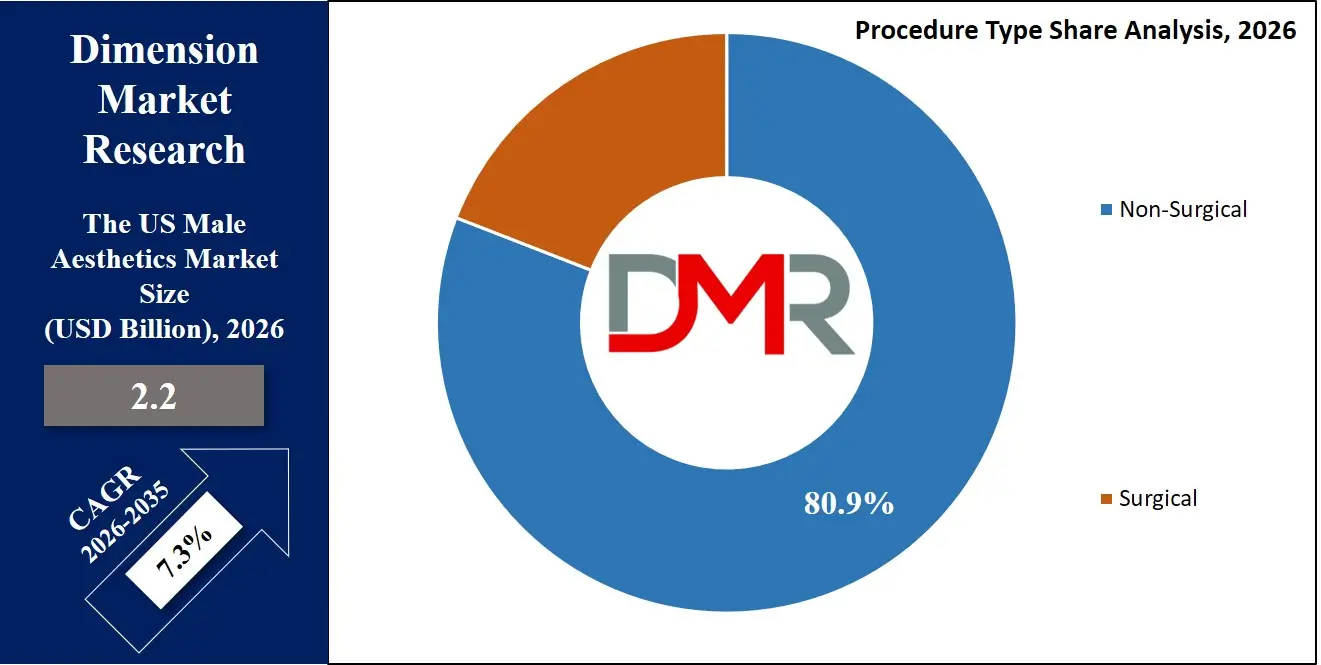
In the US male aesthetics market, non-surgical procedures are currently projected to dominate the market in terms of volume. Among these, injectables such as botulinum toxin and dermal fillers are the most significant categories due to their minimal downtime, high efficacy, and broad appeal across age groups. As professional image consciousness and preventative aging practices drive demand for subtle enhancements, non-surgical treatments remain the foundation of male aesthetic operations.
ℹ
To learn more about this report –
Download Your Free Sample Report Here
However, the fastest-growing segment is surgical procedures. These interventions, including rhinoplasty, liposuction, and hair transplantation, offer permanent or long-lasting results that differentiate them from temporary solutions. Providers are developing dedicated surgical divisions as a requirement for serving men seeking definitive outcomes. Beyond traditional surgical techniques, next-generation surgical capabilities are evolving to include advanced minimally invasive liposuction technologies and robotic-assisted hair transplantation, which can provide superior precision and faster recovery.
Rhinoplasty is widely performed to enhance facial harmony, while liposuction is increasingly used for body contouring. These procedures help support the growing demand for comprehensive physical enhancement.
Eyelid surgery, also known as blepharoplasty, is another important category, addressing concerns about aging eyes and improving visual field. These procedures require specialized surgical expertise and careful anatomical consideration to ensure natural results that preserve masculine features. Advanced handling protocols such as combination with non-surgical skin tightening are gaining importance in the overall facial rejuvenation segment, improving outcomes and patient satisfaction. Overall, service innovation in male aesthetics is increasingly focused on combining efficacy, minimal downtime, and natural-looking results.
By Age Group Analysis
The age group landscape of male aesthetics in the US is built primarily on middle-aged adults, those between 35 and 55 years old, representing the majority of revenue and volume in most practices. This demographic seeks treatments to combat visible signs of aging and maintain professional competitiveness, forming the foundation of the market.
A key emerging trend is the development of dedicated treatment protocols for young adults, those between 18 and 34 years old, an advanced service structure focused on preventative "prejuvenation" and early intervention. Unlike traditional reactive treatments, these services offer subtle enhancements, reduced volumes, and tailored plans that focus on maintenance rather than correction, improving long-term patient loyalty. This additional service specialization improves the growth potential of practices serving younger demographics.
The next major age group category is seniors, those aged 55 and older, particularly individuals seeking surgical interventions for significant rejuvenation. Senior patients combine surgical expertise with advanced pre-operative assessment to serve safety and outcome requirements. Leading clinics and device manufacturers are investing heavily in geriatric-friendly protocols and safety monitoring technology to process this growing volume. The industry's competitive focus is increasingly shifting from pure aesthetics to holistic patient care.
One emerging approach is the integration of regenerative medicine, which synchronizes aesthetic treatments with underlying biological aging processes to enable sustained results. In contrast, traditional practices prefer a procedure-by-procedure strategy, using surgical and non-surgical interventions as standalone events.
Another important trend is the expansion of services tailored to Generation X and Millennials, including dedicated packages and financing options. As generational attitudes toward aesthetics evolve, US providers are increasingly developing specialized services for each cohort. Additionally, membership programs allow practices to secure consistent revenue and patient loyalty across all age groups.
By Technology Analysis
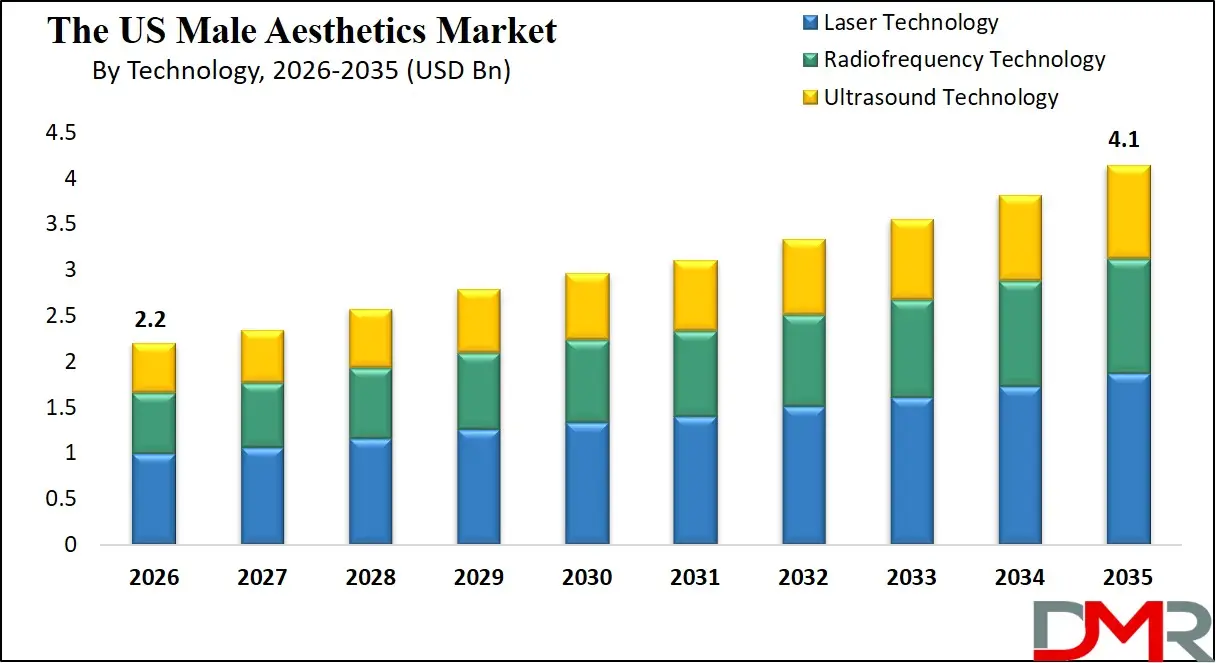
In the US male aesthetics market, laser technology represents a significant segment by revenue and volume. This dominance is largely driven by laser hair removal, skin resurfacing, and tattoo removal applications. The widespread adoption of laser platforms for hair reduction and skin rejuvenation has accelerated the integration of these devices across mainstream aesthetic practices.
However, radiofrequency technology is emerging as the fastest-growing segment for male aesthetics. Radiofrequency skin tightening and body contouring devices address significant patient expectations for non-invasive tissue tightening and fat reduction, including treatment protocols and long-term results. As a result, providers are increasingly investing in radiofrequency-optimized solutions to support men seeking muscle definition and skin firmness. Compliance with pain management expectations and improved patient comfort are also key drivers of radiofrequency service adoption.
The rapid growth of combination treatments has significantly increased the use of multiple technologies in a single patient journey. Aesthetic packages frequently require consolidated scheduling, simplified pre- and post-care, and integration with other modalities. To address these requirements, providers are deploying technologies such as multi-device treatment platforms, consolidated patient management tools, and automated outcome tracking systems.
Another important segment driving service innovation is ultrasound technology. Ultrasound lifting is increasingly utilized for non-invasive facial rejuvenation, offering enterprise-level capabilities without surgery. Practices are integrating scalable ultrasound platforms directly into their core service offerings.
Consequently, these technologies are increasingly serving as innovation testbeds for next-generation aesthetic capabilities such as real-time tissue monitoring, automated energy delivery, and simplified combination therapy protocols.
By Treatment Frequency Analysis
Treatment frequency segmentation plays a crucial role in shaping the male aesthetics market in the US. Most patients currently undergo series-based treatments, where they commit to a defined number of sessions for optimal results, with treatments typically ranging from three to six sessions for laser hair removal or body contouring. Series-based protocols include comprehensive pre-treatment planning with initial consultation and follow-up assessments.
Maintenance treatments are evolving into subscription-based capabilities, where patients can access discounted rates in exchange for consistent, recurring appointments. Examples include quarterly neurotoxin touch-ups or semi-annual skin tightening sessions. These service levels allow patients to sustain results predictably, reducing long-term costs while maintaining consistent appearance. Providers are increasingly willing to offer bundled packages for appropriate revenue stability, particularly for high-loyalty, low-acuity patient categories.
One-time treatments command premium pricing and require specialized expertise. Notable examples include surgical rhinoplasty or hair transplantation, which offer definitive outcomes with comprehensive pre- and post-operative care. One-time treatments are essential for patients seeking permanent results where ongoing commitment is less desirable.
Meanwhile, maintenance treatments are typically reserved for sustaining results from previous interventions. Practices such as Ideal Image specialize in developing membership models for ongoing care. Despite lower per-visit pricing, maintenance treatments remain essential for specific use cases including injectable top-ups, energy-based device follow-ups, and long-term skincare integration.
By Application Analysis
In the US male aesthetics market, facial aesthetics overwhelmingly dominates revenue. Most modern male patients require a comprehensive approach to facial rejuvenation, including decision-making among neurotoxins, fillers, and energy-based treatments. Because of this complexity, treatment plans must typically be managed by experienced providers with established expertise rather than executed in a piecemeal fashion.
Providers integrate facial aesthetic protocols directly into their value propositions to ensure natural results, safety, and reliable patient satisfaction. Additionally, liability considerations and outcome expectations make professional treatment management the preferred approach for male patients. As patient needs evolve into digitally connected care plans, many aesthetic decisions are embedded within the provider's core technology and clinical expertise. This deep integration makes it extremely difficult to replicate the same outcomes through self-managed or non-professional arrangements.
Nevertheless, hair restoration still plays an important role, particularly within the surgical and advanced non-surgical sectors. Providers often operate specialized hair restoration centers to facilitate follicular unit extraction, platelet-rich plasma therapy, and post-procedural care. Major groups such as Bosley and HairClub offer integrated solutions as part of end-to-end aesthetic services.
Body contouring serves patients requiring fat reduction and skin tightening. However, these solutions are generally integrated with facial treatments rather than standalone offerings. For example, services such as CoolSculpting offer non-invasive fat reduction capabilities, but typically complement core facial aesthetic activities. For skin rejuvenation, the market increasingly demands combination therapies, customized protocols, and ongoing maintenance as differentiators.
By End-User Analysis
In the US male aesthetics market, service providers represent a primary end-user segment for aesthetic products and devices. Major dermatology clinics and cosmetic centers define treatment specifications and collaborate closely with device manufacturers to integrate new technologies into clinical practice. Providers such as Allergan and Galderma play a critical role in developing specialized training, safety protocols, and visibility platforms for injectable and device-based treatments.
Purchasing decisions are heavily influenced by clinical outcomes, patient safety, and practice efficiency. Achieving rapid, predictable results is an important competitive factor for clinics, encouraging them to adopt increasingly sophisticated aesthetic solutions.
The second major end-user group consists of medical spas and franchised chains, including aesthetic clinics, med-spas, and ambulatory surgery centers. Unlike general clinics, these entities approach aesthetics from a customer service and business scalability perspective. They evaluate suppliers based on patient satisfaction, return on investment, and brand alignment. As a result, they often actively seek exclusive partnerships and franchise-wide purchasing agreements.
The direct-to-consumer segment utilizes aesthetic devices and products for at-home use, including online retail and salon offerings. Although hospitals, barbershop-adjacent grooming clinics, and other service providers also utilize aesthetic services, their operational profiles differ significantly from dedicated medical practices. For instance, barbershop-adjacent clinics such as those offering laser hair removal operate under retail-driven frameworks with specialized marketing and accessibility requirements.
Despite smaller individual volumes compared to major clinic chains, these innovative end-users influence the market by introducing advanced requirements such as countertop devices, simplified user interfaces, and subscription consumable programs, which are increasingly being adapted for broader commercial applications.
The US Male Aesthetics Market Report is segmented on the basis of the following:
By Procedure Type
- Surgical
- Rhinoplasty
- Liposuction
- Eyelid surgery (Blepharoplasty)
- Hair transplantation
- Non-Surgical
- Injectables: Botulinum Toxin (Botox), Dermal Fillers
- Laser Hair Removal
- Radiofrequency Skin Tightening
- Ultrasound Lifting
By Age Group
- Young Adults
- Middle-Aged Adults
- Seniors
By Technology
- Laser Technology
- Radiofrequency Technology
- Ultrasound Technology
By Treatment Frequency
- One-Time Treatments
- Series-Based Treatments
- Maintenance Treatments
By Application
- Facial Aesthetics
- Hair Restoration
- Body Contouring
- Skin Rejuvenation
- Others
By End-User
- Service Providers
- Hospitals and Cosmetic Centers
- Dermatology Clinics
- Medical Spas
- Ambulatory Surgery Centers
- Franchised Chains
- Barbershop-Adjacent Grooming Clinics
- Direct-to-Consumer
Impact of Artificial Intelligence in the US Male Aesthetics Market
- Deep Learning for Outcome Prediction: Artificial intelligence, particularly machine learning algorithms, is used to predict aesthetic outcomes based on patient anatomy and treatment variables, enabling providers to optimize procedure selection, reduce revision rates, and improve patient satisfaction across thousands of clinical scenarios.
- Predictive Treatment Planning: Artificial intelligence algorithms analyze facial aging patterns, skin quality data, and historical outcome databases to predict the ideal treatment sequence and recommend optimal combinations, enabling proactive long-term care planning.
- Intelligent Patient Management: Artificial intelligence serves as the digital front desk that monitors millions of patient touchpoints in real time, automatically identifying no-show risks and initiating engagement strategies without human intervention.
- Edge AI for Imaging and Simulation: High-performance imaging systems from companies like Canfield Scientific and Crisalix perform real-time three-dimensional simulations, allowing patients to visualize potential results and enhancing consultation accuracy.
- Fleet Learning, the Clinical Digital Twin Model: Practices use anonymized patient data from their entire network to continuously train and improve their central treatment models. When one patient experiences a novel side effect or complication, the learning can be applied network-wide to prevent similar issues.
- Customer Experience and Personalization: Artificial intelligence analyzes patient behavior, preferences, and historical patterns to personalize treatment recommendations, automate routine follow-ups, and provide proactive care reminders tailored to individual patient requirements.
The US Male Aesthetics Market: Competitive Landscape
The US male aesthetics market is a highly dynamic and moderately consolidated competitive landscape characterized by the presence of global pharmaceutical and medical device multinationals, franchise clinic networks, digital patient engagement platforms, and specialized niche service providers. Leading global aesthetic companies such as Allergan Aesthetics, an AbbVie company, Galderma, Merz Aesthetics, and Bausch Health maintain strong market positions by supplying integrated, end-to-end product portfolios to major US clinics and medical spas, including hospital systems and large retail aesthetic chains operating in the US. Alongside these manufacturers, franchise and clinic networks are becoming increasingly influential in shaping service expectations. Companies such as Ideal Image, Sono Bello, and Bosley provide the standardized protocols and patient engagement capabilities that power modern, scalable aesthetic supply chains.
ℹ
To learn more about this report –
Download Your Free Sample Report Here
In addition, digital patient platforms such as RealSelf, Zwivel, and Mindbody play a key role in developing technology-forward consultation and booking solutions. The US also hosts leading medical technology innovators including Cutera, Cynosure, and Alma Lasers, which are focused on improving treatment efficacy while reducing recovery times. At the same time, direct-to-consumer brands are pursuing vertical integration strategies through online retail and digital engagement, strengthening their competitive position in the at-home and salon-based aesthetic value chain.
Some of the prominent players in the US Male Aesthetics Market are:
- AbbVie Inc. (Allergan Aesthetics)
- Galderma S.A.
- Merz Pharma GmbH & Co. KGaA
- Cynosure, LLC
- Cutera, Inc.
- Candela Corporation
- Lumenis Ltd.
- Bausch Health (Solta Medical)
- Revance Therapeutics, Inc.
- Evolus, Inc.
- Sientra, Inc.
- Johnson & Johnson Services Inc.
- Hologic, Inc.
- InMode Ltd.
- Sciton, Inc.
- Apyx Medical Corporation
- Venus Concept Inc.
- Aerolase Corp.
- Cartessa Aesthetics
- BTL Industries
- Other Key Players
Recent Developments in the US Male Aesthetics Market
- March 2026: AbbVie Inc., launched the Skin Quality Index, a standardized assessment framework designed to improve patient–provider communication, enhance personalized treatment planning, and support better clinical outcomes in aesthetic procedures.
- November, 2025: Galderma S.A. showcased new clinical data and real-world evidence across its aesthetics portfolio at the ASDS Annual Meeting, reinforcing its position in injectables and skin quality solutions in the US.
- May, 2025: Evolus, Inc. reported financial results highlighting continued growth in Jeuveau adoption across the US, driven by increased provider engagement and rising demand for minimally invasive treatments.
- April, 2025: Revance Therapeutics, Inc. announced business updates emphasizing the expanding commercial adoption of DAXXIFY in the US, supporting growth in long-duration neuromodulator treatments.
- March, 2024: Merz Pharma GmbH & Co. KGaA highlighted continued demand for its Xeomin and Radiesse portfolio in the US, supported by physician training programs and expanded clinical adoption.
- February, 2024: Candela Corporation reported ongoing expansion of its energy-based device portfolio, supporting increased utilization of laser hair removal and skin resurfacing treatments.
Report Details
| Report Characteristics |
| Market Size (2026) |
USD 2.2 Bn |
| Forecast Value (2035) |
USD 4.1 Bn |
| CAGR (2026–2035) |
7.3% |
| Historical Data |
2021 – 2025 |
| Forecast Data |
2027 – 2035 |
| Base Year |
2025 |
| Estimate Year |
2026 |
| Report Coverage |
Market Revenue Estimation, Market Dynamics, Competitive Landscape, Growth Factors and etc. |
| Segments Covered |
By Procedure Type (Surgical and Non-Surgical), By Age Group (Young Adults, Middle-Aged Adults and Seniors), By Technology (Laser Technology, Radiofrequency Technology and Ultrasound Technology), By Treatment Frequency (One-Time Treatments, Series-Based Treatments, and Maintenance Treatments), By Application (Facial Aesthetics, Hair Restoration, Body Contouring, Skin Rejuvenation, and Others), By End-User (Service Providers and Direct-to-Consumer) |
| Country Coverage |
The US |
| Prominent Players |
AbbVie Inc. (Allergan Aesthetics), Galderma S.A., Merz Pharma GmbH & Co. KGaA, Cynosure, LLC, Cutera, Inc., Candela Corporation, Lumenis Ltd., Bausch Health (Solta Medical), Revance Therapeutics, Inc., Evolus, Inc., Sientra, Inc., Johnson & Johnson Services Inc., Hologic, Inc., InMode Ltd., Sciton, Inc., Apyx Medical Corporation, Venus Concept Inc., Aerolase Corp., Cartessa Aesthetics, BTL Industries., and Other Key Players |
| Purchase Options |
We have three licenses to opt for: Single User License (Limited to 1 user), Multi-User License (Up to 5 Users) and Corporate Use License (Unlimited User) along with free report customization equivalent to 0 analyst working days, 3 analysts working days and 5 analysts working days respectively. |
Frequently Asked Questions
How big is the US Male Aesthetics Market?
▾ The US Male Aesthetics Market is valued at USD 2.2 billion in 2026 and is projected to reach USD 4.1 billion by the end of 2035.
What is the growth rate for the US Male Aesthetics Market?
▾ The market is growing at a robust compound annual growth rate (CAGR) of 7.3% over the forecast period of 2026 to 2035.
Who are the key players in the US Male Aesthetics Market?
▾ Some of the major key players in the US Male Aesthetics Market are AbbVie Inc. (Allergan Aesthetics), Galderma S.A., Merz Pharma GmbH & Co. KGaA, Cynosure, LLC, Cutera, Inc., Candela Corporation, Inc., and many others.