US Sleep Apnea Device Market Snapshot
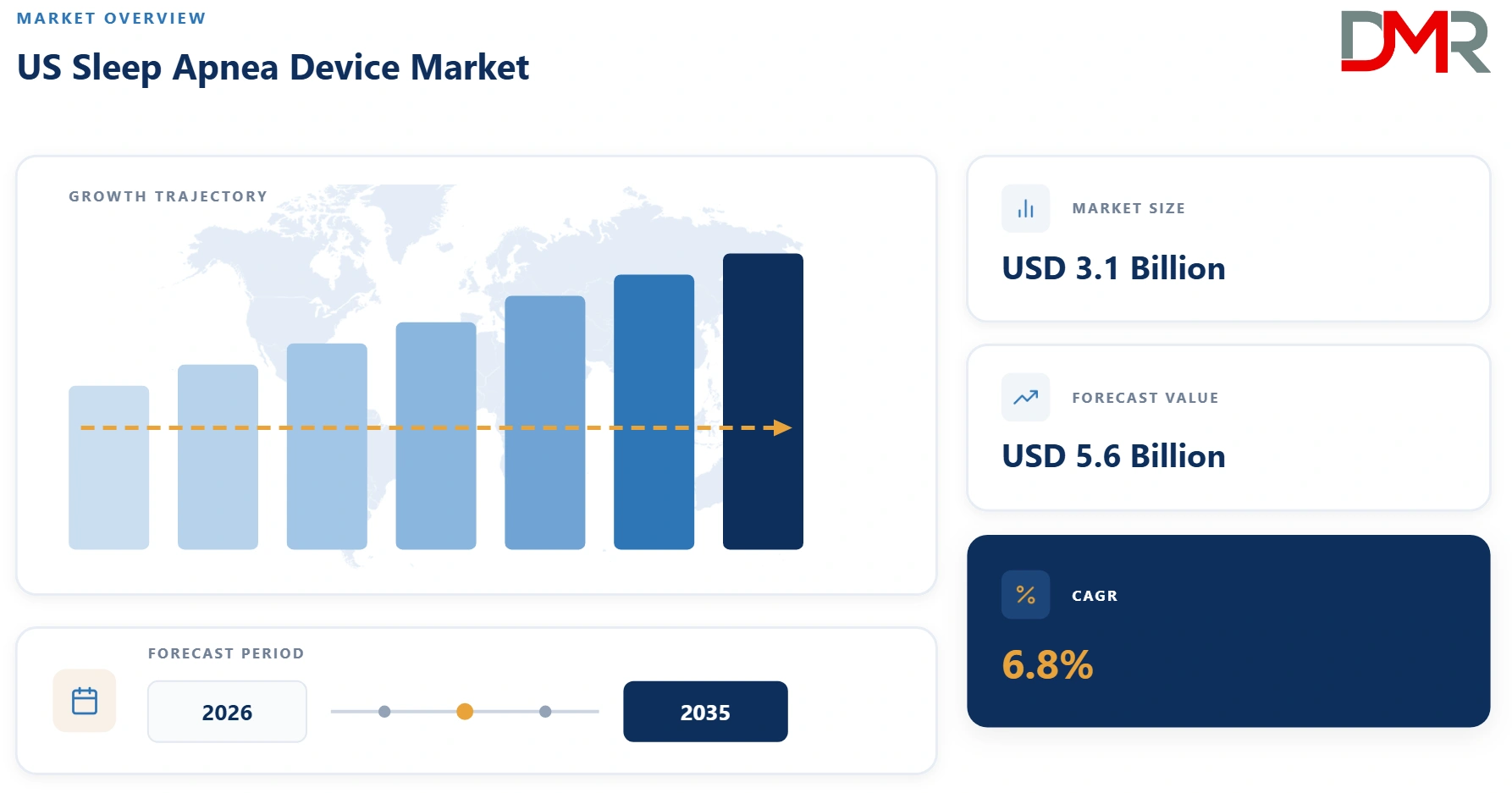
- Market Size, 2026: USD 3.1 billion
- Market Size, 2035: USD 5.6 billion
- CAGR, 2026–2035: 6.8%
- Leading Product Segment, 2026: Therapeutic Devices, 64%
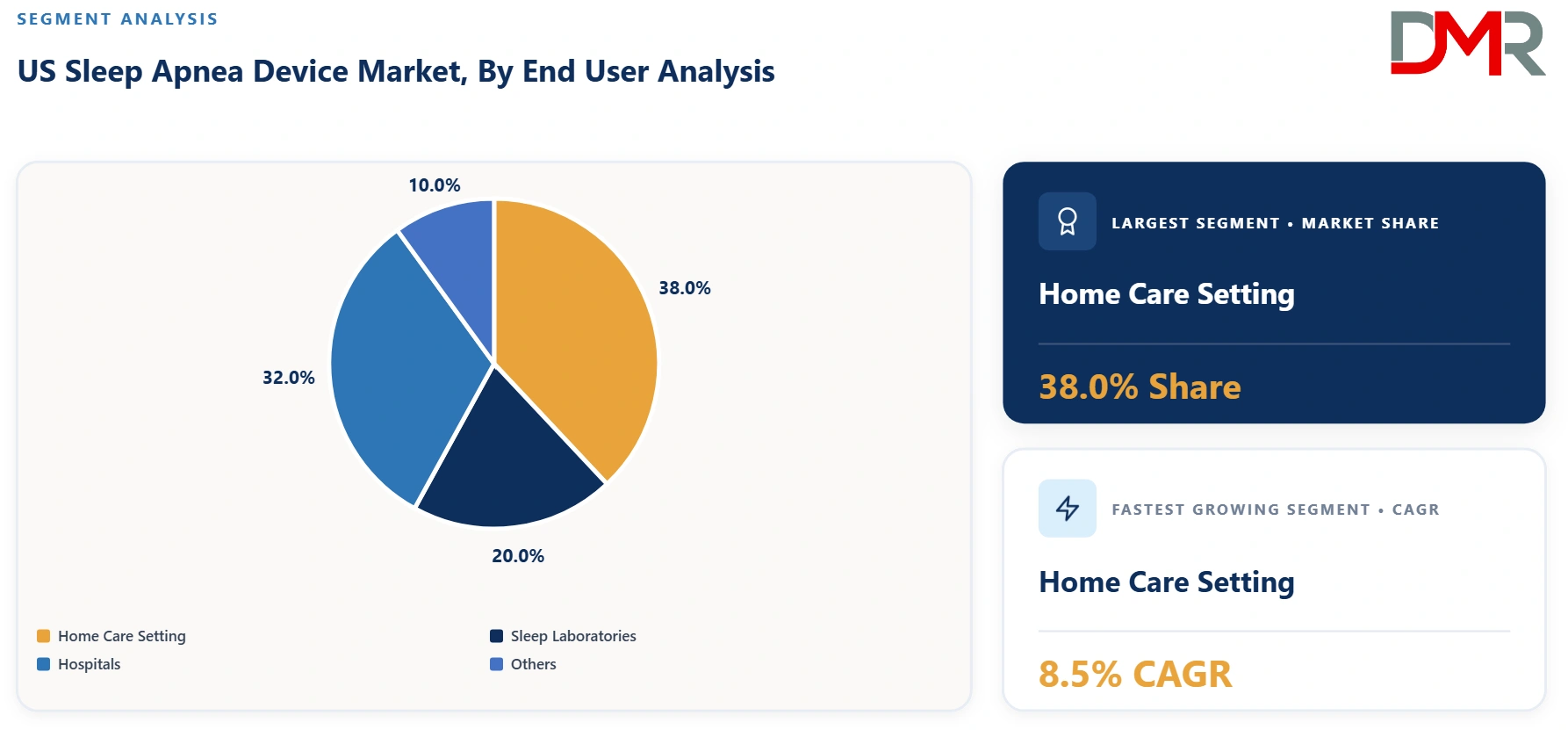
- Leading End-User Segment, 2026: Home Care Settings, 38%
What is the US Sleep Apnea Device and its Market Size?
The U.S. sleep apnea device market is estimated at USD 3.1 billion in 2026 and is projected to reach approximately USD 5.6 billion by 2035, representing a 6.8% CAGR.
ℹ
To learn more about this report –
Download Your Free Sample Report Here
The U.S. sleep apnea device market comprises medical devices used to diagnose, monitor and treat obstructive sleep apnea (OSA), central sleep apnea and related sleep-disordered breathing conditions. Products include positive airway pressure devices such as CPAP, APAP and BiPAP, sleep apnea masks and interfaces, oral appliances, nasal devices, chin straps, polysomnography systems, respiratory polygraphs, actigraphs and pulse oximeters. The market spans hospital and sleep-laboratory equipment as well as increasingly important home-based diagnostic and therapeutic technologies. Its core value proposition is to identify abnormal breathing during sleep and provide effective, increasingly comfortable and connected treatment.
Use Cases
- OSA Diagnosis: Home sleep apnea testing and laboratory polysomnography identify abnormal respiratory events and disease severity.
- PAP Therapy: CPAP, APAP and BiPAP systems maintain airway patency and reduce sleep-related respiratory interruptions.
- Remote Therapy Management: Connected PAP devices transmit adherence and therapy information for clinician and provider monitoring.
- Oral Appliance Therapy: Mandibular advancement devices provide a non-PAP treatment option for selected adult OSA patients.
- Sleep Monitoring: Pulse oximeters, actigraphs and respiratory polygraphs support screening, monitoring and diagnostic workflows.
- Patient Comfort Optimization: Advanced masks, humidification and personalized pressure settings improve usability and treatment adherence.
Key Takeaways
- Market Size: U.S. sleep apnea devices are estimated at USD 3.1 billion in 2026, reaching USD 5.6 billion by 2035.
- Growth: The market is projected to expand at approximately 6.8% CAGR during 2026–2035.
- Growth Drivers: Obesity, aging, increasing diagnosis, home-based testing, reimbursement and digital health integration remain fundamental demand drivers.
- Segment Dominance: Therapeutic devices account for approximately 64% of 2026 revenue, with PAP systems representing the largest device class.
- Home-Care Shift: Home care represents approximately 38% of market revenue as diagnosis and treatment move outside traditional sleep laboratories.
- Fastest Growth: Oral appliances are estimated to expand at approximately 10.2% CAGR, supported by patient preference for non-PAP options and increasing dentist-sleep physician collaboration.
How AI, IoT and Cloud Connectivity are Transforming the US Sleep Apnea Device Market?
AI, IoT and cloud connectivity are transforming sleep apnea devices from standalone respiratory equipment into connected therapy platforms. Modern PAP systems can collect usage, pressure, leak and respiratory-event information and transmit it to digital platforms for patient and provider review. ResMed's AirSense 11, for example, integrates connectivity with the myAir digital support ecosystem. In December 2025, ResMed received FDA clearance for Smart Comfort, an AI-enabled system designed to recommend personalized CPAP comfort settings using real-world sleep data and machine learning.
The principal benefits are improved adherence, earlier intervention, personalized therapy, reduced provider workload and greater visibility into treatment effectiveness. Connected systems also support remote patient management and reduce dependence on repeated in-person visits.
Key Drivers in the US Sleep Apnea Device Market
Rising Prevalence of Sleep Apnea and Undiagnosed Patients:
The U.S. Sleep Apnea Device Market is supported by the large population affected by obstructive sleep apnea and the continued gap between disease prevalence and diagnosis. Increasing obesity, aging demographics, and greater awareness of the health consequences associated with untreated sleep apnea are encouraging more patients to seek evaluation and treatment. Healthcare providers are also placing greater emphasis on early identification of sleep-disordered breathing because of its association with cardiovascular and metabolic conditions. The resulting increase in diagnosis creates demand for both diagnostic technologies and long-term therapeutic devices, particularly PAP systems, masks, oral appliances, and home monitoring solutions.
Expansion of Home-Based Diagnosis and Treatment:
The shift toward decentralized healthcare is significantly supporting the U.S. Sleep Apnea Device Market. Home sleep apnea testing provides an accessible diagnostic option for appropriate adults with suspected obstructive sleep apnea, while connected PAP systems enable treatment and adherence monitoring outside traditional clinical settings. The American Academy of Sleep Medicine recognizes HSAT as an alternative to polysomnography for selected uncomplicated adults when appropriately ordered and interpreted by a medical provider. This shift reduces logistical barriers, improves patient convenience, and supports telemedicine-enabled care pathways. Growing adoption of portable, easy-to-use diagnostic devices and remote monitoring technologies is therefore expected to increase the addressable market for home-care solutions.
Restraints in the US Sleep Apnea Device Market
Patient Non-Adherence to PAP Therapy:
Patient adherence remains a significant restraint for the U.S. Sleep Apnea Device Market. Although PAP therapy is highly established, some patients experience discomfort related to masks, air leakage, pressure sensations, nasal congestion, noise, or difficulty adapting to nighttime equipment. Poor adherence can reduce treatment effectiveness and discourage continued device use or replacement. Manufacturers are addressing these challenges through lighter masks, improved sealing systems, automatic pressure adjustment, humidification, quieter devices, and connected patient-support platforms. However, the need to maintain long-term patient engagement remains an important commercial and clinical challenge. Companies that fail to address comfort and usability may face greater competition from oral appliances and other alternative treatment approaches.
Complex Diagnosis, Referral, and Reimbursement Pathways:
The U.S. Sleep Apnea Device Market also faces challenges associated with the complexity of diagnosis, referral, reimbursement, and treatment initiation. Patients may encounter delays between identifying symptoms, obtaining specialist evaluation, completing diagnostic testing, receiving a prescription, and obtaining equipment. While home testing can simplify the diagnostic pathway for suitable patients, it does not eliminate the need for appropriate clinical assessment. AASM guidance emphasizes that HSAT should be medically ordered and that automatically scored results should not independently determine diagnosis or treatment. These requirements preserve clinical quality but can create additional workflow requirements for providers and device suppliers.
Growth Opportunities in the US Sleep Apnea Device Market
Growing Demand for Home Sleep Testing and Portable Diagnostics:
The expansion of home-based sleep testing represents a major opportunity for the U.S. Sleep Apnea Device Market. Portable diagnostic technologies can provide greater convenience than traditional laboratory-based testing for appropriately selected patients and can help healthcare providers manage growing demand for sleep evaluations. Advances in sensors, miniaturization, wireless connectivity, and software are improving the usability of home diagnostic systems. The continued movement toward decentralized healthcare is also creating opportunities for manufacturers to develop compact, easy-to-use devices that integrate with telemedicine and digital clinical workflows. This opportunity extends beyond initial diagnosis into treatment monitoring and longitudinal patient management.
Integration of Telemedicine, Digital Health, and AI:
The increasing integration of telemedicine, mobile health platforms, cloud connectivity, and artificial intelligence presents another significant opportunity for the U.S. Sleep Apnea Device Market. Connected devices can provide clinicians with therapy and adherence information while enabling patients to receive digital support without frequent in-person visits. AI can further support personalized therapy, data interpretation, patient engagement, and identification of potential adherence problems. Manufacturers are consequently shifting from standalone hardware toward integrated technology ecosystems combining devices, software, connectivity, and patient-management services. This evolution can create new revenue opportunities while strengthening differentiation among established manufacturers and emerging technology companies.
Trends in the US Sleep Apnea Device Market
Shift Toward Connected and Patient-Centric Devices:
The U.S. Sleep Apnea Device Market is increasingly moving toward connected devices designed around patient comfort, usability, and long-term adherence. PAP machines, masks, monitoring systems, and digital platforms are becoming more integrated, allowing therapy information to be collected and reviewed remotely. Smaller form factors, improved mask designs, automated pressure management, and mobile applications are becoming important competitive differentiators. The emphasis is shifting from simply delivering therapy to creating a more convenient and personalized patient experience.
Decentralization of Sleep Care:
Home-based diagnosis and treatment are becoming increasingly important trends in the U.S. Sleep Apnea Device Market. Portable diagnostic devices, telemedicine, remote monitoring, and home PAP therapy are reducing dependence on traditional sleep laboratories for appropriate patient populations. This trend is supported by the growing availability of technically capable home-testing devices and healthcare providers' interest in convenient, scalable care models. At the same time, clinical oversight remains important, as professional interpretation and appropriate patient selection are required for HSAT-based diagnosis.
Research Scope and Analysis
The U.S. market is analyzed across four commercially relevant dimensions: By Product and By End User. Shares represent estimated 2026 revenue allocation and are designed to provide a mutually coherent market model.
ℹ
To learn more about this report –
Download Your Free Sample Report Here
By Product Analysis
Therapeutic Devices dominate the U.S. sleep apnea device market with an estimated 64% share in 2026, reflecting the recurring need for active treatment among diagnosed patients. PAP devices—particularly CPAP and APAP—constitute the largest component because they remain the established first-line treatment platform for many adults with OSA. Diagnostic devices account for approximately 23%, supported by expanding home sleep testing and continued demand for laboratory PSG. Sleep apnea masks and interfaces represent approximately 13% when measured as a separately attributable product-revenue category. The fastest-growing product sub-segment is oral appliances, estimated at approximately 10.2% CAGR, supported by patient demand for non-PAP alternatives and dentist-led treatment pathways. Within therapeutic devices, PAP remains dominant, while oral appliances are the primary growth opportunity. Market definitions vary because some providers classify masks and accessories within PAP rather than as independent product categories.
By End User Analysis
Home Care Settings represent the largest end-user segment, with approximately 38% of 2026 market revenue. The segment benefits from the increasing use of home sleep testing, home PAP therapy, remote monitoring and DME-based equipment fulfillment. Hospitals account for approximately 32%, retaining an important role in complex diagnosis, severe disease management and patients with significant comorbidities. Sleep laboratories contribute approximately 20%, primarily through PSG, titration, specialist evaluation and complex diagnostic cases, while ambulatory centers and other users account for approximately 10%. Home care is also the fastest-growing end-user channel at an estimated 8.5% CAGR, reflecting convenience and healthcare-system efforts to shift appropriate care outside expensive institutional settings. The trend is supported by AASM guidance permitting HSAT for selected uncomplicated adults and by Medicare's established coverage framework for qualifying CPAP therapy.
The US Sleep Apnea Device Market Report is segmented on the basis of the following:
By Product
- Therapeutic Devices
- Positive Airway Pressure Devices
- Oral Devices
- Nasal Devices
- Chin Straps Diagnostic Devices
- Actigraphs
- Polysomnography Device
- Respiratory Polygraphs
- § Cardiologists
- § ENT Specialists
- § Homecare Nurses
- § Sleep Physicians
- Pulse Oximeter
- Sleep Apnea Masks
By End-User
- Home Care Setting
- Sleep Laboratories
- Hospitals
- Others
Regulatory Landscape
The U.S. sleep apnea device market operates under a relatively mature but demanding FDA framework. CPAP/PAP systems, diagnostic devices, masks and oral appliances are subject to device-specific classification, quality, labeling and premarket requirements. Oral appliances for snoring/OSA generally fall under Class II requirements, while applicable products use the 510(k) pathway. The FDA's continuing review of sensor-based digital-health devices is accelerating innovation in portable diagnostics, but manufacturers must substantiate safety and performance. Reimbursement is another critical market-access variable: CMS covers qualifying CPAP equipment under the DME benefit. Future regulatory pressure will increasingly focus on cybersecurity, AI transparency, interoperability and post-market monitoring.
Technology Analysis
The U.S. market is moving toward connected, AI-enabled and personalized sleep therapy. Cloud-connected PAP systems can capture adherence, pressure and respiratory-event information, while smartphone platforms increasingly provide patient coaching and therapy support. ResMed's Smart Comfort represents an important milestone because FDA clearance allows machine learning to recommend personalized CPAP comfort settings. Meanwhile, portable diagnostic platforms such as WatchPAT demonstrate continued innovation in home-based sleep assessment.The principal opportunity is convergence: diagnostic data can increasingly feed into therapy selection, adherence management and remote clinical intervention. Competitive advantage will therefore increasingly depend on algorithms, software usability, clinical evidence and data ecosystems rather than hardware alone.
Competitive Landscape
The U.S. sleep apnea device market is moderately concentrated, with ResMed, Philips Respironics, Fisher & Paykel Healthcare, SomnoMed, ZOLL/Itamar, React Health and other specialized manufacturers competing across PAP, masks, diagnostics and oral appliances. ResMed has a particularly strong position in connected PAP, while Fisher & Paykel has established a significant mask franchise and SomnoMed focuses on oral appliances. Competition is shifting from basic device functionality toward comfort, adherence, connectivity, AI personalization, clinical evidence and distribution. Companies are pursuing product launches, FDA clearances, digital-health partnerships, portfolio expansion and geographic/channel development.
Some of the prominent players in the US Sleep Apnea Device Market are:
- ResMed
- Philips Respironics
- Fisher & Paykel Healthcare
- Inspire Medical Systems
- React Health
- SomnoMed
- BMC Medical
- Drive DeVilbiss Healthcare
- Compumedics
- Natus Medical
- ZOLL Medical
- Cadwell Industries
- Löwenstein Medical
- Breas Medical
- Nyxoah
- ProSomnus Sleep Technologies
- DynaFlex
- Glidewell
- AirAvant Medical
- Panthera Dental
- Myerson
- Signifier Medical Technologies
- Vivos Therapeutics
- Sommetrics
- Siesta Medical
- Onera Health
- Nox Medical
- SOMNOmedics
- OrthoApnea
- OADS (Open Airway Dental Solutions)
- Tomed
- LivaNova
- Nihon Kohden
- Apnea Sciences
- Teleflex
- Asahi Kasei
- Hamilton Medical
- Invacare
- Transcend
- Apex Medical
- Other Key Players
Recent Developments
- July 2026, Itamar Medical: The FDA granted substantial-equivalence clearance for WatchPAT SW, demonstrating continued development of software-supported sleep-diagnostic platforms.
- January 2026, Fisher & Paykel Healthcare: The company launched the F&P Nova Nasal mask in the United States, emphasizing easier fitting, stable sealing, reduced noise and patient movement to support PAP adherence.
- December 2025, ResMed: ResMed received FDA clearance for Smart Comfort, an AI-enabled medical device designed to recommend personalized CPAP comfort settings, with a limited U.S. launch planned for early 2026 and broader rollout later in 2026.
- September 2025, Itamar Medical/ZOLL: FDA records show substantial-equivalence clearance for the WatchPAT400, reinforcing the continued expansion of portable, sensor-based home sleep diagnostic technologies in the U.S.
- May 2025, Fisher & Paykel Healthcare: The company reported 14% full-year growth in OSA-mask revenue, alongside continued investment in R&D and expansion of its respiratory and sleep portfolio.
Report Details
| Report Characteristics |
| Market Size (2026) |
USD 3.1 Bn |
| Forecast Value (2035) |
USD 5.6 Bn |
| CAGR (2026–2035) |
6.8% |
| Historical Data |
2021 – 2025 |
| Forecast Data |
2026 – 2035 |
| Base Year |
2025 |
| Segments Covered |
By Product, By End User |
| Country Coverage |
US |
Frequently Asked Questions
What is the size of the U.S. Sleep Apnea Device Market in 2026?
▾ The U.S. Sleep Apnea Device Market is estimated at USD 3.1 billion in 2026, supported by increasing diagnosis, home-based testing, and adoption of therapeutic devices.
What will be the size of the U.S. Sleep Apnea Device Market by 2035?
▾ The U.S. Sleep Apnea Device Market is projected to reach approximately USD 6.00 billion by 2035, reflecting sustained demand for diagnostic and therapeutic technologies.
What is the CAGR of the U.S. Sleep Apnea Device Market from 2026 to 2035?
▾ The U.S. Sleep Apnea Device Market is expected to expand at approximately 7.6% CAGR from 2026 to 2035, driven by technology adoption and increasing diagnosis.
What are the key factors driving the U.S. Sleep Apnea Device Market?
▾ The U.S. Sleep Apnea Device Market is driven by rising sleep apnea prevalence, obesity, aging, greater disease awareness, home sleep testing, and connected therapy technologies.
Which segment dominates the U.S. Sleep Apnea Device Market?
▾ Therapeutic devices represent the leading segment of the U.S. Sleep Apnea Device Market, supported by widespread adoption of positive airway pressure therapy.
Which segment is expected to grow fastest in the U.S. Sleep Apnea Device Market?
▾ Home care and self-testing solutions are among the fastest-growing areas of the U.S. Sleep Apnea Device Market, supported by increasing preference for convenient diagnosis and treatment.
Who are the key players in the U.S. Sleep Apnea Device Market?
▾ Major companies operating in the U.S. Sleep Apnea Device Market include ResMed, Koninklijke Philips, Fisher & Paykel Healthcare, Inspire Medical Systems, and SomnoMed.
How is the U.S. Sleep Apnea Device Market segmented?
▾ The U.S. Sleep Apnea Device Market is segmented by product and end usercovering therapeutic devices, diagnostic devices, masks, home care, hospitals, and sleep laboratories.