Global User-Generated Content (UGC) Marketing Market Snapshot
- Global User-Generated Content (UGC) Marketing Market Size in 2026: USD 10.2 billion
- Global User-Generated Content (UGC) Marketing Market Size in 2035: USD 51.9 billion
- Global CAGR from 2026 to 2035: 19.8%
- Videos are the leading Content Type segment in 2026: 30.4%
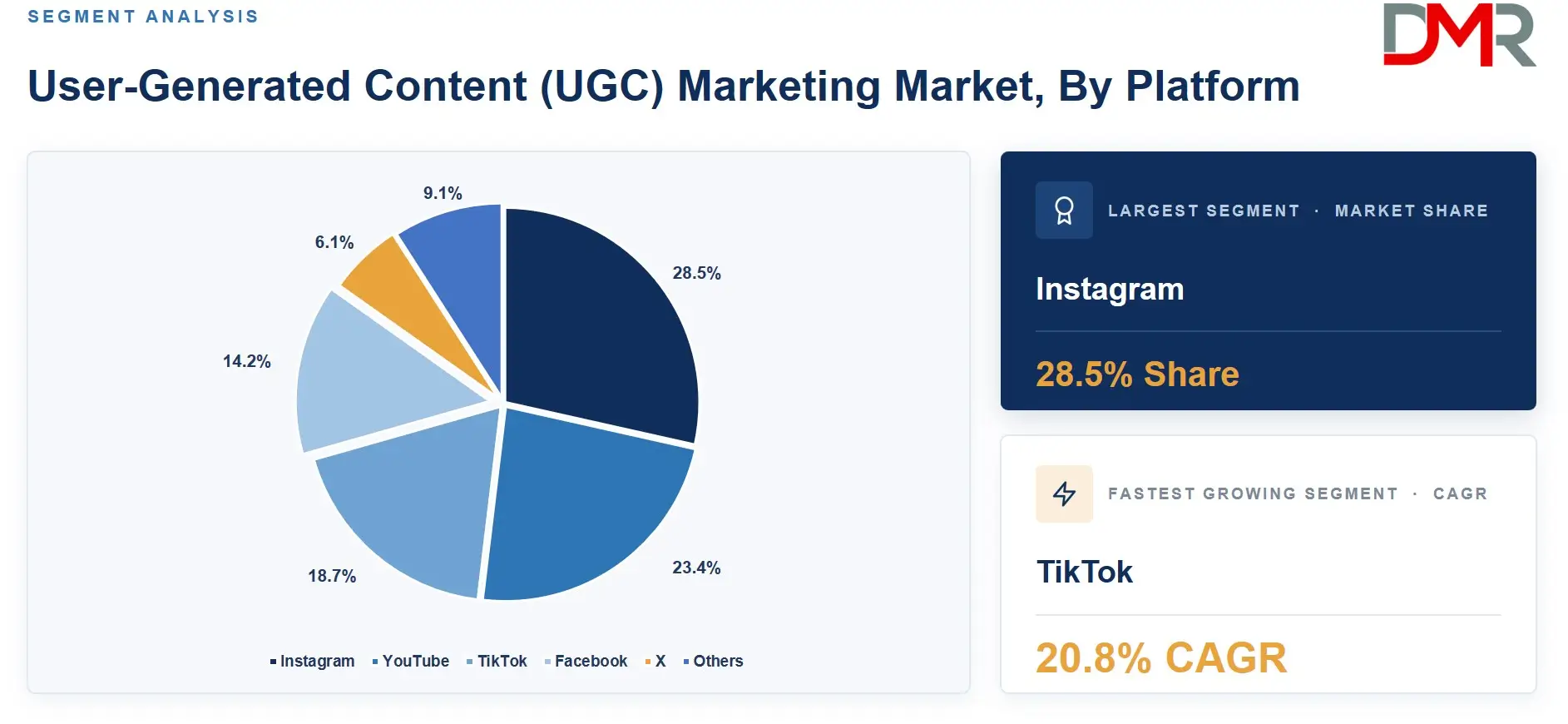
- Instagram is the leading Platform segment in 2026: 28.5%
- Cloud-Based deployment is the fastest-growing Deployment Mode segment: 20.2% CAGR
- TikTok is the fastest-growing Platform segment: 20.8% CAGR
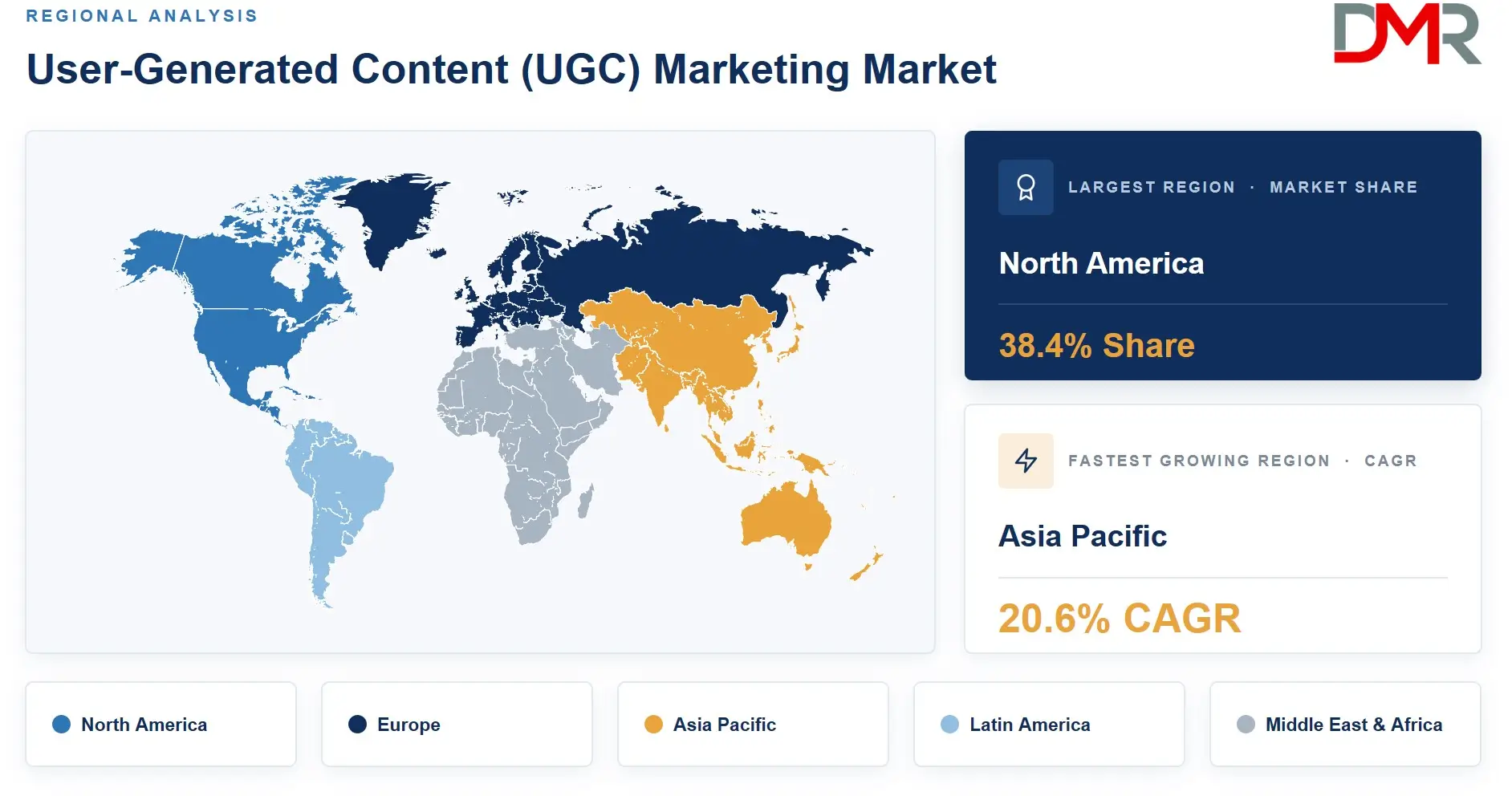
- North America is the leading Region in 2026: 38.4%
- Asia Pacific is the fastest-growing Region: 20.6% CAGR
What is the User-Generated Content Marketing Market and its Market Size?
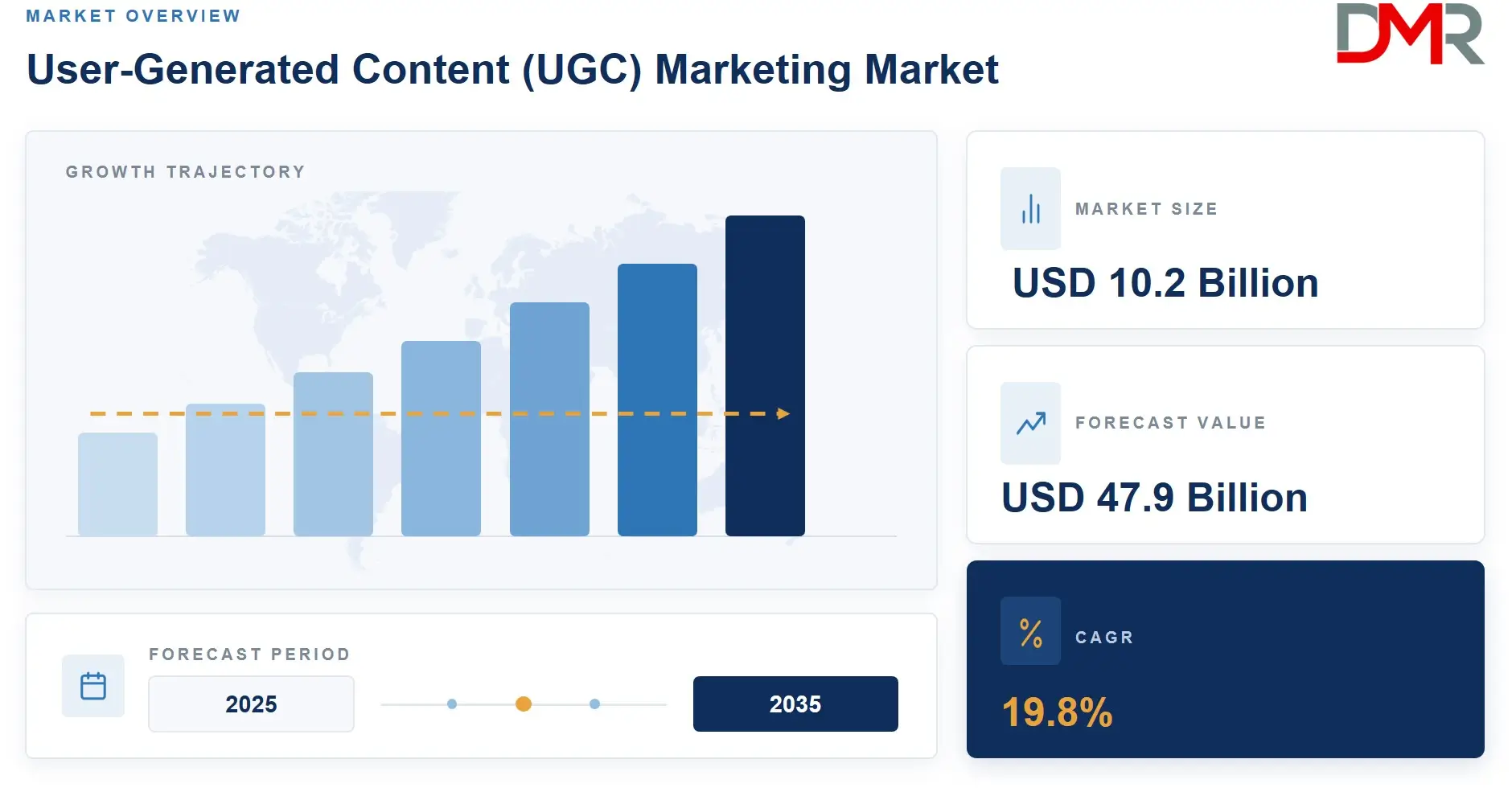
The Global User-Generated Content (UGC) Marketing Market size is projected to be valued at USD 10.2 billion in 2026, and it is further anticipated to reach a market value of USD 51.9 billion by 2035 at a CAGR of 19.8%.
ℹ
To learn more about this report –
Download Your Free Sample Report Here
The global User-Generated Content (UGC) marketing market is witnessing substantial growth, driven by the rising demand for authenticity in brand messaging and the explosive adoption of social media platforms globally. Consumers are no longer passive recipients of branded content; they actively participate in shaping a brand's identity by sharing their real-life experiences online.
Marketers are leveraging this shift by integrating customer-created content into their websites, email campaigns, and paid ads to improve credibility and boost conversion rates. From photo reviews on e-commerce sites to video testimonials on YouTube and TikTok, brands across sectors such as fashion, travel, consumer electronics, and F&B are investing in UGC tools and platforms that help discover, curate, and distribute user content effectively.
Use Cases
- Enhancing E-commerce Conversion with Visual Customer Reviews: In the e-commerce industry, integrating user-generated photos and video reviews into product pages strengthens buyer trust and increases conversions. Authentic visual content from real customers provides credible social proof, helping shoppers make confident purchase decisions. Brands like ASOS and Sephora use UGC to enhance engagement, improve customer satisfaction, and reduce product return rates.
- Boosting Travel Bookings through Real User Experiences: Travel and hospitality brands use user-generated photos, reviews, and travel stories to build trust and inspire bookings. Platforms like Airbnb and Booking.com showcase authentic guest content to influence decisions, while branded hashtag campaigns expand reach and engagement. This authentic storytelling enhances credibility, strengthens customer loyalty, and increases conversion rates in the competitive travel market.
- Strengthening Brand Loyalty Through Influencer-Led UGC Campaigns: Consumer brands partner with influencers and micro-creators to produce relatable user-generated content, including product reviews, tutorials, and hashtag campaigns. Shared across platforms like TikTok, Instagram, and YouTube, this blend of sponsored and organic content boosts brand visibility, builds trust, encourages authentic engagement, and strengthens customer loyalty while increasing purchase intent.
- Driving Product Innovation via Community-Driven Feedback: Brands leverage user-generated reviews, comments, and unboxing videos to understand customer preferences and identify improvement opportunities. This real-time feedback helps refine products, enhance product-market fit, and guide future innovations. By acting on and highlighting customer input, companies strengthen trust, encourage engagement, and build a collaborative brand community.
Key Takeaways
- Global Market Value: The global User-Generated Content (UGC) Marketing Market is projected to be valued at USD 10.2 billion in 2026 and which is further anticipated to reach USD 51.9 billion by 2035.
- Global Growth Rate: The global User-Generated Content (UGC) Marketing Market is expected to have a compound annual growth rate (CAGR) of 19.8% during the forecast period from 2026 to 2035.
- Recent Trends: Brands encourage user-generated content through loyalty programs, ambassador initiatives, and branded campaigns to build engaged communities. This participatory approach boosts content creation, strengthens customer engagement, and transforms buyers into loyal brand advocates.
- Market Drivers: The rapid rise of influencers on TikTok, Instagram, and YouTube has expanded the impact of user-generated content. Brands collaborate with creators to produce authentic, audience-focused content that boosts engagement, increases conversions, and strengthens brand trust, making influencer-led UGC a key driver of market growth.
- Content Type Segment Analysis: The videos segment is anticipated to be the largest content type segment, having a market share of 30.4% by the end of 2026. It is also expected to be the fastest-growing segment with a CAGR of 20.4% from 2026 to 2035.
- Platform Segment Analysis: Instagram is the major platform segment, representing the highest market share of 28.5% in 2026, while the TikTok is projected to have the highest growth rate with a CAGR of 20.8% during the forecast period.
- Regional Analysis: The North America region is poised to hold the largest market share of 38.4% in the global market in 2026. The Asia Pacific region is expected to be the fastest-growing region with a CAGR of 20.6% during the forecast period.
How AI/Gen AI is Transforming the User-Generated Content (UGC) Marketing Market?
The User-Generated Content (UGC) Marketing Market is undergoing a paradigm shift with the advent of AI and Gen AI, which streamline content discovery, moderation, personalization, and campaign management. AI suggests relevant UGC, thereby enhancing engagement and conversion rates. Gen AI can help brands develop captions, translations, summaries and custom marketing materials, drive up user-provided content and work at scale. Spam, inappropriate content, and fake reviews are automatically identified using AI-powered moderation tools to ensure content is authentic and safe for brands. This also allows for improved audience targeting, sentiment analysis, and performance tracking, ensuring that UGC campaigns are maximizing their impact while minimizing operational costs.
Key Drivers in the Global User-Generated Content (UGC) Marketing Market
Rising Demand for Authentic Brand Storytelling
Consumer prefer authentic, genuine information more than advertising and it plays a vital part in contemporary marketing. User-generated content provides authentic customer messaging that establishes more emotional and trust relationships. Authentic customer reviews, testimonials, and images boost engagement and customer loyalty, particularly in beauty, fashion, travel, and tech brands. This marks a paradigm shift to authentic content creation, a key driver of UGC adoption worldwide.
Growth of the Influencer and Creator Economy
UGC has gained a tremendous boost in visibility owing to the influencers and creators who use channels such as TikTok, Instagram, and YouTube. Brands are working with micro-influencers and brand advocates to create content that is meaningful to the niche audience. Such collaborations generate user-centric campaigns that are scalable, and they also yield better click-through rates and conversions than those created by the brand itself. Influencer marketing is increasingly becoming a part of UGC strategies and continues to fuel demand in all industries.
Restraints in the Global User-Generated Content (UGC) Marketing Market
Challenges in UGC Rights Management and Legal Compliance
Permission to reuse consumer-generated content is a huge hurdle for marketers. Copyright, content licensing, and privacy laws such as GDPR or CCPA can cause legal problems if the UGC is adopted without the owner's permission. While many brands appreciate the marketing potential of UGC, they still lack comprehensive solutions for managing content rights, causing hesitation in the way of scaling UGC.
Quality Control and Content Moderation Issues
Not everything created by users is done in line with the brand or campaign objectives. In addition to this, content quality, tone, and accuracy may differ significantly since UGC is decentralized. If brands don't have the right content moderation tools, they could inadvertently be publishing inappropriate, off-brand or even harmful content, harming their reputation and customers' trust. Quality and relevance can be difficult to achieve at scale, particularly for organizations with a large footprint and a global presence.
Growth Opportunities in the Global User-Generated Content (UGC) Marketing Market
Expansion of Social Commerce and Livestream Shopping
Social commerce and livestream shopping are rapidly growing trends, creating an immense opportunity for the UGC Marketing Market. Social media platforms including TikTok Shop, Instagram Shopping and YouTube Shopping are increasingly embedding user reviews, creators and content, and live product demonstrations into the purchasing process. Authentic customer content offers brands the opportunity to drive trust, engagement, and sales right on social platforms. The need for scalable UGC solutions for creating, managing, and analyzing it will likely continue to grow as shoppers continue to use social media to make purchases.
Expansion of UGC in Healthcare and Education
Authentic stories from real patients, student experiences, and expert communities are increasingly leveraged to foster trust and engagement by healthcare providers, educational institutions, and wellness brands. This increased use outside the confines of retail and consumer goods creates new revenue streams for UGC marketing platforms and content management solutions.
Trends in the Global User-Generated Content (UGC) Marketing Market
Shift toward Short-Form and Ephemeral Content
With the dominance of TikTok, Instagram Reels, and Snapchat Stories, UGC is evolving toward short-form, mobile-friendly formats. Brands are encouraging real-time, spontaneous content creation through challenges, duets, and AR filters. This trend favors high-volume, fast-paced UGC strategies that align with user behavior, especially among Gen Z and millennial consumers seeking interactive, bite-sized experiences.
Community-Led Brand Building
Modern consumers want to feel part of a brand's journey, not just passive buyers. Companies are cultivating communities around their products by encouraging UGC through loyalty programs, ambassador clubs, and branded social campaigns. This participatory marketing approach fuels a continuous stream of content, enhances user engagement, and fosters a sense of belonging, making customers long-term advocates instead of one-time buyers.
Research Scope and Analysis
The Global User-Generated Content (UGC) Marketing Market is segmented by content type, platform analysis, deployment mode, UGC campaign type, and industry vertical. Key industry verticals include retail and e-commerce, travel and hospitality, media and entertainment, consumer goods, healthcare, education, and others. These segments reflect the diverse adoption of UGC marketing across content formats, digital platforms, deployment approaches, campaign strategies, and industry-specific marketing applications, supporting brands in strengthening customer engagement, authenticity, social proof, and overall digital marketing effectiveness.
ℹ
To learn more about this report –
Download Your Free Sample Report Here
By Content Type Analysis
Videos dominated the User-Generated Content (UGC) Marketing Market by content type in 2026, accounting for 30.4% of the market share. The segment is also projected to register the fastest CAGR of 20.4% during 2026–2035, driven by the rising popularity of short-form videos, livestream shopping, influencer marketing, and high consumer engagement across social media platforms.
By Platform Analysis
Instagram led the UGC Marketing Market by platform in 2026, capturing 28.5% of the market share, driven by its strong creator ecosystem and visual-first engagement. Meanwhile, TikTok is projected to be the fastest-growing platform, registering a 20.8% CAGR during 2026–2035, fueled by the rapid adoption of short-form videos, influencer collaborations, and social commerce.
By Deployment Mode Analysis
Cloud-Based deployment dominated the UGC Marketing Market with an estimated 68.5% market share in 2026 and is projected to register the fastest CAGR of 20.2% during 2026–2035. Its growth is driven by scalability, lower infrastructure costs, seamless social media integration, AI-powered content management, and real-time analytics, making it the preferred deployment model for businesses.
By UGC Campaign Type Analysis
Organic UGC dominated the UGC Marketing Market by campaign type, accounting for an estimated 46.8% market share in 2026, driven by authentic customer reviews, photos, and social media posts. Influencer-Driven UGC is projected to register the fastest CAGR of 21.6% during 2026–2035, fueled by the rapid growth of the creator economy, influencer partnerships, and social commerce across digital platforms.
By Industry Vertical Analysis
Retail & E-Commerce dominated the UGC Marketing Market by industry vertical, accounting for an estimated 34.2% market share in 2026, driven by the widespread use of customer reviews, ratings, photos, and video testimonials. Beauty & Cosmetics is projected to be the fastest-growing segment, registering a 21.3% CAGR during 2026–2035, supported by influencer marketing, product tutorials, and strong social media engagement.
The Global User-Generated Content (UGC) Marketing Market Report is segmented based on the following:
By Content Type
- Videos
- Text/Reviews/Blogs
- Images/Photos
- Social Media Posts/Stories
- Podcasts & Audio Content
By Platform
- Instagram
- YouTube
- TikTok
- Facebook
- X
- Others
By Deployment Mode
By UGC Campaign Type
- Organic UGC
- Influencer-Driven UGC
- Branded UGC Campaigns
By Industry Vertical
- Retail & E-Commerce
- Travel & Hospitality
- Food & Beverages
- Fashion & Apparel
- Beauty & Cosmetics
- Fitness & Wellness
- Others
Regional Analysis
North America is the Leading Region in the Global User-Generated Content (UGC) Marketing Market
North America dominated the User-Generated Content (UGC) Marketing Market with 38.4% of the global market share in 2025, driven by the strong presence of leading social media platforms, e-commerce companies, and digital marketing technology providers. High adoption of influencer marketing, AI-powered content management tools, and social commerce has accelerated UGC usage across retail, beauty, travel, and entertainment industries. Additionally, widespread smartphone penetration, advanced digital infrastructure, and significant marketing investments by brands continue to strengthen the region's leadership in the global UGC marketing market.
ℹ
To learn more about this report –
Download Your Free Sample Report Here
Asia Pacific is the Fastest-Growing Region in the Global User-Generated Content (UGC) Marketing Market
Asia Pacific is expected to witness the most significant growth of 20.6% in the user-generated content (UGC) marketing market over the forecast period. This surge is fueled by the rapid expansion of the internet and smartphone penetration, a booming population of digital natives, and the explosive popularity of platforms like TikTok, WeChat, Instagram, and YouTube in countries such as India, China, Indonesia, and Southeast Asia
Europe User-Generated Content (UGC) Marketing Market
User-Generated Content (UGC) marketing is getting popular across Europe as brands increasingly rely on authentic customer reviews, photos, videos, and social media content to build trust and improve engagement. The rapid expansion of e-commerce, influencer collaborations, and social commerce is driving adoption across retail, fashion, beauty, travel, and hospitality sectors. Also, growing investments in AI-powered content moderation and compliance with data privacy regulations are supporting the development of secure, transparent, and effective UGC marketing strategies.
Latin America User-Generated Content (UGC) Marketing Market
Across Latin America, businesses are increasingly embracing user-generated content (UGC) marketing to strengthen customer engagement and brand authenticity. Growing social media participation, expanding e-commerce, and widespread smartphone usage are accelerating the adoption of customer reviews, photos, videos, and creator-led campaigns. Companies across retail, beauty, fashion, food, and travel sectors are leveraging authentic consumer content to influence purchasing decisions, improve brand credibility, and create more personalized digital marketing experiences.
Middle East and Africa (MEA) User-Generated Content (UGC) Marketing Market
Growing digital transformation, rising smartphone penetration, and increasing social media engagement are driving the adoption of user-generated content (UGC) marketing across the region. Brands are leveraging customer reviews, influencer collaborations, and user-created videos to strengthen consumer trust and improve online engagement. The rapid expansion of e-commerce, tourism, fashion, and beauty industries, along with increasing investments in digital advertising and creator partnerships, is further accelerating demand for authentic, community-driven marketing strategies.
Major Countries Analysis
United States User-Generated Content (UGC) Marketing Market
The United States represents one of the most advanced markets for user-generated content (UGC) marketing, driven by high social media engagement, a mature creator economy, and widespread adoption of e-commerce. Brands across retail, beauty, fashion, travel, and consumer goods actively leverage customer reviews, videos, and influencer collaborations to enhance trust and drive conversions. Strong investments in AI-powered content moderation, social commerce, and marketing analytics are further accelerating adoption. The presence of leading technology platforms and digital marketing companies continues to support innovation and sustained growth in UGC marketing across the country.
Japan User-Generated Content (UGC) Marketing Market
Japan has emerged as a key market, supported by its highly connected digital population and strong social media culture. The country is witnessing increasing adoption of customer reviews, creator collaborations, and short-form video content across retail, beauty, fashion, and consumer electronics. Japanese brands are also investing in AI-powered content moderation, influencer marketing, and personalized digital campaigns to strengthen customer engagement, enhance brand credibility, and improve online purchasing experiences.
Saudi Arabia User-Generated Content (UGC) Marketing Market
Saudi Arabia is witnessing rapid growth in user-generated content (UGC) marketing, driven by increasing social media adoption, expanding e-commerce, and digital transformation initiatives under Vision 2030. Brands are leveraging customer reviews, creator collaborations, and influencer campaigns to build trust, boost engagement, and enhance online shopping experiences across retail, fashion, beauty, and travel sectors.
Technology Analysis
In the context of the UGC Market, the impact of technology is especially pronounced, with generative AI, automated content moderation systems, recommendation algorithms, social commerce tools, and advanced creator platforms transforming the way content is produced and shared. AI-driven editing and customization unlock opportunities for brands to scale genuine user-generated content (UGC) campaigns effectively. But this comes with risks of deepfakes, misinformation, copyright issues, and poor moderation. As technology evolves, UGC is becoming more scalable, engaging, measurable, and commercially usable in digital marketing platforms.
Regulatory Landscape
As governments advance their data privacy, copyright, platform accountability, advertising disclosure, and harmful content moderation requirements, it's clear that regulatory developments have a major impact on the User-Generated Content (UGC) Market. The new rules on influencer marketing and AI-generated content are driving increased transparency and compliance. Consent management, content verification and automated compliance solutions are all areas where opportunities lie. Rules, however, can evolve, leading to higher operational expenses and legal risk, which may limit content use and promote safer and more open, more professionally managed UGC ecosystems.
By Region
North America
Europe
- Germany
- France
- The U.K.
- Italy
- Spain
- Rest of Europe
Asia-Pacific
- China
- Japan
- India
- Australia
- South Korea
- Rest of APAC
Latin America
- Mexico
- Brazil
- Rest of LATAM
Middle East & Africa
- Saudi Arabia
- The UAE
- South Africa
- Rest of MEA
Competitive Landscape
The competitive environment of the User-Generated Content (UGC) Marketing Market is characterized by continuous innovation among technology providers seeking to strengthen content discovery, collection, moderation, management, and distribution capabilities across digital marketing channels. Key market participants include Bazaarvoice, Yotpo, Nosto, TINT, Taggbox, Emplifi, PowerReviews, which provide platforms that help brands leverage customer reviews, social content, visual media, ratings, and other forms of user-generated content. These companies are increasingly integrating artificial intelligence, automation, analytics, content moderation, personalization, and social commerce capabilities to improve content authenticity, customer engagement, conversion performance, and brand advocacy across websites, social media, e-commerce platforms, and omnichannel marketing environments.
Some of the prominent players in the Global User-Generated Content (UGC) Marketing Market are:
- Bazaarvoice
- Yotpo
- Nosto
- TINT
- Taggbox
- PowerReviews / 1WorldSync
- Emplifi
- Flowbox
- Social Native
- CrowdRiff
- GRIN
- Upfluence
- Sprinklr
- Khoros
- Hootsuite
- Dash Hudson
- Later
- Insense
- Cohley
- Billo
- JoinBrands
- Influee
- Trend
- Collabstr
- Creator.co
- Aspire
- Captiv8
- Traackr
- impact.com
- Skeepers
- Okendo
- REVIEWS.io
- Judge.me
- Loox
- Tagembed
- Walls.io
- Juicer
- Curator.io
- EmbedSocial
- ShortStack
- Other Key Players
Recent Developments
- July 2026: Bazaarvoice announced its recognition as a Sample Vendor in the Gartner Hype Cycle for Digital Commerce 2026 for shoppable media, highlighting the increasing convergence of UGC, social commerce, and conversion-focused shopping experiences.
- May 2026: Yotpo highlighted Yotpo Discover, an AI visibility platform designed specifically for commerce, reflecting the company's broader expansion of AI capabilities alongside its established reviews and visual UGC solutions.
- March 2026: Bazaarvoice announced an integration with TikTok Shop, allowing brands in its network to syndicate product reviews and other UGC directly to products purchased through TikTok Shop, expanding the reach of authentic customer content across social commerce channels.
Report Details
| Report Characteristics |
| Market Size (2026) |
USD 10.2 Bn |
| Forecast Value (2035) |
USD 51.9 Bn |
| CAGR (2026–2035) |
19.8% |
| The US Market Size (2026) |
USD 3.06 Bn |
| Historical Data |
2021 – 2025 |
| Forecast Data |
2026 – 2035 |
| Base Year |
2025 |
| Segments Covered |
By Content Type, By Platform Analysis, By Deployment Mode, By UGC Campaign Type, By Industry Vertical |
| Regional Coverage |
North America – The US and Canada; Europe – Germany, France, The UK, Italy, Spain, Rest of Europe; Asia-Pacific – China, Japan, India, Australia, South Korea, Rest of APAC; Latin America – Mexico, Brazil, Colombia, Argentina, Rest of LATAM; Middle East & Africa – Saudi Arabia, The UAE, South Africa, Rest of MEA |
Frequently Asked Questions
How big is the User-Generated Content (UGC) Marketing Market?
▾ The global User-Generated Content (UGC) Marketing Market is projected to be valued at USD 10.2 billion in 2026 and is expected to reach USD 51.9 billion by 2035.
What is the CAGR of the User-Generated Content (UGC) Marketing Market from 2026 to 2035?
▾ The global User-Generated Content (UGC) Marketing Market is anticipated to grow at a compound annual growth rate (CAGR) of 19.8% during the forecast period from 2026 to 2035.
What factors are driving the growth of the User-Generated Content (UGC) Marketing Market?
▾ The market is driven by rising demand for authentic brand storytelling, growth of the influencer and creator economy, increasing influence of social media on consumer purchase decisions, and growing integration of UGC into e-commerce and social commerce platforms
What are the major trends in the User-Generated Content (UGC) Marketing Market?
▾ Key market trends include the Shift toward Short-Form and Ephemeral Content, Community-Led Brand Building, Growing Adoption of AI-Powered UGC Curation and Personalization, and Increasing Integration of Shoppable UGC Across Digital Commerce Channels.
Which region held the largest share of the User-Generated Content (UGC) Marketing Market in 2026?
▾ North America is poised to hold the largest share of the global User-Generated Content (UGC) Marketing Market in 2026, accounting for 38.4% of the total market.
Which region is expected to grow the fastest in the User-Generated Content (UGC) Marketing Market?
▾ Asia Pacific is projected to be the fastest-growing regional market during the forecast period, registering a CAGR of 20.6%.
Who are the key players in the User-Generated Content (UGC) Marketing Market?
▾ Major companies operating in the market include Bazaarvoice, Yotpo, Nosto, TINT, Taggbox, 1WorldSync, Emplifi, Flowbox, Social Native, and other key players.
How is the User-Generated Content (UGC) Marketing Market segmented?
▾ The market is segmented by Content Type into Videos, Text Reviews Blogs, Images Photos, Social Media Posts Stories, and Podcasts & Audio Content. By Platform, it is segmented into Instagram, YouTube, TikTok, Facebook, X, and Others. By Deployment Mode, the market is segmented into Cloud-Based and On-Premises. By UGC Campaign Type, it is segmented into Organic UGC, Influencer-Driven UGC, and Branded UGC Campaigns. By Industry Vertical, it is segmented into Retail & E-Commerce, Travel & Hospitality, Food & Beverages, Fashion & Apparel, Beauty & Cosmetics, Fitness & Wellness, and Others. Geographically, the market is analyzed across North America, Europe, Asia Pacific, Latin America, and the Middle East & Africa.